• Skip to primary navigation
  • Skip to main content
  • Skip to primary sidebar

everywomanover29 blog

Food, Mood and Women's Health – Be your healthiest, look and feel great!

  • Blog
  • About
  • Services
  • Store
  • Resources
  • Testimonials
  • The Book
  • Contact
  • Search this site

vomiting

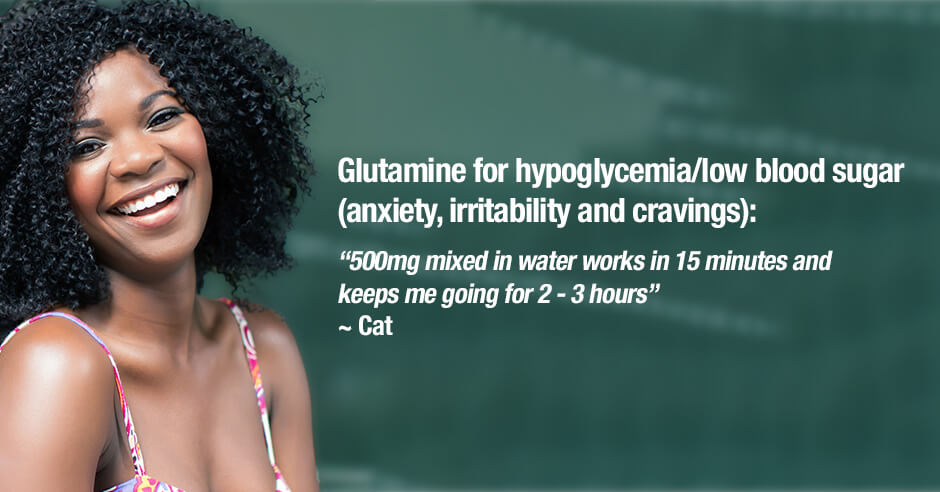
Glutamine for hypoglycemia/low blood sugar: “500mg mixed in water works in 15 minutes and keeps me going for 2 – 3 hours”

November 3, 2023 By Trudy Scott 27 Comments

glutamine and hypoglycemia

Cat shared this feedback about how effective just 500mg of glutamine is for her low blood sugar and how quickly it helps:

I recently followed one of your posts on GABA down the rabbit hole to a linked blog post and then to another post where I found a mention of using glutamine for hypoglycemia. This is the only reference that I have read on this in 35 years of research on the subject. I follow a low carb, higher protein, healthy fat diet, but still suffer low blood sugar issues consistently at one particular time of the day. After so many years of eating a second breakfast to prevent the lows, I was ready to give any other healthy option a try.

It works!!! I found a powder that I mix approximately 500 mg of with water. It works within about 15 minutes and keeps me going for about 2 – 3 hours — long enough to reach a reasonable time for lunch.

I’m thrilled to have this option as anytime that I travel, low blood sugar becomes a huge issue as I suffer from ketotic hypoglycemia and end up with massive headaches and vomiting for 6-8 hours.

You have freed me from a huge weight! Thank you and hugs!

(And thank you for researching and sharing the tremendously helpful information in your books, webinar presentations and blogs.)

Thank you Cat for sharing your success and you are most welcome! I’m sharing this as a blog post because you may also be new to this.

Glutamine dosing, using powder vs capsules and using it on the tongue

Cat finds 500 mg glutamine works well for her unique needs. This is a good starting dose. I see many folks start too high, like 5000 mg / 5 g and up multiple times a day, and it’s not necessary. However, we increase based on individual needs and you may find you do need to use 500 mg -1000 mg two to three times a day.

Using a glutamine powder is a great way to use it especially if you find you do need more than 500 mg each time.

One thing I mentioned to Cat is when you use glutamine powder directly on to the tongue (rather than mixed in water), the benefits are seen more quickly i.e. right away rather than having to wait 15 minutes.

If you do start with glutamine capsules, be sure to open the capsule on the tongue too, But watch for fillers which can be irritating to some folks. Powders are typically glutamine-only and don’t taste bad at all. But when traveling, capsules may be a better option (at least when on a plane).

Ketotic hypoglycemia, adrenal dysfunction and breakfast

Ketotic Hypoglycemia International defines ketotic hypoglycemia as “a condition characterized by low blood sugar (glucose) and elevated ketones, typically occurring after fasting, like sleeping overnight. Ketotic hypoglycemia (KH) is not a disease itself but rather a symptom or a clinical presentation that can occur as a result of various underlying conditions.” I’ve asked Cat if she is aware as to what is causing her ketotic hypoglycemia and I’ll report back.

I have also asked if she has had salivary cortisol testing done as adrenal dysfunction plays a role in all types of low blood sugar and will need to be addressed. This can take awhile to test and figure out nutritional support. Until then, glutamine is wonderful for preventing low blood sugar episodes.

I’m also curious what her breakfasts look like and will update the blog when I find out. Cat does mention that she follows “a low carb, higher protein, healthy fat diet” so I assume her first breakfast is a good one. But it’s always something to confirm.  As you can see on this blog, Anxiety and Hypoglycemia Symptoms Improve with Diet Modification, a healthy breakfast is key for blood sugar stability and preventing anxiety.

Low blood sugar symptoms and all the ways glutamine may help

This is the blog she commented on: Glutamine for calming, intense sugar cravings, gut healing and low blood sugar

I share all the symptoms we see with low blood sugar:

  • Crave sugar, starch or alcohol any time during the day
  • Irritable, shaky, headachey – especially if going too long between meals
  • Intense cravings for sweets
  • Lightheaded if meals are missed
  • Eating relieves fatigue
  • Agitated, easily upset
  • Nervous, anxious, panic attacks

As you can see, in addition to helping with low blood sugar symptoms, glutamine has calming properties (low blood sugar can also cause anxiety and panic attacks), helps reduce intense sugar cravings (sometimes described as a demonic urge to eat all things sweet and also helps with healing a leaky gut. Be sure to read these two blogs I’ve linked to above.

Glutamine has also been researched to help with addiction recovery. In this blog, An amino acid supplement with DLPA, glutamine and 5-HTP eases alcohol withdrawal symptoms at an inpatient detoxification program, glutamine is paired with two other amino acids.

Resources if you are new to using glutamine and other amino acids as supplements

We use the symptoms questionnaire to figure out if low blood sugar may be an issue for you.

If you suspect blood sugar or low levels of any of the neurotransmitters and do not yet have my book, The Antianxiety Food Solution – How the Foods You Eat Can Help You Calm Your Anxious Mind, Improve Your Mood, and End Cravings, I highly recommend getting it and reading it before jumping in and using amino acids on your own so you are knowledgeable. And be sure to share it with the practitioner/health team you or your loved one is working with.

There is an entire chapter on the amino acids and they are discussed throughout the book in the sections on gut health, gluten, blood sugar control (this topic has an entire chapter), sugar cravings, anxiety and mood issues.

The book doesn’t include product names (per the publisher’s request) so this blog, The Antianxiety Food Solution Amino Acid and Pyroluria Supplements, lists the amino acids that I use with my individual clients and those in my group programs. You can find them all in my online store.

If, after reading this blog and my book, you don’t feel comfortable figuring things out on your own (i.e. doing the symptoms questionnaire and respective amino acids trials), a good place to get help is the GABA QuickStart Program (if you have low GABA symptoms too). This is a paid online/virtual group program where you get my guidance and community support.

If you are a practitioner, join us in The Balancing Neurotransmitters: the Fundamentals program. This is also a paid online/virtual program with an opportunity to interact with me and other practitioners who are also using the amino acids.

I really appreciate Cat for sharing her story and giving me permission to share as a blog.

Has glutamine helped you with low blood sugar/hypoglycemia? If yes, in what way has it helped – reduced anxiety, less sugar cravings (or other addictions), and not as irritable and cranky/angry?

And how much helps and how quickly? Are you using it on the tongue?

Has glutamine  also helped with leaky gut?

If you’re a practitioner are you using glutamine this way with your clients/patients?

Feel free to share and ask your questions below.
Filed Under: Anger, Anxiety, Cravings, Glutamine, Hypoglycemia Tagged With: addictions, adrenal dysfunction, amino acids, anxiety, breakfast, capsules, cravings, GABA, GABA Quickstart; Balancing Neurotransmitters: the Fundamentals program for practitioners, glutamine, Headaches, Hypoglycemia, irritability, ketotic hypoglycemia, leaky gut, low blood sugar, low carb, on the tongue, powder, vomiting

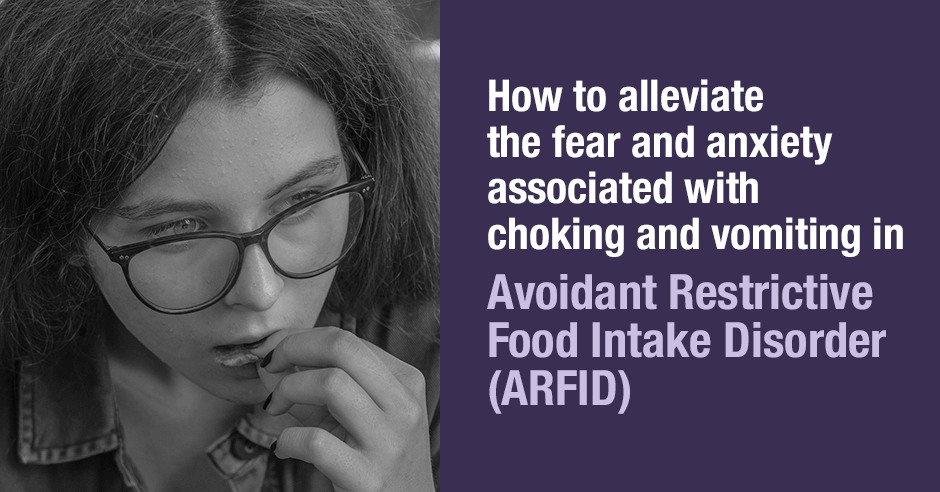
How to alleviate the fear and anxiety associated with choking and vomiting in Avoidant Restrictive Food Intake Disorder (ARFID)

May 27, 2022 By Trudy Scott 14 Comments

arfid and anxiety

According to The National Eating Disorders Association /NEDA, “Avoidant Restrictive Food Intake Disorder (ARFID) is a new diagnosis in the DSM-5, and was previously referred to as “Selective Eating Disorder.” ARFID is similar to anorexia in that both disorders involve limitations in the amount and/or types of food consumed, but unlike anorexia, ARFID does not involve any distress about body shape or size, or fears of fatness.”

As you can read on this page:

  • “Many children with ARFID also have a co-occurring anxiety disorder, and they are also at high risk for other psychiatric disorders”
  • There are also “fears of choking or vomiting” and
  • There is a “dramatic restriction in types or amount of food eaten” and they will often “only eat certain textures of food”

What we seldom see addressed is the biochemical causes of anxiety and fears which can show up as phobias and ongoing worrying and obsessing about ingesting certain foods. These are all typical low serotonin symptoms.

With low serotonin (you can see all the symptoms here) we use the amino acids tryptophan or 5-HTP to raise serotonin and alleviate these symptoms (often within a few minutes).

However, what do we do when a child (or adult) with ARFID has low serotonin and is too terrified to even consider a trial of tryptophan or 5-HTP? This may be because of fear of choking or vomiting and/or because of an aversion to the taste/texture and/or the fact that they are being offered something new that is not on their “safe foods” list.

There is a similar issue with low GABA which can show up as physical anxiety and tummy issues like “constipation, abdominal pain, upset stomach.” Intrusive thoughts are a common sign of low GABA too and this can manifest as a debilitating fear of choking and dying.

There is the same issue with not being able to have the individual use sublingual GABA as a supplement in order to alleviate these symptoms.

It’s for this reason, we have to be creative and find other ways to support serotonin and GABA.

Other ways to boost serotonin and GABA

The traditional ways that tryptophan/5-HTP and GABA are used is opened onto the tongue or swallowed or chewed. However, there are other ways to boost serotonin and GABA in these kids with ARFID, without further adding to their distress:

  • Experiment with using tryptophan or 5-HTP topically. I’m not aware of a commercial topical product but I recently mixed 500mg tryptophan powder (only tryptophan with no fillers) into a base cream (I used Primal Derma beef tallow) and used it topically with success.
  • Experiment in a similar way with using GABA topically. It could be made at home too (with a GABA only powder) or a product such as Somnium GABA cream is an excellent option (I have used this product with success). I suspect the liposomal GABA/theanine products may also work topically (but have yet to experiment with this option).
  • If tolerated, GABA powder swished in the mouth but not swallowed, may be an option once some of the anxiety and fears have been reduced. GABA powder doesn’t taste bad (it’s slightly sweet) and mixes well in water. By swishing some in the mouth it can help reduce the fear of choking and esophageal spasms (if they are present). It may also help with the sensation of a lump-in-the-throat (called globus pharyngeus) that some kids with ARFID describe.
  • Liquid zinc (zinc sulfate) tastes like water when zinc levels are low and may be tolerated. This 2021 paper, Macro- and Micronutrient Intake in Children with Avoidant/Restrictive Food Intake Disorder, lists low vitamin B1, vitamin B2, vitamin C, vitamin K, zinc, iron, and potassium in kids with ARFID. Zinc, iron and the B vitamins are all needed to make serotonin and GABA, and low zinc can reduce appetite. It’s also possible these children had low levels of some of these nutrients beforehand and that this contributed to their fears and restrictive eating.
  • Magnesium spray or other forms of topical magnesium creams can be used. Magnesium itself is calming and is a cofactor for making serotonin and GABA. An Epsom salts bath also provides magnesium and a warm bath with Epsom salts and an essential oil such as lavender is very calming.

Other less direct but equally effective approaches to include are:

  • gentle yoga (it supports GABA production and is calming)
  • swinging on an outdoor swing (reduces stress, cortisol and anxiety)
  • full spectrum light therapy (boosts serotonin)
  • vagus nerve support “This modern world can lead to overstimulation of the nervous system and you can become desensitized to chronic stress. Over time, this can lead to low vagal tone, which has been linked to a variety of mental and physical health issues.”
  • full spectrum infrared sauna (low heat and of short duration to simulate light exercise)
  • a weighted blanket is calming and improves mood and sleep and
  • essential oils such as orange (topically or diffused) can help with fear and anxiety.

Once serotonin and GABA levels have improved with some of the above measures, and more and more of the fear of choking and vomiting dissipates and food texture and taste aversion is reduced, the amino acids can then hopefully be introduced in the ways they are typically used (more on that below). This will further speed up the anxiety and fear reduction, allowing more and more foods to be slowly introduced.

If you are new to Avoidant Restrictive Food Intake Disorder (ARFID)

Be sure to read more about ARFID on The National Eating Disorders Association /NEDA site: diagnostic criteria, risk factors, warning signs and symptoms (behavioral and psychological, and physical).

As with all eating disorders, the risk factors for ARFID involve a range of biological, psychological, and sociocultural issues. These factors may interact differently in different people, which means two people with the same eating disorder can have very diverse perspectives, experiences, and symptoms.

Resources if you are new to using tryptophan/5-HTP and GABA as  supplements

If you are new to using the amino acids as supplements, here is the Amino Acids Mood Questionnaire from The Antianxiety Food Solution (you can see all the low serotonin and low GABA symptoms).

If you suspect low levels of GABA or any of the neurotransmitters and do not yet have my book, The Antianxiety Food Solution – How the Foods You Eat Can Help You Calm Your Anxious Mind, Improve Your Mood, and End Cravings, I highly recommend getting it and reading it before jumping in and using amino acids on your own so you are knowledgeable. And be sure to share it with the team you or your loved one is working with.

There is an entire chapter on the amino acids and they are discussed throughout the book in the sections on gut health, blood sugar control, sugar cravings, self-medicating with alcohol and more.

The book doesn’t include product names (per the publisher’s request) so this blog, The Antianxiety Food Solution Amino Acid and Pyroluria Supplements, lists the amino acids that I use with my individual clients and those in my group programs.

If, after reading this blog and my book, you don’t feel comfortable figuring things out on your own (i.e. doing the symptoms questionnaire and respective amino acids trials), a good place to get help is the GABA QuickStart Program. This is a paid online/virtual group program where you get my guidance and community support. There are many moms in the program who are having much success with their kids.

If you are a practitioner, join us in The Balancing Neurotransmitters: the Fundamentals program. This is also a paid online/virtual program with an opportunity to interact with me and other practitioners who are also using the amino acids.

If you feel comfortable doing so, please share more about the ARFID struggles of your son or daughter in order to help more parents understand this disorder  – their age, how long they have struggled, their fears and their safe food list.

Do let us know if you have found success with any of these approaches with your loved one with ARFID (or yourself)? And what other approaches have also helped?

If you are a practitioner are you seeing results with approaches like these with your ARFID clients/patients?

If you have questions please share them here too.

Filed Under: 5-HTP, Anxiety, GABA, serotonin, Tryptophan Tagged With: anxiety, ARFID, Avoidant Restrictive Food Intake Disorder, choking, cream, Epsom salts, esophageal spasms, fear, GABA, globus pharyngeus, intrusive thoughts, liposomal, liquid zinc, lump in the throat, magnesium spray, NEDA, obsessing, phobias, serotonin, textures, The National Eating Disorders Association, topical, tryptophan/5-HTP, types of food eaten, vomiting, worrying

GABA mixed in water and swished in his mouth before a meal prevents esophageal spasms /choking/vomiting, and allows him to swallow

April 1, 2022 By Trudy Scott 24 Comments

gaba in water

GABA mixed in water and swished in the mouth of an adult male, before a meal, prevents his esophageal spasms, and stops his frequent choking and vomiting, and allows him to swallow his food. A colleague shared her husband’s swallowing issues after she read my blog post about using GABA powder inside the check for laryngospasms. 

This is what she shared:

That [blog] made me think that [GABA] might be useful for my husband‘s esophageal spasms. He frequently can’t get food down during a meal because of them.

So he started mixing 500 mg GABA in a little water and swishing it around his mouth and then swallowing it at the beginning of each meal. Since he started doing that he has not had one spasm, or vomiting episode.

It’s wonderful to hear about her husband’s success with GABA and this unique application of swishing around GABA powder (mixed in water) in his mouth before a meal (I’ll share more on this aspect below).

I asked if they know what the causes of his esophageal spasms are but they don’t yet know:

We can’t figure it out. It appears to be all food. I would expect there to be a trigger-food, but we can’t find it.

The GABA has completely stopped it. Last night we went out to dinner and he forgot to bring GABA with him and immediately started choking. So he went to the nearest vitamin store, (of which there is only one)! Fortunately it was open. As soon as he got back to the restaurant and took his GABA, he was fine.

GABA does work so well for him and offers him some relief while they continue to search for other underlying root cause/s. Until these are found, GABA is supporting overall low GABA levels, associated with physical tension-type anxiety, intrusive thoughts, stiff and tense muscles in other areas of the body and also stress-eating and self-medicating with alcohol in order to relax. More on low GABA symptoms here.

My input on his dosing and swishing

Regarding the dosing and swishing method I have this input:

  • 500 mg GABA is the ideal dose for his needs but this is considered a high dose to start. For low GABA tension-type anxiety, I have clients start with a trial of 125 mg GABA and go up from there. I’d recommend the same approach for someone with issues like this gentleman experiences.
  • GABA is most effective when used sublingually or by opening a capsule on to the tongue or by using GABA powder on the inside of a cheek, rather than swallowing a GABA capsule. For this reason, his method of swishing GABA mixed in water is excellent for achieving the spasm-reducing and relaxing benefits quickly. For some folks doing this 30 minutes before a meal may be more effective than doing it right before eating.

The diagnosis can vary from person to person

The diagnosis can vary from person to person. But as long as there are spasms that are affecting swallowing, doing a trial of GABA is worthwhile in order to determine if it will help.

One example is eosinophilic esophagitis where

Clinical manifestations in infants and toddlers generally include vomiting, food refusal, choking with meals and, less commonly, failure to thrive. Predominant symptoms in school-aged children and adolescents include dysphagia (difficulty swallowing), food impactions, and choking/gagging with meals, particularly when comprised of foods with coarse textures. Other symptoms in this patient population include abdominal/chest pain, vomiting, and regurgitation.

The predominant symptom in adults is dysphagia [difficulty swallowing]; however, intractable heartburn and food avoidance may also be present.

One paper, Esophageal microbiome in active eosinophilic esophagitis and changes induced by different therapies discusses the role of the microbiome and how “an increase in levels of gamma-aminobutyric acid (GABA) …is known to exert a role in esophageal motor function.”

Finding the other root causes (other than low GABA)

Regarding finding the root causes, other than low GABA, this is an important aspect that does need to be pursued. Here are some of the many factors worth considering:

  • Finding food triggers. This can be challenging but an obvious one is gluten which can play a role in eosinophilic esophagitis. Dairy and environmental irritants can be issues too.
  • GERD/reflux needs to be ruled out or addressed. Food sensitivities are often a factor here too.
  • Vagus nerve issues can play a role in digestive issues like this. GABA and vagus nerve exercises helped my cough and voice issues. I recorded all my exercises on video and you can find these here. Fortunately I didn’t have any swallowing or choking episodes at that time but have had a choking episode more recently (GABA did help) so I know how scary this can be.
  • Pyroluria, a social anxiety condition needs to be ruled out or addressed too. This is because nausea, gagging and choking are common symptoms for some individuals.
  • I’d also consider a tongue tie. I just finished reading Tongue Tied: How a Tiny String Under the Tongue Impacts Nursing, Speech, Feeding, and More (my Amazon link) by Richard Baxter, DMD, MS. The focus on babies and children but adults can also benefit from addressing tongue tie issues later in life.
  • Addressing gut health and the microbiome may be one of the keys, as outlined in the paper above.

This is not a comprehensive list and a full functional workup will help to identify all possible root causes.

Related blogs: young boy with choking episodes, lump-in-the throat sensation, anxiety and globus pharyngeus

Here are some related blogs that you may find useful

  • Paroxysmal laryngospasm with low GABA physical-tension-type-anxiety: Is GABA powder rubbed on the inside of the cheek a solution? (this is the blog that inspired my colleague to have her husband do the GABA mouth swishing)
  • GABA helps a stressed young boy with episodes of “choking” or tightening in his throat
  • GABA is the answer after 40 years of a lump-in-the-throat sensation, nervousness and muscle tension at work
  • Anxiety and globus pharyngeus (lump in the throat): GABA to the rescue?

Resources if you are new to using GABA as a supplement

If you are new to using the the amino acid GABA as a supplement, here is the Amino Acids Mood Questionnaire from The Antianxiety Food Solution (you can see the low GABA and other low neurotransmitter symptoms).

If you suspect low levels of GABA or low serotonin and do not yet have my book, The Antianxiety Food Solution – How the Foods You Eat Can Help You Calm Your Anxious Mind, Improve Your Mood, and End Cravings, I highly recommend getting it and reading it before jumping in and using amino acids on your own so you are knowledgeable. And be sure to share it with the team you or your loved one is working with.

The book doesn’t include product names (per the publisher’s request) so this blog, The Antianxiety Food Solution Amino Acid and Pyroluria Supplements, lists the GABA products that I use with my individual clients and those in my group programs.

If you don’t feel comfortable reading my book, doing the low GABA symptoms questionnaire and doing trials of GABA on your own, you can get guidance from me in the GABA Quickstart Program (online/virtual).

If you are a practitioner, join us in The Balancing Neurotransmitters: the Fundamentals program. It’s an opportunity to interact with me and other practitioners who are also using the amino acids.

Have you experienced throat or esophageal spasms and difficulty swallowing with choking and/or vomiting.

And do you have the low GABA physical-tension-type-anxiety symptoms?  What else is a trigger for you and do you have a diagnosis?

If you’ve already been using GABA with success for easing your anxiety, have you noticed a reduction in your swallowing issues?

Have you ever used GABA in this way to help your swallowing issues?

If you’re a practitioner please share what you have seen?

Feel free to ask your questions here too.

Filed Under: Amino Acids, Anxiety, GABA, Gluten Tagged With: anxiety, can’t get food down, choking, choking sensation, eosinophilic esophagitis, esophageal spasms, GABA, GABA Quickstart, globus pharyngeus, gluten, gut health, laryngospasms, lump in the throat, physical-tension, pyroluria, swallow, swallowing issues, swished, tongue tie, trigger-food, vomiting

Willow’s survival story: Easter Lilies cause acute renal failure in cats and Peace Lilies cause oxalate issues

September 11, 2020 By Trudy Scott 5 Comments

willow lilies oxalate

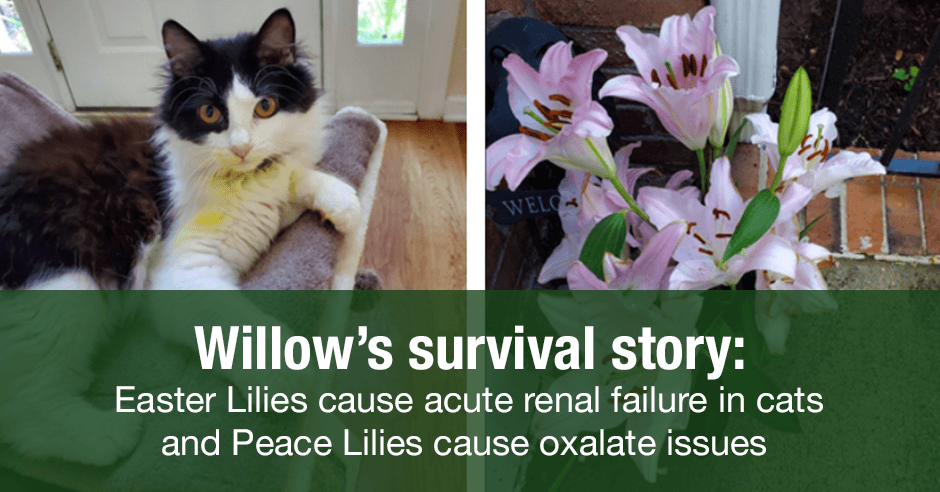
Be aware that Easter Lilies (pictured above) can cause acute renal failure in cats and Peace Lilies (pictured below) can cause calcium oxalate issues.

Lindsey Warnock shared these pictures and the story of her kitty Willow on Facebook and kindly gave me permission to share this on my blog as a caution for anyone with cats:

On Thursday Willow played with lilies in my office. She didn’t eat anything. She only batted at them and got the pollen all over her before I shooed her away. We laughed initially but thank God something in my head told me to google it.

I read, “All parts of the lily – including the stem, leaves, petals, stamens and pollen – are poisonous to cats. Even minor exposures (cat chewing on a leaf or getting pollen on his or her haircoat or whiskers) can be fatal.”

“Cats typically do not survive, even with aggressive therapy (such as dialysis).” [from this site noliliesforcats.com]

I freaked out. Threw her in the shower (that wasn’t fun) and immediately took her up to Blue Pearl Emergency & Specialty Hospital. Due to covid, they came and took her from my car and after her exam the ER doctor called me. She said her prognosis was very poor because they found the pollen around her mouth and on her tongue. She even said, “in my experience I’ve never seen a cat survive lily poisoning. Most owners only realize there’s an issue when the cat is sick and by that point it’s just too late”

Insert hysterical crying here. She said that her only saving grace may be that we sought treatment quickly but realistically she might not make it through the night. They made her throw up, gave her activated charcoal and aggressively treated her with fluid therapy and other meds.

Thank God after 2 days in the hospital, she pulled through!!! We will go for a recheck soon but her doctors are confident her organs didn’t suffer any long term damage from the poisoning.

I can’t tell you the intense guilt I felt and still feel for buying those stupid flowers. I felt like a murderer, terrible fur mom, terrible person. I’ve had cats my entire life and have never heard of lily poisoning. The vet’s response to that was “most people only find out the hard way” The doctors, technicians and staff at Blue Pearl really are the best! They saved our baby.

Please SHARE this with your friends. I would hate to see anyone go through this!! Thank you all for your support during that gut-wrenching 2 days. We’re thankful our girl is back home! No. More. Flowers. Ever.

This was a few weeks ago and when I checked in I see that Willow is still doing well!

This article, Toxic Plants by Tina A Wismer, DVM, DABVT, DABT, shares the toxic effects of the lily (pictured above) Willow brushed up against:

Lilies of the Lilium and Hemerocallis sp.have been shown to cause acute renal failure in the cat. Some examples include: Easter lilies (L. longiflorum), tiger lilies (L. tigrinum), rubrum or Japanese showy lilies (L. speciosum, L. lancifolium), and day lilies (H. species). The toxic principle is unknown, but is known to be water soluble. Even minor exposures (a few bites on a leaf, ingestion of pollen, etc.) may result in toxicosis, so all feline exposures to true lilies should be considered potentially life-threatening and should merit aggressive clinical intervention.

Peace lilies are also an issue for cats and dogs – due to oxalates

Peace Lilies are also harmful for cats and dogs because they contain calcium oxalate crystals. Fortunately they are not deadly.

peace lilies

This Toxic Plants article also lists common houseplants – including Philodendron spp. and Spathiphyllum spp. or Peace Lily – that contain insoluble calcium oxalate crystals, describing how they are also harmful for cats and dogs:

The calcium oxalate crystals look like needles, and when the plant is damaged these crystals embed themselves in the oral cavity. Clinical signs include hypersalivation, vomiting and possible swelling of the pharynx (obstruction is rare). Treatment includes milk or water to rinse mouth. Clinical signs usually resolve within 24 hours with no lasting effects.

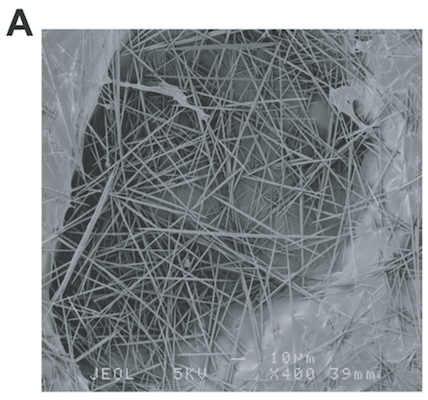
Here is an image of calcium oxalate crystals called raphides. You can see why these needle shaped calcium oxalate crystals found can inflict pain and cause harm. There are many different shapes of calcium oxalate crystals and this is just one example.

Raphides
Raphides purified from kiwifruit. Raphides, needle shaped calcium oxalate crystals, were collected from kiwifruit homogenate through heavy media separation using a dense CsCl solution. (A) The SEM image of purified raphides (x400). Shared from: Synergistic Defensive Function of Raphides and Protease through the Needle Effect via Creative Commons.

This article, Easter Lilies and Cats do not Mix! shares more about the two different groups of lilies, “true” lilies (like Easter Lilies) and “benign” lilies (like Peace Lilies). Author, Karen Christopherson, DVM, CVA says “It is best to skip lilies altogether in households where cats live.”

Be sure to read the entire Toxic Plants article for a list of all plants that are harmful and severely toxic to cats and dogs. I had no idea there were so many!

I am not a vet and am not an expert on any of this so please do check in with your own vet.

Oxalate questions I have

With regards to oxalates I have these questions I’d love to know the answers for:

  • Do all cats and dogs have an inborn ability to tolerate calcium oxalate crystals like those found in the Peace Lily?
  • Would cats and dogs also have issues (especially severe pain in their joints, bladder issues and increased anxiety) if they were to ingest high oxalate foods like spinach, beets, sweet potatoes, soy and kiwi fruit?
  • Given that there are some human “antidotes” for helping with acute exposure symptoms after ingestion of high oxalate foods (like spinach, rhubarb, nuts, kiwi fruit etc) in susceptible individuals, I am curious to know if some of these could be used with cats and dogs too: calcium citrate, magnesium citrate, vitamin B6 and/or an epsom salt bath?
  • Do humans with dietary oxalate issues have problems working with some of these indoor plants (like Peace Lilies) when planting them, pruning and even getting pollen on the skin?

Are you aware of these harmful effects of plants for cats and dogs? Let us know if you experienced something similar to what happened to Willow or with a plant like the Peace Lily. What advice did your vet share with you and how is your cat or dog doing now?

If you have answers to any of the above questions please do share too.

Feel free to post your questions here too.

We appreciate Lindsey for letting me share this and say well done for your quick thinking!

Read all posts in this series:

  • Coronavirus and vitamin C for immune support: new pain or more severe pain due to oxalate issues? (part 1)
  • Oxalate crystal disease, dietary oxalates and pain: the research & questions (part 2)
  • Vitamin C causes oxalate formation resulting in pain, anxiety, and insomnia (when there is a defect in ascorbic acid or oxalate metabolism)? (part 3)
  • Willow’s survival story: Easter Lilies cause acute renal failure in cats and Peace Lilies cause oxalate issues (part 4)
  • Waking in the night due to environmental toxins: impacts on the liver, gallbladder and fat digestion (making oxalate issues worse) (part 5)

Filed Under: Anxiety, Oxalates Tagged With: Calcium oxalate crystals, cats, dogs, Easter lily, harmful, hypersalivation, lilies, lily, mouth, needles, oral cavity, oxalates, Peace lily, raphides, swelling, vomiting

Anxiety case study: a very very slow SSRI taper with tryptophan and other nutritional support

August 28, 2020 By Trudy Scott 14 Comments

anxiety case study

Today I’m sharing an update from someone in my community who is tapering from an SSRI (Cipralex/lexapro) in the best way possible – very methodically and doing a very very slow taper, using compounded medication and nutritional support. It is a team approach with a supportive doctor monitoring for serotonin syndrome, her pharmacist compounding her medication and input from me.

She has an excellent diet that contains enough healthy protein and fats, plenty of vegetables, and no sugar or caffeine. She has the basic nutrients covered and is on the pyroluria protocol (these nutrients help make serotonin). She is using the amino acid tryptophan for serotonin support as she tapers. And she is out walking in nature and practicing mindfulness.

All of this sets her up for success and being able to avoid antidepressant discontinuation syndrome.

Here is her story:

I began tapering off 10 mg of Cipralex in November 2017. I have my little “Support Team” that includes a compounding pharmacist and my GP. Feeling very fortunate that I have these people as my taper has not exactly gone as planned (although far better than my last two attempts)

Originally, the plan was to go down by 10% of the dose and stay at that dose for 4 weeks. That didn’t work for me. I was fine when I dropped from 10mg to 9, but after my next 10% drop I experienced that familiar withdrawal hell. I got a little scared, but stuck with it, and decided to stay at that dose for a bit longer. While I leveled out, I did a lot of reading about how SSRIs work. I learned about the 1/2 life of Cipralex (all SSRIs have a different 1/2 life) and what was actually happening physiologically as my body adjusts to the lower dose. It’s a recovery process.

With that new knowledge, I decided to try another approach. I knew I couldn’t handle a drop of 10%. So, I started to taper at a rate of 0.1mg once a week (far less than 10%!). By day three at the new dose, I could feel the withdrawal, but it was far less severe. Small drops=small “withdrawal wave”. I discovered that I am able to manage a 2% drop of the current dose and I have been able to drop that % each week. So, I’m still reducing by 8% a month, which means I am close to the original plan of dropping by 10% a month. At this time I am at 6.24mg.

Yes, it is a very slow process and I have a long way to go, but it’s working. I have read that some people have to reduce by 1% of their current dose and remain at that dose for 4 weeks to allow their body the time to heal and adjust to life on the lower dose. Having the liquid compound has made such a difference! You sure would have difficulty accurately shaving off a pill by 2%!! If anyone is trying to come off of this drug, do your best to find a compounding pharmacist!

I find that I must stick to a very healthy diet. I eat a lot of fresh, raw and cooked vegetables. I mean a LOT of vegetables. I eat good sources of protein and walk for at least 45 min almost every day. I steer clear of sugar and caffeine. Both make my withdrawal much worse.

Every day I take omega 3, vitamin C, vitamin D, vitamin B complex. I take the supplements for pyroluria, vitamin B6, evening primrose oil and zinc. I take magnesium at night. I took Trudy’s amino acids course online and did all of the amino acid trials. I discovered all I really need is tryptophan. It has made a huge difference for me. Yes, I take Lidke tryptophan. For us Canadians, it can be ordered online.

I practice mindfulness. I’ve read a lot about the anxious brain (the reason I took Cipralex in the first place) so I understand what is happening now, what is real and what is just noise in my head.

Antidepressant discontinuation syndrome

This is the best way to taper SSRI medications in order to avoid withdrawal effects, also known as discontinuation syndrome which can be very severe for some folks.

Accordingly to this paper, Antidepressant discontinuation syndrome occurs in about 20% of patients who reduce the dose or abruptly stop an antidepressant that they have been taking for one month. This paper states that “symptoms are usually mild….occur within two to four days after drug cessation and usually last one to two weeks.”

It also states that occasionally symptoms “may persist up to one year…and if the same or a similar drug is started, the symptoms will resolve within one to three days.”

I typically hear from individuals who fall into the category of severe symptoms that are persisting past 2 weeks. It’s not uncommon to see symptoms continue for a year and often longer in some cases.

Also from the above paper, is the mnemonic FINISH which summarizes these symptoms:

  • Flu-like symptoms (lethargy, fatigue, headache, achiness, sweating)
  • Insomnia (with vivid dreams or nightmares)
  • Nausea (sometimes vomiting)
  • Imbalance (dizziness, vertigo, light-headedness)
  • Sensory disturbances (“burning,” “tingling,” “electric-like” or “shock-like” sensations) and
  • Hyperarousal (anxiety, irritability, agitation, aggression, mania, jerkiness).”

How you will feel if your serotonin is low and how to learn more

With low serotonin you will have the worry-in-your-head and ruminating type of anxiety, panic attacks and phobias, lack of confidence, depression, negativity, imposter syndrome, PMS, irritability, anger issues, insomnia and afternoon/evening cravings.

If you suspect low serotonin symptoms and are new to using the amino acids and do not have my book I highly recommend getting it and reading it before jumping in to taking supplements and navigating this with your prescribing physician: The Antianxiety Food Solution – How the Foods You Eat Can Help You Calm Your Anxious Mind, Improve Your Mood, and End Cravings. You may need to lend him/her a copy of my book too.

There is a complete chapter on the amino acids and one for pyroluria, plus information on real whole food, sugar and blood sugar, gluten, digestion and much more.  If you’re not a reader there is now also an audible version.

Here is the Amino Acids Mood Questionnaire from The Antianxiety Food Solution and additional information on Anxiety and targeted individual amino acid supplements: a summary

Please also read and follow these Amino Acid Precautions.

This lists The Antianxiety Food Solution Amino Acid and Pyroluria Supplements that I use with my individual clients and those in my group programs – you will find the Lidtke Tryptophan here. You can also read more about why I prefer the Lidtke tryptophan on this blog.

I would like to end off by saying how much I appreciate this woman and others sharing their stories like this so we can all learn!

Please also share your taper story and what you did to make it easier.  If you had challenges share those too. Let us know if you can relate to any of the above FINISH symptoms and how long they lasted.

Feel free to post your questions here too.

Filed Under: Anxiety, Tryptophan Tagged With: achiness, aggression, agitation, antidepressant, anxiety, B6, burning, cravings, diet, Dizziness, fatigue, flu-like symptoms, headache, insomnia, irritability, jerkiness, lethargy, light-headedness, mania, nausea, Nightmares, nutritional support, panic, serotonin, shock-like sensations, SSRI, SSRI taper, sweating, tingling, tryptophan, vertigo, vivid dreams, vomiting, worry, zinc

Primary Sidebar

NEW! GABA QuickStart Homestudy (with special intro pricing)

gaba quickstart homestudy

Free Report

9 Great Questions Women Ask about Food, Mood and their Health

You'll also receive a complimentary subscription to my ezine "Food, Mood and Gal Stuff"


Connect with me

Popular Posts

  • Amino Acids Mood Questionnaire from The Antianxiety Food Solution
  • The Antianxiety Food Solution Amino Acid and Pyroluria Supplements
  • Pyroluria Questionnaire from The Antianxiety Food Solution
  • Collagen and gelatin lower serotonin: does this increase your anxiety and depression?
  • Tryptophan for the worry-in-your-head and ruminating type of anxiety
  • GABA for the physical-tension and stiff-and-tense-muscles type of anxiety
  • The Antianxiety Food Solution by Trudy Scott
  • Seriphos Original Formula is back: the best product for anxiety and insomnia caused by high cortisol
  • Am I an anxious introvert because of low zinc and vitamin B6? My response to Huffington Post blog
  • Vagus nerve rehab with GABA, breathing, humming, gargling and key nutrients

Recent Posts

  • What do I use instead of Seriphos to help lower high cortisol that is affecting my sleep and making me anxious at night?
  • BeSerene™ GABA/theanine cream eases severe muscle tension in her neck/shoulders, prevents her bad headaches and quells her anxiety
  • How the correct approach, dose and sublingual use of GABA can be calming and not cause a flushed and itchy face and neck
  • The amino acid glutamine improves low mood by addressing gut health, and it has calming effects too
  • Flight anxiety with heightened breath, physical tension and also fearing the worst (the role of low GABA and low serotonin)

Categories

  • 5-HTP
  • AB575
  • Addiction
  • ADHD
  • Adrenals
  • Alcohol
  • Allergies
  • Alzheimer's disease
  • Amino Acids
  • Anger
  • Antianxiety
  • Antianxiety Food Solution
  • Antidepressants
  • Anxiety
  • Anxiety and panic
  • Autism
  • Autoimmunity
  • benzodiazapines
  • Bipolar disorder
  • Books
  • Caffeine
  • Cancer
  • Candida
  • Children/Teens
  • Collagen
  • Cooking equipment
  • Coronavirus/COVID-19
  • Cravings
  • Depression
  • Detoxification
  • Diabetes
  • Diet
  • DPA/DLPA
  • Drugs
  • EFT/Tapping
  • EMF
  • EMFs
  • Emotional Eating
  • Endorphins
  • Environment
  • Essential oils
  • Events
  • Exercise
  • Fear
  • Fear of public speaking
  • Fertility and Pregnancy
  • Fish
  • Food
  • Food and mood
  • Functional neurology
  • GABA
  • Gene polymorphisms
  • General Health
  • Giving
  • Giving back
  • Glutamine
  • Gluten
  • GMOs
  • Gratitude
  • Gut health
  • Heart health/hypertension
  • Histamine
  • Hormone
  • Hyperparathyroidism
  • Hypoglycemia
  • Immune system
  • Inflammation
  • Insomnia
  • Inspiration
  • Introversion
  • Joy and happiness
  • Ketogenic diet
  • Lithium orotate
  • Looking awesome
  • Lyme disease and co-infections
  • MCAS/histamine
  • Medication
  • Men's health
  • Mental health
  • Mercury
  • Migraine
  • Mold
  • Movie
  • MTHFR
  • Multiple sclerosis
  • Music
  • NANP
  • Nature
  • Nutritional Psychiatry
  • OCD
  • Osteoporosis
  • Oxalates
  • Oxytocin
  • Pain
  • Paleo
  • Parasites
  • Parkinson’s disease
  • PCOS
  • People
  • PMS
  • Postpartum
  • PTSD/Trauma
  • Pyroluria
  • Questionnaires
  • Real whole food
  • Recipes
  • Research
  • Schizophrenia
  • serotonin
  • SIBO
  • Sleep
  • Special diets
  • Sports nutrition
  • Stress
  • Sugar addiction
  • Sugar and mood
  • Supplements
  • Teens
  • Testimonials
  • Testing
  • The Anxiety Summit
  • The Anxiety Summit 2
  • The Anxiety Summit 3
  • The Anxiety Summit 4
  • The Anxiety Summit 5
  • The Anxiety Summit 6
  • Thyroid
  • Thyroid health
  • Toxins
  • Tryptophan
  • Tyrosine
  • Uncategorized
  • Vegan/vegetarian
  • Women's health
  • Yoga

Archives

  • October 2025
  • September 2025
  • August 2025
  • July 2025
  • June 2025
  • May 2025
  • April 2025
  • March 2025
  • February 2025
  • January 2025
  • November 2024
  • October 2024
  • September 2024
  • August 2024
  • July 2024
  • June 2024
  • May 2024
  • April 2024
  • March 2024
  • February 2024
  • January 2024
  • December 2023
  • November 2023
  • October 2023
  • September 2023
  • August 2023
  • July 2023
  • June 2023
  • May 2023
  • April 2023
  • March 2023
  • February 2023
  • January 2023
  • December 2022
  • November 2022
  • October 2022
  • September 2022
  • August 2022
  • July 2022
  • June 2022
  • May 2022
  • April 2022
  • March 2022
  • February 2022
  • January 2022
  • December 2021
  • November 2021
  • October 2021
  • September 2021
  • August 2021
  • July 2021
  • June 2021
  • May 2021
  • April 2021
  • March 2021
  • February 2021
  • January 2021
  • December 2020
  • November 2020
  • October 2020
  • September 2020
  • August 2020
  • July 2020
  • June 2020
  • May 2020
  • April 2020
  • March 2020
  • February 2020
  • January 2020
  • December 2019
  • November 2019
  • October 2019
  • September 2019
  • August 2019
  • July 2019
  • June 2019
  • May 2019
  • April 2019
  • March 2019
  • February 2019
  • January 2019
  • December 2018
  • November 2018
  • October 2018
  • September 2018
  • August 2018
  • July 2018
  • June 2018
  • May 2018
  • April 2018
  • March 2018
  • February 2018
  • January 2018
  • December 2017
  • November 2017
  • October 2017
  • September 2017
  • August 2017
  • July 2017
  • June 2017
  • May 2017
  • April 2017
  • March 2017
  • February 2017
  • January 2017
  • December 2016
  • November 2016
  • October 2016
  • September 2016
  • August 2016
  • July 2016
  • June 2016
  • May 2016
  • April 2016
  • March 2016
  • February 2016
  • January 2016
  • December 2015
  • November 2015
  • October 2015
  • September 2015
  • August 2015
  • July 2015
  • June 2015
  • May 2015
  • April 2015
  • March 2015
  • February 2015
  • January 2015
  • December 2014
  • November 2014
  • October 2014
  • September 2014
  • August 2014
  • July 2014
  • June 2014
  • May 2014
  • April 2014
  • March 2014
  • February 2014
  • January 2014
  • December 2013
  • November 2013
  • October 2013
  • September 2013
  • August 2013
  • July 2013
  • June 2013
  • May 2013
  • April 2013
  • March 2013
  • February 2013
  • January 2013
  • December 2012
  • November 2012
  • October 2012
  • August 2012
  • July 2012
  • June 2012
  • May 2012
  • April 2012
  • March 2012
  • February 2012
  • January 2012
  • December 2011
  • November 2011
  • October 2011
  • September 2011
  • August 2011
  • July 2011
  • June 2011
  • May 2011
  • April 2011
  • March 2011
  • February 2011
  • January 2011
  • December 2010
  • October 2010
  • September 2010
  • July 2010
  • May 2010
  • April 2010
  • March 2010
  • February 2010
  • January 2010
  • November 2009

Share the knowledge!

The above statements have not been evaluated by the Food and Drug Administration. Products listed in this website are not intended to diagnose, treat, cure or prevent any disease.

The information provided on this site is for informational and educational purposes only and is not intended as a substitute for advice from your physician or other health care professional. You should consult with a healthcare professional before starting or modifying any diet, exercise, or supplementation program, before taking or stopping any medication, or if you have or suspect you may have a health problem.


Copyright © 2026 Trudy Scott. All Rights Reserved. | Privacy | Terms and Conditions | Refund Policy | Medical Disclaimer

Free Report

9 Great Questions Women Ask about Food, Mood and their Health

You’ll also receive a complimentary subscription to my ezine “Food, Mood and Gal Stuff”