• Skip to primary navigation
  • Skip to main content
  • Skip to primary sidebar

everywomanover29 blog

Food, Mood and Women's Health – Be your healthiest, look and feel great!

  • Blog
  • About
  • Services
  • Store
  • Resources
  • Testimonials
  • The Book
  • Contact
  • Search this site

sweating

Flight anxiety with heightened breath, physical tension and also fearing the worst (the role of low GABA and low serotonin)

September 19, 2025 By Trudy Scott Leave a Comment

flight anxiety

Do you have suggestions for supplements for flight anxiety, something to make flying bearable without heightened breath, etc, or is that out of the supplement realm?

I also have physical tension and fear the worst. Any kind of turbulence or warnings of turbulence makes me extremely nervous.

K asked this question on one of my blogs and I responded that this is very much in the supplement realm! And what we use depends on the type of anxiety someone is experiencing.

I would first consider serotonin support before and during flying – tryptophan or 5-HTP – because she fears the worst and feels extremely nervous. With low serotonin there may also be  worry and fear leading up to the trip, as well as feelings of panic and imagining the worst during the flight.

GABA support – using the amino acid GABA or theanine – should also be considered for the more physical symptoms of heightened breath and physical tension. With low GABA there can be other physical symptoms such as excessive sweating (like the palms), a racing or pounding heart and a dry mouth. These amino acids could also be used leading up to the flight and during the trip if needed.

Read on for more on my insights on using these amino acids in a situation like this, additional information about fear of flying and a success story with GABA.

Serotonin and/or GABA support for fear of flying

In an ideal situation I would want to address both low serotonin and low GABA before flying and have her use extra during the flight, as needed. It’s very likely that many of the low serotonin and low GABA symptoms are present in some way in her day to day life too.

This means she can be methodical about doing a trial of the respective amino acids and figure out the optimal dose of each in familiar surroundings – using powder, capsule opened, sublingual, chewable or liposomal.

As always we trial one at a time so we know which one is working best. Keep in mind some folks do better with tryptophan and some do better with 5-HTP so both may need to be trialed. The same can be said for GABA and theanine.

Once the product and dose of each has been figured out, she’ll need to find a suitable option for use while traveling i.e. a sublingual or chewable tablet

It’s always a comprehensive approach

It’s a comprehensive approach – amino acids AND diet so I recommend eating real whole food, quality animal protein, eating for blood sugar stability, going gluten-free, sugar-free and caffeine-free, eating healthy fats, organic vegetables and fruit and fermented foods. My book “The Antianxiety Food Solution”  is a great place to start when you are new to the amino acids and other anxiety nutrition solutions like gluten/sugar/caffeine removal, blood sugar control, gut health, pyroluria etc.

During travel it’s important to be prepared with healthy travel foods and drinks. I share some ideas here.

The definition of a specific phobia such as the fear of flying

The fear of flying is called aviophobia and it’s one of many common phobias about something specific. According to this ebook

Specific phobia is an anxiety disorder characterized by excessive and irrational fear of a particular object, situation, or activity. The anxiety response goes beyond normal apprehension and leads to avoidance behavior. The intensity of the fear is often disproportionate to the actual danger posed by the phobic stimulus.

Common examples of specific phobias include fear of heights (acrophobia), fear of spiders (arachnophobia), fear of flying (aviophobia), and fear of needles (trypanophobia). People with specific phobias may experience intense anxiety or panic attacks when exposed to the feared object or situation.

This Australian article reports that “One in six people have a significant fear that prevents them from flying, and about one in five regular flyers use alcohol or prescription drugs to “help” them through a flight, according to Victoria’s Department of Health.”

Using the amino acids to address low serotonin and/or low GABA addresses the root cause and does away with the need for alcohol and antianxiety meds (and the associated side-effects).

Cognitive behavior therapy (CBT) and exposure therapy is often recommended for aviophobia but doesn’t always help, and doesn’t address the biochemical imbalances.

A success story with GABA before and during a flight – cool as a cucumber

Melissa started using Source Naturals GABA Calm in anticipation of holiday travel and holiday gatherings and shared this:

I’m glad I saw the post about GABA on your FB page a couple weeks ago. I bought Source Naturals GABA Calm and have been taking 1-3 per day for two weeks.

I’m glad I bought it before travelling home for Christmas – I was cool as a cucumber at the airport and was much calmer when visiting family and friends compared to last year! The true test of its efficacy will be in two weeks when the semester starts. For now, I notice a general calmness and am sleeping well.

Notice that she started using it in the 2 weeks leading up to her trip and not on the flight itself.

Additional resources when you are new to using tryptophan or GABA and other amino acids as supplements

We use the symptoms questionnaire to figure out if low serotonin or low GABA or other neurotransmitter imbalances may be an issue for you.

If you suspect low levels of any of the neurotransmitters and do not yet have my book, The Antianxiety Food Solution – How the Foods You Eat Can Help You Calm Your Anxious Mind, Improve Your Mood, and End Cravings. I highly recommend getting it and reading it before jumping in and using amino acids on your own so you are knowledgeable. And be sure to share it with the practitioner/health team you or your loved one is working with.

There is an entire chapter on the amino acids and they are discussed throughout the book in the sections on gut health, gluten, blood sugar control (this is covered in an entire chapter too), sugar cravings, anxiety and mood issues. The importance of quality animal protein and healthy fats is also covered.

The book doesn’t include product names (per the publisher’s request) so this blog, The Antianxiety Food Solution Amino Acid and Pyroluria Supplements, lists the amino acids that I use with my individual clients and those in my group programs.

If, after reading this blog and my book, you don’t feel comfortable figuring things out on your own (i.e. doing the symptoms questionnaire and respective amino acids trials), a good place to get help is the GABA QuickStart Program (if you have low GABA symptoms too). This is a paid online/virtual group program where you get my guidance and community support.

If you need serotonin support, the Serotonin QuickStart Program is a good place to get help. This is also a paid online/virtual group program where you get my guidance on using tryptophan and 5-HTP safely, and community support during 5 LIVE Q&A calls. You can sign up to be notified when the next live launch of this program is happening.

If you are a practitioner, join us in The Balancing Neurotransmitters: the Fundamentals program. This is also a paid online/virtual program with an opportunity to interact with me and other practitioners who are also using the amino acids.

Have you had success using serotonin and/or GABA support for your fear of flying (or other phobia/s)? If yes, which amino acids have helped you?

Did you have any success with CBT or exposure therapy or other approaches?

Feel free to share and ask your questions below.

Filed Under: Amino Acids, Anxiety, GABA, serotonin Tagged With: 5-HTP, amino acids, anxiety, aviophobia, dry mouth, fear, fear the worst, fearing the worst, flight anxiety, flying, GABA, heightened breath, low GABA, low serotonin, nervous, panic, physical-tension, racing heart, supplement, sweating, theanine, tryptophan, turbulence, worry

The correlation between terrible anxiety/panic attacks and collagen

July 25, 2025 By Trudy Scott 14 Comments

collagen and anxiety

Bea shared her collagen experience and insights on one of the collagen blogs:

I discovered the correlation between terrible anxiety and collagen myself several years ago! Couldn’t find any data about it then so just assumed I was a weirdo. But then my 26 yr old daughter started having terrible panic attacks. And bam! She too had started a collagen supplement! So I realized at least 2 ladies have this trouble! Got me to think about how many women seek anti-aging help with collagen and then also end up on prescriptions to help calm terrible anxiety without seeing the connection. Practitioners don’t seem to know about this. But every vitamin shop I visit hears from me on the anxiety/collagen connection. Perhaps grassroots word of mouth will help others eventually.

And yesssss… for me, bone broth is equally horrible!! Even if it is simmered for only 30 mins.

Thank you for explaining, Trudy!! How fascinating to learn it’s the drop in serotonin! I’ve never tried Tryptophan… just a bit nervous. But I think it’s time. I sure need the bone broth for my waning gut health. And I’m weary of ruminating thoughts lately! Thank you immensely for shining a needed light on how these amino acids help! I only wish I could share lunch with you and pass along my grateful hug!

God bless you, Trudy!

I’m so glad Dea found this correlation for herself and her daughter! Collagen use is on the rise and there is little awareness about these effects on serotonin levels in susceptible individuals. Read on for many of the anti-aging benefits of collagen, more information about tryptophan depletion studies, another similar story, other possible causes, and other blog resources on this topic.

Collagen use as we age: for skin, joints and bone health

Her comment about an increase in collagen use for anti-aging is so true. This 2023 paper, Collagen supplementation in skin and orthopedic diseases: A review of the literature, discusses the many age-related benefits of collagen:

hydrolyzed collagen supplementation promotes skin changes, such as decreased wrinkle formation; increased skin elasticity; increased hydration; increased collagen content, density, and synthesis, which are factors closely associated with aging-related skin damage.

Regarding orthopedic changes, collagen supplementation increases bone strength, density, and mass; improves joint stiffness/mobility, and functionality; and reduces pain. These aspects are associated with bone loss due to aging and damage caused by strenuous physical activity.

This paper mentions these aspects about collagen, that it’s low in tryptophan and that it is not a complete protein i.e. it’s a low biological value protein:

  • Notably, collagen is a low-tryptophan protein, an essential amino acid for humans.
  • Collagen is a source of conditionally essential amino acids (glycine and proline), which are important in some physiological situations.
  • Collagen is a low biological value protein, since its amino acid composition is poor in essential amino acids. However, it has a positive intrinsic value because its amino acid composition is equivalent to that of human connective tissue.

This supports what we have learned from acute tryptophan depletion studies causing low serotonin.

Tryptophan-depletion studies to study the relationship between low serotonin and depression

Here is my first blog explaining acute tryptophan depletion studies (published in 2017) – Collagen and gelatin lower serotonin: does this increase your anxiety and depression?.

Tryptophan-depletion studies have been done for years, as a way to study the relationship between low serotonin and depression.  Often a tryptophan-deficient amino acid mixture is used for this purpose.  More recently, collagen and gelatin are being used.

Collagen and gelatin are an excellent source of these amino acids: proline, glycine, glutamine and arginine, but they do not contain the amino acid tryptophan.

This paper, Pharmacokinetics of acute tryptophan depletion using a gelatin-based protein in male and female Wistar rats summarizes what we find in a number of studies that use gelatin for the purpose of lowering serotonin levels, in order to study the relationship between serotonin and behavior:

The essential amino acid tryptophan is the precursor of the neurotransmitter serotonin. By depleting the body of tryptophan, brain tryptophan and serotonin levels are temporarily reduced. In this paper, several experiments are described in which dose and treatment effects of acute tryptophan depletion (ATD) using a gelatin-based protein-carbohydrate mixture were studied in male and female Wistar rats.

I encourage you to read the above blog to learn about who may be more susceptible to these effects.

I also share my personal experience with collagen consumption and can totally relate to Bea’s story and what clients and those in my community have shared.

Toni used collagen for 8 months – anxiety and panic attacks are off the charts

Toni experienced something similar:

I’ve been using Organic collagen for about 8 months now… love the hair and skin results. My tummy felt better at first but not currently. My anxiety and panic attacks are off the charts: panic attacks, heart racing, sweating, brain fog. I want to escape – like fight or flight. Definitely obsessing and fears. Memory difficulty. I have an upcoming GI appointment to check for Candida /SIBO… but I had no idea this could add to my anxiety. I’ll be looking forward to more information, Seriously.

And a few weeks after stopping the collagen she shared this:

I stopped using collagen. Since then, my anxiety and panic have decreased by less than half. Mild in comparison. I’m definitely taking a long break.

Instead of stopping collagen altogether, my advice is to figure out if low serotonin is the cause and address this with tryptophan or 5-HTP so collagen can be used for its many anti-aging and health benefits.

Is their anxiety due to reduced serotonin or histamine, glutamate or oxalate issues

Keep in mind tryptophan will help and allow collagen, gelatin and broth to be consumed without the increase in anxiety and panic attacks (and sleep issues) only if it is due to low serotonin.

Presumably both Dea and her daughter have other low serotonin symptoms – in addition to anxiety and panic attacks – such as sleep issues, worry, fears, afternoon/evening cravings etc (here is the list of symptoms).  As you can see from Toni’s feedback (above), she does have many low serotonin symptoms.

A trial of tryptophan and symptom reduction (initially until the ideal dose is found) will confirm symptoms are related to low serotonin very quickly. This will also help Dea with her nervousness and ruminating thoughts, help her daughter ease the feelings of panic and help Toni too.

It’s also often helpful to also rule out histamine, glutamate and oxalate issues from collagen, gelatin and broth intake – as all of these factors can contribute to an increase in anxiousness too.

Additional blog posts on the topic of collagen

In case you are new to these potential issues, here are additional blog posts on the topic:

  • Collagen causes anxiety and sleep problems for some people. I would never have connected the dots but apparently I am one of those people
  • I have osteoporosis – within a week of starting collagen I experienced profound insomnia, was much more anxious and had tons of worrying thoughts
  • Collagen causes increased anxiety, low mood, irritability, insomnia, gut issues and an itchy skin: some questions and my answers
  • Gelatin triggers Enid’s anxiety in 2 weeks but also lowers her high blood sugar
  • Collagen Can Cause Anxiety and Insomnia with Trudy Scott: The Anxiety Summit 5

If you are new to this topic and are still skeptical about all this, do read the many comments and stories on these blogs. It’s a way more common issue than you’d think!

Additional resources when you are new to using tryptophan and other amino acids as supplements

As always, I use the symptoms questionnaire to figure out if low serotonin or other neurotransmitter imbalances may be an issue.

If you suspect low levels of any of the neurotransmitters and do not yet have my book, The Antianxiety Food Solution – How the Foods You Eat Can Help You Calm Your Anxious Mind, Improve Your Mood, and End Cravings, I highly recommend getting it and reading it before jumping in and using amino acids on your own so you are knowledgeable. And be sure to share it with the practitioner/health team you or your loved one is working with.

There is an entire chapter on the amino acids and they are discussed throughout the book in the sections on gut health, gluten, blood sugar control (this is covered in an entire chapter too), sugar cravings, anxiety and mood issues.

The book doesn’t include product names (per the publisher’s request) so this blog, The Antianxiety Food Solution Amino Acid and Pyroluria Supplements, lists the amino acids that I use with my individual clients and those in my group programs.

If, after reading this blog and my book, you don’t feel comfortable figuring things out on your own (i.e. doing the symptoms questionnaire and respective amino acids trials), a good place to get help is the GABA QuickStart Program (if you have low GABA symptoms). This is a paid online/virtual group program where you get my guidance and community support. You can sign up to be notified when the next live launch is happening.

If you need serotonin support, the Serotonin QuickStart Program is a good place to get help. This is also a paid online/virtual group program where you get my guidance on using tryptophan and 5-HTP safely, and community support during 5 LIVE Q&A calls. You can sign up to be notified when the next live launch of this program is happening.

If you are a practitioner, join us in The Balancing Neurotransmitters: the Fundamentals program. This is also a paid online/virtual program with an opportunity to interact with me and other practitioners who are also using the amino acids.

Wrapping up and your feedback

I appreciate Dea for sharing her story on the blog and for sharing this information at vitamin stores – we do need more awareness, hence this new blog on the topic to further help create awareness.

It’s very likely that this is one big contributing factor to the rise in anxiety and sleep issues in perimenopause and menopause. And this is probably made worse because so many practitioners are still not aware.

I thanked her for her kind words, and said I’ll take a virtual lunch and a virtual hug from her.

Have you experienced any adverse effects from collagen, gelatin or bone broth?

Have you been able to continue using them by adding tryptophan?

And why do you use collagen/how is it helping?

If you’re a practitioner are you aware of this issue for certain susceptible individuals?

Feel free to share and ask your questions below.
Filed Under: Anxiety, Collagen, Depression, Insomnia, serotonin Tagged With: amino acids, anti-aging, anxiety, brain fog, collagen, fears, GABA Quickstart, gut health, hair, heart racing, nervous, obsessing, panic, panic attacks, practitioners, ruminating thoughts, serotonin, Serotonin Quickstart, skin, sweating, tryptophan, tryptophan depletion studies

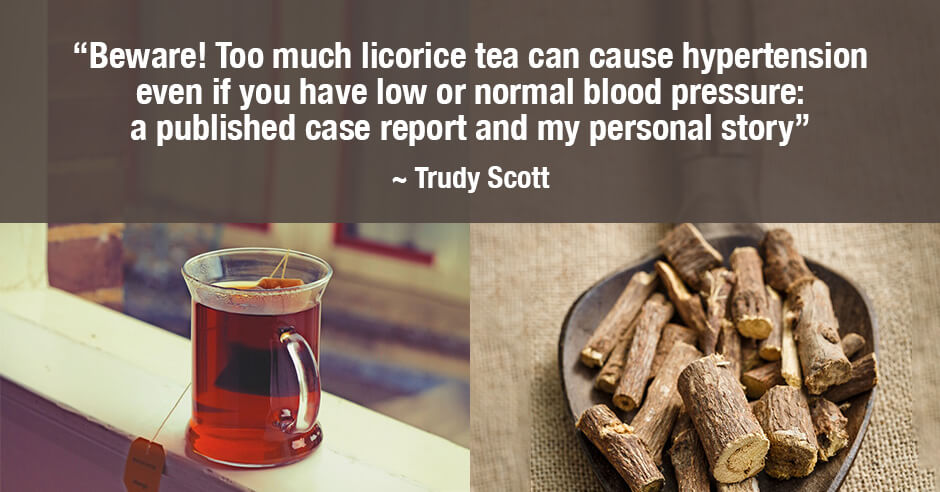
Beware! Too much licorice tea can cause hypertension even if you have low or normal blood pressure

October 6, 2023 By Trudy Scott 38 Comments

licorice tea and hypertension

A 45-year-old woman presented to her general practitioner with a 4-month history of hot flushes, sweating and headaches. On examination, she was found to be hypertensive, and blood tests revealed mild hypokalaemia [low potassium].

While awaiting the results of further investigation into the cause of her elevated blood pressure, the patient conducted her own research and identified liquorice tea [licorice tea] as the potential cause of her symptoms. The patient had been drinking up to six cups of liquorice tea per day as a substitute for caffeinated tea and fruit-based infusions.

The patient immediately stopped consuming the drink and within 2 weeks her symptoms, hypertension and hypokalaemia, had entirely resolved.

This case report, Hypertension induced by liquorice tea, is eye-opening because this woman had always had low blood pressure and so she ignored the small print on the box that states “not advised for people with hypertension.”

I often see this caution about avoiding licorice if you have high blood pressure (hypertension). But I have yet to see a warning on a box of tea about the fact that licorice can actually cause high blood pressure with high consumption – even when your blood pressure is low or normal. I feel the latter aspect is not as well known, which is the reason for this blog.

I’m also sharing this case report and additional information because something similar has just happened to me (more on my story below).

Here are a few more facts about this patient’s case:

  • She went to her doctor “with a history of hot flushes, night sweats and headaches. These symptoms had started over the preceding 4 months. The patient suspected that her symptoms were due to the onset of menopause.”
  • Initially her blood pressure was 162/82 and “Repeat blood pressure measurement confirmed ongoing hypertension of 150/80 mm Hg”
  • “Blood tests demonstrated mild hypokalaemia” (i.e. low potassium of 3.3 mmol/L).
  • Two weeks after she stopped drinking the licorice tea, “repeat blood pressure measurement was 128/84 mm Hg and her hypokalaemia (and other symptoms) had resolved.”

I encourage you to read the entire published case report to get an understanding of the mechanisms of licorice mediating “its effect on blood pressure via the action of glycyrrhizin on the kidney.” And the impacts on sodium, potassium, aldosterone, cortisol/cortisone and blood pressure. I will add that this is one of many such case reports in the published research.

My story with elevated blood pressure after drinking Yogi Throat Comfort tea

As I mentioned above, I’m sharing this case report because something similar has just happened to me! I had been drinking Yogi Throat Comfort tea for just over a week to soothe my throat and help after my voice loss. It contains licorice root as well as slippery elm and other herbs.

My blood pressure is typically low at 110/80 or less (sometimes as low as 102/80) and last Friday it was 130/80 which is the highest it had ever been.

I didn’t make the connection to licorice right away because I had just flown internationally from Hawaii to Australia and we were sprayed with insecticide on the plane when we landed in Australia. We all had to sit there in the toxic soup for 10 minutes. (I’ll be sharing more about all this in a future blog).

I suffered severe vertigo the next day and it was at the doctor’s office that I found out my blood pressure was 130/80. I was very surprised but he felt it could be due to the travel or vertigo or voice issues. I also know that bereavement can have major physiological impacts and increased blood pressure is one of them (I was in Hawaii for my darling mom’s memorial).

I finally made the connection when my blood pressure measured 137/84 a few days later and stopped drinking the tea immediately. Over the next few days it came down to 127/93 and then 121/90 and then 118/84.  I expect it to continue to come back down to my normal low blood pressure and will update this blog when it does.

As far as symptoms, I was just not feeling myself and had a strange feeling of apprehension, spaciness and breathlessness when talking too much. These are much improved having stopped the tea. My naturopath also recommended eating a banana each day to increase my potassium levels and to have epsom salt baths to help regulate the electrolytes in my body.

I will admit there are the above confounding/contributing factors – grief, voice loss, travel, vertigo, insecticide exposure – so I can’t be sure it’s only the licorice in the tea, and I’m not willing to test it out right now.

(Update Oct 13, 2023:  A week later and it’s now pretty much back to my usual low blood pressure. Over the course of this last week it measured 125/82, 118/91, 127/84, 118/85 and today it’s 112/85. I will continue to track.)

How much licorice tea is too much?

The authors of the above case report mention this about the dose of glycyrrhizin:

  • Experimental studies have shown that the rise in blood pressure caused by liquorice follows a linear dose–response relationship. Doses of as little as 75 mg of glycyrrhizin (equivalent to 50 g of standard liquorice confectionery) given daily for a 2-week period have been shown to cause a significant increase in systolic blood pressure (the first number).
  • In a survey of 33 brands of liquorice tea, the mean glycyrrhizin content was found to be 126 mg/L (range 2–450 mg/L). A cup of liquorice tea with a volume of 250 mL could therefore be expected to contain, on average, approximately 31.5 mg of glycyrrhizin.”
  • The European Scientific Committee on Food advises that regular glycyrrhizin doses of 100 mg/day present a risk to health, and advocate a safe average daily intake of no more than 10 mg/person/day. This is an amount equivalent to less than half a cup of liquorice tea or just 6 g of liquorice confectionery daily.

In the above published case, the patient had been “averaging around 4–6 cups per day, and had been consuming the licorice tea for about a year.” She was “unwittingly consuming daily volumes of liquorice tea containing up to 190 mg of glycyrrhizin, well in excess of the recommended limit” of 10 mg per day. It was 8 months before she started to notice the adverse effects, but I do wonder how long she had high blood pressure.

We have a home blood pressure monitor but I haven’t used it for ages and if I hadn’t gone in to the doctor for my vertigo, my elevated blood pressure may have gone unnoticed for a while too.

How much did I consume: a total of 10 Yogi Throat Comfort tea bags over the course of a week. The day before leaving I had a few cups of hot tea and was thrilled to be able to talk on my last day there.  I then drank it all day on the 15+ hour flight back: I had 2 tea bags in my 2 liter / 2 quart water bottle and filled it up a few times with cold water.  And I continued to do this once I was home, having it next to my bed if I woke up coughing in the night. I was probably getting 3 or 4 times more than the safe average daily intake of 10 mg/person/day.

I love licorice tea and drink it from time to time, maybe 2-4 cups a month. I’m quite surprised it affected me so quickly but have never consumed this amount and in such a concentrated time period.

Will I drink Yogi Throat Comfort tea or other herbal teas that contain licorice?

For now, I think I will – the Throat Comfort tea helped so much with my voice – but when I do I will monitor my blood pressure carefully and then make a final decision.

I also plan to dig a bit further into some of the confounding factors I mention above to see how they could possibly have made me more susceptible.

I do also have dietary oxalate issues so this could play into the effects of glycyrrhizin on the kidney. I’m finding mixed results on the oxalate content of licorice: some papers say high and some say low. But I didn’t have any of my typical oxalate reactions such as painful feet or eyes. I have, however, noticed some stiffness in my left hip the last few days so will be looking further into this aspect.

(Update Oct 13, 2023: Licorice tea is listed as low oxalate on the Trying Low Oxalates Facebook group but they will be updating their spreadsheet based on a paper I just shared with them – Oxalate in Foods: Extraction Conditions, Analytical Methods, Occurrence, and Health Implications “Licorice was the highest-oxalate food reported in this review with 3569.3 mg total oxalate/100 g FW (fresh weight).” (this is higher than spinach, sweet potatoes and rhubarb which are really high oxalate)

My takeaway messages – a warning and listen to your body

There is no licorice hypertension warning on this Yogi Throat Comfort tea box (or my Tulsi Licorice tea) and I do feel there should be 2 warnings: the usual warning about licorice if you have high blood pressure AND a general warning that licorice may also affect you if you have low or normal blood pressure.

My other takeaway message is this: listen to your body and get checked out when things don’t seem as they should be.

Has something like this happened to you? How much licorice tea did you consume, which brand and over what period?

Do you typically have low blood pressure and were you also caught by surprise?

Did you know about the caution to avoid licorice if you have high blood pressure?

And what about the fact that licorice may also affect you if you have low or normal blood pressure?

Feel free to share and ask your questions below.
Filed Under: Heart health/hypertension, Oxalates Tagged With: glycyrrhizin, Headaches, high blood pressure, hot flushes, hypertension, hypokalaemia, kidney, Licorice, licorice tea, liquorice, low blood pressure, low potassium, normal blood pressure, oxalate, sweating, Yogi Throat Comfort tea

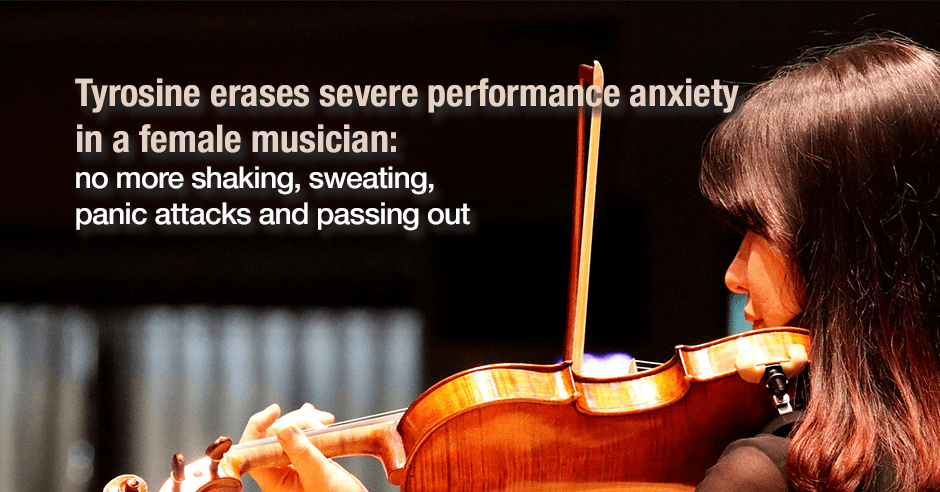
Tyrosine erases severe performance anxiety in a female musician: no more shaking, sweating, panic attacks and passing out

June 4, 2021 By Trudy Scott 42 Comments

tyrosine and musician anxiety

Today I’m sharing the case of a female musician with severe performance anxiety. It was so severe that she would shake, sweat and actually pass out. She also had problems breathing which happens when you’re having a panic attack. Surprisingly, the amino acid supplement tyrosine eliminates – or as she says, erases – all these anxiety symptoms very quickly. It’s surprising because tyrosine is typically not used for easing anxiety symptoms and is instead used to support the low catecholamine symptoms: low motivation, low energy, poor focus, feeling flat and depressed (the curl-up-in-bed kind), cravings for sugary foods for better energy and the need for caffeine.

I share her story in her own words and explore some possible mechanisms around serotonin, cortisol, dopamine and GABA.

Pam initially shared on a Facebook thread how tyrosine erased her extreme performance anxiety and we dug deeper. This is the start of the conversation:

I’ve been performing (music) ever since I was seven, but I always hated it. For extreme performance anxiety, I found, way too late, that 1,500mg of l-tyrosine simply erased the shaking and fainting, and I was “just nervous like everybody else.”

I responded saying what a great result this was and shared that I found it so interesting that tyrosine erased the shaking and fainting that she experienced with her performance anxiety.

As I mentioned above, tyrosine is typically not used for anxiety. Instead, it’s used to improve the low catecholamine symptoms of poor focus, low energy and low motivation. (More on this here)

I also always want to understand the mechanism as to why an amino acid helps ease anxiety symptoms – or in this case erased them. I share more on that below.

When I asked what she meant by “just nervous like everybody else“, this was her response:

It means pretty much everyone gets performance nerves, but not to the point of fainting on stage. Knowing intellectually that that was ridiculous did not make any difference in the fact that it occurred.

I don’t even remember why I tried tyrosine, but I do remember the first time I took it 40 minutes before a performance. I waltzed out on stage ahead of time and sat in my chair warming up, showing off even, to a hall that was filling with people.

That was and is inconceivable without the tyrosine support, which I have to assume is putting my dopamine at a normal level. Yes, I get a little wired, which can be a good thing, but passing out, having my intestines demand to be emptied, not being able to breathe [is this a panic attack?], shaking, sweating….it fixes all of that.

It’s wonderful to hear such powerful results from 1,500mg tyrosine and how quickly it works.  The latter is not surprising as this is typical with all the amino acids. They work quickly if it’s what you need and you have the ideal dose for your needs.

What is surprising is that tyrosine erased her severe performance anxiety symptoms. I immediately started trying to understand possible mechanisms.

What is the mechanism – a serotonin boost to improve confidence?

When I read “I waltzed out on stage ahead of time and sat in my chair warming up, showing off even, to a hall that was filling with people” I immediately thought of how tryptophan or 5-HTP works to give you a serotonin boost that improves your confidence.

However, Pam doesn’t feel the mechanism is related to low serotonin:

You would think, if it were serotonin, that SSRIs would be effective. They are not and cause me to have terror attacks.

She also shared that she recently gave 5-HTP a trial and it did nothing so that further supports her theory/gut feeling that her extreme performance anxiety is not related to low serotonin:

I think there is a belief system associated with serotonin that is not cognizant of the fact that the other neurotransmitters can be the culprits. I read someone’s web site sometime not that long ago, that detailed how to test all the major neurotransmitters, find out which ones were to low OR too high, and what amino acids to take to fix the imbalances. To me, this is a more comprehensive view than being stuck on serotonin.

Anxiety is not always caused by low serotonin or low GABA (although these causes are very common). I’m with Pam on finding which neurotransmitter imbalance you have. There is no one-size fits all and results can happen without us fully understanding why. It does sound like this is very much dopamine related for her but I wanted to understand how it was helping her.

What is the mechanism – lowering cortisol under extremely stressful situations?

I started looking into the research and found that one possible mechanism could be that tyrosine lowers the high cortisol that occurs after an extremely stressful situation – like going on stage to perform – and eases anxiety this way.

An animal study supports this theory: Dietary tyrosine suppresses the rise in plasma corticosterone following acute stress in rats:

Acute, uncontrollable stress increases norepinephrine (NE) turnover in the rat’s brain (depleting NE) and diminishes the animal’s subsequent tendency to explore a novel environment. Pre-treatment with tyrosine can reverse these adverse effects of stress, presumably by preventing the depletion of NE in the hypothalamus.

In the present study, we found that pre-treatment with supplemental tyrosine not only prevented the behavioral depression and hypothalamic NE depletion observed after an acute stress, but also suppressed the rise in plasma corticosterone. These results support a role for brain NE in stress-induced corticosterone secretion and demonstrate that supplemental tyrosine can protect against several adverse consequences of such stress.

Keep in mind that cortisol is the primary endogenous adrenal steroid in humans, whereas corticosterone is the primary adrenal corticosteroid in laboratory rats.

What is the mechanism – dopaminergic system influence on anxiety-like behavior?

I dug deeper into the research and found that there is evidence that dopamine plays an important role in anxiety modulation in different parts of the brain and that both dopamine D1 and D2 receptor mechanisms are important in mediating anxiety.

This paper, The Modulatory Role of Dopamine in Anxiety-like Behavior describes some of this, together with the role of GABA and glutamate:

The activity of dopaminergic system is modulated by several neurotransmitters, including glutamatergic neurons from the medial prefrontal cortex (mPFC), GABAergic fibers from the nucleus accumbens (NAc) as well as the ventral pallidum and cholinergic fibers from the pedunculopontine nucleus and the laterodorsal tegmental nucleus. Thus, changes in the glutamatergic, and GABAergic, as well as mediated transmission in the mesolimbic, mesocortical and nigrostriatal dopaminergic system may influence anxiety-like behavior.

In the past I’ve blogged about tyrosine for alleviating anxiety and panic attacks and creating a feeling of calm focus so this is not an isolated case but it is pretty unusual. As I share in the above blog, a man and a woman saw dramatic reductions in their anxiety when using tyrosine. GABA and tryptophan had not helped and both individuals were also under extreme stress. It was work stress in their cases and both of them felt that their ability to now focus in business situations eased their severe anxiety.

Regardless of the mechanism, Pam saw profound results and that is all that really matters.

My additional feedback on dosing and timing

Here is some additional feedback from me on dosing and timing. On one hand I recommend caution based on my experience with the amino acids. And on the other hand, what she did worked so I’m torn about her approach but am going to say it anyway:

  • A typical starting dose is 500mg tyrosine and I would never have anyone start with 1,500mg (even though it was the sweet spot for Pam). However, if she hadn’t used that dose, she would not have had the same results. I’m waiting to hear back if she started with 1,500mg tyrosine or worked up to this. (Pam also told a friend of hers about her results and the outcome was very different for her friend:“She tried 100mg of tyrosine and it caused her extreme nervousness, the opposite of me. I have to assume that 100mg put her at too *much* dopamine, and her genetic profile was significantly different from mine.” We are all unique and there is no one-size-fits-all.)
  • I would also be cautious about trying a new amino acid for the first time right before a major event like a musical performance. I have clients trial the amino acids at home before heading out. However, if she had done that she would likely have not experienced the desired results.

I feel it would be helpful to know if she had done a trial of GABA or tryptophan before using tyrosine but it seems she doesn’t recall this or why she decided to use 1,500mg tyrosine. If she hasn’t done I trial with both GABA and tryptophan, I would love her to consider this now in order to potentially take things up a notch further and ease her feelings of just being “nervous like everybody else”.

I appreciate Pam sharing her amazing results with tyrosine and I’m really happy for her! I’m waiting to hear back with details of what kind of musical performances she does. I’ll share this and the other information once I hear back.

I say it often and I’ll say it again – there is not a one-size-fits-all. This case illustrates this very well. Sometimes it’s methodical trial and error (my preference) and other times it’s hit and miss when nothing else seems to be helping.

Resources if you are new to using tyrosine as a supplement

If you are new to using the amino acid tyrosine as a supplement, here is the Amino Acids Mood Questionnaire from The Antianxiety Food Solution and a brief overview here, Anxiety and targeted individual amino acid supplements: a summary.

If you suspect low levels of any of the neurotransmitters and do not yet have my book, The Antianxiety Food Solution – How the Foods You Eat Can Help You Calm Your Anxious Mind, Improve Your Mood, and End Cravings, I highly recommend getting it and reading it before jumping in and using amino acids so you are knowledgeable.

The book doesn’t include product names (per the publisher’s request) so this blog, The Antianxiety Food Solution Amino Acid and Pyroluria Supplements, lists tyrosine and other products that I use with my individual clients and those in my group programs.

As with all individual amino acids we use tyrosine for quick relief of symptoms, like Pam did. And we must also always focus on the foundations like diet, the gut, adrenals and stress levels.

Do you use or have you used tyrosine to help with performance anxiety – personally or with a patient/client?

And were you/are you surprised that this worked so well when tryptophan or 5-HTP or GABA had not worked as expected?

What other symptoms did/does the tyrosine help improve: focus, motivation, drive, low energy, low mood? And did/does it help reduce sugar cravings and the need for caffeine?

Feel free to post your questions here too.

Filed Under: Anxiety, Fear of public speaking, Music, Tyrosine Tagged With: anxiety, calm focus, catecholamine, cortisol, dopamine, fainting, GABA, musician, nervous, panic attacks, passing out, performance anxiety, serotonin, shaking, sweating, tyrosine

Anxiety case study: a very very slow SSRI taper with tryptophan and other nutritional support

August 28, 2020 By Trudy Scott 14 Comments

anxiety case study

Today I’m sharing an update from someone in my community who is tapering from an SSRI (Cipralex/lexapro) in the best way possible – very methodically and doing a very very slow taper, using compounded medication and nutritional support. It is a team approach with a supportive doctor monitoring for serotonin syndrome, her pharmacist compounding her medication and input from me.

She has an excellent diet that contains enough healthy protein and fats, plenty of vegetables, and no sugar or caffeine. She has the basic nutrients covered and is on the pyroluria protocol (these nutrients help make serotonin). She is using the amino acid tryptophan for serotonin support as she tapers. And she is out walking in nature and practicing mindfulness.

All of this sets her up for success and being able to avoid antidepressant discontinuation syndrome.

Here is her story:

I began tapering off 10 mg of Cipralex in November 2017. I have my little “Support Team” that includes a compounding pharmacist and my GP. Feeling very fortunate that I have these people as my taper has not exactly gone as planned (although far better than my last two attempts)

Originally, the plan was to go down by 10% of the dose and stay at that dose for 4 weeks. That didn’t work for me. I was fine when I dropped from 10mg to 9, but after my next 10% drop I experienced that familiar withdrawal hell. I got a little scared, but stuck with it, and decided to stay at that dose for a bit longer. While I leveled out, I did a lot of reading about how SSRIs work. I learned about the 1/2 life of Cipralex (all SSRIs have a different 1/2 life) and what was actually happening physiologically as my body adjusts to the lower dose. It’s a recovery process.

With that new knowledge, I decided to try another approach. I knew I couldn’t handle a drop of 10%. So, I started to taper at a rate of 0.1mg once a week (far less than 10%!). By day three at the new dose, I could feel the withdrawal, but it was far less severe. Small drops=small “withdrawal wave”. I discovered that I am able to manage a 2% drop of the current dose and I have been able to drop that % each week. So, I’m still reducing by 8% a month, which means I am close to the original plan of dropping by 10% a month. At this time I am at 6.24mg.

Yes, it is a very slow process and I have a long way to go, but it’s working. I have read that some people have to reduce by 1% of their current dose and remain at that dose for 4 weeks to allow their body the time to heal and adjust to life on the lower dose. Having the liquid compound has made such a difference! You sure would have difficulty accurately shaving off a pill by 2%!! If anyone is trying to come off of this drug, do your best to find a compounding pharmacist!

I find that I must stick to a very healthy diet. I eat a lot of fresh, raw and cooked vegetables. I mean a LOT of vegetables. I eat good sources of protein and walk for at least 45 min almost every day. I steer clear of sugar and caffeine. Both make my withdrawal much worse.

Every day I take omega 3, vitamin C, vitamin D, vitamin B complex. I take the supplements for pyroluria, vitamin B6, evening primrose oil and zinc. I take magnesium at night. I took Trudy’s amino acids course online and did all of the amino acid trials. I discovered all I really need is tryptophan. It has made a huge difference for me. Yes, I take Lidke tryptophan. For us Canadians, it can be ordered online.

I practice mindfulness. I’ve read a lot about the anxious brain (the reason I took Cipralex in the first place) so I understand what is happening now, what is real and what is just noise in my head.

Antidepressant discontinuation syndrome

This is the best way to taper SSRI medications in order to avoid withdrawal effects, also known as discontinuation syndrome which can be very severe for some folks.

Accordingly to this paper, Antidepressant discontinuation syndrome occurs in about 20% of patients who reduce the dose or abruptly stop an antidepressant that they have been taking for one month. This paper states that “symptoms are usually mild….occur within two to four days after drug cessation and usually last one to two weeks.”

It also states that occasionally symptoms “may persist up to one year…and if the same or a similar drug is started, the symptoms will resolve within one to three days.”

I typically hear from individuals who fall into the category of severe symptoms that are persisting past 2 weeks. It’s not uncommon to see symptoms continue for a year and often longer in some cases.

Also from the above paper, is the mnemonic FINISH which summarizes these symptoms:

  • Flu-like symptoms (lethargy, fatigue, headache, achiness, sweating)
  • Insomnia (with vivid dreams or nightmares)
  • Nausea (sometimes vomiting)
  • Imbalance (dizziness, vertigo, light-headedness)
  • Sensory disturbances (“burning,” “tingling,” “electric-like” or “shock-like” sensations) and
  • Hyperarousal (anxiety, irritability, agitation, aggression, mania, jerkiness).”

How you will feel if your serotonin is low and how to learn more

With low serotonin you will have the worry-in-your-head and ruminating type of anxiety, panic attacks and phobias, lack of confidence, depression, negativity, imposter syndrome, PMS, irritability, anger issues, insomnia and afternoon/evening cravings.

If you suspect low serotonin symptoms and are new to using the amino acids and do not have my book I highly recommend getting it and reading it before jumping in to taking supplements and navigating this with your prescribing physician: The Antianxiety Food Solution – How the Foods You Eat Can Help You Calm Your Anxious Mind, Improve Your Mood, and End Cravings. You may need to lend him/her a copy of my book too.

There is a complete chapter on the amino acids and one for pyroluria, plus information on real whole food, sugar and blood sugar, gluten, digestion and much more.  If you’re not a reader there is now also an audible version.

Here is the Amino Acids Mood Questionnaire from The Antianxiety Food Solution and additional information on Anxiety and targeted individual amino acid supplements: a summary

Please also read and follow these Amino Acid Precautions.

This lists The Antianxiety Food Solution Amino Acid and Pyroluria Supplements that I use with my individual clients and those in my group programs – you will find the Lidtke Tryptophan here. You can also read more about why I prefer the Lidtke tryptophan on this blog.

I would like to end off by saying how much I appreciate this woman and others sharing their stories like this so we can all learn!

Please also share your taper story and what you did to make it easier.  If you had challenges share those too. Let us know if you can relate to any of the above FINISH symptoms and how long they lasted.

Feel free to post your questions here too.

Filed Under: Anxiety, Tryptophan Tagged With: achiness, aggression, agitation, antidepressant, anxiety, B6, burning, cravings, diet, Dizziness, fatigue, flu-like symptoms, headache, insomnia, irritability, jerkiness, lethargy, light-headedness, mania, nausea, Nightmares, nutritional support, panic, serotonin, shock-like sensations, SSRI, SSRI taper, sweating, tingling, tryptophan, vertigo, vivid dreams, vomiting, worry, zinc

Primary Sidebar

NEW! GABA QuickStart Homestudy (with special intro pricing)

gaba quickstart homestudy

Free Report

9 Great Questions Women Ask about Food, Mood and their Health

You'll also receive a complimentary subscription to my ezine "Food, Mood and Gal Stuff"


Connect with me

Popular Posts

  • Amino Acids Mood Questionnaire from The Antianxiety Food Solution
  • The Antianxiety Food Solution Amino Acid and Pyroluria Supplements
  • Pyroluria Questionnaire from The Antianxiety Food Solution
  • Collagen and gelatin lower serotonin: does this increase your anxiety and depression?
  • Tryptophan for the worry-in-your-head and ruminating type of anxiety
  • GABA for the physical-tension and stiff-and-tense-muscles type of anxiety
  • The Antianxiety Food Solution by Trudy Scott
  • Seriphos Original Formula is back: the best product for anxiety and insomnia caused by high cortisol
  • Am I an anxious introvert because of low zinc and vitamin B6? My response to Huffington Post blog
  • Vagus nerve rehab with GABA, breathing, humming, gargling and key nutrients

Recent Posts

  • What do I use instead of Seriphos to help lower high cortisol that is affecting my sleep and making me anxious at night?
  • BeSerene™ GABA/theanine cream eases severe muscle tension in her neck/shoulders, prevents her bad headaches and quells her anxiety
  • How the correct approach, dose and sublingual use of GABA can be calming and not cause a flushed and itchy face and neck
  • The amino acid glutamine improves low mood by addressing gut health, and it has calming effects too
  • Flight anxiety with heightened breath, physical tension and also fearing the worst (the role of low GABA and low serotonin)

Categories

  • 5-HTP
  • AB575
  • Addiction
  • ADHD
  • Adrenals
  • Alcohol
  • Allergies
  • Alzheimer's disease
  • Amino Acids
  • Anger
  • Antianxiety
  • Antianxiety Food Solution
  • Antidepressants
  • Anxiety
  • Anxiety and panic
  • Autism
  • Autoimmunity
  • benzodiazapines
  • Bipolar disorder
  • Books
  • Caffeine
  • Cancer
  • Candida
  • Children/Teens
  • Collagen
  • Cooking equipment
  • Coronavirus/COVID-19
  • Cravings
  • Depression
  • Detoxification
  • Diabetes
  • Diet
  • DPA/DLPA
  • Drugs
  • EFT/Tapping
  • EMF
  • EMFs
  • Emotional Eating
  • Endorphins
  • Environment
  • Essential oils
  • Events
  • Exercise
  • Fear
  • Fear of public speaking
  • Fertility and Pregnancy
  • Fish
  • Food
  • Food and mood
  • Functional neurology
  • GABA
  • Gene polymorphisms
  • General Health
  • Giving
  • Giving back
  • Glutamine
  • Gluten
  • GMOs
  • Gratitude
  • Gut health
  • Heart health/hypertension
  • Histamine
  • Hormone
  • Hyperparathyroidism
  • Hypoglycemia
  • Immune system
  • Inflammation
  • Insomnia
  • Inspiration
  • Introversion
  • Joy and happiness
  • Ketogenic diet
  • Lithium orotate
  • Looking awesome
  • Lyme disease and co-infections
  • MCAS/histamine
  • Medication
  • Men's health
  • Mental health
  • Mercury
  • Migraine
  • Mold
  • Movie
  • MTHFR
  • Multiple sclerosis
  • Music
  • NANP
  • Nature
  • Nutritional Psychiatry
  • OCD
  • Osteoporosis
  • Oxalates
  • Oxytocin
  • Pain
  • Paleo
  • Parasites
  • Parkinson’s disease
  • PCOS
  • People
  • PMS
  • Postpartum
  • PTSD/Trauma
  • Pyroluria
  • Questionnaires
  • Real whole food
  • Recipes
  • Research
  • Schizophrenia
  • serotonin
  • SIBO
  • Sleep
  • Special diets
  • Sports nutrition
  • Stress
  • Sugar addiction
  • Sugar and mood
  • Supplements
  • Teens
  • Testimonials
  • Testing
  • The Anxiety Summit
  • The Anxiety Summit 2
  • The Anxiety Summit 3
  • The Anxiety Summit 4
  • The Anxiety Summit 5
  • The Anxiety Summit 6
  • Thyroid
  • Thyroid health
  • Toxins
  • Tryptophan
  • Tyrosine
  • Uncategorized
  • Vegan/vegetarian
  • Women's health
  • Yoga

Archives

  • October 2025
  • September 2025
  • August 2025
  • July 2025
  • June 2025
  • May 2025
  • April 2025
  • March 2025
  • February 2025
  • January 2025
  • November 2024
  • October 2024
  • September 2024
  • August 2024
  • July 2024
  • June 2024
  • May 2024
  • April 2024
  • March 2024
  • February 2024
  • January 2024
  • December 2023
  • November 2023
  • October 2023
  • September 2023
  • August 2023
  • July 2023
  • June 2023
  • May 2023
  • April 2023
  • March 2023
  • February 2023
  • January 2023
  • December 2022
  • November 2022
  • October 2022
  • September 2022
  • August 2022
  • July 2022
  • June 2022
  • May 2022
  • April 2022
  • March 2022
  • February 2022
  • January 2022
  • December 2021
  • November 2021
  • October 2021
  • September 2021
  • August 2021
  • July 2021
  • June 2021
  • May 2021
  • April 2021
  • March 2021
  • February 2021
  • January 2021
  • December 2020
  • November 2020
  • October 2020
  • September 2020
  • August 2020
  • July 2020
  • June 2020
  • May 2020
  • April 2020
  • March 2020
  • February 2020
  • January 2020
  • December 2019
  • November 2019
  • October 2019
  • September 2019
  • August 2019
  • July 2019
  • June 2019
  • May 2019
  • April 2019
  • March 2019
  • February 2019
  • January 2019
  • December 2018
  • November 2018
  • October 2018
  • September 2018
  • August 2018
  • July 2018
  • June 2018
  • May 2018
  • April 2018
  • March 2018
  • February 2018
  • January 2018
  • December 2017
  • November 2017
  • October 2017
  • September 2017
  • August 2017
  • July 2017
  • June 2017
  • May 2017
  • April 2017
  • March 2017
  • February 2017
  • January 2017
  • December 2016
  • November 2016
  • October 2016
  • September 2016
  • August 2016
  • July 2016
  • June 2016
  • May 2016
  • April 2016
  • March 2016
  • February 2016
  • January 2016
  • December 2015
  • November 2015
  • October 2015
  • September 2015
  • August 2015
  • July 2015
  • June 2015
  • May 2015
  • April 2015
  • March 2015
  • February 2015
  • January 2015
  • December 2014
  • November 2014
  • October 2014
  • September 2014
  • August 2014
  • July 2014
  • June 2014
  • May 2014
  • April 2014
  • March 2014
  • February 2014
  • January 2014
  • December 2013
  • November 2013
  • October 2013
  • September 2013
  • August 2013
  • July 2013
  • June 2013
  • May 2013
  • April 2013
  • March 2013
  • February 2013
  • January 2013
  • December 2012
  • November 2012
  • October 2012
  • August 2012
  • July 2012
  • June 2012
  • May 2012
  • April 2012
  • March 2012
  • February 2012
  • January 2012
  • December 2011
  • November 2011
  • October 2011
  • September 2011
  • August 2011
  • July 2011
  • June 2011
  • May 2011
  • April 2011
  • March 2011
  • February 2011
  • January 2011
  • December 2010
  • October 2010
  • September 2010
  • July 2010
  • May 2010
  • April 2010
  • March 2010
  • February 2010
  • January 2010
  • November 2009

Share the knowledge!

The above statements have not been evaluated by the Food and Drug Administration. Products listed in this website are not intended to diagnose, treat, cure or prevent any disease.

The information provided on this site is for informational and educational purposes only and is not intended as a substitute for advice from your physician or other health care professional. You should consult with a healthcare professional before starting or modifying any diet, exercise, or supplementation program, before taking or stopping any medication, or if you have or suspect you may have a health problem.


Copyright © 2026 Trudy Scott. All Rights Reserved. | Privacy | Terms and Conditions | Refund Policy | Medical Disclaimer

Free Report

9 Great Questions Women Ask about Food, Mood and their Health

You’ll also receive a complimentary subscription to my ezine “Food, Mood and Gal Stuff”