• Skip to primary navigation
  • Skip to main content
  • Skip to primary sidebar

everywomanover29 blog

Food, Mood and Women's Health – Be your healthiest, look and feel great!

  • Blog
  • About
  • Services
  • Store
  • Resources
  • Testimonials
  • The Book
  • Contact
  • Search this site

swallowing issues

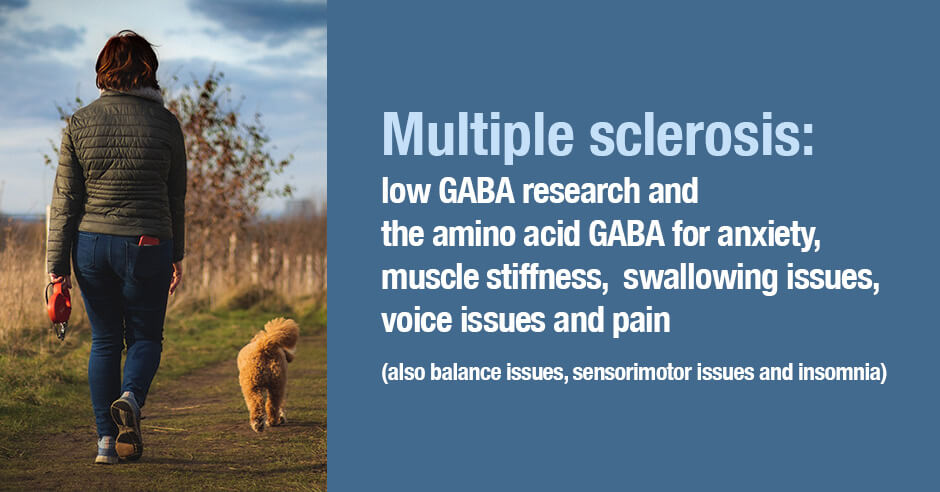
Multiple sclerosis: low GABA research and the amino acid GABA for anxiety, muscle stiffness, swallowing/voice issues and pain

April 14, 2023 By Trudy Scott 12 Comments

Multiple sclerosis and low GABA

I’m excited about the GABA research – an older paper and some new studies – on multiple sclerosis (MS). This means there is the potential for using GABA supplementation in similar ways it’s used with other conditions where anxiety, insomnia and pain are issues. This can include the typical low GABA-type physical anxiety, stiff and tense muscles, insomnia and pain, and also MS-specific issues such as spasticity, laryngospasms, balance issues, swallowing and speaking/voice issues and sensorimotor problems.

Anxiety is common in MS and benzodiazepines are commonly prescribed. The ideal is to use the amino acid that supports GABA, instead of needing to use benzodiazepines. I share some of the GABA/MS research and specific applications for using GABA below.

Prevalence of anxiety/depression in MS and the use of benzodiazepines

Anxiety and depression is common in multiple sclerosis. This paper, The incidence and prevalence of psychiatric disorders in multiple sclerosis: A systematic Review, included 118 studies and found that:

Among population-based studies, the prevalence of anxiety was 21.9% (and up to 35.0% in some papers), 23.7% for depression, 14.8% for alcohol abuse, 5.83% for bipolar disorder, 4.3% for psychosis and 2.5% for substance abuse.

psychiatric comorbidity remains understudied.

What is concerning is that benzodiazepines such as Ativan, Valium and Xanax are commonly prescribed for MS patients for their anxiety, insomnia, spasticity and pain. Recent research, Use of Benzodiazepines and Z-Drugs in Multiple Sclerosis found that benzodiazepine use is more “more common in people with MS than in general population controls, and use of these agents is in persons with MS is often chronic” i.e. for longer than 6 months.

This is problematic given that anything over 2 weeks can cause dependence, tolerance and withdrawal. They can cause balance issues and can actually cause anxiety and insomnia. Someone in my community was totally disabled for over 3 years with “locked shoulder muscles, neck, jaw …internal vibrations… bad headaches, jelly legs, distorted vision like floaters and squiggles and fireworks …cortisol rushes through the body.. And tortured every day.” Read more about her horror story and benzos here.

The ideal is to use the amino acid that supports GABA, instead of needing to use benzodiazepines.

Low GABA plays a role in multiple sclerosis: the research

Low GABA (gamma-aminobutyric acid) plays a role in multiple sclerosis. This paper, Reduced gamma-aminobutyric acid concentration is associated with physical disability in progressive multiple sclerosis states that there are

reduced GABA levels in the hippocampus and sensorimotor cortex of patients, and show that reduced GABA in the sensorimotor cortex is associated with increased motor impairment. Changes in GABA may be a marker of neurodegeneration.

This study supports the idea that modulation of gamma-aminobutyric acid neurotransmission may be an important target for neuroprotection in multiple sclerosis.

Of course, the authors don’t mention using the calming amino acid GABA, but we extrapolate and use what we see clinically in other conditions like autism (more on that below).

Two other papers support the GABA connections. This 2021 paper, Altered Plasma Metabolic Profiles in Chinese Patients With Multiple Sclerosis, observed “a great increase in the levels of L-glutamic acid” in patients with MS. Increased glutamate typically means low GABA levels.

Guanidinoacetic acid (GAA) is an experimental nutrient that is new to me, but the GABA effects and mechanisms are encouraging. In this 2022 paper, Guanidinoacetic Acid as a Nutritional Adjuvant to Multiple Sclerosis Therapy the author states that GAA may benefit MS patients via “modulation of gamma-aminobutyric acid (GABA)ergic neurotransmission and brain oxidant-antioxidant status, or a reduction of glutamate neurotoxicity.’

The author also shares that “demyelination is often characterized by various neurochemical abnormalities in GABA-glutamate metabolism.” 

In case you’re new to MS and demyelination, this Mayo Clinic article describes them as follows:

A demyelinating disease is any condition that causes damage to the protective covering (myelin sheath) that surrounds nerve fibers in your brain, the nerves leading to the eyes (optic nerves) and spinal cord. When the myelin sheath is damaged, nerve impulses slow or even stop, causing neurological problems.

Multiple sclerosis is the most common demyelinating disease of the central nervous system. In this disorder, your immune system attacks the myelin sheath or the cells that produce and maintain it.

This attack causes inflammation and injury to the nerve sheath and ultimately to the nerve fibers that it surrounds. The process can result in multiple areas of scarring (sclerosis).

I gathered some of this research while preparing for an interview with the wonderful Dr. Terry Wahls, MD and author of “The Wahls Protocol.” We were both pleasantly surprised to see these GABA/MS connections.

Using GABA for easing anxiety, overwhelm and insomnia in multiple sclerosis

There is no research that I am aware of that has studied the use of GABA supplementation in MS. We can, however, extrapolate from other conditions and use GABA for easing various MS symptoms based on what we see clinically.

As mentioned above, anxiety is common in MS and if you have the low GABA type of physical anxiety, GABA is worth a trial for easing typical low GABA symptoms of physical anxiety, feelings of overwhelm and intrusive thoughts, stress eating, using alcohol to relax or fit in socially and insomnia. You can read more about GABA for physical anxiety here and see all the low GABA symptoms here.

And here are a few examples/case studies:

  • GABA is a life saver for anxiety, theanine helps at night (insomnia) and 5-HTP makes a significant difference in lessening daily pain
  • GABA is the answer after 40 years of a lump-in-the-throat sensation, nervousness and muscle tension at work

Using GABA to help with balance, and sensorimotor and coordination issues in multiple sclerosis

These case studies illustrate an application for GABA being used for balance, sensorimotor and coordination issues that are common in MS (they are not folks with MS):

  • Half a crushed GABA Calm for my autistic child: sleep, anxiety and sensorimotor skills (writing, horse riding and swimming) improve
  • GABA Calm is a game changer for husband’s sound and tactile hypersensitivity, significant coordination problems and his anxiety

Much of the research in this area has been done with  autism, as illustrated by this GABA Oolong tea study tea in children with autism. They saw improvements in sensorimotor skills, autism profiles, anxiety and sleep.

Using GABA to help with stiff and tense muscles, spasticity, voice issues, laryngospasms and difficulty swallowing in multiple sclerosis

GABA helps to ease stiff and tense muscles in those with physical anxiety. In a similar way we see GABA help with these common MS symptoms: muscle spasms, spasticity, voice issues, laryngospasms and swallowing difficulties (dysphagia affects about a third of folks with MS).

These case studies illustrate an application for GABA being used for some of above issues that are common in MS (they are not folks with MS):

  • Keep GABA powder handy for choking episodes, stridor and panic (and find the ideal dose and be consistent for prevention/easing anxiety)
  • Paroxysmal laryngospasm with low GABA physical-tension-type-anxiety: Is GABA powder rubbed on the inside of the cheek a solution?
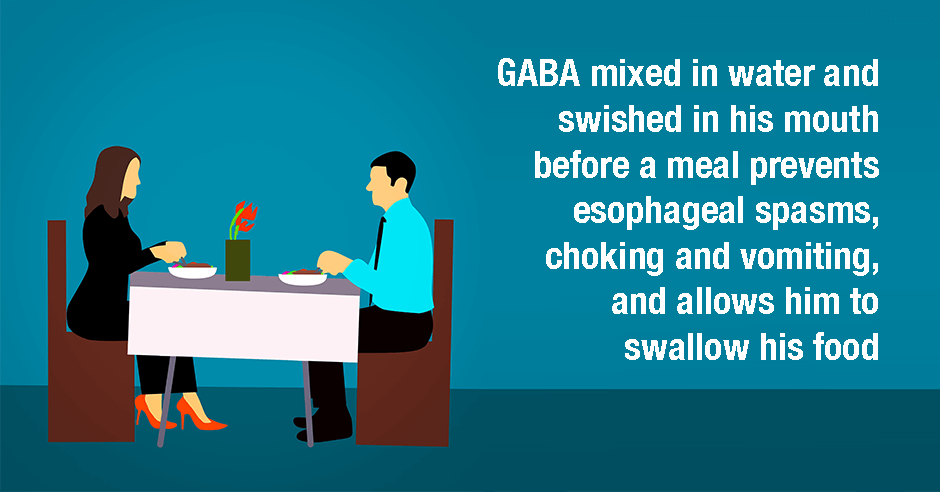
  • GABA mixed in water and swished in his mouth before a meal prevents esophageal spasms /choking/vomiting, and allows him to swallow

Again, there is no research that I am aware of specifically with MS, but clinically I see GABA helping all of the above symptoms related to spasms and muscle tension, often with anxiety and pain as an underlying factor too.

Other MS symptoms that may also be supported by addressing low GABA levels: bowel issues and rectal spasms, bladder issues/spasms, tremor and problems with memory/thinking, and possibly even vision issues.

I really look forward to seeing future research on the use of the amino acid GABA in MS. And I’d love to be involved in some studies if you are associated with a research facility or do research.

Low serotonin and low endorphins are common in multiple sclerosis too

Low GABA is just the tip of the iceberg when it comes to the underlying neurotransmitter imbalances in MS.

The amino acid DPA/d-phenylalanine may help ease some of the low endorphin pain symptoms, weepy kind of depression, and alcohol addiction. You can read about this here.

Tryptophan and/or 5-HTP may help ease some of the low serotonin worry-type of anxiety, fear, panic attacks, obsessing, low mood and MS-specific pain issues and insomnia. I’ll write more about this and the supporting research in a follow-up blog.

If you do have more than one imbalance (which is not unusual), you need to figure out which imbalance you have and address that with the relevant amino acids, one at a time. I have clients pick the area that is more problematic for them and start there.

Resources if you are new to using GABA and the other amino acids as supplements

If you are new to using GABA and the other amino acids as supplements, here is the Amino Acids Mood Questionnaire from The Antianxiety Food Solution (you can see all the symptoms of neurotransmitter imbalances, including low GABA, low serotonin and low endorphins).

If you suspect low levels of any of the neurotransmitters and do not yet have my book, The Antianxiety Food Solution – How the Foods You Eat Can Help You Calm Your Anxious Mind, Improve Your Mood, and End Cravings, I highly recommend getting it and reading it before jumping in and using amino acids on your own so you are knowledgeable. And be sure to share it with the practitioner/health team you or your loved one is working with.

There is an entire chapter on the amino acids and they are discussed throughout the book in the sections on gut health, gluten, blood sugar control, sugar cravings, anxiety and mood issues.

The book doesn’t include product names (per the publisher’s request) so this blog, The Antianxiety Food Solution Amino Acid and Pyroluria Supplements, lists the amino acids that I use with my individual clients and those in my group programs. You can find them all in my online store.

If, after reading this blog and my book, you don’t feel comfortable figuring things out on your own (i.e. doing the symptoms questionnaire and respective amino acids trials), a good place to get help is the GABA QuickStart Program (if you have low GABA symptoms). This is a paid online/virtual group program where you get my guidance and community support.

If you are a practitioner, join us in The Balancing Neurotransmitters: the Fundamentals program. This is also a paid online/virtual program with an opportunity to interact with me and other practitioners who are also using the amino acids.

Do you have multiple sclerosis and has the amino acid GABA helped with your anxiety and fears; muscle stiffness and spasticity; swallowing, laryngospasms and voice problems; balance and sensorimotor issues, insomnia and pain?)

How much has helped and which product do you use?

Do you find sublingual, powder or an opened capsule helps more than swallowing the GABA capsule?

Were you surprised that GABA would help so much?

What else has helped your multiple sclerosis symptoms? And have you also addressed low serotonin and low endorphins with amino acids tryptophan and DPA?

If you have questions and other feedback please share it here too.
Filed Under: Amino Acids, GABA, Multiple sclerosis Tagged With: amino acids, anxiety, balance issues, benzodiazepines, demyelination, GABA, GABA Quickstart online program; Balancing Neurotransmitters: the Fundamentals program for practitioners, insomnia, laryngospasms, multiple sclerosis, muscle stiffness, pain, physical anxiety, sensorimotor issues, spasticity, speaking issues, stiff and tense muscles, swallowing issues, voice issues, voice issues and sensorimotor issues

GABA mixed in water and swished in his mouth before a meal prevents esophageal spasms /choking/vomiting, and allows him to swallow

April 1, 2022 By Trudy Scott 24 Comments

gaba in water

GABA mixed in water and swished in the mouth of an adult male, before a meal, prevents his esophageal spasms, and stops his frequent choking and vomiting, and allows him to swallow his food. A colleague shared her husband’s swallowing issues after she read my blog post about using GABA powder inside the check for laryngospasms. 

This is what she shared:

That [blog] made me think that [GABA] might be useful for my husband‘s esophageal spasms. He frequently can’t get food down during a meal because of them.

So he started mixing 500 mg GABA in a little water and swishing it around his mouth and then swallowing it at the beginning of each meal. Since he started doing that he has not had one spasm, or vomiting episode.

It’s wonderful to hear about her husband’s success with GABA and this unique application of swishing around GABA powder (mixed in water) in his mouth before a meal (I’ll share more on this aspect below).

I asked if they know what the causes of his esophageal spasms are but they don’t yet know:

We can’t figure it out. It appears to be all food. I would expect there to be a trigger-food, but we can’t find it.

The GABA has completely stopped it. Last night we went out to dinner and he forgot to bring GABA with him and immediately started choking. So he went to the nearest vitamin store, (of which there is only one)! Fortunately it was open. As soon as he got back to the restaurant and took his GABA, he was fine.

GABA does work so well for him and offers him some relief while they continue to search for other underlying root cause/s. Until these are found, GABA is supporting overall low GABA levels, associated with physical tension-type anxiety, intrusive thoughts, stiff and tense muscles in other areas of the body and also stress-eating and self-medicating with alcohol in order to relax. More on low GABA symptoms here.

My input on his dosing and swishing

Regarding the dosing and swishing method I have this input:

  • 500 mg GABA is the ideal dose for his needs but this is considered a high dose to start. For low GABA tension-type anxiety, I have clients start with a trial of 125 mg GABA and go up from there. I’d recommend the same approach for someone with issues like this gentleman experiences.
  • GABA is most effective when used sublingually or by opening a capsule on to the tongue or by using GABA powder on the inside of a cheek, rather than swallowing a GABA capsule. For this reason, his method of swishing GABA mixed in water is excellent for achieving the spasm-reducing and relaxing benefits quickly. For some folks doing this 30 minutes before a meal may be more effective than doing it right before eating.

The diagnosis can vary from person to person

The diagnosis can vary from person to person. But as long as there are spasms that are affecting swallowing, doing a trial of GABA is worthwhile in order to determine if it will help.

One example is eosinophilic esophagitis where

Clinical manifestations in infants and toddlers generally include vomiting, food refusal, choking with meals and, less commonly, failure to thrive. Predominant symptoms in school-aged children and adolescents include dysphagia (difficulty swallowing), food impactions, and choking/gagging with meals, particularly when comprised of foods with coarse textures. Other symptoms in this patient population include abdominal/chest pain, vomiting, and regurgitation.

The predominant symptom in adults is dysphagia [difficulty swallowing]; however, intractable heartburn and food avoidance may also be present.

One paper, Esophageal microbiome in active eosinophilic esophagitis and changes induced by different therapies discusses the role of the microbiome and how “an increase in levels of gamma-aminobutyric acid (GABA) …is known to exert a role in esophageal motor function.”

Finding the other root causes (other than low GABA)

Regarding finding the root causes, other than low GABA, this is an important aspect that does need to be pursued. Here are some of the many factors worth considering:

  • Finding food triggers. This can be challenging but an obvious one is gluten which can play a role in eosinophilic esophagitis. Dairy and environmental irritants can be issues too.
  • GERD/reflux needs to be ruled out or addressed. Food sensitivities are often a factor here too.
  • Vagus nerve issues can play a role in digestive issues like this. GABA and vagus nerve exercises helped my cough and voice issues. I recorded all my exercises on video and you can find these here. Fortunately I didn’t have any swallowing or choking episodes at that time but have had a choking episode more recently (GABA did help) so I know how scary this can be.
  • Pyroluria, a social anxiety condition needs to be ruled out or addressed too. This is because nausea, gagging and choking are common symptoms for some individuals.
  • I’d also consider a tongue tie. I just finished reading Tongue Tied: How a Tiny String Under the Tongue Impacts Nursing, Speech, Feeding, and More (my Amazon link) by Richard Baxter, DMD, MS. The focus on babies and children but adults can also benefit from addressing tongue tie issues later in life.
  • Addressing gut health and the microbiome may be one of the keys, as outlined in the paper above.

This is not a comprehensive list and a full functional workup will help to identify all possible root causes.

Related blogs: young boy with choking episodes, lump-in-the throat sensation, anxiety and globus pharyngeus

Here are some related blogs that you may find useful

  • Paroxysmal laryngospasm with low GABA physical-tension-type-anxiety: Is GABA powder rubbed on the inside of the cheek a solution? (this is the blog that inspired my colleague to have her husband do the GABA mouth swishing)
  • GABA helps a stressed young boy with episodes of “choking” or tightening in his throat
  • GABA is the answer after 40 years of a lump-in-the-throat sensation, nervousness and muscle tension at work
  • Anxiety and globus pharyngeus (lump in the throat): GABA to the rescue?

Resources if you are new to using GABA as a supplement

If you are new to using the the amino acid GABA as a supplement, here is the Amino Acids Mood Questionnaire from The Antianxiety Food Solution (you can see the low GABA and other low neurotransmitter symptoms).

If you suspect low levels of GABA or low serotonin and do not yet have my book, The Antianxiety Food Solution – How the Foods You Eat Can Help You Calm Your Anxious Mind, Improve Your Mood, and End Cravings, I highly recommend getting it and reading it before jumping in and using amino acids on your own so you are knowledgeable. And be sure to share it with the team you or your loved one is working with.

The book doesn’t include product names (per the publisher’s request) so this blog, The Antianxiety Food Solution Amino Acid and Pyroluria Supplements, lists the GABA products that I use with my individual clients and those in my group programs.

If you don’t feel comfortable reading my book, doing the low GABA symptoms questionnaire and doing trials of GABA on your own, you can get guidance from me in the GABA Quickstart Program (online/virtual).

If you are a practitioner, join us in The Balancing Neurotransmitters: the Fundamentals program. It’s an opportunity to interact with me and other practitioners who are also using the amino acids.

Have you experienced throat or esophageal spasms and difficulty swallowing with choking and/or vomiting.

And do you have the low GABA physical-tension-type-anxiety symptoms?  What else is a trigger for you and do you have a diagnosis?

If you’ve already been using GABA with success for easing your anxiety, have you noticed a reduction in your swallowing issues?

Have you ever used GABA in this way to help your swallowing issues?

If you’re a practitioner please share what you have seen?

Feel free to ask your questions here too.

Filed Under: Amino Acids, Anxiety, GABA, Gluten Tagged With: anxiety, can’t get food down, choking, choking sensation, eosinophilic esophagitis, esophageal spasms, GABA, GABA Quickstart, globus pharyngeus, gluten, gut health, laryngospasms, lump in the throat, physical-tension, pyroluria, swallow, swallowing issues, swished, tongue tie, trigger-food, vomiting

Primary Sidebar

NEW! GABA QuickStart Homestudy (with special intro pricing)

gaba quickstart homestudy

Free Report

9 Great Questions Women Ask about Food, Mood and their Health

You'll also receive a complimentary subscription to my ezine "Food, Mood and Gal Stuff"


Connect with me

Popular Posts

  • Amino Acids Mood Questionnaire from The Antianxiety Food Solution
  • The Antianxiety Food Solution Amino Acid and Pyroluria Supplements
  • Pyroluria Questionnaire from The Antianxiety Food Solution
  • Collagen and gelatin lower serotonin: does this increase your anxiety and depression?
  • Tryptophan for the worry-in-your-head and ruminating type of anxiety
  • GABA for the physical-tension and stiff-and-tense-muscles type of anxiety
  • The Antianxiety Food Solution by Trudy Scott
  • Seriphos Original Formula is back: the best product for anxiety and insomnia caused by high cortisol
  • Am I an anxious introvert because of low zinc and vitamin B6? My response to Huffington Post blog
  • Vagus nerve rehab with GABA, breathing, humming, gargling and key nutrients

Recent Posts

  • What do I use instead of Seriphos to help lower high cortisol that is affecting my sleep and making me anxious at night?
  • BeSerene™ GABA/theanine cream eases severe muscle tension in her neck/shoulders, prevents her bad headaches and quells her anxiety
  • How the correct approach, dose and sublingual use of GABA can be calming and not cause a flushed and itchy face and neck
  • The amino acid glutamine improves low mood by addressing gut health, and it has calming effects too
  • Flight anxiety with heightened breath, physical tension and also fearing the worst (the role of low GABA and low serotonin)

Categories

  • 5-HTP
  • AB575
  • Addiction
  • ADHD
  • Adrenals
  • Alcohol
  • Allergies
  • Alzheimer's disease
  • Amino Acids
  • Anger
  • Antianxiety
  • Antianxiety Food Solution
  • Antidepressants
  • Anxiety
  • Anxiety and panic
  • Autism
  • Autoimmunity
  • benzodiazapines
  • Bipolar disorder
  • Books
  • Caffeine
  • Cancer
  • Candida
  • Children/Teens
  • Collagen
  • Cooking equipment
  • Coronavirus/COVID-19
  • Cravings
  • Depression
  • Detoxification
  • Diabetes
  • Diet
  • DPA/DLPA
  • Drugs
  • EFT/Tapping
  • EMF
  • EMFs
  • Emotional Eating
  • Endorphins
  • Environment
  • Essential oils
  • Events
  • Exercise
  • Fear
  • Fear of public speaking
  • Fertility and Pregnancy
  • Fish
  • Food
  • Food and mood
  • Functional neurology
  • GABA
  • Gene polymorphisms
  • General Health
  • Giving
  • Giving back
  • Glutamine
  • Gluten
  • GMOs
  • Gratitude
  • Gut health
  • Heart health/hypertension
  • Histamine
  • Hormone
  • Hyperparathyroidism
  • Hypoglycemia
  • Immune system
  • Inflammation
  • Insomnia
  • Inspiration
  • Introversion
  • Joy and happiness
  • Ketogenic diet
  • Lithium orotate
  • Looking awesome
  • Lyme disease and co-infections
  • MCAS/histamine
  • Medication
  • Men's health
  • Mental health
  • Mercury
  • Migraine
  • Mold
  • Movie
  • MTHFR
  • Multiple sclerosis
  • Music
  • NANP
  • Nature
  • Nutritional Psychiatry
  • OCD
  • Osteoporosis
  • Oxalates
  • Oxytocin
  • Pain
  • Paleo
  • Parasites
  • Parkinson’s disease
  • PCOS
  • People
  • PMS
  • Postpartum
  • PTSD/Trauma
  • Pyroluria
  • Questionnaires
  • Real whole food
  • Recipes
  • Research
  • Schizophrenia
  • serotonin
  • SIBO
  • Sleep
  • Special diets
  • Sports nutrition
  • Stress
  • Sugar addiction
  • Sugar and mood
  • Supplements
  • Teens
  • Testimonials
  • Testing
  • The Anxiety Summit
  • The Anxiety Summit 2
  • The Anxiety Summit 3
  • The Anxiety Summit 4
  • The Anxiety Summit 5
  • The Anxiety Summit 6
  • Thyroid
  • Thyroid health
  • Toxins
  • Tryptophan
  • Tyrosine
  • Uncategorized
  • Vegan/vegetarian
  • Women's health
  • Yoga

Archives

  • October 2025
  • September 2025
  • August 2025
  • July 2025
  • June 2025
  • May 2025
  • April 2025
  • March 2025
  • February 2025
  • January 2025
  • November 2024
  • October 2024
  • September 2024
  • August 2024
  • July 2024
  • June 2024
  • May 2024
  • April 2024
  • March 2024
  • February 2024
  • January 2024
  • December 2023
  • November 2023
  • October 2023
  • September 2023
  • August 2023
  • July 2023
  • June 2023
  • May 2023
  • April 2023
  • March 2023
  • February 2023
  • January 2023
  • December 2022
  • November 2022
  • October 2022
  • September 2022
  • August 2022
  • July 2022
  • June 2022
  • May 2022
  • April 2022
  • March 2022
  • February 2022
  • January 2022
  • December 2021
  • November 2021
  • October 2021
  • September 2021
  • August 2021
  • July 2021
  • June 2021
  • May 2021
  • April 2021
  • March 2021
  • February 2021
  • January 2021
  • December 2020
  • November 2020
  • October 2020
  • September 2020
  • August 2020
  • July 2020
  • June 2020
  • May 2020
  • April 2020
  • March 2020
  • February 2020
  • January 2020
  • December 2019
  • November 2019
  • October 2019
  • September 2019
  • August 2019
  • July 2019
  • June 2019
  • May 2019
  • April 2019
  • March 2019
  • February 2019
  • January 2019
  • December 2018
  • November 2018
  • October 2018
  • September 2018
  • August 2018
  • July 2018
  • June 2018
  • May 2018
  • April 2018
  • March 2018
  • February 2018
  • January 2018
  • December 2017
  • November 2017
  • October 2017
  • September 2017
  • August 2017
  • July 2017
  • June 2017
  • May 2017
  • April 2017
  • March 2017
  • February 2017
  • January 2017
  • December 2016
  • November 2016
  • October 2016
  • September 2016
  • August 2016
  • July 2016
  • June 2016
  • May 2016
  • April 2016
  • March 2016
  • February 2016
  • January 2016
  • December 2015
  • November 2015
  • October 2015
  • September 2015
  • August 2015
  • July 2015
  • June 2015
  • May 2015
  • April 2015
  • March 2015
  • February 2015
  • January 2015
  • December 2014
  • November 2014
  • October 2014
  • September 2014
  • August 2014
  • July 2014
  • June 2014
  • May 2014
  • April 2014
  • March 2014
  • February 2014
  • January 2014
  • December 2013
  • November 2013
  • October 2013
  • September 2013
  • August 2013
  • July 2013
  • June 2013
  • May 2013
  • April 2013
  • March 2013
  • February 2013
  • January 2013
  • December 2012
  • November 2012
  • October 2012
  • August 2012
  • July 2012
  • June 2012
  • May 2012
  • April 2012
  • March 2012
  • February 2012
  • January 2012
  • December 2011
  • November 2011
  • October 2011
  • September 2011
  • August 2011
  • July 2011
  • June 2011
  • May 2011
  • April 2011
  • March 2011
  • February 2011
  • January 2011
  • December 2010
  • October 2010
  • September 2010
  • July 2010
  • May 2010
  • April 2010
  • March 2010
  • February 2010
  • January 2010
  • November 2009

Share the knowledge!

The above statements have not been evaluated by the Food and Drug Administration. Products listed in this website are not intended to diagnose, treat, cure or prevent any disease.

The information provided on this site is for informational and educational purposes only and is not intended as a substitute for advice from your physician or other health care professional. You should consult with a healthcare professional before starting or modifying any diet, exercise, or supplementation program, before taking or stopping any medication, or if you have or suspect you may have a health problem.


Copyright © 2026 Trudy Scott. All Rights Reserved. | Privacy | Terms and Conditions | Refund Policy | Medical Disclaimer

Free Report

9 Great Questions Women Ask about Food, Mood and their Health

You’ll also receive a complimentary subscription to my ezine “Food, Mood and Gal Stuff”