• Skip to primary navigation
  • Skip to main content
  • Skip to primary sidebar

everywomanover29 blog

Food, Mood and Women's Health – Be your healthiest, look and feel great!

  • Blog
  • About
  • Services
  • Store
  • Resources
  • Testimonials
  • The Book
  • Contact
  • Search this site

substance P

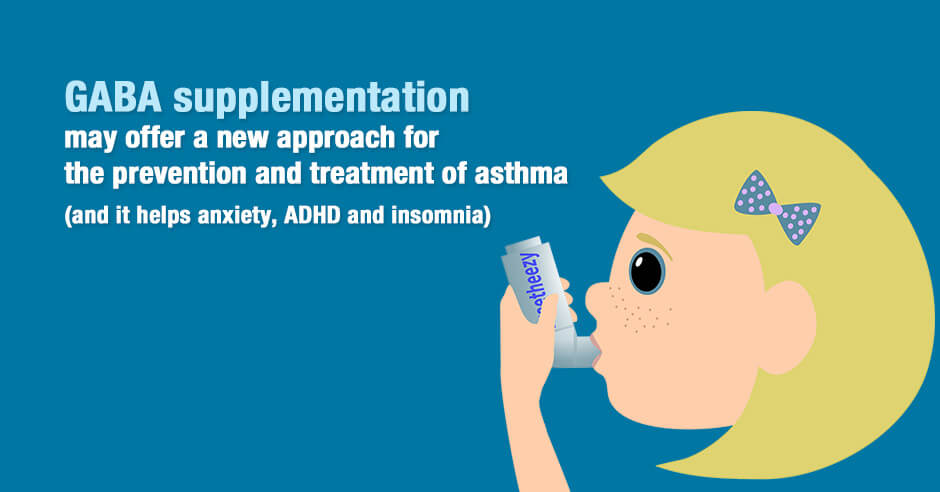
GABA supplementation may offer a new approach for the prevention and treatment of asthma (and it helps anxiety, ADHD and insomnia)

December 16, 2022 By Trudy Scott 12 Comments

gaba and asthma

If you’re already taking the amino acid GABA for physical anxiety, have you noticed if it’s also helping to ease your asthma symptoms too? This may sound surprising but research shows GABA may reduce inflammation and spasms and help with asthma symptoms via these mechanisms. What’s encouraging is the fact that GABA supplementation also helps with anxiety, obesity, ADHD and insomnia which commonly occur with asthma and can be associated with inflammation too. It’s so important to be addressing the root causes of asthma because of the many neuropsychiatric side-effects of  asthma medications. This blog addresses all of these topics.

We’ll start with the research first. In this study, Effect of gamma-aminobutyric acid treatment on plasma substance P and calcitonin gene-related peptide levels in children with asthma, of 75 children with asthma, 36 children were in the GABA treatment group and received oral GABA (25-30 mg/kg per day) in addition to standard asthma medications.

The authors propose that airway inflammation may be a factor in asthma and GABA helps because it reduces SP (substance P) and CGRP (calcitonin gene-related peptide), easing neurogenic inflammation and tracheal spasms.

The conclusion of the study is that oral GABA:

can significantly decrease plasma levels of SP and CGRP in children suffering from acute asthma.

It may offer a new approach for the prevention and treatment of asthma.

(this is my best translation from the Chinese paper).

Dosing of GABA for asthma

The children in the study group received oral GABA of  25-30 mg/kg per day. For a 100 lb /45 kg child this would equate to 1125 mg -1350 mg of GABA per day.

As I always share, I don’t recommend using GABA based on the weight of the person and I consider this a high dose. For adults, 125 mg GABA is a good starting dose with 125 mg often used 2-4 times a day. For a child, ¼ to ⅓ this dose is typically good to start with. All that said, many adults and children with asthma and anxiety need higher doses than what they initially start with.

It’s also worth noting that the oral dose of GABA was swallowed so it’s possible (and very likely) that more was needed than if it was used sublingually or with the capsule opened or a powder or a liposomal form.

GABA is seldom recommended for asthma – more recent research supports this approach

This is not new research – the paper was published in 2013 – but I seldom see it discussed or hear about practitioners recommending GABA for asthma.

A more recent paper, Neuroimmune Pathophysiology in Asthma (published in 2021) supports this and discusses the role of neurotransmitters (including GABA and serotonin) and neuropeptides (including SP, CGRP and others) in asthma. The authors suggest “that regulating the effects of neurotransmitters and neuropeptides represents a potential novel approach for the treatment of asthma.”

Why we need to consider GABA – the neuropsychiatric side effects of asthma medications

Exploring the use of GABA and these approaches is especially important given the neuropsychiatric side effects of asthma medications. In this study (published in March this year), Neuropsychiatric adverse drug reactions induced by montelukast impair the quality of life in children with asthma

Neuropsychiatric ADRs (adverse drug reactions) were reported in 78 (62.4%) of 125 patients, who recovered when the drug was discontinued.

These were children of 3-18 years taking montelukast for the first time. The good news is that they recovered when the drug was stopped.

The bad news is there is no information on how many kids who have been prescribed this class of medication are subsequently prescribed psychiatric medications.

This concern needs to be considered for all asthma medications: there are similar adverse effects with antihistamine and inhaled corticosteroid medications.

GABA helps with other conditions where spasms are common

The study results are very encouraging and support what I see clinically with asthma and other conditions where spasms are common. These include

  • proctalgia fugax/rectal spasms
  • laryngospasms
  • vagus nerve issues with a chronic cough and throat spasms and
  • globus pharyngeus/ lump-in-the-throat

GABA helps with all of the above and the non-allergic comorbidities seen with asthma.

Asthma in children and non-allergic comorbidities (obesity, depression and anxiety, ADHD and insomnia)

As stated in this paper, Paediatric asthma and non-allergic comorbidities: A review of current risk and proposed mechanisms “It is increasingly recognized that children with asthma are at a higher risk of other non-allergic concurrent diseases than the non-asthma population.” These include obesity, depression and anxiety, neurodevelopmental disorders (such as ADHD), sleep disorders and autoimmune diseases.

This paper looks at mechanisms and inflammation is a common theme except when it comes to anxiety and depression. Given that this paper was published this year and all that we now know  about nutritional psychiatry and neuroinflammation and anxiety, it’s clearly lacking in this aspect.

Clinically, we see how GABA can help with obesity (and cravings or stress-eating), depression and anxiety, ADHD and insomnia, as illustrated by these case studies:

  • GABA for ending sugar cravings (and anxiety and insomnia)
  • GABA for easing physical anxiety and tension: some questions and answers
  • The seasonality of GABA: worsening anxiety, insomnia and intrusive thoughts in winter (and the need for increased GABA supplementation)
  • GABA for children: ADHD, focus issues, irritability, anxiety and tantrums

I see similar comorbidities (the occurrence of more than one disorder at the same time) in adults and GABA can be used safely with adults and children.

Asthma from a functional medicine approach

There is clearly more to asthma than only GABA. This this article on natural remedies for asthma covers diet (eat real good quality food and avoid junk food), nutrients like vitamin D, zinc and others, and allergens – and all this needs to be investigated and addressed with a functional medicine approach.

Dr. Axe does mention stress and anxiety being a trigger: “It’s well-known that stress increases the severity and frequency of asthmatic attacks because it hinders immune function and raises inflammation.” He mentions stress-reduction techniques and breathing. I say let’s add GABA to the mix too.

Resources if you are new to using GABA and other amino acids as supplements

If you are new to using GABA or any of the other amino acids as supplements, here is the Amino Acids Mood Questionnaire from The Antianxiety Food Solution (you can see all the symptoms of neurotransmitter imbalances, including low GABA and low serotonin).

If you suspect low levels of any of the neurotransmitters and do not yet have my book, The Antianxiety Food Solution – How the Foods You Eat Can Help You Calm Your Anxious Mind, Improve Your Mood, and End Cravings, I highly recommend getting it and reading it before jumping in and using amino acids on your own so you are knowledgeable. And be sure to share it with the practitioner/health team you or your loved one is working with.

There is an entire chapter on the amino acids and they are discussed throughout the book in the sections on gut health, gluten, blood sugar control, sugar cravings, self-medicating with alcohol and more.

The book doesn’t include product names (per the publisher’s request) so this blog, The Antianxiety Food Solution Amino Acid and Pyroluria Supplements, lists the amino acids that I use with my individual clients and those in my group programs. You can find them all in my online store.

If, after reading this blog and my book, you don’t feel comfortable figuring things out on your own (i.e. doing the symptoms questionnaire and respective amino acids trials), a good place to get help is the GABA QuickStart Program (if you have low GABA symptoms). This is a paid online/virtual group program where you get my guidance and community support.

If you are a practitioner, join us in The Balancing Neurotransmitters: the Fundamentals program. This is also a paid online/virtual program with an opportunity to interact with me and other practitioners who are also using the amino acids.

Has GABA helped ease your physical anxiety and asthma symptoms too?

What about obesity/cravings, ADHD and insomnia as well?

Have you or one of your children been adversely impacted by asthma medications? If yes please share which medications and what symptoms were experienced.

What functional medicine and nutritional approaches have helped your asthma symptoms?

Feel free to post your questions and feedback in the comments below.
Filed Under: ADHD, Anxiety, Cravings, GABA, Insomnia Tagged With: ADHD, ADHD and insomnia; GABA Quickstart online program; Balancing Neurotransmitters: the Fundamentals program for practitioners, anxiety, asthma, asthma medications, calcitonin gene-related peptide, children, cravings, depression, GABA, Inflammation, insomnia, neurogenic inflammation, neuropsychiatric, obesity, physical anxiety, side-effects, spasms, substance P, tracheal spasms

Acupuncture boosts GABA to reduce back pain and oral GABA further reduces the pain

August 18, 2017 By Trudy Scott 13 Comments

I fell and injured my back last week but I am doing much better already. I’m going to be sharing a series of articles on post what I’m doing to ease the pain and heal – acupuncture and cupping being two of the approaches. As well as heat (with a hot water bottle), I’m also using a long list of nutrients such as:

  • high-dose fish oil and curcumin (as anti-inflammatories)
  • relaxing magnesium
  • arnica for bruising
  • GABA for relaxing my muscles and helping with the acute pain, and for easing the fear and anxiety (initially I was very fearful I had a serious back injury) and
  • DPA (d-phenylalanine) for the endorphin-boosting pain-relief

Today I’m going to share some research on GABA and how it helps with pain reduction and muscle tension, and how the acupuncture actually boosts GABA (as well as endorphins) to reduce pain.

Based on the examination I have soft tissue bruising around the lumbar area (L3 to L5). Sitting had been impossible until 2 days ago and even now I have to alternate between sitting and standing. I also twisted my ankle in the fall so initially standing was even challenging!  

I had one acupuncture and cupping session last Saturday and will be having another one this coming Saturday. I felt some immediate relief after this session and my back has been getting better and better each day.

Oral sublingual GABA for the acute pain and muscle relaxation

In the interim, between acupuncture/cupping sessions I felt I needed relaxing support for my stiff and spasming back muscles so I immediately started using high doses of GABA for the acute pain. And it’s been working amazingly well.

Right after the fall I was taking 1g of GABA powder every few hours (held in my mouth for 1-2 minutes) and now I only need to take it 2 or 3 times a day as needed. This is the dose I started with only because I know this dose works for me for the rectal spasms I sometimes experience. I always have clients do a trial and start low and increase slowly based on need and response. The starting dose is typically 125mg as found in GABA Calm but I suspect this is likely too low if you are someone needing pain relief.

With the oral sublingual GABA I feel relief from the pain within 5 minutes and it lasts a few hours.

My pain level was 10/10 and is now down to 2/10 most of the time with a few times during the day when it is 4/10. I’m walking, standing, able to turn over in bed and sleep through the night, and able to get off the bed without assistance. I can now also put on my yoga pants, socks and shoes myself – these were impossible tasks in the first 5 days after my fall!

Acupuncture boosts GABA and downregulates substance P and CGRP

I have not been able to find research on oral GABA for easing pain but do have some research to share. In this first paper, Effect of electroacupuncture on thermal pain threshold and expression of calcitonin-gene related peptide, substance P and γ-aminobutyric acid in the cervical dorsal root ganglion of rats with incisional neck pain the authors state that it is known that acupuncture therapy effectively reduces post-surgical pain, but its mechanism of action remains unclear. The aim of the study was to investigate:

whether expression of γ-aminobutyric acid (GABA) and the neuropeptides substance P (SP) and calcitonin gene-related peptide (CGRP) in the primary sensory neurons of cervical dorsal root ganglia (DRG) are involved in electroacupuncture (EA)-induced analgesia [pain reduction]in a rat model of incisional neck pain.

The conclusion is as follows: acupuncture increases the pain threshold i.e. it reduces pain and the mechanism is likely related to

downregulation of pronociceptive mediators SP/CGRP and upregulation of the inhibitory transmitter GABA in the primary sensory neurons of cervical DRGs

In case you’re not familiar with the terms substance P (SP) and calcitonin gene-related peptide (CGRP) I’m going to explain what they are, how they are connected to pain and why downregulation helps with pain reduction.

What is substance P (SP)?

Founders and Directors of Neuroplastix, Marla Golden, DO and Michael Moskowitz, MD share this about substance-P (SP), the main pain neurotransmitter:

It has five basic functions in the body. They are pain, inflammation, anxiety, depression and nausea. Even though these seem like negative experiences, they are important for survival. Problems arise with excessive production and release of Substance-P.

They share a very descriptive video that:

depicts a nerve injury causing a massive release of Substance-P, up to 5 times greater than in acute pain. This diffuses out to three to five times more local area. This is a major way that the pain map expands in persistent pain and keeps the pain going.

Be sure to watch the video on this page.

What is calcitonin gene-related peptide (CGRP)?

Calcitonin gene-related peptide (CGRP) is relatively new marker for pain as this recent review paper discusses – Calcitonin gene-related peptide and pain: a systematic review

The present review revealed the association between measured CGRP levels and somatic, visceral, neuropathic and inflammatory pain. These data suggest that CGRP may act as a neuromodulator in non-headache pain conditions. However, more studies are needed to fully understand the role of CGRP in nociceptive processing and therapy of chronic pain.

Oral GABA lowers substance P and CGRP in asthmatic children

As I mentioned there is no research on the effects of oral GABA on pain reduction so I’m going to extrapolate from this study on asthma – Effect of gamma-aminobutyric acid treatment on plasma substance P and calcitonin gene-related peptide levels in children with asthma.

In this study of 75 children with asthma, 36 children were in the GABA treatment group and received oral GABA (25-30 mg/kg per day) in addition to standard asthma medications. For a 100 lb /45 kg child this would equate to 1125-1350mg of GABA per day.

The conclusion of the study is that oral GABA

can significantly decrease plasma levels of SP and CGRP in children suffering from acute asthma.

The authors propose that airway inflammation may be a factor in asthma and since GABA reduces SP and CGRP, eases neurogenic inflammation and tracheal spasms, it may offer a new approach for the prevention and treatment of asthma (this is my best translation from the Chinese paper).

In summary, oral GABA, used sublingually has helped me tremendously with the acute pain of my muscle injury, and it helped ease the anxiety and fear I felt right after the incident.

As you read above, I am using more than just the GABA, but because it works so quickly I saw benefits right away and had hope while all the other approaches are starting to slowly help too. I just love that I get to experience this first-hand and share it with you – although I would have preferred not falling and that initial severe pain!

I also have a good history of GABA helping me so this was a clue for me to try it now. It was my life-saver when I first experienced my terrible anxiety and panic attacks and helped me tremendously within a few days.  I also did very well with GABA when I used it for throat spasms during  my vagus nerve issue after that scary plane ride, and another incidence when I was getting terrible ice-pick type headaches that turned out to be a jammed neck issue.   I really am a GABA girl aren’t I!?

I have used high doses of GABA like this with one client who had a back and neck injury after a construction accident. It also helped him tremendously.

Have you used high doses of GABA for muscle injuries and seen improvements like this? Or do you use this approach with your clients/patients?

Filed Under: Anxiety, GABA, Pain Tagged With: Acupuncture, anxiety, asthma, back, calcitonin gene-related peptide, CGRP, GABA, Inflammation, muscle injury, pain, SP, substance P

Primary Sidebar

NEW! GABA QuickStart Homestudy (with special intro pricing)

gaba quickstart homestudy

Free Report

9 Great Questions Women Ask about Food, Mood and their Health

You'll also receive a complimentary subscription to my ezine "Food, Mood and Gal Stuff"


Connect with me

Popular Posts

  • Amino Acids Mood Questionnaire from The Antianxiety Food Solution
  • The Antianxiety Food Solution Amino Acid and Pyroluria Supplements
  • Pyroluria Questionnaire from The Antianxiety Food Solution
  • Collagen and gelatin lower serotonin: does this increase your anxiety and depression?
  • Tryptophan for the worry-in-your-head and ruminating type of anxiety
  • GABA for the physical-tension and stiff-and-tense-muscles type of anxiety
  • The Antianxiety Food Solution by Trudy Scott
  • Seriphos Original Formula is back: the best product for anxiety and insomnia caused by high cortisol
  • Am I an anxious introvert because of low zinc and vitamin B6? My response to Huffington Post blog
  • Vagus nerve rehab with GABA, breathing, humming, gargling and key nutrients

Recent Posts

  • What do I use instead of Seriphos to help lower high cortisol that is affecting my sleep and making me anxious at night?
  • BeSerene™ GABA/theanine cream eases severe muscle tension in her neck/shoulders, prevents her bad headaches and quells her anxiety
  • How the correct approach, dose and sublingual use of GABA can be calming and not cause a flushed and itchy face and neck
  • The amino acid glutamine improves low mood by addressing gut health, and it has calming effects too
  • Flight anxiety with heightened breath, physical tension and also fearing the worst (the role of low GABA and low serotonin)

Categories

  • 5-HTP
  • AB575
  • Addiction
  • ADHD
  • Adrenals
  • Alcohol
  • Allergies
  • Alzheimer's disease
  • Amino Acids
  • Anger
  • Antianxiety
  • Antianxiety Food Solution
  • Antidepressants
  • Anxiety
  • Anxiety and panic
  • Autism
  • Autoimmunity
  • benzodiazapines
  • Bipolar disorder
  • Books
  • Caffeine
  • Cancer
  • Candida
  • Children/Teens
  • Collagen
  • Cooking equipment
  • Coronavirus/COVID-19
  • Cravings
  • Depression
  • Detoxification
  • Diabetes
  • Diet
  • DPA/DLPA
  • Drugs
  • EFT/Tapping
  • EMF
  • EMFs
  • Emotional Eating
  • Endorphins
  • Environment
  • Essential oils
  • Events
  • Exercise
  • Fear
  • Fear of public speaking
  • Fertility and Pregnancy
  • Fish
  • Food
  • Food and mood
  • Functional neurology
  • GABA
  • Gene polymorphisms
  • General Health
  • Giving
  • Giving back
  • Glutamine
  • Gluten
  • GMOs
  • Gratitude
  • Gut health
  • Heart health/hypertension
  • Histamine
  • Hormone
  • Hyperparathyroidism
  • Hypoglycemia
  • Immune system
  • Inflammation
  • Insomnia
  • Inspiration
  • Introversion
  • Joy and happiness
  • Ketogenic diet
  • Lithium orotate
  • Looking awesome
  • Lyme disease and co-infections
  • MCAS/histamine
  • Medication
  • Men's health
  • Mental health
  • Mercury
  • Migraine
  • Mold
  • Movie
  • MTHFR
  • Multiple sclerosis
  • Music
  • NANP
  • Nature
  • Nutritional Psychiatry
  • OCD
  • Osteoporosis
  • Oxalates
  • Oxytocin
  • Pain
  • Paleo
  • Parasites
  • Parkinson’s disease
  • PCOS
  • People
  • PMS
  • Postpartum
  • PTSD/Trauma
  • Pyroluria
  • Questionnaires
  • Real whole food
  • Recipes
  • Research
  • Schizophrenia
  • serotonin
  • SIBO
  • Sleep
  • Special diets
  • Sports nutrition
  • Stress
  • Sugar addiction
  • Sugar and mood
  • Supplements
  • Teens
  • Testimonials
  • Testing
  • The Anxiety Summit
  • The Anxiety Summit 2
  • The Anxiety Summit 3
  • The Anxiety Summit 4
  • The Anxiety Summit 5
  • The Anxiety Summit 6
  • Thyroid
  • Thyroid health
  • Toxins
  • Tryptophan
  • Tyrosine
  • Uncategorized
  • Vegan/vegetarian
  • Women's health
  • Yoga

Archives

  • October 2025
  • September 2025
  • August 2025
  • July 2025
  • June 2025
  • May 2025
  • April 2025
  • March 2025
  • February 2025
  • January 2025
  • November 2024
  • October 2024
  • September 2024
  • August 2024
  • July 2024
  • June 2024
  • May 2024
  • April 2024
  • March 2024
  • February 2024
  • January 2024
  • December 2023
  • November 2023
  • October 2023
  • September 2023
  • August 2023
  • July 2023
  • June 2023
  • May 2023
  • April 2023
  • March 2023
  • February 2023
  • January 2023
  • December 2022
  • November 2022
  • October 2022
  • September 2022
  • August 2022
  • July 2022
  • June 2022
  • May 2022
  • April 2022
  • March 2022
  • February 2022
  • January 2022
  • December 2021
  • November 2021
  • October 2021
  • September 2021
  • August 2021
  • July 2021
  • June 2021
  • May 2021
  • April 2021
  • March 2021
  • February 2021
  • January 2021
  • December 2020
  • November 2020
  • October 2020
  • September 2020
  • August 2020
  • July 2020
  • June 2020
  • May 2020
  • April 2020
  • March 2020
  • February 2020
  • January 2020
  • December 2019
  • November 2019
  • October 2019
  • September 2019
  • August 2019
  • July 2019
  • June 2019
  • May 2019
  • April 2019
  • March 2019
  • February 2019
  • January 2019
  • December 2018
  • November 2018
  • October 2018
  • September 2018
  • August 2018
  • July 2018
  • June 2018
  • May 2018
  • April 2018
  • March 2018
  • February 2018
  • January 2018
  • December 2017
  • November 2017
  • October 2017
  • September 2017
  • August 2017
  • July 2017
  • June 2017
  • May 2017
  • April 2017
  • March 2017
  • February 2017
  • January 2017
  • December 2016
  • November 2016
  • October 2016
  • September 2016
  • August 2016
  • July 2016
  • June 2016
  • May 2016
  • April 2016
  • March 2016
  • February 2016
  • January 2016
  • December 2015
  • November 2015
  • October 2015
  • September 2015
  • August 2015
  • July 2015
  • June 2015
  • May 2015
  • April 2015
  • March 2015
  • February 2015
  • January 2015
  • December 2014
  • November 2014
  • October 2014
  • September 2014
  • August 2014
  • July 2014
  • June 2014
  • May 2014
  • April 2014
  • March 2014
  • February 2014
  • January 2014
  • December 2013
  • November 2013
  • October 2013
  • September 2013
  • August 2013
  • July 2013
  • June 2013
  • May 2013
  • April 2013
  • March 2013
  • February 2013
  • January 2013
  • December 2012
  • November 2012
  • October 2012
  • August 2012
  • July 2012
  • June 2012
  • May 2012
  • April 2012
  • March 2012
  • February 2012
  • January 2012
  • December 2011
  • November 2011
  • October 2011
  • September 2011
  • August 2011
  • July 2011
  • June 2011
  • May 2011
  • April 2011
  • March 2011
  • February 2011
  • January 2011
  • December 2010
  • October 2010
  • September 2010
  • July 2010
  • May 2010
  • April 2010
  • March 2010
  • February 2010
  • January 2010
  • November 2009

Share the knowledge!

The above statements have not been evaluated by the Food and Drug Administration. Products listed in this website are not intended to diagnose, treat, cure or prevent any disease.

The information provided on this site is for informational and educational purposes only and is not intended as a substitute for advice from your physician or other health care professional. You should consult with a healthcare professional before starting or modifying any diet, exercise, or supplementation program, before taking or stopping any medication, or if you have or suspect you may have a health problem.


Copyright © 2026 Trudy Scott. All Rights Reserved. | Privacy | Terms and Conditions | Refund Policy | Medical Disclaimer

Free Report

9 Great Questions Women Ask about Food, Mood and their Health

You’ll also receive a complimentary subscription to my ezine “Food, Mood and Gal Stuff”