• Skip to primary navigation
  • Skip to main content
  • Skip to primary sidebar

everywomanover29 blog

Food, Mood and Women's Health – Be your healthiest, look and feel great!

  • Blog
  • About
  • Services
  • Store
  • Resources
  • Testimonials
  • The Book
  • Contact
  • Search this site

stiff and tense muscles

Why does chewable GABA make me run to the bathroom and what GABA do I use instead?

January 4, 2019 By Trudy Scott 9 Comments

The amino acid GABA (gamma-amino butyric acid) helps to raise GABA neurotransmitter levels and ease the physical symptoms of anxiety: stiff and tense muscles as well as feelings of stress, overwhelm and often panic attacks and overthinking/unwanted thoughts too. It can also help with the visceral pain of IBS/SIBO and insomnia. GABA eases symptoms very quickly, often within 5 minutes but is most effective when taken sublingually, is chewed or is opened on to the tongue.

I often get feedback from individuals in my community saying GABA doesn’t work for them for one reason or another. Digestive issues are a common problem and one question I often hear is the one about chewable GABA and gas, bloating and/or diarrhea.

Rav asks this question on the blog:

What about individuals with IBS (irritable bowel syndrome) or Colitis who cannot take chewable tablets? I used to take the GABA-Pro by Bioclinic Naturals and it just made me run to the bathroom. Should those with digestive trouble steer clear from chewable forms of GABA?

This is an excellent question and something you always need to consider when having digestive upset: is it due to a new supplement I’ve recently added? You have to find a product that works for you and we’re all different. Just like we need to read labels with food we need to read and understand the labels of supplements too.

There are a number of factors to consider: sugar alcohols, natural flavors and plant-based cellulose ingredients.

Let’s look at sugar alcohols first

Many of the chewable or sublingual forms of GABA contain sugar alcohols which can be problematic and cause digestive upset and often explosive diarrhea. Sugar alcohols include xylitol, sorbitol, mannitol and erythritol. Your reaction will depend on the amount of sugar alcohols used, how many chewable tablets you use and how accustomed you are to sugar alcohols. You may get used to them and eventually be fine with consuming small amounts and yet for others the tiniest amount is an issue.

Many of the chewable forms also contain natural flavors which could potentially be problematic for you.

Let’s now look at cellulose and rice flour

I’m also starting to see more and more folks have digestive distress and gas from products with plant-based cellulose ingredients, especially when someone has IBS or SIBO (small intestinal bacterial overgrowth). For example, you may see hydroxypropylcellulose on the label. This helps the chewable keep its shape and stay intact longer when in the mouth.

With capsules you may see cellulose, methylcellulose or hypromellose on the “Other Ingredients” section on the label, with these vegetable-based ingredients replacing the gelatin capsule. This also often causes bloating and gas when IBS/SIBO is an issue.

The rice flour filler in many products can also be problematic for some folks with IBS/SIBO.

Reading the label

The product Rav mentions – GABA-Pro by Bioclinic Naturals – is not one I’m familiar with but a quick check shows these ingredients in addition to the GABA:

Xylitol, stearic acid, hydroxypropylcellulose, silica, natural tropical fruit flavour (banana, pomegranate, pineapple, mango, passionfruit, orange, tangerine, mandarin), citric acid, vegetable grade magnesium stearate (lubricant).

The xylitol is a sugar alcohol, the hydroxypropylcellulose is plant-based cellulose and there are many natural flavors in this product. Any one or all could be the issue.

Magnesium stearate, a bulking agent and lubricant, is often reported as being problematic but since it’s in so many products, it’s unlikely to be causing digestive distress in this case. If you’d like to learn more, Dr Josh Axe has a great blog addressing some of the hype around magnesium stearate concluding it’s safe to consume.

Interestingly, the product label says GABA (gamma-amino butyric acid) when in actual fact it contains pharma GABA (a fermented form of GABA). It’s unlikely that this is the issue for Rav but I do find it a strange way to label a product.

Finally, it’s always important to check quality and make sure there are no artificial colors, preservatives, or sweeteners, no dairy, no gluten and no GMO ingredients in the supplement. This product passes this test.

What GABA do I use instead?

One option is to switch to another chewable such as GABA Calm. This is one of my favorite GABA products because  it works so well, is a nice low dose of GABA, is convenient when you’re out and about and actually tastes good. This one does contain the sugar alcohols sorbitol and mannitol, as well as a natural flavor which may well also be an issue, although I’ve had few complaints from clients and those in my community.

The other option is to use a GABA-only product or a combination GABA and theanine product (such as NFH GABA-T SAP) opened onto the tongue. It’s not as convenient but if it gets you the calming results you’re looking for then it’s a non-issue.

And finally, you could do a trial of using the chewable during the day and the opened GABA capsule at night so you’re consuming less sugar alcohols overall (if that’s your issue).

You can find the GABA Calm, NFH GABA-T SAP and Enzymatic Therapy GABA on the supplements blog here. To be clear, I’m not saying the GABA-Pro product isn’t a good choice in general, rather that it may not be ideal for you, based on your unique needs and what is going on with your gut at any one time.

How do you do with these chewable GABA products (or others like this). Do you do well on them or do you end up running to the toilet or battle with gas and/or bloating?

Or do you prefer a GABA-only or GABA/theanine combination product (opened onto the tongue)?
Filed Under: GABA Tagged With: anxiety, bathroom, bloating, cellulose, diarrhea, digestive trouble, GABA, GABA Calm, gas, magnesium stearate, quality GABA T-SAP, stiff and tense muscles, sugar alcohols, toilet

GABA for the physical-tension and stiff-and-tense-muscles type of anxiety

September 6, 2017 By Trudy Scott 178 Comments

Today I’m going to review some GABA products for the physical-tension and stiff-and-tense-muscles type of anxiety, and share some additional resources for you.

The other symptoms we see with low GABA are panic attacks, physical tension in certain settings like public speaking or driving, and the need to self-medicate to calm down, often with alcohol but sometimes with carbs and sugary foods. Insomnia can also be due to low GABA and you’ll experience physical tension (rather than the ruminating thoughts which is the low serotonin type of insomnia – although it’s not uncommon to experience both). GABA also helps with muscle spasms and pain relief when muscles are tight.

The biggest take-aways with GABA:

  • Sublingual is best. I find that GABA works best when used sublingually and this is one reason I like Source Naturals GABA Calm so much. If this is not an option (it does contain sugar alcohols that some clients can’t or won’t use and does contain tyrosine which as some contraindications) then opening a capsule of a GABA-only or a GABA-theanine combination are my next choices when working with someone.
  • Start very low and increase as needed. I have found 125mg to be a good starting dose but some pixie dust clients do well on a dab or pinch
  • Do a trial to determine if the anxiety in in fact due to low GABA. I always do this with clients before starting any amino acid. Be sure to read how to do an amino acid trial – it has the low GABA questionnaire, the precautions and information on how to use targeted individual amino acids.

Here are some of the actual GABA products I recommend and use with clients:

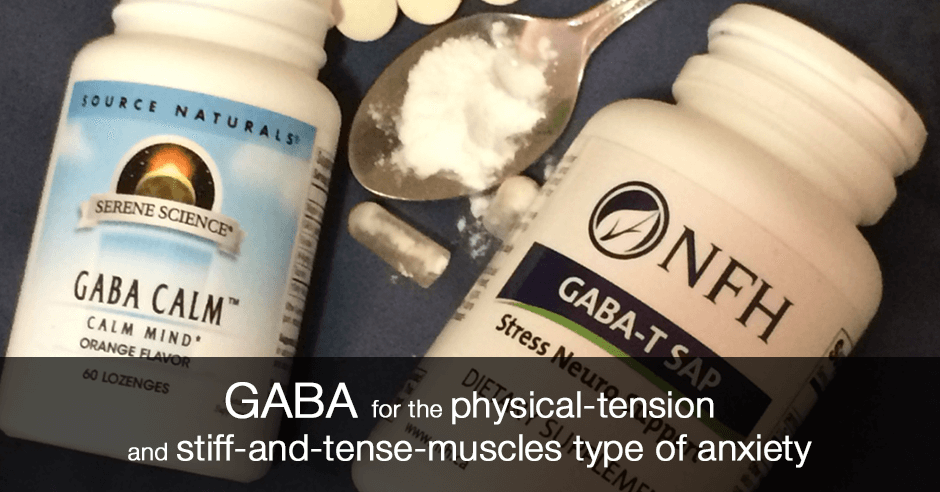
  • Source Naturals GABA Calm. This is a pleasant-tasting sublingual product that is my most popular and most effective form of GABA I use with my clients. It contains 125 mg GABA and some glycine, taurine and magnesium, and a small amount of tyrosine to counter the calming effects. You can see the lozenges in the picture above.
  • Nutritional Fundamentals for Health GABA-T SAP: gamma-Aminobutyric acid (GABA) 300 mg, l-Theanine 150 mg. This is pleasant-tasting when opened on to the tongue and works very well when GABA Calm can’t be used.  I find best results when it is used opened on to the tongue and I really like that it’s a low dose of GABA. Some of my clients do well with half a capsule. You can see an opened capsule in the picture above.
  • Enzymatic Therapy GABA: gamma-Aminobutyric acid (GABA) 250 mg. This is also pleasant-tasting when opened on to the tongue and works very well when GABA Calm can’t be used.  As with all GABA products, I find best results when it is used opened on to the tongue.
  • ProThera 500mg GABA: gamma-aminobutyric acid (GABA) 500 mg.  You will likely need to open this up and start with less than a full capsule during the day and increase as needed based on the trial. A full capsule may be fine at night for some individuals and more than one works in some situations.

There are a number of other great GABA products. When I reached out on Facebook for feedback I heard from one mom who likes Kirkman Labs GABA with Niacinamide and Inositol for her son who is on the spectrum, and someone else shared she likes Thorne PharmaGABA better than GABA products.

A few people shared this feedback when using GABA: one person felt too tired, someone else felt a niacin-type flush and someone else got an electric shock feeling in her brain. How you respond depends on the dose and with GABA and the other amino acids there is no one recommended dose for anyone. It’s very individualized which is why I have clients do a trial and start low. GABA helps many people tapering from benzodiazepines but some people are so sensitive that even a pinch is too much.

One person asked how to get GABA from food as she is fearful of taking medications and supplements. I always recommend a real whole foods diet with quality animal protein and organic produce, together with health fats and fermented veggies – so this is a great foundation. It may not be enough and when there is fear and phobias I immediately think of low serotonin and would determine if this is a factor an address this first. I covered low serotonin and tryptophan in the product review last week.

Here are some additional GABA resources for you:

Source Naturals GABA Calm™: Why I recommend it for anxiety

It’s a great product to use with children. Trish Soderstrom shared how she used this product with her daughter’s Lyme anxiety.

We’ve used Source Naturals GABA Calm sublinguals with good results. I learned about GABA helping anxiety and because I was treating my young daughter I purchased this because it was easy for her to take.But there may still be some confusion about when to use GABA and when to use tryptophan and how much of each of these amino acids to use.

GABA is calming for me, doesn’t work for my daughter’s anxiety and makes my son sleepy

I have used GABA (several brands, just open capsule and sprinkle small amount under tongue) for years now, with calming results within minutes. It was recommended to me by 2 family members, both bi-polar, who were tested by Dr. Amen. I have also used it with my children (now adults); my daughter says it doesn’t work for her. (She has anxiety issues and occasional panic attacks, and Rescue Remedy helps her.) It does work to calm my 3 sons, but one says it makes him sleepy, and lasts into the next day, so he won’t take it.

GABA for children: ADHD, focus issues, irritability, anxiety and tantrums

My daughter hasn’t been diagnosed with ADHD but has a lot of ADHD qualities. We were having a huge amount of behavior problems as she is getting older (she’s 11). I did some research and went to the health food store and bought a bottle. At this point I was mentally exhausted from all the fighting and drama at home and at school. I was desperate and didn’t want to put her on any hard medication.

She has had amazing behavior at school and at home since giving it to her. She’s almost like different child. GABA has truly changed our life. She’s been taking it for almost 2 months.

The blog has many other posts on GABA and serotonin and simply use the “search” function to find them.

This blog post is part of the series of amino acid product reviews:

  • Tryptophan for low serotonin (worry-in-the-head anxiety)
  • Glutamine for calming, intense sugar cravings, gut healing and low blood sugar
  • DPA for weepiness, pain and comfort and reward eating
  • Tyrosine for focus, motivation, energy, a good mood and possibly even anxiety

The resources in this blog and my other articles are intended to be used in conjunction with my book: The Antianxiety Food Solution – How the Foods You Eat Can Help You Calm Your Anxious Mind, Improve Your Mood, and End Cravings. If you do not have my book I highly recommend getting it and reading it before jumping in and taking the amino acid supplements:

There is a complete chapter on the amino acids and one for pyroluria, plus information on real whole food, sugar and blood sugar, gluten, digestion and much more.

You can find the GABA products and the others I recommend here on this blog: The Antianxiety Food Solution Amino Acid and Pyroluria Supplements


I’d love to hear what GABA product has worked for you and how it’s helped?

If you have questions please post them below or on the supplements blog

Filed Under: GABA, Supplements Tagged With: anxiety, GABA, GABA Calm, insomnia, pain, physical-tension, stiff and tense muscles, theanine

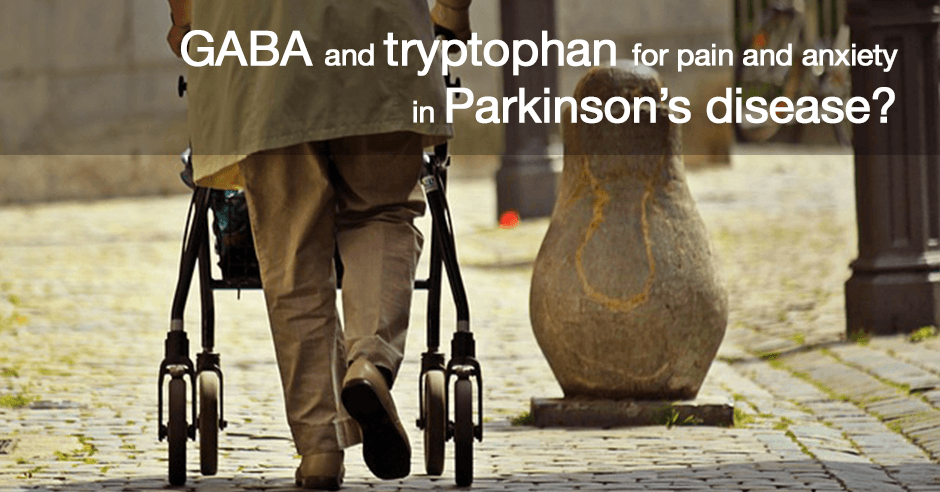
GABA and tryptophan for pain and anxiety in Parkinson’s disease?

August 25, 2017 By Trudy Scott 12 Comments

Last week I blogged about my recent back injury and how acupuncture boosts GABA to reduce back pain and how oral GABA further reduces the pain. Both these interventions have helped me so much and I’m doing so much better.

I love the feedback I receive in the blog comments and the great questions – which get to help the person asking the question and everyone else reading the blog and comments. So thank you if you comment!

I received this lovely feedback about GABA and anxiety, and a question about Parkinson’s disease (on the above blog) and want to share it and my response here so you and families with a loved one with Parkinson’s disease will also have access to this information:

I have loved reading your articles for a long time and listen to you whenever you are on a summit. I have learned a lot. GABA definitely helps me to relax, reduce my monkey mind and sleep better.

My mom has Parkinson’s disease and is very stiff and tight. She hurts often, especially her back. She also has afternoon anxiety, some call it “sundowners”. Can she take GABA with carbidopa-levidopa and blood pressure meds? She needs some kind of help!

Thank you in advance for any suggestions you might have to give her any quality of life as right now it is not good and the doctors offer no suggestions beyond possibly more prescriptions.

I responded saying how glad I was to hear GABA helps her to relax, reduces her monkey mind and also helps her to sleep better and how sorry I was to hear about her mom’s stiffness, pain and anxiety.

I posted this regarding the stiffness and back pain: share this paper with your doctor and get his/her approval to do a trial of GABA – Parkinson’s Disease and Neurodegeneration: GABA-Collapse Hypothesis:

the original description of Parkinson’s disease (PD) as due to the selective damage of dopaminergic neurons in the mesencephalon should be updated into the concept of a severe multisystemic neurodegenerative disorder of the nervous system, whose clinical symptoms reflect the localization and progression of the most advanced GABA pathology. A future and more complete therapeutic approach to PD should be aimed first at slowing (or stopping) the progression of Ca(2+)/GABA functional decline.

I have worked with a few people with Parkinson’s disease and GABA has been very helpful for the stiffness and pain, the physical anxiety, easing some of their tremors and helping with insomnia. I always do a trial so we know how much the individual will need.

For someone on blood pressure medication I’d start with a GABA-only product or GABA-theanine product rather than GABA Calm which does contain tyrosine.

I posted this regarding the “sundowners” question: I’d share this with your doctor and get the approval to do a trial of tryptophan – Sundown Syndrome in Persons with Dementia: An Update

sundown syndrome is characterized by the emergence or increment of neuropsychiatric symptoms such as agitation, confusion, anxiety, and aggressiveness in late afternoon, in the evening, or at night.

Although this paper refers to dementia, these symptoms also happen to be classic low serotonin symptoms that typically respond really well to tryptophan. The paper mentions melatonin as an intervention but since tryptophan converts to melatonin I’d start with tryptophan (based on doing a trial) and then consider adding melatonin too if needed.

I shared a few more resources on Parkinson’s disease:

  • Chris Kresser has an excellent blog post called New Research and Treatments for Parkinson’s Disease where he writes about the microbiome, constipation, SIBO, gluten, the HPA axis, low-dose naltrexone (LDN) and the possible autoimmune aspect, iron overload and the benefits of curcumin, a ketogenic diet and glutathione.
  • The Wahls Protocol for MS (some versions of which are ketogenic diets) shows promise for many neurodegenerative diseases and is also being researched for Parkinson’s disease

I also shared this amazing and inspiring video created by physical therapist Anicea Gunlock, on how using music while gait training can be beneficial for those suffering from Parkinsons’s disease

You read more about this music approach Anicea Gunlock used with her patient here.

The amino acids GABA and tryptophan can often be used in conjunction with all of the above approaches and often provide immediate relief for anxiety, pain, agitation and insomnia while some of the other root causes are being addressed.

I’ve recently updated the Antianxiety Food Solution Amino Acid and Pyroluria Supplements blog with some of my favorite GABA and tryptophan products mentioned above. You’ll also see the amino acid questionnaire and amino acid precautions on this blog.

Instead of only considering the amino acids for someone whose primary issue is anxiety, I’d like you to start thinking about using the amino acids for anyone who has a medical diagnosis – such as autism, cancer, ALS, Parkinson’s disease, MS, Alzheimer’s disease or anything else – and who also happens to suffer from anxiety.

Have you used GABA or tryptophan to ease stiff and tense muscles and pain in your Parksinson’s disease, for a family member or for a patient/client?

And have you used tryptophan for the low serotonin worry-type of anxiety, agitation and insomnia?

Filed Under: Anxiety, GABA, serotonin Tagged With: agitation, anxiety, autism, GABA, MS, pain, Parkinson's disease, serotonin, stiff and tense muscles, sundowners, tryptophan

  • « Go to Previous Page
  • Page 1
  • Page 2

Primary Sidebar

NEW! GABA QuickStart Homestudy (with special intro pricing)

gaba quickstart homestudy

Free Report

9 Great Questions Women Ask about Food, Mood and their Health

You'll also receive a complimentary subscription to my ezine "Food, Mood and Gal Stuff"


Connect with me

Popular Posts

  • Amino Acids Mood Questionnaire from The Antianxiety Food Solution
  • The Antianxiety Food Solution Amino Acid and Pyroluria Supplements
  • Pyroluria Questionnaire from The Antianxiety Food Solution
  • Collagen and gelatin lower serotonin: does this increase your anxiety and depression?
  • Tryptophan for the worry-in-your-head and ruminating type of anxiety
  • GABA for the physical-tension and stiff-and-tense-muscles type of anxiety
  • The Antianxiety Food Solution by Trudy Scott
  • Seriphos Original Formula is back: the best product for anxiety and insomnia caused by high cortisol
  • Am I an anxious introvert because of low zinc and vitamin B6? My response to Huffington Post blog
  • Vagus nerve rehab with GABA, breathing, humming, gargling and key nutrients

Recent Posts

  • What do I use instead of Seriphos to help lower high cortisol that is affecting my sleep and making me anxious at night?
  • BeSerene™ GABA/theanine cream eases severe muscle tension in her neck/shoulders, prevents her bad headaches and quells her anxiety
  • How the correct approach, dose and sublingual use of GABA can be calming and not cause a flushed and itchy face and neck
  • The amino acid glutamine improves low mood by addressing gut health, and it has calming effects too
  • Flight anxiety with heightened breath, physical tension and also fearing the worst (the role of low GABA and low serotonin)

Categories

  • 5-HTP
  • AB575
  • Addiction
  • ADHD
  • Adrenals
  • Alcohol
  • Allergies
  • Alzheimer's disease
  • Amino Acids
  • Anger
  • Antianxiety
  • Antianxiety Food Solution
  • Antidepressants
  • Anxiety
  • Anxiety and panic
  • Autism
  • Autoimmunity
  • benzodiazapines
  • Bipolar disorder
  • Books
  • Caffeine
  • Cancer
  • Candida
  • Children/Teens
  • Collagen
  • Cooking equipment
  • Coronavirus/COVID-19
  • Cravings
  • Depression
  • Detoxification
  • Diabetes
  • Diet
  • DPA/DLPA
  • Drugs
  • EFT/Tapping
  • EMF
  • EMFs
  • Emotional Eating
  • Endorphins
  • Environment
  • Essential oils
  • Events
  • Exercise
  • Fear
  • Fear of public speaking
  • Fertility and Pregnancy
  • Fish
  • Food
  • Food and mood
  • Functional neurology
  • GABA
  • Gene polymorphisms
  • General Health
  • Giving
  • Giving back
  • Glutamine
  • Gluten
  • GMOs
  • Gratitude
  • Gut health
  • Heart health/hypertension
  • Histamine
  • Hormone
  • Hyperparathyroidism
  • Hypoglycemia
  • Immune system
  • Inflammation
  • Insomnia
  • Inspiration
  • Introversion
  • Joy and happiness
  • Ketogenic diet
  • Lithium orotate
  • Looking awesome
  • Lyme disease and co-infections
  • MCAS/histamine
  • Medication
  • Men's health
  • Mental health
  • Mercury
  • Migraine
  • Mold
  • Movie
  • MTHFR
  • Multiple sclerosis
  • Music
  • NANP
  • Nature
  • Nutritional Psychiatry
  • OCD
  • Osteoporosis
  • Oxalates
  • Oxytocin
  • Pain
  • Paleo
  • Parasites
  • Parkinson’s disease
  • PCOS
  • People
  • PMS
  • Postpartum
  • PTSD/Trauma
  • Pyroluria
  • Questionnaires
  • Real whole food
  • Recipes
  • Research
  • Schizophrenia
  • serotonin
  • SIBO
  • Sleep
  • Special diets
  • Sports nutrition
  • Stress
  • Sugar addiction
  • Sugar and mood
  • Supplements
  • Teens
  • Testimonials
  • Testing
  • The Anxiety Summit
  • The Anxiety Summit 2
  • The Anxiety Summit 3
  • The Anxiety Summit 4
  • The Anxiety Summit 5
  • The Anxiety Summit 6
  • Thyroid
  • Thyroid health
  • Toxins
  • Tryptophan
  • Tyrosine
  • Uncategorized
  • Vegan/vegetarian
  • Women's health
  • Yoga

Archives

  • October 2025
  • September 2025
  • August 2025
  • July 2025
  • June 2025
  • May 2025
  • April 2025
  • March 2025
  • February 2025
  • January 2025
  • November 2024
  • October 2024
  • September 2024
  • August 2024
  • July 2024
  • June 2024
  • May 2024
  • April 2024
  • March 2024
  • February 2024
  • January 2024
  • December 2023
  • November 2023
  • October 2023
  • September 2023
  • August 2023
  • July 2023
  • June 2023
  • May 2023
  • April 2023
  • March 2023
  • February 2023
  • January 2023
  • December 2022
  • November 2022
  • October 2022
  • September 2022
  • August 2022
  • July 2022
  • June 2022
  • May 2022
  • April 2022
  • March 2022
  • February 2022
  • January 2022
  • December 2021
  • November 2021
  • October 2021
  • September 2021
  • August 2021
  • July 2021
  • June 2021
  • May 2021
  • April 2021
  • March 2021
  • February 2021
  • January 2021
  • December 2020
  • November 2020
  • October 2020
  • September 2020
  • August 2020
  • July 2020
  • June 2020
  • May 2020
  • April 2020
  • March 2020
  • February 2020
  • January 2020
  • December 2019
  • November 2019
  • October 2019
  • September 2019
  • August 2019
  • July 2019
  • June 2019
  • May 2019
  • April 2019
  • March 2019
  • February 2019
  • January 2019
  • December 2018
  • November 2018
  • October 2018
  • September 2018
  • August 2018
  • July 2018
  • June 2018
  • May 2018
  • April 2018
  • March 2018
  • February 2018
  • January 2018
  • December 2017
  • November 2017
  • October 2017
  • September 2017
  • August 2017
  • July 2017
  • June 2017
  • May 2017
  • April 2017
  • March 2017
  • February 2017
  • January 2017
  • December 2016
  • November 2016
  • October 2016
  • September 2016
  • August 2016
  • July 2016
  • June 2016
  • May 2016
  • April 2016
  • March 2016
  • February 2016
  • January 2016
  • December 2015
  • November 2015
  • October 2015
  • September 2015
  • August 2015
  • July 2015
  • June 2015
  • May 2015
  • April 2015
  • March 2015
  • February 2015
  • January 2015
  • December 2014
  • November 2014
  • October 2014
  • September 2014
  • August 2014
  • July 2014
  • June 2014
  • May 2014
  • April 2014
  • March 2014
  • February 2014
  • January 2014
  • December 2013
  • November 2013
  • October 2013
  • September 2013
  • August 2013
  • July 2013
  • June 2013
  • May 2013
  • April 2013
  • March 2013
  • February 2013
  • January 2013
  • December 2012
  • November 2012
  • October 2012
  • August 2012
  • July 2012
  • June 2012
  • May 2012
  • April 2012
  • March 2012
  • February 2012
  • January 2012
  • December 2011
  • November 2011
  • October 2011
  • September 2011
  • August 2011
  • July 2011
  • June 2011
  • May 2011
  • April 2011
  • March 2011
  • February 2011
  • January 2011
  • December 2010
  • October 2010
  • September 2010
  • July 2010
  • May 2010
  • April 2010
  • March 2010
  • February 2010
  • January 2010
  • November 2009

Share the knowledge!

The above statements have not been evaluated by the Food and Drug Administration. Products listed in this website are not intended to diagnose, treat, cure or prevent any disease.

The information provided on this site is for informational and educational purposes only and is not intended as a substitute for advice from your physician or other health care professional. You should consult with a healthcare professional before starting or modifying any diet, exercise, or supplementation program, before taking or stopping any medication, or if you have or suspect you may have a health problem.


Copyright © 2026 Trudy Scott. All Rights Reserved. | Privacy | Terms and Conditions | Refund Policy | Medical Disclaimer

Free Report

9 Great Questions Women Ask about Food, Mood and their Health

You’ll also receive a complimentary subscription to my ezine “Food, Mood and Gal Stuff”