• Skip to primary navigation
  • Skip to main content
  • Skip to primary sidebar

everywomanover29 blog

Food, Mood and Women's Health – Be your healthiest, look and feel great!

  • Blog
  • About
  • Services
  • Store
  • Resources
  • Testimonials
  • The Book
  • Contact
  • Search this site

music

GABA Calm is a game changer for husband’s sound and tactile hypersensitivity, significant coordination problems and his anxiety

February 10, 2023 By Trudy Scott 20 Comments

gaba calm

My husband is low in GABA and he had significant coordination problems and sensory sensitivity ….. until GABA Calm. 3 tablets per day work great. If he has none, he gets hyper sensitive again and starts tripping over things in the house.

He has always struggled with anxiety and sound / tactile hypersensitivity. Alongside that he often tripped over things. He made great progress when he started using The Listening Program. I wonder if this sound therapy raises GABA and that was why it helped him (although it only partially helped with anxiety)?

When he stopped The Listening Program then his symptoms came back.

He started taking GABA Calm as I saw it in your blogs years ago. Then he found that he didn’t need to do the Listening Program any more.

GABA Calm is a game changer for him.

Denise shared this feedback about her husband’s great results on a blog post about GABA Calm helping with anxiety and sensorimotor skills in an autistic child.

I thanked her for sharing these wonderful results her husband is experiencing.  I am inspired to share this feedback as a blog to give others hope. And also because this illustrates the diversity of how GABA can help i.e. it works for adults and children, males and females, and there is different dosing according to each person’s unique needs.

Music therapy: calming effect and GABA mechanisms

This study, Emotional Inhibitory Effect of Music Therapy on Anxiety Neurosis Based on Neural Content Analysis in Hippocampus, reports that music therapy has a calming effect by adjusting the glutamate/GABA balance. This is likely why Denise’s husband found The Listening Program to be helpful in certain ways – glutamate is the main excitatory neurotransmitter and GABA is the main calming neurotransmitter.

GABA, the GABA Calm supplement, hypersensitivity and sensorimotor difficulties (research)

GABA (gamma-aminobutyric acid) is your main inhibitory neurotransmitter and the amino acid GABA can be used as a supplement to raise GABA levels and ease physical anxiety symptoms, help with insomnia, stress eating, intrusive thoughts and stiff/tense muscles.

GABA Calm is one of many different GABA supplements that I recommend to my clients. This particular one is a sublingual/chewable offered as a 125mg dose, which is where I have most of my clients start. Denise’s husband finds that 3 GABA Calm used throughout the day are enough for his needs. These alleviate his anxiety and also stop his sound and tactile hypersensitivity, and significant coordination problems such as tripping.

This paper reports that“Sensory over-responsivity (SOR), extreme sensitivity to or avoidance of sensory stimuli (e.g., scratchy fabrics, loud sounds)… is present in 5–15% of the general population and is even more common (rates over 50%) in individuals with both genetic and environmentally-based psychiatric and neurodevelopmental disorders such as anxiety, attention deficit hyperactivity disorder, early life adversity, and autism spectrum disorder (ASD).”

The authors discuss altered thalamic sensory gating and an excitatory (glutamate) / inhibitory (GABA) neurochemical imbalance in ASD youth. Most of the research on sensory issues and GABA has been done in ASD children but it clearly applies to adults with anxiety too.

I highlight the motor issues with GABA/glutamate imbalances in the above GABA sensorimotor skills blog. This research is also looking at ASD populations but these mechanisms may account for her husband’s significant coordination problems/tripping.

You can read the current list of low GABA symptoms here. This list will be updated with sound and tactile hypersensitivity, and coordination problems/tripping (and a few others like asthma and laryngospasm).

An occupational therapist who is training as a nutritional therapist

Denise is an occupational therapist (OT) who is training as a nutritional therapist so she can recommend supplements for the kids she works with, alongside the other therapies she uses as an OT.   I love this. I’m a big believer in using everything we have at our disposal and am a huge advocate of OT.  I would love to see more OTs and other practitioners using the amino acids and nutritional therapy.

Denise shared that she actually started her journey in nutritional therapy 20 years ago due to the impact she was seeing in diet and autism. She took a very long break and had her own children and has now restarted her training. She shared this:

I plan to integrate nutritional advice into my work with families. As I am currently a NT student I haven’t been able to advise families even regarding the GABA Oolong tea [more on that below]. I am excited to qualify as I see various sensory, motor and attention issues that can be easily treated through nutritional adjustments and supplements.

Denise is already using the amino acids personally and with her family, sharing: “I love using aminos e.g. 5-HTP and L-theanine for myself and my daughters and GABA for my husband, tyrosine occasionally for my son.”

She has my book “The Antianxiety Food Solution”, a great resource that is practical and fully referenced, for both consumers and practitioners.

I encouraged her to also look into the amino acid training I offer for practitioners once she has completed her training as a nutritional therapist, so she can confidently use them with her clients too.

Having her in the program is also an opportunity for me and others in the group to learn from Denise about her expertise on integrating amino acids, nutrition and OT.

Her feedback on GABA oolong tea or GABA Calm for children with autism?

She also commented that she loved reading the GABA Oolong research – GABA Oolong tea in children with autism: improvements in sensorimotor skills, autism profiles, anxiety and sleep (new research)

I asked for her feedback and if she has kids in her practice, see any benefits when drinking this GABA Oolong tea. And what their responses are to the taste. Since she is still a student she can’t yet advise families regarding the GABA Oolong tea but she did say this:

To be honest I think the Source Naturals GABA Calm sublingual will be easier to tolerate for lots of children compared with tea.

As fascinating as the GABA Oolong tea research is, I feel the same way and  I really appreciate this feedback from an OT. I have actually received similar feedback from a number of other practitioners too. Stay tuned as I continue to gather feedback.

Autism: diet, GABA and working with an OT

It’s amazing that 20 years ago Denise was seeing the impact of diet in kids with autism. If you would like to learn more, this blog – Nutritional and Dietary Intervention for Autism Spectrum Disorder – summarizes a 2018 study and offers many insights into to the progress since then.

As I mentioned above, her husband’s success with 3 GABA Calm illustrates the diversity of how GABA can help i.e. adults and children, males and females, and different dosing according to each person’s unique needs.

This is the blog Denise commented on – Half a crushed GABA Calm for my autistic child: sleep, anxiety and sensorimotor skills (writing, horse riding and swimming) improve.

In the above blog, I share Vic’s feedback about just half a GABA Calm improving her daughter’s sleep, social skills and sensorimotor skills such as pen and pencil use, horse riding and swimming. Her daughter is also working with an OT and getting those added benefits too.

Resources if you are new to using GABA and other amino acids as supplements

If you are new to using tryptophan, GABA or any of the other amino acids as supplements, here is the Amino Acids Mood Questionnaire from The Antianxiety Food Solution (you can see all the symptoms of neurotransmitter imbalances, including low GABA and low serotonin).

If you suspect low levels of any of the neurotransmitters and do not yet have my book, The Antianxiety Food Solution – How the Foods You Eat Can Help You Calm Your Anxious Mind, Improve Your Mood, and End Cravings, I highly recommend getting it and reading it before jumping in and using amino acids on your own so you are knowledgeable. And be sure to share it with the practitioner/health team you or your loved one is working with.

There is an entire chapter on the amino acids and they are discussed throughout the book in the sections on gut health, gluten, blood sugar control, sugar cravings, self-medicating with alcohol and more.

The book doesn’t include product names (per the publisher’s request) so this blog, The Antianxiety Food Solution Amino Acid and Pyroluria Supplements, lists the amino acids that I use with my individual clients and those in my group programs. You can find them all in my online store.

If, after reading this blog and my book, you don’t feel comfortable figuring things out on your own (i.e. doing the symptoms questionnaire and respective amino acids trials), a good place to get help is the GABA QuickStart Program (if you have low GABA symptoms). This is a paid online/virtual group program where you get my guidance and community support.

If you are a practitioner, join us in The Balancing Neurotransmitters: the Fundamentals program. This is also a paid online/virtual program with an opportunity to interact with me and other practitioners who are also using the amino acids.

Have you or a family member had GABA help with sound and tactile hypersensitivity, coordination problems and anxiety?

Which GABA product and how much?

And is the GABA product used sublingually or the capsule opened?

Are you an OT using amino acids and nutritional approaches with your clients, in addition to other approaches?

Do you find music therapy to be calming, in a similar way to the calming effects of GABA?

If you have other questions and feedback please share them here too.
Filed Under: Anxiety, GABA, Men's health Tagged With: adults, amino acids, anxiety, autism, children, coordination problems, diet, female, GABA, GABA Calm, GABA Oolong tea, husband, hypersensitivity, male, music, occupational therapist, sensorimotor, sensory sensitivity, sound, sound and tactile hypersensitivity, tactile, the GABA Quickstart online program; and Balancing Neurotransmitters: the Fundamentals program for practitioners, The Listening Program, tripping

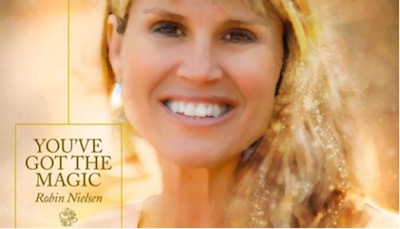
You’ve got the Magic – a song by Robin Nielsen

April 15, 2016 By Trudy Scott 1 Comment

youve-got-magic-robin

My dear friend and Certified Clinical Nutritionist, Robin Nielsen wrote and sings this inspiring and uplifting song – it’s just beautiful and so much fun! She shares:

This song and music video is for you. Inspired by Tina Maze, the beautiful 2014 Winter Olympic Gold Medalist who made a music video about her journey to Gold, Marianne Williamson’s poem “Our Deepest Fear”, and all of my beautiful clients over the years, I wrote this delicious song with my sons, Nick and Duncan Nielsen to inspire women to tap back into their own magic, and shine no matter what their age.

Robin has helped “thousands of women of all ages regain their health and get the twinkle back in their eyes” and she has a lovely message for us:

“You’ve Got the Magic” was written and produced for all of us. It’s time to ask for what we want and discover the beautiful goddess within. Enjoy this fabulous life no matter what, and let your inner light shine bright as an inspiration to everyone. I invite you to rekindle your magic and open all the “love letters” that come your way everyday.

Wishing you joy, grace, beauty and lots of pleasure. Please share with every beautiful woman you know.

Enjoy the uplifting song and the really fun video! I keep watching it and smile the whole way through. I’m also so in awe of someone being able to sing and produce a song and video like this! Wow!

We have been friends since I first became a nutritionist and met when we both volunteered to do speaker support at the National Association of Nutrition Professionals /NANP (www.nanp.org) conference. We were later invited to serve on the board of directors and Robin went on the become President of the board, while I served as VP (and later as President).

During production of the video, Robin reached out to her friends and colleagues asking for a short video clip of us having fun and enjoying life. I sent in a clip and I’m actually featured in the video. How fun! See if you can spot me!?

You can get the song on iTunes or Amazon and grab the lyrics here.

Filed Under: Music Tagged With: music, Robin Nielsen, song

The Anxiety Summit – Deconstructing medical anxiety & evidence-based natural solutions

November 11, 2014 By Trudy Scott 8 Comments

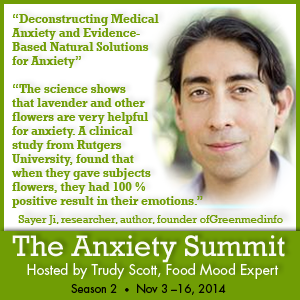
Sayer Ji_Quote_Anxiety2

Sayer Ji, researcher, author, founder of Greenmedinfo was interviewed by host of the Anxiety Summit, Trudy Scott, Food Mood Expert and Nutritionist, author of The Antianxiety Food Solution.

Deconstructing medical anxiety and evidence-based natural solutions

  • how modern medical screening and interventions are based on an outdated evidence-base and lead to fear and anxiety
  • the top evidence-based natural interventions for anxiety: lavender, aromatherapy, flowers, plants, forest bathing, probiotics (and the gut-brain axis), magnesium
  • foods that can cause anxiety: gluten/all grains
  • what foods to include: real whole foods, healthy fats, eggs (and issues with statins)
  • ‘alternative’ non-invasive modalities to reduce stress/anxiety – yoga, EFT, music, shiatsu, dancing and aromatherapy

Here are some snippets from our interview

The science shows that lavender and other flowers are very helpful for anxiety. A clinical study from Rutgers University, found that when they gave subjects flowers, they had 100 percent positive result in their emotions.

Lavender has been studied both as an aromatherapeutic agent where you have these small molecules in the volatile fragrance that go right into the olfactory lobe and then start modulating all these different pathways in the brain. Now there are many different ways of looking at this. There’s actually research in the animal model specifically on it being serotonergic, meaning boosting the serotonin levels or preventing their turnover so they last longer, but the reality is there are so many other mechanisms that have been identified. For example, it inhibits what is known as a voltage-dependent calcium channel in a way similar to the drug Pregabalin, also known as Lyrica. And then there’s probably 10 or 20 other different ways in which is likely modulates traditional drug targets in the brain and that’s because the brain is so complex. We’re dealing with hundreds of different biomolecules, many of them classified as neurotransmitters that are making the magic of the chemistry of our brain-produced emotions and feelings so I don’t ever imagine we’ll ever fully understand how it works.

Here is a great blog post from greenmedinfo: Evidence-Based Aromatherapy: Stress Relief And Much More

Here is more information on the Rutgers flowers study, that offered convincing evidence that flowers may be potent mood elevators.  I really love this one!  How did you feel the last time you received flowers?  And when did you last give someone flowers?

I often blog about the joys of nature and getting outdoors and just love this study on forest therapy (also sometimes called forest bathing): Psychological relaxation effect of forest therapy: results of field experiments in 19 forests in Japan involving 228 participants

these results suggest that the forest environments have significant beneficial and relaxing effects on human’s moods compared with the urban environments.

Here is the study that found participants experienced empathy when they smelled the anxiety of another participant: Induction of empathy by the smell of anxiety 

You can get access to Sayer Ji’s  Wisdom of Food eCourse here (use code: cureanxiety)

If you are not already registered for the Anxiety Summit you can get live access to the speakers of the day here www.theAnxietySummit.com

Filed Under: Antianxiety, Anxiety and panic, The Anxiety Summit 2 Tagged With: anxiety, fear, flowers, greenmedinfo, lavender, music, Sayer Ji, the anxiety summit, Trudy Scott, yoga

The Anxiety Summit – The latest food and nutrient research on anxiety, music and more

November 2, 2014 By Trudy Scott 37 Comments

as

A very very big welcome to The Anxiety Summit, season 2, day 1!! We’re going to share expert interviews on nutritional approaches for eliminating anxiety, social anxiety, panic attacks and OCD.

This is what you’ll learn in the Anxiety Summit – how you can eliminate: 

  • full blown anxiety, panic attacks, social anxiety, OCD, phobias
  • constant low grade fear, feelings of dread, the racing heart, the busy mind you can’t switch off and the ruminating thoughts
  • the constant worry, perfectionism, procrastination, the who-am-I-to-do-this or imposter syndrome

The first talk is: “The latest food and nutrient research on anxiety, music and more” and airs live on Monday November 3rd from 9am PST for a 24 hour window.

Trudy Scott, Food Mood Expert, is the host the Anxiety Summit, and author of The Antianxiety Food Solution.

  • Why The Anxiety Summit
  • New research on food and nutrients for reducing anxiety and depression
  • Why changing our diets and addressing nutritional deficiencies is so important
  • Music for mood and some inspiration for you
  • Gems from each of the upcoming speakers

A recent paper in BMC Psychiatry titled “Lessons from obesity prevention for the prevention of mental disorders” proposes that

common mental disorders like anxiety and depression “should be considered as a form of non-communicable disease,” like obesity “preventable through the modification of lifestyle behaviors, particularly diet” and exercise.

One of the authors of the above study, Dr. Felice Jacka, a well-known food and mood researcher, co-authored another 2014 paper “Nutritional psychiatry research: an emerging discipline and its intersection with global urbanization, environmental challenges and the evolutionary mismatch”  that stated:

“the clear message is that in the midst of a looming global epidemic” of mental health disorders, “we ignore nutrition at our peril.”

If you joined us in June during season 1, you’ll recall Dr. Jacka shared The Research – Food to prevent and treat anxiety and depression?  She shared:

We’ve now seen data from right around the world right across every continent and across age ranges, showing that diet really does matter to the prevalence and incidence of depression and anxiety.

This is the ATA blog post I mentioned: Five Ways the New ATA Hypothyroidism Guidelines are Bad for Thyroid Patients

Music has mood benefits. I blogged about this in this Anna Clendening post. Check it out to see the links to the research and hear Anna sing.

Grab your copy of “Top of the World ” song here. This is your own copy of my custom song co-created by me and Amma Jo and sung by the lovely Amma Jo. I want this to be an inspiration for you! And as someone said during the first season: “a bouquet of hope.” Because you deserve to feel on top of the world all the time! Enjoy!

And stay tuned for my interview with Amma Jo later in the summit.

Do you sing or play a musical instrument? How does it make you feel?  Does it help with anxiety, depression, stress?

Have food changes helped your anxiety, depression, stress?

If you are not already registered for the Anxiety Summit you can get live access to the speakers of the day here www.theAnxietySummit.com

Filed Under: Antianxiety, Food and mood, Music, The Anxiety Summit 2 Tagged With: anxiety, food, music, the anxiety summit, Trudy Scott

Anna Clendening: Anxious Singer on America’s Got Talent 2014

July 13, 2014 By Trudy Scott 45 Comments

anna clendening agt

Anna is a very talented 20 year old young woman who recently performed on America’s Got Talent 2014. Her singing was just beautiful and you could hear the raw emotion in her voice.

Being on this big stage was quite something for her – she’s been suffering from anxiety and depression since she was 16. A few months ago she was bedridden and having panic attacks. She said: “my mind had given up on me. I didn’t see a future. I didn’t want to be here anymore and I felt so bad about myself.”

She was able to turn things around dramatically with therapy and music.

During her audition, judge Howie Mandel shared: “I also suffer from an anxiety disorder – I have OCD.” He also said: “There isn’t anyone alive who doesn’t need help at some time and the world is here for you.” After her song, Howie was very kind and went and hugged her. He also said this: “life is filled with peaks and valleys, you have experienced a lot of valleys. Tonight, young lady, you are on a peak.”

I would have to agree and I’d like to say “bravo Anna!”  Watch her performance here….

I’ve got three other comments on this: the stigma of mental health, the wonderful effects of music for mood and encouragement to look in to the powerful effects of food and nutrients.

The stigma of mental health

I commend her for being open about her anxiety and depression. There is a great deal of stigma around mental illness but I had no idea how bad it was. I was very surprised to see all the cruel and insensitive comments on the youtube video. Here is one example:

Couldn’t leave her bed?  What a joke.  You didn’t see this kind this stuff 50 years ago.  It was called responsibility and accountability.  She was obviously validated and enabled by her parents.  Society today substantiates this crap.  It’s called life, and everybody has challenges and feeling they need to overcome, get over it.  I bet she’s drawing a nice little social security disability check, too. Its pretty sad that she has such self pity.  She is very attractive, talented, not overweight, racially advantaged, has loving parents.  She needs to visit a children’s cancer ward or burn ward and get a grip as to how truly blessed she is.  

I say this to Anna: “Just ignore these naysayers. You did good and the more of us who talk about it the more awareness we’ll bring.”

The wonderful effects of music for mood

In a 2009 paper called The effect of group music therapy on quality of life for participants living with a severe and enduring mental illness

A 10-week group music therapy project was designed to determine whether music therapy influenced quality of life and social anxiety for people with a severe and enduring mental illness living in the community. Ten one-hour weekly sessions including song singing, song writing and improvisation, culminated in each group recording original song/s in a professional studio.

This is what they found:

music therapy gave joy and pleasure, working as a team was beneficial, participants were pleasantly surprised at their creativity, and they took pride in their song.

A 2014 study called Possible benefits of singing to the mental and physical condition of the elderly, reported that the study participants felt:

refreshed, comfortable, light-hearted, relieved, and relaxed, they felt less tense and confused and their mood improved.  The level of cortisol, a salivary stress marker, decreased after singing.  The same tendencies were shown regardless of whether or not the subjects liked singing !  (this is my exclamation point)

I say this to Anna: “Good for you for finding music! I wish you all the best in AGT 2014!”

The powerful effects of food and nutrients

I would also like to encourage Anna and anyone with anxiety and depression to look in to the powerful effects of food and nutrients. Here are just a few of the topics we covered on the recent Anxiety Summit:

  • Dr. Felice Jacka – Principal Research Fellow at Deakin University, Melbourne, Australia: “The research: food for the treatment and prevention of anxiety and depression?”
  • Julie Matthews – Certified Nutrition Consultant and author of award winning book, Nourishing Hope for Autism: “BioIndividual Nutrition for Anxiety: How special diets and avoiding certain foods can Support individuals with anxiety.”
  • Mira Dessy – Certified Nutrition Educator, Real Food Advocate, and author of The Pantry Principle: “How additives in your food can make you anxious.”
  • Amanda Swart – Associate Professor, Department of Biochemistry, Stellenbosch University, South Africa: “Rooibos: a functional food in the management of stress“
  • Julia Ross, MFT – Pioneer in the field of Neuro-nutrient Therapy and the author of the best sellers The Mood Cure and The Diet Cure: “Eliminating Anxiety: Amino Acid Therapy and Adrenal Balancing.”

I say this to Anna: “I’d like to encourage you explore these and other biochemical approaches – so you can have zero anxiety and depression.”

And I say this to Howie: “I’d like to encourage you to also explore these and other biochemical approaches for eliminating your OCD.”  In this blog post about Charlize Theron I talk about how GABA, tryptophan, 5-HTP and/or inositol can end OCD and obsessive thoughts and behaviors.

I am musically “challenged” and can’t sing to save my life so while this is all very interesting to me, it’s not something I have experienced first hand.  I’d love to hear from you.  

Do you sing or play a musical instrument? How does it make you feel?  Does it help with anxiety, depression, stress?

Filed Under: Music, People Tagged With: america's got talent, amino acids, anna clendening, anxiety, anxious, food, music, stigma

Primary Sidebar

NEW! GABA QuickStart Homestudy (with special intro pricing)

gaba quickstart homestudy

Free Report

9 Great Questions Women Ask about Food, Mood and their Health

You'll also receive a complimentary subscription to my ezine "Food, Mood and Gal Stuff"


Connect with me

Popular Posts

  • Amino Acids Mood Questionnaire from The Antianxiety Food Solution
  • The Antianxiety Food Solution Amino Acid and Pyroluria Supplements
  • Pyroluria Questionnaire from The Antianxiety Food Solution
  • Collagen and gelatin lower serotonin: does this increase your anxiety and depression?
  • Tryptophan for the worry-in-your-head and ruminating type of anxiety
  • GABA for the physical-tension and stiff-and-tense-muscles type of anxiety
  • The Antianxiety Food Solution by Trudy Scott
  • Seriphos Original Formula is back: the best product for anxiety and insomnia caused by high cortisol
  • Am I an anxious introvert because of low zinc and vitamin B6? My response to Huffington Post blog
  • Vagus nerve rehab with GABA, breathing, humming, gargling and key nutrients

Recent Posts

  • What do I use instead of Seriphos to help lower high cortisol that is affecting my sleep and making me anxious at night?
  • BeSerene™ GABA/theanine cream eases severe muscle tension in her neck/shoulders, prevents her bad headaches and quells her anxiety
  • How the correct approach, dose and sublingual use of GABA can be calming and not cause a flushed and itchy face and neck
  • The amino acid glutamine improves low mood by addressing gut health, and it has calming effects too
  • Flight anxiety with heightened breath, physical tension and also fearing the worst (the role of low GABA and low serotonin)

Categories

  • 5-HTP
  • AB575
  • Addiction
  • ADHD
  • Adrenals
  • Alcohol
  • Allergies
  • Alzheimer's disease
  • Amino Acids
  • Anger
  • Antianxiety
  • Antianxiety Food Solution
  • Antidepressants
  • Anxiety
  • Anxiety and panic
  • Autism
  • Autoimmunity
  • benzodiazapines
  • Bipolar disorder
  • Books
  • Caffeine
  • Cancer
  • Candida
  • Children/Teens
  • Collagen
  • Cooking equipment
  • Coronavirus/COVID-19
  • Cravings
  • Depression
  • Detoxification
  • Diabetes
  • Diet
  • DPA/DLPA
  • Drugs
  • EFT/Tapping
  • EMF
  • EMFs
  • Emotional Eating
  • Endorphins
  • Environment
  • Essential oils
  • Events
  • Exercise
  • Fear
  • Fear of public speaking
  • Fertility and Pregnancy
  • Fish
  • Food
  • Food and mood
  • Functional neurology
  • GABA
  • Gene polymorphisms
  • General Health
  • Giving
  • Giving back
  • Glutamine
  • Gluten
  • GMOs
  • Gratitude
  • Gut health
  • Heart health/hypertension
  • Histamine
  • Hormone
  • Hyperparathyroidism
  • Hypoglycemia
  • Immune system
  • Inflammation
  • Insomnia
  • Inspiration
  • Introversion
  • Joy and happiness
  • Ketogenic diet
  • Lithium orotate
  • Looking awesome
  • Lyme disease and co-infections
  • MCAS/histamine
  • Medication
  • Men's health
  • Mental health
  • Mercury
  • Migraine
  • Mold
  • Movie
  • MTHFR
  • Multiple sclerosis
  • Music
  • NANP
  • Nature
  • Nutritional Psychiatry
  • OCD
  • Osteoporosis
  • Oxalates
  • Oxytocin
  • Pain
  • Paleo
  • Parasites
  • Parkinson’s disease
  • PCOS
  • People
  • PMS
  • Postpartum
  • PTSD/Trauma
  • Pyroluria
  • Questionnaires
  • Real whole food
  • Recipes
  • Research
  • Schizophrenia
  • serotonin
  • SIBO
  • Sleep
  • Special diets
  • Sports nutrition
  • Stress
  • Sugar addiction
  • Sugar and mood
  • Supplements
  • Teens
  • Testimonials
  • Testing
  • The Anxiety Summit
  • The Anxiety Summit 2
  • The Anxiety Summit 3
  • The Anxiety Summit 4
  • The Anxiety Summit 5
  • The Anxiety Summit 6
  • Thyroid
  • Thyroid health
  • Toxins
  • Tryptophan
  • Tyrosine
  • Uncategorized
  • Vegan/vegetarian
  • Women's health
  • Yoga

Archives

  • October 2025
  • September 2025
  • August 2025
  • July 2025
  • June 2025
  • May 2025
  • April 2025
  • March 2025
  • February 2025
  • January 2025
  • November 2024
  • October 2024
  • September 2024
  • August 2024
  • July 2024
  • June 2024
  • May 2024
  • April 2024
  • March 2024
  • February 2024
  • January 2024
  • December 2023
  • November 2023
  • October 2023
  • September 2023
  • August 2023
  • July 2023
  • June 2023
  • May 2023
  • April 2023
  • March 2023
  • February 2023
  • January 2023
  • December 2022
  • November 2022
  • October 2022
  • September 2022
  • August 2022
  • July 2022
  • June 2022
  • May 2022
  • April 2022
  • March 2022
  • February 2022
  • January 2022
  • December 2021
  • November 2021
  • October 2021
  • September 2021
  • August 2021
  • July 2021
  • June 2021
  • May 2021
  • April 2021
  • March 2021
  • February 2021
  • January 2021
  • December 2020
  • November 2020
  • October 2020
  • September 2020
  • August 2020
  • July 2020
  • June 2020
  • May 2020
  • April 2020
  • March 2020
  • February 2020
  • January 2020
  • December 2019
  • November 2019
  • October 2019
  • September 2019
  • August 2019
  • July 2019
  • June 2019
  • May 2019
  • April 2019
  • March 2019
  • February 2019
  • January 2019
  • December 2018
  • November 2018
  • October 2018
  • September 2018
  • August 2018
  • July 2018
  • June 2018
  • May 2018
  • April 2018
  • March 2018
  • February 2018
  • January 2018
  • December 2017
  • November 2017
  • October 2017
  • September 2017
  • August 2017
  • July 2017
  • June 2017
  • May 2017
  • April 2017
  • March 2017
  • February 2017
  • January 2017
  • December 2016
  • November 2016
  • October 2016
  • September 2016
  • August 2016
  • July 2016
  • June 2016
  • May 2016
  • April 2016
  • March 2016
  • February 2016
  • January 2016
  • December 2015
  • November 2015
  • October 2015
  • September 2015
  • August 2015
  • July 2015
  • June 2015
  • May 2015
  • April 2015
  • March 2015
  • February 2015
  • January 2015
  • December 2014
  • November 2014
  • October 2014
  • September 2014
  • August 2014
  • July 2014
  • June 2014
  • May 2014
  • April 2014
  • March 2014
  • February 2014
  • January 2014
  • December 2013
  • November 2013
  • October 2013
  • September 2013
  • August 2013
  • July 2013
  • June 2013
  • May 2013
  • April 2013
  • March 2013
  • February 2013
  • January 2013
  • December 2012
  • November 2012
  • October 2012
  • August 2012
  • July 2012
  • June 2012
  • May 2012
  • April 2012
  • March 2012
  • February 2012
  • January 2012
  • December 2011
  • November 2011
  • October 2011
  • September 2011
  • August 2011
  • July 2011
  • June 2011
  • May 2011
  • April 2011
  • March 2011
  • February 2011
  • January 2011
  • December 2010
  • October 2010
  • September 2010
  • July 2010
  • May 2010
  • April 2010
  • March 2010
  • February 2010
  • January 2010
  • November 2009

Share the knowledge!

The above statements have not been evaluated by the Food and Drug Administration. Products listed in this website are not intended to diagnose, treat, cure or prevent any disease.

The information provided on this site is for informational and educational purposes only and is not intended as a substitute for advice from your physician or other health care professional. You should consult with a healthcare professional before starting or modifying any diet, exercise, or supplementation program, before taking or stopping any medication, or if you have or suspect you may have a health problem.


Copyright © 2026 Trudy Scott. All Rights Reserved. | Privacy | Terms and Conditions | Refund Policy | Medical Disclaimer

Free Report

9 Great Questions Women Ask about Food, Mood and their Health

You’ll also receive a complimentary subscription to my ezine “Food, Mood and Gal Stuff”