• Skip to primary navigation
  • Skip to main content
  • Skip to primary sidebar

everywomanover29 blog

Food, Mood and Women's Health – Be your healthiest, look and feel great!

  • Blog
  • About
  • Services
  • Store
  • Resources
  • Testimonials
  • The Book
  • Contact
  • Search this site

lavender

New book: The Healing Power of Essential Oils

March 19, 2018 By Trudy Scott Leave a Comment

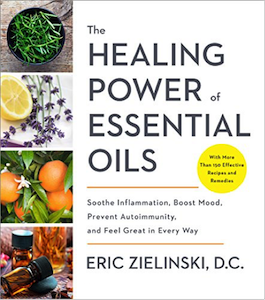
The Healing Power of Essential Oils: Soothe Inflammation, Boost Mood, Prevent Autoimmunity, and Feel Great in Every Way by Eric Zielinski, launched last week and I promised you a book review so here goes. I have always loved Dr. Z’s research-based approach and practical how-tos when it comes to essential oils and was so excited for this book. Well, all I can say is that this is one of the best books I’ve read this year! I read it cover-to-cover in one sitting and I have lists of things I want to try!

It’s perfect for you if you’re:

  • a total newbie to essential oils and have been hearing how great they are and want to learn the basics (and the science)
  • someone like me who does has been using essential oils for a few years but could really take things up notch in terms of therapeutic use and how to use blends
  • someone who is well versed in using essential oils therapeutically, making your own cleaning products and self-care products and wants the science behind each essential oil
  • looking for a great resource to give a loved one like your sister or mom, or to a friend, and if you’re a practitioner, as a resource for your clients and patients, so they too can benefit by what you already know
  • looking for a non-branded resource (Dr. Z has no brand loyalty but does teach you how to find quality brands of essential oils)

Here are some of the many reasons I love this book:

  • Dr. Z emphasizes biochemical individuality – just like with food and nutrients there is no one size fits all with essential oils and you have to find what works for you. He teaches you how to figure that out in the recipes sections
  • He addresses the ‘overwhelmed and where do I start’ aspect – he calls it “paralysis by analysis”. One way he does this in a few ways: 7 steps to start using them, a daily morning and/or evening practice and the tops oils everyone should start with. Here’s another idea (from me): start with a calming essential oil like lavender or neroli!
  • The background information is excellent: the source of the essential oil (for example cinnamon bark vs the leaf); why knowing the chemotype is important in terms of their different therapeutic effects; shelf life; how to find quality oils; why plants native to an area are better; dilution rules; inhalation, topical use and ingestion of oils
  • The research is comprehensive and best of all he refers to studies where the essential oil has been shown to provide therapeutic value, rather than referencing studies on various constituents
  • There is extensive coverage on carrier oils (like jojoba, coconut oil, fractionated coconut oil etc.) and emulsifiers (like Castile soap and aloe vera oil). He also shares that liquid stevia is a solubilizer (this one intrigues me)
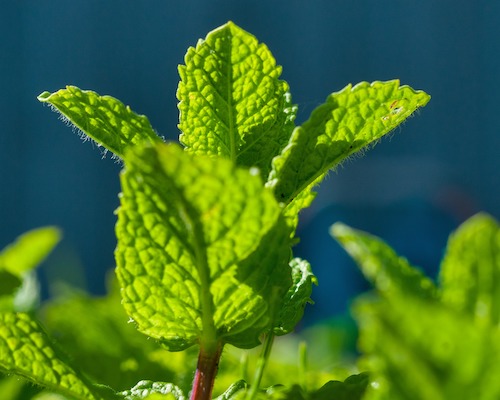
  • All the wonderful recipes – from home cleaning to personal care products to many products for addressing specific health conditions like aching muscles, wounds, candida, dandruff and much more. Here are a few ways he shares how peppermint essential oil, one of my favorites, can help: as a digestive aid (I use it topically in coconut oil, together with lavender at night and love it!), to ease muscle tension, to clear sinuses, as a potential solution to antibiotic-resistant infections (I’ve used lavender and lemongrass when I had a boil but wasn’t aware peppermint had similar properties), to give you focus and provide an energy pick-up and much more.  Here is one application for your hair/scalp:

A few drops of peppermint essential oil included in your shampoo and conditioner will tingle your scalp and wake your senses. As a bonus, peppermint’s antiseptic properties can also help prevent or remove both lice and dandruff.
 

  • Here is a safe and effective bathroom cleaner recipe from the book – and it smells wonderful! I love the added bonus of getting a mood boost while cleaning!

    Tea Tree Citrus Bathroom Cleaner

    The star of this blend is orange essential oil, which is a known mood booster. You’ll be happier even though you’re stuck cleaning the bathroom!

    1 tablespoons Dr. Bronner’s liquid castile soap

    2 tablespoons baking soda

    20 drops tea tree essential oil

    15 drops orange or lemon essential oil (or 7 drops of each)

    15 drops lemon eucalyptus or lemon myrtle essential oil

    2 cups distilled water

    Supplies: 32 oz spray bottle, preferably glass

    1. Combine the liquid soap, baking soda and essential oils in the spray bottle and mix well.
    2. Pour in the water and shake well
    3. Use as you would any other bathroom cleaner. Shake before use.

    Elsewhere in the book, Dr. Z writes about how eucalyptus is highly antimicrobial, helping to clear surfaces of potential germs (and says you can use regular eucalyptus in the above recipe too).

  • There is a big focus on women’s health and anxiety and depression, so it’s perfect for you. The recipes for PMS, perimenopause and menopause are fabulous – with help for anxiety, depression, insomnia, vaginal dryness and much more. Here is one where clary sage helped with depression (anxiety was not assessed but we know high cortisol and low serotonin impacts both anxiety and depression)

Clary sage offers antidepressant effects as described in a 2014 study that was conducted on twenty-two women in Korea. The trial measured neurotransmitter levels found in blood samples of menopausal women and discovered that, by simply inhaling clary sage oil, levels of the stress hormone cortisol dropped considerably and serotonin levels were elevated. The result was an overall improvement in depression symptoms.

  • There is an entire chapter on essential oils for fertility, pregnancy and postpartum
  • Photosensitivity is explained and he lists all the oils that fall into this category (such as bergamot and expressed lemon)

Some essential oils can increase the photosensitivity of your skin. For example, chemicals in the citrus family such as bergapten are notable for their phototoxic effects. When bergapten is left on the skin and then exposed to the sun, it can amplify the effect of UV rays, potentially causing sunburn and leading to sunspots. Some people just decide not to use any bergapten-heavy oils topically, but simply avoiding the sun after use (for example, by applying them at night) is sufficient.

  • He addresses the concerns about lavender and tea tree being estrogenic and explaining why they are not (I get this question a lot!)
  • Plenty of oils and recipes for digestive support like a SIBO blend of a 1:1:1 ratio of caraway, lavender and neroli (which I am very interested in exploring further)

As you can see, this book is comprehensive, research-based, practical and I would even say pretty exciting and fun! Here is the official blurb about the book:

Eric Zielinski, D.C., host of the Essential Oils Revolution summits, offers a soup-to-nuts guide to mastering essential oils for vibrant health and well-being, featuring dozens of recipes and formulations for restful sleep, reduced inflammation, balanced hormones, and more.

Achieving true health is not an easy task. For many people, it might be easier to pop a pill or push aside lingering discomfort in favor of finishing everything on your to-do list. In The Healing Power of Essential Oils, Eric Zielinski, D.C. shows readers how to make their health a priority with the life-changing benefits of essential oils. Essential oils are the natural solution to everything from anxiety and depression to deep-seated inflammation.

For beginners, Dr. Z teaches everything you need to know to get started, including the top seven oils you should stock from Day 1 and the commonly used techniques and tools. He illustrates daily practices you can follow to enjoy the properties of essential oils, including a five-minute devotional using frankincense and neroli to set you up for a productive and stress-free day, and a simple bedtime routine harnessing the soporific effects of lavender.

Backed by extensive research, Dr. Z also supplies essential oil blends that promote hormone balance, reduced inflammation, improved digestion, increased immunity, and so much more. You’ll be armed with over 150 recipes for every health need, and a special section on women’s health includes dozens of formulations for PMS, fertility, pregnancy, candida, and menopause. Even those well-versed in essential oils will benefit from this thorough approach. With your newfound knowledge, you can begin tailoring an essential oils practice to your unique pain points and lifestyle right away – and start experiencing amazing results.

Grab a copy from your nearest bookstore or online store such as Amazon (this is my amazon affiliate link)

Be sure to grab the bonus gifts here after you’ve purchased the book

And let us know what you think and some of your favorite recipes and how they have helped you!

Filed Under: Books, Essential oils Tagged With: anxiety, clary sage, cortisol, depression, Dr. Z, eric zielinski, essential oils, lavender, menopause, The Healing Power of Essential Oils

Blend of lavender, ylang-ylang, marjoram, and neroli reduces stress and lowers cortisol

February 19, 2018 By Trudy Scott 6 Comments

As you know I’m a big fan of essential oils and the healing benefits they offer for anxiety and stress. Here is one example of the power of essential oils for both reducing stress and lowering cortisol levels.

In this study, Essential oil inhalation on blood pressure and salivary cortisol levels in prehypertensive and hypertensive subjects, 83 participants who were hypertensive (high blood pressure) or prehypertensive were asked to inhale an essential oil blend of lavender, ylang-ylang, marjoram, and neroli with the following ratio (20 : 15 : 10 : 2).

The study group experienced the relaxation effects of this particular blend of essential oils leading to:

  • significant decreases in the concentration of salivary cortisol
  • reduced blood pressure
  • and stress reduction.

Here is the rationale for the particular blend they used in this study:

Lavender alleviates cardiac excitation, lowers BP [blood pressure], and is effective in hypertension and palpitations. Ylang-ylang lowers BP [blood pressure], alleviates palpitations and nervous system excitation, and promotes emotional relaxation. Marjoram lowers sympathetic nervous system activity and stimulates the parasympathetic nervous system, resulting in vasodilatation to reduce cardiac strain and decrease BP [blood pressure]. Neroli brings forth emotional soothing and comfort and is effective in cardiac palpitations secondary to shock or fear.

Are you new to essential oils or want to learn more about using them?

Dr. Z and Mama Z’s 10-part video online masterclass called Essential Oils for Abundant Living offers practical steps for using essential oils.  It is science-based (which I love!) and they address potential risks. Dr. Z shares this:

We pride ourselves on providing safe, scientific and practical advice that is all non-branded. We do not sell essential oils so, regardless of what your favorite brand is, the information you will learn in this program applies.

Not to mention, because we don’t sell essential oils, we are not restricted by government or “compliance” regulations and we can freely communicate what the research REALLY says about the healing power of essential oils!

And here is the amazing line-up of video lessons you’ll have access to when you register for Essential Oils for Abundant Living. After watching the Quick Start Guide, a new lesson will air each day:

Setting the Foundation

  • Lesson 1: Aromatherapy Quick-Start Guide
  • Lesson 2: Inhalation Guide & Safety Tips
  • Lesson 3: Topical Application Guide & Safety Tips
  • Lesson 4: Internal Use Guide & Safety Tips

Natural Solutions for a Toxic-Free Home

  • Lesson 5: DIY Body Care Products
  • Lesson 6: DIY Cleaning Products
  • Lesson 7: Cooking with Essential Oils 

Regaining Control of Your Health

  • Lesson 8: Preventing Disease with Essential Oils
  • Lesson 9: Treating Disease with Essential Oils
  • Lesson 10: Advanced Strategies & Protocols

This video series will

  • give you the confidence that you need to use essential oils to make healing remedies for your body, as well as non-toxic natural recipes for your home.
  • provide many golden nuggets that you can start putting into practice today (no matter where you are in your essential oil journey)
  • offer an all-you-can-eat buffet of expert tips, recipes and DIY ideas to help you and your family enjoy abundant health with essential oils!

Reserve your spot for Essential Oils for Abundant Living HERE!

I hope you enjoy it and learn a ton!

After the no-cost online airing you’ll have an opportunity to upgrade and get additional content and also join the wonderful Facebook group. I’m a member and it’s a fabulous resource for asking questions and sharing what’s working!

Filed Under: Essential oils Tagged With: anxiety, cortisol, essential oils, Essential Oils for Abundant Living, lavender, marjoram, neroli, stress, ylang-ylang

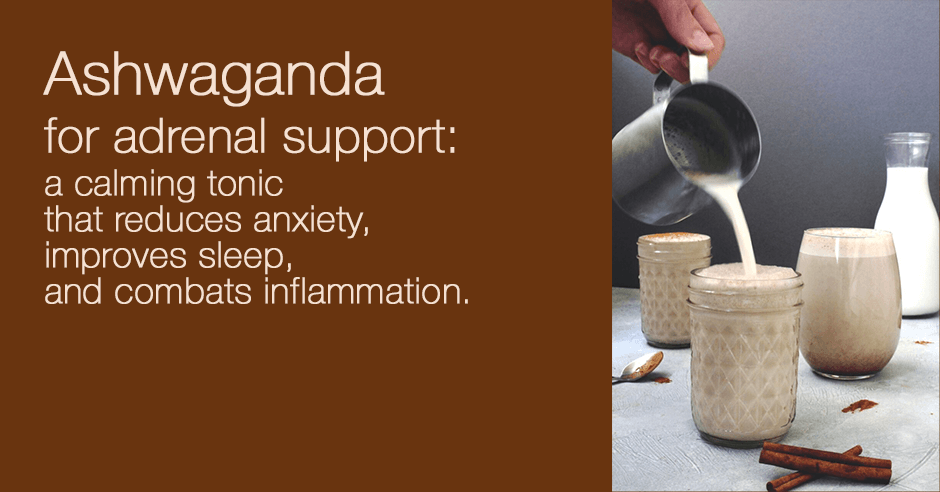
Ashwaganda for adrenal support: a calming tonic that reduces anxiety and improves sleep

September 16, 2017 By Trudy Scott 17 Comments

Overactive adrenals can leave you feeling like you’re constantly in “fight or flight” mode. First, your body releases high levels of stress chemicals like adrenaline and cortisol. To ensure you’re ready to defend yourself or run, these chemicals spike your blood sugar, as well as increasing heart rate, blood pressure, and insulin levels – making you feel anxious, stressed and wide awake at night.

Nature offers plenty of wonderful herbal remedies to support the adrenals. Herbal adaptogens such as ashwaganda and rhodiola are two of my favorite herbs for the adrenals. They gently calm your overactive system helping your body damp down your fight or flight response and reduce stress and anxiety.

  • Ashwaganda is often called “Indian Ginseng” and is widely used in Ayurvedic medicine to lower stress and stabilize thyroid hormones. It is a calming tonic that reduces anxiety, improves sleep, and combats inflammation.
  • Rhodiola is a another potent herbal adaptogen that helps your body reduce anxiety and irritability. At the same time, it boosts immune function, hormonal balance, and concentration.

You can learn how to use herbs like this in your everyday routine in this no-cost online workshop “How To Use Everyday Herbs and Spices To Rebalance Your Hormones”

In this online workshop, you will learn about 20 healing herbs and spices to help support and heal your thyroid, adrenals, menopause, weight, hair loss, cellulite, PCOS, hot flashes (and more).

  • Skullcap – used to treat conditions like panic attacks, anxiety and also helps to promote better quality sleep.
  • Chamomile is well known for its calming properties. After people drink chamomile tea their levels of glycine increase. Glycine is a nerve relaxant with mild sedative properties – all things that can help you to de-stress. Chamomile also has anti-spasmodic properties that help to relieve menstrual cramps in women. It also contains a potent flavonoid called apigenin, a mild tranquilizer that can help benefit sleep onset and sleep quality.
  • Lavender made into a tea is an effective tonic for jittery nerves because it encourages a calmer state of mind. Research comparing the use of lavender to (synthetic) benzodiazepine medication for anxiety has found it provides equal benefit, minus all the side effects.

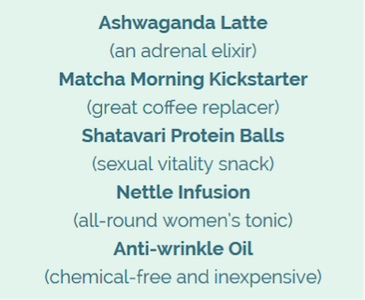
You will also learn 5 simple and delicious herbal recipes to restore and rebalance your hormones

Watch this video snippet to get a taste of some of what Magdalena will be covering in the online herbal workshop. One thing she’ll be making is the wonderful and nourishing Ashwaganda Latte for adrenal support.

And here is the recipe for the Ashwaganda Latte

Author: Magdalena Wszelaki

Ingredients

  • 1 cup of milk (almond or hazelnut works well, if using coconut milk, I would suggest ½ cup coconut milk and ½ cup water)
  • 1 teaspoon ashwagandha powder
  • ½ teaspoon cinnamon powder
  • ½ teaspoon maple syrup or honey

How To Make

  1. Warm the milk, then add the powdered spices and maple syrup or honey
  2. Stir well, using the whisk to blend, adjusting for sweetness if necessary
  3. Pour into a nice cup and drink an hour before bed

Equipment: Medium saucepan, whisk, strainer

You’ll also learn how to avoid common chemicals found in everyday skincare, personal care and house cleaning products that disrupt your hormones, and discover which herbs are best for your individual needs.

Hope to see you there! You can register for this online herbal workshop here

You may remember Magdalena from the Anxiety Summit and her wonderful interviews on eating for hormone balance! She is now taking hormone balance to the next level by teaching us how to use herbs. This wonderful workshop is a taste of what’s to come in her upcoming longer program so stay tuned for more on that!

Filed Under: Adrenals, Hormone Tagged With: adrenals, anxiety, ashwaganda, herbs, hormones, lavender, rhodiola, sleep, stress

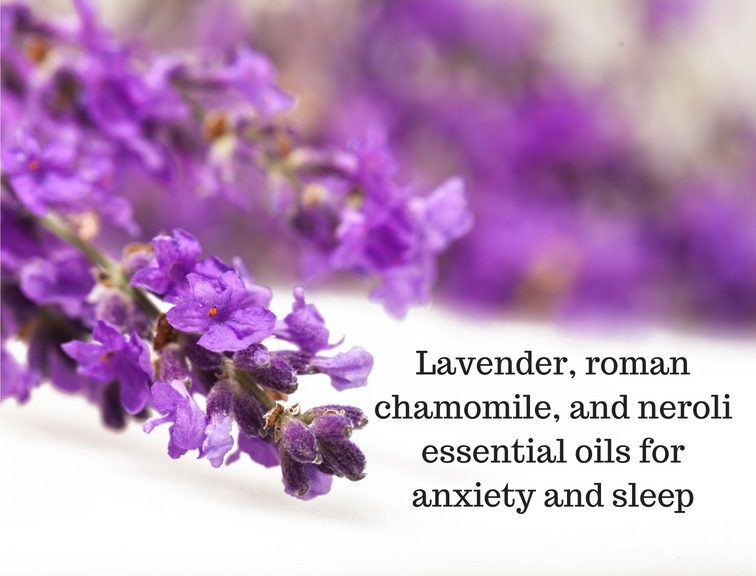
Lavender, roman chamomile, and neroli essential oils for anxiety and sleep

August 11, 2016 By Trudy Scott Leave a Comment

Lavender, roman chamomile, and neroli essential oils for anxiety and sleep

Lavender, roman chamomile, and neroli essential oils have been found to be beneficial for anxiety and sleep in patients going through a surgical procedure. 

The aromatherapy blend was in a ratio of 6 :  2 : 0.5  for lavender: roman chamomile: neroli.  

Participants received 10 treatments before percutaneous coronary intervention/PCI (formerly known as angioplasty with stent) and the same essential oil blend was inhaled another 10 times after the procedure.

Here are the details of the study: Effects of aromatherapy on the anxiety, vital signs, and sleep quality of percutaneous coronary intervention patients in intensive care units

The purpose of this study was to investigate the effects of aromatherapy on the anxiety, sleep, and blood pressure (BP) of percutaneous coronary intervention (PCI) patients in an intensive care unit (ICU). Fifty-six patients with PCI in ICU were evenly allocated to either the aromatherapy or conventional nursing care.

Outcome measures patients’ state anxiety, sleeping quality, and BP (blood pressure).

The aromatherapy group showed significantly low anxiety and improving sleep quality compared with conventional nursing intervention.

If these surgical patients could see these results imagine how these essential oils could help you if you suffer from anxiety and/or sleep issues.

Join us on the Essential Oils Revolution 2 to hear me cover this and  and other essential oils combinations for anxiety and insomnia.

essential-oils-revolution-banner

Here is the summit registration link:
https://qt247.isrefer.com/go/EOR16reg/trudyscottcn/

Have you found that this combination helps you with anxiety and sleep?  What ratio works for you?


Filed Under: Anxiety and panic, Essential oils, Events, Sleep Tagged With: anxiety, chamomile, essential oils, insomnia, lavender, neroli, sleep

Bergamot, lavender and ylangylang for anxiety and high blood pressure

August 4, 2016 By Trudy Scott 23 Comments

bergamot-eo

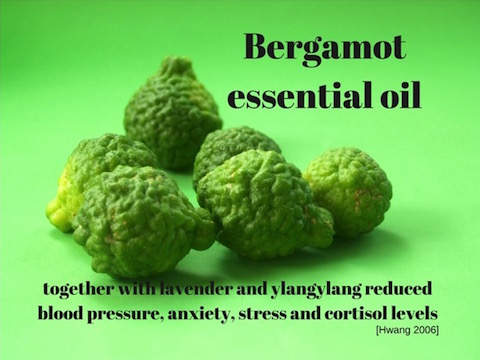
The wonderful combination of bergamot, lavender and ylangylang essential oils have been found to lower high blood pressure and reduce anxiety.

The study The effects of the inhalation method using essential oils on blood pressure and stress responses of clients with essential hypertension was published in 2006 and looked at 52 people who were anxious and stressed, and had high blood pressure.

The participants were placed in an essential oil group, a placebo group, and a control group by random assignment.

The essential oil group used aromatherapy inhalation by blending lavender, ylangylang, and bergamot essential oils once a day for 4 weeks.

To evaluate the effects of aromatherapy, blood pressure and pulse were measured two times a week and serum cortisol levels, catecholamine levels, subjective stress, and state anxiety were measured before and after treatment in the three groups.

 Here are the results of the study:

The blood pressure, pulse, subjective stress, state anxiety, and serum cortisol levels among the three groups were significantly statistically different.

The results suggest that the inhalation method using essential oils can be considered an effective nursing intervention that reduces psychological stress responses and serum cortisol levels, as well as the blood pressure of clients with essential hypertension.

They did not see any significant differences in catecholamine levels among the three groups but keep in mind this was only a 4-week study. And to see those other results in just 4 weeks is very encouraging! A simple intervention and yet very profound.

Dietary changes and amino acids and other nutrients are my go-to approach for anxiety but I’m finding more and more of my clients benefit with the addition of essential oils.

Essential oils are also very beneficial in the following instance where amino acids and other supplements can’t be taken or are not tolerated:

  • Young children (inhalation aromatherapy and creams/lotions work well here)
  • Older adults (creams/lotions work well when there is loss of smell with dementia or Alzheimer’s disease)
  • Someone going through benzodiazepine withdrawal and is too sensitive for supplements or can only tolerate small amounts

I talk about this research and other essential oils for anxiety and stress in the upcoming Essential Oils Revolution 2 summit which runs August 22 to 29. I’m thrilled to be part of this event!

essential-oils-revolution-banner

People all over the world are scrambling to find the answer to health problems like diabetes, pain, chronic fatigue, anxiety, estrogenic cancers and more. Millions are turning to natural solutions and many have experienced great success with essential oils. Learn if oils could be the missing ingredient for you and your family! What you will gain from this event:

  • Why essential oils are truly nature’s best medicine
  • How to use essential oils safely and effectively
  • Tips for regaining control of your health
  • Home recipes, guides, safety protocols and best practices
  • And so much more!

More than 165,000 people joined the 2015 Essential Oils Revolution. This year, the experts in aromatherapy, medicine and research will deliver in-depth discussion, debunk common myths and help you learn about the possibility of regaining your health using essential oils.

I can’t wait to learn more and hope you’ll tune in too. Here is the registration link:
https://qt247.isrefer.com/go/EOR16reg/trudyscottcn/

Let’s get the conversation started now. Feel free to share which essential oils you use for anxiety and stress? And how do you use them?

Filed Under: Essential oils, Events Tagged With: anxiety, Bergamot, cortisol, Essential Oils Revolution, high blood pressure, lavender, stress, Ylangylang

The Anxiety Summit – Deconstructing medical anxiety & evidence-based natural solutions

November 11, 2014 By Trudy Scott 8 Comments

Sayer Ji_Quote_Anxiety2

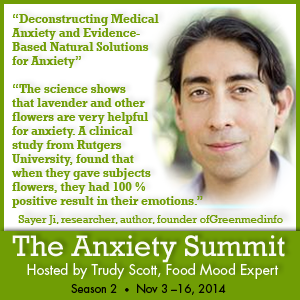
Sayer Ji, researcher, author, founder of Greenmedinfo was interviewed by host of the Anxiety Summit, Trudy Scott, Food Mood Expert and Nutritionist, author of The Antianxiety Food Solution.

Deconstructing medical anxiety and evidence-based natural solutions

  • how modern medical screening and interventions are based on an outdated evidence-base and lead to fear and anxiety
  • the top evidence-based natural interventions for anxiety: lavender, aromatherapy, flowers, plants, forest bathing, probiotics (and the gut-brain axis), magnesium
  • foods that can cause anxiety: gluten/all grains
  • what foods to include: real whole foods, healthy fats, eggs (and issues with statins)
  • ‘alternative’ non-invasive modalities to reduce stress/anxiety – yoga, EFT, music, shiatsu, dancing and aromatherapy

Here are some snippets from our interview

The science shows that lavender and other flowers are very helpful for anxiety. A clinical study from Rutgers University, found that when they gave subjects flowers, they had 100 percent positive result in their emotions.

Lavender has been studied both as an aromatherapeutic agent where you have these small molecules in the volatile fragrance that go right into the olfactory lobe and then start modulating all these different pathways in the brain. Now there are many different ways of looking at this. There’s actually research in the animal model specifically on it being serotonergic, meaning boosting the serotonin levels or preventing their turnover so they last longer, but the reality is there are so many other mechanisms that have been identified. For example, it inhibits what is known as a voltage-dependent calcium channel in a way similar to the drug Pregabalin, also known as Lyrica. And then there’s probably 10 or 20 other different ways in which is likely modulates traditional drug targets in the brain and that’s because the brain is so complex. We’re dealing with hundreds of different biomolecules, many of them classified as neurotransmitters that are making the magic of the chemistry of our brain-produced emotions and feelings so I don’t ever imagine we’ll ever fully understand how it works.

Here is a great blog post from greenmedinfo: Evidence-Based Aromatherapy: Stress Relief And Much More

Here is more information on the Rutgers flowers study, that offered convincing evidence that flowers may be potent mood elevators.  I really love this one!  How did you feel the last time you received flowers?  And when did you last give someone flowers?

I often blog about the joys of nature and getting outdoors and just love this study on forest therapy (also sometimes called forest bathing): Psychological relaxation effect of forest therapy: results of field experiments in 19 forests in Japan involving 228 participants

these results suggest that the forest environments have significant beneficial and relaxing effects on human’s moods compared with the urban environments.

Here is the study that found participants experienced empathy when they smelled the anxiety of another participant: Induction of empathy by the smell of anxiety 

You can get access to Sayer Ji’s  Wisdom of Food eCourse here (use code: cureanxiety)

If you are not already registered for the Anxiety Summit you can get live access to the speakers of the day here www.theAnxietySummit.com

Filed Under: Antianxiety, Anxiety and panic, The Anxiety Summit 2 Tagged With: anxiety, fear, flowers, greenmedinfo, lavender, music, Sayer Ji, the anxiety summit, Trudy Scott, yoga

  • « Go to Previous Page
  • Page 1
  • Page 2
  • Page 3
  • Go to Next Page »

Primary Sidebar

NEW! GABA QuickStart Homestudy (with special intro pricing)

gaba quickstart homestudy

Free Report

9 Great Questions Women Ask about Food, Mood and their Health

You'll also receive a complimentary subscription to my ezine "Food, Mood and Gal Stuff"


Connect with me

Popular Posts

  • Amino Acids Mood Questionnaire from The Antianxiety Food Solution
  • The Antianxiety Food Solution Amino Acid and Pyroluria Supplements
  • Pyroluria Questionnaire from The Antianxiety Food Solution
  • Collagen and gelatin lower serotonin: does this increase your anxiety and depression?
  • Tryptophan for the worry-in-your-head and ruminating type of anxiety
  • GABA for the physical-tension and stiff-and-tense-muscles type of anxiety
  • The Antianxiety Food Solution by Trudy Scott
  • Seriphos Original Formula is back: the best product for anxiety and insomnia caused by high cortisol
  • Am I an anxious introvert because of low zinc and vitamin B6? My response to Huffington Post blog
  • Vagus nerve rehab with GABA, breathing, humming, gargling and key nutrients

Recent Posts

  • What do I use instead of Seriphos to help lower high cortisol that is affecting my sleep and making me anxious at night?
  • BeSerene™ GABA/theanine cream eases severe muscle tension in her neck/shoulders, prevents her bad headaches and quells her anxiety
  • How the correct approach, dose and sublingual use of GABA can be calming and not cause a flushed and itchy face and neck
  • The amino acid glutamine improves low mood by addressing gut health, and it has calming effects too
  • Flight anxiety with heightened breath, physical tension and also fearing the worst (the role of low GABA and low serotonin)

Categories

  • 5-HTP
  • AB575
  • Addiction
  • ADHD
  • Adrenals
  • Alcohol
  • Allergies
  • Alzheimer's disease
  • Amino Acids
  • Anger
  • Antianxiety
  • Antianxiety Food Solution
  • Antidepressants
  • Anxiety
  • Anxiety and panic
  • Autism
  • Autoimmunity
  • benzodiazapines
  • Bipolar disorder
  • Books
  • Caffeine
  • Cancer
  • Candida
  • Children/Teens
  • Collagen
  • Cooking equipment
  • Coronavirus/COVID-19
  • Cravings
  • Depression
  • Detoxification
  • Diabetes
  • Diet
  • DPA/DLPA
  • Drugs
  • EFT/Tapping
  • EMF
  • EMFs
  • Emotional Eating
  • Endorphins
  • Environment
  • Essential oils
  • Events
  • Exercise
  • Fear
  • Fear of public speaking
  • Fertility and Pregnancy
  • Fish
  • Food
  • Food and mood
  • Functional neurology
  • GABA
  • Gene polymorphisms
  • General Health
  • Giving
  • Giving back
  • Glutamine
  • Gluten
  • GMOs
  • Gratitude
  • Gut health
  • Heart health/hypertension
  • Histamine
  • Hormone
  • Hyperparathyroidism
  • Hypoglycemia
  • Immune system
  • Inflammation
  • Insomnia
  • Inspiration
  • Introversion
  • Joy and happiness
  • Ketogenic diet
  • Lithium orotate
  • Looking awesome
  • Lyme disease and co-infections
  • MCAS/histamine
  • Medication
  • Men's health
  • Mental health
  • Mercury
  • Migraine
  • Mold
  • Movie
  • MTHFR
  • Multiple sclerosis
  • Music
  • NANP
  • Nature
  • Nutritional Psychiatry
  • OCD
  • Osteoporosis
  • Oxalates
  • Oxytocin
  • Pain
  • Paleo
  • Parasites
  • Parkinson’s disease
  • PCOS
  • People
  • PMS
  • Postpartum
  • PTSD/Trauma
  • Pyroluria
  • Questionnaires
  • Real whole food
  • Recipes
  • Research
  • Schizophrenia
  • serotonin
  • SIBO
  • Sleep
  • Special diets
  • Sports nutrition
  • Stress
  • Sugar addiction
  • Sugar and mood
  • Supplements
  • Teens
  • Testimonials
  • Testing
  • The Anxiety Summit
  • The Anxiety Summit 2
  • The Anxiety Summit 3
  • The Anxiety Summit 4
  • The Anxiety Summit 5
  • The Anxiety Summit 6
  • Thyroid
  • Thyroid health
  • Toxins
  • Tryptophan
  • Tyrosine
  • Uncategorized
  • Vegan/vegetarian
  • Women's health
  • Yoga

Archives

  • October 2025
  • September 2025
  • August 2025
  • July 2025
  • June 2025
  • May 2025
  • April 2025
  • March 2025
  • February 2025
  • January 2025
  • November 2024
  • October 2024
  • September 2024
  • August 2024
  • July 2024
  • June 2024
  • May 2024
  • April 2024
  • March 2024
  • February 2024
  • January 2024
  • December 2023
  • November 2023
  • October 2023
  • September 2023
  • August 2023
  • July 2023
  • June 2023
  • May 2023
  • April 2023
  • March 2023
  • February 2023
  • January 2023
  • December 2022
  • November 2022
  • October 2022
  • September 2022
  • August 2022
  • July 2022
  • June 2022
  • May 2022
  • April 2022
  • March 2022
  • February 2022
  • January 2022
  • December 2021
  • November 2021
  • October 2021
  • September 2021
  • August 2021
  • July 2021
  • June 2021
  • May 2021
  • April 2021
  • March 2021
  • February 2021
  • January 2021
  • December 2020
  • November 2020
  • October 2020
  • September 2020
  • August 2020
  • July 2020
  • June 2020
  • May 2020
  • April 2020
  • March 2020
  • February 2020
  • January 2020
  • December 2019
  • November 2019
  • October 2019
  • September 2019
  • August 2019
  • July 2019
  • June 2019
  • May 2019
  • April 2019
  • March 2019
  • February 2019
  • January 2019
  • December 2018
  • November 2018
  • October 2018
  • September 2018
  • August 2018
  • July 2018
  • June 2018
  • May 2018
  • April 2018
  • March 2018
  • February 2018
  • January 2018
  • December 2017
  • November 2017
  • October 2017
  • September 2017
  • August 2017
  • July 2017
  • June 2017
  • May 2017
  • April 2017
  • March 2017
  • February 2017
  • January 2017
  • December 2016
  • November 2016
  • October 2016
  • September 2016
  • August 2016
  • July 2016
  • June 2016
  • May 2016
  • April 2016
  • March 2016
  • February 2016
  • January 2016
  • December 2015
  • November 2015
  • October 2015
  • September 2015
  • August 2015
  • July 2015
  • June 2015
  • May 2015
  • April 2015
  • March 2015
  • February 2015
  • January 2015
  • December 2014
  • November 2014
  • October 2014
  • September 2014
  • August 2014
  • July 2014
  • June 2014
  • May 2014
  • April 2014
  • March 2014
  • February 2014
  • January 2014
  • December 2013
  • November 2013
  • October 2013
  • September 2013
  • August 2013
  • July 2013
  • June 2013
  • May 2013
  • April 2013
  • March 2013
  • February 2013
  • January 2013
  • December 2012
  • November 2012
  • October 2012
  • August 2012
  • July 2012
  • June 2012
  • May 2012
  • April 2012
  • March 2012
  • February 2012
  • January 2012
  • December 2011
  • November 2011
  • October 2011
  • September 2011
  • August 2011
  • July 2011
  • June 2011
  • May 2011
  • April 2011
  • March 2011
  • February 2011
  • January 2011
  • December 2010
  • October 2010
  • September 2010
  • July 2010
  • May 2010
  • April 2010
  • March 2010
  • February 2010
  • January 2010
  • November 2009

Share the knowledge!

The above statements have not been evaluated by the Food and Drug Administration. Products listed in this website are not intended to diagnose, treat, cure or prevent any disease.

The information provided on this site is for informational and educational purposes only and is not intended as a substitute for advice from your physician or other health care professional. You should consult with a healthcare professional before starting or modifying any diet, exercise, or supplementation program, before taking or stopping any medication, or if you have or suspect you may have a health problem.


Copyright © 2026 Trudy Scott. All Rights Reserved. | Privacy | Terms and Conditions | Refund Policy | Medical Disclaimer

Free Report

9 Great Questions Women Ask about Food, Mood and their Health

You’ll also receive a complimentary subscription to my ezine “Food, Mood and Gal Stuff”