• Skip to primary navigation
  • Skip to main content
  • Skip to primary sidebar

everywomanover29 blog

Food, Mood and Women's Health – Be your healthiest, look and feel great!

  • Blog
  • About
  • Services
  • Store
  • Resources
  • Testimonials
  • The Book
  • Contact
  • Search this site

insomnia

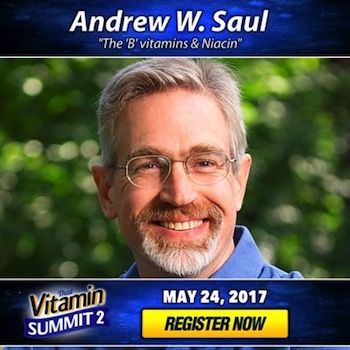
Niacin for anxiety and insomnia: Andrew W. Saul on That Vitamin Summit

May 16, 2017 By Trudy Scott 57 Comments

If you have trouble calming down or maybe difficulty sleeping at night, niacin may be worth investigating and trialing. Andrew W. Saul addresses this B vitamin on That Vitamin Summit which starts later this week and runs May 18 – 24 2017. (Note that it starts on a Thursday and not the usual Monday)

He covers the four types of niacin:

Niacin or plain old niacin, niacinamide, a no flush form that works just right for all mental and emotional issues but does not work for cholesterol issues. Inositol hexanicotinate which works well for everything but you have to use more it costs a little more money and it doesn’t work as well and then sustained release niacin which is prescription, expensive and has the most side effects.

Andrew discusses how to experiment and what you can expect in the way of flushing:

First of all you personally can experiment by trying some niacin and seeing how you feel. An example of this would be a healthy person who has a little trouble calming down maybe difficulty sleeping at night. Maybe they’re a little more anxious than they think they should be and perhaps taking some niacin would be a good thing to try. You could open up with 500 milligrams of niacin, breakfast lunch and dinner.

Now you’re probably going to flush and by the way if you have it with a meal you don’t flush as much. You don’t flush as quickly as you do if you take it on an empty stomach but you are still going to flush. The weird thing is you’re not going to flush for a couple of hours because you’re going to have the niacin with all that food and if you take the niacin in the middle of the meal or at the end of the meal there could be quite a delay before you have your flush.

Andrew does share what he calls “my wimpy way of taking niacin” where you slowly but surely increase from a low dose to avoid the flush.

He laughs about how Dr. Abram Hoffer was so fond of using niacin that he would tell people look just tough it out: “Tolerate the flush, it’s going to take a couple of weeks.”

And he also shares that Dr. Hoffer was his mentor and how Dr. Hoffer saw dramatic results with schizophrenia patients:

Now Dr. Abram Hoffer the world’s expert on niacin who started studying niacin in the early 1950’s and he was my personal mentor many decades later. Dr. Hoffer was a psychiatrist, a PhD as well as an MD and he treated over five thousand patients with niacin in his medical career.

The amount of niacin that you need for schizophrenia tends to be very high. Dr. Hoffer’s standard prescription was three thousand milligrams a day, divided into three doses of one thousand milligrams each.

It’s a fascinating interview and the most detailed one I’ve yet to hear on the topic of niacin. It’s not to be missed!

He goes on to cover the following

  • niacin for the treatment of alcoholic depression
  • other B vitamins like thiamine, vitamin B12, vitamin B6 and folate
  • plus multivitamins and whole food vitamins

I hope you can join us on That Vitamin Summit brought to you by makers of That Vitamin Movie which has been watched online by over one million people since its release in January 2016.

There are over 80 years of documented evidence that show how humble vitamins, minerals and other nutrients (such as amino acids – the topic of my interview) can prevent, and even cure major diseases like diabetes, arthritis heart disease and anxiety and depression. That Vitamin Summit 2 has assembled over 20 top experts to show YOU how to use these nutrients to increase your health and well-being almost immediately.

Here is the registration link for the summit which starts later this week on Thursday May 18 (note the Thursday start date)
Filed Under: Events Tagged With: Andrew W. Saul, anxiety, calming, inositol hexanicotinate, insomnia, niacin, niacinamide, That Vitamin Summit

Seriphos Original Formula is back: the best product for anxiety and insomnia caused by high cortisol

January 20, 2017 By Trudy Scott 296 Comments

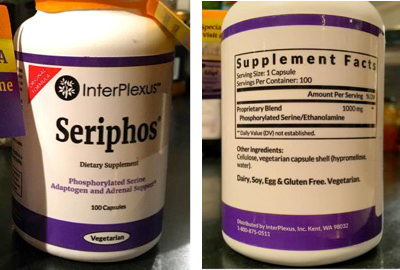
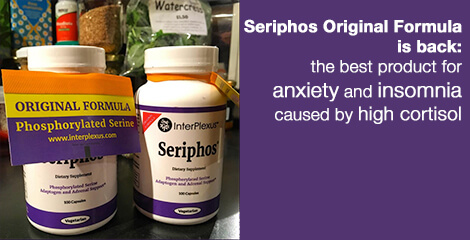
Seriphos “Original Formula” with a red triangle on the left side of the bottle (Photo credit: Drew Todd)

Interplexus changed its proprietary formula for Seriphos, a phosphorylated serine product, sometime March/April 2016. It was changed to a form which no longer worked for many people with the anxiety and insomnia that is associated with high levels of cortisol at night.

Thanks to feedback from folks in my community I investigated and blogged about this here: Seriphos has been reformulated – what do I use to lower high cortisol?, sharing information about labeling confusion and many possible alternatives.  I also looked into Relora, a standardized/patented Magnolia bark extract and Phellodendron bark extract, as a very viable alternative.

But I was hoping, as were many of you, that they’d hear all the requests and complaints from their loyal users and practitioners like myself and bring back the original formula.

This week a number of people in my community notified me that the original Seriphos is back so I reached out to Interplexus again. I had been watching their site and had not seen any announcement just a banner stating it’ll be ready Dec 2016 (which is still on the site as of this writing). So I emailed Interplexus earlier this week:

Just checking to see if you have a status update on this please?  When will it be ready and when can we expect to see it in online stores? Can it be purchased from Interplexus directly? Can you also please share how we’ll know it’s the new formulation and are you able to guarantee it’s the exact same formula as before?

And the response from Interplexus:

Seriphos has been in stock for about 3 weeks now and is widely available online, we are suggesting retail customers search the product online and purchase from the most convenient retailer because at this time we [Interplexus] are wholesale only. However we will be venturing into retail in the future.

The label now has a red triangle on the left side that states “Original Formula.” To avoid confusion we are asking that customers purchase from online stores that have the updated label. We can assure you that it is the exact same formula as before.

The Original Formula of Seriphos is now back! And we’re thrilled! Thank you Interplexus!

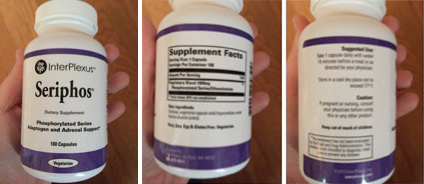
(Photo credit: Julie Matthews)

This is what the old bottle looked like before it was reformulated. The label reads: Proprietary Blend 1000mg Phosphorylated Serine/Ethanolamine.

(Photo credit: Drew Todd)

This is the label from the “Original Formula” – the new Seriphos just reintroduced

As you can see the new “Original Formula” has the red triangle on the front and the back also reads: Proprietary Blend 1000mg Phosphorylated Serine/Ethanolamine.

I’m sharing all this and the images for a few reasons:

  • There was some confusion with the labels when it was reformulated earlier in 2016 (you can see what I mean here)
  • If you need it I want to make sure you get the correct one and
  • In the last week I’ve had three reports from people who have the “Original Formula” and feel it’s not working as before.

I’m going to stay optimistic and hope they’ll see results after another week of use (maybe 2 weeks tops), although in the past I have had many clients say they notice a difference in a few days.

If you have new “Original Formula” and have started using it again and have observed it’s not working as before here are a few things to consider:

  • Give it a week or two to see if it’s going to work for you
  • Keep a food mood sleep log to make sure nothing else is affecting your anxiety and sleep (like accidental gluten exposure, caffeine, high FODMAPs food if you have SIBO
  • Your cortisol high may have shifted in the time you weren’t taking the old Seriphos pre-April 2016 and you may need to retest your salivary cortisol levels and adjust the timing accordingly
  • Think back to try and figure out if anything else may have change between then and now (a new medication started, a medication stopped, new supplements, dietary changes etc)

If this is the first time you’re reading about Seriphos here is some additional information: If you have high nighttime cortisol (as measured by an adrenal saliva test) it can cause insomnia and anxiety. Using 1-3 x Seriphos about 1-3 hours before the high cortisol is the best way I know for lowering the high cortisol and providing relief.

Here is some feedback from someone who commented on the blog:

I have been tested for cortisol and I have extremely high levels day and night. The old Seriphos [pre-April 2016] was working for me to reduce the internal jitters which would wake me several times a night with heart pounding and adrenalin rushing. I do not have a problem turning my brain off going to sleep – just problems waking several hours later (sometimes several times a night) – sometimes not being able to get back to sleep because I am wide awake.

And feedback from Julie Matthews, Certified Nutrition Consultant, Author of Nourishing Hope for Autism and founder of Bioindividual Nutrition Institute:

Seriphos is the best thing I found to combat high cortisol levels in the evening. I don’t need to take it every day, but if there is an event that gets my cortisol up such as: travel, speaking at a conference, or doing taiko too late at night, I could be awake for hours from high cortisol. When I take Seriphos, I can literally feel my system dramatically ratcheting down moment by moment and within an hour or less I am easily able to go to bed and sleep. I have tried other supplements and none of them work nearly as well as Seriphos for me. I’m so glad the “Original Formula” is back.

If you do have the new “Original Formula” and used the old Seriphos pre-April 2016, have you started using it again? We’d love to hear how you’re doing and how it compares to the Seriphos pre-April 2016?

If you’re a practitioner and have used the old Seriphos pre-April 2016 with success for helping clients/patients lower high cortisol we’d love to hear your feedback on the new “Original Formula.”

Thanks for the initial alert about the reformulation, thanks if you shared pictures with me, thanks if have been asking questions and sharing feedback here on the blog, and thanks if you contacted Interplexus! I love the community we are creating here!

UPDATE 3/7/2020: The new “Original Formula” of Seriphos is the same as the old Seriphos pre-April 2016 and is working as it always did, helping to lower high cortisol levels in order to ease anxiety that is due to high cortisol and improve sleep issues that are caused by high night-time or early morning cortisol. (I’ve been replying to comments to this effect but forgot to come back and update the blog.)

Filed Under: Supplements Tagged With: anxiety, cortisol, insomnia, seriphos

Seriphos has been reformulated – what do I use to lower high cortisol?

September 30, 2016 By Trudy Scott 121 Comments

seriphos
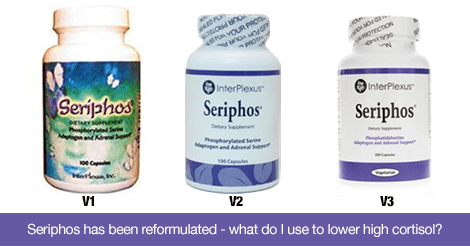
V1. The very old bottle (many years ago): Phospholylated Serine on the front

V2. Old label, original formulation (2 years ago?): Phospholylated Serine on the front

V3. New label, new formulation (5 months ago): Phosphatidylserine on the front

Last month I wrote a blog called Tryptophan and melatonin make a big difference but why do I still wake at 4am? and included a section about high night-time cortisol (measured with an adrenal salivary test) also being a factor with insomnia and waking in the night, often with anxiety. I then shared my top product for lowing high cortisol, Interplexus Seriphos, and had a number of readers (very kindly) inform me that Seriphos has been reformulated. One person shared this:

In your blog you recommend Interplexus Seriphos for those who have a high cortisol problem. What you may not know is that Interplexus changed its proprietary formula sometime March/April 2016 to a form which no longer works for many of us.

This is also true for me as I have been taking the new formula and the sleep issues have returned: waking at 2 am and not being able to go back to sleep. I have asked my functional medicine doctor and called Interplexus but they cannot help. Since you are an expert in such matters, PLEASE, help find another product like the old Seriphos (prior to March 2016) so that all of us who were happy with the old product can get back to the business of sleeping through the night.

Someone else shared this:

I was using the phosphorylated serine found in Interplexus Seriphos from November 2015 until present. For the first 6 months it was like a miracle pill calming me and leaving me feel normal, not like Niagara Falls was rushing through my veins.

Sometime in the spring 2016 I noticed the Seriphos was not working and read the reviews on Amazon that Interplexus had changed the formula.

I was not aware that the formulation had changed

I was not aware that the formulation had changed and love that I get to learn from my community too – thank you for letting me know!

I had not seen any new clients since just before the Anxiety Summit in June and my existing clients who are using the original Seriphos have enough stock to not have noticed the change or brought it to my attention.

It’s such a pity it has been reformulated because it’s been so powerful for lowering high cortisol and quickly when 1-3 x Seriphos (the original) are taken about 2-3 hours before the high cortisol. I first learned about this phosphorylated serine product when working with Julia Ross and continued to use it very successfully in my practice.

As you can see from the feedback above it truly was a lifesaver for these two women and for so many individuals.

I’m going to share what I have discovered thus far

I like to share what I know works but so many of you are desperately seeking a solution right now. I promised to look into what has happened so I’m going to share what I have discovered thus far.

It’s always helpful to learn from feedback from others (both positive and negative) so I read through Steve Gibson’s negative review on Amazon and found the very long thread of comments under this.

I also reached out to my colleagues to ask what they are now using:

  • some had not ever used Seriphos
  • some were also not aware it had changed (the old and new labels are deceptively similar)
  • some had used phosphatidyl serine and found Seriphos to be more effective
  • and many have had/do have success with phosphatidyl serine.

I also contacted Interplexus and was told there are no plans to go bring back the original formulation and they very nicely communicated that they’re sorry and feel they’ve done their best in communicating that it’s a new product.

As you can see from the images above the bottles, I tend to disagree and find it confusing:

V1. The very old bottle (many years ago): Phospholylated Serine on the front

V2. Old label, original formulation (2 years ago?): Phospholylated Serine on the front

V3. New label, new formulation (5 months ago): Phosphatidylserine on the front

So what are your options instead of Seriphos?

It’s going to be a good 3 months before I can definitively give you feedback so these are my suggestions right now since it’s too soon to know for sure. These are based on what I already know, some common sense, some of what we know from the research, feedback from colleagues, and feedback from real people who have been searching for alternatives and trying various combinations:

  • Cortisol Manager by Integrative Therapeutics (1 capsule contains 50mg phosphatidyl serine, theanine and other ingredients)
      • A colleague shared this: “Cortisol Manager can be dosed up to 2-3 tablets per day and used with or without additional phosphatidyl serine which can easily go as high as 600 mg.” He has seen salivary cortisol levels shift with this approach and shared: “Interestingly, I never saw those changes with Seriphos despite being a heavy user between 2009 and 2011 so I thought it was just hype.”
      • Feedback from someone on my blog: “Cortisol Manager was too stimulating with the Ashwagandha”
      • Feedback from a practitioner who first used Cortisol Manager personally and then switched to Seriphos at my recommendation: “Cortisol Manager did nothing for me. I dosed it high enough and took it for a month – but I felt nothing. Seriphos on the other hand, worked the same night, within an hour or two.”
  • Designs for Health PS 150 – Phosphatidylserine 150 mg: non-soy, sunflower sourced phosphatidyl serine with one capsule serving of 150mg
    • Someone shared this on Amazon: “We have equally good results with phosphatidyl serine, but the dose usually needs to be in the 300-500mg range, to equate to what 1 or 2 Seriphos capsules could do.” I don’t know which brand they use used.
    • Feedback from a colleague: “We started using PS150 from DFH and love it.” He often uses this in conjunction with another Designs for Health product called Catecholacalm.
  • Phosphatidyl Serine Powder 50 gms: One quarter teaspoon provides Phosphatidyl Serine 200 mg in a powder form.
    • This one is soy-derived (GMO-free) but may be easier to use to get higher doses
  • Enerphos by T.E. Neesby [Update Oct 2025 – this product is no longer on the Neesby site]
      • It is advertised to be same formula as the original Seriphos
      • Julia Ross recommends this as a replacement
      • One practitioner shared that she has had similar results with this product.
      • I’ve also had feedback from colleagues saying it works half as well. Perhaps doubling the dose would be more effective?
  • Lactium, also known as hydrolyzed casein
    • Biotics Research De-stress is a product I use with clients with good results. It’s calming and based on the research it also lowers high cortisol
  • There is very promising research on essential oils lowering cortisol levels – such as bergamot and I wonder if this approach could be incorporated too?

Update Nov 11, 2016: Relora, which is a proprietary combination of Magnolia bark extract and Phellodendron bark extract that studies show reduces cortisol and perceived daily stress and anxiety, improving mood and reducing fatigue.

I know the original Seriphos was very affordable and very effective for the cost. Using higher amounts of the above products and various combinations is likely to be much more expensive but at least it’s an option to provide relief until we find a longer term solution or until a Seriphos-type product becomes available.

Address all the possible underlying causes of high cortisol

We also don’t want to lose sight of why long-term use of Seriphos is needed and be sure to also focus on addressing all the possible underlying causes of high cortisol: stress, parasites, infections and inflammation, gluten sensitivity and other food sensitivities, low calorie eating, medication side-effects etc.

Please share what helps

If you’ve used Seriphos in the past and have found a solution please let us know.

If you are looking for an alternative to Seriphos please share this list with your practitioner in case they are not aware the formulation has changed. And have them help you find the right combination for your particular needs. Please come back and share what helps so we can all benefit.

If you are a practitioner and have your favorite product or combination please share what is working for your clients/patients.


Update November 18, 2016: I emailed Interplexus asking if they will be bringing back the original Seriphos formula and received this message from them:

Yes, the information is correct we will be returning the previous formula of Seriphos and are expecting to have it late November, unfortunately we do not have a completion date as of yet so the estimated time frame is not a guarantee. It will be the same formula as before and we will also manufacture a Phosphatidylserine standalone product in the future. If you have further questions or concerns feel free to contact, and you’re also welcome to check on the status of Seriphos periodically.

Update January 20, 2017:

The original Seriphos formula is back. This blog post has additional information – Seriphos Original Formula is back: the best product for anxiety and insomnia caused by high cortisol


Filed Under: Antianxiety Tagged With: anxiety, cortisol, Cortisol Manager, insomnia, phosphatidyl serine, phosphorylated serine, seriphos

Tryptophan and melatonin make a big difference but why do I still wake at 4am?

August 26, 2016 By Trudy Scott 113 Comments

waking-up-early

I get many questions on the blog about problems with sleep: not able to fall asleep, not waking rested and waking in the early hours and not being able to go back to sleep. By far the most common question is “Why do I still wake at 4am and can’t go back to sleep?”

So let me share one of the typical questions I receive and my feedback in the hope that something you read here may help you or someone you’re working with. Here is the question:

I purchased Lidtke l-Tryptophan and time release melatonin and notice a big difference in my sleep. Instead of waking up every two hours I’m sleeping better but still wake up at 4 am and can’t get back to sleep. GABA hasn’t helped. What can I take to get back to sleep and what are your thoughts on Seriphos Phosphorylated Serine? I think my anxiety has to do with my adrenals because I wake up in a sweat and am way past menopause.

Since she is seeing a big difference with tryptophan and timed-release melatonin, low serotonin is the likely root cause of her insomnia or at least one of the root causes. We always want to capitalize on what is already working. Too many people don’t see expected results with 1 x 500mg tryptophan at bedtime and 1mg timed-release melatonin and start looking for other solutions when the answer may be right in front of them.

Here are the steps I’d follow with a client with similar sleep challenges:

  • Try more tryptophan, increasing it slowly over the course of a few weeks in the hope that it more will provide more serotonin support. This is what I call an amino acid trial where you rate and log your improvements as you incrementally increase – with the goal of finding an optimal amount for your needs. We all have different needs and post menopause it’s not uncommon for women to experience anxiety, depression and insomnia related to low serotonin and fluctuating sex hormones. We also always want to capitalize on what is already working.
  • Also, to add to what’s working, add tryptophan mid-afternoon if it’s not already in place. When someone scores high on the low serotonin questionnaire the typical timing of tryptophan is mid-afternoon and an hour before bed (always away from protein). Serotonin levels start to decline mid-afternoon hence the benefits of a mid-afternoon dose. Start low and increase slowly.
  • I would also suggest trying the tryptophan opened up (at both times) to see if this makes a difference.
  • Taking a tryptophan at the 4am waking can help you go back to sleep so this is worth trying. For some people 500mg at 4am is too much and using 125mg or 250mg works well. You determine the amount based on how you feel when you do get up. If you were able to go back to sleep easily buy wake groggy then it’s too much.
  • Some people are reporting better results with Lidtke Tryptophan Complete (which has all the co-factor nutrients) so this may be worth trialing too. I’d start by adding to what is already in place.
  • If we get benefits with any of the above by are not quite there then I would suggest additional timed-release melatonin until sleep improves.

This is always done slowly and methodically over the course of a few weeks. I always have my clients carefully log what they try and what is working and not working.

Other factors we’d make sure are addressed:

  • What GABA was used, was it trialed (starting low and increased) and was it used sublingually?
  • Is high cortisol at night a factor? Doing an adrenal saliva test will provide the answer. If it is then the Interplexus Seriphos is the best for lowering it. It’s best to take 1-3 x Seriphos about 2-3 hours before the high cortisol.  [UPDATE: INTERPLEXUS SERIPHOS WAS REFORMULATED IN 2016 – PLEASE SEE BELOW FOR MORE ON THIS]
  • Is gut health a factor? Look into SIBO, gluten sensitivity, other food sensitivities, dysbiosis and parasites (which are often active in the early hours and can cause night sweats)
  • Is there a sex hormone imbalance? Even with someone way past menopause, the night sweats mean this should be ruled out. The addition of amino acids starts to balance the hormones but more support may be needed.  
  • Is any caffeine (even decaf) still being consumed?
  • Is blood sugar stable? Make sure to have breakfast with animal protein and healthy fats and the same at each meal and for snacks. Consider a trial of glutamine during the day and just before bed for added blood sugar stability
  • Are medications a factor? Current medications or prior use of benzodiazepines or SSRIs can affect sleep even long after they have been tapered.
  • Is sleep apnea a factor?

We also address all the usual sleep hygiene factors: dark room, cool room, quiet room, no cell phone or clock radio on the bedside table, no late night computer use and getting some early morning light.

Many essential oils can provide added benefits when diffused at night or mixed with a carrier oil and used topically. One lovely combination I share on the Essential Oils Revolution 2 (happening now) is lavender, roman chamomile and neroli which helps both insomnia and anxiety.

There can be many other possible root causes of insomnia: autoimmunity, Lyme disease, pain, past trauma or grief and even genetic polymorphisms, all covered on the recent Sleep Success Summit.

Have you used tryptophan or other amino acids like GABA (for the more physical tension) and melatonin to reduce or eliminate early morning waking episodes?

If you’re a practitioner, have you helped your clients/patients with this methodical approach?

What else has helped you?

Update August 27, 2016 : INTERPLEXUS SERIPHOS HAS BEEN REFORMULATED -I am doing research to find suitable alternatives. For now, feel free to read through the comments below for discussions about this.  Once I have some useful information I’ll create a new blog post. 

Update November 18, 2016: Here are some possible alternatives to Seriphos

Update January 20, 2017: The Original Formula of Seriphos has been reintroduced you can read more about this here


Filed Under: Sleep Tagged With: amino acids, anxiety, GABA, insomnia, melatonin, seriphos, serotonin, sleep, tryptophan, waking

Lavender, roman chamomile, and neroli essential oils for anxiety and sleep

August 11, 2016 By Trudy Scott Leave a Comment

Lavender, roman chamomile, and neroli essential oils for anxiety and sleep

Lavender, roman chamomile, and neroli essential oils have been found to be beneficial for anxiety and sleep in patients going through a surgical procedure. 

The aromatherapy blend was in a ratio of 6 :  2 : 0.5  for lavender: roman chamomile: neroli.  

Participants received 10 treatments before percutaneous coronary intervention/PCI (formerly known as angioplasty with stent) and the same essential oil blend was inhaled another 10 times after the procedure.

Here are the details of the study: Effects of aromatherapy on the anxiety, vital signs, and sleep quality of percutaneous coronary intervention patients in intensive care units

The purpose of this study was to investigate the effects of aromatherapy on the anxiety, sleep, and blood pressure (BP) of percutaneous coronary intervention (PCI) patients in an intensive care unit (ICU). Fifty-six patients with PCI in ICU were evenly allocated to either the aromatherapy or conventional nursing care.

Outcome measures patients’ state anxiety, sleeping quality, and BP (blood pressure).

The aromatherapy group showed significantly low anxiety and improving sleep quality compared with conventional nursing intervention.

If these surgical patients could see these results imagine how these essential oils could help you if you suffer from anxiety and/or sleep issues.

Join us on the Essential Oils Revolution 2 to hear me cover this and  and other essential oils combinations for anxiety and insomnia.

essential-oils-revolution-banner

Here is the summit registration link:
https://qt247.isrefer.com/go/EOR16reg/trudyscottcn/

Have you found that this combination helps you with anxiety and sleep?  What ratio works for you?


Filed Under: Anxiety and panic, Essential oils, Events, Sleep Tagged With: anxiety, chamomile, essential oils, insomnia, lavender, neroli, sleep

Sleep restriction for insomnia – Dr. Breus on the Sleep Success Summit

August 8, 2016 By Trudy Scott 17 Comments

sleep-success-summit

As you probably know, insomnia is often a big issue if you have anxiety and/or depression. I like to address low serotonin, low GABA and low blood sugar for the sleep and mood issues but sleep issues can be caused by so many factors.

The Sleep Success summit addresses so many of these other factors: the adrenals, the thyroid, the gut, hormone health (all of which can impact sleep), plus topics on sleep apnea (and the inflammation connection), MTHFR, autoimmunity, using essential oils, sleep problems we see in kids and so much more.

sleep-summit-speakers

Dr. Michael Breus is the host of the summit and is interviewed by Sean Croxton: “An Interview with The Sleep Doctor.” He shares:

We know that when people aren’t able to stay asleep or fall asleep there is always some type of a mental component, either anxiety or depression (60-70% of the time)

There are just not a lot of people out there treating insomnia other than just prescribing pills and I’m not a big fan of that. Now you have two problems – you have a sleep problem and you have a pill problem.

I learned something new listening to Dr. Breus’ interview. He uses an evidence-based technique called “sleep restriction” to help his patients with insomnia.   He says it trains your brain to know when to sleep and it works for about 50% of his patients.   When the “sleep restriction” technique isn’t enough he uses cognitive behavior therapy to help with the negative thoughts and worry around the lack of sleep and supplements. He does use medications short-term (a few weeks only) to break the insomnia cycle.

I’m so intrigued by this “sleep restriction” method that I went looking for the research and found this study published just last month: 70% of the women receiving cognitive behavioral therapy for insomnia (CBT-I) said they had no more insomnia after 8 weeks and 84% said they had no more insomnia after 24 weeks!

A randomized clinical trial was conducted among 106 perimenopausal or postmenopausal women aged 40 to 65 years with moderate insomnia symptoms and 2 or more daily hot flashes.

Telephone-based cognitive behavioral therapy for insomnia (CBT-I) – which included sleep restriction, stimulus control, sleep hygiene education, cognitive restructuring, and behavioral homework – was compared to menopause education MEC/ information about menopause and women’s health.

At 8 and 24 weeks, 33 of 47 women (70%) and 37 of 44 (84%) in the CBT-I group, had scores in the no-insomnia range, compared with 10 of 41 (24%) and 16 of 37 (43%) in the MEC group.

Dr. Breus’ expertise is CBT-I and he is new to the naturopathic and nutritional world so we do have some professional differences of opinion, like buying Cosco magnesium (I would suggest looking for a quality product just like I do with all supplments) and avoiding 5-HTP and melatonin (although I do agree we do need to be informed consumers when using them).  The good news is that because he’s new to this he does ask great in-depth questions of the experts on the summit.

Other great interviews to check out:

  • Ben Lynch, ND – Are Your Genes Affecting Your Ability to Sleep?
  • Izabella Wentz, PharmD, FASCP – Getting to the Root Cause of Hypersomnia and Thyroid Fatigue
  • Magdalena Wszelaki, HHC – Your Hormones Could Be Affecting Your Sleep
  • Alan Christianson, NMD – Heal Your Adrenals and Get Better Sleep
  • Daniel Kalish, DC – How Sleep Influences Functional Medicine
  • Amy Myers, MD – Sleep, Functional Medicine and Autoimmune Function
  • Eric L. Zielinski, DC, MPH(c), BA – Sleep and Essential Oils: What’s the Connection?
  • Emily Fletcher – How Meditation Cured my Insomnia!
  • David Wolfe – How Your Environment Could Be Affecting Sleep! (Earthing and grounding for better sleep + Analyzing your environment to sleep better)

You can REGISTER HERE

You can PURCHASE HERE (it’s summit special pricing until the summit ends) 

I’d love to know if you’ve ever done cognitive behavioral therapy for insomnia (CBT-I) and if it helped you?   Is yes did it include all of the following: sleep restriction, stimulus control, sleep hygiene education, cognitive restructuring, and behavioral homework? Please share in the comments.

Filed Under: Events, Sleep Tagged With: anxiety, CBT-I, depression, insomnia, Michael Breus, sleep, sleep restriction, Sleep Success Summit

  • « Go to Previous Page
  • Page 1
  • Interim pages omitted …
  • Page 14
  • Page 15
  • Page 16
  • Page 17
  • Go to Next Page »

Primary Sidebar

NEW! GABA QuickStart Homestudy (with special intro pricing)

gaba quickstart homestudy

Free Report

9 Great Questions Women Ask about Food, Mood and their Health

You'll also receive a complimentary subscription to my ezine "Food, Mood and Gal Stuff"


Connect with me

Popular Posts

  • Amino Acids Mood Questionnaire from The Antianxiety Food Solution
  • The Antianxiety Food Solution Amino Acid and Pyroluria Supplements
  • Pyroluria Questionnaire from The Antianxiety Food Solution
  • Collagen and gelatin lower serotonin: does this increase your anxiety and depression?
  • Tryptophan for the worry-in-your-head and ruminating type of anxiety
  • GABA for the physical-tension and stiff-and-tense-muscles type of anxiety
  • The Antianxiety Food Solution by Trudy Scott
  • Seriphos Original Formula is back: the best product for anxiety and insomnia caused by high cortisol
  • Am I an anxious introvert because of low zinc and vitamin B6? My response to Huffington Post blog
  • Vagus nerve rehab with GABA, breathing, humming, gargling and key nutrients

Recent Posts

  • What do I use instead of Seriphos to help lower high cortisol that is affecting my sleep and making me anxious at night?
  • BeSerene™ GABA/theanine cream eases severe muscle tension in her neck/shoulders, prevents her bad headaches and quells her anxiety
  • How the correct approach, dose and sublingual use of GABA can be calming and not cause a flushed and itchy face and neck
  • The amino acid glutamine improves low mood by addressing gut health, and it has calming effects too
  • Flight anxiety with heightened breath, physical tension and also fearing the worst (the role of low GABA and low serotonin)

Categories

  • 5-HTP
  • AB575
  • Addiction
  • ADHD
  • Adrenals
  • Alcohol
  • Allergies
  • Alzheimer's disease
  • Amino Acids
  • Anger
  • Antianxiety
  • Antianxiety Food Solution
  • Antidepressants
  • Anxiety
  • Anxiety and panic
  • Autism
  • Autoimmunity
  • benzodiazapines
  • Bipolar disorder
  • Books
  • Caffeine
  • Cancer
  • Candida
  • Children/Teens
  • Collagen
  • Cooking equipment
  • Coronavirus/COVID-19
  • Cravings
  • Depression
  • Detoxification
  • Diabetes
  • Diet
  • DPA/DLPA
  • Drugs
  • EFT/Tapping
  • EMF
  • EMFs
  • Emotional Eating
  • Endorphins
  • Environment
  • Essential oils
  • Events
  • Exercise
  • Fear
  • Fear of public speaking
  • Fertility and Pregnancy
  • Fish
  • Food
  • Food and mood
  • Functional neurology
  • GABA
  • Gene polymorphisms
  • General Health
  • Giving
  • Giving back
  • Glutamine
  • Gluten
  • GMOs
  • Gratitude
  • Gut health
  • Heart health/hypertension
  • Histamine
  • Hormone
  • Hyperparathyroidism
  • Hypoglycemia
  • Immune system
  • Inflammation
  • Insomnia
  • Inspiration
  • Introversion
  • Joy and happiness
  • Ketogenic diet
  • Lithium orotate
  • Looking awesome
  • Lyme disease and co-infections
  • MCAS/histamine
  • Medication
  • Men's health
  • Mental health
  • Mercury
  • Migraine
  • Mold
  • Movie
  • MTHFR
  • Multiple sclerosis
  • Music
  • NANP
  • Nature
  • Nutritional Psychiatry
  • OCD
  • Osteoporosis
  • Oxalates
  • Oxytocin
  • Pain
  • Paleo
  • Parasites
  • Parkinson’s disease
  • PCOS
  • People
  • PMS
  • Postpartum
  • PTSD/Trauma
  • Pyroluria
  • Questionnaires
  • Real whole food
  • Recipes
  • Research
  • Schizophrenia
  • serotonin
  • SIBO
  • Sleep
  • Special diets
  • Sports nutrition
  • Stress
  • Sugar addiction
  • Sugar and mood
  • Supplements
  • Teens
  • Testimonials
  • Testing
  • The Anxiety Summit
  • The Anxiety Summit 2
  • The Anxiety Summit 3
  • The Anxiety Summit 4
  • The Anxiety Summit 5
  • The Anxiety Summit 6
  • Thyroid
  • Thyroid health
  • Toxins
  • Tryptophan
  • Tyrosine
  • Uncategorized
  • Vegan/vegetarian
  • Women's health
  • Yoga

Archives

  • October 2025
  • September 2025
  • August 2025
  • July 2025
  • June 2025
  • May 2025
  • April 2025
  • March 2025
  • February 2025
  • January 2025
  • November 2024
  • October 2024
  • September 2024
  • August 2024
  • July 2024
  • June 2024
  • May 2024
  • April 2024
  • March 2024
  • February 2024
  • January 2024
  • December 2023
  • November 2023
  • October 2023
  • September 2023
  • August 2023
  • July 2023
  • June 2023
  • May 2023
  • April 2023
  • March 2023
  • February 2023
  • January 2023
  • December 2022
  • November 2022
  • October 2022
  • September 2022
  • August 2022
  • July 2022
  • June 2022
  • May 2022
  • April 2022
  • March 2022
  • February 2022
  • January 2022
  • December 2021
  • November 2021
  • October 2021
  • September 2021
  • August 2021
  • July 2021
  • June 2021
  • May 2021
  • April 2021
  • March 2021
  • February 2021
  • January 2021
  • December 2020
  • November 2020
  • October 2020
  • September 2020
  • August 2020
  • July 2020
  • June 2020
  • May 2020
  • April 2020
  • March 2020
  • February 2020
  • January 2020
  • December 2019
  • November 2019
  • October 2019
  • September 2019
  • August 2019
  • July 2019
  • June 2019
  • May 2019
  • April 2019
  • March 2019
  • February 2019
  • January 2019
  • December 2018
  • November 2018
  • October 2018
  • September 2018
  • August 2018
  • July 2018
  • June 2018
  • May 2018
  • April 2018
  • March 2018
  • February 2018
  • January 2018
  • December 2017
  • November 2017
  • October 2017
  • September 2017
  • August 2017
  • July 2017
  • June 2017
  • May 2017
  • April 2017
  • March 2017
  • February 2017
  • January 2017
  • December 2016
  • November 2016
  • October 2016
  • September 2016
  • August 2016
  • July 2016
  • June 2016
  • May 2016
  • April 2016
  • March 2016
  • February 2016
  • January 2016
  • December 2015
  • November 2015
  • October 2015
  • September 2015
  • August 2015
  • July 2015
  • June 2015
  • May 2015
  • April 2015
  • March 2015
  • February 2015
  • January 2015
  • December 2014
  • November 2014
  • October 2014
  • September 2014
  • August 2014
  • July 2014
  • June 2014
  • May 2014
  • April 2014
  • March 2014
  • February 2014
  • January 2014
  • December 2013
  • November 2013
  • October 2013
  • September 2013
  • August 2013
  • July 2013
  • June 2013
  • May 2013
  • April 2013
  • March 2013
  • February 2013
  • January 2013
  • December 2012
  • November 2012
  • October 2012
  • August 2012
  • July 2012
  • June 2012
  • May 2012
  • April 2012
  • March 2012
  • February 2012
  • January 2012
  • December 2011
  • November 2011
  • October 2011
  • September 2011
  • August 2011
  • July 2011
  • June 2011
  • May 2011
  • April 2011
  • March 2011
  • February 2011
  • January 2011
  • December 2010
  • October 2010
  • September 2010
  • July 2010
  • May 2010
  • April 2010
  • March 2010
  • February 2010
  • January 2010
  • November 2009

Share the knowledge!

The above statements have not been evaluated by the Food and Drug Administration. Products listed in this website are not intended to diagnose, treat, cure or prevent any disease.

The information provided on this site is for informational and educational purposes only and is not intended as a substitute for advice from your physician or other health care professional. You should consult with a healthcare professional before starting or modifying any diet, exercise, or supplementation program, before taking or stopping any medication, or if you have or suspect you may have a health problem.


Copyright © 2026 Trudy Scott. All Rights Reserved. | Privacy | Terms and Conditions | Refund Policy | Medical Disclaimer

Free Report

9 Great Questions Women Ask about Food, Mood and their Health

You’ll also receive a complimentary subscription to my ezine “Food, Mood and Gal Stuff”