• Skip to primary navigation
  • Skip to main content
  • Skip to primary sidebar

everywomanover29 blog

Food, Mood and Women's Health – Be your healthiest, look and feel great!

  • Blog
  • About
  • Services
  • Store
  • Resources
  • Testimonials
  • The Book
  • Contact
  • Search this site

hypersensitivity

Using GABA to ease the visceral / abdominal pain and hypersensitivity of colitis, ease anxiety and reduce inflammation?

April 12, 2024 By Trudy Scott 13 Comments

gaba and visceral pain

Can the amino acid GABA be used as a supplement to ease the visceral (or abdominal) pain and hypersensitivity of colitis? And at the same time help to ease physical anxiety/tension, spasms and even reduce inflammation? A new animal study suggests this may be possible, with the authors stating “these results raise the promising possibility that GABA … may be an effective therapeutic strategy for the management of symptoms associated with colitis.”

Clinically we see that GABA does ease visceral pain in many digestive conditions and there is much evidence that it eases physical anxiety too. I share my personal experiences and feedback from someone in my community below.

What is especially exciting about this paper is that it’s specific for colitis and many markers of inflammation are favorably impacted by GABA supplementation too. The authors do state that human studies are needed to confirm this research. I look forward to these human studies and until then I say let’s use what we see clinically, based on symptoms and a trial of GABA.

Here is the paper: Experimental colitis-induced visceral hypersensitivity is attenuated by GABA treatment and the overview of their hypothesis:

Ulcerative colitis is linked with inflammation of the large intestine due to an overactive response of the colon-immune system. Ulcerative colitis is associated with weight loss, rectal bleeding, diarrhea, and abdominal pain.

Given that γ-amino butyric acid (GABA) suppresses immune cell activity and the excitability of colonic afferents, and that there is a decrease in colonic GABA during ulcerative colitis, we hypothesized that ulcerative colitis pain is due to a decrease in the inhibition of colonic afferents. Thus, restoring GABA in the colon will attenuate inflammatory hypersensitivity.

Colonic afferents are neurons that “carry information from sensory receptors of … organs” like the colon “to the central nervous system (i.e. brain and spinal cord).” They are involved in the perception of pain.

The study and favorable outcomes

They tested their hypothesis in a mouse model of colitis and GABA was given at the same time.

What they found is that GABA reduced the “increase in the colon permeability” i.e. prevented leaky gut; reduced the “clinical progression of colitis (disease activity index or DAI)”; reduced the “colon histological score” (or measure of disease activity in inflammatory bowel diseases) and reduced visceral hypersensitivity (or abdominal pain).

There were also favorable changes in inflammatory markers: “GABA inhibited the …increase in the proinflammatory cytokines tumor necrosis factor-α (TNF-α), interferon-γ (IFN-γ), interleukin-12 (IL-12), and increased the expression of the anti-inflammatory cytokine IL-10 in the colon tissue.”

Their conclusion is as follows: “These data suggest that increasing gastrointestinal levels of GABA may be useful for the treatment of colitis.”

My GABA visceral pain story

I have chronic SIBO (small intestinal bacterial overgrowth) and found that sublingual GABA helped when I would get that awful and painful belly bloat. When my SIBO was at its worst I would be in pain all night, tossing and turning and unable to sleep because of the belly distension/bloat.

It was often a combined approach of sublingual GABA, Iberogast and topical peppermint and lavender essential oil on my bloated belly.

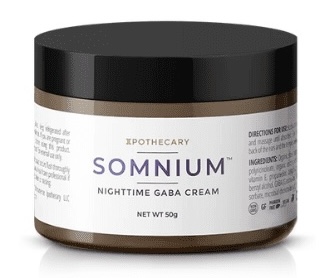
More recently I found that the topical GABA called Somnium, rubbed onto my bloated belly,  helped tremendously too. You can read more about Somnium here.

(My SIBO is much much better now, since I’ve been using berberine, but that is a topic for another blog post.)

GABA: stress, anxiety and visceral pain

As you know, I consider myself a GABA girl and it also helps ease my physical anxiety.

The above animal study doesn’t address the impacts of GABA on anxiety but there is research showing that “in concert with chronic visceral pain, there is a high comorbidity with stress-related psychiatric disorders including anxiety and depression.

Evidence suggests that long term stress facilitates pain perception and sensitizes pain pathways, leading to a feed-forward cycle promoting chronic visceral pain disorders such as irritable bowel syndrome (IBS).”

It makes total sense that GABA can play a role in addressing all of this for me – the visceral pain and IBS, the physical anxiety and sleep issues too.

GABA eases Gail’s painful gut spasms and reduces her stress

Neither myself or Gail have colitis and yet GABA helps us both with SIBO and the visceral pain we experience, and the associated anxiety. Gail shares this: “I’ve had diarrheal IBS for decades, recently diagnosed SIBO. Missed a lot of work with pain spasms and diarrhea almost every work morning. I had a phenomenal experience with my first dose of GABA at bedtime and like a miracle I’m pain-free in the morning.

It’s a huge huge improvement! (unless there’s a major stressor in my life like when my mom recently passed away)

I also take GABA at work if I anticipate a stressful situation. I love that I am still sharp mentally on this.”

A few GABA product options  – a sublingual, a powder and a cream
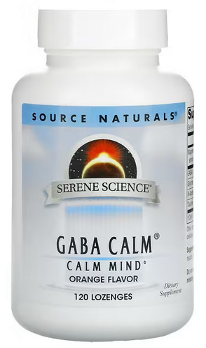
gaba calm
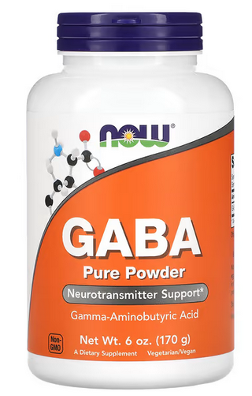
gaba pure poder
somnium gaba cream

Some of the GABA products I recommend include Source Naturals GABA Calm lozenges and Now GABA Powder.  You can purchase these from my online store (Fullscript – only available to US customers – use this link to set up an account).

If you’re not in the US, Source Naturals GABA Calm lozenges and Now GABA Powder are available via iherb (use this link to save 5%).

Somnium GABA Cream is available with international shipping. Click here to get Somnium GABA Cream (and use my coupon code TRUDY15 to save 15%).

Additional resources when you are new to using GABA and other amino acids as supplements

As always, I use the symptoms questionnaire to figure out if low GABA or other neurotransmitter imbalances may be an issue for you.

If you suspect low levels of any of the neurotransmitters and do not yet have my book, The Antianxiety Food Solution – How the Foods You Eat Can Help You Calm Your Anxious Mind, Improve Your Mood, and End Cravings, I highly recommend getting it and reading it before jumping in and using amino acids on your own so you are knowledgeable. And be sure to share it with the practitioner/health team you or your loved one is working with.

There is an entire chapter on the amino acids and they are discussed throughout the book in the sections on gut health, gluten, blood sugar control (this is covered in an entire chapter too), sugar cravings, anxiety and mood issues.

The book doesn’t include product names (per the publisher’s request) so this blog, The Antianxiety Food Solution Amino Acid and Pyroluria Supplements, lists the amino acids that I use with my individual clients and those in my group programs (over and above the few I mentioned above).

If, after reading this blog and my book, you don’t feel comfortable figuring things out on your own (i.e. doing the symptoms questionnaire and respective amino acids trials), a good place to get help is the GABA QuickStart Program (if you have low GABA symptoms too). This is a paid online/virtual group program where you get my guidance and community support.

If you are a practitioner, join us in The Balancing Neurotransmitters: the Fundamentals program. This is also a paid online/virtual program with an opportunity to interact with me and other practitioners who are also using the amino acids.

Wrapping up and your feedback

I do always appreciate questions and feedback like this so keep your questions and comments coming. I do hope my sharing my experience with GABA for visceral pain and this other feedback has been helpful to you.

While this blog is specific to the research on GABA for colitis, I feel comfortable saying the use of GABA could also be considered for belly pain/visceral pain in someone with a diagnosis such as Crohn’s disease (which like colitis is also classed an IBD/inflammatory bowel disease) or IBS/SIBO (irritable bowel syndrome/small intestinal bacterial overgrowth).

How has GABA helped reduce your visceral pain? (please share if you have colitis or Crohn’s disease or IBS/SIBO or another digestive issue).

Has GABA also helped to reduce your physical anxiety, tension and self-medicating with sugar or alcohol in order to relax?

If yes, which products have helped, how much and do you find swallowed or capsule opened or powder is more effective for your needs?

If you’re a practitioner do you use GABA with your colitis clients/patients?

And please let me know if it’s helpful that I’m now including product recommendations and where to get them?

Feel free to share and ask your questions below.
Filed Under: Anxiety and panic, GABA, Gut health, Inflammation, Pain Tagged With: abdominal pain, amino acid, anxiety, colitis, digestive conditions, GABA, GABA Quickstart; Balancing Neurotransmitters: the Fundamentals program for practitioners, hypersensitivity, Inflammation, neurotransmitters, spasms, tension, ulcerative colitis, visceral pain

GABA Calm is a game changer for husband’s sound and tactile hypersensitivity, significant coordination problems and his anxiety

February 10, 2023 By Trudy Scott 20 Comments

gaba calm

My husband is low in GABA and he had significant coordination problems and sensory sensitivity ….. until GABA Calm. 3 tablets per day work great. If he has none, he gets hyper sensitive again and starts tripping over things in the house.

He has always struggled with anxiety and sound / tactile hypersensitivity. Alongside that he often tripped over things. He made great progress when he started using The Listening Program. I wonder if this sound therapy raises GABA and that was why it helped him (although it only partially helped with anxiety)?

When he stopped The Listening Program then his symptoms came back.

He started taking GABA Calm as I saw it in your blogs years ago. Then he found that he didn’t need to do the Listening Program any more.

GABA Calm is a game changer for him.

Denise shared this feedback about her husband’s great results on a blog post about GABA Calm helping with anxiety and sensorimotor skills in an autistic child.

I thanked her for sharing these wonderful results her husband is experiencing.  I am inspired to share this feedback as a blog to give others hope. And also because this illustrates the diversity of how GABA can help i.e. it works for adults and children, males and females, and there is different dosing according to each person’s unique needs.

Music therapy: calming effect and GABA mechanisms

This study, Emotional Inhibitory Effect of Music Therapy on Anxiety Neurosis Based on Neural Content Analysis in Hippocampus, reports that music therapy has a calming effect by adjusting the glutamate/GABA balance. This is likely why Denise’s husband found The Listening Program to be helpful in certain ways – glutamate is the main excitatory neurotransmitter and GABA is the main calming neurotransmitter.

GABA, the GABA Calm supplement, hypersensitivity and sensorimotor difficulties (research)

GABA (gamma-aminobutyric acid) is your main inhibitory neurotransmitter and the amino acid GABA can be used as a supplement to raise GABA levels and ease physical anxiety symptoms, help with insomnia, stress eating, intrusive thoughts and stiff/tense muscles.

GABA Calm is one of many different GABA supplements that I recommend to my clients. This particular one is a sublingual/chewable offered as a 125mg dose, which is where I have most of my clients start. Denise’s husband finds that 3 GABA Calm used throughout the day are enough for his needs. These alleviate his anxiety and also stop his sound and tactile hypersensitivity, and significant coordination problems such as tripping.

This paper reports that“Sensory over-responsivity (SOR), extreme sensitivity to or avoidance of sensory stimuli (e.g., scratchy fabrics, loud sounds)… is present in 5–15% of the general population and is even more common (rates over 50%) in individuals with both genetic and environmentally-based psychiatric and neurodevelopmental disorders such as anxiety, attention deficit hyperactivity disorder, early life adversity, and autism spectrum disorder (ASD).”

The authors discuss altered thalamic sensory gating and an excitatory (glutamate) / inhibitory (GABA) neurochemical imbalance in ASD youth. Most of the research on sensory issues and GABA has been done in ASD children but it clearly applies to adults with anxiety too.

I highlight the motor issues with GABA/glutamate imbalances in the above GABA sensorimotor skills blog. This research is also looking at ASD populations but these mechanisms may account for her husband’s significant coordination problems/tripping.

You can read the current list of low GABA symptoms here. This list will be updated with sound and tactile hypersensitivity, and coordination problems/tripping (and a few others like asthma and laryngospasm).

An occupational therapist who is training as a nutritional therapist

Denise is an occupational therapist (OT) who is training as a nutritional therapist so she can recommend supplements for the kids she works with, alongside the other therapies she uses as an OT.   I love this. I’m a big believer in using everything we have at our disposal and am a huge advocate of OT.  I would love to see more OTs and other practitioners using the amino acids and nutritional therapy.

Denise shared that she actually started her journey in nutritional therapy 20 years ago due to the impact she was seeing in diet and autism. She took a very long break and had her own children and has now restarted her training. She shared this:

I plan to integrate nutritional advice into my work with families. As I am currently a NT student I haven’t been able to advise families even regarding the GABA Oolong tea [more on that below]. I am excited to qualify as I see various sensory, motor and attention issues that can be easily treated through nutritional adjustments and supplements.

Denise is already using the amino acids personally and with her family, sharing: “I love using aminos e.g. 5-HTP and L-theanine for myself and my daughters and GABA for my husband, tyrosine occasionally for my son.”

She has my book “The Antianxiety Food Solution”, a great resource that is practical and fully referenced, for both consumers and practitioners.

I encouraged her to also look into the amino acid training I offer for practitioners once she has completed her training as a nutritional therapist, so she can confidently use them with her clients too.

Having her in the program is also an opportunity for me and others in the group to learn from Denise about her expertise on integrating amino acids, nutrition and OT.

Her feedback on GABA oolong tea or GABA Calm for children with autism?

She also commented that she loved reading the GABA Oolong research – GABA Oolong tea in children with autism: improvements in sensorimotor skills, autism profiles, anxiety and sleep (new research)

I asked for her feedback and if she has kids in her practice, see any benefits when drinking this GABA Oolong tea. And what their responses are to the taste. Since she is still a student she can’t yet advise families regarding the GABA Oolong tea but she did say this:

To be honest I think the Source Naturals GABA Calm sublingual will be easier to tolerate for lots of children compared with tea.

As fascinating as the GABA Oolong tea research is, I feel the same way and  I really appreciate this feedback from an OT. I have actually received similar feedback from a number of other practitioners too. Stay tuned as I continue to gather feedback.

Autism: diet, GABA and working with an OT

It’s amazing that 20 years ago Denise was seeing the impact of diet in kids with autism. If you would like to learn more, this blog – Nutritional and Dietary Intervention for Autism Spectrum Disorder – summarizes a 2018 study and offers many insights into to the progress since then.

As I mentioned above, her husband’s success with 3 GABA Calm illustrates the diversity of how GABA can help i.e. adults and children, males and females, and different dosing according to each person’s unique needs.

This is the blog Denise commented on – Half a crushed GABA Calm for my autistic child: sleep, anxiety and sensorimotor skills (writing, horse riding and swimming) improve.

In the above blog, I share Vic’s feedback about just half a GABA Calm improving her daughter’s sleep, social skills and sensorimotor skills such as pen and pencil use, horse riding and swimming. Her daughter is also working with an OT and getting those added benefits too.

Resources if you are new to using GABA and other amino acids as supplements

If you are new to using tryptophan, GABA or any of the other amino acids as supplements, here is the Amino Acids Mood Questionnaire from The Antianxiety Food Solution (you can see all the symptoms of neurotransmitter imbalances, including low GABA and low serotonin).

If you suspect low levels of any of the neurotransmitters and do not yet have my book, The Antianxiety Food Solution – How the Foods You Eat Can Help You Calm Your Anxious Mind, Improve Your Mood, and End Cravings, I highly recommend getting it and reading it before jumping in and using amino acids on your own so you are knowledgeable. And be sure to share it with the practitioner/health team you or your loved one is working with.

There is an entire chapter on the amino acids and they are discussed throughout the book in the sections on gut health, gluten, blood sugar control, sugar cravings, self-medicating with alcohol and more.

The book doesn’t include product names (per the publisher’s request) so this blog, The Antianxiety Food Solution Amino Acid and Pyroluria Supplements, lists the amino acids that I use with my individual clients and those in my group programs. You can find them all in my online store.

If, after reading this blog and my book, you don’t feel comfortable figuring things out on your own (i.e. doing the symptoms questionnaire and respective amino acids trials), a good place to get help is the GABA QuickStart Program (if you have low GABA symptoms). This is a paid online/virtual group program where you get my guidance and community support.

If you are a practitioner, join us in The Balancing Neurotransmitters: the Fundamentals program. This is also a paid online/virtual program with an opportunity to interact with me and other practitioners who are also using the amino acids.

Have you or a family member had GABA help with sound and tactile hypersensitivity, coordination problems and anxiety?

Which GABA product and how much?

And is the GABA product used sublingually or the capsule opened?

Are you an OT using amino acids and nutritional approaches with your clients, in addition to other approaches?

Do you find music therapy to be calming, in a similar way to the calming effects of GABA?

If you have other questions and feedback please share them here too.

Filed Under: Anxiety, GABA, Men's health Tagged With: adults, amino acids, anxiety, autism, children, coordination problems, diet, female, GABA, GABA Calm, GABA Oolong tea, husband, hypersensitivity, male, music, occupational therapist, sensorimotor, sensory sensitivity, sound, sound and tactile hypersensitivity, tactile, the GABA Quickstart online program; and Balancing Neurotransmitters: the Fundamentals program for practitioners, The Listening Program, tripping

Primary Sidebar

NEW! GABA QuickStart Homestudy (with special intro pricing)

gaba quickstart homestudy

Free Report

9 Great Questions Women Ask about Food, Mood and their Health

You'll also receive a complimentary subscription to my ezine "Food, Mood and Gal Stuff"


Connect with me

Popular Posts

  • Amino Acids Mood Questionnaire from The Antianxiety Food Solution
  • The Antianxiety Food Solution Amino Acid and Pyroluria Supplements
  • Pyroluria Questionnaire from The Antianxiety Food Solution
  • Collagen and gelatin lower serotonin: does this increase your anxiety and depression?
  • Tryptophan for the worry-in-your-head and ruminating type of anxiety
  • GABA for the physical-tension and stiff-and-tense-muscles type of anxiety
  • The Antianxiety Food Solution by Trudy Scott
  • Seriphos Original Formula is back: the best product for anxiety and insomnia caused by high cortisol
  • Am I an anxious introvert because of low zinc and vitamin B6? My response to Huffington Post blog
  • Vagus nerve rehab with GABA, breathing, humming, gargling and key nutrients

Recent Posts

  • What do I use instead of Seriphos to help lower high cortisol that is affecting my sleep and making me anxious at night?
  • BeSerene™ GABA/theanine cream eases severe muscle tension in her neck/shoulders, prevents her bad headaches and quells her anxiety
  • How the correct approach, dose and sublingual use of GABA can be calming and not cause a flushed and itchy face and neck
  • The amino acid glutamine improves low mood by addressing gut health, and it has calming effects too
  • Flight anxiety with heightened breath, physical tension and also fearing the worst (the role of low GABA and low serotonin)

Categories

  • 5-HTP
  • AB575
  • Addiction
  • ADHD
  • Adrenals
  • Alcohol
  • Allergies
  • Alzheimer's disease
  • Amino Acids
  • Anger
  • Antianxiety
  • Antianxiety Food Solution
  • Antidepressants
  • Anxiety
  • Anxiety and panic
  • Autism
  • Autoimmunity
  • benzodiazapines
  • Bipolar disorder
  • Books
  • Caffeine
  • Cancer
  • Candida
  • Children/Teens
  • Collagen
  • Cooking equipment
  • Coronavirus/COVID-19
  • Cravings
  • Depression
  • Detoxification
  • Diabetes
  • Diet
  • DPA/DLPA
  • Drugs
  • EFT/Tapping
  • EMF
  • EMFs
  • Emotional Eating
  • Endorphins
  • Environment
  • Essential oils
  • Events
  • Exercise
  • Fear
  • Fear of public speaking
  • Fertility and Pregnancy
  • Fish
  • Food
  • Food and mood
  • Functional neurology
  • GABA
  • Gene polymorphisms
  • General Health
  • Giving
  • Giving back
  • Glutamine
  • Gluten
  • GMOs
  • Gratitude
  • Gut health
  • Heart health/hypertension
  • Histamine
  • Hormone
  • Hyperparathyroidism
  • Hypoglycemia
  • Immune system
  • Inflammation
  • Insomnia
  • Inspiration
  • Introversion
  • Joy and happiness
  • Ketogenic diet
  • Lithium orotate
  • Looking awesome
  • Lyme disease and co-infections
  • MCAS/histamine
  • Medication
  • Men's health
  • Mental health
  • Mercury
  • Migraine
  • Mold
  • Movie
  • MTHFR
  • Multiple sclerosis
  • Music
  • NANP
  • Nature
  • Nutritional Psychiatry
  • OCD
  • Osteoporosis
  • Oxalates
  • Oxytocin
  • Pain
  • Paleo
  • Parasites
  • Parkinson’s disease
  • PCOS
  • People
  • PMS
  • Postpartum
  • PTSD/Trauma
  • Pyroluria
  • Questionnaires
  • Real whole food
  • Recipes
  • Research
  • Schizophrenia
  • serotonin
  • SIBO
  • Sleep
  • Special diets
  • Sports nutrition
  • Stress
  • Sugar addiction
  • Sugar and mood
  • Supplements
  • Teens
  • Testimonials
  • Testing
  • The Anxiety Summit
  • The Anxiety Summit 2
  • The Anxiety Summit 3
  • The Anxiety Summit 4
  • The Anxiety Summit 5
  • The Anxiety Summit 6
  • Thyroid
  • Thyroid health
  • Toxins
  • Tryptophan
  • Tyrosine
  • Uncategorized
  • Vegan/vegetarian
  • Women's health
  • Yoga

Archives

  • October 2025
  • September 2025
  • August 2025
  • July 2025
  • June 2025
  • May 2025
  • April 2025
  • March 2025
  • February 2025
  • January 2025
  • November 2024
  • October 2024
  • September 2024
  • August 2024
  • July 2024
  • June 2024
  • May 2024
  • April 2024
  • March 2024
  • February 2024
  • January 2024
  • December 2023
  • November 2023
  • October 2023
  • September 2023
  • August 2023
  • July 2023
  • June 2023
  • May 2023
  • April 2023
  • March 2023
  • February 2023
  • January 2023
  • December 2022
  • November 2022
  • October 2022
  • September 2022
  • August 2022
  • July 2022
  • June 2022
  • May 2022
  • April 2022
  • March 2022
  • February 2022
  • January 2022
  • December 2021
  • November 2021
  • October 2021
  • September 2021
  • August 2021
  • July 2021
  • June 2021
  • May 2021
  • April 2021
  • March 2021
  • February 2021
  • January 2021
  • December 2020
  • November 2020
  • October 2020
  • September 2020
  • August 2020
  • July 2020
  • June 2020
  • May 2020
  • April 2020
  • March 2020
  • February 2020
  • January 2020
  • December 2019
  • November 2019
  • October 2019
  • September 2019
  • August 2019
  • July 2019
  • June 2019
  • May 2019
  • April 2019
  • March 2019
  • February 2019
  • January 2019
  • December 2018
  • November 2018
  • October 2018
  • September 2018
  • August 2018
  • July 2018
  • June 2018
  • May 2018
  • April 2018
  • March 2018
  • February 2018
  • January 2018
  • December 2017
  • November 2017
  • October 2017
  • September 2017
  • August 2017
  • July 2017
  • June 2017
  • May 2017
  • April 2017
  • March 2017
  • February 2017
  • January 2017
  • December 2016
  • November 2016
  • October 2016
  • September 2016
  • August 2016
  • July 2016
  • June 2016
  • May 2016
  • April 2016
  • March 2016
  • February 2016
  • January 2016
  • December 2015
  • November 2015
  • October 2015
  • September 2015
  • August 2015
  • July 2015
  • June 2015
  • May 2015
  • April 2015
  • March 2015
  • February 2015
  • January 2015
  • December 2014
  • November 2014
  • October 2014
  • September 2014
  • August 2014
  • July 2014
  • June 2014
  • May 2014
  • April 2014
  • March 2014
  • February 2014
  • January 2014
  • December 2013
  • November 2013
  • October 2013
  • September 2013
  • August 2013
  • July 2013
  • June 2013
  • May 2013
  • April 2013
  • March 2013
  • February 2013
  • January 2013
  • December 2012
  • November 2012
  • October 2012
  • August 2012
  • July 2012
  • June 2012
  • May 2012
  • April 2012
  • March 2012
  • February 2012
  • January 2012
  • December 2011
  • November 2011
  • October 2011
  • September 2011
  • August 2011
  • July 2011
  • June 2011
  • May 2011
  • April 2011
  • March 2011
  • February 2011
  • January 2011
  • December 2010
  • October 2010
  • September 2010
  • July 2010
  • May 2010
  • April 2010
  • March 2010
  • February 2010
  • January 2010
  • November 2009

Share the knowledge!

The above statements have not been evaluated by the Food and Drug Administration. Products listed in this website are not intended to diagnose, treat, cure or prevent any disease.

The information provided on this site is for informational and educational purposes only and is not intended as a substitute for advice from your physician or other health care professional. You should consult with a healthcare professional before starting or modifying any diet, exercise, or supplementation program, before taking or stopping any medication, or if you have or suspect you may have a health problem.


Copyright © 2026 Trudy Scott. All Rights Reserved. | Privacy | Terms and Conditions | Refund Policy | Medical Disclaimer

Free Report

9 Great Questions Women Ask about Food, Mood and their Health

You’ll also receive a complimentary subscription to my ezine “Food, Mood and Gal Stuff”