• Skip to primary navigation
  • Skip to main content
  • Skip to primary sidebar

everywomanover29 blog

Food, Mood and Women's Health – Be your healthiest, look and feel great!

  • Blog
  • About
  • Services
  • Store
  • Resources
  • Testimonials
  • The Book
  • Contact
  • Search this site

hashimoto's thyroiditis

Toxoplasma gondii: schizophrenia, bipolar disorder, OCD and unresolved anxiety?

August 14, 2017 By Trudy Scott 17 Comments

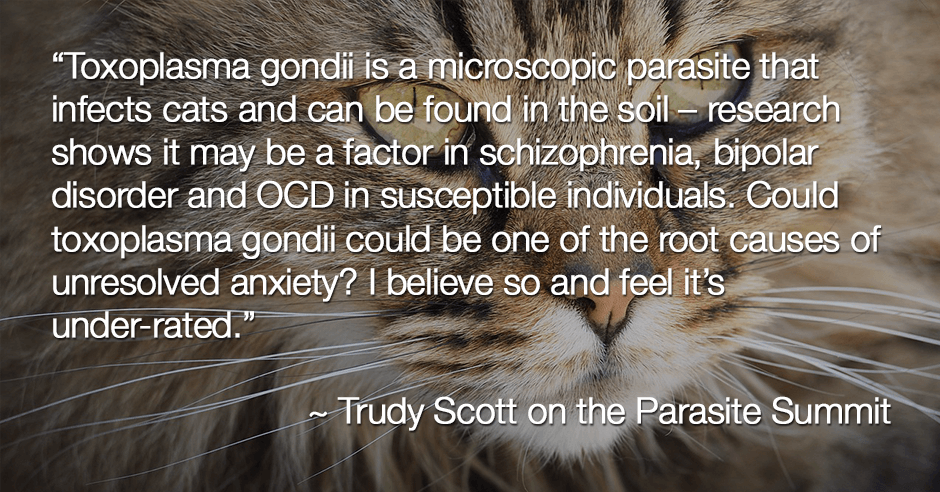
Toxoplasma gondii is a microscopic parasite that infects cats and can be found in the soil – research shows it may be a factor in schizophrenia, bipolar disorder and OCD in susceptible individuals. Could toxoplasma gondii could be one of the root causes of unresolved anxiety? I believe so and feel it’s under-rated.

This is the one of the parasitic infections I cover in an interview I did on The Parasite Summit.

Here are a few snippets from my interview:

A single-celled parasite called Toxoplasma gondii causes a disease known as toxoplasmosis.

Toxoplasma gondii is a microscopic parasite that infects cats and can be found in the soil. The infection can be acquired by ingesting contaminated food or water, by handling contaminated cat litter, or by transmission from mother-to-child.

According to the CDC – as of Mar 1, 2017 – in the United States it is estimated that 11% of the population 6 years and older have been infected with Toxoplasma. In various places throughout the world, it has been shown that up to 95% of some populations have been infected with Toxoplasma.

I love cats and have always been a cat person and pets are wonderful companions helping many of us humans recovering from PTSD and trauma – but we always need to dig deeper:

  • some individuals don’t respond as well to dietary changes, brain chemical balancing and addressing other biochemical/nutritional factors
  • I’m always looking for root possible causes. I’ve identified 70+ causes of anxiety and one of them is parasites
  • any parasite could be a factor – it causes stress and inflammation in the body, and we may see high cortisol leading to increased anxiety, insomnia and inflammation
  • could toxoplasma gondii could be one of the root causes of unresolved anxiety? I believe so and feel it’s under-rated – and believe we’ll be hearing more about it as more research comes out

I discuss this review paper published this year: Is Toxoplasma gondii a Trigger of Bipolar Disorder?

The association between T. gondii and schizophrenia/schizoaffective disorder is one of the most studied links between one pathogen and a psychiatric disorder.

However, growing emerging evidence has also documented an association between latent toxoplasmosis and the risk of [bipolar disorder] and suicidal/aggressive behaviors. T. gondii infection, as previously suggested for schizophrenia, may contribute to the onset and the progressive course of the disease interacting with genetic hereditary predisposing factors, as well as affecting neurotransmitter systems and immune responses, which have recently been shown to be closely linked to the pathogenesis of BD and its medical comorbidities.

The link between this parasite and psychiatric disorders could be also explained by its ability to influence neurotransmitter pathways. Indeed, T. gondii has been shown to increase dopamine levels, as well as to modulate serotonin, gamma-aminobutyric acid (GABA) and glutamate signaling.

With the impacts on neurotransmitters it’s clear how this parasite could directly trigger anxiety, panic attacks, fears, worry and even OCD. I cover this and more (malaria and malaria medications too) in my interview and book.

Parasites may be silently impacting your health and they’re FAR MORE COMMON than you think! Parasites aren’t just found in third-world countries, millions are already infected in industrialized countries and parasites could be silently hampering your health. Fortunately, with awareness and appropriate care, parasites can be prevented and treated, once detected.

If you’re struggling with any of the following, it may be worth looking into parasites:

  • Gastrointestinal: pain/cramps, excess gas, bloating, constipation/diarrhea
  • Infertility and hormone disorders
  • Skin issues: acne, itching, rashes
  • Mental health: depression, bipolar disorder, anxiety, OCD, schizophrenia
  • Challenges with autoimmune disease recovery (Toxoplasma gondii may also be a factor in Hashimoto’s thyroiditis)

Please share feedback and ask questions in the comments below.
Filed Under: Anxiety and panic, Events, Parasites Tagged With: anxiety, bipolar disorder, cats, dopamine, GABA, hashimoto's thyroiditis, OCD, parasite, schizophrenia, serotonin, The Parasite Summit, toxoplasma gondii, Trudy Scott

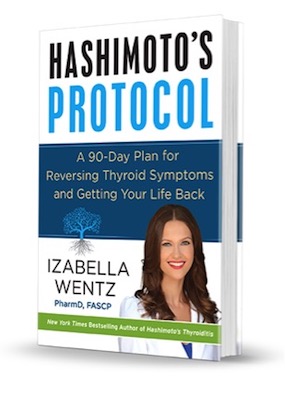
Hashimoto’s Protocol by Dr. Izabella Wentz

April 6, 2017 By Trudy Scott 4 Comments

The great new book called Hashimoto’s Protocol by Dr. Izabella Wentz just made #1 on the New York Times bestseller list!

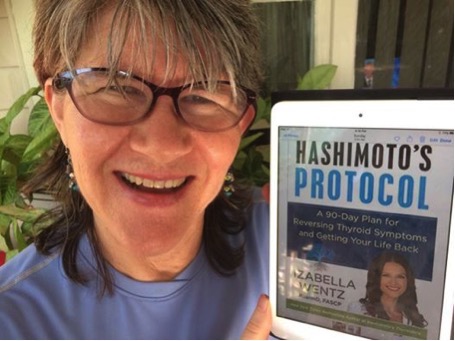
Since I’m in Australia I have a kindle edition of Dr. Izabella’s brilliant new book that just released last week: Hashimoto’s Protocol: A 90-Day Plan for Reversing Thyroid Symptoms and Getting Your Life Back. It’s a must-read if you are dealing with Hashimoto’s or actually any thyroid problems (or if you suspect you may have thyroid issues)!

If you are a practitioner I highly recommend it too!

Here’s the official blurb:

Dr. Izabella Wentz, the author of the phenomenal New York Times bestseller Hashimoto’s Thyroiditis, returns with a long-awaited, groundbreaking prescription to reverse the symptoms of this serious autoimmune condition that is becoming one of the country’s fastest growing diseases.

More than thirty-five million Americans currently suffer from Hashimoto’s—an autoimmune disease that affects the thyroid gland and causes the body to attack its own cells. To alleviate the symptoms of this debilitating condition—including chronic cough, acid reflux, IBS, allergies, chronic pain, hair loss, brain fog, and forgetfulness [plus anxiety and depression] —patients are often prescribed synthetic hormones that have numerous life-altering side effects.

But there is a better way.

Diagnosed with Hashimoto’s at twenty-seven, pharmacist Dr. Izabella Wentz knows first-hand the effects of the disease, as well as the value—and limitations—of medication. The key to improved health, she argues, involves lifestyle interventions. In Hashimoto’s Protocol, she outlines a proven treatment that has helped thousands heal and many others feel better—in as fast as ninety days.

Drawing on her own personal experience as well as her work consulting with thousands of patients, Hashimoto’s Protocol offers a practical pathway for healing and reversing the autoimmune damage at the root of the disease. The first step is a quick-start two-week detox that includes foods to eat and inflammatory foods to avoid, advice on supplements to support the liver, and an adrenal recovery plan. Next, readers create a personalized plan with foods, supplements, and other lifestyle interventions tailored to their body’s own unique Hashimoto’s triggers, which they can identify using self-tests included in the book. Hashimoto’s Protocol also features original recipes.

Grounded in the latest science, Hashimoto’s Protocol is the first book to offer a proven protocol by an acknowledged expert in the field to treat this condition without dangerous hormones—and help sufferers reclaim their lives.

Izabella has done a wonderful job! I love that she covers the basics like liver support, the adrenals and gut health and then goes into advanced protocols for trauma, infections, toxins and nutrient deficiencies! I really LOVE how she dives deep into the newest research and connects ALL the dots in a really smart way!

And even if you don’t have thyroid issues you would benefit from these sections that are applicable for everyone:

  • Root Cause Liver Support Protocol — how to support your liver by clearing detox pathways so that you’re able to release toxins and get your energy back.
  • Adrenal Recovery Protocol — how to reset your response to stress so that you can regenerate your body.
  • The Gut Balancing Protocol — the right nutrients so that your gut starts working at its optimal level.

Here is a snippet from the Liver support section:

Halogens and halogen-containing chemicals: These chemicals include bromide, chloride, and fluoride; are structurally similar to iodine; and may take up receptor sites in the thyroid gland. Unfortunately, their presence in the thyroid gland can

lead to thyroid cell death and inflammation. Individuals exposed to high levels of halogen-containing substances have been found to have higher rates of thyroid antibodies.

Chlorine: When found in polychlorinated biphenyls (PCBs), chlorine has been shown to be toxic to thyroid cells and to promote the onset of Hashimoto’s through increasing TSH, thyroid antibodies, and thyroid size. PCBs are found in industrial products. Chlorine is also found in water systems, pools, cleaning products, and plastics.

Bromide: This can be found in baked goods, plastics, soft drinks, and even our mattresses, which are coated with brominated flame retardants. Studies show bromine-containing substances—polybrominated diphenyl ethers (PBDEs)—are connected to an increased incidence of Hashimoto’s.

Fluoride: This thyroid-suppressing halogen is found in water, toothpaste, and some medications as well as in black, green, and red tea. Using a reverse osmosis filter is the best way to get rid of fluoride.

The gentle two-week Liver support section

will guide you on how to eliminate hidden toxins from your everyday life and how to help your liver process out the toxins you may have in your body. Both are critical steps for anyone who’s had problems with taking supplements or is struggling with current symptoms. Most people see drastic changes just by completing this step alone.


Here is the Amazon link or support your local book store if you have one nearby!

Also enjoy the fabulous 2 week recipe plan Dr. Izabella is offering. It has 2 weeks worth of recipes, meal plans and shopping lists based on the autoimmune Paleo diet template. Click here to learn more and signup for the 2 week recipe plan.

Hope you enjoy these great thyroid resources!

If you already have a copy let us know what you think and which sections have helped you?

Filed Under: Books, Thyroid, Thyroid health Tagged With: hashimoto's, hashimoto's thyroiditis, izabella wentz, thyroid

Thyroid Secret documentary – wise words of wisdom!

February 25, 2017 By Trudy Scott 9 Comments

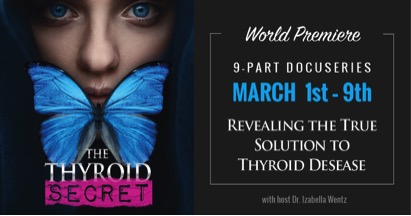
The Thyroid Secret documentary is just around the corner!  My colleague Dr. Izabella Wentz and her amazing team have produced this powerful 9-part documentary and it truly is groundbreaking! (It starts on March 1.)

Thyroid disease is one of the most overlooked diseases and is so often misdiagnosed. I see this all this time with my anxious clients (and I share more about this in the documentary!)

In case you’re not already signed up here is the link to sign up. And some wise words of wisdom from some of the experts that are part of the documentary

If you are already signed up enjoy these wise words too!

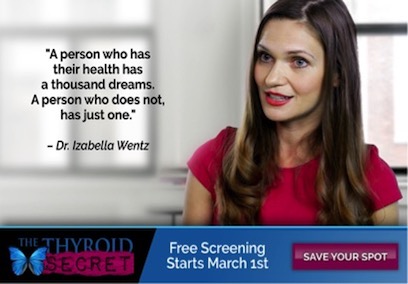
Dr. Izabella Wentz, host and producer of the documentary, and author of the forthcoming book, Hashimoto’s Protocol, sets the tone and I love it!

A person who has their health has 1,000 dreams. A person who does not has just one.

Allowing yourself to heal will allow you to do all these different things in your life that you maybe dreamed about but you never thought were possible. I have people within my community who’ve become like romance novelists or … they’ve gone back to horseback riding. They’ve done all of these things that they never thought will be possible and sometimes in their 40s, 50s, 60s, lucky ones in their 20s.

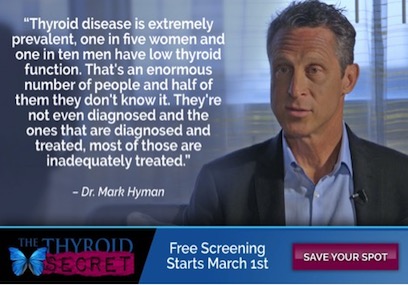
Dr. Mark Hyman, author of The Blood Sugar Solution, discusses the prevalence of thyroid disease in this part of his interview:

Thyroid disease is extremely prevalent, one in five women and one in ten men have low thyroid function. That’s an enormous number of people and half of them they don’t know it. They’re not even diagnosed and the ones that are diagnosed and treated most of those are inadequately treated.

You’ve got an epidemic or thyroid dysfunction that is really driving a lot of suffering and it’s subtle. People don’t know, they think it’s something else. Oh I’m a little tired, oh I have trouble getting up in the morning, my skin’s a little dry, my nails are cracking, I’m a little constipated, I have a little fluid retention. Can’t remember things as well, I feel little depressed, I might not be sleeping as well, I might get muscle cramps, my sex drive’s a little low… You add all these things up, oh my hair’s falling out a little bit.


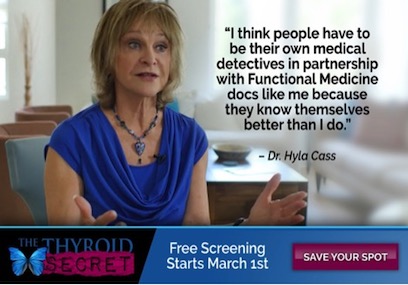
Dr. Hyla Cass, integrative psychiatrist, talks about antidepressant side-effects in this part of her interview:

I think people have to be their own medical detectives in partnership with Functional Medicine docs like me because they know themselves better than I do.

 I think the way conventional medicine is treating depression is really a disaster and that’s simply writing prescriptions for antidepressants. I get a lot of these women and women outnumbering men with thyroid issues coming to me, that have been failures. ‘Failures’ at antidepressant therapy, they’re still depressed and they’re not only still depressed but they now have side effects from being on antidepressants. They can’t sleep or they’re sleeping too much, weight gain, huge weight gain (with thyroid issues you’re already gaining weight). Then there is dizziness, nausea, lack of libido… I mean really? So many problems with the antidepressants and it’s not directed to the cause.


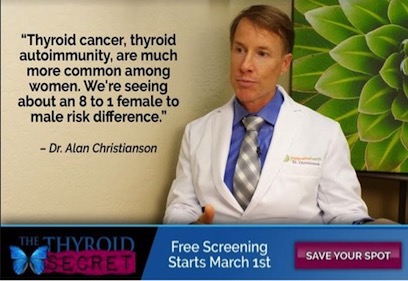
Dr. Alan Christianson, author of The Adrenal Reset Diet, covers our genes and environmental toxins in this part of his interview:

Thyroid cancer, thyroid autoimmunity are much more common among women. We’re seeing about a eight to one female to male risk difference.

So, we think that it’s really a perfect storm of three, three large factors; we’ve got the, the genes, you know. So, the first step is you got to be cautious about choosing your parents (laughter), however that works out, I don’t know. So, there’s some genetic susceptibility and then, and there’s some foreign substances. So, your thyroid like, there’s the shows about the hoarders you know, like those that like never let go of things. So, your thyroid is kind of a hoarder (laughter). It needs iodine, but the amount that it needs is way above what your blood carries, so it concentrates it and pulls it in.

We have a lot of weird chemicals nowadays that confuse that concentrator, that your concentrator thinks, “Well, that looks like iodine,” but it’s not. So, we have uh, Perchlorate for example in the soils in the southwest area, where we had someone just the other day who is working in aviation, in managing the airplanes out in the tarmac and what not and exposed to jet fuel, and they get Perchlorate from that as well.

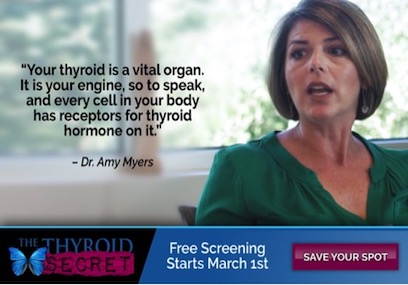
Dr. Amy Myers, author of The Autoimmune Solution, covers diagnosis, root causes and supplemental thyroid hormone in this part of her interview:

Your thyroid is a vital organ. It is your engine, so to speak, and every cell in your body has receptors for thyroid hormone on it.

The average is 6 to 10 doctors in five years to get any kind of autoimmune diagnosis. It may be less for thyroid because that’s a little more common and people do screen at least with a TSH, but if that damage has been going on or you are just now becoming aware of it and you’ve had Hashimoto’s for 20 years, if you’ve had enough damage and destruction to your thyroid, I and no one can grow your thyroid back. We can optimize the function through, and I’m sure we’ll talk about that through this interview, we can optimize the function, we can prevent you hopefully from getting another autoimmune disease, we can get to the root cause of why you got it, but I can’t regrow thyroid tissue for you. You may still need to be on some supplemental thyroid hormone, and that’s okay. I just want people to know that there are people, and I have them in my clinic as well, that we get it early enough and we’re able to do all the things that we’ll talk about in the interview, and they don’t need to go on supplemental thyroid hormone, or they’ve gone on it and we’ve been able to get them off.

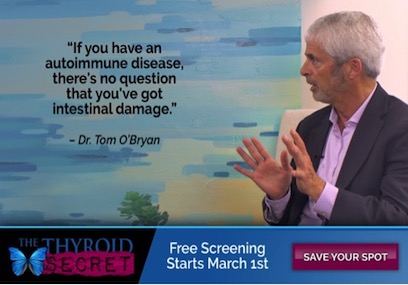
Dr. Tom O’Bryan, author of The Autoimmune Fix, discusses the key role the gut and microbiome play:

If you have an autoimmune disease, there’s no question that you’ve got intestinal damage.

It’s a shift. The first shift is recognizing that there’s no magic pill for thyroid autoimmune disease. There’s no magic pill. The second shift is recognizing that it’s going to take time to reverse the damage that’s accrued. If you can accept that and look for the small wins regularly, and the third is … My recommendation to people, one hour a week. Can you give one hour a week to just doing some research on this topic that you have? Just one hour a week.

The most important thing as we’re learning now in this last ten to twelve year period is if there’s one organ that is more impactful on the rest of the body than any other organ, it’s the microbiome. The microbiome controls our brain function. For every one message coming from the brain down to the gut, there are nine messages from the gut to the brain. It’s the exhaust, if you will, the chemicals that are secreted by the microbiome that go up to the brain to tell the brain what to do. It’s a nine to one ratio. For your heart, the microbiome sends direction to the heart. For your thyroid, the microbiome sends direction to the thyroid.

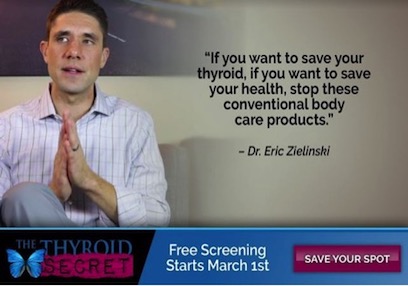
Dr. Eric Zielinski, host of the Essential Oils Summit, covers the dangers of conventional body care products and why use essential oils instead:

We need to work on preventing disease before they happen and I hope to God, that the researchers will come together, that the funding will be available so we could start testing how certain essential oils and chemical constituencies in these oils affect thyroid conditions. Until we do have that, I’m telling you one thing.

If you want to save your thyroid, if you want to save your health, stop these conventional body care products. I’m talking throw them away.

The lowest hanging fruit that anyone can do today, so easy, is literally to throw away all hand sanitizer. I’m telling you, it’s like the worst stuff for you. Conventional hand sanitizer, throw it away. To replace it, super simple. You get a one to two ounce glass spritzer bottle, you put a few drops of witch hazel in it, a couple drops of aloe, vitamin E, and seven drops of essential oils per every ounce that the bottle is.

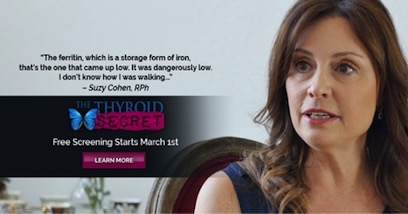
Suzy Cohen, RPh covers low ferritin and low manganese:

The ferritin, which is a storage form of iron, that’s the one that came up low. It was dangerously low. I don’t know how I was walking, it was eight, and it was eight for years. It was eight when I measured it, so it was probably lower, but eight is a very bad number. We shoot to have it above 50, sometimes even closer to 70.

I’m often asked, “What did I do to raise that ferritin, how did I get my iron up?” You would think the answer is that I took iron supplements, but that didn’t work. I did try them. I tried them for six months, they tore me apart. I took the best forms. I’m a pharmacist, I know what the best forms are. Iron doesn’t really help you if you’re iron deficient. That’s a huge secret.

The things that I did were I bought a cast iron pot. I bought two, a little one and a bigger one, and I cooked everything in my cast iron pot because the iron leaches just a little teeny bit. It’s just a little bit, but cooking all of your food in a cast iron pot helped. I drank a little Dixie cup full of orange juice every day. I took betaine with pepsin. This was huge for me. You’ve written articles about this, where you have to titrate up with the betaine. You can’t just take five all at once, but I was so low in acid that at one point I was taking six with my meals. Isn’t that a lot? Today I don’t take any, but there was a point where I worked my way up from one capsule with a meal to six.

The final piece of this was manganese. If your iron is low, manganese is lower, count on it. Having your iron and your manganese in the correct ratio is very huge. I took one capsule of manganese every day and that worked for me. It allows you to better absorb your iron, you need less iron, and you maintain the manganese-iron ratio, and that was a very big piece of it. I took one manganese capsule every day for about a year.

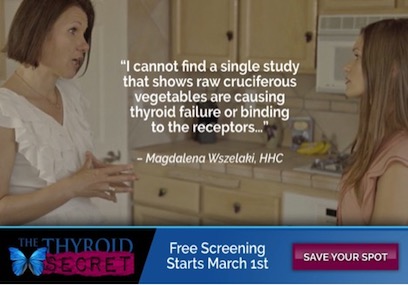
Magdalena Wszelaki, creator of Eating for Hormone Balance, talks about raw cruciferous vegetables and oxalates in this part of her interview:

I cannot find a single study that shows raw cruciferous vegetables are causing thyroid failure or binding to the receptors, or whatever. It’s the stuff that I feel like the bloggers have copied and pasted the same information and just created fear. Having said that, I have come across people …This is anecdotal, but when you have people coming to you over and over again telling these stories of going on a health binge, on a health kick I should say, and they will do juicing or they would start blending smoothies that are full of kale, and beets, and almonds. Then three months into that health protocol, they start having a lot of issues with fatigue. They start putting on weight. They go and get a test that turns out it’s the thyroid.

I think that what is happening is that there’s an issue with oxalates with a lot of the vegetables. Kale has got some oxalates, but spinach is super high in oxalates. Almonds are super high in oxalates, so are hemp seeds, all the seeds and nuts. That has been well-documented that oxalates can deposit on the thyroid gland and be causing an issue. I suspect that could be a problem for a lot of people. With the cruciferous vegetables, I love them because they are so rich in … Nutritionally they’re so much richer than all the other vegetables. They’re also full of diindolylmethane, DIM also named, which binds estrogen and that really supports the thyroid function. I’m definitely for them.

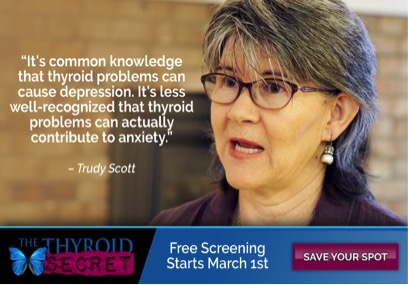
Trudy Scott, yours truly (!), and author of The Antianxiety Food Solution:

A lot of people go to the doctor and get a diagnosis, you’ve got anxiety, or you’ve got depression, and they’ll be given a medication, benzodiazepine or an SSRI. It may be the thyroid that’s causing the problems. It’s common knowledge that thyroid problems can cause depression. It’s less well recognized that thyroid problems can actually contribute to anxiety.

I actually looked at a study that was published in 2010, and they found that there was three times the higher incidence of anxiety in women who have underactive thyroid. It’s more common than a lot of people realize.

Certainly in my practice, working with anxious women, most of the people that I work with are women, I work with men as well, but most of the women that I work with, with anxiety, have thyroid issues. They either have Hashimoto’s Thyroiditis, they have hypothyroid, or they may have had Graves’ in the past. It’s very, very common that I see this.

One of the things that we want to think about from a biochemical and a nutritional aspect when it comes to anxiety is, junk food. We want to eat real whole food. The additives, the colors, the pesticides, the trans fats, all of those can be problematic when it comes to anxiety, because we don’t have the raw materials to make our brain chemicals. GABA is a wonderful calming neurotransmitter, and serotonin is also calming, and if we don’t have enough of the raw materials to make those neurotransmitters, we can be more prone to anxiety.

I’d like to end with a perfect quote from Mary Shomon, thyroid advocate: Be your own CEO of your healthcare!

Watching this Thyroid Secret documentary will empower you, provide you with vital thyroid knowledge you and will truly allow you to be the CEO of your own healthcare when it comes to your thyroid health!

Here is the link to register for the 9-part online documentary The Thyroid Secret, which runs March 1-9.

I do hope you can join us online for this amazing 9-part documentary that I’m so honored to have been a part of!

Filed Under: Anxiety and panic, Events, Thyroid, Thyroid health Tagged With: anxiety, Dr Alan Christianson, Dr Tom O'Bryan, Dr. Mark Hyman, GABA, hashimoto's thyroiditis, izabella wentz, thyroid, Thyroid Secret

The Anxiety Summit – How thyroid imbalance can cause anxiety and depression

November 8, 2014 By Trudy Scott 6 Comments

Dr. Hyla CassQuote_Anxiety2

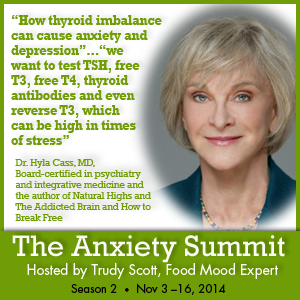
Dr Hyla Cass, MD, author of Eight Weeks to Vibrant Health was interviewed by host of the Anxiety Summit, Trudy Scott, Food Mood Expert and Nutritionist, author of The Antianxiety Food Solution.

How thyroid imbalance can cause anxiety and depression

  • An aside on Abram Hoffer and orthomolecular medicine
  • Thyroid disorders: frequency, causes, symptoms and the mood/anxiety connection
  • Hashimotos thyroiditis and anxiety
  • Hyperthyroidism and anxiety
  • Testing: basal temperature and blood tests
  • Conventional medical treatment
  • Natural thyroid hormones and dietary factors
  • Shoulder stands, rebounding and exercise for stress and anxiety

Hyla and I recently both presented at the Integrative Medicine for Mental Health conference.  While we were these I asked her to do a quick video.  Here it is…

Here is Hyla’s answer to: “What are some of the other factors that can cause us to have a low thyroid function?”

Well, if you’re not converting T4 to T3, you want to go another step deeper, and that is why aren’t you converting T4 to T3? Because that is the active form. So it could be that you’re converting it to inactive form, which is reverse T3. That’s what you do in times of stress. It could be that you’re deficient in certain minerals that are required to convert the T4 to T3. Those are selenium, for example, zinc, magnesium.

We need to have a lot of chemicals in our body, a lot of good chemicals, good vitamins, good minerals for all the chemistry to work properly. So rather than simply replacing thyroid hormones, which is a good idea and it works, but also to find out what’s going on to make your body produce the T3 instead of giving it exogenously, giving external T3. But let’s encourage the body first to make it.

Or your adrenals can be wiped out. You get really stressed and your adrenals are working too hard, and they kind of go on strike. What happens when your adrenals are really exhausted is they’re releasing cortisol. You actually suppress your thyroid, your production of thyroid. You could actually have a low TSH and a low T4 and a low T3. It has to do with your adrenal glands being really tired. What you look for is reverse T3. That’s a good clue that your adrenals are not functioning on all cylinders.

Here is the paper: The prevalence of depression and anxiety disorders in patients with euthyroid Hashimoto’s thyroiditis: a comparative study, discussing the connection between thyroid disorders and anxiety and depression (and treatment resistant depression)

Euthyroid Hashimotos thyroiditis and euthyroid goiter increase predisposition to major depression and anxiety disorders, and thyroid autoimmunity and other thyroid pathologies should be investigated in euthyroid patients with chronic and treatment-resistant complaints.

We discussed hyperthyroidism and psychiatric diagnoses. Here is the paper in the European Journal of Endinocrinology: Hyperthyroidism and psychiatric morbidity: evidence from a Danish nationwide register study:

Hyperthyroid individuals have an increased risk of being hospitalized with psychiatric diagnoses and being treated with antipsychotics, antidepressants, and anxiolytics, both before and after the diagnosis of hyperthyroidism.

Here is the 2014 paper I mentioned – Paradigm shifts in thyroid hormone replacement therapies for hypothyroidism.

Impaired psychological well-being, depression or anxiety are observed in 5-10% of hypothyroid patients receiving levothyroxine, despite normal TSH levels

Here is a link to my interview with Dr. Prousky – Tapering off psychiatric drugs so they don’t ruin your life. It has information about the Canadian Society for Orthomolecular Medicine

Here are two of Hyla’s great books:

Natural Highs: Supplements, Nutrition, and Mind-Body Techniques to Help You Feel Good All the Time

Eight Weeks to Vibrant Health: A Take Charge Plan for Women to Correct Imbalances, Reclaim Energy and Restore Well-Being

Get your free gifts from Dr. Hyla Cass: “Outsmart Your Addiction Quiz” and “Reclaim Your Brain” e-report

If you are not already registered for the Anxiety Summit you can get live access to the speakers of the day here www.theAnxietySummit.com

Filed Under: Antianxiety, Anxiety and panic, Depression, The Anxiety Summit 2, Thyroid health Tagged With: anxiety, depression, hashimoto's thyroiditis, Hyla Cass, hyperthyroidism, the anxiety summit, thyroid, Trudy Scott

The Hashimoto’s Institute summit: Autoimmune thyroid dysfunction and anxiety

September 16, 2014 By Trudy Scott 2 Comments

hashimotos institute summit

There is a valuable summit airing this week: September 15 – September 22, and the topic is all about Hashimoto’s Thyroiditis.

The Hashimoto’s Institute (and summit) was created by my colleagues Dr. Izabella Wentz (the pharmacist), Dr. Alan Christianson (the doctor) and Andrea Nakayama (the nutritionist).

You may recall Dr. Izabella Wentz, PharmD, “The Thyroid Pharmacist”, from The Anxiety Summit in June. Her very popular interview was Hashimoto’s Thyroiditis and Anxiety. She shared how she would co-host a summit purely on the topic of Hashimoto’s Thyroiditis and here it is.

Here are some facts on Hashimoto’s Thyroiditis:

  • Autoimmune thyroid dysfunction is the leading cause of hypothyroidism in the developed world
  • It can lead to weight gain, poor energy, hair loss, constipation, and even anxiety and depression.
  • It’s something I see with so many of my clients (and so many don’t even know they have it)
  • Statistics estimate that as many as 20% of people have circulating antibodies, which is indicative of Hashimoto’s thyroiditis
  • The conventional medical model does not offer much besides using medications.

Here is the break down for the week:

Day 1: Diagnosis – test don’t guess, learn what you need to know to plan your recovery
Day 2: Dosage – medication options and strategies
Day 3: Diet/Digestion – healing from within
Day 4: Daily rhythms – balance your adrenals and other hormones
Day 5: Detox – remove the triggers
Day 6: Defense – immune repair
Day 7: Design your recovery – creating your personal recovery plan

By the end of next week, you’ll have a detailed plan of action to find and fix the cause of your thyroid problems.

There is no cost to attend this awesome event and it’s completely online. When you register you get some great free gifts

Alan Christianson, NMD – “Healing Hashimoto’s – A Savvy Patient’s Guide”
Izabella Wentz, PharmD – “Guide to Overcoming Hashimoto’s Fatigue”
Andrea Nakayama, CNE, CNC – “Mapping Your Signs & Symptoms: Addressing Your Hashimoto’s from a Full System’s Perspective”

Plus, A full day of Special Topics from Taming Post-Partum Flares to Addressing Underlying Immune Triggers
AND… real life tools to help you reclaim your health

You can register here https://jz197.isrefer.com/go/hashimotos/tlscott

Enjoy!


Filed Under: Events Tagged With: hashimoto's thyroiditis

The Anxiety Summit: Hashimoto’s Thyroiditis and Anxiety

June 16, 2014 By Trudy Scott 12 Comments

izabella wentz 1

This is day 7 of the Anxiety Summit. Dr. Izabella Wentz – PharmD, author of Hashimoto’s Thyroiditis: Lifestyle Interventions for Finding and Treating the Root Cause is interviewed by host of the Anxiety Summit, Trudy Scott, Food Mood Expert and Nutritionist, author of The Antianxiety Food Solution.

Hashimoto’s Thyroiditis and Anxiety

  • Why hypothyroidism can sometimes feel like anxiety and the definition of autoimmunity
  • How common is it and an overview of the best testing
  • The role of the gut and food intolerances
  • The key nutrients: zinc, iodine, selenium and more

Here is a great gem from my interview with Izabella:

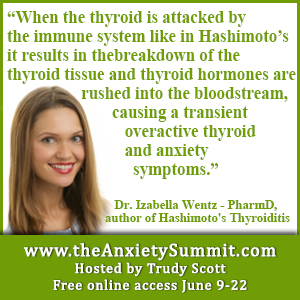
When the thyroid is attacked by the immune system like in Hashimoto’s it results in the breakdown of the thyroid tissue and thyroid hormones are rushed into the bloodstream, causing a transient overactive thyroid and anxiety symptoms.”

Remember that the thyroid needs to be functioning well for the amino acids to be effective.

I highly recommend Izabella’s book Hashimoto’s Thyroiditis: Lifestyle Interventions for Finding and Treating the Root Cause  and love Izabella’s great content-packed Facebook page Thyroid Lifestyle

Get your free gift from Dr Izabella Wentz.  She has a chapter from her book on nutrient depletions, a gluten free guide, and a lovely recipes eBook http://www.thyroidpharmacist.com/gift.html

If you are not already registered for the Anxiety Summit you can get live access to the speakers of the day here www.theAnxietySummit.com

UPDATE: the summit concluded on Tues 6/24 – season 2 of The Anxiety Summit will be in November 2014. If you’d like to be on the notification list just sign up here www.theAnxietySummit.com

Missed this interview or can’t listen live? Or want this and the other great interviews for your learning library? Purchase the MP3s or MP3s + transcripts + interview highlights and listen when it suits you  

Filed Under: Antianxiety, Antianxiety Food Solution, The Anxiety Summit, Thyroid Tagged With: anxiety, hashimoto's thyroiditis, izabella wentz, the antianxiety food solution, the anxiety summit, Trudy Scott

Primary Sidebar

NEW! GABA QuickStart Homestudy (with special intro pricing)

gaba quickstart homestudy

Free Report

9 Great Questions Women Ask about Food, Mood and their Health

You'll also receive a complimentary subscription to my ezine "Food, Mood and Gal Stuff"


Connect with me

Popular Posts

  • Amino Acids Mood Questionnaire from The Antianxiety Food Solution
  • The Antianxiety Food Solution Amino Acid and Pyroluria Supplements
  • Pyroluria Questionnaire from The Antianxiety Food Solution
  • Collagen and gelatin lower serotonin: does this increase your anxiety and depression?
  • Tryptophan for the worry-in-your-head and ruminating type of anxiety
  • GABA for the physical-tension and stiff-and-tense-muscles type of anxiety
  • The Antianxiety Food Solution by Trudy Scott
  • Seriphos Original Formula is back: the best product for anxiety and insomnia caused by high cortisol
  • Am I an anxious introvert because of low zinc and vitamin B6? My response to Huffington Post blog
  • Vagus nerve rehab with GABA, breathing, humming, gargling and key nutrients

Recent Posts

  • What do I use instead of Seriphos to help lower high cortisol that is affecting my sleep and making me anxious at night?
  • BeSerene™ GABA/theanine cream eases severe muscle tension in her neck/shoulders, prevents her bad headaches and quells her anxiety
  • How the correct approach, dose and sublingual use of GABA can be calming and not cause a flushed and itchy face and neck
  • The amino acid glutamine improves low mood by addressing gut health, and it has calming effects too
  • Flight anxiety with heightened breath, physical tension and also fearing the worst (the role of low GABA and low serotonin)

Categories

  • 5-HTP
  • AB575
  • Addiction
  • ADHD
  • Adrenals
  • Alcohol
  • Allergies
  • Alzheimer's disease
  • Amino Acids
  • Anger
  • Antianxiety
  • Antianxiety Food Solution
  • Antidepressants
  • Anxiety
  • Anxiety and panic
  • Autism
  • Autoimmunity
  • benzodiazapines
  • Bipolar disorder
  • Books
  • Caffeine
  • Cancer
  • Candida
  • Children/Teens
  • Collagen
  • Cooking equipment
  • Coronavirus/COVID-19
  • Cravings
  • Depression
  • Detoxification
  • Diabetes
  • Diet
  • DPA/DLPA
  • Drugs
  • EFT/Tapping
  • EMF
  • EMFs
  • Emotional Eating
  • Endorphins
  • Environment
  • Essential oils
  • Events
  • Exercise
  • Fear
  • Fear of public speaking
  • Fertility and Pregnancy
  • Fish
  • Food
  • Food and mood
  • Functional neurology
  • GABA
  • Gene polymorphisms
  • General Health
  • Giving
  • Giving back
  • Glutamine
  • Gluten
  • GMOs
  • Gratitude
  • Gut health
  • Heart health/hypertension
  • Histamine
  • Hormone
  • Hyperparathyroidism
  • Hypoglycemia
  • Immune system
  • Inflammation
  • Insomnia
  • Inspiration
  • Introversion
  • Joy and happiness
  • Ketogenic diet
  • Lithium orotate
  • Looking awesome
  • Lyme disease and co-infections
  • MCAS/histamine
  • Medication
  • Men's health
  • Mental health
  • Mercury
  • Migraine
  • Mold
  • Movie
  • MTHFR
  • Multiple sclerosis
  • Music
  • NANP
  • Nature
  • Nutritional Psychiatry
  • OCD
  • Osteoporosis
  • Oxalates
  • Oxytocin
  • Pain
  • Paleo
  • Parasites
  • Parkinson’s disease
  • PCOS
  • People
  • PMS
  • Postpartum
  • PTSD/Trauma
  • Pyroluria
  • Questionnaires
  • Real whole food
  • Recipes
  • Research
  • Schizophrenia
  • serotonin
  • SIBO
  • Sleep
  • Special diets
  • Sports nutrition
  • Stress
  • Sugar addiction
  • Sugar and mood
  • Supplements
  • Teens
  • Testimonials
  • Testing
  • The Anxiety Summit
  • The Anxiety Summit 2
  • The Anxiety Summit 3
  • The Anxiety Summit 4
  • The Anxiety Summit 5
  • The Anxiety Summit 6
  • Thyroid
  • Thyroid health
  • Toxins
  • Tryptophan
  • Tyrosine
  • Uncategorized
  • Vegan/vegetarian
  • Women's health
  • Yoga

Archives

  • October 2025
  • September 2025
  • August 2025
  • July 2025
  • June 2025
  • May 2025
  • April 2025
  • March 2025
  • February 2025
  • January 2025
  • November 2024
  • October 2024
  • September 2024
  • August 2024
  • July 2024
  • June 2024
  • May 2024
  • April 2024
  • March 2024
  • February 2024
  • January 2024
  • December 2023
  • November 2023
  • October 2023
  • September 2023
  • August 2023
  • July 2023
  • June 2023
  • May 2023
  • April 2023
  • March 2023
  • February 2023
  • January 2023
  • December 2022
  • November 2022
  • October 2022
  • September 2022
  • August 2022
  • July 2022
  • June 2022
  • May 2022
  • April 2022
  • March 2022
  • February 2022
  • January 2022
  • December 2021
  • November 2021
  • October 2021
  • September 2021
  • August 2021
  • July 2021
  • June 2021
  • May 2021
  • April 2021
  • March 2021
  • February 2021
  • January 2021
  • December 2020
  • November 2020
  • October 2020
  • September 2020
  • August 2020
  • July 2020
  • June 2020
  • May 2020
  • April 2020
  • March 2020
  • February 2020
  • January 2020
  • December 2019
  • November 2019
  • October 2019
  • September 2019
  • August 2019
  • July 2019
  • June 2019
  • May 2019
  • April 2019
  • March 2019
  • February 2019
  • January 2019
  • December 2018
  • November 2018
  • October 2018
  • September 2018
  • August 2018
  • July 2018
  • June 2018
  • May 2018
  • April 2018
  • March 2018
  • February 2018
  • January 2018
  • December 2017
  • November 2017
  • October 2017
  • September 2017
  • August 2017
  • July 2017
  • June 2017
  • May 2017
  • April 2017
  • March 2017
  • February 2017
  • January 2017
  • December 2016
  • November 2016
  • October 2016
  • September 2016
  • August 2016
  • July 2016
  • June 2016
  • May 2016
  • April 2016
  • March 2016
  • February 2016
  • January 2016
  • December 2015
  • November 2015
  • October 2015
  • September 2015
  • August 2015
  • July 2015
  • June 2015
  • May 2015
  • April 2015
  • March 2015
  • February 2015
  • January 2015
  • December 2014
  • November 2014
  • October 2014
  • September 2014
  • August 2014
  • July 2014
  • June 2014
  • May 2014
  • April 2014
  • March 2014
  • February 2014
  • January 2014
  • December 2013
  • November 2013
  • October 2013
  • September 2013
  • August 2013
  • July 2013
  • June 2013
  • May 2013
  • April 2013
  • March 2013
  • February 2013
  • January 2013
  • December 2012
  • November 2012
  • October 2012
  • August 2012
  • July 2012
  • June 2012
  • May 2012
  • April 2012
  • March 2012
  • February 2012
  • January 2012
  • December 2011
  • November 2011
  • October 2011
  • September 2011
  • August 2011
  • July 2011
  • June 2011
  • May 2011
  • April 2011
  • March 2011
  • February 2011
  • January 2011
  • December 2010
  • October 2010
  • September 2010
  • July 2010
  • May 2010
  • April 2010
  • March 2010
  • February 2010
  • January 2010
  • November 2009

Share the knowledge!

The above statements have not been evaluated by the Food and Drug Administration. Products listed in this website are not intended to diagnose, treat, cure or prevent any disease.

The information provided on this site is for informational and educational purposes only and is not intended as a substitute for advice from your physician or other health care professional. You should consult with a healthcare professional before starting or modifying any diet, exercise, or supplementation program, before taking or stopping any medication, or if you have or suspect you may have a health problem.


Copyright © 2026 Trudy Scott. All Rights Reserved. | Privacy | Terms and Conditions | Refund Policy | Medical Disclaimer

Free Report

9 Great Questions Women Ask about Food, Mood and their Health

You’ll also receive a complimentary subscription to my ezine “Food, Mood and Gal Stuff”