• Skip to primary navigation
  • Skip to main content
  • Skip to primary sidebar

everywomanover29 blog

Food, Mood and Women's Health – Be your healthiest, look and feel great!

  • Blog
  • About
  • Services
  • Store
  • Resources
  • Testimonials
  • The Book
  • Contact
  • Search this site

depression

Urinary neurotransmitter testing falls short

July 11, 2014 By Trudy Scott 37 Comments

lab

I am often asked about urinary neurotransmitter testing and often a new client will come in with results from a test she/he has had done. I would like to share my thoughts on this rather controversial subject and say that I am not a fan and do not ever use this test. Let’s take a deeper dive into this topic.

The question

Here is a question I received right after the Anxiety Summit:

I have had good results using urinary neurotransmitter testing and targeted amino acid therapy and bioidentical hormones. I am able to see if all levels are low, indicating low stomach acid. I am also able to see if histamine or glutamate are high, indicating food hypersensitivities. I also use the levels for balancing and replacing. I know that Julia Ross is opposed to testing. What is your opinion and what did your other speakers [on the Anxiety Summit] say about this topic?

This is my answer:
I am very pleased that this person sees good results using urinary neurotransmitter testing and targeted amino acid therapy.

Why I am not in favor of this testing

However, I am not in favor of this testing for a few reasons:

1) Julia Ross is not in favor of it and having worked with her in her clinic for 2 years I respect her professional opinion and the results she saw when urinary neurotransmitter results didn’t correlate with amino acid questionnaire and trials of amino acids. Julia wrote a great article on this topic for the Townsend Letter and you can access this via the anxiety summit blog for her interview

2) Since leaving the clinic and starting my own practice, I’ve worked with folks who come in with urinary neurotransmitter test results that don’t always with correlate with amino acid questionnaire and trials of the amino acids. But I will be the first to admit that I have not done a thorough analysis of where they haven’t correlated simply because it didn’t seem worth my time.

3) I have heard some rather unpleasant stories from people who have had the urinary neurotransmitter testing done and have been given supplement recommendations based on the results. I just received an email recently from someone who said this:

I was doing xyz’s program last year and the aminos recommended based on urine neurotransmitter testing nearly sent me over the edge with extreme anxiety, insomnia and panic attacks. He had me take 300mg 5-HTP and 3000mg tyrosine a day, based on test results.

We know that anyone can have a bad reaction to supplements. But let me comment on this example: 5-HTP can raise cortisol and be stimulating for some people so it’s not something I recommend for everyone with low serotonin symptoms; 3000mg tyrosine a day is not excessive (1-2 x 500mg , 3 times a day is often typical) BUT will be too much if you don’t need it and can cause anxiety and insomnia.

Low stomach acid and food hypersensitivities?

I’d like to also comment on two other parts of this question:

  • “I am able to see if all levels are low, indicating low stomach acid.” I have not heard this correlation and would use other labs markers for low stomach acid – like total protein, globulin etc – and the person’s response to a HCl trial.
  • “I am also able to see if histamine or glutamate are high, indicating food hypersensitivities.” I have also not heard of this correlation and would use an IgG test and food elimination and challenge to help figure out if someone has food sensitivities.

What do other speakers think?

It was also asked what other speakers on the Anxiety Summit said about this topic:

  • Other than Julia Ross, the only person who mentioned urinary neurotransmitter testing briefly was Dr. Anna Cabeca and we didn’t go deeper into the topic.
  • I did email Dr. Kelly Brogan and she said

I actually don’t use them. Occasionally I do serum amino acid testing (ION panel) but don’t feel that the science is there to support urinary neurotransmitter testing and feel that the reductionism around amino acids and behavioral translation is not consistent with my perspective and not needed for the outcomes I get.

If you listened to our interview on the Anxiety Summit, you’ll remember that Kelly doesn’t feel that low serotonin is a factor in anxiety and depression.

  • I will be following up with some of the other speakers like Josh Friedman, Hyla Cass, Amy Day and Corey Schuler.

What do Dr Weil and Nora Gedgaudas think?

I’d like to share some perspectives from a few others:

  • On Dr. Andrew Weil’s site

I checked with David Perlmutter, M.D., a neurologist colleague in Florida, about the accuracy of urine testing for neurotransmitters. He told me that neurotransmitters and their precursors are produced in abundance throughout the body and to assume that what is collected in the urine reflects what’s going on in the brain is a stretch.

Unfortunately Dr. Weil goes on to discredit salivary cortisol testing which has plenty of research supporting how effective it is!

  • Nora Gedgaudas, author of Primal Body Primal Mind states this on her site:

I have considered the urinary testing approach and was even enamored of the concept at first. Once I looked into the idea more closely, though, it just didn’t add up for me. I have been using amino acids now to address issues of mood, health and cognitive functioning for over 20 years. I have never used anything other than mood/symptomatic screening to guide amino acid supplementation. Results tend to be uniformly good to excellent. The sheer overwhelming complexity of amino acid/neurotransmitter activity in the human body/brain-and the compartmentalized nature of the biochemistry of each seems to best lend itself to a more functional and symptom-related evaluation. Lab testing simply falls short of the mark here.

I could not agree more with Nora’s comments. These are my exact thoughts. Here is the amino acids mood questionnaire I use with my clients. Based on symptoms we do amino acid trials and based on their response (which can happen as quickly as 5 minutes) we know if we’re on the right track.

I’ll be the first to say we don’t always have all the research to support what we do in the nutritional/integrative world and do agree that testing is extremely valuable but in this case I do not recommend urinary neurotransmitter testing as it does fall short in terms of accuracy and consistency.

I’d love to hear your thoughts and experiences. Have you been tested and had good results? Bad results? Are you a health practitioner and say ‘yes’ or ‘no’ to this testing?
Filed Under: Anxiety and panic, Questionnaires, Testing Tagged With: amino acid questionnaire, anxiety, depression, urinary neurotransmitter testing

Eat fish and prevent anxiety, depression, inflammation and insulin resistance

June 27, 2014 By Trudy Scott 18 Comments

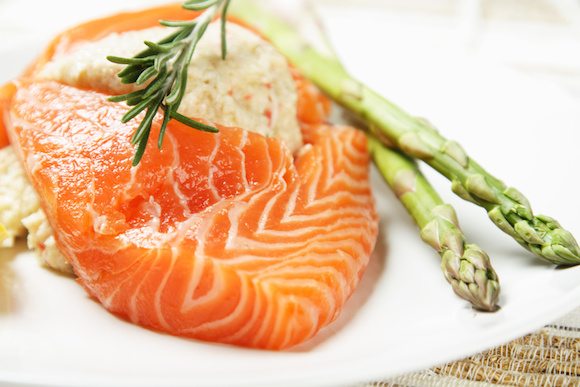
Stuffed salmon

How much wild fish is in your diet? Are you eating wild salmon or sardines two or three times a week? If you’re not, there are plenty of good reasons to start doing so!

Research shows “the likelihood of having depressive symptoms was significantly higher among infrequent fish consumers than among frequent consumers”

A 2011 study supports omega-3 consumption for mood disorders.

“DHA modulates some of the same genes targeted by current psychotropic medications, as well as increases myelin-related gene expression. Myelin-related gene expression decrease is a common, if nonspecific, denominator of neuropsychiatric disorders. In conclusion, our work supports the potential utility of omega-3 fatty acids, specifically DHA, for a spectrum of psychiatric disorders such as stress disorders, bipolar disorder, alcoholism and beyond.”

A 2012 animal study shows that sardines lower insulin resistance and has other wonderful health benefits.

“these results support the beneficial effect of sardine protein in fructose-induced metabolic syndrome on such variables as hyperglycemia, insulin resistance, hyperlipidemia and oxidative and inflammatory status, suggesting the possible use of sardine protein as a protective strategy against insulin resistance and related situations.”

I grew up in South Africa eating sardines and love them! I always have a few cans with me when I travel in case I’m stuck somewhere without a good protein source! Here is a blog post I wrote on: Healthy travel food ideas when you have food sensitivities.

Here is a great resource for making the best choices when it comes to seafood: “The Monterey Bay Aquarium Seafood Watch program helps consumers and businesses make choices for healthy oceans. Our recommendations indicate which seafood items are ‘Best Choices’, ‘Good Alternatives’ and which ones you should ‘Avoid’.”

A wonderful source for great quality fish is Vital Choice. They are “a trusted source for fast home delivery of the world’s finest wild seafood and organic fare, harvested from healthy, well-managed wild fisheries and farms.” I have met Randy Hartnell a few times and I love this company and everything that they stand for!

“We capture the fresh-caught quality of fine, sustainably harvested Alaskan salmon and other Alaskan and northwest Pacific seafood by cleaning and flash-freezing it within hours of harvest.

The fisheries that supply most of our seafood are certified sustainable by MSC (look for their blue logo) or the State of Alaska, or are widely considered sustainable.”

Enjoy some beautiful salmon for dinner or have a yummy sardine snack and see mood, blood sugar and overall health benefits!

Filed Under: Anxiety and panic, Food and mood Tagged With: anxiety, depression, salmon, sardines, Vital Choice

The Anxiety Summit: The Research – Food to prevent and treat anxiety and depression?

June 20, 2014 By Trudy Scott 12 Comments

Dr. Felice Jacka_2

Dr. Felice Jacka, Principal Research Fellow at Deakin University, Melbourne, Australia, is interviewed by host of the Anxiety Summit, Trudy Scott, Food Mood Expert and Nutritionist, author of The Antianxiety Food Solution.

The Research: Food to prevent and treat anxiety and depression?

  • Organizations and collaboration in nutritional psychiatry research and prevention
  • Study: Traditional diet lowers the risk of anxiety and depression in women
  • The surprising benefits of grass-fed red meat for improved mood
  • Food and mental health research in Norway, Japan, UK and Spain, across all ages and socioeconomic levels
  • Ongoing research on diet to prevent depression and future research on the gut

These are the two organizations we talked about:

  • International Society for Nutritional Psychiatry Research

Dr Jacka said she “initiated this society at the end of 2012 really in recognition of the need to get people collaborating and working together and creating those synergies to push this field forward”

  • Alliance for the Prevention of Mental Disorders

Here are some great gems from our interview:

we take the point that prevention is better than cure

there is no mental health without physical health

treating the whole person- their physical health as well as their mental health – is critical

We’ve now seen data from right around the world right across every continent and across age ranges, showing that diet really does matter to the prevalence and incidence of depression and anxiety.

Study: Association of Western and Traditional Diets with Depression and Anxiety in Women

We discussed the results of her Ph.D. paper that was published in the American Journal of Psychiatry in 2010: “Association of Western and Traditional Diets with Depression and Anxiety in Women.”

This study was published on the front cover of the journal with a big editorial and was nominated the most important study of 2010 in psychiatry research. It was considered really huge news in psychiatry.

a “traditional” dietary pattern characterized by vegetables, fruit, meat, fish, and whole grains was associated with lower odds for major depression or dysthymia and for anxiety disorders. A “western” diet of processed or fried foods, refined grains, sugary products, and beer was associated with a higher odds of mood disorders

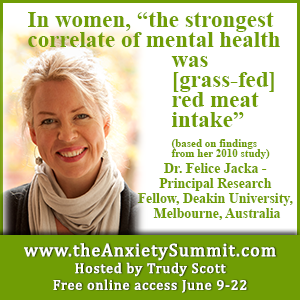
We discussed the connection between red meat and mental health especially in women.

Dr. Jacka shared this: “One of the hypotheses that I had during the Ph.D. was that increased intake of animal foods would be toxic” and “would be associated with more mental disorders.”

This did not turn out to be the case. “In our study, out of every single dietary food grouping that I looked at including vegetables, fruits, salads, beans, etc the strongest correlate of mental health was red meat intake,” grass-fed red meat of course.

“Consistently, women who have less than the recommended intake of red meat seem to be in an increased risk for common mental disorders” (like anxiety and depression) “and bipolar disorder.

Women only need a small amount (a palm-sized serving) three or four times a week.

These are pretty profound results, especially in this day and age where people are being cautioned to eat no red meat or to eat less. I encourage all my clients to eat red meat, grass-fed of course. It’s a wonderful source of amino acids, zinc, iron and omega-3 fatty acids – all important for depression and anxiety.

The first randomized controlled trial

Dr. Jacka is looking for participants for the first randomized controlled trial looking at diet as a therapeutic approach for depression. They are seeking the following study participants: those with major depression, who are over 18, with no dietary restrictions and who live in Melbourne.

There is additional information on the Diet Depression Study page.

UPDATE March 2017:
Here is the outcome of the study: SMILES diet depression trial: reduced depression and anxiety

It’s the first randomized controlled diet depression study and ONE THIRD of the dietary intervention group saw improvements in their depression symptoms.  This was just diet alone and switching from processed/junk food to real food with no specific dietary restrictions.

With regards to quality animal protein, it did include fish (at least 2 per week); lean red meats (3–4 per week), chicken (2–3 per week) and eggs (up to 6 per week).


Filed Under: Antianxiety, Food and mood, Real whole food, The Anxiety Summit Tagged With: Antianxiety Food Solution, anxiety, depression, DR Felice Jacka, food research, red meat, the anxiety summit, Trudy Scott

Nutritional interventions in postpartum depression and anxiety

May 9, 2014 By Trudy Scott 17 Comments

A 2013 paper published in Yale Journal of Biology and Medicine and titled “Nutritional interventions in depression and perinatal depression” states the following:

In pregnancy three “different physiological causes of depression have been identified: low serotonin, dopamine, and norepinephrine levels in the brain; altered neuromembranes and the impact of polyunsaturated fatty acids on these membranes; and hormones, especially hormonal changes that occur during and after pregnancy. Each of these pathways is affected by specific nutrients and may be altered by nutritional approaches.”

The paper lists the following possible nutritional deficiencies to consider:

  • Folate, vitamin B12 and vitamin B6 – which help maintain sufficient levels of neurotransmitters in the brain . These B vitamins are critical factors in homocysteine metabolism and homocysteine is a necessary precursor in the biosynthesis of serotonin, dopamine, and norepinephrine.
  • omega-3 fatty acids (EPA and DHA) – which keep neuronal membranes fluid and thereby enhance neurotransmitter production
  • SAMe – which has an antidepressant effect

The authors also discuss the importance of addressing possible imbalances of sex hormones, cortisol and thyroid hormones.

The paper concludes with this:

“Nutritional interventions may be a cost effective way of preventing and treating depression in pregnancy. When used prophylactically, nutritional interventions may decrease the incidence or severity of perinatal depression. When used as treatment methods, nutritional interventions may reduce the utilization of or the necessary dose of psychotropic drugs. Decreasing the amount of psychotropic drugs used during pregnancy may reduce the risk of harm to the fetus, while still providing the mother with an equivalent amount of therapy.”

In addition to the above, there is also research on: tryptophan, melatonin, zinc, and the role of inflammation in postpartum depression and anxiety.

It should be noted that by addressing many of these factors, both depression and anxiety may be alleviated. Also, since each person has their own unique biochemistry, it’s important to figure out what factor plays a role for that person.

I recently had the opportunity to share and more when I exhibited at the “California Maternal Wellness Summit: Postpartum Depression and Beyond.”

I met some wonderful women and groups who are doing amazing things to support women who have postpartum anxiety and depression. The response to my book, The Antianxiety Food Solution, and all the research on the powerful food mood connection was wonderful!

Because I feel this topic is so important, I’ve interviewed Christa Orrechio for “The Anxiety Summit.” The topic of her interview is: “Preventing and Quelling Post-Partum Anxiety.”

“The Anxiety Summit” is a free online virtual event that runs June 9 to June 22 and will be bringing together experts from all over the world – to share nutritional approaches to end anxiety, social anxiety, panic attacks and OCD.  You can register for “The Anxiety Summit” here.

UPDATE: the summit concluded on Tues 6/24 – season 2 of The Anxiety Summit will be in November 2014. If you’d like to be on the notification list just sign up here www.theAnxietySummit.com

Filed Under: Antianxiety Food Solution, Anxiety and panic, Food and mood, Postpartum Tagged With: anxiety, depression, Folate, omega-3, postpartum, the anxiety summit, vitamin B12, vitamin B6

Trans fats make us depressed and anxious!

February 21, 2014 By Trudy Scott 15 Comments

Cheese Pizza

We don’t need trans fats in our diets! In November last year the FDA Targeted Trans Fat in Processed Foods.

Mical E. Honigfort, a consumer safety officer at FDA, says that trans fat can still be found in such processed foods as:

  • crackers, cookies, cakes, frozen pies and other baked goods
  • snack foods (such as microwave popcorn)
  • frozen pizza
  • vegetable shortenings and stick margarines
  • coffee creamers
  • refrigerated dough products (such as biscuits and cinnamon rolls)
  • ready-to-use frostings

Partially hydrogenated oils are the major dietary source of trans fat in processed food. The FDA is in the process of determining if trans fats are GRAS, in other words “generally recognized as safe.” Trans fats, produced by industrial processes, are unrecognizable to the body and inherently unhealthful and I believe we have enough information to show they are not GRAS.

One of the many detrimental health effects of trans fats is that they contribute to mental health problems. I have my clients avoid them at all costs and educate them on the incredible mood benefits of eating only real whole foods.

A 2011 study called “Dietary Fat Intake and the Risk of Depression” looking at the diets of 12,059 Spanish university graduates found that consumption of trans fats were linked to an increased risk of depression. The authors state this: “These findings suggest that cardiovascular disease and depression may share some common nutritional determinants related to subtypes of fat intake.”

A more recent 2013 animal study in Neuroscience found that “chronic consumption of trans fats can enhance emotionality and anxiety parameters resulting from stressful situations of everyday life, which can trigger more severe neuropsychiatric conditions.”

If you recall, trans fats get mentioned in a recent blog post where I reviewed Dr Masley’s new book “The 30-Day Heart Tune-Up”. They are one of the worst culprits for heart disease (together with sugar and carbs).

And my colleague Mira Dessy shares that trans fats lower cognitive performance scores as well as lower brain volume

So ditch those trans fats and eat real whole food to feel calm, happy, smart and live healthy! 

Filed Under: Anxiety and panic, Heart health/hypertension, Real whole food Tagged With: anxiety, depression, trans fats

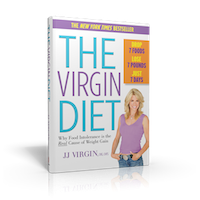
The Virgin Diet by JJ Virgin: book review and webinar

February 12, 2014 By Trudy Scott 15 Comments

virgin-diet-book-NYT

Food intolerance is a big factor and something I look at with all my clients. Other than weight gain it can cause a host of other issues ranging from inflammation to aches and pains to fatigue and even anxiety and depression. In fact, over 80% of my anxious clients do better mood-wise on a gluten-free diet.

I’m a little behind the times because JJ Virgin wrote this NY Times bestseller book late in 2012:  The Virgin Diet: Drop 7 Foods, Lose 7 Pounds, Just 7 Days (Why Food Intolerance is the Real Cause of Weight Gain).

With her new recipe book coming out I decided it’s time to do a review!

These are the 7 foods JJ wants you to drop: corn, eggs, peanuts, dairy, gluten, soy, and sugar (including artificial sweeteners).

I have to admit I was skeptical about eggs because they are such a wonderful protein source, such a great start to the day  and so handy for a snack. I used to eat a lot of eggs until I recently discovered that I have an egg intolerance! I’m hoping it’s going to be a short-term problem and that I can eventually reintroduce them because I LOVE my soft-boiled pastured eggs.  [UPDATE 2015: I am now able to eat eggs again!] The message is this: even a healthy food like eggs may be an issue for you.

You eliminate the above 7 foods and see how you do and then add them back and see how they affect you (sugar and artificial sweeteners stay out for good, and possibly gluten too). There are 3 cycles that the book walks you through:

  • Cycle 1: Elimination
  • Cycle 2: Reintroduction
  • Cycle 3: The Virgin Diet for Life

The book goes into a great more detail about the following:

  • what food intolerances are
  • insulin resistance – a condition in which the body produces insulin but does not use it effectively leading to weight-gain and blood sugar issues
  • leptin resistance – leptin is the hormone that signals satiety or fullness and when you have resistance you feel hungrier and have more cravings
  • zonulin – a protein that is affected by gluten and loosens the tight junctions in the gut contributing to leaky gut and more food intolerances
  • the dangers of GMOs and soy
  • the autoimmune connection – and much more

The book has great sections on healthy proteins and fats, quality produce, sugar and artificial sweeteners, exercising, meal planning, eating out and recipes. I’m looking forward to her follow-up book which launches on Feb 18th – her recipe book The Virgin Diet Cookbook: 150 Easy and Delicious Recipes to Lose Weight and Feel Better Fast 

We do have a few differences of opinion. 🙂

  • I’m not a big fan of coffee and JJ admits that she fights her fellow-nutritionists on this one!
  • I find that my clients with adrenal issues need to eat more frequently than every 4 to 6 hours
  • Pea-rice protein is the protein powder recommended and would not be suitable if you need to eat grain free or have issues with peas so adjust accordingly
  • I’m not terribly fond of the 3-bite rule where you get to splurge on desserts. JJ has a great sense of humor and says “share your dessert with someone who has a faster fork!” But I think you can get to the point where you no longer have a sweet tooth.

I’d also like to add that these 7 food intolerances are obviously not the only factor when it comes to weight-loss resistance – it’s one of many factors, including thyroid health, environmental toxins, dysbiosis, brain chemical imbalances, poor eating choices, stress (this is a big one!), lack of sleep and not exercising enough or incorrectly. JJ is the pro when it comes to exercise and she is a big proponent of restorative sleep.  There are also many  other foods that could potentially be an issue for you.

I do love that this book has brought the concept of food intolerances to the masses, bringing awareness of something that had not even been considered before. I commend JJ for this and her big mission to help millions of people lose weight and get healthy! So many people have had such incredible results with her program!

PS. In preparation of the new book launch JJ is hosting a webinar on what you need to know about The Virgin Diet. You can sign up here to get the most up-to-date information. Sign up and get to hear her share her words of wisdom.

Filed Under: Anxiety and panic, Books, Looking awesome, People Tagged With: anxiety, depression, food sensitivity, JJ Virgin, mood, Virgin diet

  • « Go to Previous Page
  • Page 1
  • Interim pages omitted …
  • Page 22
  • Page 23
  • Page 24
  • Page 25
  • Page 26
  • Page 27
  • Go to Next Page »

Primary Sidebar

NEW! GABA QuickStart Homestudy (with special intro pricing)

gaba quickstart homestudy

Free Report

9 Great Questions Women Ask about Food, Mood and their Health

You'll also receive a complimentary subscription to my ezine "Food, Mood and Gal Stuff"


Connect with me

Popular Posts

  • Amino Acids Mood Questionnaire from The Antianxiety Food Solution
  • The Antianxiety Food Solution Amino Acid and Pyroluria Supplements
  • Pyroluria Questionnaire from The Antianxiety Food Solution
  • Collagen and gelatin lower serotonin: does this increase your anxiety and depression?
  • Tryptophan for the worry-in-your-head and ruminating type of anxiety
  • GABA for the physical-tension and stiff-and-tense-muscles type of anxiety
  • The Antianxiety Food Solution by Trudy Scott
  • Seriphos Original Formula is back: the best product for anxiety and insomnia caused by high cortisol
  • Am I an anxious introvert because of low zinc and vitamin B6? My response to Huffington Post blog
  • Vagus nerve rehab with GABA, breathing, humming, gargling and key nutrients

Recent Posts

  • What do I use instead of Seriphos to help lower high cortisol that is affecting my sleep and making me anxious at night?
  • BeSerene™ GABA/theanine cream eases severe muscle tension in her neck/shoulders, prevents her bad headaches and quells her anxiety
  • How the correct approach, dose and sublingual use of GABA can be calming and not cause a flushed and itchy face and neck
  • The amino acid glutamine improves low mood by addressing gut health, and it has calming effects too
  • Flight anxiety with heightened breath, physical tension and also fearing the worst (the role of low GABA and low serotonin)

Categories

  • 5-HTP
  • AB575
  • Addiction
  • ADHD
  • Adrenals
  • Alcohol
  • Allergies
  • Alzheimer's disease
  • Amino Acids
  • Anger
  • Antianxiety
  • Antianxiety Food Solution
  • Antidepressants
  • Anxiety
  • Anxiety and panic
  • Autism
  • Autoimmunity
  • benzodiazapines
  • Bipolar disorder
  • Books
  • Caffeine
  • Cancer
  • Candida
  • Children/Teens
  • Collagen
  • Cooking equipment
  • Coronavirus/COVID-19
  • Cravings
  • Depression
  • Detoxification
  • Diabetes
  • Diet
  • DPA/DLPA
  • Drugs
  • EFT/Tapping
  • EMF
  • EMFs
  • Emotional Eating
  • Endorphins
  • Environment
  • Essential oils
  • Events
  • Exercise
  • Fear
  • Fear of public speaking
  • Fertility and Pregnancy
  • Fish
  • Food
  • Food and mood
  • Functional neurology
  • GABA
  • Gene polymorphisms
  • General Health
  • Giving
  • Giving back
  • Glutamine
  • Gluten
  • GMOs
  • Gratitude
  • Gut health
  • Heart health/hypertension
  • Histamine
  • Hormone
  • Hyperparathyroidism
  • Hypoglycemia
  • Immune system
  • Inflammation
  • Insomnia
  • Inspiration
  • Introversion
  • Joy and happiness
  • Ketogenic diet
  • Lithium orotate
  • Looking awesome
  • Lyme disease and co-infections
  • MCAS/histamine
  • Medication
  • Men's health
  • Mental health
  • Mercury
  • Migraine
  • Mold
  • Movie
  • MTHFR
  • Multiple sclerosis
  • Music
  • NANP
  • Nature
  • Nutritional Psychiatry
  • OCD
  • Osteoporosis
  • Oxalates
  • Oxytocin
  • Pain
  • Paleo
  • Parasites
  • Parkinson’s disease
  • PCOS
  • People
  • PMS
  • Postpartum
  • PTSD/Trauma
  • Pyroluria
  • Questionnaires
  • Real whole food
  • Recipes
  • Research
  • Schizophrenia
  • serotonin
  • SIBO
  • Sleep
  • Special diets
  • Sports nutrition
  • Stress
  • Sugar addiction
  • Sugar and mood
  • Supplements
  • Teens
  • Testimonials
  • Testing
  • The Anxiety Summit
  • The Anxiety Summit 2
  • The Anxiety Summit 3
  • The Anxiety Summit 4
  • The Anxiety Summit 5
  • The Anxiety Summit 6
  • Thyroid
  • Thyroid health
  • Toxins
  • Tryptophan
  • Tyrosine
  • Uncategorized
  • Vegan/vegetarian
  • Women's health
  • Yoga

Archives

  • October 2025
  • September 2025
  • August 2025
  • July 2025
  • June 2025
  • May 2025
  • April 2025
  • March 2025
  • February 2025
  • January 2025
  • November 2024
  • October 2024
  • September 2024
  • August 2024
  • July 2024
  • June 2024
  • May 2024
  • April 2024
  • March 2024
  • February 2024
  • January 2024
  • December 2023
  • November 2023
  • October 2023
  • September 2023
  • August 2023
  • July 2023
  • June 2023
  • May 2023
  • April 2023
  • March 2023
  • February 2023
  • January 2023
  • December 2022
  • November 2022
  • October 2022
  • September 2022
  • August 2022
  • July 2022
  • June 2022
  • May 2022
  • April 2022
  • March 2022
  • February 2022
  • January 2022
  • December 2021
  • November 2021
  • October 2021
  • September 2021
  • August 2021
  • July 2021
  • June 2021
  • May 2021
  • April 2021
  • March 2021
  • February 2021
  • January 2021
  • December 2020
  • November 2020
  • October 2020
  • September 2020
  • August 2020
  • July 2020
  • June 2020
  • May 2020
  • April 2020
  • March 2020
  • February 2020
  • January 2020
  • December 2019
  • November 2019
  • October 2019
  • September 2019
  • August 2019
  • July 2019
  • June 2019
  • May 2019
  • April 2019
  • March 2019
  • February 2019
  • January 2019
  • December 2018
  • November 2018
  • October 2018
  • September 2018
  • August 2018
  • July 2018
  • June 2018
  • May 2018
  • April 2018
  • March 2018
  • February 2018
  • January 2018
  • December 2017
  • November 2017
  • October 2017
  • September 2017
  • August 2017
  • July 2017
  • June 2017
  • May 2017
  • April 2017
  • March 2017
  • February 2017
  • January 2017
  • December 2016
  • November 2016
  • October 2016
  • September 2016
  • August 2016
  • July 2016
  • June 2016
  • May 2016
  • April 2016
  • March 2016
  • February 2016
  • January 2016
  • December 2015
  • November 2015
  • October 2015
  • September 2015
  • August 2015
  • July 2015
  • June 2015
  • May 2015
  • April 2015
  • March 2015
  • February 2015
  • January 2015
  • December 2014
  • November 2014
  • October 2014
  • September 2014
  • August 2014
  • July 2014
  • June 2014
  • May 2014
  • April 2014
  • March 2014
  • February 2014
  • January 2014
  • December 2013
  • November 2013
  • October 2013
  • September 2013
  • August 2013
  • July 2013
  • June 2013
  • May 2013
  • April 2013
  • March 2013
  • February 2013
  • January 2013
  • December 2012
  • November 2012
  • October 2012
  • August 2012
  • July 2012
  • June 2012
  • May 2012
  • April 2012
  • March 2012
  • February 2012
  • January 2012
  • December 2011
  • November 2011
  • October 2011
  • September 2011
  • August 2011
  • July 2011
  • June 2011
  • May 2011
  • April 2011
  • March 2011
  • February 2011
  • January 2011
  • December 2010
  • October 2010
  • September 2010
  • July 2010
  • May 2010
  • April 2010
  • March 2010
  • February 2010
  • January 2010
  • November 2009

Share the knowledge!

The above statements have not been evaluated by the Food and Drug Administration. Products listed in this website are not intended to diagnose, treat, cure or prevent any disease.

The information provided on this site is for informational and educational purposes only and is not intended as a substitute for advice from your physician or other health care professional. You should consult with a healthcare professional before starting or modifying any diet, exercise, or supplementation program, before taking or stopping any medication, or if you have or suspect you may have a health problem.


Copyright © 2026 Trudy Scott. All Rights Reserved. | Privacy | Terms and Conditions | Refund Policy | Medical Disclaimer

Free Report

9 Great Questions Women Ask about Food, Mood and their Health

You’ll also receive a complimentary subscription to my ezine “Food, Mood and Gal Stuff”