• Skip to primary navigation
  • Skip to main content
  • Skip to primary sidebar

everywomanover29 blog

Food, Mood and Women's Health – Be your healthiest, look and feel great!

  • Blog
  • About
  • Services
  • Store
  • Resources
  • Testimonials
  • The Book
  • Contact
  • Search this site

B-complex

My kids and I used GABA to get through Hurricane Helene – I recommend it for everyone’s 72-hr kit now

July 15, 2025 By Trudy Scott 2 Comments

gaba in hurricane

My kids and I used GABA to get through Hurricane Helene. Freeways broken in 3 directions, no comms, no gas, no power, etc. GABA noticeably kept us calmer even as the days went by. It helped us stay calm enough to think about our escape plan and jump on opportunities to find gas and water.

So grateful we learned about it [from you years ago] and had it on hand… I recommend it for everyone’s 72-hr [emergency preparedness] kit now.

Alecia shared her wonderful results with GABA on a Facebook post. I’m sorry they went through this but I am so happy GABA helped. I also wish everyone had GABA on hand for situations like this.

She now also uses a manual device for vagus nerve stimulation (VNS) and feels a combination of “GABA and VNS would have been incredible.” I’m a big fan of a B complex too and zinc and extra B6 if you have pyroluria because the added stress depletes these nutrients and makes things worse. And serotonin and endorphin support can often be helpful too. More on all this below and details about the GABA product she used and what dose helped her.

Which GABA product helped her and her family and how much did she use?

I asked Alecia to share how much GABA helped during and after the hurricane and which product worked for her? And if she had been using it before for day-to-day low GABA symptoms of feeling anxious, stressed, overwhelmed with physical tension and sleep issues.

We use the pharmaGABA by Natural Factors. I usually only need 100 – 200 mg in my regular life. During the hurricane I needed 300 mg pharmaGABA a couple of times a day. And more when waiting in a gas line. Such intense stress. GABA really took the edge off.

It’s always helpful to know your baseline dose i.e. what you use on a day-to-day basis. And to expect that dose to increase in times of the added stress in the midst of the hurricane and the immediate aftermath – as it did for Alecia. She needed a higher dose and used it more frequently.

You may often find you need to continue with the higher dose for a few weeks to months after the disaster, especially during the clean-up and rebuilding period.

One other factor to consider is the form of GABA. She used pharmaGABA with much success and many do very well on this form but I find more folks do better with GABA. GABA works best when used sublingually, capsule-opened, powder (all held on the tongue 1-2 mins) or cream, and a low starting dose is used, and increased to find the optimal dose.

Vagus nerve stimulation (VNS) as an added benefit

Alecia now also uses a manual device for vagus nerve stimulation (VNS). She had it during Hurricane Helene but had not yet used it:

A combo of GABA and VNS would have been incredible. I found out my mom was diagnosed with stage 4 cancer the next week and finally started using both GABA and VNS. Game changer combo.

She has the Hoolest veRelief Prime device and says this:

I love the Hoolest VNS. It helps with anxiety, sleep, digestion, and higher performance. I like level 4 but my kids prefer level 1.

I used it daily for about 4-6 months and then I started to heal deeply. Now I only need it once every week or two.

(I did hear that her mom’s treatments are working)

Vagus nerve stimulation, anxiety, GABA and the potential with VNS devices

This paper, Vagus nerve stimulation: a physical therapy with promising potential for central nervous system disorders, discusses how “vagus nerve stimulation influences the central nervous system through the GABA system” and the fact that “VNS has been shown to alleviate anxiety symptoms”, depression, obsessive-compulsive disorder (OCD), panic disorder, and post-traumatic stress disorder (PTSD). Much of the research has been done with implantable vagus nerve stimulation (iVNS) but the potential with non-invasive vagus nerve stimulation devices is really exciting.

What is so interesting is that “Vagus nerve stimulation influences the central nervous system through the GABA system” and it’s “speculated that part of VNS’s therapeutic effects …might involve the GABA system.”

VNS benefits are also seen via impacts on serotonin and dopamine, BDNF (brain-derived neurotrophic factor), by reducing inflammation and the secretion of inflammatory cytokines and promoting neuroprotection.

You can read more about vagus nerve support on this blog: Vagus nerve rehab with GABA, breathing, humming, gargling and key nutrients. I share my vagus nerve/throat issue and how manual vagus nerve support exercises and GABA helped me.

Using a good B complex and the pyroluria protocol too

I told Alecia that I’m a big fan of a good B complex and the pyroluria protocol too. I share more in this blog – Nutrition solutions for psychological stress after a natural disaster.

If this is all that can be managed it would be my first choice for everyone. In fact, if you live in an area prone to hurricanes, floods, fires etc. I’d recommend being on a B complex all the time.

My colleagues Bonnie Kaplin and Julia Rucklidge published this paper in 2015: A randomised trial of nutrient supplements to minimise psychological stress after a natural disaster. Those consuming a B-Complex and a broad-spectrum mineral/vitamin formula showed significantly greater improvement in stress and anxiety than study participants consuming a vitamin D supplement.

It is well known that pyroluria symptoms are made worse in times of heightened stress. If you are on protocol for pyroluria, additional zinc and vitamin B6/P5P is likely going to be needed short-term too.

In addition to GABA I also mention serotonin and endorphin support:

  • Serotonin support with tryptophan or 5-HTP, especially if you’re feeling sad, worried, imagining the worst, feeling fearful and having problems sleeping. More on tryptophan products.
  • Endorphin support with Lidtke DPA if you’re feeling especially emotional and weepy and grieving the loss of your home and community. More on endorphins here.

And I also include some resources for disaster preparedness and things to consider after the fangers have passed (like mold toxicity).

Additional resources when you are new to using GABA and other amino acids as supplements

As always, I use the symptoms questionnaire to figure out if low GABA or low serotonin or other neurotransmitter imbalances may be an issue.

If you suspect low levels of any of the neurotransmitters and do not yet have my book, The Antianxiety Food Solution – How the Foods You Eat Can Help You Calm Your Anxious Mind, Improve Your Mood, and End Cravings, I highly recommend getting it and reading it before jumping in and using amino acids on your own so you are knowledgeable. And be sure to share it with the practitioner/health team you or your loved one is working with.

There is an entire chapter on the amino acids and they are discussed throughout the book in the sections on gut health, gluten, blood sugar control (this is covered in an entire chapter too), sugar cravings, anxiety and mood issues.

The book doesn’t include product names (per the publisher’s request) so this blog,The Antianxiety Food Solution Amino Acid and Pyroluria Supplements, lists the amino acids that I use with my individual clients and those in my group programs.

If, after reading this blog and my book, you don’t feel comfortable figuring things out on your own (i.e. doing the symptoms questionnaire and respective amino acids trials), a good place to get help is the GABA QuickStart Program (if you have low GABA symptoms). This is a paid online/virtual group program where you get my guidance and community support. You can sign up to be notified when the next live launch is happening.

If you need serotonin support, the Serotonin QuickStart Program is a good place to get help. This is also a paid online/virtual group program where you get my guidance on using tryptophan and 5-HTP safely, and community support during 5 LIVE Q&A calls. You can sign up to be notified when the next live launch of this program is happening.

If you are a practitioner, join us in The Balancing Neurotransmitters: the Fundamentals program. This is also a paid online/virtual program with an opportunity to interact with me and other practitioners who are also using the amino acids.

Wrapping up and your feedback

I appreciate Alecia for sharing her story and giving me permission to share on the blog.

Do you have GABA on hand all the time and include them in your 72-hr emergency preparedness kit?

Have you found vagus nerve stimulation (VNS) to be helpful – either manual exercises (which ones help you) or using a device (which one helps you)?

What about B vitamins and the pyroluria protocol – do they help too?

If you’re a practitioner do you recommend GABA, VNS, B vitamins and the pyroluria protocol?

Feel free to share and ask your questions below.
Filed Under: Anxiety, Fear, GABA Tagged With: 72-hr kit, B-complex, B6, calm, calmer, disaster, dopamine, emergency, endorphin, GABA, GABA Quickstart, Hurricane Helene, pharmaGABA, pyroluria, serotonin, Serotonin Quickstart, stress, vagus, vagus nerve stimulation, VNS, zinc

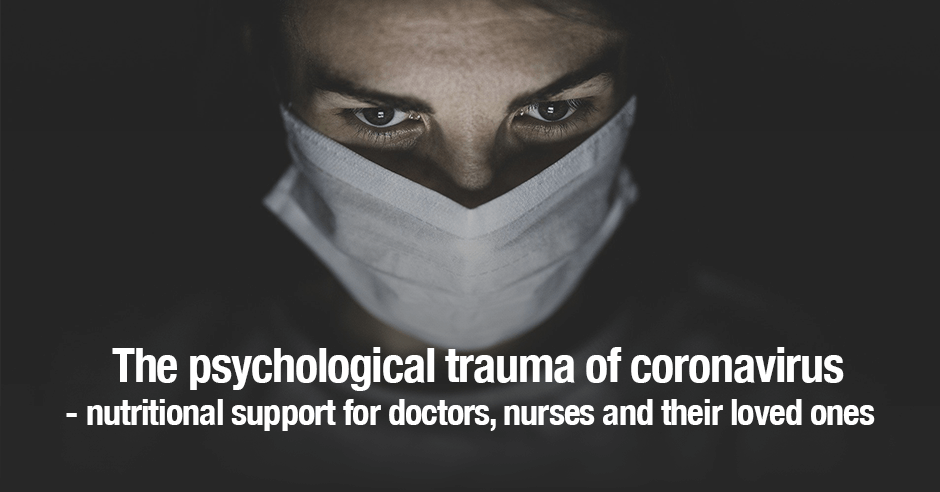
The psychological trauma of coronavirus – nutritional support for doctors, nurses and their loved ones

April 3, 2020 By Trudy Scott 13 Comments

psychological trauma coronavirus

If you are a nurse or doctor or providing support in any capacity in hospitals and other essential services during this coronavirus pandemic you need nutritional support.  You may be feeling on edge and anxious, worried about the future, concerned and angry about the lack of personal protective equipment (PPE), fearful for your safety and terrified about bringing the virus back to your family, exhausted and yet not able to sleep, feeling overly emotional and weepy about your patients (and decisions you are making or you anticipate having to make), and starting to have nightmares.

I’m not downplaying the enormity of the stress and trauma you are already facing and will continue to face, but we must not forget that nutrients (and nature and exercise) have a role to play in PTSD and trauma. They help to make you more resilient and mitigate some of the effects of trauma, and they also support healing and recovery.

When you feel calmer and you sleep better, you indirectly support your immune function too. There is also research that directly supports the role that GABA plays in improving immune function (more on this below).

B-complex and a multi-vitamin for everyone

If this is all that can be managed, a B-complex and a good multi-vitamin would be my first choice for everyone. I wrote this blog during Hurricane Harvey: Nutrition solutions for psychological stress after a natural disaster. It’s equally applicable now. Simply replace “after a natural disaster” with “during the coronavirus pandemic.”

My colleagues Bonnie Kaplin and Julia Rucklidge published this paper in 2015: A randomised trial of nutrient supplements to minimise psychological stress after a natural disaster. They found that folks traumatised after New Zealand earthquakes and floods in southern Alberta, Canada, showed significantly greater improvement in stress and anxiety when consuming a B-Complex and/or broad-spectrum mineral/vitamin formula.

In a newly published article in the Calgary Herald, Dr. Kaplan explains how these nutrients act as co-factors for making serotonin, GABA and dopamine and that “we should all consider a B-complex and/or a broad-spectrum nutrient formula on a daily basis to strengthen our mental resilience.”

My second recommendation is GABA and/or theanine

Supporting low levels of GABA, the calming neurotransmitter, eases your anxiety, improves your sleep and supports your immunity. When you feel calmer and you sleep better, you indirectly support your immune function too:

the physiological response to psychological stressors can dramatically impact the functioning of the immune system (from this paper)

We also have research that directly supports the role that GABA plays when it comes to improving immune function.

We want you to stay emotionally and physically strong and so does your family!

I write more about this here: GABA and theanine for easing anxiety, improving sleep and supporting immunity.  I share advice if you’re currently using GABA/theanine or have used it in the past, and a summary if you’re new to low GABA anxiety symptoms and using GABA/theanine.

Melatonin and serotonin support

I have my clients use a sublingual melatonin for going to sleep and a timed-release melatonin for staying asleep, and it’s another recommendation I’m making.

Melatonin improves sleep, helps ease anxiety and fear and may help with PTSD:

  • A double-blind, placebo-controlled crossover trial concludes that “melatonin may be an effective treatment for shift work nurses with difficulty falling asleep.”
  • Low levels of melatonin are common in military-related PTSD.
  • Melatonin modulates fear and “may serve as an agent for the treatment of PTSD”.

This in press and pre-proof paper reports on melatonin: COVID-19: Melatonin as a potential adjuvant treatment:

Melatonin, a well-known anti-inflammatory and anti-oxidative molecule, is protective against ALI/ARDS [acute lung injury/acute respiratory distress syndrome] caused by viral and other pathogens. Melatonin is effective in critical care patients by reducing vessel permeability, anxiety, sedation use, and improving sleeping quality, which might also be beneficial for better clinical outcomes for COVID-19 patients. Notably, melatonin has a high safety profile.

This is very promising for offering added protection if you are working on the front-line and for  your patients too.

Serotonin is the precursor to melatonin and the amino acid tryptophan is one of the raw materials for making serotonin. I would also include tryptophan or 5-HTP for supporting serotonin levels to help with the worry and anxiety in the head, lying awake ruminating, feelings of fear, anger, depression, worry and negative thinking.

Try to get into nature for the pure joy of it and to lower your cortisol

Do your absolute best to try and get some nature. I share some simple options in this blog:

  • Get out into nature at least one day a week i.e. do some “forest bathing”
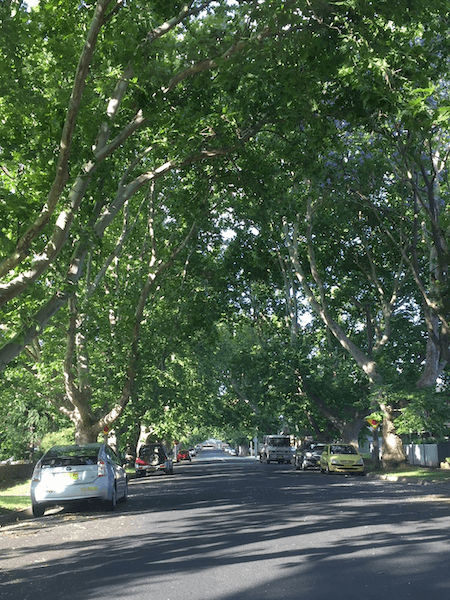
  • Take a short detour and drive to work via a tree-lined street
  • Look at some images of nature: sit and stare at a giant poster or even watch a show on National Geographic

Beyond the pure joy of spending time in nature, there is research supporting all of the above in playing a role in reducing anxiety, feeling more positive and calm, reducing cortisol levels and helping with recovery from stressful situations.

tree-lined street

Do this workout a few times a week for mood support

Here is a great workout from Dr. Zach Bush, MD. He recommends doing it 3 x day and starting with 10 reps of each of the 4 exercises and building up to 20 reps of each one:

The Four Minute Workout is a new concept of exercise that revolves around the body’s ability to use Nitric Oxide for muscle growth. This is an efficient anaerobic workout that can be done multiple times per day. The more frequently you do it, the better your results.

In this blog, I write how signals from our large leg muscles alter our brain and nervous system and improve mood.

If it’s your loved-one on the front-lines be sure to take care of yourself too

All of this nutritional support is also important if you are the mother or husband or wife or sister or brother etc. who is anxious and worrying about your loved one. You need to be strong for them so be sure to take care of you too.

Even if you are not working on the front-line or don’t know anyone doing so, if you are experiencing any of the above emotions, you need nutritional support too.

The New York Times article

It was reading this very somber and eye-opening article in the New York Times that promoted me to write this blog: The Psychological Trauma That Awaits Our Doctors and Nurses

The angst that clinicians may experience when asked to withdraw ventilators for reasons not related to the welfare of their patients should not be underestimated,” warn the authors of the article in The New England Journal of Medicine.“It may lead to debilitating and disabling distress.

We look at veterans and thank them for their service, never being able to fully comprehend what they’ve been through. The same may soon be true of some of our health care professionals. We may think we know. But we don’t.

No-one should have to make these choices and our hearts break for you and the families who are being impacted.

Louisiana article conveys the gravity of the situation like no other

Unfortunately it is happening already. This article conveys the gravity of the situation like no other and I’ve been pouring through everything – an account from a respiratory therapist in a Louisiana hospital (published two weeks ago.) We have been hearing similar stories from Italy for over a month now. Be warned – it’s horrifying!

It does include this statement… “The medical details in this story were vetted by an infectious disease doctor, a cardiologist and an internist at three different hospitals. All of the information about ARDS, the condition that the respiratory therapist describes, was fact-checked against peer-reviewed articles and UpToDate, a resource for physicians to check current standards in care, clinical features, and expected complications and outcomes.”

Because but I’m not familiar with this publication, I also checked with colleagues who are doctors and this is medically accurate.

While we don’t want to create panic I want to understand what doctors and nurses are facing so I can help. I do also believe we all deserve to know the facts, so we can truly support our doctors and nurses, and so we take this very seriously and stay home!

My biggest wish

It is my biggest wish that we can prevent much of this heart-ache and trauma going forwards, by preventing the spread of this virus and preventing the need for ventilators by helping sick individuals recover more quickly or prevent folks getting sick in the first place.

I do know of many incredible functional medicine practitioners who are creating task forces and working behind the scenes putting together proposals to present to governors, governments and mainstream medicine.

The products I mention and eating real whole food

The products I recommend to my clients are Designs for Health B Supreme and Designs for Health Twice Daily Multi.

You can find the GABA, theanine, tryptophan and 5-HTP on the supplements blog here.

If you are working in a hospital or medical setting or essential services

  • Please reach out if you need help with any of this – how to implement these recommendation or where to get the products
  • If you’re already doing this please share so we can encourage others to support themselves

And if your loved ones or friends in healthcare need support

  • Please share this blog with them and help them get access to these nutrients
  • I also encourage you to read my book – The Antianxiety Food Solution – How the Foods You Eat Can Help You Calm Your Anxious Mind, Improve Your Mood, and End Cravings – and give them the highlights about eating real whole food, quality animal protein, organic veggies and fruits, fermented foods, healthy fats, avoiding caffeine and sugar, eating for blood sugar control etc.
  • Please share if you know ways we can get this information (and nutrients) into the hands of more of our front-line workers
  • My focus is nutrition and nutrients but they also need someone to talk to so give them a call and be a listening ear. Also, help them find an online therapy service if they feel they need it. It’s encouraging to see more and more of this being made available.

One final comment – these are the bare essentials. In an ideal world, with more time, it would be best to work with a functional medicine practitioner and nutritionist and figure out your exact nutritional needs.

Filed Under: Anxiety Tagged With: B-complex, cortisol, doctors, exercise, GABA, hope, hospital, melatonin, multi-vitamin, nature, nurses, psychological trauma, PTSD, serotonin, tryptophan

Help! I’m worried all the time! Soothe with supplements and tame worry with food!

April 20, 2018 By Trudy Scott 3 Comments

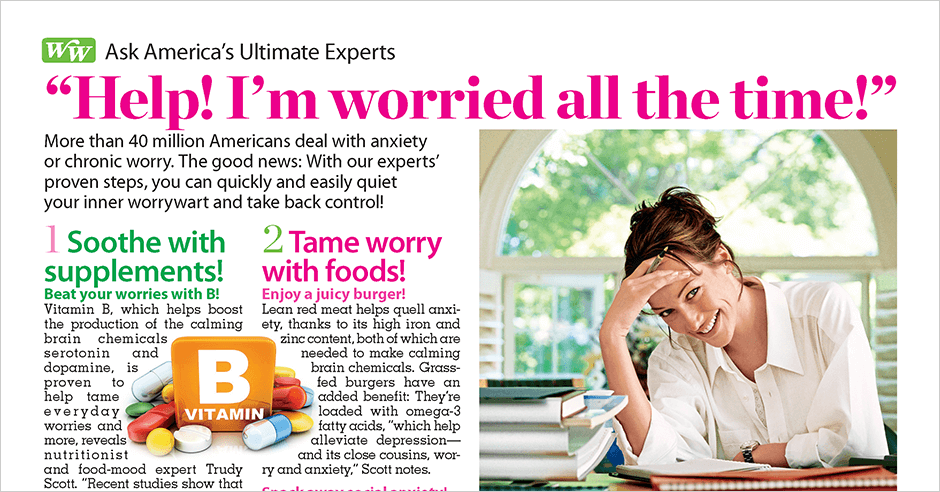
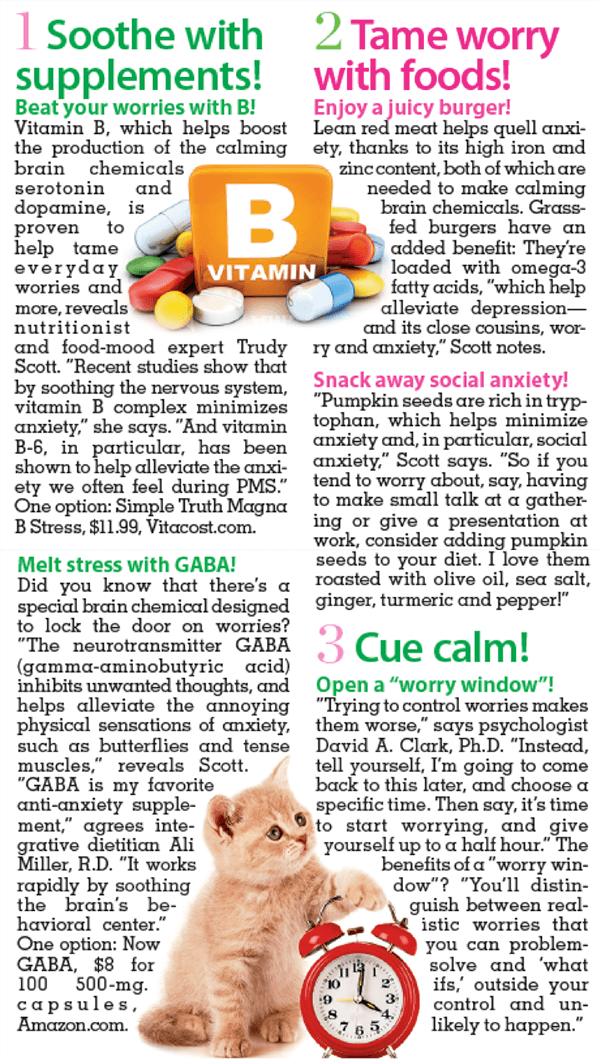
Some of my simple tips for worry were shared in the April edition of Women’s World so here they are for you to enjoy in case you didn’t see them in the magazine. I’m quite chuffed to see it’s for a piece called “Ask America’s Ultimate Experts.”

I share tips about the benefits of a B- complex vitamin (for adrenal support), vitamin B6 (especially for PMS-type anxiety and worry, the calming amino acid called GABA, plus the mood-boosting and calming benefits of a grass-fed burger (loaded with zinc, iron and omega-3s) and pumpkin seeds as a snack (because they’re rich in both tryptophan and zinc)

Here are my tips from the article:

#1 Soothe with supplements

Here are some supporting articles and research for some of the above tips. A good B- complex vitamin for adrenal support has been shown to minimize psychological stress after a natural disaster and vitamin B6 (or pyridoxine) helps with PMS-type anxiety and worry.

A paper titled Pyridoxine in the treatment of premenstrual syndrome: a retrospective survey in 630 patients, reports the following results:

The daily doses of pyridoxine hydrochloride varied from 40 to 100 mg early in the study and from 120 to 200 mg in the later period of the investigations. The response to treatment was recorded as good (no significant residual complaints) in 40 per cent or more of patients taking 100-150 mg pyridoxine daily and in 60 per cent of patients treated with 160-200 mg daily. Together with partial response (useful benefit but still some significant complaints), the positive effect of the treatment increased to 65-68 per cent and 70-88 per cent respectively. No symptoms consistent with a diagnosis of peripheral neuropathy were reported

The calming amino acid called GABA helps with the physical-tension and stiff-and-tense-muscles type of anxiety and helps with worry and inhibition of unwanted thoughts.

#2 Tame worry with foods

Professor Felice Jacka, nutritional psychiatry researcher, discusses the mood-boosting and calming benefits of grass-fed beef (loaded with zinc, iron and omega-3s) on our Anxiety Summit interview: The Research – Food to prevent and treat anxiety and depression?

Pumpkin seeds are rich in tryptophan and zinc and research shows that a functional food made from these seeds actually helps with social anxiety.

Here are a few minor discrepancies in the above sections:

  • In #1 dopamine is not a calming brain chemical but instead it’s stimulating and helps with focus and motivation. The B vitamin mentioned contain folic acid whereas methyl folate is the preferred choice.
  • In #2 the GABA product recommended is 500mg and I find starting much lower is a more effective approach with my clients.

#3 Cue calm – open a worry window

Opening a worry window is a new approach for me and I’d love to hear if it helps you now or has helped you in the past.

Anti-anxiety gummies and low serotonin

Ali Miller, RD, shares a recipe for anti-anxiety gummies (you can see it in the PDF) and I love that it includes coconut water, ginger and turmeric. I’d replace the cup of orange juice (which is high in sugar) with water and use 2 tablespoons instead. Be sure to watch that these gelatin gummies don’t make your anxiety (or depression or sleep worse). It’s a small amount of gelatin but if you’re eating a lot of them and you’re prone to low serotonin, this may be a problem for you. I write about this in a blog post here – Collagen and gelatin lower serotonin: does this increase your anxiety and depression? If it does cause an adverse reaction it doesn’t mean you can’t eat them, instead it simply means you may need to take tryptophan when eating them (if low serotonin is the issue.

If you’d like a PDF of the article you can grab a copy here.

I’d love to hear if any of these approaches have helped you or your clients/patients. Keep in mind that it’s a fun article that is by no means comprehensive in terms of addressing all the possible root causes of anxiety.

Filed Under: Anxiety Tagged With: anxiety, B-complex, food, GABA, grass-fed red meat, omega-3s, pumpkin seeds, supplements, vitamin B6, Women’s World, worry, zinc

Primary Sidebar

NEW! GABA QuickStart Homestudy (with special intro pricing)

gaba quickstart homestudy

Free Report

9 Great Questions Women Ask about Food, Mood and their Health

You'll also receive a complimentary subscription to my ezine "Food, Mood and Gal Stuff"


Connect with me

Popular Posts

  • Amino Acids Mood Questionnaire from The Antianxiety Food Solution
  • The Antianxiety Food Solution Amino Acid and Pyroluria Supplements
  • Pyroluria Questionnaire from The Antianxiety Food Solution
  • Collagen and gelatin lower serotonin: does this increase your anxiety and depression?
  • Tryptophan for the worry-in-your-head and ruminating type of anxiety
  • GABA for the physical-tension and stiff-and-tense-muscles type of anxiety
  • The Antianxiety Food Solution by Trudy Scott
  • Seriphos Original Formula is back: the best product for anxiety and insomnia caused by high cortisol
  • Am I an anxious introvert because of low zinc and vitamin B6? My response to Huffington Post blog
  • Vagus nerve rehab with GABA, breathing, humming, gargling and key nutrients

Recent Posts

  • What do I use instead of Seriphos to help lower high cortisol that is affecting my sleep and making me anxious at night?
  • BeSerene™ GABA/theanine cream eases severe muscle tension in her neck/shoulders, prevents her bad headaches and quells her anxiety
  • How the correct approach, dose and sublingual use of GABA can be calming and not cause a flushed and itchy face and neck
  • The amino acid glutamine improves low mood by addressing gut health, and it has calming effects too
  • Flight anxiety with heightened breath, physical tension and also fearing the worst (the role of low GABA and low serotonin)

Categories

  • 5-HTP
  • AB575
  • Addiction
  • ADHD
  • Adrenals
  • Alcohol
  • Allergies
  • Alzheimer's disease
  • Amino Acids
  • Anger
  • Antianxiety
  • Antianxiety Food Solution
  • Antidepressants
  • Anxiety
  • Anxiety and panic
  • Autism
  • Autoimmunity
  • benzodiazapines
  • Bipolar disorder
  • Books
  • Caffeine
  • Cancer
  • Candida
  • Children/Teens
  • Collagen
  • Cooking equipment
  • Coronavirus/COVID-19
  • Cravings
  • Depression
  • Detoxification
  • Diabetes
  • Diet
  • DPA/DLPA
  • Drugs
  • EFT/Tapping
  • EMF
  • EMFs
  • Emotional Eating
  • Endorphins
  • Environment
  • Essential oils
  • Events
  • Exercise
  • Fear
  • Fear of public speaking
  • Fertility and Pregnancy
  • Fish
  • Food
  • Food and mood
  • Functional neurology
  • GABA
  • Gene polymorphisms
  • General Health
  • Giving
  • Giving back
  • Glutamine
  • Gluten
  • GMOs
  • Gratitude
  • Gut health
  • Heart health/hypertension
  • Histamine
  • Hormone
  • Hyperparathyroidism
  • Hypoglycemia
  • Immune system
  • Inflammation
  • Insomnia
  • Inspiration
  • Introversion
  • Joy and happiness
  • Ketogenic diet
  • Lithium orotate
  • Looking awesome
  • Lyme disease and co-infections
  • MCAS/histamine
  • Medication
  • Men's health
  • Mental health
  • Mercury
  • Migraine
  • Mold
  • Movie
  • MTHFR
  • Multiple sclerosis
  • Music
  • NANP
  • Nature
  • Nutritional Psychiatry
  • OCD
  • Osteoporosis
  • Oxalates
  • Oxytocin
  • Pain
  • Paleo
  • Parasites
  • Parkinson’s disease
  • PCOS
  • People
  • PMS
  • Postpartum
  • PTSD/Trauma
  • Pyroluria
  • Questionnaires
  • Real whole food
  • Recipes
  • Research
  • Schizophrenia
  • serotonin
  • SIBO
  • Sleep
  • Special diets
  • Sports nutrition
  • Stress
  • Sugar addiction
  • Sugar and mood
  • Supplements
  • Teens
  • Testimonials
  • Testing
  • The Anxiety Summit
  • The Anxiety Summit 2
  • The Anxiety Summit 3
  • The Anxiety Summit 4
  • The Anxiety Summit 5
  • The Anxiety Summit 6
  • Thyroid
  • Thyroid health
  • Toxins
  • Tryptophan
  • Tyrosine
  • Uncategorized
  • Vegan/vegetarian
  • Women's health
  • Yoga

Archives

  • October 2025
  • September 2025
  • August 2025
  • July 2025
  • June 2025
  • May 2025
  • April 2025
  • March 2025
  • February 2025
  • January 2025
  • November 2024
  • October 2024
  • September 2024
  • August 2024
  • July 2024
  • June 2024
  • May 2024
  • April 2024
  • March 2024
  • February 2024
  • January 2024
  • December 2023
  • November 2023
  • October 2023
  • September 2023
  • August 2023
  • July 2023
  • June 2023
  • May 2023
  • April 2023
  • March 2023
  • February 2023
  • January 2023
  • December 2022
  • November 2022
  • October 2022
  • September 2022
  • August 2022
  • July 2022
  • June 2022
  • May 2022
  • April 2022
  • March 2022
  • February 2022
  • January 2022
  • December 2021
  • November 2021
  • October 2021
  • September 2021
  • August 2021
  • July 2021
  • June 2021
  • May 2021
  • April 2021
  • March 2021
  • February 2021
  • January 2021
  • December 2020
  • November 2020
  • October 2020
  • September 2020
  • August 2020
  • July 2020
  • June 2020
  • May 2020
  • April 2020
  • March 2020
  • February 2020
  • January 2020
  • December 2019
  • November 2019
  • October 2019
  • September 2019
  • August 2019
  • July 2019
  • June 2019
  • May 2019
  • April 2019
  • March 2019
  • February 2019
  • January 2019
  • December 2018
  • November 2018
  • October 2018
  • September 2018
  • August 2018
  • July 2018
  • June 2018
  • May 2018
  • April 2018
  • March 2018
  • February 2018
  • January 2018
  • December 2017
  • November 2017
  • October 2017
  • September 2017
  • August 2017
  • July 2017
  • June 2017
  • May 2017
  • April 2017
  • March 2017
  • February 2017
  • January 2017
  • December 2016
  • November 2016
  • October 2016
  • September 2016
  • August 2016
  • July 2016
  • June 2016
  • May 2016
  • April 2016
  • March 2016
  • February 2016
  • January 2016
  • December 2015
  • November 2015
  • October 2015
  • September 2015
  • August 2015
  • July 2015
  • June 2015
  • May 2015
  • April 2015
  • March 2015
  • February 2015
  • January 2015
  • December 2014
  • November 2014
  • October 2014
  • September 2014
  • August 2014
  • July 2014
  • June 2014
  • May 2014
  • April 2014
  • March 2014
  • February 2014
  • January 2014
  • December 2013
  • November 2013
  • October 2013
  • September 2013
  • August 2013
  • July 2013
  • June 2013
  • May 2013
  • April 2013
  • March 2013
  • February 2013
  • January 2013
  • December 2012
  • November 2012
  • October 2012
  • August 2012
  • July 2012
  • June 2012
  • May 2012
  • April 2012
  • March 2012
  • February 2012
  • January 2012
  • December 2011
  • November 2011
  • October 2011
  • September 2011
  • August 2011
  • July 2011
  • June 2011
  • May 2011
  • April 2011
  • March 2011
  • February 2011
  • January 2011
  • December 2010
  • October 2010
  • September 2010
  • July 2010
  • May 2010
  • April 2010
  • March 2010
  • February 2010
  • January 2010
  • November 2009

Share the knowledge!

The above statements have not been evaluated by the Food and Drug Administration. Products listed in this website are not intended to diagnose, treat, cure or prevent any disease.

The information provided on this site is for informational and educational purposes only and is not intended as a substitute for advice from your physician or other health care professional. You should consult with a healthcare professional before starting or modifying any diet, exercise, or supplementation program, before taking or stopping any medication, or if you have or suspect you may have a health problem.


Copyright © 2026 Trudy Scott. All Rights Reserved. | Privacy | Terms and Conditions | Refund Policy | Medical Disclaimer

Free Report

9 Great Questions Women Ask about Food, Mood and their Health

You’ll also receive a complimentary subscription to my ezine “Food, Mood and Gal Stuff”