• Skip to primary navigation
  • Skip to main content
  • Skip to primary sidebar

everywomanover29 blog

Food, Mood and Women's Health – Be your healthiest, look and feel great!

  • Blog
  • About
  • Services
  • Store
  • Resources
  • Testimonials
  • The Book
  • Contact
  • Search this site

anxiety nutrition solutions

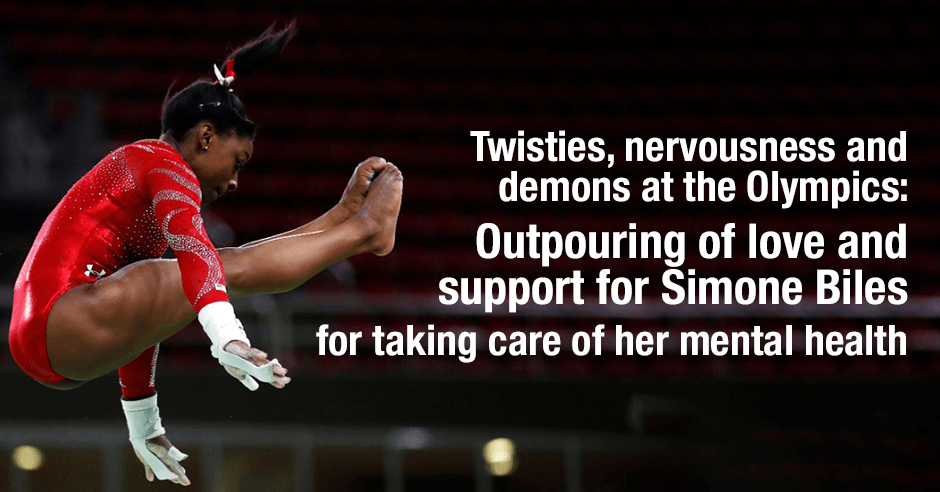
Twisties, nervousness and demons at the Olympics: Outpouring of love and support for Simone Biles for taking care of her mental health

July 30, 2021 By Trudy Scott 10 Comments


twisties olympics

Simone Biles at a training session at the Rio 2016 Summer Olympic Games (Salty View / Shutterstock.com)

There has been an incredible outpouring of love and support for gymnast Simone Biles, as she withdrew from the 2020 Olympics Women’s Team final on Tuesday and All-Around Individual Final on Wednesday. This was due to the twisties, nervousness and mental demons. I’ve decided to gather some of this admiration into a blog post as a testament to Simone who I adore and respect even more than I did before today. I want this to be all about the love and support, but in order to tie it all together, I share more on the twisties (and anxiety), being vulnerable and taking care of yourself, nutritional psychiatry, using amino acids and mental health advocacy below.

Before we get into all that, here is an ET video that explains some of the backstory leading up to this:

Simone shares that she feels good physically but emotionally, her feelings vary by the day. She also talks about the stress of the Olympics and being the star gymnast and that she feels she has the weight of the world on her shoulders.

You’ll also see and hear the love and support she gets from her team members and fellow gymnasts. Two-time Olympian, Aly Raisman, says this about Simone: “She is human too and sometimes people forget that. She is doing the best she can.”

The love and support continued to show up all over social media (and is still showing up)! What follows are some of my favorite posts and mentions.

The love and support – Simone Biles already won

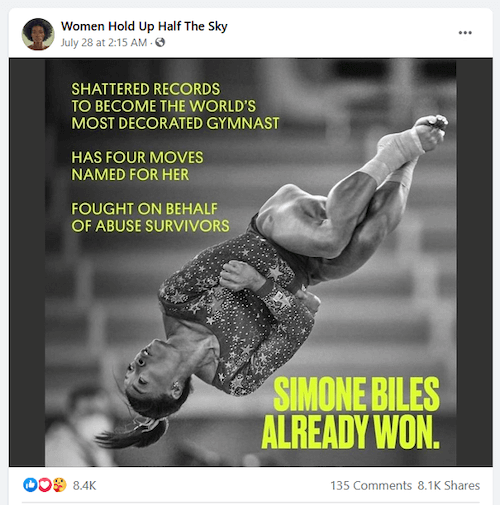
Women Hold Up Half The Sky, a community that empowers women to find their voice and celebrates women in their diversity, shared this powerful post when Simone withdrew:

“Simone Biles already won” and how she has “shattered records to become the world’s most decorated gymnast, has four moves named for her and fought on behalf of abuse survivors.”
simone biles

Simone is one of many young female gymnasts who were sexually abused by disgraced former USA Gymnastics doctor Larry Nassar. This article in Elle covers her story and goal to be an advocate for other young girls.

We are just as proud of you today as yesterday

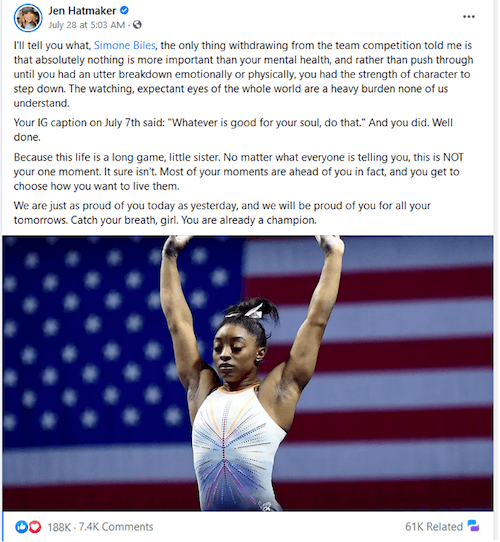
Jen Hatmaker, New York Times bestselling author of “Simple and Free” posts this lovely uplifting message, ending with:

I’ll tell you what, Simone Biles, the only thing withdrawing from the team competition told me is that absolutely nothing is more important than your mental health, and rather than push through until you had an utter breakdown emotionally or physically, you had the strength of character to step down. The watching, expectant eyes of the whole world are a heavy burden none of us understand.

Your IG caption on July 7th said: “Whatever is good for your soul, do that.” And you did. Well done.

Because this life is a long game, little sister. No matter what everyone is telling you, this is NOT your one moment. It sure isn’t. Most of your moments are ahead of you in fact, and you get to choose how you want to live them.

We are just as proud of you today as yesterday, and we will be proud of you for all your tomorrows. Catch your breath, girl. You are already a champion.
simone biles

I wholeheartedly agree, nothing is more important than her metal health. Too often we put on a brave face and push through. Simone didn’t and for that we are super-proud of her – for her own physical and mental health, and for being a role model to girls and women around the world.

Simone Biles and Naomi Osaka are the role models I want for my girls

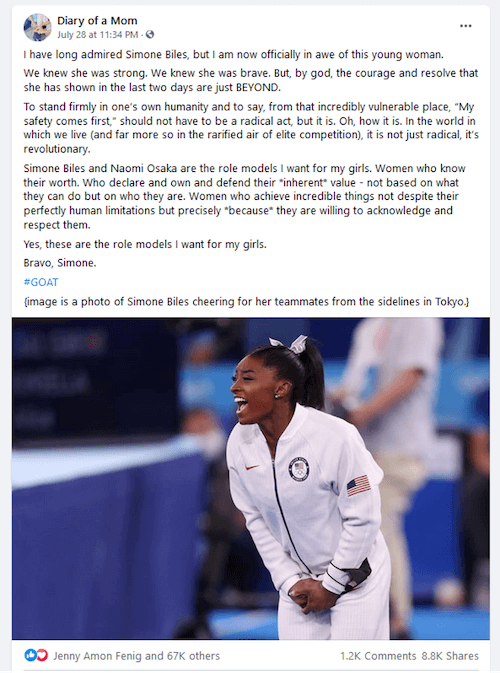
Diary of a Mom, mother, intersectional advocate, believer in the power of community, posted this beautiful message about strength, bravery, vulnerability and Simone and Naomi being role models for her daughters:

I have long admired Simone Biles, but I am now officially in awe of this young woman.

We knew she was strong. We knew she was brave. But, by god, the courage and resolve that she has shown in the last two days are just BEYOND.

To stand firmly in one’s own humanity and to say, from that incredibly vulnerable place, “My safety comes first,” should not have to be a radical act, but it is. Oh, how it is. In the world in which we live (and far more so in the rarified air of elite competition), it is not just radical, it’s revolutionary.

Simone Biles and Naomi Osaka are the role models I want for my girls. Women who know their worth. Who declare and own and defend their *inherent* value – not based on what they can do but on who they are. Women who achieve incredible things not despite their perfectly human limitations but precisely *because* they are willing to acknowledge and respect them.

Yes, these are the role models I want for my girls.

Bravo, Simone.

#GOAT
simone biles

I applaud this strong woman and amazing athlete

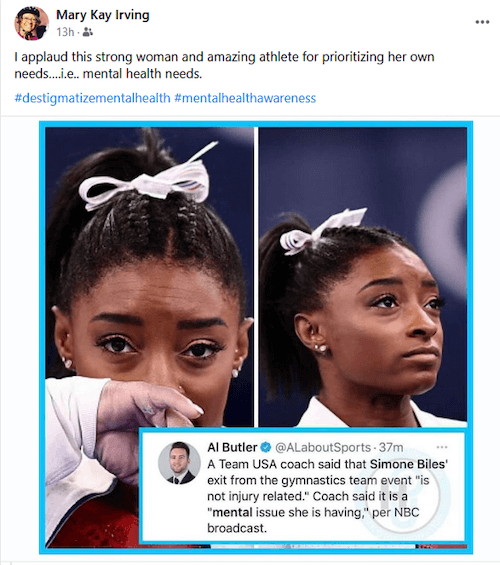
Mary Kay Irving, Therapist/Care Coordinator at Boulder Community Health and Owner at Boulder Center for Health and Nutrition, shares this message.

I applaud this strong woman and amazing athlete for prioritizing her own needs….i.e.. mental health needs. #destigmatizementalhealth #mentalhealthawareness
simone biles

I also applaud Simone and support her decision to take care of her mental health needs no matter how hard it must have been for her!

Simone is an absolute legend!

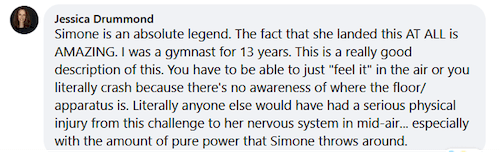
My friend and colleague Dr. Jessica Drummond, a functional nutrition and integrative women’s health expert, and founder of Integrative Women’s Health Institute, says Simone is an absolute legend:

Simone is an absolute legend. The fact that she landed this AT ALL is AMAZING. I was a gymnast for 13 years. You have to be able to just “feel it” in the air or you literally crash because there’s no awareness of where the floor/ apparatus is. Literally anyone else would have had a serious physical injury from this challenge to her nervous system in mid-air… especially with the amount of pure power that Simone throws around.
simone biles

This is so great for people, especially our youth athletes, to see

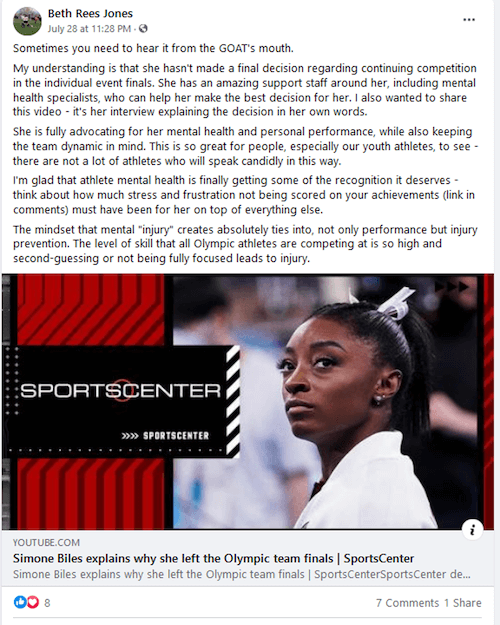
Another friend and colleague, Beth Jones who is a Female/Teen Athlete Wellness & Mindset Coach, posts this.

I’m grateful for athletes like Simone Biles and Naomi Osaka who are coming forward (and professionals as well) to normalize mental health as a key piece of sports training and recovery.

I could not agree more.

In this post, Beth also shares Simone’s press release video where she fully advocates for her mental health and personal performance, keeping the team dynamic in mind, and also sets a wonderful example for young athletes

Sometimes you need to hear it from the GOAT’s mouth.

My understanding is that she hasn’t made a final decision regarding continuing competition in the individual event finals. She has an amazing support staff around her, including mental health specialists, who can help her make the best decision for her. I also wanted to share this video – it’s her interview explaining the decision in her own words.

She is fully advocating for her mental health and personal performance, while also keeping the team dynamic in mind. This is so great for people, especially our youth athletes, to see – there are not a lot of athletes who will speak candidly in this way.

I’m glad that athlete mental health is finally getting some of the recognition it deserves – think about how much stress and frustration not being scored on your achievements (link in comments) must have been for her on top of everything else.

The mindset that mental “injury” creates absolutely ties into, not only performance but injury prevention. The level of skill that all Olympic athletes are competing at is so high and second-guessing or not being fully focused leads to injury.
simone biles

Thank you for finding your voice and staying true to yourself.

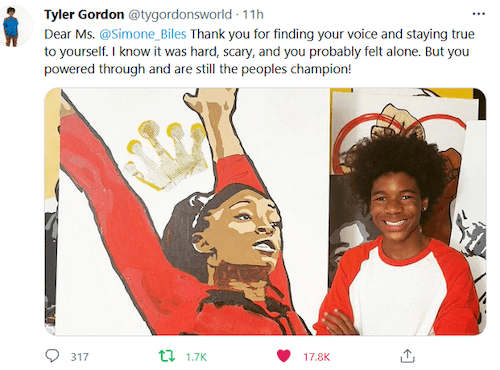
Tyler Gordon, a 14-year old artist who seeks to inspire through the stories of heroes in his work, tweeted this sweet message with  his painting of Simone:

Dear Ms. @Simone_Biles Thank you for finding your voice and staying true to yourself. I know it was hard, scary, and you probably felt alone. But you powered through and are still the peoples champion!
simone biles

This young man is kind-hearted and has talent! You can actually watch him painting Simone here.

Unfortunately, there have been way too many negative comments. I believe these are people who don’t understand mental health. You don’t have to have broken your back to have compassion for someone who has but there are still too many people who can’t understand mental health or have empathy until they have experienced it or see a loved one experiencing it. I’m hopeful all this media attention will help create more awareness, compassion and kindness.

The twisties and how stress and anxiety can play a role

In case you are new to this term (like I was until this week), this article explains what the twisties are – Simone Biles Mentioned Having ‘the Twisties’ – Here’s What That Means, and Why It Can Be Dangerous in Gymnastics:

The twisties is an informal term used to refer to a certain kind of mental block that a gymnast can experience as they are in the air during a twisting skill. When someone gets the twisties, there is a disconnect between the brain and body, Jamie Shapiro, PhD, a certified mental performance coach who is the co-director of the Masters in Sport and Performance Psychology program at the University of Denver

In this same article, Dr. Shapiro, a former gymnast herself, shares how this loss of control can have both physical and mental implications:

Physically, the twisties can make a gymnast unable to perform the skills as they were previously able to.

Mentally, that inability to perform the skills can cause anxiety, exacerbating the mental block.

Allie Wagener, PhD, a licensed psychologist who specializes in sport and performance psychology at Premier Sports Psychology and is also a former gymnast shares how dangerous this can be in terms of injuring yourself when “you don’t know where you are in the air and you don’t know how to land.” It’s also terrifying for the gymnast and that worry and fear about it happening again can make things worse.

I wanted to understand more about the “twisties” in gymnastics and asked Jessica Drummond how similar are they to the yips, which happen in golf or baseball, and which I know are closely tied to increased anxiety/stress. The stress/anxiety can be a trigger and then having the yips make your anxiety and fears worse. Jessica confirmed this about the twisties:

Yes, it’s sort of a loop that can get stuck – get lost in the air (cognitive, proprioceptive, vestibular) –> realize how dangerous that is/ was/ could be –> fear –> stress –> exacerbates the original brain-based issue.

I encourage you to read the entire article to see how stress and anxiety, racing/negative/distracted thoughts, fear of failure, high expectations and even focal dystonia (involuntary muscle spasms) can play a role.

The experts also mention a number of possible techniques to help (like progression, focusing on a different skill, using simple cue words to “keep you focused on the skill rather than the fear”), speaking with a sports psychologist and taking a break.

There is no mention of “nutritional psychiatry” as a possible solution (and I share more on this below).

What Simone has shared – I’m a little bit more nervous

Right now, we don’t know exactly why Simone experienced the twisties or if any of the above apply to her, but we do know some of what she has shared with the media up until now.

In this article Simone said she wasn’t physically injured but fighting some mental demons and had experienced a little injury to her pride. She said that “after the performance I did I just didn’t want to go on,” saying it was all in her head. Simone also emphasized the need to protect her body and mind, saying “I have to focus on my mental health and not jeopardize my health and well-being.”

An article in Women’s Health Magazine reports her comments at a press conference after the USA team won the Silver medal. Simone shared how she just doesn’t trust herself as much as she used to, wasn’t having as much fun as usual and admitted that “I’m a little bit more nervous when I do gymnastics.” 

It was here that she announced that she had the twisties.

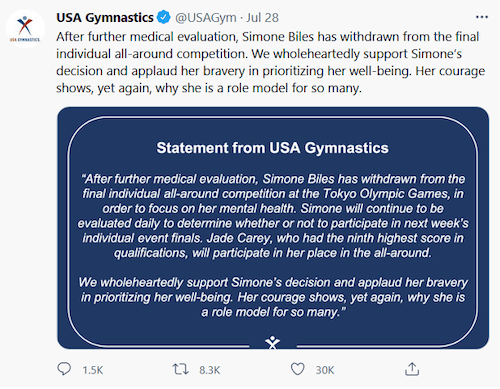
Around this time USA Gymnastics announced Simone had withdrawn to focus on her mental health. They also offered their support:

We wholeheartedly support Simone’s decision and applaud her bravery in prioritizing her well-being. Her courage shows, yet again, why she is a role model for so many.
simone biles

A place for “nutritional psychiatry” and “anxiety nutrition solutions”

My hope is that more and more “nutritional psychiatry” and “anxiety nutrition solutions” (like the use of GABA, tryptophan and other amino acids) will make it into the world of professional (and recreational) sports. I’d like to see this embraced by athletic coaches, registered dieticians and psychologists working with athletes, and hopefully some of the athletes themselves.

Research shows that elite young athletes have high psychological demands:

Elite young athletes have to cope with multiple psychological demands such as training volume, mental and physical fatigue, spatial separation of family and friends or time management problems may lead to reduced mental and physical recovery.

The paper concludes that:

Future research should focus on sports medical and sports psychiatric interventional approaches with the goal to prevent anxiety and depression as well as teaching coping strategies to young athletes.

I recently blogged about how the amino acid tyrosine erased severe performance anxiety in a female musician – to such an extent that she had no more shaking, sweating, panic attacks or passing out. Much of this could be applied to an athletic performance where low dopamine is a factor.

This recent blog resonated with many in my community: What if overthinking, fear, anxiety and worry (caused by low serotonin) is holding you back instead of low motivation/low dopamine? Much of this could also apply to athletes with the twisties or yips with low serotonin as a root cause.

My book, The Antianxiety Food Solution, is a great place to start with the foundations of eating to reduce anxiety (real whole food, no gluten, no caffeine, no sugar, eating for blood sugar control and gut health) and more advanced interventions (like using the amino acids GABA, tryptophan, 5-HTP, tyrosine, DPA and glutamine for balancing brain chemistry, and addressing low zinc and vitamin B6 for pyroluria/social anxiety.)

All this is clearly very needed, and the research and awareness are growing in leaps and bounds, but as Beth Jones, Female/Teen Athlete Wellness & Mindset Coach, shares, what an amazing shift it would be if we could add more “nutritional psychiatry” into the sports psych training:

Coming from 20 years working in sports med with athletes, I keep coming back to wishing there was a degree that combined sports psychology & nutrition (functional & fueling). I started looking into the more mental aspects of performance and healing and then also bringing in more nutrition aligned with healing needs about 15 years ago, but it was all on my own.

What I’ve been learning from you has given me some new tools to share, but you’re right in that they are not well known. I know our US Olympic Committee has amazing health professionals in all areas that work as a team approach for our athletes, but I wonder how many of the RDs are actually having conversations with the mental health team and collaborating taking all of the athlete-specific nuances into consideration.

I know my own therapist suggested that I not pursue sports psych because of the lack of support among therapists out there, but what an amazing shift it would be if we could add more nutritional psychiatry into the sports psych training? Trying to forge a path in this area on my own, but it’s a lot of bush-whacking and little progress.

Beth raises some excellent points and as I said above, hopefully more and more of the “anxiety nutrition solutions” and “nutritional psychiatry” will make it into professional and recreational sports.

It’s ok to say you’re not ok mentally

Simone has noticed and embraced the love and support she’s been receiving. She tweeted this:

The outpouring [of] love & support I’ve received has made me realize I’m more than my accomplishments and gymnastics which, I never truly believed before

She is way more than her accomplishments and gymnastics.

Naomi Osaka penned an article in Time magazine with this title: ‘It’s O.K. Not to Be O.K.’  She wrote this shortly after she withdrew from the French Open to tend to her own mental health. Naomi’s openness has inspired Simone to speak out.

When athletes like Simone and Naomi prioritize their own mental health and are public about it, they are paving the way for it being ok to say you’re not ok mentally. Through their honesty and vulnerability, they have become role models and mental health advocates, and we applaud them for that.

But most of all we applaud them both for taking care of their mental health!

What love and support can you share for Simone and Naomi? Feel free to post in the comments.

Does this motivate and inspire you to be more open about your own anxiety and mental health challenges (if you have not been open yet)?

If you’re an athlete (professional or recreational), does any of this resonate with you and have the amino acids or diet helped you with your anxiety?

If you work with athletes (professional or recreational), I’d love to hear if this resonates with you and if you’re using nutritional psychiatry approaches with them to help ease their anxiety?

If you have connections to athletes (professional or recreational), or coaches, dieticians or psychologists who work with athletes, please share this blog and my work, so we can get nutritional psychiatry resources and anxiety nutrition solutions into their hands and help more athletes.
Filed Under: Anxiety, People, Sports nutrition Tagged With: anxiety, anxiety nutrition solutions, athletes, demons, fear, low dopamine, low serotonin, mental health, mentally, Naomi Osaka, nerves, nervous, nervousness, nutritional psychiatry, Olympics, Simone Biles, twisties, worry

Healthy travel food, first aid and avoiding anxiety and motion sickness when flying

November 3, 2017 By Trudy Scott 15 Comments

Updated: June 28, 2024

In today’s blog I share what I eat on a long international flight, plus what “first-aid” goodies I take in my carry-on luggage, how to stay cool, calm and collected when flying and demonstrate my favorite wrist bands for preventing motion sickness.

Even though I order gluten-free meals, I’m sure you’ll agree that the food on planes is pretty horrible and sometimes you can’t even be sure you’ll get your special meal.  One flight we ordered gluten-free only to be told on the plane that they don’t serve gluten-free meals! Fortunately we did a layover in Hawaii and were able to buy a salad and some fruit after a lot of searching but it was not what you’d expect. It was a good thing we did take some snacks with us too but I am now way more prepared when I travel.

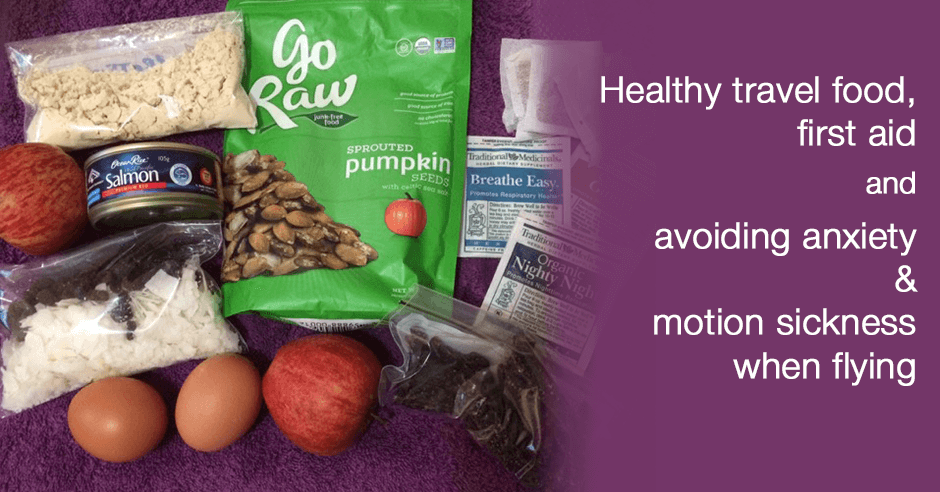
As you can see from the above image, this is the typical travel food (or “padkos” as we call it in South Africa) for a 13-hour flight:

  • 2 organic apples
  • 2 organic boiled eggs and some sea salt
  • Homemade biltong from grass fed beef (a South African version of jerky) made with sea salt, coriander and pepper
  • Coconut flakes and organic raisins
  • Sprouted pumpkin seeds (many nuts and seeds are medium and high oxalate but a few tablespoons of pumpkin seeds are low oxalate – more on oxalates here)
  • A selection of herbal tea bags: ginger (which is great for motion sickness), Nighty night which contains chamomile and is relaxing), Breathe Easy (in case of congestion) and rooibos (great for stress and an excellent source of polyphenols)
  • A can of wild salmon
  • Pea protein powder or whey or beef protein powder (as tolerated)

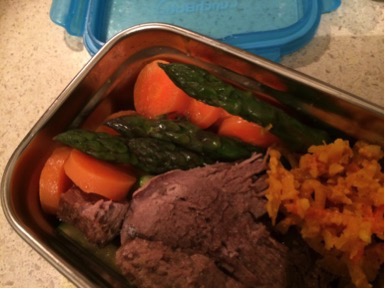
I also packed a meal of roast lamb with a veggie selection of carrots, zucchini and asparagus, plus some cauliflower sauerkraut. This was really delicious!

Also, to be safe, I take a selection of “first-aid” products in my carry-on luggage.

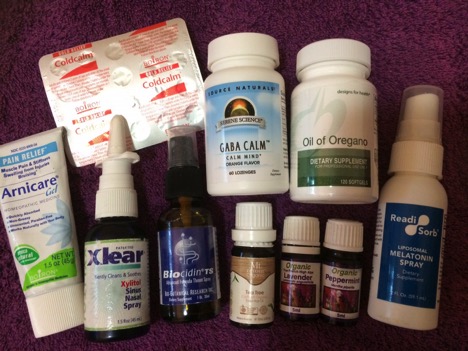
Here is some of what I typically pack for “first-aid”:

  • Arnicare which is an arnica gel * (for muscle pain)
  • Xlear nasal spray * and Biocidin throat spray * – I find that using these two products before boarding the plane and half way into the flight prevents me from picking up any bugs and getting sick
  • Tree tree oil *
  • Essential oils of lavender * (for relaxation and sleep) and peppermint * (for energy and a headache). Both are antibacterial too.
  • Melatonin spray * to help reset my circadian rhythm and help with jetlag
  • Designs for Health Oil of Oregano * and garlic supplements (not shown) for bug protection
  • Source Naturals GABA Calm for tension and anxiety. I didn’t use it/need it this trip but after my scary plane ride last year leading to vagus nerve issues, I’ve decided to always have some on hand when flying
  • Boiron Cold Calm, one of my favorite homeopathic cold remedies

I also take a few of each of the following in a supplement box: Designs for Health Inflammatone * (a natural anti-inflammatory), DPP-IV enzymes * (for accidental gluten exposure), activated charcoal * (also for accidental gluten exposure) and my daily supplements.

Note: the products marked with a * above can all be found on my Fullscript supplement store. And tryptophan, mentioned below, is also available on Fullscript.

Here is a video I did for the Healthy Travelers Global summit, an online event that was hosted by my good friend Robyn Benson in 2015 (just ignore the summit promo and enjoy the tips and demonstrations).

I share the following:

  • A quick demonstration using Xlear (notice that I actually miss my nose by mistake!) and Biocidin Throat Spray for avoiding bugs
  • The pressure-point wrist-bands I use for motion sickness (find them on Amazon here). Many people with pyroluria are more prone to morning nausea and may be very prone to motion sickness (and it’s commonly a sign of low vitamin B6). In order to be effective they do need to be put on BEFORE you start to travel and the position is key).
  • I don’t mention it in the video but motion sickness can be a sign of low bile production or poor quality bile. I share more about how I’ve been using ox bile to improve fat digestion and help with oxalate issues here. Hopefully this will help even more with my motion sickness.
  • Amino acids for travel anxiety (GABA for the physical anxiety and tryptophan for the fearful, worrying-about-flying anxiety)
  • Healthy travel snacks

Enjoy the beautiful Rocky Mountains! When I filmed this I was on a trip to St Paul, MN for the National Association of Nutrition Professionals conference and wanted to share just how I travel.

Additional resources when you are new to using amino acids such as GABA or tryptophan as supplements

As always, I use the symptoms questionnaire to figure out if low GABA or low serotonin may be an issue.

When considering them for flying I have clients do a trial before they leave and figure out optimal doses for their unique needs. And then use GABA and/or tryptophan as needed on the flight.

If you suspect low levels of any of the neurotransmitters and do not yet have my book, The Antianxiety Food Solution – How the Foods You Eat Can Help You Calm Your Anxious Mind, Improve Your Mood, and End Cravings, I highly recommend getting it and reading it before jumping in and using amino acids on your own so you are knowledgeable. And be sure to share it with the practitioner/health team you or your loved one is working with.

There is an entire chapter on the amino acids and they are discussed throughout the book in the sections on gut health, gluten, blood sugar control (this is covered in an entire chapter too), sugar cravings, anxiety and mood issues.

The book doesn’t include product names (per the publisher’s request) so this blog, The Antianxiety Food Solution Amino Acid and Pyroluria Supplements, lists the amino acids that I use with my individual clients and those in my group programs.

If, after reading this blog and my book, you don’t feel comfortable figuring things out on your own (i.e. doing the symptoms questionnaire and respective amino acids trials), a good place to get help is the GABA QuickStart Program (if you have low GABA symptoms too). This is a paid online/virtual group program where you get my guidance and community support.

If you are a practitioner, join us in The Balancing Neurotransmitters: the Fundamentals program. This is also a paid online/virtual program with an opportunity to interact with me and other practitioners who are also using the amino acids.

Wrapping up and your feedback

I hope this is all helpful for your next long flight or even a road-trip you have coming up. Do keep in mind that some of this can be adapted for a day out shopping or a day at the beach too.

I’d love to hear about your favorite travel foods and first-aid goodies that you take on a trip.

Feel free to share and ask your questions below.

Filed Under: Anxiety Tagged With: anxiety, anxiety nutrition solutions, depression, DPA, GABA, iPhone, kids, teen, Teen Depression and Anxiety: Why the Kids Are Not Alright, teens, tryptophan

Teen Depression and Anxiety: Why the Kids Are Not Alright – my response

October 27, 2017 By Trudy Scott 10 Comments

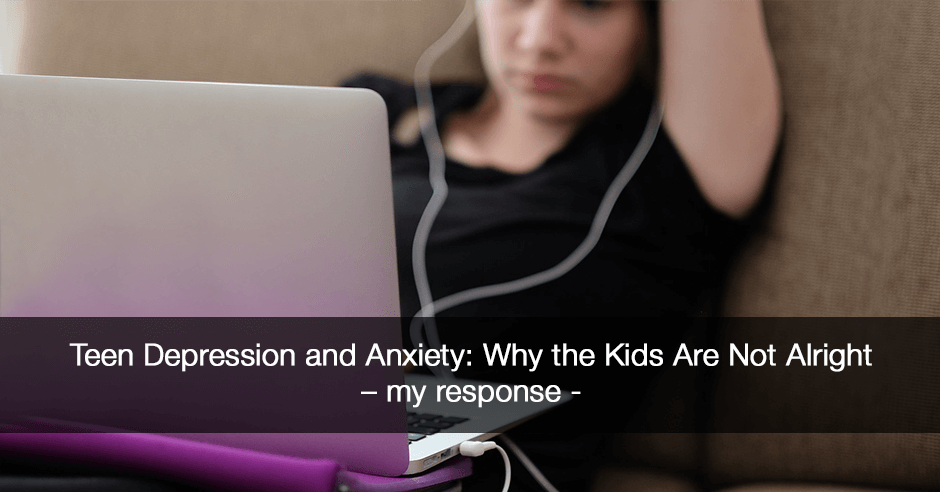
Teens suffer from so much anxiety and their anxiety symptoms are now more of an issue than depression; they are cutting and self-harming as a way to feel normal; they are super-stressed; social media and iPhone use is taking over their lives, and in general, they seem to have poor coping skills.

This article in TIME magazine is a sad and concerning read: Teen Depression and Anxiety: Why the Kids Are Not Alright. It was written last year but is still very relevant. The author writes:

“Adolescents today have a reputation for being more fragile, less resilient and more overwhelmed than their parents were when they were growing up”

It’s an excellent article for creating awareness and to get an understanding of the extent of the issues and does highlight the crazy online world of teens:

It’s hard for many adults to understand how much of teenagers’ emotional life is lived within the small screens on their phones, but a CNN special report in 2015 conducted with researchers at the University of California, Davis, and the University of Texas at Dallas examined the social-media use of more than 200 13-year-olds. Their analysis found that ‘there is no firm line between their real and online worlds.’

Here is my response to the article and how I feel we can do better.

No solutions other than coping mechanisms

These teens are hopeless and resigned to the fact that this is how they are going to have to live i.e. simply managing their symptoms. It breaks my heart and it’s not alright!

Unfortunately (like the recent Xanax anxiety article in the New York Times) it offers no solutions other than coping mechanisms.

No mention of the importance of diet or nature

I agree that these kids are under a lot of stress (certainly more than when I was a teen) BUT there is ZERO mention of a real foods diet (that includes quality animal protein), a nourishing breakfast with protein (balancing blood sugar makes such a difference for reducing anxiety levels), the removal of caffeine, gluten and sugar, the importance of addressing nutritional deficiencies and poor gut health.

I love the movie project but there is no encouragement to get these teens out into nature (and maybe take up bouldering or gardening, both of which have been shown to reduce anxiety and depression).

No mention of DPA or GABA or tryptophan for self-harming, anxiety and addiction

The article makes the connections between the endorphin/opioid system and pain and the comfort these teens get from self-harming and cutting:

Scientists want to better understand how self-harm engages the endogenous opioid system–which is involved in the pain response in the brain–and what happens if and when it does

However, there is NO nutritional solution offered and NO mention of the amino acid DPA (d-phenylalanine), which can often be very effective for the cutting and self-harming, because it creates a similar endorphin boost that the cutting provides.  

There is also NO mention of the calming amino acid GABA or the happy and worry-free amino acid tryptophan for the anxiety and worry.

All the above amino acid also address addictions and may well offer neurotransmitter support to help with the addictive nature of their “drug-of-choice” i.e. their iPhones, games and other devices.

We have a plethora of nutritional solutions

We have a plethora of nutritional solutions to consider. Here are some relevant blogs that need to be part of the conversation for these teens:

  • GABA for children: ADHD, focus issues, irritability, anxiety and tantrums
  • My interview with psychiatric nurse practitioner, Zendi Moldenhauer, on the Anxiety Summit – Anxiety in children, adolescents and young adults: an integrative psychiatric approach
  • My discussion with Dr. Nicole Beurkens at the end of one of Integrative Medicine for Mental Health conferences to talk about anxiety and the impact of both low zinc and low GABA. Nicole shares her perspectives on working with children and I share what I see with the adult women I work with.

Something as simple as a weighted blanket may help ease the anxiety some of these teens are experiencing.

We can do better than simply discussing the problem teens face. I’ve worked with both children and teens and we’ve shifted things in a matter of months. It really can be done but we need to share the powerful nutritional psychiatry solution, especially because research shows that most children with anxiety relapse, regardless of conventional treatment approaches.

Do you have a teenager who is experiencing anxiety and what has helped her/him?

Do you work with teens and do you incorporate some of these approaches?

How do we get this information into the hands of parents, schools, organizations, doctors, mental health practitioners and others those who can help make this happen?

Filed Under: Anxiety, Children/Teens, Teens Tagged With: anxiety, anxiety nutrition solutions, depression, DPA, GABA, iPhone, kids, teen, Teen Depression and Anxiety: Why the Kids Are Not Alright, teens, tryptophan

Prozac Nation Is Now the United States of Xanax in New York Times Magazine: my response

June 23, 2017 By Trudy Scott 11 Comments

This is the title of a new article recently published in the New York Times Magazine: Prozac Nation Is Now the United States of Xanax. In other words, depression has been surpassed by anxiety and the antidepressant Prozac has been replaced by Xanax (and other benzodiazepines /anti-anxiety medications) by the US population!

It’s an excellent read for creating awareness about anxiety and benzodiazepines but also sad because there is so much we can do and no solutions are offered. Here are some startling stats shared in the article:

According to data from the National Institute of Mental Health, some 38 percent of girls ages 13 through 17, and 26 percent of boys, have an anxiety disorder. [Note: this was quoted in the article. I’m trying to track down the source because an article in Time Magazine last year says this: ‘About 30% of girls and 20% of boys–totaling 6.3 million teens–have had an anxiety disorder, according to data from the National Institute of Mental Health’ as of 2015.]

On college campuses, anxiety is running well ahead of depression as the most common mental health concern, according to a 2016 national study of more than 150,000 students by the Center for Collegiate Mental Health at Pennsylvania State University. [Both anxiety and depression have shown slight but persistent increases each year for the past six years]

Meanwhile, the number of web searches involving the term [anxiety] has nearly doubled over the last five years, according to Google Trends. (The trendline for “depression” was relatively flat.)

I’m the optimistic type, I’m proactive and I like to give hope as well as solutions – and I have quite a bit to say about this article so here goes.

#1 Too many people are prescribed benzodiazepines without knowing what they are getting into

The article does not address the issues with benzodiazepines: how too many people are prescribed benzodiazepines without knowing what they are getting into, with many suffering dreadfully and never offered nutritional solutions. When I shared the article on my facebook page, someone in my community shared this (and gave me permission to share it further in the hope someone else will be spared her suffering)

Been totally disabled by benzo for 3.5 years. I have been off meds for 17.5 months and the impact of these meds makes any anxiety I ever felt a cake walk. Please run from the poison. Find healthy foods, nutrition and take the break your body is begging you for. We need to listen to our bodies! If it is screaming with anxiety maybe you need to make some life changes. I wish I did instead of taking a med that has almost destroyed me.

I asked her what symptoms she was experiencing, and as well as suffering from severe motion sickness (so badly she can’t even leave her home) she also shared this:

I have locked shoulder muscles, neck, jaw; I have internal vibrations, I get bad headaches, jelly legs, distorted vision like floaters and squiggles and fireworks, my teeth all feel like they will fall out but they are not lose, it feels like adrenaline or cortisol rushes through the body. Sometimes arms go numb. I am pretty tortured every day. These meds are truly causing chemical warfare on some of us.

I believe this will be the next big epidemic and I hope I heal somehow to help others

She had been on a variety of benzodiazepines, SSRIs and other medications for over 17 years and you may think this is an isolated incidence. I assure you it is not – just read the list of the most common psychological and physical symptoms of benzodiazepine withdrawal.

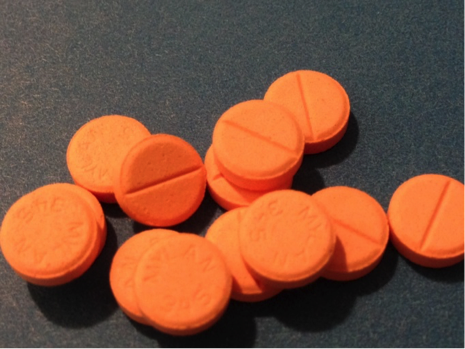
5mg diazepam / Valium, a benzodiazepine

Here is some useful information about the risks and dangers of benzodiazepines:

  • World Benzodiazepine Awareness Day – say NO to Benzodiazepines for anxiety!
  • Benzodiazepines do patients more harm than good

#2 Let’s help anxious individuals like you find solutions

Scott Stossel, journalist and author of My Age of Anxiety: Fear, Hope, Dread, and the Search for Peace of Mind was quoted as saying this in the article:

The silver lining for those with nervous disorders is that we can welcome our previously non-neurotic fellow citizens into the anxious fold.

My first response to the article is this: I say NO to Scott Stossel and instead I say let’s think bigger and instead let’s invite the anxious citizens into the calm and no-more-anxiety fold!

Scott’s book is well-written book, offers an excellent understanding of what it feels like to experience anxiety and panic attacks, and has many compelling stories. But as a number of his Amazon reviewer’s say the big question is this: what is the answer or solution? Unfortunately it’s not provided in his book (or the New York Times Magazine article).

The New York Times Magazine article provides another anxiety resource that has helped “bring anxiety into the open, and allowed its clinical sufferers to band together in a virtual group-therapy setting”: The Sarah Fader on twitter, creator of the hashtag #ThisIsWhatAnxietyFeelsLike and a mental-health advocacy organization called Stigma Fighters.

Again, these are wonderful resources for support, awareness and advocacy but they don’t offer solutions if you suffer from anxiety. With nutritional solutions we can change this to #ThisIsWhatCalmFeelsLike.

#3 Too few people know about nutritional solutions

Too few people know about nutritional solutions and that has to change. Clinically we know it works and there is now SO much research supporting this approach.

Here are a few of many blog posts on my site that share powerful anxiety nutrition solutions:

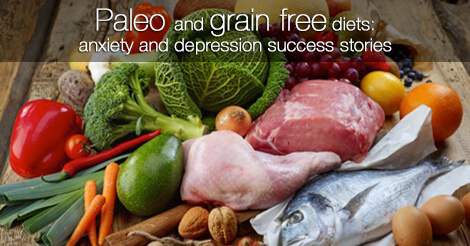
  • Paleo and grain free diets: anxiety and depression success stories
  • GABA the calming amino acid: common questions I get asked
  • GABA for children: ADHD, focus issues, irritability, anxiety and tantrums
  • Tryptophan for PMS: premenstrual dysphoria, mood swings, tension, and irritability

Here is one of the latest food and mental health studies – A modified Mediterranean dietary intervention for adults with major depression: Dietary protocol and feasibility data from the SMILES trial

This and other dietary and nutritional approaches for both depression and anxiety will be presented at the upcoming International Society of Nutritional Psychiatry Research conference in Bethesda, MD next month)

Here are two book resources too: my book The Antianxiety Food Solution and integrative psychiatrist Kelly Brogan’s book A Mind of Your Own.

I’d love your feedback

  • Which nutritional solutions topics do you have questions about and in what areas do you still need help?
  • What ideas do you have for getting this nutritional solution message out in a bigger way?
  • What do you wish you’d known when you were first diagnosed with anxiety and prescribed medication (such as a benzodiazepine or SSRI)?
  • How do we convince the naysayers that this does work and is worth implementing?
  • How do we get the mainstream mental health community on board?
  • What anxiety resources do you have to share

Filed Under: benzodiazapines Tagged With: anxiety, anxiety nutrition solutions, benzodiazepine, depression, prozac, Xanax

Primary Sidebar

NEW! GABA QuickStart Homestudy (with special intro pricing)

gaba quickstart homestudy

Free Report

9 Great Questions Women Ask about Food, Mood and their Health

You'll also receive a complimentary subscription to my ezine "Food, Mood and Gal Stuff"


Connect with me

Popular Posts

  • Amino Acids Mood Questionnaire from The Antianxiety Food Solution
  • The Antianxiety Food Solution Amino Acid and Pyroluria Supplements
  • Pyroluria Questionnaire from The Antianxiety Food Solution
  • Collagen and gelatin lower serotonin: does this increase your anxiety and depression?
  • Tryptophan for the worry-in-your-head and ruminating type of anxiety
  • GABA for the physical-tension and stiff-and-tense-muscles type of anxiety
  • The Antianxiety Food Solution by Trudy Scott
  • Seriphos Original Formula is back: the best product for anxiety and insomnia caused by high cortisol
  • Am I an anxious introvert because of low zinc and vitamin B6? My response to Huffington Post blog
  • Vagus nerve rehab with GABA, breathing, humming, gargling and key nutrients

Recent Posts

  • What do I use instead of Seriphos to help lower high cortisol that is affecting my sleep and making me anxious at night?
  • BeSerene™ GABA/theanine cream eases severe muscle tension in her neck/shoulders, prevents her bad headaches and quells her anxiety
  • How the correct approach, dose and sublingual use of GABA can be calming and not cause a flushed and itchy face and neck
  • The amino acid glutamine improves low mood by addressing gut health, and it has calming effects too
  • Flight anxiety with heightened breath, physical tension and also fearing the worst (the role of low GABA and low serotonin)

Categories

  • 5-HTP
  • AB575
  • Addiction
  • ADHD
  • Adrenals
  • Alcohol
  • Allergies
  • Alzheimer's disease
  • Amino Acids
  • Anger
  • Antianxiety
  • Antianxiety Food Solution
  • Antidepressants
  • Anxiety
  • Anxiety and panic
  • Autism
  • Autoimmunity
  • benzodiazapines
  • Bipolar disorder
  • Books
  • Caffeine
  • Cancer
  • Candida
  • Children/Teens
  • Collagen
  • Cooking equipment
  • Coronavirus/COVID-19
  • Cravings
  • Depression
  • Detoxification
  • Diabetes
  • Diet
  • DPA/DLPA
  • Drugs
  • EFT/Tapping
  • EMF
  • EMFs
  • Emotional Eating
  • Endorphins
  • Environment
  • Essential oils
  • Events
  • Exercise
  • Fear
  • Fear of public speaking
  • Fertility and Pregnancy
  • Fish
  • Food
  • Food and mood
  • Functional neurology
  • GABA
  • Gene polymorphisms
  • General Health
  • Giving
  • Giving back
  • Glutamine
  • Gluten
  • GMOs
  • Gratitude
  • Gut health
  • Heart health/hypertension
  • Histamine
  • Hormone
  • Hyperparathyroidism
  • Hypoglycemia
  • Immune system
  • Inflammation
  • Insomnia
  • Inspiration
  • Introversion
  • Joy and happiness
  • Ketogenic diet
  • Lithium orotate
  • Looking awesome
  • Lyme disease and co-infections
  • MCAS/histamine
  • Medication
  • Men's health
  • Mental health
  • Mercury
  • Migraine
  • Mold
  • Movie
  • MTHFR
  • Multiple sclerosis
  • Music
  • NANP
  • Nature
  • Nutritional Psychiatry
  • OCD
  • Osteoporosis
  • Oxalates
  • Oxytocin
  • Pain
  • Paleo
  • Parasites
  • Parkinson’s disease
  • PCOS
  • People
  • PMS
  • Postpartum
  • PTSD/Trauma
  • Pyroluria
  • Questionnaires
  • Real whole food
  • Recipes
  • Research
  • Schizophrenia
  • serotonin
  • SIBO
  • Sleep
  • Special diets
  • Sports nutrition
  • Stress
  • Sugar addiction
  • Sugar and mood
  • Supplements
  • Teens
  • Testimonials
  • Testing
  • The Anxiety Summit
  • The Anxiety Summit 2
  • The Anxiety Summit 3
  • The Anxiety Summit 4
  • The Anxiety Summit 5
  • The Anxiety Summit 6
  • Thyroid
  • Thyroid health
  • Toxins
  • Tryptophan
  • Tyrosine
  • Uncategorized
  • Vegan/vegetarian
  • Women's health
  • Yoga

Archives

  • October 2025
  • September 2025
  • August 2025
  • July 2025
  • June 2025
  • May 2025
  • April 2025
  • March 2025
  • February 2025
  • January 2025
  • November 2024
  • October 2024
  • September 2024
  • August 2024
  • July 2024
  • June 2024
  • May 2024
  • April 2024
  • March 2024
  • February 2024
  • January 2024
  • December 2023
  • November 2023
  • October 2023
  • September 2023
  • August 2023
  • July 2023
  • June 2023
  • May 2023
  • April 2023
  • March 2023
  • February 2023
  • January 2023
  • December 2022
  • November 2022
  • October 2022
  • September 2022
  • August 2022
  • July 2022
  • June 2022
  • May 2022
  • April 2022
  • March 2022
  • February 2022
  • January 2022
  • December 2021
  • November 2021
  • October 2021
  • September 2021
  • August 2021
  • July 2021
  • June 2021
  • May 2021
  • April 2021
  • March 2021
  • February 2021
  • January 2021
  • December 2020
  • November 2020
  • October 2020
  • September 2020
  • August 2020
  • July 2020
  • June 2020
  • May 2020
  • April 2020
  • March 2020
  • February 2020
  • January 2020
  • December 2019
  • November 2019
  • October 2019
  • September 2019
  • August 2019
  • July 2019
  • June 2019
  • May 2019
  • April 2019
  • March 2019
  • February 2019
  • January 2019
  • December 2018
  • November 2018
  • October 2018
  • September 2018
  • August 2018
  • July 2018
  • June 2018
  • May 2018
  • April 2018
  • March 2018
  • February 2018
  • January 2018
  • December 2017
  • November 2017
  • October 2017
  • September 2017
  • August 2017
  • July 2017
  • June 2017
  • May 2017
  • April 2017
  • March 2017
  • February 2017
  • January 2017
  • December 2016
  • November 2016
  • October 2016
  • September 2016
  • August 2016
  • July 2016
  • June 2016
  • May 2016
  • April 2016
  • March 2016
  • February 2016
  • January 2016
  • December 2015
  • November 2015
  • October 2015
  • September 2015
  • August 2015
  • July 2015
  • June 2015
  • May 2015
  • April 2015
  • March 2015
  • February 2015
  • January 2015
  • December 2014
  • November 2014
  • October 2014
  • September 2014
  • August 2014
  • July 2014
  • June 2014
  • May 2014
  • April 2014
  • March 2014
  • February 2014
  • January 2014
  • December 2013
  • November 2013
  • October 2013
  • September 2013
  • August 2013
  • July 2013
  • June 2013
  • May 2013
  • April 2013
  • March 2013
  • February 2013
  • January 2013
  • December 2012
  • November 2012
  • October 2012
  • August 2012
  • July 2012
  • June 2012
  • May 2012
  • April 2012
  • March 2012
  • February 2012
  • January 2012
  • December 2011
  • November 2011
  • October 2011
  • September 2011
  • August 2011
  • July 2011
  • June 2011
  • May 2011
  • April 2011
  • March 2011
  • February 2011
  • January 2011
  • December 2010
  • October 2010
  • September 2010
  • July 2010
  • May 2010
  • April 2010
  • March 2010
  • February 2010
  • January 2010
  • November 2009

Share the knowledge!

The above statements have not been evaluated by the Food and Drug Administration. Products listed in this website are not intended to diagnose, treat, cure or prevent any disease.

The information provided on this site is for informational and educational purposes only and is not intended as a substitute for advice from your physician or other health care professional. You should consult with a healthcare professional before starting or modifying any diet, exercise, or supplementation program, before taking or stopping any medication, or if you have or suspect you may have a health problem.


Copyright © 2026 Trudy Scott. All Rights Reserved. | Privacy | Terms and Conditions | Refund Policy | Medical Disclaimer

Free Report

9 Great Questions Women Ask about Food, Mood and their Health

You’ll also receive a complimentary subscription to my ezine “Food, Mood and Gal Stuff”