• Skip to primary navigation
  • Skip to main content
  • Skip to primary sidebar

everywomanover29 blog

Food, Mood and Women's Health – Be your healthiest, look and feel great!

  • Blog
  • About
  • Services
  • Store
  • Resources
  • Testimonials
  • The Book
  • Contact
  • Search this site

antidepressant

Little evidence for SSRI use in anxiety and compulsions in ASD: my interview on Nourishing Hope for Autism Summit

July 2, 2018 By Trudy Scott 2 Comments

One of the reasons I’m so passionate about participating on summits like The Nourishing Hope for Autism Summit and sharing the powerful nutritional interventions is due to the fact that medications such as antidepressants and benzodiazepines are frequently prescribed in ASD – and the research and clinical evidence shows that children and adolescents with ASD (autism spectrum disorder) are more vulnerable to the side effects.

This paper, Psychopharmacological interventions in autism spectrum disorder, makes the following conclusion:

Psychopharmacological treatment of core and associated symptoms in ASD is challenging, in large part because ASD presents in many different ways. Furthermore, children and adolescents with ASD are more vulnerable to the side effects of psychopharmacological intervention than their age-matched, typically developing counterparts.

This paper, Pharmacotherapy of emotional and behavioral symptoms associated with autism spectrum disorder in children and adolescents, supports this, stating there is little evidence to support the use of SSRIs in ASD:

Selective serotonin reuptake inhibitors are often used in clinical practice to target anxiety and compulsions; however, there is little evidence to support its use in this population. There is a great need for further research on the safety and efficacy of existing psychotropic medications in youth with ASD.

And this paper published a few months ago, An update on pharmacotherapy of autism spectrum disorder in children and adolescents, concludes that

Overall, the evidence is limited for pharmacotherapy in children with ASD, and side-effects with long-term use can be burdensome.

Much of this also applies to adults with ASD and in my interview I talk about the psychiatric medicine concerns within the ASD community and the high incidence of anxiety, aggression, irritability and OCD in this population.

We also discuss the following nutritional solutions in my interview (appropriately titled: How to calm anxiety, and eliminate aggression and OCD) –

  • the role low serotonin plays in anxiety, aggression and OCD/obsessions and the use of tryptophan and when to avoid 5-HTP
  • the low GABA type of physical anxiety and how to effectively use GABA for results
  • how to use inositol for OCD and some wonderful success stories
  • lead toxicity and increased anxiety and the protective role of tryptophan and ascorbic acid
  • phenols and oxalates other special diets (and my story with oxalate issues)

Our interviews are always fun, science based and practical – and in this one we even shared some of our personal results (both good and bad) with some of these nutrients.

Here are just a few of the speakers and topics I’m really looking forward to hearing:

  • James Adams, PhD: The Scientific Evidence Linking Nutrition and Autism Improvement
  • Dietrich Klinghardt: Understanding Lyme, Infections, Mold, and Heavy Metals and the Effects on Autism
  • Chef Pete Evans: Food is Medicine, Inspiration from a chef
  • Kaalya Daniel, PhD: How You Can Use the Healing Properties of Camel’s Milk for Autism
  • Dominic D’Agostino, PhD: Is the Ketogenic Diet Right for an Autistic Child?
  • Susan Owens, MS: The Inflammasome, Oxalates, Autoimmunity and Autism
  • And of course, Julie Matthews, CNC: When GFCF Diets Don’t Work – BioIndividual Nutrition for Autism

This summit provides you with information and tools that address the root causes so medications such as the above do not even have to come into the picture!

The Nourishing Hope for Autism Summit runs July 30 to August 3 and is hosted by my dear friend and colleague Julie Matthews, whose work you’re probably very familiar with. In case Julie’s work is new to you, in my eyes, she is THE autism nutrition expert. I’ve had the pleasure of interviewing her a number of times on the Anxiety Summit, I endorse her Bioindividual Nutrition training (special diets) for practitioners, I highly respect the work she does and I adore her!

The focus of this summit is clearly autism and Julie is THE expert so you’ll learn a ton from the experts she has gathered.

But do keep in mind that those with autism or Asperger’s are often considered the canaries in the coalmine and even if you don’t have a loved one with ASD many of the interviews have wider applications for anxiety, ADHD and other developmental and learning disorders.

Register here for The Nourishing Hope for Autism Summit to learn more! It airs online from July 30 to August 3, 2018
Filed Under: Anxiety, Autism, Events Tagged With: antidepressant, anxiety, ASD, Asperger’s, autism, benzodiazepine, compulsions, GABA, inositol, Julie Matthews, medications, Nourishing Hope for Autism Summit, OCD, psychotropic, SSRI, tryptophan

Kate Spade: suicide, hormonal imbalance, antidepressants as a trigger and the stigma of mental health

June 15, 2018 By Trudy Scott 34 Comments

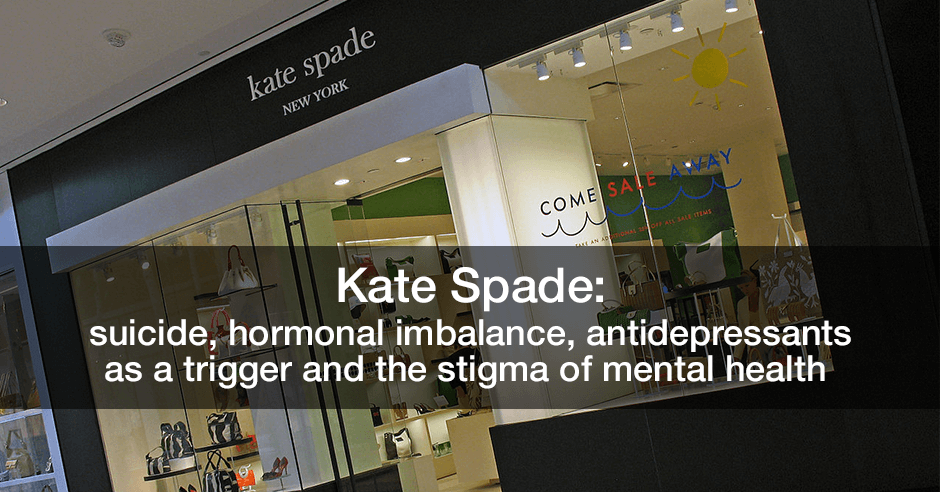
Photo by Paul Keleher (originally posted to Flickr as kate spade) [CC BY 2.0], via Wikimedia Commons
Kate Spade, a well-known American fashion icon and handbag designer, died by suicide last week at the age of 55. I’m always torn in situations like this…just share the news story with my sympathies in order to respect the family or use this as an opportunity to learn from and prevent others from suffering the same fate. This time I’m doing the latter – with the risk of appearing insensitive – because there are red flags here and I feel so strongly that we all need to learn from this in order to move mental health forward. I’m hoping her husband and family would approve.

In the announcement about Kate Spade’s suicide in the New York Times, Mr. Spade said:

that though his wife had suffered from anxiety at points during their relationship and marriage, her serious bouts of depression only began about six years ago, at the age of 49.

Kate suffered from depression and anxiety for many years. She was actively seeking help and working closely with her doctors to treat her disease, one that takes far too many lives. We were in touch with her the night before and she sounded happy. There was no indication and no warning that she would do this. It was a complete shock. And it clearly wasn’t her. There were personal demons she was battling.

My heart goes out to Kate Spade’s husband, young daughter and loved ones. Her suicide is just so sad but as I said I have a fair bit to say about this….


Hormone imbalance triggering anxiety and depression?

According to the reports, Kate’s “serious bouts of depression only began about six years ago, at the age of 49, but she had suffered “from depression and anxiety for many years”.

Perimenopause and menopause is a classic time for women to experience worsening anxiety and depression and can be driven by fluctuating hormones, especially low estrogen. In this study, Depression and the menopause: why antidepressants are not enough? the authors share that

Postmenopausal depression is more severe, has a more insidious course, is more resistant to conventional antidepressants in comparison with premenopausal women and has better outcomes when antidepressants are combined with HT (hormone therapy).

Addressing hormone imbalance as one possible root cause can eliminate the anxiety and depression. Some of my favorite resources for hormone balance are these books: The Hormone Secret and Cooking for Hormone Balance.


Low levels of neurotransmitters like serotonin, catecholamines and GABA?

Directly connected to hormonal imbalance is brain chemistry imbalance. Addressing low levels of neurotransmitters like serotonin, the catecholamines and GABA provide results quickly when they are used in a targeted way based on individual needs:

  • Low serotonin is an issue when estrogen levels are declining and the amino acid tryptophan can have profound benefits if low serotonin is one of the root causes, leading to depression, worry, fear, overwhelm and sleep issues.
  • Low catecholamines can cause the “I just want to say in bed” depression and low motivation, together with fatigue and poor focus. The amino acid tyrosine can help to eliminate some of this and also provides thyroid support.  Poor thyroid health can also be a root cause of depression.
  • We see low GABA levels when progesterone is low and if this is one of the root causes, it can result in increased physical anxiety and insomnia. The amino acid GABA, opened on to the tongue, can provide calming results within minutes.

I can totally relate to the hormonal aspect as I suffered from PMS for years and my anxiety issues and panic attacks started in my late 30s and I had a really low spell as I was going through menopause.  Both GABA and tryptophan turned things around very quickly for me as they do for my clients.


The role of diet and nutritional psychiatry?

There is so much new science behind the role of a real foods traditional diet for alleviating both depression and anxiety. The SMILES study, published by Prof Felice Jacka early 2017, was the first randomized controlled diet depression study and ONE THIRD of the dietary intervention group saw improvements in their depression symptoms.  This was just diet alone and switching from processed and junk food to real food with no specific dietary restrictions.

There is also much clinical evidence supporting how diet can have an impact. Holly, suffered from with severe depression and anxiety changed her diet and shared this with me:

Over the course of a year and a half, I was given 10 different psychiatric diagnoses and cycled through 10 different medications. I discovered the healing power of diet completely by accident, and it changed my life. I now live with no diagnoses and no symptoms.

I started with the Whole30 (strict paleo), then went paleo, dabbled with a ketogenic approach, and now I eat a modified paleo diet, with some rice and goat dairy.

This has been termed nutritional psychiatry and you can read more diet-depression and diet-anxiety success stories here.

Keep in mind that your prescribing psychiatrist may not yet be on board with this or up to date on the newest research. Just last week someone told me what happened when they discussed nutritional psychiatry with their doctor and showed them my book The Antianxiety Food Solution (my Amazon link). He said: “Good luck with that!”


Could the antidepressant medication have triggered her suicide?

The statement from Kate’s husband says “She was actively seeking help for depression and anxiety over the last 5 years, seeing a doctor on a regular basis and taking medication for both depression and anxiety.”  Could the antidepressant medication have triggered her suicide or played some part?

We will never know with Kate but this is always my first thought when I learn of a suicide and when we hear of homicides in the news. One of my colleagues shared this when her suicide was first announced: “I was wondering if she was under psych care and what role meds might have played in this tragedy.”

This paper is one of many papers reporting similar antidepressant suicide and violence risks, and concludes that:

Antidepressants double the occurrence of events in adult healthy volunteers that can lead to suicide and violence

Kelly Brogan MD – Holistic Psychiatrist​ no longer prescribes psychiatric medications because we don’t know who will experience this side-effect. She writes this about a Swedish study and antidepressants and increased suicides

As antidepressant prescriptions increased 270% over 15 years, suicide rates also increased. Strikingly, more than half of the young women who committed suicide (52%) were prescribed antidepressants within a year of committing suicide. And antidepressants were detected in 41% of the women who committed suicide, showing that they were under the influence of antidepressants at the time of death. 


What if you are taking an antidepressant and seeing benefits?

When I posted some of this on Facebook earlier in the week someone who is on an antidepressant and benefiting shared her frustration that we are blaming suicide on medications.

There are many who do benefit but there are two issues I have:

  1. Even if someone is doing well on an antidepressant, benzodiazepine or other psychiatric medication I feel we need informed consent about the side-effects and training for the individual and family on what to look out for as things can change. The can occur when meds are changed, doses are increased or decreased, new meds are added, one or more are stopped abruptly or too quickly (called discontinuation syndrome). Many doctors also need to be educated and to acknowledge that suicide and homicide are very real side-effects of these meds.
  2. We don’t know who will be adversely impacted, which is why consent/knowledge about this is so important.

When we rent ski equipment or go bungee jumping we sign an informed consent form, acknowledging the possible risks of death. Why is this not happening with these medications? I just want individuals to be going into this with eyes wide-open so they don’t say “why didn’t anyone tell us this?”

If someone is currently seeing benefits from antidepressants (or benzodiazepines) I make sure they know ALL the risks and encourage them to continue to look for root the causes and address these (never stopping medications abruptly and never without the prescribing doctor’s permission).

There are many possible biological or biomedical or metabolic causes of depression and anxiety and many of these can play a factor in suicide.  Here is a list of just some of them:

  • gluten sensitivity and celiac disease
  • low B12, low B6, low omega3s, low zinc
  • the anti-malaria drug mefloquine (has been associated with acts of violence and suicide)
  • toxoplasma gondii
  • fluoroquinolone antibiotics
  • many common drugs may be contributing to depression (over 200 including acid reflux meds, blood pressure meds, birth control pill)

My concern is that none of these – the medications or poor diet and nutritional deficiencies – are ever discussed when someone does commit suicide or goes on a violent or homicidal rampage.


The stigma of mental health and the fear of seeking help

There are reports that “Kate Spade felt unable to seek help or discuss her mental health because she feared this might damage the brand she created.”  This is a huge issue and if it was true for her or if anyone with a mental health condition feels like this, this has to change!

As Dr. Mark Hyman MD​ said this when I interviewed him last year before the launch of his Broken Brain docu-series

I began to realize that the body was driving a lot of this brain dysfunction, and that if you fix the body, a lot of the brain disorders would get better, that it wasn’t a primarily a mental problem, but it was a physical problem.

Our interview and full transcript is here and we cover the gamut in 12 minutes: the gut and microbiome, nutritional deficiencies, food sensitivities, heavy metals, other environmental toxins and medications.

We don’t hide the fact that we have a broken leg so why do we have to hide it when we have a broken brain? If we can start to acknowledge that mental health issues so often have this physical aspect (and often it’s 100% physical) then hopefully we can end this crazy stigma.

And even if there is also trauma or lifestyle factors that make someone depressed or anxious – so be it. Stop the stigma and shame. Why do we have to put on a brave face and pretend all is well. It has to stop so people can ask for help.

Last but not least, I feel we need to offer practical nutritional psychiatry resources to the family who have been traumatized by the loss of a loved one to suicide.  We know the amino acids and B vitamins help individuals recover from psychological stress after a natural disaster and these same nutrients can help the family in the midst of their sorrow.

I am aware it’s a very delicate subject and I’m sure this will rub some people the wrong way but I believe we all need to be talking about this and not tip-toeing around it.

I really feel this all needed to be said today. I hope this helps you or a loved one.

Rest in peace Kate Spade.

Filed Under: Amino Acids, Depression, Nutritional Psychiatry Tagged With: antidepressant, anxiety, depression, estrogen, fear, GABA, hormone imbalance, Kate Spade, mental health, progesterone, root causes, serotonin, SSRI, stigma, suicide

How do I taper from my antidepressant with tryptophan and can I safely use the other amino acids?

November 18, 2016 By Trudy Scott 119 Comments

antidepressant-tapering

Today’s article is based on a question I am seeing more and more on the blog: How do I taper from my antidepressant with tryptophan and can I safely use the other amino acids?

I find my clients do better when tapering off an antidepressant (which is often prescribed for anxiety and panic attacks) when their nutritional status is solid. Incorporating diet changes and adding amino acids and other nutrients first can result in a more successful taper with less side-effects. This would mean starting with the basics – eating real whole food, incorporating quality animal protein, eating to balance blood sugar, and removing gluten, caffeine and sugar.

If needed and based on testing results, it’s important to address any other nutritional deficiencies such as low iron, low vitamin D, low stomach acid, low total cholesterol, low B12 (and whatever else is an issue), plus support the adrenals/sex hormones/thyroid if needed and addressing gut health like leaky gut and dysbiosis.

Adding a good copper free multivitamin and often the addition of zinc and vitamin B6, evening primrose oil and possibly fish oil – the latter based on each person’s unique needs.

With antidepressants such as selective serotonin-reuptake inhibitors (SSRIs), I have my clients work with their prescribing doctor and get the approval to add tryptophan (or 5-HTP) 6 hours apart from the SSRI. If they are taking the medication at night they get the approval from their doctor to switch it to the morning, and will take tryptophan (or 5-HTP) at least 6 hours later, mid-afternoon and evening.

If they decide to do both the medication and tryptophan (or 5-HTP), they get a protocol for the SSRI taper for the future. This is important. If you are in too big a rush to start right away, it often causes more issues. It’s also important to make sure you get a very slow taper protocol from your doctor. Some antidepressants are harder to taper (Paxil is notoriously difficult) and they all should be tapered really slowly.

The plan is to start to taper the SSRI once you have been using the tryptophan (or 5-HTP) for at least 4 to 8 weeks and are seeing real benefits by using it. This translates to much much less or none of the following symptoms: anxiety, depression, insomnia, rumination, worry, negative-self-talk, perfectionism, afternoon and evening carbohydrate cravings, PMS, rage or anger.

For some of my clients it’s 3 months before they feel they are ready to taper. This may be because of feedback they have provided based on prior taper attempts and how they are feeling this time. It may also be based on what else is going on in their lives like a stressful work situation. It may also be based on the time of the year: winter is generally not a good time to taper and definitely not if you suffer from increased depression or anxiety in winter.

The tryptophan (or 5-HTP) is adjusted up as needed while continuing to taper the SSRI.

The doctor is always kept informed and monitors for the possibility of serotonin syndrome. I learned about the potential concerns about serotonin syndrome when using tryptophan or 5-HTP with an SSRI from Julia Ross, author of The Mood Cure, and so I continue to caution my clients about this.

When I interviewed Dr. Peter Bongiorno in season 4 of the Anxiety Summit (Serotonin and anxiety: tryptophan, 5-HTP, serotonin syndrome and medication tapers), he shared that he is not concerned about serotonin syndrome being an issue with tryptophan or 5-HTP dosed with an SSRI, even if taken at the same time. He cited research that found the combination of tryptophan and SSRI did not result in serotonin syndrome in any of the participants.

Dr. Bongiorno also uses the same approach to address the basics:

the most important thing is that we really establish all the basics and that they’re in the healthiest place possible.  Because if those aren’t there, if a patient just gets off the medication and we haven’t really done anything to change the underlying reasons why they got to the place where they had the mood issue, in most cases they’re going to go back there again.

Some people need amino acid support in more than just the low serotonin area so we review the amino acid questionnaire and consider trials of GABA and other amino acids too. All this only applies for SSRIs and tryptophan or 5-HTP. The other amino acids can safely be used with SSRIs, and it’s not uncommon to also have low GABA, low endorphins, low catecholamines and low blood sugar and need them all, but it’s still best to discuss them with the prescribing doctor.

We also review all the amino acid precautions.

Some people choose to work with their doctor to taper the SSRI and then add the tryptophan (or 5-HTP) once they have quit the medication. I have found that this makes it much harder to do and more side-effects are seen. With the amino acids you start to get some relief right away and have hope on the first day! They also make it so much easier to quit the sugar, gluten and caffeine without having to use will-power.

In summary, these are my recommendations for doing an SSRI taper with amino acids:

  • doctor’s approval to taper the SSRI and use amino acids
  • address diet and nutritional deficiencies first – before starting to taper
  • work with someone knowledgeable in amino acid use
  • OR educate yourself by
    • reading my book The Antianxiety Food Solution , Julia’s book The Mood Cure and Dr. Kelly Brogan’s new book A Mind of Your Own
    • listening to the Anxiety Summit interviews

(please don’t simply read one or two blogs and jump in to this)

  • use the amino acids from day one to start addressing low levels of all the brain chemicals
  • use the tryptophan or 5-HTP at least 6 hours away from the SSRI

I would like to add that Dr. Brogan shares that coffee enemas help her patients who are doing medication tapers.

If you are a practitioner, join us in The Balancing Neurotransmitters: the Fundamentals program. It’s an opportunity to interact with me and other practitioners who are also using the amino acids and helping their clients/patients to taper from antidepressants (always working with the prescribing doctor).

Have you used a similar SSRI taper protocol? And how did it work for you? What would you have done differently? And what advice would you give someone contemplating an SSRI taper?

Have you found that coffee enemas have helped?

If you are a practitioner, has the above approach been helpful for your clients/patients?

Filed Under: Antidepressants Tagged With: 5-HTP, amino acids, antidepressant, anxiety, depression, serotonin, SSRI, taper, tryptophan

Medication tapering and withdrawal: an interview with Dr. Kelly Brogan

April 8, 2016 By Trudy Scott 80 Comments

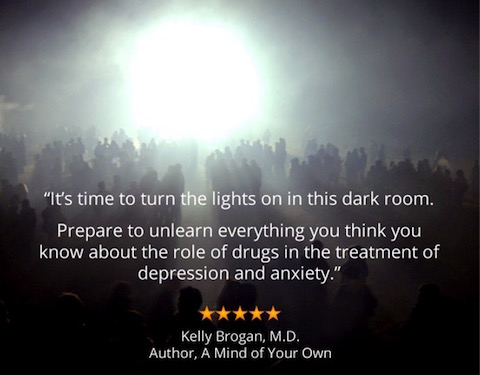
mind-of-your-own-meme

I recently had the absolute pleasure of interviewing Dr. Kelly Brogan, holistic women’s health psychiatrist and author of the new bestseller, A Mind of Your Own. I’ve had the section on medication tapering and withdrawal effects transcribed because it’s so valuable.

=================================================================

Kelly: Now much of my practice is devoted to psychiatric medications tapers. Guess what? I didn’t learn that in my training. There wasn’t a single hour of education on this subject. I have learned how to do this from patients, and really from patients globally who are educating each other and frankly educating physicians about how to engage in a safe and responsible psychiatric medication tapers……

…when you try to taper off a medication after long-term exposure, either because you’re no longer deriving that initial benefit from it, or because something has changes about your life circumstance and you want to try a different kind of healthcare maybe, they you might learn that these are some of the most habit forming medications, I would say habit forming substances, on the planet.

I wouldn’t believe this if I haven’t seen it with my very own eyes, but this is what actually compelled me to put down my prescription pad for good. After I read that book, I began to take patients, or at least offer them the opportunity to taper them off of medication. Even when we did it responsibly, I was essentially running an outpatient rehab. I mean from neurologic symptoms to psychiatric symptoms, physical symptoms, autoimmune diseases flaring, patients developing impulsive behavior and even violence. It was beyond description.

Then I began to see that actually a lot of patients around the world are talking about this. They’re talking about withdrawal from anti-depressant specifically, but of course other medications as well. Their doctors are totally ill-equipped to help them because we don’t learn about how to do this in our training. We actually in fact dismiss patients when they talk about these being addictive medications. Of course, now finally Fava is a group of researchers who have finally begun to publish the reality of this withdrawal syndrome, and how disabling it can be.

Since I have 4 grounded lifestyle interventions, and actually begun with nutrition such that I don’t even begin a medication taper until about 2 months into lifestyle change, everything is different now in my practice. I feel that once you can optimize your physiology, you really put yourself in a much, much better position to safely and strategically taper. Wow. Isn’t that something you would want to know before taking your first prescription? I certainly never told any patients that it could be like a horror show and you might never be able come off of a psychiatric medication if you’re taking it for longer than a year or so. I never informed patients of that.

A lot of what I discuss and describe in this book is in service of presenting people with a full picture of what the science has to say before they make a decision. I think we really wish that there was a magic pill. We really wish there was a safe effective quick fix. Unfortunately, what is available is really anything but that.

Trudy: Yeah. We want that quick fix. I’ve got a few follow on questions, because this is a lot of good information here. The fact that you see all these problems when people are coming off the meds, is there a time frame, or is that really dependent on each person?

Kelly: It’s very, very dependent on each person. That ends up being the take home that we are talking about. What I like to call end of one medicine. We’re talking about the fact that our levels of biochemical individuality have ever been more relevant than when we’re exploring how we interact with chemicals in our environment, in our pharmaceuticals. We really need to understand that every single person is an individual.

When I taper patients off of meds, I normally do what’s called a test dose decrease, which often is around 20% to 25% of the dose. We come down by that. Again, this is after we’ve done the initial months at least of fairly strict dietary compliance working with relaxation response, doing 20 minutes or more of movement, working on sleep. All of this has to happen first. Then we begin, and so we start with a test dose. If we see in about 2 to 4 weeks that test dose is completely well-tolerated, meaning you don’t even notice the difference, then we probably can work in bigger increments. That’s actually a godsend. These tapers, when we’re working in 10% and less doses, could take literally years.

You want to begin to learn about what your body is capable of bouncing back from. We begin with 25%. If that’s not a pretty picture, then we’ll just scale it back to about 10% of the initial dose, and work with that 10% increment at about every 2 to 4 weeks, sometimes unfortunately slower. The increment and then the speed are 2 variables that we have to learn for each patient.

I don’t know what I would do without a compounding pharmacy. While many of these medications are available in liquid form, and some of them, like Effexor for example, have beads inside a capsule, to be able to tailor and personalize the dosage to each individual patient is wonderful and that I have that option through compounding pharmacy. I work with one in Massachusetts named Johnson Compounding, and they’ve just been a wonderful support over the years to my patients.

Trudy: Wonderful. Very slow and then obviously very individualized. Now I’m very familiar with the effects of benzodiazepines and the slow taper process that’s needed for someone on the anti-anxiety benzodiazepine medication. Would you say that SSRIs can have comparable effects in some people, or are they not as bad as the benzodiazepines?

Kelly: That’s a great question. What we’ve observed in psychiatry is that there’s really been a transition from using benzodiazepine as sort of like a spot treatment to transitioning into using anti-depressants long-term. When I was in my training, the typical gold standard protocol would be to start somebody on both benzodiazepine and anti-depressant, and then taper them off to benzodiazepine and leave on the anti-depressant with the thinking being that benzodiazepine are acknowledged for their habit forming properties and anti-depressants are totally safe.

What we are learning is in fact, that group that Fava runs, with the papers that they’re putting out, they are essentially equating the anti-depressant withdrawal phenomenon to benzodiazepines. In my clinical experience, I would actually argue that SSRIs are worse with long-term exposure. A lot of people at this point, given that it’s been decades since Prozac, have been on these medications for more than 10 years. We’re really talking about a level of habituation that could be challenging to undo. It’s not that I haven’t. I struggled a lot with Klonopin for example. It’s not that I haven’t encountered challenges with benzodiazepines.

A patient in my practice I’m taking off of Lexapro a thousandth of a milligram a month. I’ve never heard of something like that. Heroin, crack, cocaine, oxycontin: show me something that would ever require that. It’s unbelievable. I think it’s at least comparable I would say, and that’s what the literature is beginning to demonstrate, is that there are actually comparable phenomenon, but we really never ever talked about anti-depressants in this way, so it really is a game changing perspective.

Trudy: The fact that you say people are not told that this could be a possibility, and the fact that you’re talking about this and writing about it I think is so important, because people need to know. They would choose not to do this if they did know. I see there is this MA bill going through [correction: being proposed – you can read more here]. It’s about benzodiazepines and people needing to consent to the fact that it’s going to possibly cause them issues. It sounds like we need to do the same with these anti-depressants.

Kelly: Absolutely, 100%.

Trudy: Now, I’ve heard that certain SSRIs are worse than others. I’ve heard that Paxil can be really bad. Have you seen a difference between different medications?

Kelly: Basically we look at half-life of these medications, and we extrapolate from there. Assuming that Prozac would be the easiest, and there are medications like Paxil and Effexor that are more challenging. In my experience, there are 2 ways of discontinuation – the field likes to call it discontinuations issues. The first is acute. It’s within 72 hours of a dose change where you can get brain zaps and headache, and gastrointestinal distress, you feel agitated. The Paxils of the world are much more likely to cause those more immediate withdrawal symptoms.

What I have found is unfortunately there’s no free lunch. There isn’t a medication that actually is effortless to come off for everyone, so that even when you’re on Prozac, for example, for a long period of time, even though it has this long half-life, it should be easy to come off of, in my experience, it can often be challenging as well. These other medications often manifest as second waves. What I have found is almost uncanny – after about 2 months, it’s almost always 6 to 8 weeks after the final dose or after a major dose change. It’s like the other shoe can drop.

You have those immediate withdrawal symptoms, and then about 2 months later, you can begin to have what has historically been categorized as a relapse. This is when your doctor will tell you, “You see, you should have never even tried to go off your medication. You need it for life. Now you know.” That’s what we’re taught to say. In fact, it’s actually a protracted withdrawal phenomenon. Again, this has now been documented that this can occur for unfortunately, I don’t want to scare anyone, it can occur for months and months and even years after the final dose. That being said, there is a medication that spares you from that arm of this problem.

Even I went for years tapering patients off of Wellbutrin and thinking, “Well, this is the easy one. I can even come down by 50% of the dose, and it’s not a problem.” Right now, I have in my practice, a patient who has been completely destabilized coming down by 25 milligrams of Wellbutrin. Again, it’s a very individualized process, and I don’t think that there are any obvious choices in terms of medications that are easier come off of after long-term exposure.

Trudy: Thank you for sharing that. It’s scary, but the good thing is that there are solutions. People on these medications must do the slow taper and make all the changes that you’ve talked about. I’m glad that you mentioned, “Don’t rush into this, make all the food changes.” We’re going to talk about some of the things that you recommend in a second, but get yourself in a better place to start making these changes. If you’re listening to this and you’re thinking, “Oh my gosh. This is terrible.” Don’t go and rush out and just stop. You simply don’t want to stop cold turkey. You want to be working with someone. Then obviously read the book and get resources so you can be in a good place when you’re starting to make these changes.

Kelly: Absolutely. That’s all incredibly important. Yes. Please don’t ever consider just stopping your medication.

Trudy: Absolutely. I have one final question on the medication aspect. You’ve got a small section in the book where you talk about using amino acids are helping people taper, and as you know, my community is very into using the amino acids. I find them very helpful for helping people with mood and anxiety issues. Can you talk a little bit about how you use the aminos and how beneficial you find them when someone is doing this taper?

Kelly: Yes. Absolutely. I am quite certain that there are many, many, many roads to physiologic and psycho spiritual resiliency. I, in no way, intend to position myself as having the answer by any means. I am very much trying to create a space for all of those who are passionate about natural healing, including yourself and our colleagues, because I think that just about everything in the natural health arena offers you the potential for very high yield, very low-risk healthcare.

I certainly don’t consider myself an expert in amino acids and don’t have a fraction of the knowledge that you have about this arena. That being said, I do use them for tapers specifically. If I use supplements I wait after a month of dietary change before introducing any supplements, mostly because I want to, I don’t know, send patients the message of what a single intervention, in terms of lifestyle, what a dietary intervention can do in terms of moving the needle of their health. I often don’t want to cloud the picture with other interventions like even supplements or even detox.

After that period, if it is necessary, I’ll often lead with some of the supplements that I talk about, whether it’s probiotic or glandulars, I use a lot based on my work with the only mentor I’ve ever had, Dr. Nicholas Gonzales. I learned a lot about using glandulars, using specific minerals, using fatty acids, that sort of thing. Well, we’re working with SSRIs. I tend to use tryptophan more often than 5-HTP. I do use tryptophan even in the 3 to 6 gram range before dinner and before bed. I would say that it’s helpful often, not in every case, with a lot of the insomnia specifically. It’s about the worst thing that can happen in the setting of a taper. It’s the kind of insomnia that’s induced by psychiatric medication taper.

I have several tricks up my sleeve, and that’s certainly one of them. Through my own self-education, and again, you may have a more sophisticated perspective on this that when you use 5-HTP or tryptophan for the longest period of time, meaning over a couple of weeks, so you want to balance it out with tyrosine or DL-phenylalanine. If we are using it for a period of time, I might incorporate that. I have found that when I work with Wellbutrin tapers, it’s extremely helpful. Tyrosine and actually an herb called mucuna support dopamine.

Then all of my patients who are tapering – I have them on a blend of amino acids.

=================================================================

We cover much more than the medication taper and withdrawal and you can listen to the entire interview here:

https://s3-us-west-2.amazonaws.com/axmisc/kelly-brogan-mind-of-your-own-interview-spr16.mp3


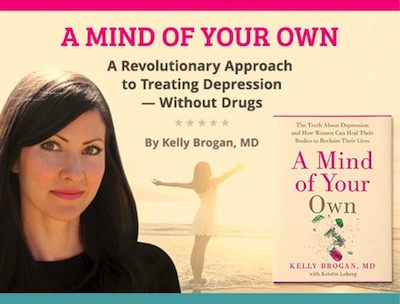
A Mind of Your Own: The Truth about Depression and How Women Can Heal Their Bodies to Reclaim Their Lives is superb, brave, bold, science-based (which I love!) and offers holistic solutions for depression (and anxiety). Get the book from Amazon or better yet, get a copy from your local book store (ask them to get it if they don’t carry it)!

mind-of-your-own-meme2

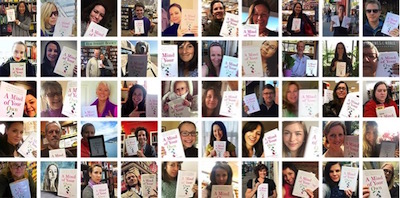
It launched March 16th and there is a grass-roots effort to share this book widely because of the mainstream media blackout.  Join the grassroots effort and help share this valuable message!

Take a picture with the book and post on social media with #amindofyourown and you can have an impact. You’ll also automatically show up in “hall of fame” on the tagboard.

mind-of-your-own-meme3

You can go and get the first chapter of the book if you’re on the fence (get it here: http://kellybroganmd.com/amindofyourown/?ref=35). After reading the first chapter, I know you’ll want to get the book and join the grass roots effort.

If you already have the book lets us know in the comments what you think.

Feel free to post questions on the blog and please do share your SSRI or benzodiazepine taper and withdrawal story so we can all be better informed.

PS. Both Kelly Brogan and myself will be presenting at the Mindd Conference in Sydney in May. We’ll also be presenting at IMMH/Integrative Medicine for Mental Health Conference in September in Washington DC. Come along to those events, and you can hear Kelly Brogan speak live, and you can hear me speak live as well.

Filed Under: Antidepressants, benzodiazapines, Books, Depression, Drugs, Events Tagged With: a mind of your own, antianxiety, antidepressant, anxiety, benzodiazepine, depressed, interview, Kelly Brogan, medication, SSRI, taper, withdrawal

  • « Go to Previous Page
  • Page 1
  • Page 2

Primary Sidebar

NEW! GABA QuickStart Homestudy (with special intro pricing)

gaba quickstart homestudy

Free Report

9 Great Questions Women Ask about Food, Mood and their Health

You'll also receive a complimentary subscription to my ezine "Food, Mood and Gal Stuff"


Connect with me

Popular Posts

  • Amino Acids Mood Questionnaire from The Antianxiety Food Solution
  • The Antianxiety Food Solution Amino Acid and Pyroluria Supplements
  • Pyroluria Questionnaire from The Antianxiety Food Solution
  • Collagen and gelatin lower serotonin: does this increase your anxiety and depression?
  • Tryptophan for the worry-in-your-head and ruminating type of anxiety
  • GABA for the physical-tension and stiff-and-tense-muscles type of anxiety
  • The Antianxiety Food Solution by Trudy Scott
  • Seriphos Original Formula is back: the best product for anxiety and insomnia caused by high cortisol
  • Am I an anxious introvert because of low zinc and vitamin B6? My response to Huffington Post blog
  • Vagus nerve rehab with GABA, breathing, humming, gargling and key nutrients

Recent Posts

  • What do I use instead of Seriphos to help lower high cortisol that is affecting my sleep and making me anxious at night?
  • BeSerene™ GABA/theanine cream eases severe muscle tension in her neck/shoulders, prevents her bad headaches and quells her anxiety
  • How the correct approach, dose and sublingual use of GABA can be calming and not cause a flushed and itchy face and neck
  • The amino acid glutamine improves low mood by addressing gut health, and it has calming effects too
  • Flight anxiety with heightened breath, physical tension and also fearing the worst (the role of low GABA and low serotonin)

Categories

  • 5-HTP
  • AB575
  • Addiction
  • ADHD
  • Adrenals
  • Alcohol
  • Allergies
  • Alzheimer's disease
  • Amino Acids
  • Anger
  • Antianxiety
  • Antianxiety Food Solution
  • Antidepressants
  • Anxiety
  • Anxiety and panic
  • Autism
  • Autoimmunity
  • benzodiazapines
  • Bipolar disorder
  • Books
  • Caffeine
  • Cancer
  • Candida
  • Children/Teens
  • Collagen
  • Cooking equipment
  • Coronavirus/COVID-19
  • Cravings
  • Depression
  • Detoxification
  • Diabetes
  • Diet
  • DPA/DLPA
  • Drugs
  • EFT/Tapping
  • EMF
  • EMFs
  • Emotional Eating
  • Endorphins
  • Environment
  • Essential oils
  • Events
  • Exercise
  • Fear
  • Fear of public speaking
  • Fertility and Pregnancy
  • Fish
  • Food
  • Food and mood
  • Functional neurology
  • GABA
  • Gene polymorphisms
  • General Health
  • Giving
  • Giving back
  • Glutamine
  • Gluten
  • GMOs
  • Gratitude
  • Gut health
  • Heart health/hypertension
  • Histamine
  • Hormone
  • Hyperparathyroidism
  • Hypoglycemia
  • Immune system
  • Inflammation
  • Insomnia
  • Inspiration
  • Introversion
  • Joy and happiness
  • Ketogenic diet
  • Lithium orotate
  • Looking awesome
  • Lyme disease and co-infections
  • MCAS/histamine
  • Medication
  • Men's health
  • Mental health
  • Mercury
  • Migraine
  • Mold
  • Movie
  • MTHFR
  • Multiple sclerosis
  • Music
  • NANP
  • Nature
  • Nutritional Psychiatry
  • OCD
  • Osteoporosis
  • Oxalates
  • Oxytocin
  • Pain
  • Paleo
  • Parasites
  • Parkinson’s disease
  • PCOS
  • People
  • PMS
  • Postpartum
  • PTSD/Trauma
  • Pyroluria
  • Questionnaires
  • Real whole food
  • Recipes
  • Research
  • Schizophrenia
  • serotonin
  • SIBO
  • Sleep
  • Special diets
  • Sports nutrition
  • Stress
  • Sugar addiction
  • Sugar and mood
  • Supplements
  • Teens
  • Testimonials
  • Testing
  • The Anxiety Summit
  • The Anxiety Summit 2
  • The Anxiety Summit 3
  • The Anxiety Summit 4
  • The Anxiety Summit 5
  • The Anxiety Summit 6
  • Thyroid
  • Thyroid health
  • Toxins
  • Tryptophan
  • Tyrosine
  • Uncategorized
  • Vegan/vegetarian
  • Women's health
  • Yoga

Archives

  • October 2025
  • September 2025
  • August 2025
  • July 2025
  • June 2025
  • May 2025
  • April 2025
  • March 2025
  • February 2025
  • January 2025
  • November 2024
  • October 2024
  • September 2024
  • August 2024
  • July 2024
  • June 2024
  • May 2024
  • April 2024
  • March 2024
  • February 2024
  • January 2024
  • December 2023
  • November 2023
  • October 2023
  • September 2023
  • August 2023
  • July 2023
  • June 2023
  • May 2023
  • April 2023
  • March 2023
  • February 2023
  • January 2023
  • December 2022
  • November 2022
  • October 2022
  • September 2022
  • August 2022
  • July 2022
  • June 2022
  • May 2022
  • April 2022
  • March 2022
  • February 2022
  • January 2022
  • December 2021
  • November 2021
  • October 2021
  • September 2021
  • August 2021
  • July 2021
  • June 2021
  • May 2021
  • April 2021
  • March 2021
  • February 2021
  • January 2021
  • December 2020
  • November 2020
  • October 2020
  • September 2020
  • August 2020
  • July 2020
  • June 2020
  • May 2020
  • April 2020
  • March 2020
  • February 2020
  • January 2020
  • December 2019
  • November 2019
  • October 2019
  • September 2019
  • August 2019
  • July 2019
  • June 2019
  • May 2019
  • April 2019
  • March 2019
  • February 2019
  • January 2019
  • December 2018
  • November 2018
  • October 2018
  • September 2018
  • August 2018
  • July 2018
  • June 2018
  • May 2018
  • April 2018
  • March 2018
  • February 2018
  • January 2018
  • December 2017
  • November 2017
  • October 2017
  • September 2017
  • August 2017
  • July 2017
  • June 2017
  • May 2017
  • April 2017
  • March 2017
  • February 2017
  • January 2017
  • December 2016
  • November 2016
  • October 2016
  • September 2016
  • August 2016
  • July 2016
  • June 2016
  • May 2016
  • April 2016
  • March 2016
  • February 2016
  • January 2016
  • December 2015
  • November 2015
  • October 2015
  • September 2015
  • August 2015
  • July 2015
  • June 2015
  • May 2015
  • April 2015
  • March 2015
  • February 2015
  • January 2015
  • December 2014
  • November 2014
  • October 2014
  • September 2014
  • August 2014
  • July 2014
  • June 2014
  • May 2014
  • April 2014
  • March 2014
  • February 2014
  • January 2014
  • December 2013
  • November 2013
  • October 2013
  • September 2013
  • August 2013
  • July 2013
  • June 2013
  • May 2013
  • April 2013
  • March 2013
  • February 2013
  • January 2013
  • December 2012
  • November 2012
  • October 2012
  • August 2012
  • July 2012
  • June 2012
  • May 2012
  • April 2012
  • March 2012
  • February 2012
  • January 2012
  • December 2011
  • November 2011
  • October 2011
  • September 2011
  • August 2011
  • July 2011
  • June 2011
  • May 2011
  • April 2011
  • March 2011
  • February 2011
  • January 2011
  • December 2010
  • October 2010
  • September 2010
  • July 2010
  • May 2010
  • April 2010
  • March 2010
  • February 2010
  • January 2010
  • November 2009

Share the knowledge!

The above statements have not been evaluated by the Food and Drug Administration. Products listed in this website are not intended to diagnose, treat, cure or prevent any disease.

The information provided on this site is for informational and educational purposes only and is not intended as a substitute for advice from your physician or other health care professional. You should consult with a healthcare professional before starting or modifying any diet, exercise, or supplementation program, before taking or stopping any medication, or if you have or suspect you may have a health problem.


Copyright © 2026 Trudy Scott. All Rights Reserved. | Privacy | Terms and Conditions | Refund Policy | Medical Disclaimer

Free Report

9 Great Questions Women Ask about Food, Mood and their Health

You’ll also receive a complimentary subscription to my ezine “Food, Mood and Gal Stuff”