This is the title of a new article recently published in the New York Times Magazine: Prozac Nation Is Now the United States of Xanax. In other words, depression has been surpassed by anxiety and the antidepressant Prozac has been replaced by Xanax (and other benzodiazepines /anti-anxiety medications) by the US population!
It’s an excellent read for creating awareness about anxiety and benzodiazepines but also sad because there is so much we can do and no solutions are offered. Here are some startling stats shared in the article:
According to data from the National Institute of Mental Health, some 38 percent of girls ages 13 through 17, and 26 percent of boys, have an anxiety disorder. [Note: this was quoted in the article. I’m trying to track down the source because an article in Time Magazine last year says this: ‘About 30% of girls and 20% of boys–totaling 6.3 million teens–have had an anxiety disorder, according to data from the National Institute of Mental Health’ as of 2015.]
On college campuses, anxiety is running well ahead of depression as the most common mental health concern, according to a 2016 national study of more than 150,000 students by the Center for Collegiate Mental Health at Pennsylvania State University. [Both anxiety and depression have shown slight but persistent increases each year for the past six years]
Meanwhile, the number of web searches involving the term [anxiety] has nearly doubled over the last five years, according to Google Trends. (The trendline for “depression” was relatively flat.)
I’m the optimistic type, I’m proactive and I like to give hope as well as solutions – and I have quite a bit to say about this article so here goes.
#1 Too many people are prescribed benzodiazepines without knowing what they are getting into
The article does not address the issues with benzodiazepines: how too many people are prescribed benzodiazepines without knowing what they are getting into, with many suffering dreadfully and never offered nutritional solutions. When I shared the article on my facebook page, someone in my community shared this (and gave me permission to share it further in the hope someone else will be spared her suffering)
Been totally disabled by benzo for 3.5 years. I have been off meds for 17.5 months and the impact of these meds makes any anxiety I ever felt a cake walk. Please run from the poison. Find healthy foods, nutrition and take the break your body is begging you for. We need to listen to our bodies! If it is screaming with anxiety maybe you need to make some life changes. I wish I did instead of taking a med that has almost destroyed me.
I asked her what symptoms she was experiencing, and as well as suffering from severe motion sickness (so badly she can’t even leave her home) she also shared this:
I have locked shoulder muscles, neck, jaw; I have internal vibrations, I get bad headaches, jelly legs, distorted vision like floaters and squiggles and fireworks, my teeth all feel like they will fall out but they are not lose, it feels like adrenaline or cortisol rushes through the body. Sometimes arms go numb. I am pretty tortured every day. These meds are truly causing chemical warfare on some of us.
I believe this will be the next big epidemic and I hope I heal somehow to help others
She had been on a variety of benzodiazepines, SSRIs and other medications for over 17 years and you may think this is an isolated incidence. I assure you it is not – just read the list of the most common psychological and physical symptoms of benzodiazepine withdrawal.
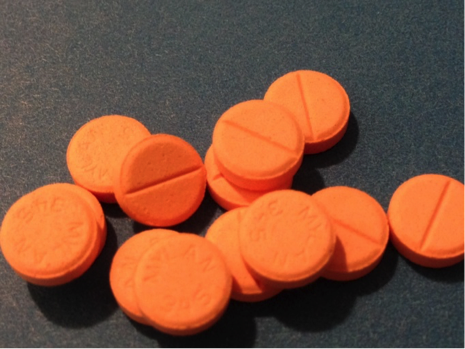
Here is some useful information about the risks and dangers of benzodiazepines:
- World Benzodiazepine Awareness Day – say NO to Benzodiazepines for anxiety!
- Benzodiazepines do patients more harm than good
#2 Let’s help anxious individuals like you find solutions
Scott Stossel, journalist and author of My Age of Anxiety: Fear, Hope, Dread, and the Search for Peace of Mind was quoted as saying this in the article:
The silver lining for those with nervous disorders is that we can welcome our previously non-neurotic fellow citizens into the anxious fold.
My first response to the article is this: I say NO to Scott Stossel and instead I say let’s think bigger and instead let’s invite the anxious citizens into the calm and no-more-anxiety fold!
Scott’s book is well-written book, offers an excellent understanding of what it feels like to experience anxiety and panic attacks, and has many compelling stories. But as a number of his Amazon reviewer’s say the big question is this: what is the answer or solution? Unfortunately it’s not provided in his book (or the New York Times Magazine article).
The New York Times Magazine article provides another anxiety resource that has helped “bring anxiety into the open, and allowed its clinical sufferers to band together in a virtual group-therapy setting”: The Sarah Fader on twitter, creator of the hashtag #ThisIsWhatAnxietyFeelsLike and a mental-health advocacy organization called Stigma Fighters.
Again, these are wonderful resources for support, awareness and advocacy but they don’t offer solutions if you suffer from anxiety. With nutritional solutions we can change this to #ThisIsWhatCalmFeelsLike.
#3 Too few people know about nutritional solutions
Too few people know about nutritional solutions and that has to change. Clinically we know it works and there is now SO much research supporting this approach.

Here are a few of many blog posts on my site that share powerful anxiety nutrition solutions:
- Paleo and grain free diets: anxiety and depression success stories
- GABA the calming amino acid: common questions I get asked
- GABA for children: ADHD, focus issues, irritability, anxiety and tantrums
- Tryptophan for PMS: premenstrual dysphoria, mood swings, tension, and irritability
Here is one of the latest food and mental health studies – A modified Mediterranean dietary intervention for adults with major depression: Dietary protocol and feasibility data from the SMILES trial
This and other dietary and nutritional approaches for both depression and anxiety will be presented at the upcoming International Society of Nutritional Psychiatry Research conference in Bethesda, MD next month)
Here are two book resources too: my book The Antianxiety Food Solution and integrative psychiatrist Kelly Brogan’s book A Mind of Your Own.
I’d love your feedback
- Which nutritional solutions topics do you have questions about and in what areas do you still need help?
- What ideas do you have for getting this nutritional solution message out in a bigger way?
- What do you wish you’d known when you were first diagnosed with anxiety and prescribed medication (such as a benzodiazepine or SSRI)?
- How do we convince the naysayers that this does work and is worth implementing?
- How do we get the mainstream mental health community on board?
- What anxiety resources do you have to share

When I was first diagnosed with panic attacks and given benzos, I found tremendous relief in that little pill. But I knew rather quickly that I was becoming dependent on it. The psychiatrist kept assuring me I was not addicted and would prescribe more. However, when more symptoms showed up like fatigue and wanting to sleep all day, my internist found that I had Hashi’s hypothyroidism. By this time I was hooked on Ativan and Ambien, and it was extremely difficult to get myself off! I used The Road Back program which was a life saver. But finding Trudy’s info about amino acids has brought tremendous relief from ongoing anxiety and insomnia. I’m grateful, Trudy! If only that psychiatrist had done blood tests to find the CAUSE of the panic and anxiety, I would have been saved from years of addiction issues.
Hi Lorraine
I am so sorry to hear what you have been through – it’s just so common! Thank you for sharing – I’m hoping this can help others from going down a similar path and knowing about how the amino acids can be so helpful id they find themselves in this position! I’m so pleased you have found your root cause.
Please tell me more about the Road Back program and how it helped you?
I’m also doing an informal survey of people who have developed a dependency, experienced adverse effects when using benzodiazepines as prescribed or when tapering to see how often these factors show up as possibly contributing to issues (all documented as having the possibility of making things worse). Would you be willing to share?
1) Taking Valium/ diazepam and have the CYP2C19 polymorphism (about 10-20% of Western populations are defective in genes of the CYP liver enzyme superfamily)
2) Taking Xanax/ alprazolam and have CYP3A5 polymorphism (about 10-20% of Western populations are defective in genes of the CYP liver enzyme superfamily)
3) Taking any benzodiazepine and also
4) Taking oral contraceptives
5) Taking a course of antibiotics
6) Taking a course of one of the fluoroquinolone antibiotics
7) On an SSRI prescription
8) Taking a course of antifungal medications
9) Drinking alcohol on a regular basis
10) On an opioid such as oxycodone
11) Drinking grapefruit juice on a regular basis
Thanks
I think it was here I read about essential oils. Something like lavender is calming. Re. benzodiazepines I have heard a lot of people with serious sideeffects and also its very addictive.
Thomas
Yes lavender and many other essential oils are calming (here are some others https://www.everywomanover29.com/blog/lavender-roman-chamomile-neroli-essential-oils-anxiety-sleep/) and a wonderful addition to the dietary and supplement approaches I teach about
I wish I had known the dangers of benzodiazepines and antidepressants when they were prescribed. I was diagnosed with depression because I was tired and no physical reason could be found. I was diagnosed with social phobia because I was shy. It wasn’t until after I took antidepressants for a while that I developed a depressed mood and generalized anxiety. I was prescribed a benzo for the withdrawal symptoms from antidepressants. After a few years of antidepressants, I landed up on disability. The reason I took the meds in the first place was because I was afraid of losing my job because I was so tired all the time and having difficulty keeping up with my managerial duties. Then, with increasing anxiety, landed up taking a benzo for over 10 years (Klonopin .5 mg 3 times per day). Since nothing was working for the persistent depression, I was put on and taken off (rapidly) 30 different psychotropic drugs in about a 10 year period.. When I had side effects to meds or withdrawal symptoms, I was diagnosed with another “mental illness” instead of the symptoms being acknowledged as side effects/withdrawal. Unfortunately, it was many years before I started to think “what’s wrong with this picture”? I was way sicker, both mentally and physically, than before I took any psych meds. This was around the time the internet became accessible in most households. I learned about these meds, not from any of my physicians, but from my own online research and from other people in online groups suffering because of these drugs. It took me over 3 years to get off of the Klonopin (clonazepam). I could only describe those 3 years as hell. I was able to get my psychiatrist to prescribe a liquid solution so I could make tiny reductions, but there was no support from anyone in the medical field. My psychiatrist literally chuckled every time I saw him and I told him how slowly I was weaning off. Every time he saw me,, he tried to get me to take more meds. But I refused, although I was still taking an antidepressant which was started before the taper. I could never have imagined the intensity and degree of the horrific withdrawal symptoms during my very slow benzo taper. As I neared the end of my successful taper, my doctor stopped laughing at my slow taper method. I have been off of benzos for 15 months and, although much better than during the taper and 6 months after, I am still suffering with persistent nausea, tight painful muscles, tertiary contractions in my esophagus and food not going down properly, anxiety much much worse than before the meds, fatique, trouble sleeping, a very sensitive nervous system ( disturbed by bright lights, noise), irritability, food sensitivities, intermittent blurred vision/light flashes, hyper sensitive to drugs and nutritional supplements, unable to tolerate thyroid meds, intermittent feelings of intense fear for no apparent reason. During my taper, the worst withdrawal symptoms (and there were over 20 for me) were the intense fear, probably caused by my body constantly spitting out adrenaline, for no apparent reason and the constant electric shock sensation throughout my body. These was there most of the time and for no apparent reason. Fortunately, the intense fear and inner vibration/shock has mostly subsided now. I am currently weaning, very slowly off of the only med I am on now, Mirtazapine. I started at 15 mg and am now down to 4.5 mg per day. This is very difficult also , but, for me anyway,, not as difficult as the benzo was. I do everything I can to get the word out about what can happen to some people with these Rx drugs. I don’t want anyone else to have to go through this. Sadly, I have yet to meet a doctor that even acknowledges that any of this can happen, even when weaning off very slowly. These meds have stolen my life from me. I will be approximately 63 years old when I finish my mirtazapine taper. Please, please, please… anyone considering taking any of these meds, do your research first. Take a look at benzo.org.uk and also survivingantidepressants.org.
Nancy
I am so sorry to hear what you have been through. Sadly it’s a very common story I hear. I want to thank you for sharing – I’m hoping this can help others from going down a similar path. It’s very unfortunate that so few doctors (in both the mainstream and even in the integrative world) know so little about the effects of these meds and how to safely guide a taper. I’m hoping we can change this.
I’m very familiar with benzo.org.uk for benzodiazepine resources for detailed specifics on tapering and education in general. Benzobuddies.org is also wonderful for support as you do the tapering. survivingantidepressants.org is also wonderful for support. I recommend all of them with one caveat: they all say no supplements and don’t mention dietary changes (like real food, no gluten, no caffeine, no sugar, addressing gut health, the adrenals and nutritional deficiencies) – all of which do make the tapering easier. For clients sensitive to supplements we try very very small amounts, essential oils, light therapy and gentle detox, as well as a nutrient-dense diet.
Kelly Brogan has had success with coffee enemas too and I’m looking into nigella sativa as possible support. I recently wrote about cell danger response (in autism) and wonder if this could be a factor for those having such a hard time tapering https://www.everywomanover29.com/blog/low-dose-suramin-autism-disables-cell-danger-response-speech-calm-focus-play/
I forgot to mention this. I’m doing an informal survey of people who have experienced adverse effects when using benzodiazepines as prescribed or when tapering to see how often these factors show up as possibly contributing to issues (all documented as having the possibility of making things worse). Would you be willing to share?
1) Taking Valium/ diazepam and have the CYP2C19 polymorphism (about 10-20% of Western populations are defective in genes of the CYP liver enzyme superfamily)
2) Taking Xanax/ alprazolam and have CYP3A5 polymorphism (about 10-20% of Western populations are defective in genes of the CYP liver enzyme superfamily)
3) Taking any benzodiazepine and also
4) Taking oral contraceptives
5) Taking a course of antibiotics
6) Taking a course of one of the fluoroquinolone antibiotics
7) On an SSRI prescription
8) Taking a course of antifungal medications
9) Drinking alcohol on a regular basis
10) On an opioid such as oxycodone
11) Drinking grapefruit juice on a regular basis
#7 applies to you – do any of the others?
I’m not sure if this is what you are looking for. But here are the results from my GeneSight test regarding CYP liver enzymes — CYP1A2 = Extensive (normal) Metabolizer; CYP2B6 = Extensive (normal) Metabolizer; CYP2C19 = Intermediate Metabolizer; CYP2C9 = Intermediate Metabolizer; CYP3A4 = Extensive (normal) Metabolizer; CYP2D6 = Ultrarapid Metabolizer. CYP3A5 (#2 in your reply above) is not included in my test results.
Nothing else in your list, other than #7, applies to me.
Nancy
Thanks for sharing. This could be an issue: CYP2C9 = Intermediate Metabolizer. With slower metabolization drugs may be more toxic.
I have been off klonopin for 3 years now.It hadbeen a long journey.I received help when weaning off from an addiction Psychatrist ,She saw me every week and gave me moral support as well.The road back and their supplements,also helped me.I am 69 yrs old and after all this still cannot sleep and still have Windows which are good days and still have quite a few withdrawal symptoms.Everything is getting better except for the insomnia.My hair is still falling out that is one of the withdrawal symptoms also.Any supplements kind of make me feel funny.Have try many natural things for sleeping and melatonin made me feel bad the next day.Yrying to change my diet some now.Have bacteria overgrowth in my gut but refuse to take antibiotics .I donot know what to take for that.My body is so sensitive to meds and supplements now.I really donot know what to do.But I would like to sleep.I have tried everything. All I can do now is pray,
Antoinette
For many recovering from withdrawal very very tiny amounts of nutrients are tolerated and I have all my clients trial GABA and tryptophan for insomnia (https://www.everywomanover29.com/blog/how-to-do-an-amino-acid-trial-for-anxiety/). I also test for high cortisol and address that. When no nutrients are tolerated I recommend exercise, nature, yoga, essential oils and even a full-spectrum lamp in the morning. Morning natural light and no cell phones/computers in the evening. Of course we look at all the usual sleep culprits like caffeine, gluten, low blood sugar and SIBO too.