• Skip to primary navigation
  • Skip to main content
  • Skip to primary sidebar

everywomanover29 blog

Food, Mood and Women's Health – Be your healthiest, look and feel great!

  • Blog
  • About
  • Services
  • Store
  • Resources
  • Testimonials
  • The Book
  • Newsletter
  • Contact
  • Search this site

Gratitude: more optimism, more happiness and less anxiety

August 22, 2014 By Trudy Scott 8 Comments

Husky Service dog who helps veterans

Here is a great description of gratitude from Psychology Today:

“Gratitude is an emotion expressing appreciation for what one has—as opposed to a consumer-oriented emphasis on what one wants or needs. Gratitude is getting a great deal of attention as a facet of positive psychology: Studies show that we can deliberately cultivate gratitude, and can increase our well-being and happiness by doing so. In addition, grateful thinking—and especially expression of it to others—is associated with increased levels of energy, optimism, and empathy.”

Gratitude also helps reduce anxiety. A 2014 paper in Aging and Mental Health discusses a program which consists of training based on autobiographical memory, forgiveness and gratitude.

“The results revealed that participants who followed the program (experimental group) showed a significant decrease in state anxiety and depression as well as an increase in specific memories, life satisfaction and subjective happiness, compared with the placebo group.”

I’m in South Africa visiting my family and feel so much gratitude despite a few setbacks that almost prevented me from being here. I was in Palm Springs the weekend before my departure and missed my connecting flight back to Sacramento but I am grateful for:

  • having the Phoenix hotel night paid for and for not paying two bag fees
  • meeting a lovely woman from Oakland, CA who gave up her seat on the flight so someone could get home to the funeral of a loved one
  • “meeting” a beautiful huskie Service dog in the hotel elevator and finding out from his owner that his job was to be petted by veterans – to help lower blood pressure and to calm them down and make them happy. A 2012 paper discusses how a Service dog training program benefits the treatment of posttraumatic stress in service members and how it “enhances the sense of wellness.”
  • having travel food with me so I could stay nourished until I got home. I tucked in to apples, sardines, oysters, pemmican, a boiled egg and yummy coconut wraps
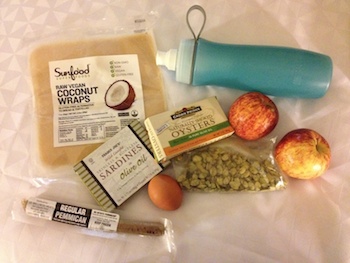
travel-food

  • making it back in time on Tuesday morning in order to catch my New York flight that very same evening!
  • getting to South Africa and spending quality time with my wonderful family, enjoying good food with them (one night we had roast lamb, steamed Brussel’s sprouts and baby marrow/zucchini and a delicious creamy cauliflower dish; and last night we had a yummy Paleo-type pasta-free lasagna from the new Tim Noake’s book “The Real Meal Revolution”), reminiscing, laughing, and getting and giving lots of hugs!

trudy-and-family

Let’s end with this great quote by Zig Ziglar:

The more you express gratitude for what you have, the more things you’ll have to express gratitude for.

What are you grateful for today? And how does it make you feel when you express your gratitude?
Filed Under: Gratitude

Do you eat mindfully and truly savor your food?

August 18, 2014 By Trudy Scott 12 Comments

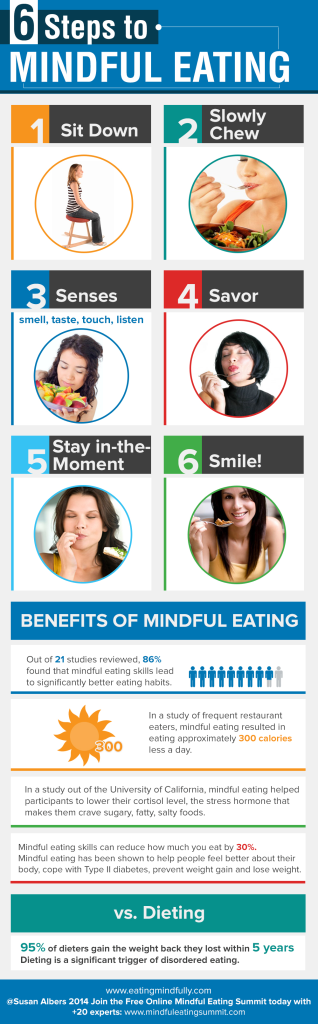
infographicofmindfuleating-318x1024

Put simply, mindful eating is about eating with more awareness. This method of eating aims to stop mindless eating behaviors like unconsciously popping food into your mouth while watching TV or devouring a carton of ice cream to ease stress.

Studies show that reducing these behaviors can have a significant impact on improving your health, weight, and reducing stress, anxiety and depression.

A 2010 study “Pilot Study: Mindful Eating and Living (MEAL): Weight, Eating Behavior, and Psychological Outcomes Associated with a Mindfulness-Based Intervention for People with Obesity” had participants do 6 weeks of training in mindfulness meditation and mindful eating. The obese individuals who participated in the study “showed statistically significant increases in measures of mindfulness and cognitive restraint around eating, and statistically significant decreases in weight, eating disinhibition, binge eating, depression, perceived stress, physical symptoms, negative affect, and C-reactive protein.”

Here are some tips for mindful eating and what to do if mindful eating isn’t quite enough.

Give thanks for your food, savor the meal, and be mindful.

  • Give thanks, say a prayer, or do a blessing.
  • Slow down and savor the flavors, the textures, the aromas, and the experience of eating.
  • Be mindful and think about the food you’re eating. I once did a mindfulness exercise where we were guided through the experience of eating a single raisin over the course of five minutes. It is something that will stay with me always. First we looked at the raisin, then we touched it and smelled it. Then we put it in our mouths and very, very slowly chewed it, attending to its texture, juices, and sweetness. This is such a contrast to the way we usually gulp our food down.

Sit down to eat and make it a family gathering

  • Sit down to eat, and eat at the table with family and friends, not in front of the TV.
  • Keep the conversation positive and light.
  • I love this idea offered by fellow nutritionist and good friend Robin Nielsen: She suggests that just lighting a candle can be calming and put you in a digestive mode.

Don’t eat when you’re highly stressed or anxious

  • Chronic stress, anxiety, and depression reduces your production of hydrochloric acid and lowers levels of secretory immunoglobulin A (SIgA), an antibody that plays a critical role in immunity in the gastrointestinal tract. This will impair your digestion. And because poor digestion leads to nutrient depletions that make it more difficult to handle stress, it creates a vicious cycle.

Address possible neurotransmitter deficiencies

If you’ve tried all of the above and are still finding it challenging to stay on track then the next step is to address possible neurotransmitter deficiencies.

  • If you have afternoon or evening cravings for carbohydrates and gluten-containing grains, you may have low serotonin. Tryptophan or 5-hydroxytryptophan may help.
  • If you crave comfort foods like bread, cookies, or ice cream, they may be providing an endorphin rush. Taking D-phenylalanine (DPA) may help.
  • If you overeat bread, cereal, pasta, or dairy to calm down, or drink wine to de-stress you may have low levels of GABA. Taking supplemental GABA may help you relax and experience fewer anxiety-related cravings.
  • If you’re prone to low blood sugar and have intense cravings for something sweet or starchy, glutamine really helps, as it plays a role in moderating blood sugar levels.
  • If you crave something sweet for a quick energy fix, you may have low levels of catecholamines. Taking supplemental tyrosine may help.

The amino acid questionnaire from The Antianxiety Food Solution can help you figure out which area to focus on.

Do you want to learn more about mindful eating? Join us on the Mindful Eating Summit

Join me and 20 other speakers on the Eating Mindfully Summit August 21-28 with my friend and colleague, Dr. Susan Albers, author of “Eating Mindfully” and Cleveland Clinic psychologist. This summit will teach you how to boost your nutrition, end mindless overeating and stop feeling guilty when you eat!

Here are just a few of the presenters, all of whom offer their own rich, in-depth perspective on health, wellness and mindfulness:

  • Dr. Brian Wansink Director of Cornell Food & Brand Lab and best-selling author of Mindless Eating: Why We Eat More Than We Think
  • Evelyn Tribole Award-winning registered dietitian and author of Intuitive Eating
  • Dr. Jim Painter Producer of Portion Size Me, a documentary about fast food and health and featured on CBS’s Early Show
  • Dr. Katz, author of Disease Proof and contributor to O, the Oprah Magazine
  • Dr. Daniel Siegel, Professor of at the UCLA School of Medicine and the founding co-director of the Mindful Awareness Research Center
  • Dr. Alan Christianson, specialist in natural endocrinology with a focus on thyroid disorders
  • Jonathan Bailor, author of The Calorie Myth

I am also presenting on this summit. The topic of my talk is “The amazing amino acids for eliminating anxiety and emotional eating.”

So do join us on the Eating Mindfully Summit August 21-28 with host Susan Albers. You can sign up here:
http://mindfuleatingsummit.com?orid=6083&opid=4


Filed Under: Events, Food and mood Tagged With: Eating Mindfully Summit, mindful eating

What’s lurking in your food: book review of The Pantry Principle

August 1, 2014 By Trudy Scott 10 Comments

mira-exhibittable
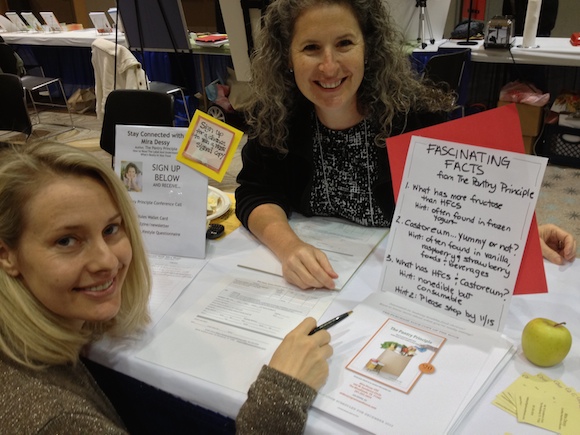
The fun and enlightening quiz Mira did at the Weston A. Price conference

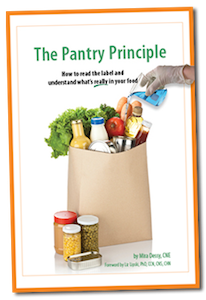
There is so much lurking in our food and The Pantry Principle: How to Read the Label and Understand What’s Really in Your Food does a wonderful job educating us about all the nasty stuff that can make us anxious and sad, affect our digestion, give us ADHD symptoms and so much more.

Mira Dessy is a certified food educator, is known as the Food Ingredient Guru and is a Real Food Advocate. We are colleagues and I was honored to have been asked to do an advance review of her book for inclusion on the book cover. This is what I said:

“Mira Dessy’s book, The Pantry Principle is a real gem! If you eat, this book is a must-read – so you really know what’s in your food. It is a user-friendly, comprehensive, well-researched and eye-opening resource. I look forward to recommending it to all my clients!”

I work with anxious, stressed, overwhelmed women and I do now recommend it to my clients. It’s a perfect companion to my book The Antianxiety Food Solution for taking shopping and eating to the next level.

Initially I wondered how relevant it may be since I recommend real whole food to my clients, rather than packaged foods. I found out very quickly that is it very relevant!

Here is a great example of the relevance even when you are eating real whole foods:

  • a possible new coating for bananas which will delay the ripening process by up to two weeks
  • the product is made from chitosan, which is in turn made from shrimp and crab shells.
  • as Mira says: “this could present serious problems for those with high-level seafood allergies.”

I really do like that it contains the most current information. The banana coating information is from a 2012 report. I also really like that I learned about things I had not heard of before!  I’m a nutritionist and I learned new facts!

And Mira keeps us up to date with this ever-changing world via social media and her great blog called Grains and More.

It is also quite provocative. Just wait until you read about castoreum and other surprises you will find in your food! Mira mentions castoreum in this blog post about shellac and candy: shellac is:

“confectioner’s glaze,” “confectioner’s resin,” “candy glaze,” or even simply “natural glaze.”

It’s essentially the insect version of castoreum. Harvested from trees where the female lac bug lays down cocoon-like secretions, it is scraped off the trees (often along with bark and insect parts) and heated until it liquifies. It’s strained and then allowed to cool in thin sheets. This is then reconstituted with denatured alcohol when manufacturers are ready to use it to give foods that shiny coating.

Here is a sampling of what Mira covers in the book:

  • How to read a nutrition label
  • Understanding Additives
  • Artificial colors
  • Sugar and where it’s lurking
  • Fake fats
  • Packaging
  • A GMO ingredients list and much more

 You can see the complete table of contents via the Amazon preview and buy your copy of The Pantry Principle via my Amazon link.

pantry-principle-book-cover

Mira will be exhibiting with me at the upcoming Integrative Medicine for Mental Health conference next month so if you’re at the event come on by and meet her and get a signed copy of the book.

Mira was also one of the guest experts on the recent Anxiety Summit. Her topic was “How Additives in Your Food Can Make You Anxious” and it was a great interview (you can check out the other speakers here.

Please ask questions below. If you have already read this book do share some of your favorite tips in the comments below.

Filed Under: Books, Food and mood, Real whole food Tagged With: food ingredients, mira dessy, pantry principle

2nd Annual Online Eating Psychology Conference: Marc David shares

July 21, 2014 By Trudy Scott 13 Comments


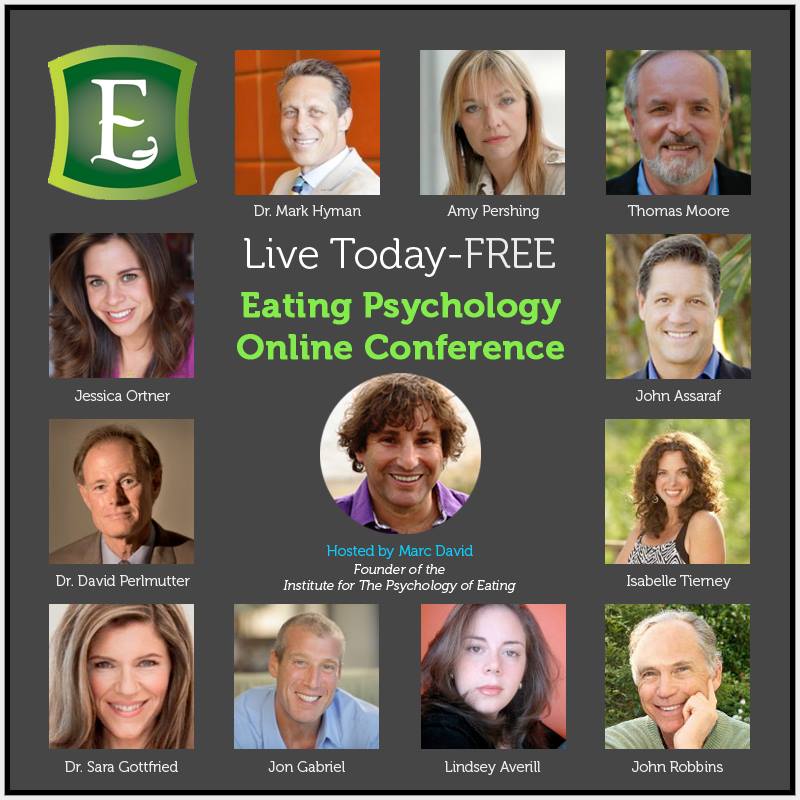
day 1The 2nd Annual Online Eating Psychology Conference started today and I thought I’d share some gems from Marc David’s opening interview. Marc is the Founder of the Institute for the Psychology of Eating and the host of the 2nd Annual Online Eating Psychology Conference. He shared this:

My mission is to expand eating psychology so it’s for everyone
I have an inclusive approach and I have invited speakers and thought leaders with diverse viewpoints
I have invited people who care and who bring something special to their work

Marc says we need to handle eating challenges, emotional eating, body image issues, mood, digestion, immunity, fatigue etc. so “we can step forward into our greatness and give our gifts in this world”

Marc shared an example of 40 year old client who had digestive issues, was a binge eater, was constipated, had a low mood, got coughs and colds, needed to lose 20 lbs. She had tried everything and nothing worked. He looked at her diet which was extremely low in fat. He shared this “When you go low fat, binge eating is common.” When he said “You need to eat more fat, she had a horrified look. She had toxic belief that fat was bad for her. It’s an outdated belief but she had a fear of fat.” He had to work with her at a psychological level – suggesting a little bit of olive oil on her salad, eating an avocado and taking a fish oil supplement. She made the changes and she lost 14 lbs over the course of 3 months.

I really enjoyed his principles of “dynamic eating psychology” (a term Marc David coined):

  1. Food is a doorway and our relationship with food is a doorway to see what is there. He says “Stop fighting yourself and stop hating yourself and walk through the door and be a little curious. Insights will start to happen”
  2. Food is a great teacher. For example, I hate my job, I’m unhappy, something is out of balance.
  3. Every symptom has a deeper meaning and message
  4. You are here to heal – you could tweak someone’s diet and it can help, sometimes you need to do more
  5. Our life has a bigger purpose and higher calling – our eating challenges are here to move us in the right direction, help us get better and grow
  6. The more we can become personally empowered the more we can reach our metabolic potential. As you become the best possible person you can be, you have the best chance for the body to reach it’s potential.
  7. Food is love, energy, information and nutrition.

Marc says “We are banding together and bringing together experts to find a better way to eat.”

I am thrilled that I am one of the featured experts in the 2nd Annual Online Eating Psychology Conference on July 21 – 26, 2014.

My interview plays tomorrow July 22 and is called: “The amazing amino acids for eliminating anxiety and emotional eating.” Could your anxiety and emotional eating be a brain chemical imbalance? And how do we address this with the amazing amino acids and other key nutrients

Join me, along with Marc David, as he interviews over 45+ experts in eating psychology, embodiment, weight, health, and nutrition. Get ready to hear some great insights and information that will advance your understanding of eating psychology and personal transformation in this one-of-a-kind virtual conference!

Here are a few gems from other speakers on day 1.

Dr. Mark Hyman, founder of the Ultrawellness Center, and author of the new book “The Blood Solution 10 day Detox Diet” shared this in his interview:

We have bought it hook line and sinker that we have to eat less and exercise more i.e. it’s your fault that you’re fat
The science now shows that all calories are not the same and certain foods are addictive
When we outsource our cooking to food corporations we will get sick. We have to learn how to cook. We have to eat real food! Eat an avocado – it doesn’t have a barcode on it and it doesn’t have an ingredient list. If something has an ingedient list it’s probably not that great for you!

Amy Pershing’s topic is “The Psychology of Binge Eating” and she shared:

Binge eating is not a willpower issue
Causes are profoundly varied – genetics, trauma, dieting, weight-related bullying, mood disorders like anxiety and depression
5 million adults 18 years and older ie 3.5 % of women and 2% of men, meet the criteria for BED (binge eating disorder)

You can sign up for the 2nd Annual Online Eating Psychology Conference for FREE here: https://ipe.isrefer.com/go/2ndepoc/trudyscott/

Filed Under: Addiction, Amino Acids, Anxiety and panic, Emotional Eating, Events, Sugar and mood Tagged With: amino acids, anxiety, eating psychology, emotional eating, marc david, Trudy Scott

Anna Clendening: Anxious Singer on America’s Got Talent 2014

July 13, 2014 By Trudy Scott 45 Comments

anna clendening agt

Anna is a very talented 20 year old young woman who recently performed on America’s Got Talent 2014. Her singing was just beautiful and you could hear the raw emotion in her voice.

Being on this big stage was quite something for her – she’s been suffering from anxiety and depression since she was 16. A few months ago she was bedridden and having panic attacks. She said: “my mind had given up on me. I didn’t see a future. I didn’t want to be here anymore and I felt so bad about myself.”

She was able to turn things around dramatically with therapy and music.

During her audition, judge Howie Mandel shared: “I also suffer from an anxiety disorder – I have OCD.” He also said: “There isn’t anyone alive who doesn’t need help at some time and the world is here for you.” After her song, Howie was very kind and went and hugged her. He also said this: “life is filled with peaks and valleys, you have experienced a lot of valleys. Tonight, young lady, you are on a peak.”

I would have to agree and I’d like to say “bravo Anna!”  Watch her performance here….

I’ve got three other comments on this: the stigma of mental health, the wonderful effects of music for mood and encouragement to look in to the powerful effects of food and nutrients.

The stigma of mental health

I commend her for being open about her anxiety and depression. There is a great deal of stigma around mental illness but I had no idea how bad it was. I was very surprised to see all the cruel and insensitive comments on the youtube video. Here is one example:

Couldn’t leave her bed?  What a joke.  You didn’t see this kind this stuff 50 years ago.  It was called responsibility and accountability.  She was obviously validated and enabled by her parents.  Society today substantiates this crap.  It’s called life, and everybody has challenges and feeling they need to overcome, get over it.  I bet she’s drawing a nice little social security disability check, too. Its pretty sad that she has such self pity.  She is very attractive, talented, not overweight, racially advantaged, has loving parents.  She needs to visit a children’s cancer ward or burn ward and get a grip as to how truly blessed she is.  

I say this to Anna: “Just ignore these naysayers. You did good and the more of us who talk about it the more awareness we’ll bring.”

The wonderful effects of music for mood

In a 2009 paper called The effect of group music therapy on quality of life for participants living with a severe and enduring mental illness

A 10-week group music therapy project was designed to determine whether music therapy influenced quality of life and social anxiety for people with a severe and enduring mental illness living in the community. Ten one-hour weekly sessions including song singing, song writing and improvisation, culminated in each group recording original song/s in a professional studio.

This is what they found:

music therapy gave joy and pleasure, working as a team was beneficial, participants were pleasantly surprised at their creativity, and they took pride in their song.

A 2014 study called Possible benefits of singing to the mental and physical condition of the elderly, reported that the study participants felt:

refreshed, comfortable, light-hearted, relieved, and relaxed, they felt less tense and confused and their mood improved.  The level of cortisol, a salivary stress marker, decreased after singing.  The same tendencies were shown regardless of whether or not the subjects liked singing !  (this is my exclamation point)

I say this to Anna: “Good for you for finding music! I wish you all the best in AGT 2014!”

The powerful effects of food and nutrients

I would also like to encourage Anna and anyone with anxiety and depression to look in to the powerful effects of food and nutrients. Here are just a few of the topics we covered on the recent Anxiety Summit:

  • Dr. Felice Jacka – Principal Research Fellow at Deakin University, Melbourne, Australia: “The research: food for the treatment and prevention of anxiety and depression?”
  • Julie Matthews – Certified Nutrition Consultant and author of award winning book, Nourishing Hope for Autism: “BioIndividual Nutrition for Anxiety: How special diets and avoiding certain foods can Support individuals with anxiety.”
  • Mira Dessy – Certified Nutrition Educator, Real Food Advocate, and author of The Pantry Principle: “How additives in your food can make you anxious.”
  • Amanda Swart – Associate Professor, Department of Biochemistry, Stellenbosch University, South Africa: “Rooibos: a functional food in the management of stress“
  • Julia Ross, MFT – Pioneer in the field of Neuro-nutrient Therapy and the author of the best sellers The Mood Cure and The Diet Cure: “Eliminating Anxiety: Amino Acid Therapy and Adrenal Balancing.”

I say this to Anna: “I’d like to encourage you explore these and other biochemical approaches – so you can have zero anxiety and depression.”

And I say this to Howie: “I’d like to encourage you to also explore these and other biochemical approaches for eliminating your OCD.”  In this blog post about Charlize Theron I talk about how GABA, tryptophan, 5-HTP and/or inositol can end OCD and obsessive thoughts and behaviors.

I am musically “challenged” and can’t sing to save my life so while this is all very interesting to me, it’s not something I have experienced first hand.  I’d love to hear from you.  

Do you sing or play a musical instrument? How does it make you feel?  Does it help with anxiety, depression, stress?

Filed Under: Music, People Tagged With: america's got talent, amino acids, anna clendening, anxiety, anxious, food, music, stigma

Urinary neurotransmitter testing falls short

July 11, 2014 By Trudy Scott 37 Comments

lab

I am often asked about urinary neurotransmitter testing and often a new client will come in with results from a test she/he has had done. I would like to share my thoughts on this rather controversial subject and say that I am not a fan and do not ever use this test. Let’s take a deeper dive into this topic.

The question

Here is a question I received right after the Anxiety Summit:

I have had good results using urinary neurotransmitter testing and targeted amino acid therapy and bioidentical hormones. I am able to see if all levels are low, indicating low stomach acid. I am also able to see if histamine or glutamate are high, indicating food hypersensitivities. I also use the levels for balancing and replacing. I know that Julia Ross is opposed to testing. What is your opinion and what did your other speakers [on the Anxiety Summit] say about this topic?

This is my answer:
I am very pleased that this person sees good results using urinary neurotransmitter testing and targeted amino acid therapy.

Why I am not in favor of this testing

However, I am not in favor of this testing for a few reasons:

1) Julia Ross is not in favor of it and having worked with her in her clinic for 2 years I respect her professional opinion and the results she saw when urinary neurotransmitter results didn’t correlate with amino acid questionnaire and trials of amino acids. Julia wrote a great article on this topic for the Townsend Letter and you can access this via the anxiety summit blog for her interview

2) Since leaving the clinic and starting my own practice, I’ve worked with folks who come in with urinary neurotransmitter test results that don’t always with correlate with amino acid questionnaire and trials of the amino acids. But I will be the first to admit that I have not done a thorough analysis of where they haven’t correlated simply because it didn’t seem worth my time.

3) I have heard some rather unpleasant stories from people who have had the urinary neurotransmitter testing done and have been given supplement recommendations based on the results. I just received an email recently from someone who said this:

I was doing xyz’s program last year and the aminos recommended based on urine neurotransmitter testing nearly sent me over the edge with extreme anxiety, insomnia and panic attacks. He had me take 300mg 5-HTP and 3000mg tyrosine a day, based on test results.

We know that anyone can have a bad reaction to supplements. But let me comment on this example: 5-HTP can raise cortisol and be stimulating for some people so it’s not something I recommend for everyone with low serotonin symptoms; 3000mg tyrosine a day is not excessive (1-2 x 500mg , 3 times a day is often typical) BUT will be too much if you don’t need it and can cause anxiety and insomnia.

Low stomach acid and food hypersensitivities?

I’d like to also comment on two other parts of this question:

  • “I am able to see if all levels are low, indicating low stomach acid.” I have not heard this correlation and would use other labs markers for low stomach acid – like total protein, globulin etc – and the person’s response to a HCl trial.
  • “I am also able to see if histamine or glutamate are high, indicating food hypersensitivities.” I have also not heard of this correlation and would use an IgG test and food elimination and challenge to help figure out if someone has food sensitivities.

What do other speakers think?

It was also asked what other speakers on the Anxiety Summit said about this topic:

  • Other than Julia Ross, the only person who mentioned urinary neurotransmitter testing briefly was Dr. Anna Cabeca and we didn’t go deeper into the topic.
  • I did email Dr. Kelly Brogan and she said

I actually don’t use them. Occasionally I do serum amino acid testing (ION panel) but don’t feel that the science is there to support urinary neurotransmitter testing and feel that the reductionism around amino acids and behavioral translation is not consistent with my perspective and not needed for the outcomes I get.

If you listened to our interview on the Anxiety Summit, you’ll remember that Kelly doesn’t feel that low serotonin is a factor in anxiety and depression.

  • I will be following up with some of the other speakers like Josh Friedman, Hyla Cass, Amy Day and Corey Schuler.

What do Dr Weil and Nora Gedgaudas think?

I’d like to share some perspectives from a few others:

  • On Dr. Andrew Weil’s site

I checked with David Perlmutter, M.D., a neurologist colleague in Florida, about the accuracy of urine testing for neurotransmitters. He told me that neurotransmitters and their precursors are produced in abundance throughout the body and to assume that what is collected in the urine reflects what’s going on in the brain is a stretch.

Unfortunately Dr. Weil goes on to discredit salivary cortisol testing which has plenty of research supporting how effective it is!

  • Nora Gedgaudas, author of Primal Body Primal Mind states this on her site:

I have considered the urinary testing approach and was even enamored of the concept at first. Once I looked into the idea more closely, though, it just didn’t add up for me. I have been using amino acids now to address issues of mood, health and cognitive functioning for over 20 years. I have never used anything other than mood/symptomatic screening to guide amino acid supplementation. Results tend to be uniformly good to excellent. The sheer overwhelming complexity of amino acid/neurotransmitter activity in the human body/brain-and the compartmentalized nature of the biochemistry of each seems to best lend itself to a more functional and symptom-related evaluation. Lab testing simply falls short of the mark here.

I could not agree more with Nora’s comments. These are my exact thoughts. Here is the amino acids mood questionnaire I use with my clients. Based on symptoms we do amino acid trials and based on their response (which can happen as quickly as 5 minutes) we know if we’re on the right track.

I’ll be the first to say we don’t always have all the research to support what we do in the nutritional/integrative world and do agree that testing is extremely valuable but in this case I do not recommend urinary neurotransmitter testing as it does fall short in terms of accuracy and consistency.

I’d love to hear your thoughts and experiences. Have you been tested and had good results? Bad results? Are you a health practitioner and say ‘yes’ or ‘no’ to this testing?

Filed Under: Anxiety and panic, Questionnaires, Testing Tagged With: amino acid questionnaire, anxiety, depression, urinary neurotransmitter testing

  • « Go to Previous Page
  • Page 1
  • Interim pages omitted …
  • Page 129
  • Page 130
  • Page 131
  • Page 132
  • Page 133
  • Interim pages omitted …
  • Page 160
  • Go to Next Page »

Primary Sidebar

GABA QuickStart Homestudy

gaba quickstart homestudy

Free Report

9 Great Questions Women Ask about Food, Mood and their Health

You'll also receive a complimentary subscription to my ezine "Food, Mood and Gal Stuff"


Connect with me

Popular Posts

  • Amino Acids Mood Questionnaire from The Antianxiety Food Solution
  • The Antianxiety Food Solution Amino Acid and Pyroluria Supplements
  • Pyroluria Questionnaire from The Antianxiety Food Solution
  • Collagen and gelatin lower serotonin: does this increase your anxiety and depression?
  • Tryptophan for the worry-in-your-head and ruminating type of anxiety
  • GABA for the physical-tension and stiff-and-tense-muscles type of anxiety
  • The Antianxiety Food Solution by Trudy Scott
  • Seriphos Original Formula is back: the best product for anxiety and insomnia caused by high cortisol
  • Am I an anxious introvert because of low zinc and vitamin B6? My response to Huffington Post blog
  • Vagus nerve rehab with GABA, breathing, humming, gargling and key nutrients

Recent Posts

  • Her cravings for chips and peanut butter were triggered by stress: GABA ends cravings and reduces physical tension and fear of heights
  • It is truly miraculous to be able to move through life without crippling anxiety and panic
  • GABA and tryptophan combo provide immediate and noticeable relief for tremors and cervical dystonia in just 7 days
  • Red light therapy for back and neck pain, plantar fasciitis and low mood – a complement to the amino acids GABA, DPA and tryptophan
  • What do I use instead of Seriphos to help lower high cortisol that is affecting my sleep and making me anxious at night?

Categories

  • 5-HTP
  • AB575
  • Addiction
  • ADHD
  • Adrenals
  • Alcohol
  • Allergies
  • Alzheimer's disease
  • Amino Acids
  • Anger
  • Antianxiety
  • Antianxiety Food Solution
  • Antidepressants
  • Anxiety
  • Anxiety and panic
  • Autism
  • Autoimmunity
  • benzodiazapines
  • Bipolar disorder
  • Books
  • Caffeine
  • Cancer
  • Candida
  • Children/Teens
  • Collagen
  • Cooking equipment
  • Coronavirus/COVID-19
  • Cravings
  • Depression
  • Detoxification
  • Diabetes
  • Diet
  • DPA/DLPA
  • Drugs
  • EFT/Tapping
  • EMF
  • EMFs
  • Emotional Eating
  • Endorphins
  • Environment
  • Essential oils
  • Events
  • Exercise
  • Fear
  • Fear of public speaking
  • Fertility and Pregnancy
  • Fish
  • Food
  • Food and mood
  • Functional neurology
  • GABA
  • Gene polymorphisms
  • General Health
  • Giving
  • Giving back
  • Glutamine
  • Gluten
  • GMOs
  • Gratitude
  • Gut health
  • Heart health/hypertension
  • Histamine
  • Hormone
  • Hyperparathyroidism
  • Hypoglycemia
  • Immune system
  • Inflammation
  • Insomnia
  • Inspiration
  • Introversion
  • Joy and happiness
  • Ketogenic diet
  • Lithium orotate
  • Looking awesome
  • Lyme disease and co-infections
  • MCAS/histamine
  • Medication
  • Men's health
  • Mental health
  • Mercury
  • Migraine
  • Mold
  • Movie
  • MTHFR
  • Multiple sclerosis
  • Music
  • NANP
  • Nature
  • Nutritional Psychiatry
  • OCD
  • Osteoporosis
  • Oxalates
  • Oxytocin
  • Pain
  • Paleo
  • Parasites
  • Parkinson’s disease
  • PCOS
  • People
  • PMS
  • Postpartum
  • PTSD/Trauma
  • Pyroluria
  • Questionnaires
  • Real whole food
  • Recipes
  • Research
  • Schizophrenia
  • serotonin
  • SIBO
  • Sleep
  • Special diets
  • Sports nutrition
  • Stress
  • Sugar addiction
  • Sugar and mood
  • Supplements
  • Teens
  • Testimonials
  • Testing
  • The Anxiety Summit
  • The Anxiety Summit 2
  • The Anxiety Summit 3
  • The Anxiety Summit 4
  • The Anxiety Summit 5
  • The Anxiety Summit 6
  • Thyroid
  • Thyroid health
  • Toxins
  • Tryptophan
  • Tyrosine
  • Uncategorized
  • Vegan/vegetarian
  • Women's health
  • Yoga

Archives

  • May 2026
  • April 2026
  • October 2025
  • September 2025
  • August 2025
  • July 2025
  • June 2025
  • May 2025
  • April 2025
  • March 2025
  • February 2025
  • January 2025
  • November 2024
  • October 2024
  • September 2024
  • August 2024
  • July 2024
  • June 2024
  • May 2024
  • April 2024
  • March 2024
  • February 2024
  • January 2024
  • December 2023
  • November 2023
  • October 2023
  • September 2023
  • August 2023
  • July 2023
  • June 2023
  • May 2023
  • April 2023
  • March 2023
  • February 2023
  • January 2023
  • December 2022
  • November 2022
  • October 2022
  • September 2022
  • August 2022
  • July 2022
  • June 2022
  • May 2022
  • April 2022
  • March 2022
  • February 2022
  • January 2022
  • December 2021
  • November 2021
  • October 2021
  • September 2021
  • August 2021
  • July 2021
  • June 2021
  • May 2021
  • April 2021
  • March 2021
  • February 2021
  • January 2021
  • December 2020
  • November 2020
  • October 2020
  • September 2020
  • August 2020
  • July 2020
  • June 2020
  • May 2020
  • April 2020
  • March 2020
  • February 2020
  • January 2020
  • December 2019
  • November 2019
  • October 2019
  • September 2019
  • August 2019
  • July 2019
  • June 2019
  • May 2019
  • April 2019
  • March 2019
  • February 2019
  • January 2019
  • December 2018
  • November 2018
  • October 2018
  • September 2018
  • August 2018
  • July 2018
  • June 2018
  • May 2018
  • April 2018
  • March 2018
  • February 2018
  • January 2018
  • December 2017
  • November 2017
  • October 2017
  • September 2017
  • August 2017
  • July 2017
  • June 2017
  • May 2017
  • April 2017
  • March 2017
  • February 2017
  • January 2017
  • December 2016
  • November 2016
  • October 2016
  • September 2016
  • August 2016
  • July 2016
  • June 2016
  • May 2016
  • April 2016
  • March 2016
  • February 2016
  • January 2016
  • December 2015
  • November 2015
  • October 2015
  • September 2015
  • August 2015
  • July 2015
  • June 2015
  • May 2015
  • April 2015
  • March 2015
  • February 2015
  • January 2015
  • December 2014
  • November 2014
  • October 2014
  • September 2014
  • August 2014
  • July 2014
  • June 2014
  • May 2014
  • April 2014
  • March 2014
  • February 2014
  • January 2014
  • December 2013
  • November 2013
  • October 2013
  • September 2013
  • August 2013
  • July 2013
  • June 2013
  • May 2013
  • April 2013
  • March 2013
  • February 2013
  • January 2013
  • December 2012
  • November 2012
  • October 2012
  • August 2012
  • July 2012
  • June 2012
  • May 2012
  • April 2012
  • March 2012
  • February 2012
  • January 2012
  • December 2011
  • November 2011
  • October 2011
  • September 2011
  • August 2011
  • July 2011
  • June 2011
  • May 2011
  • April 2011
  • March 2011
  • February 2011
  • January 2011
  • December 2010
  • October 2010
  • September 2010
  • July 2010
  • May 2010
  • April 2010
  • March 2010
  • February 2010
  • January 2010
  • November 2009

Share the knowledge!

The above statements have not been evaluated by the Food and Drug Administration. Products listed in this website are not intended to diagnose, treat, cure or prevent any disease.

The information provided on this site is for informational and educational purposes only and is not intended as a substitute for advice from your physician or other health care professional. You should consult with a healthcare professional before starting or modifying any diet, exercise, or supplementation program, before taking or stopping any medication, or if you have or suspect you may have a health problem.


Copyright © 2026 Trudy Scott. All Rights Reserved. | Privacy | Terms and Conditions | Refund Policy | Medical Disclaimer

Free Report

9 Great Questions Women Ask about Food, Mood and their Health

You’ll also receive a complimentary subscription to my ezine “Food, Mood and Gal Stuff”