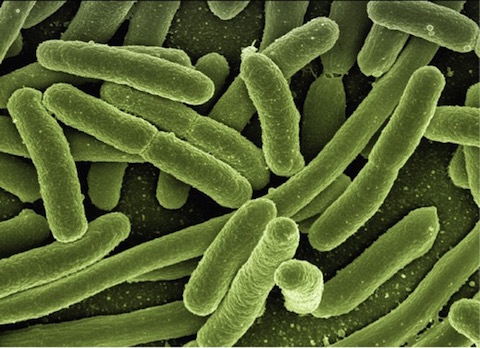
New bacteria that consumes GABA, the main calming neurotransmitter, has been discovered. It has provisionally been named KLE1738 Evtepia gabavorous (vorous means “eating”).
This new discovery was presented at the recent American Society for Microbiology conference in Boston in the Microbial Mind Control session.
Here is the entire abstract: Gaba Modulating Bacteria of the Human Gut Microbiome:
The gut microbiome affects many different diseases, and has been recently linked to human mental health. The microbiome community is diverse, but 50-80% of its diversity remains uncultured. We previously reported that uncultured bacteria from the marine environment require growth factors from neighboring species, and by using co-culture, we could cultivate novel diversity. In the present study, we used a similar co-culture approach to grow bacteria from humans stool samples. KLE1738, a “Most-Wanted” member of the human gut microbiome only known by its 16S rDNA signature, was found to require the presence of Bacteroides fragilis KLE1758 for growth. Using bio-assay driven purification of B. fragilis KLE1758 supernatant, γ-aminobutyric acid (GABA), the major inhibitory neurotransmitter of the central nervous system, was identified as the growth factor for KLE1738. We found no other tested compound but GABA supported the growth of KLE1738, and genomic analysis suggests an unusual metabolism focused on consuming GABA. Due to this unique growth requirement, we provisionally name KLE1738 Evtepia gabavorous. Using growth of E. gabalyticus as an indicator, we then identified novel GABA producing bacteria from the gut microbiome. Reduced levels of GABA are associated with depression, and we found fewer GABA producers in a human cohort of depressed individuals. By modulating the level of GABA, microbial producers and consumers of this neurotransmitter may be influencing host behavior.
If you’re anxious and especially if you have physical anxiety, it’s worth considering if low GABA is an issue and addressing your anxiety by trying to raise your GABA levels by taking GABA as a supplement, with lifestyle activities like yoga sessions, by eating a real whole foods traditional diet and by addressing gut health.
There is much research supporting the gut-brain connection and how imbalances of the microbiome i.e. intestinal dysbiosis, can contribute to:
- anxiety, depression, social behaviour, cognition and visceral pain
- neurobehavioral alterations in offspring
- anorexia and anxiety/depression
- alcohol use disorders and anxiety
Could Evtepia gabavorous be a factor in all of the above? It’s too soon to know but I expect we’ll know more as more research is completed.
If you’re looking for more information on GABA and the gut:
- I recently covered GABA in my presentation during season 4 of the Anxiety Summit
- and I’ve had the pleasure of interviewing Ted Dinan on psychobiotics on a previous summit
- I also have a whole chapter on digestion and gut health in my book The Antianxiety Food Solution. It is still very relevant but could do with the addition of all this new research!
We certainly appreciate Postdoctoral Research Associate, Phillip Strandwitz and his team for the work they are doing. Strandwitz shares this on his bio:
my work has led me to focus on the gut-microbe-brain axis, specifically microbes able to modulate levels of neurotransmitters
I reached out to I asked him why he is interested this area of research and he shared this with me:
I think mental health is an incredible burden to society and there is not nearly enough spotlight nor funding to understand and treat these issues. I believe the microbiome is involved (at least to some capacity), and I’m passionate about trying to understand this involvement to create novel therapies to help those in need. I’m also a strong supporter of diet/lifestyle changes for better cognition!
How wonderful is this!
It’s early days and right now we can only speculate but it may be worth to considering if the presence of Evtepia gabavorous may be a reason why some individuals continue to need to take GABA supplements long-term to keep anxiety at bay. It also gives us additional reasons to focus on addressing gut health and boosting good bacteria to help to reduce the need for ongoing GABA supplementation.
As soon as the paper is published, I’ll have more details to share. In the meantime, enjoy the fascination and wonderment of the human body and our microbiome.
Please share if you have signs of low GABA and have you been taking GABA supplements long-term? Do you also have gut issues and dysbiosis too (based on stool testing)?
PS. So many of you contacted me with a link to this preliminary research so I’d just like to say thanks!

I want to take GABA but have found that it gives me air hunger symptoms that ended up getting quite scary. When I stopped GABA the air hunger went away.
What do you suggest?
thank you Trudy!
Sandi
Too much GABA can cause breathlessness or what you call air hunger. I find this to be case when 500mg or 750 mg and above is used. I have my clients start on 125mg (found in GABA Calm https://www.everywomanover29.com/blog/source-natural-gaba-calm-anxiety/) and slowly build up. Doing GABA sublingually also gives you more of an effect with less.
I’m curious how much causes these symptoms for you? and what product?
I was trying Vitamin Shoppe 750mg. I didn’t know it was the GABA for a couple of months. I’d start to loose my breath and I had to force myself not to have panic attacks. It scared the s?#t out of me. I though I was going crazy or would have to add one more issue to my long list. As soon as I stopped, the breathlessness stopped. I’ll try your suggestion. thanks
Sandi
Yes 750mg of GABA can do that. I’d love to hear if less works for you
And remember to stop any supplement that causes an adverse effect.
Trudy, How can that bacteria be wiped out if one contract it? How would one know they had it? Is there a test for it yet?
Currently is there a way of testing which neurotransmitter levels are low to make it easier to achieve balance?
Thanks for all you do!
Diana
This is a preliminary paper presented at a conference. The paper has yet to be published in the journal. I’ll have more to share then but even then it won’t be part of a functional stool test for some time.
In the meantime gut health must be restored – so much of this goes back to the gut. Until we know more I assume this means boosting good bacteria to crowd out Evtepia gabavorous. It many also mean finding a way to get rid of Evtepia gabavorous (assuming it’s identified as a bad bacteria or pathogenic).
For neurotransmitter balancing I use the amino acid questionnaire and have my clients do a trial – you can find more about this here https://www.everywomanover29.com/blog/anxiety-amino-acids-overview/
Hi Trudy, thank you for bringing all this wonderful information! I am of the opinion that if a certain bacteria consumes GABA then taking a GABA supplement will only feed this bacteria and that gut health must be restored before taking GABA supplements otherwise you will only feed the bacteria and will need more and more GABA to counteract its growing consumption… What are your thoughts on this?
Joanna
That may well be the case. We don’t yet know enough and certainly don’t know if Evtepia gabavorous is consuming endogenous GABA (GABA we make) and/or exogenous GABA (as a supplement).
I agree that gut health must be restored and I assume this means boosting good bacteria to crowd out Evtepia gabavorous. It many also mean finding a way to get rid of Evtepia gabavorous (assuming it’s identified as a bad bacteria or pathogenic).
But I suspect many people will continue to benefit from taking GABA supplements to ease their anxiety, while they are in the process of restoring gut health, since GABA provides instant relief and fixing the gut can take months. It may end up being a balance between both.
Until we see all the research and until this bacteria is part of a stool test (so we can measure and monitor it) we really won’t know.
Im taking 5htp 50 mg for skeep,gaba didn’t help. I wake up constantly in the middle of the night. How long does it take for 5htp to start working?
Michele
When we find the correct dose of either 5-HTP or tryptophan AND if sleep issues are due to low serotonin, sleep improves right away. With any trial of an amino we increase until we don’t see additional benefits. We may add melatonin too.
Keep in mind 5-HTP can sometimes affect cortisol – in this instance tryptophan is a better choice.
Sleep can be impacted by many factors – medications, low blood sugar, high cortisol, gluten and other food sensitivities, SIBO, parasites, EMFs, sex hormone imbalances – so all these would need to be ruled out/addressed
I do have high cortisol. Should i stop 5htp even though i just started taking it.
what do you suggest for high cortisol? My dr. Doesn’t know how to help me and im suffering for a long time. Going to get my hormones checked also. I have low thyroid hasimotos not on any meds. I need sleep.
Michele
As I said I don’t use 5-HTP when someone has high cortisol and prefer tryptophan.
To help lower the high cortisol Interplexus Seriphos is excellent. Plus getting to the root cause of it – stress, gluten, gut health, parasites etc
Fascinating Trudy. There are so many microbiome differences in individuals with autism. I bet this is a factor. Thanks for sharing!!
Julie
Yes, so fascinating! We have so much to learn and I love all the new gut-brain research. I’m sure future research will see this to be a factor with both autism and mood disorders.
Hi Trudy
Thanks so much for all the information here. My daughter has had gut issues since birth, couldn’t eat until she was 11months and now has social anxiety/or actively isolates herself at age 4. Perhaps this bacteria has something to do with it.
I want to put her on the vit B6, Zinc, evening primrose oil protocol and would like to know the dose you would recommend for a 4 year old. ‘
Also I am in South Africa, not sure if you visit at all and whether you could recommend any local supplements.
Thanks again for all your work. You have such a lovely, honest, accessible, easy to digest way of getting the facts across.
Lekker bly from a cold and rainy Cape Town
Emma
I’m sorry to hear about your daughter. Gut health and dysbiosis does play a role in anxiety/social anxiety so it’s possible.
For kids I use 120lbs as the adult dose and for 60lbs half that (sorry I’ve been in the USA too long and now think in pounds again! it’s nuts!)
I’d also look at candida/parasites, remove gluten and sugar and make sure blood sugar is stable (having her get good animal protein at breakfast + plenty of healthy fats)
A lot of the SA products have changed since I was there so I can’t help in that area.
Glad you enjoy the way I share and stay warm and dry in Cape Town
You know as well as I GABA should not work in a normal brain. it is to big. It is a disservice to recommend it without repairing brain membranes first. that’s why L theanine is preferred.
John
I’m afraid that’s a myth that GABA won’t work unless you have a leaky brain. I encourage you to listen to my presentation on this very topic on season 4 of the Anxiety Summit. You can read some of the research here https://www.everywomanover29.com/blog/gaba-blood-brain-barrier-trial-anxiety/
I like theanine a lot too but find that many of my clients do better on GABA.
I’d love to hear if you are a practitioner and have not had good results using GABA? or if this is based on your personal experience?
After years of suffering with anxiety and depression I began to fast for 24 hours at a time several times a month. Slowly I began to experience a deep sense of calmness and well being that has continued for over a year. I am working up the courage to spend some time at True North Health Center in Santa Rosa CA to take on a longer fast. The are many benefits to fasting. Perhaps my own mini fasts were “starving” this certain strain of bacteria and has killed it off and GABA levels have been restored. Interesting.
Christie
Thank you for sharing. I’m glad you’re seeing benefits from fasting. I’m sharing a link here for you and other readers: Role of therapeutic fasting in women’s health: An overview. https://www.ncbi.nlm.nih.gov/pubmed/27499591
I’ve recently started ‘fasting’ i.e. having my first meal of the day around 10.30am so creating a longer fasting window from dinner the night before which in turn increases the window for autophagy to continue and have to say am feeling a lot better for it. I thought I’d maybe get anxious due to not having protein within an hour of waking up and that my adrenals may take a beating but 3 weeks in and I have a lot more energy and mental clarity throughout the day. Guess it will take a while to determine the long term benefits and if they last…
Drew
Good to hear – there is quite a bit of research on intermittent fasting and it’s benefits. People with SIBO seem to really benefit too. If the blood sugar is not an issue it’s a good sign the adrenals are doing better
Yes, it seems to help my intermittent SIBO symptoms. Have been following the lovely Dr Jillian Teta’s work and she has a DeStress Your Gut program which is a comprehensive course to address all manner of gut issues. I am exploring doing this as whilst my symptoms have improved I’m not totally there yet. Stress is a major issue for me and my sensitive gut and second brain (enteric nervous system). The slightest stress can clench my gut and shut down digestion.
Also have been having excellent results by taking Ben Lynch’s NADH + CoQ10 lozenge first thing daily:
https://www.seekinghealth.com/nadh-coq10-30-lozenges
My energy and motivation levels have sky rocketed! Have done this for a month now so pleased about that.
Drew
Good to hear about the NADH + CoQ10 lozenge – I remember him talking about this during our Anxiety Summit interview and haven’t investigated further. I will do so now
Thanks Trudy – it does seem to be helping a lot, just not sure if I can continue indefinitely with it or if it is only intended for short term use. Can’t imagine there would be any harm done taking this daily for the foreseeable future…