• Skip to primary navigation
  • Skip to main content
  • Skip to primary sidebar

everywomanover29 blog

Food, Mood and Women's Health – Be your healthiest, look and feel great!

  • Blog
  • About
  • Services
  • Store
  • Resources
  • Testimonials
  • The Book
  • Contact
  • Search this site

Julie Matthews fermented foods and probiotics for anxiety and depression

October 24, 2014 By Trudy Scott 34 Comments

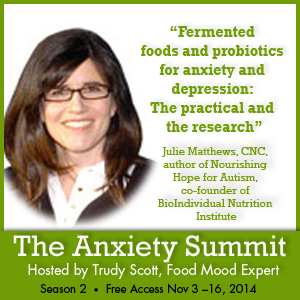
Julie Matthews, Certified Nutrition Consultant, author of Nourishing Hope for Autism was interviewed by host of the Anxiety Summit, Trudy Scott, Food Mood Expert and Nutritionist, author of The Antianxiety Food Solution. 

“Fermented foods and probiotics for anxiety and depression: The practical and the research”

Here is an outline of our interview:

  • Types of fermentations
  • Health benefits of probiotics and fermentations
  • Research on probiotics and anxiety/depression/brain health/autism
  • Probiotic supplements
  • Prebiotics and why some people can’t use them
  • Who might have trouble with fermented foods and why
  • Steps and tips on making fermented foods and beverages

Here is the first 2014 study I mentioned –The impact of microbiota on brain and behavior: mechanisms & therapeutic potential.

There is increasing evidence that host-microbe interactions play a key role in maintaining homeostasis. Alterations in gut microbial composition is associated with marked changes in behaviors relevant to mood, pain and cognition, establishing the critical importance of the bi-directional pathway of communication between the microbiota and the brain in health and disease. Dysfunction of the microbiome-brain-gut axis has been implicated in stress-related disorders such as depression, anxiety and irritable bowel syndrome and neurodevelopmental disorders such as autism.

And here are 3 snippets from our interview:

There was a study that looked at human subjects under academic stress and the effects of fermented yogurt particularly Lactobacillus casei (European Journal of Nutrition in 2004 by a researcher named Marcos and their team). They found that the fermented yogurt was able to modulate the immune effects in the subjects that were under stress.

There was a study done by a researcher named Tillisch and published in 2013 in Gastroenterology. We know a lot about how the brain sends signals to the gut, but she explained that in the study they learned that the gut also sends signals to the brain. The researchers found that with yogurt, they found positive effects on the brain, including sensory processing and those areas associated with emotion and mood.

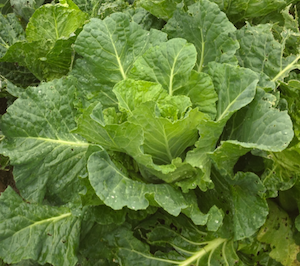
The nice thing about fermented food like sauerkraut is that it’s a form of food that is already partly digested, so it tends to create less gas. It also tends to be better digestible and can be higher in nutrients than the foods themselves that aren’t fermented. They can often help with supporting a good PH balance in the gut. The other nice thing about fermented foods is that you can get a lot of bacteria in a serving. Dr. Joseph Mercola recently tested some of his own homemade sauerkraut and found 10 trillion beneficial bacteria in a four to six ounce serving. So that’s a hundred times the amount of bacteria in a serving than you would find in a bottle of a high potency probiotic.
cabbage

Here are some of the studies we discussed

Gut-brain axis: how the microbiome influences anxiety and depression.

Effects of the probiotic Bifidobacterium infantis in the maternal separation model of depression.

Consumption of fermented milk product with probiotic modulates brain activity.

Gastrointestinal flora and gastrointestinal status in children with autism–comparisons to typical children and correlation with autism severity.

Intake of dairy products and calcium and prevalence of depressive symptoms during pregnancy in Japan: a cross-sectional study.

A randomized, double-blind, placebo-controlled pilot study of a probiotic in emotional symptoms of chronic fatigue syndrome.

We found a significant rise in both Lactobacillus and Bifidobacteria in those taking the LcS, and there was also a significant decrease in anxiety symptoms among those taking the probiotic vs controls

Modulation of intestinal microbiota by the probiotic VSL#3 resets brain gene expression and ameliorates the age-related deficit in LTP.

Probiotic-induced reduction of gastrointestinal oxalate absorption in healthy subjects.

You’ll also learn how to make your own sauerkraut in the video giveaway being offered by Julie – Video: How to make sauerkraut

Practitioner video/gift – “BioIndividual Nutrition: The Importance of Personalizing Diet in your Practice” 

UPDATE: Season 2 of The Anxiety Summit concluded in November 2014. If you’d like to be on the notification list for the next summit just sign up here www.theAnxietySummit.com

Missed this interview and want this and the other great interviews for your learning library? Purchase the MP3s or MP3s + transcripts + interview highlights and listen when it suits you


The above statements have not been evaluated by the Food and Drug Administration. Products listed in this blog post are not intended to diagnose, treat, cure or prevent any disease.

The information provided on this site is for informational and educational purposes only and is not intended as a substitute for advice from your physician or other health care professional. You should consult with a healthcare professional before starting or modifying any diet, exercise, or supplementation program, before taking or stopping any medication, or if you have or suspect you may have a health problem.


The amino acids and pyroluria supplements I use with my clients

Additional Anxiety Resources
Click on each image to learn more

gaba quickstart live gaba quickstart hs

Filed Under: Anxiety and panic, Food and mood, Real whole food, The Anxiety Summit 2 Tagged With: anxiety, anxiety summit, fermented foods, Julie Matthews, nourishing hope, Trudy Scott

About Trudy Scott

Food Mood Expert Trudy Scott is a certified nutritionist on a mission to educate and empower anxious individuals worldwide about natural solutions for anxiety, stress and emotional eating.

Trudy is the author of The Antianxiety Food Solution: How the Foods You Eat Can Help You Calm Your Anxious Mind, Improve Your Mood and End Cravings and host of The Anxiety Summit now in its 6th season and called a “bouquet of hope.”

Trudy is passionate about sharing the powerful food mood connection because she experienced the results first-hand, finding complete resolution of her anxiety and panic attacks.

Reader Interactions

Comments

  1. joann says

    November 4, 2014 at 10:12 pm

    What is the condition that is caused by STREP that, in turn, causes OCD. I couldn’t catch the condition. Could you please tell me what Julie called it? tks

    Reply
    • everywomanover29 says

      November 5, 2014 at 8:45 am

      Hi Joann
      PANDAs – Pediatric Autoimmune Neuropsychiatric Disorders Associated with Streptococcal Infections

      During season 1 Dr James Greenblatt talked about it in great detail. You can see all the speakers and topics from season 1 here http://www.theanxietysummit.com/season-1/ If you do decide to purchase season 1 it’s actually on special during this summit
      Trudy

      Reply
  2. bob says

    November 5, 2014 at 3:56 am

    joann: I think it’s called PANDAS.

    Reply
    • everywomanover29 says

      November 5, 2014 at 8:46 am

      thanks Bob!

      Reply
  3. monica says

    November 5, 2014 at 4:52 am

    Hi Trudy from South Africa,
    How can you test if you are sensitive to oxlates – elimination diet or is there a specific test?

    Reply
    • everywomanover29 says

      November 5, 2014 at 11:05 am

      Hi Monica
      Great Plains has an organic acids/OAT test with a number of markers http://www.greatplainslaboratory.com/home/eng/oxalates.asp

      You can also remove oxalates and see how you do. The recommendation is to start slowly, removing high oxalate foods first to avoid an oxalate dump. Julie went into this in a lot more detail during our interview during season 1 (http://www.theanxietysummit.com/season-1/)
      Trudy

      Reply
  4. Rachel says

    November 5, 2014 at 11:16 am

    hi and thank you for this wonderful summit. I wish to ask Julie about finding the right Probiotics and Prebiotics for you. is it only a trial and error? I tried many brand names and didn’t find yet something that made a difference. Are there any tests that can help? thanks : )

    Reply
    • everywomanover29 says

      November 5, 2014 at 5:03 pm

      Hi Rachel
      I’ll comment and will have Julie pop on and comment too. Professional grade probiotics, refridgerated and I prefer those without prebiotics added if you have bloating and suspect SIBO/small intestinal bacterial overgrowth. You can do a stool test from a functional lab and organic acids testing can be very helpful too.
      Trudy

      Reply
    • Julie Matthews says

      January 5, 2015 at 2:07 pm

      HI Rachel, either option is possible. Some people prefer to try certain ones and see which seem to work best based on experience, while other people have their doctor do some testing to determine the strains that may be lacking. Stool tests can determine both the beneficial and pathogenic strains present. And there are other tests like OAT tests that can specifically look for markers of pathogens. If someone is looking for specific strains or functions, they might choose single strain or specific probiotic formulas. Other people might prefer more of a “broad spectrum” of probiotics in a supplement.

      Reply
  5. Rebekah B says

    November 6, 2014 at 4:56 am

    What brands of probiotics are recommended?

    Reply
  6. Rebekah B says

    November 6, 2014 at 5:16 am

    I see so many other supplements out there with prebiotics. And soil based organisms, with conflicting reviews. Why might these be bad? It’s so confusing.

    Reply
    • Julie Matthews says

      January 5, 2015 at 2:09 pm

      Rebekah, it’s easier to comment, when I have specifics. Each brand is so different.

      Reply
  7. Mel says

    November 6, 2014 at 10:00 am

    I was just wondering if you had a few over the counter probiotics brands that you recommend for anxiety?
    Thanks

    Reply
    • Trudy Scott says

      January 5, 2015 at 6:24 pm

      Mel
      I prefer recommending professional grade supplements – that way I have vetted them. For OTC probiotics I’d look for something that is refrigerated and doesn’t contain any wheat, soy, colors, additives etc
      Trudy

      Reply
  8. Esther Bardack says

    November 8, 2014 at 3:59 pm

    Does a large bowel movement indicate a GI issue? My daughter has epilepsy,anxiety,social skills are poor, poor executive functioning skills,and other learning difficulties. Could the large bowels be related?

    Reply
    • Trudy Scott says

      January 5, 2015 at 6:22 pm

      Esther
      It’s hard to say but it’s generally considered that having a nice large BM is a good thing, provided it’s at least happening every day
      Trudy

      Reply
  9. Silvija says

    November 14, 2014 at 2:28 pm

    Julie, I am always listening to your very passionate lectures and every time learning a lot. I started to work with autistic children in Latvia recently using GAPS and Homeopathy, and CEASE therapy, and supplements. Glad to report some first good improvements what gives me even more passion to learn. I have your books, and the plan is to study them in detail. From todays lecture the big news for me was that even Probiotics, or sauerkraut or kefir might not be good for everyone. I know, individualisation is one of your strong points.
    The question after todays talk is – how would you suggest taking Probiotic supplements – with meals, before meals, after or in between. The question is how much of good bacterias would survive stomach acid? Thanks, I am very inspired by your work.

    Reply
    • Julie Matthews says

      January 5, 2015 at 2:15 pm

      Hi Silvija,

      Thanks for the kind words. I will often suggest probiotic timing based on the particular company’s recommendations, as each have different coatings and other things that may determine the best timing. Personally, I most often take probiotics with meals, as they would normally come in food naturally. I’m not necessarily concerned with “surviving stomach acid” – common sense tells me that if we normally “eat” probiotics with food (i.e. sauerkraut, yogurt, etc) if they were killed by stomach acid, how would we ever colonize bacteria? So my feeling is that that concept may not be of concern. I tend to go with either what the company suggests, or whatever is easier for the individual.

      Reply
      • Silvija says

        February 18, 2015 at 4:15 am

        Thanks, Julie. It all makes sense, really.

  10. Julie Matthews says

    January 5, 2015 at 1:57 pm

    Thanks for sharing this information Trudy. It’s an exciting time in nutrition science – there are more studies coming out all the time. This subject of our microbiome and mental health is so important.

    Reply
    • Trudy Scott says

      January 5, 2015 at 2:12 pm

      Thank you for the very valuable work you’re doing in the area – and you’re so right, it is an exciting time in nutrition science. Thanks again for being one of our amazing summit speakers – it’s always a pleasure interviewing you!

      Reply
  11. Katherine C. H. E. says

    January 6, 2015 at 7:02 pm

    Fascinating topics!!! Thanks for spotlighting them! XO, Katherine.

    Reply
  12. Tandy Elisala says

    January 7, 2015 at 5:29 pm

    I always enjoy your deeply informational articles, Trudy. There are SO many things to consider with mental health. I also enjoy your responses to questions to articles! What brand of professional probiotics do you recommend?

    Reply
    • Trudy Scott says

      January 9, 2015 at 7:29 pm

      Tandy
      Glad you enjoyed it! One product that I like is Designs for Health Probiotic Synergy

      Reply
  13. Mary Ellen Miller says

    January 7, 2015 at 6:31 pm

    Thank you Julie and Trudy for this good information, particularly about sauerkraut. I know first hand the value of a good probiotic and read this post with great interest.

    Reply
  14. Tiffany deSilva says

    January 8, 2015 at 11:54 am

    Great article ladies! I am pretty much obsessed with learning about the human microbiome and its role in autoimmune disorders, food allergies, and mental health. I love fermented foods–especially my homemade sauerkraut.

    Reply
    • Trudy Scott says

      January 9, 2015 at 7:28 pm

      Agreed Tiffany, the human microbiome and what we are learning on a daily basis is quite fascinating!

      Reply
  15. Jessica says

    January 10, 2015 at 2:12 pm

    I was under the impression that their are different probiotics for different body needs, is that accurate? And if so, how would one know which to get unless they are working with a nutritionist who can guide them.

    ps I love sauerkraut and yogurt… I sure hope Greek Yogurt counts!

    Reply
    • Trudy Scott says

      January 10, 2015 at 5:32 pm

      Jessica
      Doing a stool test is a good way to see where you may be low – this would need to be a test done by a functional lab such as Genova.

      And yes Greek yogurt does count! enjoy!
      Trudy

      Reply
  16. Mitch Tublin says

    January 11, 2015 at 2:58 pm

    Trudy,
    Excellent information! One area I personally
    have not explored. Now I must after reading
    what you have presented here.

    Reply
  17. Mira Dessy, NE, The Ingredient Guru and author The Pantry Principle says

    January 11, 2015 at 9:06 pm

    This was a great interview. Gut health is so important to overall health. Helping people understand the connection between our intestinal ecosystem and our health is key to supporting their needs. Thanks for all of your work on this issue.

    Reply
    • Trudy Scott says

      January 13, 2015 at 10:02 am

      Thanks Mira – I always enjoy my interviews with Julie!

      Reply
  18. John says

    June 8, 2015 at 11:24 am

    Thanks for this excellent information. I have recently been experimenting with prebiotics (Bimuno) and it made my brain and nerves considerably worse. In some ways this is encouraging, as it confirms for me the link between my gut and the way I’ve been feeling all this time, but I would also like to know how to proceed. Have you heard of people becoming worse with prebiotics before? What might the solution be? Thanks.

    Reply
    • Trudy Scott says

      June 9, 2015 at 10:09 am

      John
      When prebiotics make things worse I start looking at SIBO. Here is a great interview I recently did on the Anxiety Summit https://www.everywomanover29.com/blog/anxiety-summit-intestinal-bacterial-overgrowth-anxiety/

      The SIBO Symposium was last weekend but is available as an online purchase https://www.everywomanover29.com/blog/sibo-symposium-2015/

      Reply

Leave a Reply Cancel reply

Your email address will not be published. Required fields are marked *

Primary Sidebar

NEW! GABA QuickStart Homestudy (with special intro pricing)

gaba quickstart homestudy

Free Report

9 Great Questions Women Ask about Food, Mood and their Health

You'll also receive a complimentary subscription to my ezine "Food, Mood and Gal Stuff"


Connect with me

Popular Posts

  • Amino Acids Mood Questionnaire from The Antianxiety Food Solution
  • The Antianxiety Food Solution Amino Acid and Pyroluria Supplements
  • Pyroluria Questionnaire from The Antianxiety Food Solution
  • Collagen and gelatin lower serotonin: does this increase your anxiety and depression?
  • Tryptophan for the worry-in-your-head and ruminating type of anxiety
  • GABA for the physical-tension and stiff-and-tense-muscles type of anxiety
  • The Antianxiety Food Solution by Trudy Scott
  • Seriphos Original Formula is back: the best product for anxiety and insomnia caused by high cortisol
  • Am I an anxious introvert because of low zinc and vitamin B6? My response to Huffington Post blog
  • Vagus nerve rehab with GABA, breathing, humming, gargling and key nutrients

Recent Posts

  • What do I use instead of Seriphos to help lower high cortisol that is affecting my sleep and making me anxious at night?
  • BeSerene™ GABA/theanine cream eases severe muscle tension in her neck/shoulders, prevents her bad headaches and quells her anxiety
  • How the correct approach, dose and sublingual use of GABA can be calming and not cause a flushed and itchy face and neck
  • The amino acid glutamine improves low mood by addressing gut health, and it has calming effects too
  • Flight anxiety with heightened breath, physical tension and also fearing the worst (the role of low GABA and low serotonin)

Categories

  • 5-HTP
  • AB575
  • Addiction
  • ADHD
  • Adrenals
  • Alcohol
  • Allergies
  • Alzheimer's disease
  • Amino Acids
  • Anger
  • Antianxiety
  • Antianxiety Food Solution
  • Antidepressants
  • Anxiety
  • Anxiety and panic
  • Autism
  • Autoimmunity
  • benzodiazapines
  • Bipolar disorder
  • Books
  • Caffeine
  • Cancer
  • Candida
  • Children/Teens
  • Collagen
  • Cooking equipment
  • Coronavirus/COVID-19
  • Cravings
  • Depression
  • Detoxification
  • Diabetes
  • Diet
  • DPA/DLPA
  • Drugs
  • EFT/Tapping
  • EMF
  • EMFs
  • Emotional Eating
  • Endorphins
  • Environment
  • Essential oils
  • Events
  • Exercise
  • Fear
  • Fear of public speaking
  • Fertility and Pregnancy
  • Fish
  • Food
  • Food and mood
  • Functional neurology
  • GABA
  • Gene polymorphisms
  • General Health
  • Giving
  • Giving back
  • Glutamine
  • Gluten
  • GMOs
  • Gratitude
  • Gut health
  • Heart health/hypertension
  • Histamine
  • Hormone
  • Hyperparathyroidism
  • Hypoglycemia
  • Immune system
  • Inflammation
  • Insomnia
  • Inspiration
  • Introversion
  • Joy and happiness
  • Ketogenic diet
  • Lithium orotate
  • Looking awesome
  • Lyme disease and co-infections
  • MCAS/histamine
  • Medication
  • Men's health
  • Mental health
  • Mercury
  • Migraine
  • Mold
  • Movie
  • MTHFR
  • Multiple sclerosis
  • Music
  • NANP
  • Nature
  • Nutritional Psychiatry
  • OCD
  • Osteoporosis
  • Oxalates
  • Oxytocin
  • Pain
  • Paleo
  • Parasites
  • Parkinson’s disease
  • PCOS
  • People
  • PMS
  • Postpartum
  • PTSD/Trauma
  • Pyroluria
  • Questionnaires
  • Real whole food
  • Recipes
  • Research
  • Schizophrenia
  • serotonin
  • SIBO
  • Sleep
  • Special diets
  • Sports nutrition
  • Stress
  • Sugar addiction
  • Sugar and mood
  • Supplements
  • Teens
  • Testimonials
  • Testing
  • The Anxiety Summit
  • The Anxiety Summit 2
  • The Anxiety Summit 3
  • The Anxiety Summit 4
  • The Anxiety Summit 5
  • The Anxiety Summit 6
  • Thyroid
  • Thyroid health
  • Toxins
  • Tryptophan
  • Tyrosine
  • Uncategorized
  • Vegan/vegetarian
  • Women's health
  • Yoga

Archives

  • October 2025
  • September 2025
  • August 2025
  • July 2025
  • June 2025
  • May 2025
  • April 2025
  • March 2025
  • February 2025
  • January 2025
  • November 2024
  • October 2024
  • September 2024
  • August 2024
  • July 2024
  • June 2024
  • May 2024
  • April 2024
  • March 2024
  • February 2024
  • January 2024
  • December 2023
  • November 2023
  • October 2023
  • September 2023
  • August 2023
  • July 2023
  • June 2023
  • May 2023
  • April 2023
  • March 2023
  • February 2023
  • January 2023
  • December 2022
  • November 2022
  • October 2022
  • September 2022
  • August 2022
  • July 2022
  • June 2022
  • May 2022
  • April 2022
  • March 2022
  • February 2022
  • January 2022
  • December 2021
  • November 2021
  • October 2021
  • September 2021
  • August 2021
  • July 2021
  • June 2021
  • May 2021
  • April 2021
  • March 2021
  • February 2021
  • January 2021
  • December 2020
  • November 2020
  • October 2020
  • September 2020
  • August 2020
  • July 2020
  • June 2020
  • May 2020
  • April 2020
  • March 2020
  • February 2020
  • January 2020
  • December 2019
  • November 2019
  • October 2019
  • September 2019
  • August 2019
  • July 2019
  • June 2019
  • May 2019
  • April 2019
  • March 2019
  • February 2019
  • January 2019
  • December 2018
  • November 2018
  • October 2018
  • September 2018
  • August 2018
  • July 2018
  • June 2018
  • May 2018
  • April 2018
  • March 2018
  • February 2018
  • January 2018
  • December 2017
  • November 2017
  • October 2017
  • September 2017
  • August 2017
  • July 2017
  • June 2017
  • May 2017
  • April 2017
  • March 2017
  • February 2017
  • January 2017
  • December 2016
  • November 2016
  • October 2016
  • September 2016
  • August 2016
  • July 2016
  • June 2016
  • May 2016
  • April 2016
  • March 2016
  • February 2016
  • January 2016
  • December 2015
  • November 2015
  • October 2015
  • September 2015
  • August 2015
  • July 2015
  • June 2015
  • May 2015
  • April 2015
  • March 2015
  • February 2015
  • January 2015
  • December 2014
  • November 2014
  • October 2014
  • September 2014
  • August 2014
  • July 2014
  • June 2014
  • May 2014
  • April 2014
  • March 2014
  • February 2014
  • January 2014
  • December 2013
  • November 2013
  • October 2013
  • September 2013
  • August 2013
  • July 2013
  • June 2013
  • May 2013
  • April 2013
  • March 2013
  • February 2013
  • January 2013
  • December 2012
  • November 2012
  • October 2012
  • August 2012
  • July 2012
  • June 2012
  • May 2012
  • April 2012
  • March 2012
  • February 2012
  • January 2012
  • December 2011
  • November 2011
  • October 2011
  • September 2011
  • August 2011
  • July 2011
  • June 2011
  • May 2011
  • April 2011
  • March 2011
  • February 2011
  • January 2011
  • December 2010
  • October 2010
  • September 2010
  • July 2010
  • May 2010
  • April 2010
  • March 2010
  • February 2010
  • January 2010
  • November 2009

Share the knowledge!

The above statements have not been evaluated by the Food and Drug Administration. Products listed in this website are not intended to diagnose, treat, cure or prevent any disease.

The information provided on this site is for informational and educational purposes only and is not intended as a substitute for advice from your physician or other health care professional. You should consult with a healthcare professional before starting or modifying any diet, exercise, or supplementation program, before taking or stopping any medication, or if you have or suspect you may have a health problem.


Copyright © 2026 Trudy Scott. All Rights Reserved. | Privacy | Terms and Conditions | Refund Policy | Medical Disclaimer

Free Report

9 Great Questions Women Ask about Food, Mood and their Health

You’ll also receive a complimentary subscription to my ezine “Food, Mood and Gal Stuff”