• Skip to primary navigation
  • Skip to main content
  • Skip to primary sidebar

everywomanover29 blog

Food, Mood and Women's Health – Be your healthiest, look and feel great!

  • Blog
  • About
  • Services
  • Store
  • Resources
  • Testimonials
  • The Book
  • Newsletter
  • Contact
  • Search this site

Sleep

Tryptophan for anxiety, sleep and mood: in Put Anxiety Behind You

May 6, 2016 By Trudy Scott 98 Comments

put-anxiety-behind-you

Tryptophan is an amino acid I use with clients all the time. If you have the low serotonin symptoms of anxiety, worry, depression, insomnia, PMS, TMJ, anger issues, winter blues and afternoon/evening cravings, tryptophan can provide relief very quickly, provided you use a quality tryptophan product and find the right amount for your unique needs. I do a trial of each amino acid with my clients.

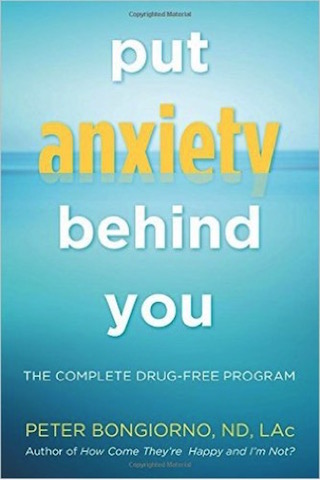
Dr. Peter Bongiorno, ND, a doctor of naturopathic medicine, also uses tryptophan with his patients. Here is an excerpt on tryptophan from his newest book Put Anxiety Behind You: The Complete Drug-Free Program:

Tryptophan (sometimes referred to as L-tryptophan) is a naturally derived amino acid that serves as a precursor to the neurotransmitter serotonin, which is needed to help you stay asleep. Low levels of tryptophan contribute to generalized anxiety and panic attacks. Back in the early 1990s, a laboratory I was associated with at Yale University performed “tryptophan depletion studies” and which volunteers who were already prone to anxiety were put on a tryptophan-free diet. Within days, these people were extremely anxious, panicky and unstable – and they had lots of trouble staying asleep.

I usually give people 500 – 1,000 mg of tryptophan at bedtime, but I may dose up to 2,500 mg. Take tryptophan at bedtime with a slice of simple carbohydrate (like an apple slice) – the carbohydrate will increase insulin levels and insulin will promote tryptophan absorption in the brain. In my clinic I use a supplement called Tryptophan Calmplete, which includes B vitamins.

Although most conventional psychiatrists are afraid to mix natural medicines like tryptophan with conventional medications studies suggest that they can be safely combined. One eight-week randomized controlled trial of thirty patients with major depression combined 20 mg of Prozac (an SSRI medication) with 2,000 mg of tryptophan as daily treatment for major depressive disorder. This study demonstrated that combining tryptophan and an SSRI improved mood and helped patients stay asleep.

If you look up tryptophan on websites like WebMD, they are going to tell you that tryptophan is unsafe. The reason for this is because in the early 1990s there was an incident of Eosinophilia Myalgia Syndrome, a condition contracted by thirty people who most unfortunately got sick (and some died) after ingesting tryptophan supplements. This tragic event occurred because the company making the supplement had no quality controls, and allowed the introduction of bacteria. These deaths had nothing to do with tryptophan itself. My sense is that the folks behind conventional websites WebMD, who should be doing their homework, let these ideas persist on purpose. The drug companies who advertise with these websites then benefit from continuing the misinformation. I have taken tryptophan myself, have used it with family members and countless patients with absolutely no problem save for the side benefit of better sleep and mood.

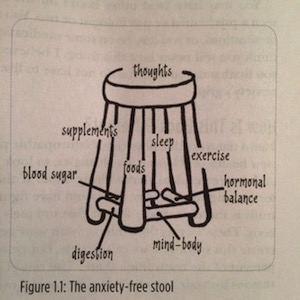
This book is an excellent resource for anxiety, where addressing nutritional imbalances with a supplement such as tryptophan is part of the bigger picture of addressing sleep, doing thought work and mind-body work, balancing hormones and blood sugar, exercising, adopting a healthy real foods diet, and making sure you have a healthy digestive system.

He uses the analogy of a stool – when one of the legs or supports is weak, your health suffers.
put-anxiety-behind-you-fig1

I’m a research-geek and love to be able to look at the studies so my only negative comment about the book is that all the studies mentioned in the text are not listed in the references and studies that are listed in the references are not numbered so they can be easily found in the text.

His other book Holistic Solutions for Anxiety and Depression: Combining Natural Remedies with Conventional Care is also excellent and is geared to therapists and other practitioners. You can read my review of that book here.

I had the pleasure of interviewing Dr. Bongiorno on The Anxiety Summit (season 3) – our topic: Serotonin and Anxiety, Happiness, Digestion and our Hormones. And I’m excited to share that he’ll be speaking on Season 4 of the Anxiety Summit. We’ll be taking a deeper dive into serotonin and tryptophan.

I also had the pleasure of meeting Dr. Bongiorno in person and hearing him present at the New York City Integrative Healthcare Symposium earlier this year.  

peter-trudy

Dr. Bongiorno is co-director of Inner Source Natural Health and Acupuncture in New York City. President of the New York Association of Naturopathic Physicians, he is a contributor to numerous blogs and online magazines, including DrOz.com and Sharecare.com, and is regularly interviewed as a natural medicine expert on national television and radio.

Dr. Bongiorno has been kind enough to offer a copy of Put Anxiety Behind You: The Complete Drug-Free Program as a giveaway. We’ll do a drawing and select one lucky reader and announce the winner next Friday. If you’d like to be entered in to the drawing simply comment below and share:

  • why you’d like to win the book
  • if you’ve used tryptophan and what results you saw/see
  • which section you’re most excited about reading and why (just go to the Amazon preview via this link and check out the table of contents and sections of the book)
  • which holistic approaches you already use personally or if you’re a practitioner, what you have used with your anxious patients/clients

5/12/16 UPDATE: Thanks for participating and commenting – the winner is Liz. We’ll contact you to get a mailing address and get a copy of the book to you! Enjoy it! 

If you missed out I encourage you to still check out the table of contents (with the look inside Amazon feature) and get the book if it feels like a fit for you. Check out the comments below to be inspired further.

Please share your feedback (and questions you may have) in the comments section below.

 

Filed Under: Anxiety and panic, Books, Sleep, Tryptophan Tagged With: amino acid, anxiety, panic, Peter Bongiorno, Put Anxiety Behind You, serotonin, sleep, tryptophan

Anxiety, ADHD, autism and insomnia: how a weighted blanket helps

April 22, 2016 By Trudy Scott 20 Comments

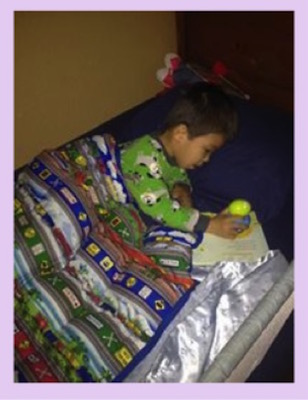
anxiety-weighted-blanket

I shared this article on facebook recently: Sleeping With Weighted Blankets Helps Insomnia And Anxiety

Traditionally, weighted blankets are used as part of occupational therapy for children experiencing sensory disorders, anxiety, stress or issues related to autism. ‘In psychiatric care, weighted blankets are one of our most powerful tools for helping people who are anxious, upset, and possibly on the verge of losing control,’ says Karen Moore, OTR/L, an occupational therapist in Franconia, N.H.

The response was so positive I promised I would share some blog posts with more information, so here we are. The first is to share some additional information and stories from people who have seen results or heard positive things about their use.

A 2008 study published in Occupational Therapy in Mental Health, observed the effects of a 30lb weighted blanket in a sample of 32 adults: Exploring the Safety and Therapeutic Effects of Deep Pressure Stimulation Using a Weighted Blanket. These results were observed

  • 63% reported lower anxiety after use
  • 78% preferred the weighted blanket as a calming modality

When I shared the article I asked a few questions. The first one: Have you used weighted blankets personally, or with children or recommended them to patients/clients?

The feedback I received was amazing! Lynn shared this magic blanket comment for ADHD and anxiety:

Someone close to me got one for her foster child, who suffers from emotional dysregulation, ADHD, and anxiety. It works like magic– in fact the child calls it his “magic blanket.”

She also shared this about her younger brother who is autistic and mute:

When we were young children, he would suffer terrible insomnia and agitation whenever there was a full moon. My older brother and I would take turns sleeping with him on full moon nights because that comforted him somewhat. We figured out as small children that we could get him to calm down and go to sleep by draping one leg and one arm across him. I think it was the heaviness and pressure of our limbs that settled his anxiety. Our parents could not do it, I suppose because their limbs were too large. So when I learned about Temple Grandin’s solution [more on that below], it made sense to me. Interesting, hmm

Phaedra commented saying some of us like to sleep with heavy blankets even in the summer and said this:

Deep pressure is calming and nurturing. Helps us get into our bodies and stimulates our proprioception (awareness of our body in space). I use weighted yoga bags filled with sand. Simply placing one across the chest or anywhere else on the body can be calming.

Diane shared that she used to write for a company called Mosaic Weighted Blankets and one of her jobs was to interview customers as testimonials:

I can’t tell you how blown away I was with my first few interviews. Parents of kids having autism, Asperger’s, special needs kids, kids having night terrors…it truly brought them (kids and the entire family) great peace and an ability to sleep through the night, almost immediately in many cases.

Adults also gained benefits, especially relating to issues with PTSD and restless legs syndrome.

The weight is part of the reason it provides calming…the pellets also provided something for the kids to touch/manipulate while they were trying to go to sleep. Mosaic’s blog should still have a lot of good articles on the benefits and how it is also used by occupational therapists. They can be on the expensive side if you compare it to a blanket, but if you compare it to the need for less medications and such it could be a very viable option.

There are many companies as well as sites showing how to make them yourself, just be sure you are focusing on the “pressure” effect and not the “heavy”…these blankets are not the same as just throwing 6 thick blankets on someone.

She also shared this article she wrote: Sensory Processing Disorder Treatment, Mosaic Weighted Blankets

Mosaic-Weighted-Blankets
Source: Mosaic Weighted Blankets

Tara lives in the UK and uses a medium weight duvet/comforter and has two very useful tricks/tips to hopefully get similar benefits if you don’t have access to a weighted blanket:

GREAT thread, everyone! Thanks so much! I find deep pressure *very* soothing. I don’t have a weighted blanket, but we do sleep with a 10.5 tog duvet [spring/autumn weight comforter – tog is a British measure of warmth pretty much year-round. (Ah, the “joy” of living in the UK. Not!)

good-sleep

That said, here are two other tricks: 1) if your climate allows (i.e. it’s not too hot), make yourself a *full* hot water bottle and tuck your feet *under* it. This will put some weight/pressure on your body and will feel comforting. (I’m thinking this could even be done with cold water if it’s too hot where you live.)

And 2) if you don’t have a weighted blanket, but find yourself struggling with insomnia, lie on your side and tuck your arms between your legs (so that your arms are “sandwiched” between your legs and the gravity of the leg on top presses onto your arms). It’s not the same as having the full weight of something on you, but you will be creating a bit of deep pressure all the same. I’m not an OT (I wish I were!) but if you think about what the best thing to do with a small baby is – swaddle it!!! A weighted blanket makes total sense! It’s calming to our nervous system because it “contains” us (but not in an oppressive, limiting way).

I have not verified if these two trick/tips do in fact work the same way but it makes sense that they would so feel free to share if you’ve found they work for you. I personally love the hot water bottle feeling and have always done this for as long as I can remember. I will also often start off sleeping in the arms-sandwiched position and then end up in arms folded position, sort of hugging myself. I had no idea why except that it just feels good.  

Tara mentioned also Temple Grandin’s deep pressure squeeze machine.

Temple Grandin (one of my heroes!) actually made her own deep pressure “machine” when she was little – she intuitively knew that it would help and soothe her. I’m not saying that anyone here is on the spectrum, but I have a hunch – tell me where I’m wrong – that a whole bunch of us have super “highly tuned” nervous systems! Thanks so much for all you do, Trudy and thanks to everyone in this group/community/village!

Based on the response this facebook post generated many of us have super “highly tuned” nervous systems, myself included!

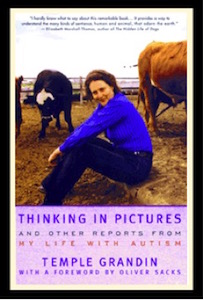
Many years ago I had read about device in her book: Thinking in Pictures, My Life with Autism many years ago. She is a fascinating woman and it’s a great read!  I see there is now an updated version.

thinking-in-pictures

Here is a little more about her: Temple Grandin PhD is an American professor of animal science at Colorado State University, world-renowned autism spokesperson and consultant to the livestock industry on animal behavior. On her website it states that she is now the most accomplished and well-known adult with autism in the world.

She writes about her squeeze machine and how it helped her anxiety and oversensitivity to touch here: Calming Effects of Deep Touch Pressure in Patients with Autistic Disorder, College Students, and Animals

I will describe here a deep touch pressure device (“squeeze machine”) that I developed to help me overcome problems of oversensitivity to touch, and that allays my nervousness. Reactions of other people to the squeeze machine, including children with autistic disorder and attention-deficit hyperactivity disorder (ADHD) are also reported.

When I posted this on facebook I also asked: “Do you have a source you can recommend -organic cotton cloth, non-plastic beads?”

I received some great resources but none that use organic cotton cloth and non-plastic beads. Some companies use stones and/or glass beads and one company has the option to send in your own fabric so you could buy your own organic cotton.  

I just feel that with sensitive individuals, having organic cotton and beads that are not plastic is the best option, especially since many of you will spend quite a bit of time under these blankets or wrapped in them.

I appreciate having the opportunity to share all the great facebook comments here. Thanks if you contributed to the discussion!. If you’d like to see all the responses here is link to the facebook post. Join us on facebook and be part of future discussions. We have a lot of fun and some healthy and sometimes heated debates too!

Stay tuned for part 2 where I will share resources for buying a weighted blanket. I’ll also share more of the research on how these weighted blankets work, resources for making one plus how to know what weight is best for you.

If you’ve used a weighted blanket for anxiety, stress reduction, ADHD or insomnia please do share how you liked it and how it helped you. Have you used one personally, or with children or recommended them to patients/clients?

If you have a resource that offers organic cotton cloth with non-plastic beads please do share it.

Filed Under: Antianxiety, Autism, Sleep Tagged With: insomnia, weighted blancket

Sleep promoting effects of combined GABA and 5-HTP: new research

March 11, 2016 By Trudy Scott 173 Comments

gaba 5-htp and sleep

A new paper published in Life Sciences reports that a combination of GABA (γ-aminobutyric acid) and 5-HTP (5-hydroxytryptophan) improved sleep and sleep duration more than the use of either of the two amino acids alone.

Insomnia is a common symptom of both low GABA and low serotonin. The amino acid GABA raises levels of GABA, our calming brain chemical/neurotransmitter. 5-HTP is one of the amino acids that raises serotonin, your happy brain chemical/neurotransmitter (which is also happens to be calming) and in turn converts to melatonin to help you sleep. Tryptophan is the other amino acid that raises serotonin.

Low levels of both brain chemicals can also make you anxious, worried and overwhelmed. With low GABA levels you’ll have physical anxiety and may lie awake in bed feeling tension in your body. With low serotonin you’ll have the busy-mind type of anxiety, often lying in bed not able to switch off the ruminating thoughts or monkey-mind. (You can find the complete amino acid questionnaire here.)

The study, Sleep-promoting effects of a GABA/5-HTP mixture: Behavioral changes and neuromodulation in an invertebrate model, used caffeine treated fruit flies and:

Behavioral assays were applied to investigate subjective nighttime activity, sleep episodes, and total duration of subjective nighttime sleep of two amino acids and GABA/5-HTP mixture

In case you’re wondering, fruit flies are often used in research. This paper shares that the “Homeostatic and circadian regulation in Drosophila are comparable to findings from mammalian sleep research.” I can’t help chuckling when I imagine these little fruit flies lying in a tiny bed, ramped up on caffeine and with busy little minds!

fruit-fly

After my attempt at some humor (laughter is good for us too!), let’s get on to the serious stuff.

The study concludes that:

using a GABA/5-HTP mixture modulates subjective nighttime activity, sleep episodes, and total duration of subjective nighttime sleep to a greater extent than single administration of each amino acid, and that this modulation occurs via GABAergic and serotonergic signaling.

How this might equate to human dosing and other possible combinations

You may be wondering how this might equate to human dosing of these amino acids. Since it was the combined use of 1% GABA and 0.1% 5-HTP that had the most impact, this could equate to:

  • 250mg GABA and 25mg 5-HTP or
  • 500mg GABA and 50mg 5-HTP or
  • 1000mg GABA and 100mg 5-HTP

Do keep in mind that we are all unique and there is no one size fits all so it’s important to do a trial to see how much of each may work for you. This means starting low and increasing until you don’t get added benefits or until you get an adverse effect.

You may do better with a combination of GABA and 5-HTP or you may even find that you do well with one or the other. And you may also find tryptophan works better for you than 5-HTP. We know that 5-HTP can raise cortisol so keep that in mind if you know you have high night-time cortisol. And for many of my clients 250mg to 500mg GABA is too much, although you may be able to get away with more at night than during the day. And different GABA products work well for different people. But again, it’s important to figure out what works for you.

Here are some possible combinations that could help you with the restless nights and anxiety:

  • GABA and 5-HTP
  • GABA alone
  • 5-HTP alone
  • Tryptophan alone
  • GABA and tryptophan (this is what recommend most of the time)

I recently blogged about the differences between Tryptophan 500mg and Tryptophan Complete (by Lidtke) so the Complete product may well be part of the equation too.

Additional resources when you are new to using tryptophan, 5-HTP, GABA and other amino acids as supplements

As always, I use the symptoms questionnaire to figure out if low serotonin or low GABA or other neurotransmitter imbalances may be an issue.

If you suspect low levels of any of the neurotransmitters and do not yet have my book, The Antianxiety Food Solution – How the Foods You Eat Can Help You Calm Your Anxious Mind, Improve Your Mood, and End Cravings, I highly recommend getting it and reading it before jumping in and using amino acids on your own so you are knowledgeable. And be sure to share it with the practitioner/health team you or your loved one is working with.

There is an entire chapter on the amino acids and they are discussed throughout the book in the sections on gut health, gluten, blood sugar control (this is covered in an entire chapter too), sugar cravings, anxiety and mood issues.

The book doesn’t include product names (per the publisher’s request) so this blog, The Antianxiety Food Solution Amino Acid and Pyroluria Supplements, lists the amino acids that I use with my individual clients and those in my group programs.

If, after reading this blog and my book, you don’t feel comfortable figuring things out on your own (i.e. doing the symptoms questionnaire and respective amino acids trials), a good place to get help is the GABA QuickStart Program (if you have low GABA symptoms). This is a paid online/virtual group program where you get my guidance and community support, and is where this question was asked of me during one of the live Q&A calls.

If you are a practitioner, join us in The Balancing Neurotransmitters: the Fundamentals program. This is also a paid online/virtual program with an opportunity to interact with me and other practitioners who are also using the amino acids.

Wrapping up and your feedback

Keep in mind that low GABA and/or low serotonin are just one of many causes of insomnia. If you try to address what appears to be low levels and it doesn’t work then you have to look for other root causes such as: high cortisol, low blood sugar, SIBO, gluten sensitivity, EMF sensitivity, medication side-effects, caffeine and sugar consumption, benzodiazepine tolerance and/or withdrawal, parasites, and too much light too late or not enough light early in the morning.

Have you used any of the above with good results for sleep? I’d love to hear if you do better with the synergistic effects of two amino acids. And how much works for you?

Or do you do better with another combination?

Feel free to share your feedback and ask your questions below in the comments section.

Filed Under: Amino Acids, GABA, Sleep

Essential oils to help alleviate anxiety and improve sleep

January 1, 2016 By Trudy Scott 18 Comments

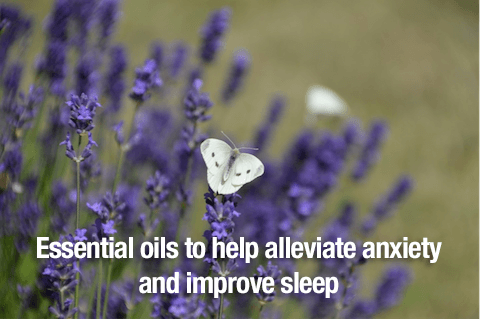
essential oils and anxiety

There are a number of essential oils that are currently in use as aromatherapy agents to relieve anxiety, stress, and depression, and often improve sleep too. Here is some feedback from individuals who use essential oils and share some of their favorites and some ways that they use them.

Tana really likes myrtle and a combination product called Peace and Calming:

My favorite for anxiety is Young Living Myrtle. I originally bought it to use for thyroid support and found it really helped when I felt anxious. Now I wouldn’t be without it. Another favorite of mine is Peace and Calming [which contains tangerine, orange, ylang ylang, patchouli, vetiver, bergamot and some others]

Drew likes to use a blend of oils:

I diffuse a blend of oils including lavender around bed time in my LUMIE Bodyclock Iris 500 which helps create a wonderful calming sleep haven. Low level warm lighting switched on too.

Joy uses her essential oils in candles, incense, or in a homemade spray and shares that she:

loves lavender oil and sandalwood oil for relieving anxiety. I either have them in candles, incense, or in a homemade spray.

Laura has great way of using her essential oils when she is out and about. She shares:

I love lavender, frankincense and geranium (rose geranium when I can find it). I use them in our home and I like to put a couple drops on cotton balls to carry in a sandwich bag. There are times when I like to take them with me.

Evan’s son uses essential oils for anxiety and insomnia:

My son uses Peace & calming with lavender in the diffuser and/or Valor (sometimes vetiver) on his wrists for anxiety and sleepless nights.

There is, of course, research supporting how many of these essential oils help to reduce anxiety. This paper looks at myrtle and the GABA connection: Anxiolytic-like effects and mechanism of (-)-myrtenol and states that:

results suggest that MYR [myrtle] presents anxiolytic-like activity and that effect can be mediated by GABAergic transmission

Here are a few of the many papers supporting aromatherapy for anxiety and stress:

  • Bergamot: Citrus bergamia essential oil: from basic research to clinical application
  • Lavender, ylangylang, and bergamot: The effects of the inhalation method using essential oils on blood pressure and stress responses of clients with essential hypertension
  • Lavender, rose, orange, bergamot, lemon, sandalwood, clary sage, Roman chamomile, and rose-scented geranium: Essential oils and anxiolytic aromatherapy

Here is systematic review published October 2015: A Systematic Review of the Anxiolytic-Like Effects of Essential Oils in Animal Models

The essential oil with the best profile is Lavendula angustifolia, which has already been tested in controlled clinical trials with positive results. Citrus aurantium using different routes of administration also showed significant effects in several animal models, and was corroborated by different research groups. Other promising essential oils are Citrus sinensis and bergamot oil, which showed certain clinical anxiolytic actions; along with Achillea wilhemsii, Alpinia zerumbet, Citrus aurantium, and Spiranthera odoratissima, which, like Lavendula angustifolia, appear to exert anxiolytic-like effects without GABA/benzodiazepine activity, thus differing in their mechanisms of action from the benzodiazepines.

Have you used any essential oils for anxiety? I’d love to hear which are your favorites and how you’ve used them? Do you/did you use only essential oils or other approaches to help your anxiety too? Do you continue to use them? Do you recommend them to clients or patients?

I love lavender (it’s in my facewash) and neroli (I use this as a spray instead of using perfume). I also travel with lavender essential oil in case sleep is an issue in noisy hotels.

Filed Under: Antianxiety, Sleep Tagged With: essential oils

The Anxiety Summit: Sleep Your Way to Better Moods

June 19, 2014 By Trudy Scott 9 Comments

robin nielsen 1 the anxiety summit

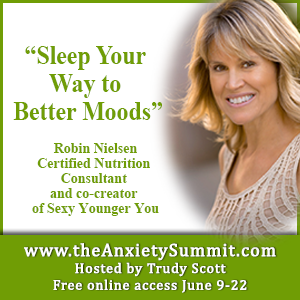
This is day 12 of the Anxiety Summit. Robin Nielsen, Certified Nutrition Consultant and co-creator of Sexy Younger You, is interviewed by host of the Anxiety Summit, Trudy Scott, Food Mood Expert and Nutritionist, author of The Antianxiety Food Solution.

Everyone needs sleep! The CDC /Centers for Disease control says “Insufficient Sleep Is a Public Health Epidemic” According to data from the National Health Interview Survey, nearly 30% of adults reported an average of ?6 hours of sleep and only 31% of high school students reported getting at least 8 hours of sleep on an average school night. How do you feel when you don’t get enough sleep – other than awful…irritable, anxious, depressed and you very likely gravitate to sugar and caffeine to keep you going – which is only going to make things worse!

Research published just last month in the journal Pediatrics suggest that poor sleep in children under age 7 can lead to weight problems later on in life and can also affect their emotional health leading to more anxiety and depression.

Robin shares how you can …

Sleep Your Way to Better Moods

  • Learn why restorative sleep is the key to being happier
  • How anxiety and poor sleep are connected: sugar, blood sugar, caffeine, gluten
  • What sleep has to do with brain chemistry and hormones
  • How you can feel so much better when you get restorative sleep

Here are some great gems from my interview with Robin:

restorative sleep means sleep without medication

sleep helps to keep us beautiful as we age

insomnia can really be caused by just about anything and things that we would never guess

if you have a busy day, you’re going to have a busy night

chronic infections are constant stressor (and can affect your sleep)

hypothyroidism can cause sleep apnea

if you’re exercising improperly it’s going to raise your stress hormones and it’s going to affect your sleep and anxiety

We certainly did cover all the causes of insomnia and there are a lot of them.

Robin also shared that one of her favorite books is Lights Out: Sleep, Sugar, and Survival by T.S. Wiley.

Robin is so funny…she starts out by saying talking about sleep is not sexy and then ends with a sexy bombshell about oxytocin that left me speechless! Be warned!

Get your free gift from Robin Nielsen. She has a great Sleep Quiz, Checklist and Journal for you.

If you are not already registered for the Anxiety Summit you can get live access to the speakers of the day here www.theAnxietySummit.com

UPDATE: the summit concluded on Tues 6/24 – season 2 of The Anxiety Summit will be in November 2014. If you’d like to be on the notification list just sign up here www.theAnxietySummit.com

Missed this interview or can’t listen live? Or want this and the other great interviews for your learning library? Purchase the MP3s or MP3s + transcripts + interview highlights and listen when it suits you

Filed Under: Antianxiety, Anxiety and panic, Sleep, The Anxiety Summit Tagged With: Antianxiety Food Solution, anxiety, GABA, insomnia, mood, Robin Nielsen, sleep, the anxiety summit, Trudy Scott

Zinc deficiency is common: using liquid zinc status test as an assessment tool

December 21, 2012 By Trudy Scott 156 Comments

zinctest

“Zinc deficiency is quite common in the developing world. Even in the United States, about 12 percent of the population is probably at risk for zinc deficiency, and perhaps as many as 40 percent of the elderly” Science Daily, Sept 17, 2009

I, however, find that the majority of my clients with anxiety, pyroluria, depression and/or sugar and carb cravings are low in zinc. I have all my clients do the zinc status test when we start working together and then we retest their levels each week until they have good zinc levels. I use zinc sulfate, a liquid zinc that tastes a certain way depending on zinc levels.

Zinc Status test (also called zinc taste test or zinc tally or zinc challenge)

Category 1:

No specific taste or sensation – “It tastes like water” INDICATES GREATEST NEED FOR EXTRA ZINC

Category 2

No immediate taste noticed, but after a few seconds, a slight taste is noticed – ‘stale’, ‘dry mineral’, ‘furry’ or ‘sweet’ INDICATES SOME NEED FOR ZINC

Category 3

A definite mildly unpleasant taste is noticed almost immediately , and tends to intensify with time.. INDICATES LESS NEED FOR ZINC

Category 4

A very strong and very unpleasant taste is noticed immediately – bad enough to need to spit it out.. INDICATES NO NEED FOR ADDITIONAL ZINC, EXCEPT THAT FOUND IN A MULTIVITAMIN

Here is a video of Kelly taken at the recent 2012 Weston A Price conference. She did the zinc status test at my Antianxiety Food Solution booth and this is how the zinc sulfate should taste! Really really terrible! She was the one and only person over a 3 day period who had this reaction. Most of the other attendees scored either 1 or 2 i.e low zinc; a few people scored 3.

If your zinc status is good, this is what the zinc sulfate should taste like!

Zinc is an important and much-needed mineral:

  • Zinc is needed for neurotransmitter functioning ie to make “calming” GABA and “happy” serotonin
  • Zinc helps eliminate pyroluria (a social anxiety condition – see the pyroluria questionnaire here
  • Zinc is critical for wound healing, protein synthesis, muscle contractions, skin conditions
  • Zinc is critical for taste buds and appetite
  • Zinc is crucial for blood sugar control, weight control and diabetes
  • Zinc is crucial for thyroid health and sex hormones (and fertility)
  • Zinc is important for immunity and protection against yeast infections
  • Zinc helps with mental alertness and brain function, as well as sleep
  • Zinc is needed for many enzymatic processes in the body
  • Zinc is not stored in the body and can be depleted by sugar consumption, exercise and sweating and stress

Food sources of zinc

  • The highest concentration of zinc is oysters
  • Zinc is also found in other shellfish such as shrimps and crab
  • Zinc is also found in red meat, fish, poultry and cheese
  • It’s also found in smaller amounts in whole grains, beans, miso, tofu, nuts and seeds, mushrooms and broccoli (many of the plant sources also contain phytic acid which binds to zinc and prevents it being absorbed; many also contain copper so overdoing something like nuts or nut flours can be an issue for many of my clients with low zinc and anxiety)

Zinc supplements

I have found that zinc supplement containing 30mg is a good place to start if your level is low i.e. level 1 or 2 or even 3. I also find that Opti-zinc is very well absorbed by most of my clients (I like the Solaray brand). For someone with pyroluria I prefer a zinc supplement without copper and this brand is free of copper.

Here is my blog with the supplements I recommend to clients and details on how to set up an account with the fulfilment company I use.  Simply search for zinc and you’ll find various professional grade zinc products and the zinc tally or zinc challenge products.

If you’d like more information on zinc, pyroluria and anxiety, a great resource is my book The Antianxiety Food Solution: How the Foods You Eat Can Help You Calm Your Anxious Mind, Improve Your Mood and End Cravings, available in major books stores and from Amazon.  You can read more about it here.

Filed Under: Antianxiety Food Solution, Anxiety and panic, Food and mood, Sleep, Women's health Tagged With: anxiety, deficiency, GABA, pyroluria zinc taste test, serotonin, zinc, zinc sulfate

  • « Go to Previous Page
  • Page 1
  • Page 2
  • Page 3
  • Page 4
  • Go to Next Page »

Primary Sidebar

GABA QuickStart Homestudy

gaba quickstart homestudy

Free Report

9 Great Questions Women Ask about Food, Mood and their Health

You'll also receive a complimentary subscription to my ezine "Food, Mood and Gal Stuff"


Connect with me

Popular Posts

  • Amino Acids Mood Questionnaire from The Antianxiety Food Solution
  • The Antianxiety Food Solution Amino Acid and Pyroluria Supplements
  • Pyroluria Questionnaire from The Antianxiety Food Solution
  • Collagen and gelatin lower serotonin: does this increase your anxiety and depression?
  • Tryptophan for the worry-in-your-head and ruminating type of anxiety
  • GABA for the physical-tension and stiff-and-tense-muscles type of anxiety
  • The Antianxiety Food Solution by Trudy Scott
  • Seriphos Original Formula is back: the best product for anxiety and insomnia caused by high cortisol
  • Am I an anxious introvert because of low zinc and vitamin B6? My response to Huffington Post blog
  • Vagus nerve rehab with GABA, breathing, humming, gargling and key nutrients

Recent Posts

  • Her cravings for chips and peanut butter were triggered by stress: GABA ends cravings and reduces physical tension and fear of heights
  • It is truly miraculous to be able to move through life without crippling anxiety and panic
  • GABA and tryptophan combo provide immediate and noticeable relief for tremors and cervical dystonia in just 7 days
  • Red light therapy for back and neck pain, plantar fasciitis and low mood – a complement to the amino acids GABA, DPA and tryptophan
  • What do I use instead of Seriphos to help lower high cortisol that is affecting my sleep and making me anxious at night?

Categories

  • 5-HTP
  • AB575
  • Addiction
  • ADHD
  • Adrenals
  • Alcohol
  • Allergies
  • Alzheimer's disease
  • Amino Acids
  • Anger
  • Antianxiety
  • Antianxiety Food Solution
  • Antidepressants
  • Anxiety
  • Anxiety and panic
  • Autism
  • Autoimmunity
  • benzodiazapines
  • Bipolar disorder
  • Books
  • Caffeine
  • Cancer
  • Candida
  • Children/Teens
  • Collagen
  • Cooking equipment
  • Coronavirus/COVID-19
  • Cravings
  • Depression
  • Detoxification
  • Diabetes
  • Diet
  • DPA/DLPA
  • Drugs
  • EFT/Tapping
  • EMF
  • EMFs
  • Emotional Eating
  • Endorphins
  • Environment
  • Essential oils
  • Events
  • Exercise
  • Fear
  • Fear of public speaking
  • Fertility and Pregnancy
  • Fish
  • Food
  • Food and mood
  • Functional neurology
  • GABA
  • Gene polymorphisms
  • General Health
  • Giving
  • Giving back
  • Glutamine
  • Gluten
  • GMOs
  • Gratitude
  • Gut health
  • Heart health/hypertension
  • Histamine
  • Hormone
  • Hyperparathyroidism
  • Hypoglycemia
  • Immune system
  • Inflammation
  • Insomnia
  • Inspiration
  • Introversion
  • Joy and happiness
  • Ketogenic diet
  • Lithium orotate
  • Looking awesome
  • Lyme disease and co-infections
  • MCAS/histamine
  • Medication
  • Men's health
  • Mental health
  • Mercury
  • Migraine
  • Mold
  • Movie
  • MTHFR
  • Multiple sclerosis
  • Music
  • NANP
  • Nature
  • Nutritional Psychiatry
  • OCD
  • Osteoporosis
  • Oxalates
  • Oxytocin
  • Pain
  • Paleo
  • Parasites
  • Parkinson’s disease
  • PCOS
  • People
  • PMS
  • Postpartum
  • PTSD/Trauma
  • Pyroluria
  • Questionnaires
  • Real whole food
  • Recipes
  • Research
  • Schizophrenia
  • serotonin
  • SIBO
  • Sleep
  • Special diets
  • Sports nutrition
  • Stress
  • Sugar addiction
  • Sugar and mood
  • Supplements
  • Teens
  • Testimonials
  • Testing
  • The Anxiety Summit
  • The Anxiety Summit 2
  • The Anxiety Summit 3
  • The Anxiety Summit 4
  • The Anxiety Summit 5
  • The Anxiety Summit 6
  • Thyroid
  • Thyroid health
  • Toxins
  • Tryptophan
  • Tyrosine
  • Uncategorized
  • Vegan/vegetarian
  • Women's health
  • Yoga

Archives

  • May 2026
  • April 2026
  • October 2025
  • September 2025
  • August 2025
  • July 2025
  • June 2025
  • May 2025
  • April 2025
  • March 2025
  • February 2025
  • January 2025
  • November 2024
  • October 2024
  • September 2024
  • August 2024
  • July 2024
  • June 2024
  • May 2024
  • April 2024
  • March 2024
  • February 2024
  • January 2024
  • December 2023
  • November 2023
  • October 2023
  • September 2023
  • August 2023
  • July 2023
  • June 2023
  • May 2023
  • April 2023
  • March 2023
  • February 2023
  • January 2023
  • December 2022
  • November 2022
  • October 2022
  • September 2022
  • August 2022
  • July 2022
  • June 2022
  • May 2022
  • April 2022
  • March 2022
  • February 2022
  • January 2022
  • December 2021
  • November 2021
  • October 2021
  • September 2021
  • August 2021
  • July 2021
  • June 2021
  • May 2021
  • April 2021
  • March 2021
  • February 2021
  • January 2021
  • December 2020
  • November 2020
  • October 2020
  • September 2020
  • August 2020
  • July 2020
  • June 2020
  • May 2020
  • April 2020
  • March 2020
  • February 2020
  • January 2020
  • December 2019
  • November 2019
  • October 2019
  • September 2019
  • August 2019
  • July 2019
  • June 2019
  • May 2019
  • April 2019
  • March 2019
  • February 2019
  • January 2019
  • December 2018
  • November 2018
  • October 2018
  • September 2018
  • August 2018
  • July 2018
  • June 2018
  • May 2018
  • April 2018
  • March 2018
  • February 2018
  • January 2018
  • December 2017
  • November 2017
  • October 2017
  • September 2017
  • August 2017
  • July 2017
  • June 2017
  • May 2017
  • April 2017
  • March 2017
  • February 2017
  • January 2017
  • December 2016
  • November 2016
  • October 2016
  • September 2016
  • August 2016
  • July 2016
  • June 2016
  • May 2016
  • April 2016
  • March 2016
  • February 2016
  • January 2016
  • December 2015
  • November 2015
  • October 2015
  • September 2015
  • August 2015
  • July 2015
  • June 2015
  • May 2015
  • April 2015
  • March 2015
  • February 2015
  • January 2015
  • December 2014
  • November 2014
  • October 2014
  • September 2014
  • August 2014
  • July 2014
  • June 2014
  • May 2014
  • April 2014
  • March 2014
  • February 2014
  • January 2014
  • December 2013
  • November 2013
  • October 2013
  • September 2013
  • August 2013
  • July 2013
  • June 2013
  • May 2013
  • April 2013
  • March 2013
  • February 2013
  • January 2013
  • December 2012
  • November 2012
  • October 2012
  • August 2012
  • July 2012
  • June 2012
  • May 2012
  • April 2012
  • March 2012
  • February 2012
  • January 2012
  • December 2011
  • November 2011
  • October 2011
  • September 2011
  • August 2011
  • July 2011
  • June 2011
  • May 2011
  • April 2011
  • March 2011
  • February 2011
  • January 2011
  • December 2010
  • October 2010
  • September 2010
  • July 2010
  • May 2010
  • April 2010
  • March 2010
  • February 2010
  • January 2010
  • November 2009

Share the knowledge!

The above statements have not been evaluated by the Food and Drug Administration. Products listed in this website are not intended to diagnose, treat, cure or prevent any disease.

The information provided on this site is for informational and educational purposes only and is not intended as a substitute for advice from your physician or other health care professional. You should consult with a healthcare professional before starting or modifying any diet, exercise, or supplementation program, before taking or stopping any medication, or if you have or suspect you may have a health problem.


Copyright © 2026 Trudy Scott. All Rights Reserved. | Privacy | Terms and Conditions | Refund Policy | Medical Disclaimer

Free Report

9 Great Questions Women Ask about Food, Mood and their Health

You’ll also receive a complimentary subscription to my ezine “Food, Mood and Gal Stuff”