• Skip to primary navigation
  • Skip to main content
  • Skip to primary sidebar

everywomanover29 blog

Food, Mood and Women's Health – Be your healthiest, look and feel great!

  • Blog
  • About
  • Services
  • Store
  • Resources
  • Testimonials
  • The Book
  • Contact
  • Search this site

Archives for January 2024

Seriphos to lower high cortisol: Help prevent an adrenaline-type surge and waking with anxiety and panic. Your questions answered

January 26, 2024 By Trudy Scott 16 Comments

seriphos and high cortisol

When you have high night-time cortisol it can cause you to wake in the middle of the night with anxiety and/or feeling like you’re having a panic attack. If your cortisol is really high in the early morning (outside of the normal range), you can also wake with a jolt and feelings of anxiety and panic. Seriphos, a phosphorylated serine product, can help to lower your high cortisol and eventually prevent these symptoms.

Today I’m addressing your questions about how to use Seriphos to lower high cortisol and help prevent an adrenaline-type surge – like dosing/timing at night and in the early morning, how long you can take it for, cortisol salivary testing, interactions, brands and another option to Seriphos.

Soma shared her symptoms on Facebook when I said I’d be taking questions:

Can feel the adrenaline rush “crash” over me. I responded so so to beta blockers but still having fitful sleep and occasional “shocks” into wakefulness in the night as if tragedy struck … fight or flight upon waking. Tremendous night sweats. Generally hyper vigilant as a person.

This is her question: “What dosage and when to take (how soon before bed) is recommended?”

Addressing dosage and timing is a good place to start (and a common question) but I asked her if she has done a 4-5x cortisol salivary collection to confirm that her night time cortisol is high. She has not done this simple and very effective adrenal test and I highly recommend it before using Seriphos. The reason is that low cortisol can often have similar symptoms to high cortisol and using Seriphos is going to make things worse.

What dosage and when to take Seriphos (how soon before bed) is recommended?

Assuming Soma has done the adrenal saliva test and knows her middle of the night cortisol (5th saliva collection) is high, using 1-3 capsules a few hours before the high cortisol seems to be most effective. For example, for 2-4 am waking this typically means taking Seriphos right before bed. In some instances, taking 1 on waking in the night can help too (for a maximum of 3).

If her late evening 10 pm (4th saliva collection) is high too, the dose can be split. For example, taking 1 Seriphos at 7- 8 pm (a few hours before the high cortisol at 10 pm) and 1-2 right before bed for the 2 -4 am high cortisol.

The bottle states to use 1 capsule with water 15 minutes before a meal. I’m really not sure why they state this.

How to use Seriphos for high morning cortisol and adrenaline surge on waking?

Syd asks this question about high morning cortisol (as confirmed by saliva adrenal testing):

Opinion about using it for confirmed high MORNING cortisol? (Yup, I know cortisol is supposed to be highest in the morning, but this is off the charts, literally, high.)

“Adrenaline surge” or “catecholamine surge” is exactly how I’ve explained it to people!! No cognitive worrying, just that surge.

Because Seriphos works best taken a few hours in advance of high cortisol, I typically have clients use Lactium in this situation. It’s a hydrolyzed casein product that also lowers high cortisol. If casein is an issue then Relora is another option. I’ve blogged about both – Lactium here and Relora here.

One other option is to experiment with Seriphos – using it in the morning and also trying it at bedtime.

Should I take two Seriphos? I wake halfway through the night

Anne asks this question:

I only take one capsule? Should I take two? I wake halfway through the night, usually due to a full bladder. I fall back to sleep easily if I use a CBD gummy. Tested high for cortisol throughout the day on a DUTCH complete test, which measures at least 4 times.

Anne has done a DUTCH test which includes 4 adrenal saliva collections but doesn’t know if her cortisol is high in the middle of the night.  As mentioned above, 1-3 capsules of Seriphos is ideal so I have clients start with 1 and increase to 2 and then 3. Since her cortisol is high throughout the day she may do better using Seriphos in the day and continuing with CBD at night when she wakes.

She may also want to consider low GABA and/or low serotonin as factors causing her to not sleep through the night. This applies to anyone using Seriphos to lower high cortisol. More on amino acids below.

If she does have bladder issues addressing this is key too.

For how long can Seriphos be taken?

It is recommended to take a one-month break after 3 months of Seriphos use. Ideally, once some or all the root causes of high cortisol are addressed (like gluten, stress, parasites, infections, trauma etc), you should be able to stop anyway.  Or take a break, retest cortisol and then continue.

Does Seriphos have any interactions? And is there any cohort who should not use it?

Someone asked about using Seriphos with a beta blocker and someone else asked about using it with a SSRI. I’m not aware of any medication interactions but it’s best to always discuss with the prescribing physician.

What brands make Seriphos and where can I find it?
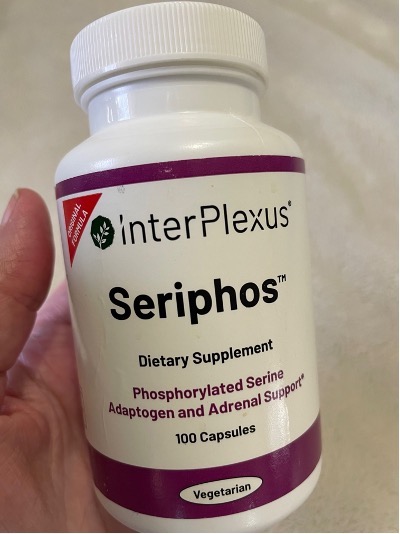
seriphos

There is only one product and it’s called Interplexis Seriphos. You can purchase this from my online store (Fullscript – only available to US customers – use this link to set up an account) and you can also find it on iherb (use this link to save 5%).
de-stress
bioactive milk peptides

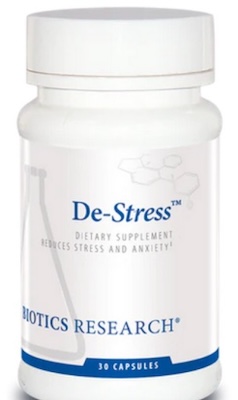
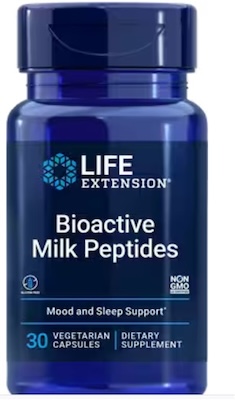
Since I mentioned Lactium above, Biotics Research De-Stress contains 150mg hydrolyzed casein or lactium. You can find this in my online Fullscript too – use this link to set up an account.  For non-US customers, Life Extension Bioactive Milk Peptides also contains 150mg hydrolyzed casein or lactium (you’ll see casein decapeptide and lactium on the label.)  You can find this on iherb (use this link to save 5%).

Additional resources when you are new to using amino acids as supplements

We use the symptoms questionnaire to figure out if low serotonin or low GABA and other neurotransmitter imbalances may be an issue for you.

If you suspect low levels of any of the neurotransmitters and do not yet have my book, The Antianxiety Food Solution – How the Foods You Eat Can Help You Calm Your Anxious Mind, Improve Your Mood, and End Cravings, I highly recommend getting it and reading it before jumping in and using amino acids on your own so you are knowledgeable. And be sure to share it with the practitioner/health team you or your loved one is working with.

There is an entire chapter on the amino acids and they are discussed throughout the book in the sections on gut health, gluten, blood sugar control, sugar cravings, anxiety and mood issues. The importance of quality animal protein is also covered.

The book doesn’t include product names (per the publisher’s request) so this blog, The Antianxiety Food Solution Amino Acid and Pyroluria Supplements, lists the amino acids that I use with my individual clients and those in my group programs.

If, after reading this blog and my book, you don’t feel comfortable figuring things out on your own (i.e. doing the symptoms questionnaire and respective amino acids trials), a good place to get help is the GABA QuickStart Program (if you have low GABA symptoms too). This is a paid online/virtual group program where you get my guidance and community support.

If you are a practitioner, join us in The Balancing Neurotransmitters: the Fundamentals program. This is also a paid online/virtual program with an opportunity to interact with me and other practitioners who are also using the amino acids.

Have you had success with Seriphos (or Lactium or Relora) to lower high cortisol and help with anxiety, panic and/or adrenaline-type surges?

Have you used Seriphos in combination with amino acids and dietary changes?

If you’re a practitioner do you use Seriphos with clients/patients?

Feel free to share and ask your questions below.
Filed Under: Adrenals, Anxiety and panic, Insomnia Tagged With: adrenaline-type surge, anxiety, cortisol, de-stress, dosage, fight or flight, high cortisol, interactions; GABA Quickstart; Balancing Neurotransmitters: the Fundamentals program for practitioners, jolt, lactium, panic, phosphorylated serine, safe, salivary testing, seriphos, shocks, Timing, waking

How to use bright light therapy for increased anxiety, increased panic and SAD during the cold dark winter months

January 19, 2024 By Trudy Scott 2 Comments

bright light therapy

There is a seasonality to anxiety and panic disorder just as there are seasonal variations in mood for certain susceptible individuals:

Following a clinical observation of increased anxiety symptoms and mood changes during winter in panic disorder patients, the Seasonal Pattern Assessment Questionnaire (SPAQ) was completed by 133 patients. Global Seasonality Scores (GSS), and the prevalence of Seasonal Affective Disorder (SAD), were significantly higher than reported in general population studies.

Seasonal changes were also found in anxiety and panic attacks.

These findings suggest the possibility of a common aetiology [etiology or cause] for panic disorder and SAD, that seasonality may be a far more general phenomenon in psychopathology, and that light therapy may be a useful treatment for some panic disorder patients.

The above abstract is from this paper: Seasonality in panic disorder

If you’re new to bright light therapy or are currently using it with success and would like to learn more, I’d like to point you to this excellent review paper, Bright Light as a Personalized Precision Treatment of Mood Disorders. The authors of the above paper cover some of the basics like how to use bright light for SAD (seasonal affective disorder) or the winter blues, and for how long, possible adverse effects and who should not use bright light therapy (this last aspect is theoretical).

This information about bright light and mood disorders can be applied to anxiety and panic attacks, in addition to SAD.

As you’ll read below there are also often benefits for non seasonal depression, bipolar disorder, fatigue, sleep issues, emotional eating and other conditions too.  And bright light therapy can be used in conjunction with the amino acids tryptophan or 5-HTP, and is often used with psychiatric medications too.

How to use bright light for SAD and winter anxiety/panic and for how long?

You sit in front of the light box or full spectrum lamp – on a table or your desk – with open eyes.  Using a standing lamp as a source of light is another option.

The authors of the Bright Light paper share the following approach for SAD (seasonal affective disorder or the winter blues), all of which is applicable for increased anxiety and panic attacks in winter too):

  • Start with a “duration of 30 minutes, using a light intensity of 10,000 lux.” (more on lux comparisons below)
  • “Early morning administration offers greater chances for remission” (although there is documented research and clinical results that for some folks later in the day works well too).
  • “Measured at eye level, a therapeutic distance of 60–80 cm from the light box can be seen as standard requirements (some other devices recommend a distance of 30 cm, so we advise to follow the device recommendations that take into account light parameters and distance).” Most of the lights/devices I recommend state a distance of 30 cm so it’s best to follow the manufacturer’s guidelines.
  • “Lower intensities also appear to be effective, but need longer exposure durations: 2,500 Lux for 2 hours per day or 5,000 Lux for 1 hour a day.” This means sitting further away may allow you to sit in front of the lamp/device for longer duration and get the same benefits.
  • “Significant effects appear only at 2–3 weeks of treatment.” Based on my clinical results, I have clients start to feel some improvements right away with the correct distance and a good lamp.
  • “Treatment is usually continued until the time of usual spontaneous remission in the spring or summer” (and is ideally started as fall/autumn starts to approach rather than in the middle of winter).

I’m also adding this missing and yet important fact from another paper: “The light box is angled ~30° from the line of gaze. The user does not stare directly into the light.”

They also discuss guidelines for year round use of bright light therapy for non-seasonal unipolar depression, another term for major depressive disorder. And midday or morning use for bipolar depression (when on mood stabilizers). I share more about this in my blog: Midday bright light therapy for bipolar depression. I refer you to the study for this information so it can be discussed with your doctor.

Bright light therapy for insomnia and decreased alertness/fatigue

The Bright Light paper also mentions how light therapy “may also be useful to improve sleep quality” … and … “abnormalities in circadian rhythms such as sleep phase delay syndrome, that are frequently associated in mood disorders.”

The authors also mention how light therapy can also help “decreased alertness”, presumably as a result of poor sleep.

Clinically, I see these benefits for clients in similar ways that tryptophan or 5-HTP help with sleep issues. This is related to the serotonin boosting mechanism of bright light therapy. Keep in mind anxiety and panic are symptoms of low serotonin.

What are some possible adverse effects of bright light therapy?

The authors state that bright light therapy “is well-tolerated by patients; adverse effects such as headache, eyestrain, nausea and agitation, are usually transient and mild.” Clinically, I have seldom seen clients experience headache, eyestrain and nausea.

However, I have seen agitation and other low serotonin symptoms get worse – like feeling more sad or more worried or more angry or more irritated or more sleep issues (or all of the above). Too much bright light therapy can ramp up low serotonin symptoms in a similar way that too much tryptophan or 5-HTP can. In other words, it can be overdone and more is not necessarily better. You have to find a balance and figure out what works best for your needs.

I also have clients who are prescribed antidepressants discuss light therapy with their prescribing doctor as I suspect there is the possibility of serotonin syndrome. I don’t see any reports of this in the research and a number of reports of bright light therapy being used successfully in conjunction with antidepressants.

Who should not use bright light therapy?

The authors share these contraindications: “ophthalmic disorders (cataract, macular degeneration, glaucoma, retinitis pigmentosa) and disorders affecting the retina (retinopathy, diabetes, herpes, etc.).” They recommend getting an eye examination if you are in doubt.

Other papers state that the above is theoretical and there are no documented cases of eye damage from bright light therapy. But if you suspect you may be at high risk, get the approval from your ophthalmologist and ongoing monitoring too.

Recommended lights, lamps and panels: always 10,000 lux

This blog post, Winter blues or SAD: light therapy has been updated (as of Jan 2024) with new links for recommended lights/lamps/panels, all 10,000 lux. You can also read feedback from folks who use and find the benefits of full spectrum light or bright light therapy. For example, Chrstine shared this:

My office is the darkest room in the house and I have one sitting on my desk, especially helpful in the winter. This is the second Verilux Happy Light I have used and I really like it. Living in Nevada where there is sunshine over 330 days of the year I am so accustomed to light and brightness that if I am in a dark room or space for too long it really affects me. This has been a great product for me and I can recommend it.

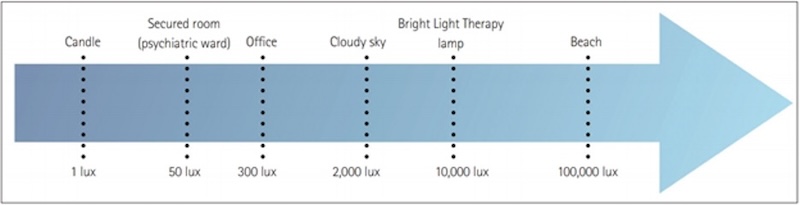
If you’re curious about lux, it is a unit of illumination and this paper, Light Therapy in Mood Disorders: A Brief History with Physiological Insights, includes this very useful lux comparison image:

light therapy and mood disorders
The above is shared under the Creative Commons Attribution License and can be found here .

The combination of using bright light therapy with amino acids such as tryptophan and 5-HTP

I often recommend the use of light therapy in conjunction with amino acids such as tryptophan and 5-HTP. This offers additional serotonin support and helps ease worry-type anxiety, panic attacks, low mood, insomnia, cravings and more. I discuss this combination approach in the winter blues blog.

When someone is already using amino acids with some success, we may just add light therapy and keep amino acid dosing the same or we may use higher doses of amino acids like tryptophan, 5-HTP and GABA during the winter months. We may also use both depending on the person’s unique needs.

I had one client who did really well with tryptophan: his anxiety decreased dramatically but then ramped up before winter. Increasing tryptophan was too much for him so we kept the original tryptophan dose and he started bright light therapy. This worked very well for him until the end of spring when he was able to stop the light therapy.

I also share links to increased OCD (obsessive compulsive disorder), intrusive thoughts, PMDD (premenstrual dysphoric disorder), PMS (premenstrual syndrome), binge eating/emotional eating and drinking/alcoholism in the winter months – and the role of light therapy and amino acids.

Additional resources when you are new to using tryptophan or other amino acids as supplements

We use the symptoms questionnaire to figure out if low serotonin or other neurotransmitter imbalances may be an issue for you.

If you suspect low levels of any of the neurotransmitters and do not yet have my book, The Antianxiety Food Solution – How the Foods You Eat Can Help You Calm Your Anxious Mind, Improve Your Mood, and End Cravings, I highly recommend getting it and reading it before jumping in and using amino acids on your own so you are knowledgeable. And be sure to share it with the practitioner/health team you or your loved one is working with.

There is an entire chapter on the amino acids and they are discussed throughout the book in the sections on gut health, gluten, blood sugar control, sugar cravings, anxiety and mood issues. The importance of quality animal protein is also covered.

The book doesn’t include product names (per the publisher’s request) so this blog, The Antianxiety Food Solution Amino Acid and Pyroluria Supplements, lists the amino acids that I use with my individual clients and those in my group programs.

If, after reading this blog and my book, you don’t feel comfortable figuring things out on your own (i.e. doing the symptoms questionnaire and respective amino acids trials), a good place to get help is the GABA QuickStart Program (if you have low GABA symptoms too). This is a paid online/virtual group program where you get my guidance and community support.

If you are a practitioner, join us in The Balancing Neurotransmitters: the Fundamentals program. This is also a paid online/virtual program with an opportunity to interact with me and other practitioners who are also using the amino acids.

Do you experience increased anxiety, panic attacks and/or the winter blues in the winter months? Have you had success with bright light therapy?

If yes, which full spectrum lamp have you found to be the most useful? What time of the day do you use it, how often do you use it and for what duration?

Have you used a combination of amino acids and light therapy, and adjusted up your amino acids during the colder and darker winter months?

If you’re a practitioner do you recommend light therapy to your clients/patients?

Feel free to share and ask your questions below.
Filed Under: Amino Acids, Anxiety and panic, Depression, Emotional Eating Tagged With: 000 lux, 10, 5-HTP, anxiety, Bipolar, Bright light therapy, depression, emotional eating amino acids, fatigue, GABA Quickstart; Balancing Neurotransmitters: the Fundamentals program for practitioners, how to use, light therapy, mood, panic, SAD, seasonal affective disorder, seasonality, sleep, tryptophan, winter, winter blues

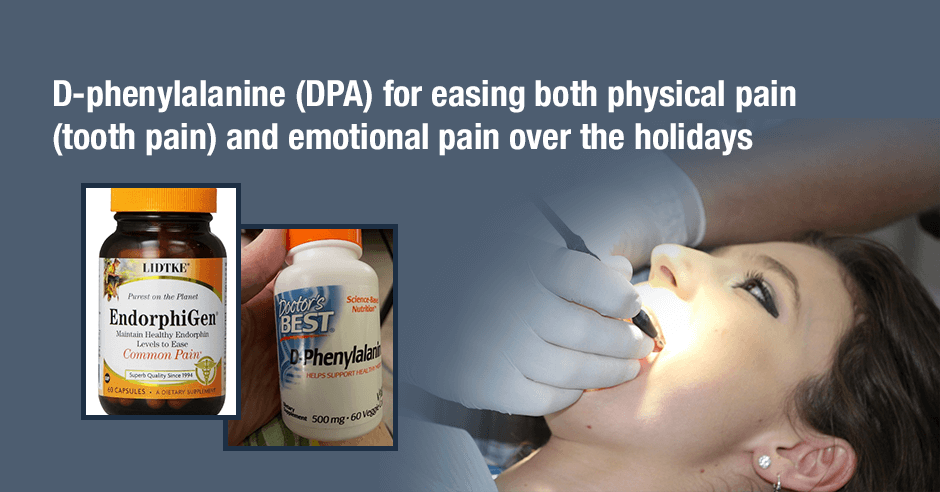
D-phenylalanine (DPA) for easing both physical pain (tooth pain) and emotional pain over the holidays

January 5, 2024 By Trudy Scott 33 Comments

dpa for pain

Today I share how the amino acid D-phenylalanine (DPA), used as a supplement multiple times a day, and opened on to my tongue, eased both the physical tooth pain I experienced for 14 days and the emotional pain I was feeling over the holidays.

In this blog I share more about DPA and endorphins when it comes to pain – both physical and emotional. I also share two DPA products I recommend, product label confusion and more about how DPA differs from DLPA (DL-phenylalanine). I am often asked this question and even long time users of DLPA are sometimes surprised to learn how different DPA is. As always, I like to share some research and other related blogs on the topic. Here is my recent and very positive personal experience with DPA, a firm favorite of mine:

I’m just back from the dentist – my crown was re-cemented and I’m a happy camper now. It popped off just before Christmas and I had to wait until now! There was a tiny cavity beneath the crown which is why I was having daily pain.

Thank goodness I always have DPA (the amino acid d-phenylananine) on hand. I gravitate to it for pain relief – sports injuries like muscle sprains, the rare headache and this time for tooth/jaw pain.

I opened a DPA onto my tongue as soon as I could feel the dull ache start and the pain relief lasted a few hours. It works by boosting endorphins to provide pain relief – kind of like acupuncture.  I call it “powdered acupuncture”.

Some days I used 3-4 and one day I needed 6. Taking one before bed was wonderful.

I also got bonus benefits for emotional well-being over the holidays. It’s the first Christmas without my darling mom and I really needed the endorphin boost to help with the emotional pain.

The DPA product I used was Doctor’s best (details below) and I opened up the 500 mg capsule onto my tongue each time I needed pain relief.

The number of capsules I needed seemed to vary by how much chewing I was doing (for example, I had more pain after a steak meal vs smoked salmon) and what I was eating or drinking (for example, I had more pain after drinking something cold). I simply used a DPA capsule when the dull pain started, making sure it was away from protein (not always but most of the time).

UPDATE: Sept 13, 2024
DPA has come to my rescue yet again and this time the tooth pain has been very severe. I initially suspected it was the crown again but when I got into the dentist an xray confirmed an abscess at the tip of one of the roots.

It’s a first for me and I’ve never experienced a toothache like this. The pain ramps up from zero to 10 (with 10 being most severe) in a matter of seconds. The only thing that helps right now is DPA. I’m opening a capsule every few hours and have even had to use it every 30 mins when it’s really severe like after drinking or eating something. It brings to pain down to a 3 in a matter of minutes.

I’ve figured out that using a straw to drink liquids helps a ton. I’m also  using a soft ice-pack a few times a day too. Strangely it’s worse just before bed, after I take my bedtime supplements. I need the DPA and ice-pack but fortunately I have no pain through the night.  Thank goodness for that!

I’m also using a herbal antibiotic and herbal mouth swish from my naturopath while I get a second opinion, learn about my options, and decide next steps.

All this has solidified DPA as my go-to supplement for pain relief.

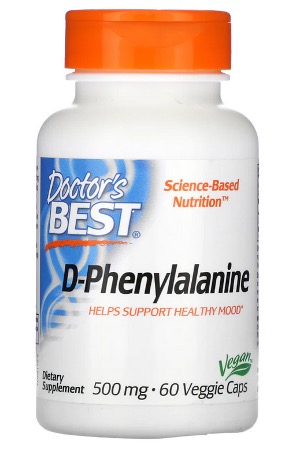
One of the DPA products I recommend: Doctor’s Best D-Phenylalanine

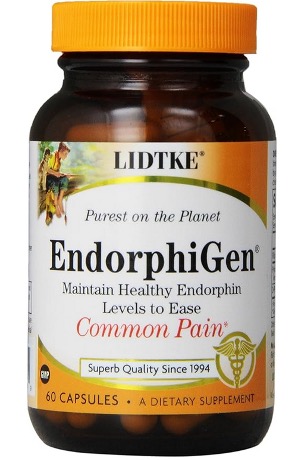
There are not many d-phenylalanine/DPA products available but of those I have two that I recommend: Doctor’s Best D-Phenylalanine and Lidtke Endorphigen. Both contain 500 mg DPA but the labels can be confusing at first – at least until you’re familiar with them.

Also, this amino acid, DPA, is not to be confused with docosapentaenoic acid (also abbreviated as DPA), an omega-3 fatty acid similar to eicosapentaenoic acid (EPA).

dr's best dpa

Here is the Doctor’s Best D-Phenylalanine description:

Doctor’s Best D-phenylalanine is a non-protein amino acid that acts as an inhibiting agent to enzymes that degrade enkephalins, naturally occurring peptides in the body that metabolize endorphins. Endorphins are neurotransmitters that play a key role in the function of the nervous system and are associated with feelings of pleasure. By limiting production of enzymes that break down endorphins, the supplement can help support a healthy mood and normal functioning of the nervous system.

  • Helps support healthy mood
  • Helps support endorphin metabolism
  • Help support neurotransmitter function

This is the actual product that I used over the past 2 weeks and have used it on and off as needed for a few years. It was one of the nutrients that helped when I sprained my ankle when visiting my brother in Las Vegas. More here

As you can see there is no mention of pain on the label or product description. I share more on the pain/endorphin connection below.

You can purchase this online from their website or from iherb. If you use my iherb link you’ll save 5%. This is a good option if you’re not in the USA and already use iherb for one-stop shopping of quality products.

The other DPA product I recommend: Lidtke Endorphigen

The other product I recommend is Lidtke Endorphigen which also contains 500 mg DPA and a small amount of vitamin B6 and riboflavin (vitamin B2). As you can see, this product does mention pain but not the emotional support/mood benefits on the front label.

lidke endorphigen

Here is the Lidtke Endorphigen description

Ease Minor Pain & Feel Good with Healthy Endorphin Level Maintenance

Endorphins are nature’s way to relieve common minor pain and promote a cheerful mood. Research shows that endorphins are released in response to pain and stress, bringing relief. The second wind and runner’s high during and after a vigorous run are results of endorphins. Acting as an analgesic and sedative, endorphins diminish our perception of pain…. But there is more.

Recovery centers report that endorphins promote recovery from a wide variety of unhealthy cravings.

Low endorphin symptoms and typical dosing of DPA

I use the symptoms questionnaire to help clients identify if they have low endorphin symptoms (you can see that here).

Typical dosing is 500 mg to 1000 mg DPA 3-4 x day between meals/away from protein. I do find having clients open the capsule onto their tongue to be more effective for quick pain relief – with results as quickly as 5-10 minutes.

DPA vs DLPA: they are quite different but have some overlaps

I am often asked if DPA and DLPA are the same – they are quite different but have some overlaps as outlined in this blog post on the topic: What is the difference between DPA and DLPA (amino acids) and which one do I use for weepiness, heart-ache, pain and energy?

The precautions are also not the same so I always review contraindications with all my clients and encourage you to do the same.

DPA for MS pain, weepiness, emotional pain and more

Here are a few blog posts illustrating the use of DPA in multiple sclerosis, weepiness, physical pain, emotional pain and resilience, cravings/emotional eating and even helping to wean off prescription pain medication:

  • Multiple sclerosis: low endorphin research and the amino acid DPA (d-phenylalanine) for pain, depression, comfort and trauma support “The endogenous opioid system is …well known to play a role in the development of chronic pain and negative affect [i.e. depression], both of which are common comorbidities in MS.”
  • DPA for weepiness, pain and comfort and reward eating
  • The individual amino acids glutamine, GABA, tryptophan (or 5-HTP), DPA and tyrosine are powerful for eliminating sugar cravings, often within 5 minutes
  • When using the amino acid DPA (d-phenylalanine) I have more resilience and more buffer in the caregiving work I do, and just the oops’s of life As I mentioned above, using DPA over these holidays also gave me more resilience and the endorphin boost I needed help with the emotional pain of losing my mom.
  • Wean off prescription pain medication, improve sleep and reduce emotional eating with DPA (an endorphin-boosting amino acid)

Be sure to use the search feature on the blog to find additional applications of DPA.

DPA research on pain and depression

The use of DPA is not new as you can read in this paper from 1982 – D-phenylalanine and other enkephalinase inhibitors as pharmacological agents: implications for some important therapeutic application

A number of compounds have been shown to inhibit the degradation of enkephalins. As expected, these compounds produce naloxone reversible analgesia and potentiate the analgesia produced by enkephalins and by acupuncture.

One of these, D-phenylalanine, is also anti-inflammatory.

D-phenylalanine has proven to be beneficial in many human patients with chronic, intractable pain. It is proposed the enkephalinase inhibitors may be effective in a number of human “endorphin deficiency diseases” such as depression, schizophrenia, convulsive disorders and arthritis.

Additional resources when you are new to using DPA and the other amino acids as supplements

We use the symptoms questionnaire to figure out if low endorphins or other neurotransmitter imbalances may be an issue for you.

If you suspect low levels of any of the neurotransmitters and do not yet have my book, The Antianxiety Food Solution – How the Foods You Eat Can Help You Calm Your Anxious Mind, Improve Your Mood, and End Cravings, I highly recommend getting it and reading it before jumping in and using amino acids on your own so you are knowledgeable. And be sure to share it with the practitioner/health team you or your loved one is working with.

There is an entire chapter on the amino acids and they are discussed throughout the book in the sections on gut health, gluten, blood sugar control, sugar cravings, anxiety and mood issues.

The book doesn’t include product names (per the publisher’s request) so this blog, The Antianxiety Food Solution Amino Acid and Pyroluria Supplements, lists the amino acids that I use with my individual clients and those in my group programs. You can find them all – including the Lidtke Endorphigen 500 mg that I mentioned above.

Also mentioned above is Doctor’s Best D-Phenylalanine which can be purchased on iherb.

If, after reading this blog and my book, you don’t feel comfortable figuring things out on your own (i.e. doing the symptoms questionnaire and respective amino acids trials), a good place to get help is the GABA QuickStart Program (if you have low GABA symptoms too). This is a paid online/virtual group program where you get my guidance and community support.

If you are a practitioner, join us in The Balancing Neurotransmitters: the Fundamentals program. This is also a paid online/virtual program with an opportunity to interact with me and other practitioners who are also using the amino acids.

Have you had success using DPA for toothache, dental abscess or your other pain issues – what kind of pain has it helped and how much has helped you?

Has DPA also helped with emotional pain and weepiness? And cravings/emotional eating?

If you’re a practitioner do you have success using DPA with your clients/patients?

Feel free to share and ask your questions below.
Filed Under: Depression, DPA/DLPA, Emotional Eating, Endorphins, Pain Tagged With: Acupuncture, amino acids, cavity, crown, d-phenylalanine, dentist, depression, dl-phenylalanine, DLPA, Doctor’s Best D-Phenylalanine, DPA, dull ache, emotional pain, emotional well-being, endorphins, GABA Quickstart; Balancing Neurotransmitters: the Fundamentals program for practitioners, headache, Lidtke Endorphigen, muscle sprains, physical pain, tooth pain, weepiness

Primary Sidebar

NEW! GABA QuickStart Homestudy (with special intro pricing)

gaba quickstart homestudy

Free Report

9 Great Questions Women Ask about Food, Mood and their Health

You'll also receive a complimentary subscription to my ezine "Food, Mood and Gal Stuff"


Connect with me

Popular Posts

  • Amino Acids Mood Questionnaire from The Antianxiety Food Solution
  • The Antianxiety Food Solution Amino Acid and Pyroluria Supplements
  • Pyroluria Questionnaire from The Antianxiety Food Solution
  • Collagen and gelatin lower serotonin: does this increase your anxiety and depression?
  • Tryptophan for the worry-in-your-head and ruminating type of anxiety
  • GABA for the physical-tension and stiff-and-tense-muscles type of anxiety
  • The Antianxiety Food Solution by Trudy Scott
  • Seriphos Original Formula is back: the best product for anxiety and insomnia caused by high cortisol
  • Am I an anxious introvert because of low zinc and vitamin B6? My response to Huffington Post blog
  • Vagus nerve rehab with GABA, breathing, humming, gargling and key nutrients

Recent Posts

  • What do I use instead of Seriphos to help lower high cortisol that is affecting my sleep and making me anxious at night?
  • BeSerene™ GABA/theanine cream eases severe muscle tension in her neck/shoulders, prevents her bad headaches and quells her anxiety
  • How the correct approach, dose and sublingual use of GABA can be calming and not cause a flushed and itchy face and neck
  • The amino acid glutamine improves low mood by addressing gut health, and it has calming effects too
  • Flight anxiety with heightened breath, physical tension and also fearing the worst (the role of low GABA and low serotonin)

Categories

  • 5-HTP
  • AB575
  • Addiction
  • ADHD
  • Adrenals
  • Alcohol
  • Allergies
  • Alzheimer's disease
  • Amino Acids
  • Anger
  • Antianxiety
  • Antianxiety Food Solution
  • Antidepressants
  • Anxiety
  • Anxiety and panic
  • Autism
  • Autoimmunity
  • benzodiazapines
  • Bipolar disorder
  • Books
  • Caffeine
  • Cancer
  • Candida
  • Children/Teens
  • Collagen
  • Cooking equipment
  • Coronavirus/COVID-19
  • Cravings
  • Depression
  • Detoxification
  • Diabetes
  • Diet
  • DPA/DLPA
  • Drugs
  • EFT/Tapping
  • EMF
  • EMFs
  • Emotional Eating
  • Endorphins
  • Environment
  • Essential oils
  • Events
  • Exercise
  • Fear
  • Fear of public speaking
  • Fertility and Pregnancy
  • Fish
  • Food
  • Food and mood
  • Functional neurology
  • GABA
  • Gene polymorphisms
  • General Health
  • Giving
  • Giving back
  • Glutamine
  • Gluten
  • GMOs
  • Gratitude
  • Gut health
  • Heart health/hypertension
  • Histamine
  • Hormone
  • Hyperparathyroidism
  • Hypoglycemia
  • Immune system
  • Inflammation
  • Insomnia
  • Inspiration
  • Introversion
  • Joy and happiness
  • Ketogenic diet
  • Lithium orotate
  • Looking awesome
  • Lyme disease and co-infections
  • MCAS/histamine
  • Medication
  • Men's health
  • Mental health
  • Mercury
  • Migraine
  • Mold
  • Movie
  • MTHFR
  • Multiple sclerosis
  • Music
  • NANP
  • Nature
  • Nutritional Psychiatry
  • OCD
  • Osteoporosis
  • Oxalates
  • Oxytocin
  • Pain
  • Paleo
  • Parasites
  • Parkinson’s disease
  • PCOS
  • People
  • PMS
  • Postpartum
  • PTSD/Trauma
  • Pyroluria
  • Questionnaires
  • Real whole food
  • Recipes
  • Research
  • Schizophrenia
  • serotonin
  • SIBO
  • Sleep
  • Special diets
  • Sports nutrition
  • Stress
  • Sugar addiction
  • Sugar and mood
  • Supplements
  • Teens
  • Testimonials
  • Testing
  • The Anxiety Summit
  • The Anxiety Summit 2
  • The Anxiety Summit 3
  • The Anxiety Summit 4
  • The Anxiety Summit 5
  • The Anxiety Summit 6
  • Thyroid
  • Thyroid health
  • Toxins
  • Tryptophan
  • Tyrosine
  • Uncategorized
  • Vegan/vegetarian
  • Women's health
  • Yoga

Archives

  • October 2025
  • September 2025
  • August 2025
  • July 2025
  • June 2025
  • May 2025
  • April 2025
  • March 2025
  • February 2025
  • January 2025
  • November 2024
  • October 2024
  • September 2024
  • August 2024
  • July 2024
  • June 2024
  • May 2024
  • April 2024
  • March 2024
  • February 2024
  • January 2024
  • December 2023
  • November 2023
  • October 2023
  • September 2023
  • August 2023
  • July 2023
  • June 2023
  • May 2023
  • April 2023
  • March 2023
  • February 2023
  • January 2023
  • December 2022
  • November 2022
  • October 2022
  • September 2022
  • August 2022
  • July 2022
  • June 2022
  • May 2022
  • April 2022
  • March 2022
  • February 2022
  • January 2022
  • December 2021
  • November 2021
  • October 2021
  • September 2021
  • August 2021
  • July 2021
  • June 2021
  • May 2021
  • April 2021
  • March 2021
  • February 2021
  • January 2021
  • December 2020
  • November 2020
  • October 2020
  • September 2020
  • August 2020
  • July 2020
  • June 2020
  • May 2020
  • April 2020
  • March 2020
  • February 2020
  • January 2020
  • December 2019
  • November 2019
  • October 2019
  • September 2019
  • August 2019
  • July 2019
  • June 2019
  • May 2019
  • April 2019
  • March 2019
  • February 2019
  • January 2019
  • December 2018
  • November 2018
  • October 2018
  • September 2018
  • August 2018
  • July 2018
  • June 2018
  • May 2018
  • April 2018
  • March 2018
  • February 2018
  • January 2018
  • December 2017
  • November 2017
  • October 2017
  • September 2017
  • August 2017
  • July 2017
  • June 2017
  • May 2017
  • April 2017
  • March 2017
  • February 2017
  • January 2017
  • December 2016
  • November 2016
  • October 2016
  • September 2016
  • August 2016
  • July 2016
  • June 2016
  • May 2016
  • April 2016
  • March 2016
  • February 2016
  • January 2016
  • December 2015
  • November 2015
  • October 2015
  • September 2015
  • August 2015
  • July 2015
  • June 2015
  • May 2015
  • April 2015
  • March 2015
  • February 2015
  • January 2015
  • December 2014
  • November 2014
  • October 2014
  • September 2014
  • August 2014
  • July 2014
  • June 2014
  • May 2014
  • April 2014
  • March 2014
  • February 2014
  • January 2014
  • December 2013
  • November 2013
  • October 2013
  • September 2013
  • August 2013
  • July 2013
  • June 2013
  • May 2013
  • April 2013
  • March 2013
  • February 2013
  • January 2013
  • December 2012
  • November 2012
  • October 2012
  • August 2012
  • July 2012
  • June 2012
  • May 2012
  • April 2012
  • March 2012
  • February 2012
  • January 2012
  • December 2011
  • November 2011
  • October 2011
  • September 2011
  • August 2011
  • July 2011
  • June 2011
  • May 2011
  • April 2011
  • March 2011
  • February 2011
  • January 2011
  • December 2010
  • October 2010
  • September 2010
  • July 2010
  • May 2010
  • April 2010
  • March 2010
  • February 2010
  • January 2010
  • November 2009

Share the knowledge!

The above statements have not been evaluated by the Food and Drug Administration. Products listed in this website are not intended to diagnose, treat, cure or prevent any disease.

The information provided on this site is for informational and educational purposes only and is not intended as a substitute for advice from your physician or other health care professional. You should consult with a healthcare professional before starting or modifying any diet, exercise, or supplementation program, before taking or stopping any medication, or if you have or suspect you may have a health problem.


Copyright © 2026 Trudy Scott. All Rights Reserved. | Privacy | Terms and Conditions | Refund Policy | Medical Disclaimer

Free Report

9 Great Questions Women Ask about Food, Mood and their Health

You’ll also receive a complimentary subscription to my ezine “Food, Mood and Gal Stuff”