• Skip to primary navigation
  • Skip to main content
  • Skip to primary sidebar

everywomanover29 blog

Food, Mood and Women's Health – Be your healthiest, look and feel great!

  • Blog
  • About
  • Services
  • Store
  • Resources
  • Testimonials
  • The Book
  • Contact
  • Search this site

vagus nerve

Stress, aging and turning off your bad genes: with Dr. Sara Gottfried

March 6, 2017 By Trudy Scott 23 Comments

At age 44, my friend and colleague Dr. Sara Gottfried, M.D., got a research opportunity few people would want. She performed a simple blood test of how fast she was aging, and she failed.

She was aging 20 years faster than her chronological years, as measured by her telomeres. Those are the protective caps on your chromosomes that determine how your cells age. You want telomeres that are long and lovely. Dr. Sara’s were short and stubby.

Despite what we’ve been told, it’s not normal to age fast, gain weight, feel anxious, and become disease-ridden. Just as the number on the bathroom scale isn’t always a simple reflection of calories consumed vs. calories burned, the number of years you’ve lived isn’t always a reflection of your biological age (meaning the age of your cells).

Dr. Sara’s telomeres and body needed rescuing, so she dove into the science and created a breakthrough protocol to slow down aging.

Dr. Sara also had adrenal fatigue, a slow thyroid, estrogen dominance, disrupted sleep, and insulin resistance. Because her cells were numb to insulin, her blood sugar was climbing. Not in the diabetes range, but prediabetes. These hormone problems added up to faster aging.

During the past five years of research, Dr. Sara discovered crucial truths locked in our genes—truths about how you age, how you gain weight, how your body handles stress, and so much more. In her new book, Younger: A Breakthrough Program to Reset Your Genes, Reverse Aging, and Turn Back the Clock 10 Years, she reveals important yet little-known truths to slow down aging and reverse anxiety. She helps you create hormonal harmony and turn on and off the appropriate longevity genes. Here are just a few highlights:

  • Breast cancer runs in her family, so she learned how to turn off her cancer-promoting genes using her fork and wine glass.
  • Sara doesn’t detox well—neither do half of Americans—so she needed to add a specific B vitamin to her daily regimen. Hint: we talk about the MTHFR gene and detox in our interview below).
  • Her grandmother died of Alzheimer’s disease, so Dr. Sara was thrilled to learn about the functional medicine protocol that preserves cognitive function regardless of age. Hint: it involves a specific way of eating, exercising, practicing yoga or meditation, flossing, brushing teeth, and sleeping.
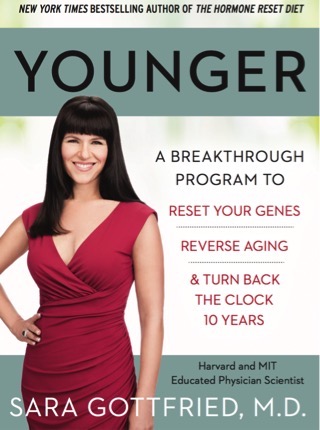
In her new book, you’ll learn what happened to Dr. Sara’s telomeres over the past 5 years as she tested and refined her protocol, first on herself, and then on 1,000 other women.

I was fortunate to receive an advance copy of Younger and loved it so much that I wrote the following endorsement:

The brilliant book, Younger, by Dr. Sara Gottfried MD is mesmerizing, cutting-edge and a must-read! It teaches how you can turn your good genes on and your bad genes off via a healthy mix of science and gene information, together with simple assessment tools and powerful lifestyle changes. You’ll feel happier and calmer, look and feel younger, and actually reverse age-related diseases – even if you have anxiety, depression, Alzheimer’s disease, breast cancer, heart disease or obesity in your family. Why wouldn’t you want to influence your genes for the better? I know I do and so do my community of anxious women. We will all benefit immensely from Dr. Gottfried’s wisdom!

~ Trudy Scott, nutritionist and author of The Antianxiety Food Solution

I also had the opportunity to interview Dr. Sara about this topic and you can watch and listen below as we discuss some of the following:

  • Telomeres and aging (at 44 Dr. Sara had the telomeres of a 64 year old woman)
  • Healthspan and feeling fantastic
  • Walking on the beach for the adrenals, earthing and vagal toning
  • Forest bathing and the effects on cortisol levels [this isn’t in the book]
  • Ikaria “the island where they forgot to die” – herbal teas, tight social community, long lunches, no watches, 7.5 hours of sleep
  • Date night and chanting in the infrared sauna
  • Finnish study: saunas, longevity and the FOXO3 gene (a panacea? and even a form of exercise for those with heart failure)
  • MTHFR “detox” or methylation gene (depression and alcohol detox)
  • We can impact how our genes talk to our bodies in such profound ways
  • The FKBP5 Gene is turned on by severe trauma (studied in Holocaust victims) and affects how we handle stress
  • The TH gene is turned on by the cold
  • rs6330 – NGF/nerve growth factor gene and vagal tone (CC form = more anxious females; TT form = more anxious males) [this isn’t in the book]
  • Genetic testing is optional but can be done with 23andme, Pathway and SmartDNA (in Australia)
  • Testing telomeres with Lifelength and SpectraCell
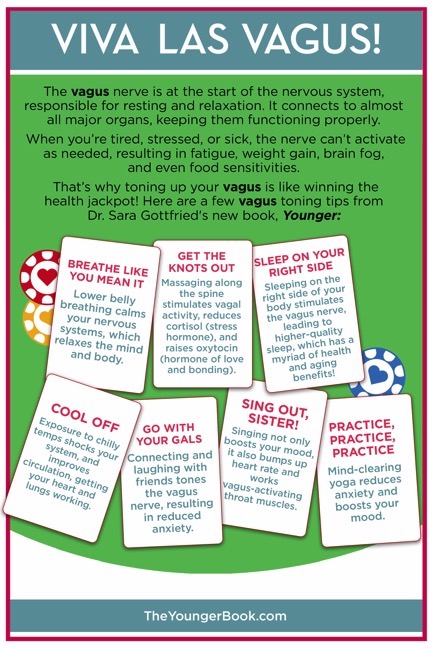
  • Vagus nerve and parasympathetic system – affects anxiety levels, the gut, voice and brain – improved with meditation, prayer, chanting, social connection, singing, call girlfriends, sleeping on your right side
  • 7 day Younger challenge (most powerful levers from the book)
  • 7 week Younger challenge
  • Thing about your 75 year old self: “I want to make decisions that are kind to her” and “How can you kind be to your future self”

If this resonates with you, I encourage you to join Dr. Sara’s slow aging revolution by ordering your copy of Younger.

I hope you’ll join Dr. Sara and me in our quest to continue resetting genes and reversing aging in 2017. The science is yours for the taking!

If you are like Dr. Sara and have issues with your adrenals, thyroid, insulin, or sleep, you could be aging too fast, as she was. And while the genetic hand you’ve been dealt may seem like a fait accompli, the greatest truth Dr. Sara discovered is that you can “turn on” good genes and “turn off” bad ones using the seven-week protocol she developed based on the latest research. Thankfully, she’s done all the research so you don’t have to!

When you order the new book, feel free to click here to submit your receipt and get several bonuses for a limited time, including Dr. Sara’s Younger Quick Start Guide. This guide includes an overview of the Younger Protocol, Dr. Sara’s Anti-Aging Prerequisites, and a sample menu so that you’re ready when the book arrives.
 

Filed Under: Books, Stress Tagged With: aging, Sara Gottfried, vagus nerve

The Anxiety Summit – Anxiety and digestion: the microbiome, stomach acid, bile and the vagus nerve

June 10, 2016 By Trudy Scott 50 Comments

Liz Lipski_Anxiety4

Prof. Liz Lipski, PhD, CCN, CNS, was interviewed on the Anxiety Summit by host of the Anxiety Summit, Trudy Scott, Food Mood Expert and Nutritionist, author of The Antianxiety Food Solution.

Anxiety and digestion: the microbiome, stomach acid, bile and the vagus nerve

  • The microbiome – how these microbes are “us” and not different from us
  • Low stomach acid and the effects on protein/zinc/iron absorption, and candida
  • Low bile production and fat absorption issues
  • The vagus nerve, enteric nervous system and neurotransmitter production

Here are some gems from our interview:

So just to start the microbiome itself is not something separate from us but it’s the most newly recognized organ that we have in the human body.  And it’s comprised of viruses, bacteria and fungi.  And they’re like our rainforest and they live in every epithelial cell surface of our body so they’re on our skin, they’re in your lungs, in your hair, in your nailbeds.  They’re in your genitourinary system, in your digestive system, in your nose.  They’re really everywhere and I think that we’re also going to find that we have these microbes inside of our brain and inside of our liver and I think the more we learn we’re going to find that they’re really everywhere.

The thing that excites me about them is that they really help run our metabolism, help determine whether we’re fat or thin, help determine what our moods are like and how we feel. 

I just love this comment about the microbiome:

And honestly I never know are we just a big bag for carrying around these microbes and they’re really the intelligence in our body or what?  Because they’re kind of like the superstars and we’re really a super organism.  And without them we don’t function at all.

Here is some of what covered in the gut brain connection section:

We make a lot of neurotransmitters in our gut.  In fact we make about 80 to 90 percent of our neurotransmitters like serotonin.  We make most of it in our digestive system and not in our brain at all.  And when you start looking at it, it’s like wow, you look at dopamine and epinephrine and norepinephrine and all of these are made in great abundance in the digestive system itself and again they help modulate again the microbiome.  They help modulate gut motility, so how fast or how slow the food moves through our digestive system. 

Here is a fascinating article that covers much of the new research. The tantalizing links between gut microbes and the brain : Neuroscientists are probing the idea that intestinal microbiota might influence brain development and behaviour.

We cover hydrochloric acid and minerals:

So hydrochloric acid is really important for that.  It also helps us just break down proteins so that our digestive enzymes don’t have to work so hard.  And then it also in the beginning of the small intestine which is called the duodenum -it’s the first 12 to 18 inches – what happens is that the acid is still there before it get neutralized by the pancreas which secretes basically baking soda and neutralizes it because it’s done its job.  But in that first big part of the small intestine, the duodenum, is where we absorb iron and calcium and zinc and to a lesser extent magnesium and copper.  And so when we don’t have enough acid we’re more likely to get mineral insufficient.

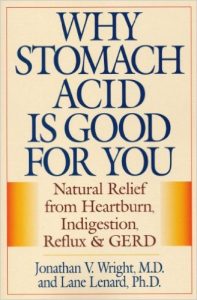
This is the book she mentions in the interview – Why Stomach Acid Is Good for You: Natural Relief from Heartburn, Indigestion, Reflux and GERD by Jonathan Wright

why stomach acid is good for you

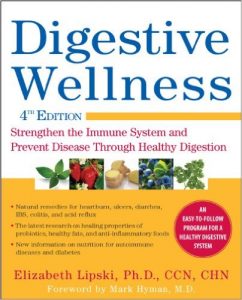
Here is Liz’s fabulous book Digestive Wellness 4th edition

digestive wellness

Here is the Stomach Acid/Hydrochloric Acid Test handout

If you are not already registered for the Anxiety Summit you can get live access to the speakers of the day here: www.theAnxietySummit.com

Missed this interview or can’t listen live? Or want this and the other great interviews for your learning library? Purchase the MP3s or MP3s + transcripts and listen when it suits you.

You can find your purchasing options here.: Anxiety Summit Season 1, Anxiety Summit Season 2, Anxiety Summit Season 3, and Anxiety Summit Season 4.

Filed Under: Events, The Anxiety Summit 4 Tagged With: anxiety, anxiety summit, bile, digestion, Liz Lipski, microbiome, stomach acid, Trudy Scott, vagus nerve

The Anxiety Summit – Opening: benzos, electroshock, blueberries, sauerkraut and the vagus nerve

June 7, 2016 By Trudy Scott 56 Comments

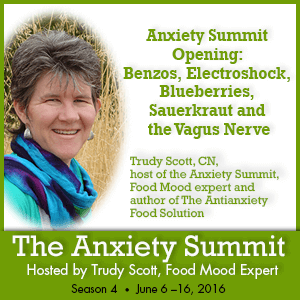
Trudy Scott_opening_Anxiety4 other

The host of the Anxiety Summit, Trudy Scott, Food Mood Expert and Nutritionist, author of The Antianxiety Food Solution opens up the Anxiety Summit Season 4.

Anxiety Summit opening: benzos, electroshock, blueberries, sauerkraut and the vagus nerve

  • My vagus nerve story and how GABA helped
  • Why we need an integrative approach: Electroshock, LSD, BPA, zinc deficiencies, medication side-effects
  • An update on benzodiazepines and what we can learn from the Swiss and Blue Zones
  • Anxiety: new research on blueberries, gluten, sauerkraut, low vitamin B6 and iron, foods rich in polyphenols
  • An overview of the speakers and topics on this summit

My vagus nerve story – the videos document the journey with GABA and vagus nerve exercises 3-6-6 breathing and happy birthday humming.

This article published just last month is just so distressing to even contemplate: American Psychiatric Association Lobbies FDA to Electroshock Children

While the APA looks to seizure-inducing, brain-disabling, electricity as a form of ‘treatment,’ lobbying the FDA to make ECT available for children, no one in medicine, let alone psychiatry, has a clue how ECT machines ‘work’ or how passing large amounts of electricity into a child’s brain ‘treats’ the subjective mental disorder.  

Also published last month is an article in the New York Times called: LSD Like Drugs Are Out of the Haze and Back in the Labs.

modern scientists are picking up where their forerunners of the ’50s and ’60s left off. They are studying hallucinogens’ potential to help smokers kick the habit, to undo addictions to drugs and alcohol, to cope with cluster headaches and depression, and to deal with obsessive-compulsive and post-traumatic stress disorders.

Earlier this year a bill was put forward in Massachusetts proposing informed consent for benzodiazepine use. They will be submitting it again in a future session.

Here is the blog post and research on blueberries and serotonin: Blueberries boost serotonin and may help with PTSD and anxiety

Rats that were fed blueberries saw an increase in serotonin levels and the study authors suggest that the neuroprotection offered by the blueberries may offer support for those with PTSD. Presumably this could help those with anxiety and depression too, since low serotonin can also be an underlying factor.

Here is the blog post and research on gluten and OCD: Integrative Medicine Approach to Pediatric Obsessive-Compulsive Disorder and Anxiety 

The 7-year-old boy was put on a gluten-free diet and they saw a huge reduction in his OCD symptoms and anxiety and an improvement in social behavior and school work.

A paper published in August 2015: Fermented foods, neuroticism, and social anxiety suggests that:

consumption of fermented foods that contain probiotics may serve as a low-risk intervention for reducing social anxiety

Here are some of the other papers I mentioned:

  • Low serum concentrations of vitamin B6 and iron are related to panic attack and hyperventilation attack
  • Zinc-deficient ASD mice study: Gender Dependent Evaluation of Autism like Behavior in Mice Exposed to Prenatal Zinc Deficiency

  • Polyphenols / what foods can help fight the risk of chronic inflammation?
  • Bisphenol A exposure and children’s behavior:  A systematic review 

Here is the master blog with all the speakers, their topics and their individual blog posts with additional information, links to studies, books and other resources – The Anxiety Summit Season 4: All the speakers and topics (keep in mind that the speaker blog links will be live/active from the day of the speaker interview)

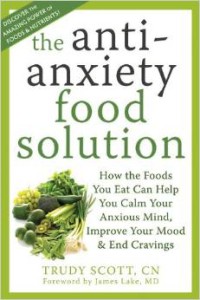
If you already have my book The Antianxiety Food Solution: How the Foods You Eat Can Help You Calm Your Anxious Mind, Improve Your Mood, and End Cravings, I recommend that you skim through it again and review the chapters on the food basics, gluten, amino acids, pyroluria and digestion.  If you don’t yet have a copy, I highly recommend getting a copy so you can be educated as well as empowered.

trudy scott the antianxiety food solution

Here is my gift to you, a song called Top of the World (grab the mp3 at this link)

A new beginning, a brand new day
All of my fears are gone away
I feel so calm, so free, so whole
Right now, I’m feeling on top of the world

On top the world
Right now, I’m feeling on top of the world


And here is another special gift: transcript of this entire talk!
Download the transcript here (right-click on the link and select “Save link as” or “Save target as” to download the file to your computer)

If you are not already registered for the Anxiety Summit you can get live access to the speakers of the day here: www.theAnxietySummit.com

Missed this interview or can’t listen live? Or want this and the other great interviews for your learning library? Purchase the MP3s or MP3s + transcripts and listen when it suits you.

You can find your purchasing options here.: Anxiety Summit Season 1, Anxiety Summit Season 2, Anxiety Summit Season 3, and Anxiety Summit Season 4.

Filed Under: Events, Food and mood, GABA, The Anxiety Summit 4 Tagged With: anxiety, anxiety summit, Trudy Scott, vagus nerve

Music Therapy for Vagus Nerve rehab: on the Brain Summit

April 25, 2016 By Trudy Scott 9 Comments

Just a quick reminder that the Brain Summit airs May 2nd to 6th.

brain-summit

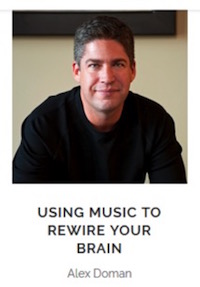
Here is a snippet from the interview with Alex Doman: Using Music to Rewire Your Brain. Alex is CEO of Advanced Brain Technologies, the third generation of a family of pioneers in the field of human brain development, co-founder of Sleep Genius, author of the best-selling book, Healing at the Speed of Sound and co-creator of The Listening Program, a sound therapy program.

alex-dorman

It’s a fascinating topic that I didn’t know much about until I heard this interview. Alex shares some of the basics of sound and sound therapy:

Sound affects us on a myriad of levels, from lower brain centers to the higher brain centers. So bottom-up and top-down processing, emotional regulation, moods. So it has a swath of impact on us as human beings, and, you know, the music that’s in our personal playlist we use, you know, to self-regulate, and, as you said, maybe an up-tempo piece for our cardio; a slow tempo, very calm piece when we’re in a stress state; maybe some baroque music to help focus us.

And the principles of using music and sound for self-regulation, there are a few components, right? One is frequency, which you mentioned, which is a big area of focus for us. Different sound frequencies have a different impact on our functions and performance, right? So we’ve learned that low-frequency sounds have a very calming effect on the nervous system. They have an effect on our motor functions within the brain; fine and gross motor skills, our sense of body and space, our left-right awareness, our coordinated movements, and our vestibular functions, primarily. Whereas, the mid-frequencies are very focusing, as opposed to the low frequencies being grounded, and they are more related to our communication with one another, our ability to receive and express language, both orally and through written communication. And then these high frequencies, which are rather magical, in a way, that are very stimulating and tap into our intuition, our beliefs, our creativity. And actually, in the brain, there’s more neural area for the high frequencies than any other range of sound frequencies.

So we are working with sound and the components of frequency to affect different functions within our lives — from the low to the mid to the high frequencies—in very specific ways, but then there are other features, like the tempo, the pace of the music, right? Slow tempos will entrain our body rhythms and brain waves to lower states, and fast tempos will activate us. So, in way, you can think of high frequencies like sonic caffeine that I have here in my cup, to get me activated, and the low frequencies might be like taking a lavender essential oil to help kind of calm our nervous system. So they affect us across a great range.

Once he started talking about stress, burnout and the vagus nerve, I was even more fascinated and really intrigued:

What’s happening is our stress resilience is getting lower and lower and lower. So what’s interesting is noise is a big contributor to that. But sound is also the antidote. So there was some research that was done in Europe a few years ago with child care workers that experienced burnout symptoms to the magnitude that many would qualify for a depression diagnosis.

So the investigators wanted to research the impact of Music Listening Therapy with a special mode of stimulation that would impact the vagus nerve and the autonomic nervous system with more impact—and we’ll probably talk about bone conduction later—and to use one of our protocols to see if, in fact, symptoms of burnout would be lessened in response to that intervention, compared to the standard care, that standard care being visits to a psychotherapist for these workers.

So they did a controlled study, and one group saw the therapist and one group, their therapist was themselves using sound as the input and to help heal and change their state. And what was miraculous is that those that did the listening had statistically significant improvements going from stress burnout to normal stress resilience, and those getting talk therapy made very little change. They stayed kind of stuck in their pattern of stress response. So it’s really a testament to the power of the right sound done in a very specific manner, right? This isn’t haphazard; this is a very focused, structured program to create a massive change to a very big issue that many of us face.

Later on in the interview, there is more discussion about the vagus nerve. If you’ve been following my blogging recently you’ll be aware of the issues I had with my voice and the breathing and humming work I did for my vagus nerve rehabilitation. Now I have a much better understanding of why it helped so much!  

And what’s interesting is the vagus nerve, which is a cranial nerve, has enervations within the ear, meaning connections, inner connections within the ear. So when we hear or experience sound, that sound carries along the vagus nerve. So it connects our central nervous system and our autonomic nervous system; that’s the main bridge, the main connector that happens. And it’s very important for emotional regulation; it’s the center of emotional regulation.

And what we’ve found with Music Listening Therapy, the observations are that it helps with that homeostatic state, that balance of acceleration when we need it and deceleration in the brake when we need it. So that we can have improved stress resilience and better emotional regulation

Erin Matlock is founder of Brain Summit, a mental health advocate and popular speaker. After overcoming a crippling battle with severe depression, she went on to create an online community where she openly shares her search for a better brain.  

During this interview she shares how much this music therapy helped her to feel joyful and more connected:

erin-matlock

I’d spent four weeks in the high frequency range, and that produced a joy. And I have never described myself as joyful, not since I was a little child, because of the history of depression. And I can’t remember – and I know I wrote about that – a time when I walked around saying, “I feel joy,” for no reason, none at all.

And then the other part was the connection. And this part was interesting. As an introvert, as someone who has always felt very out of place, like I was born in the wrong time, I used to describe myself like that saying, “alone in a crowded room.” That was me. And to feel connected — not to any particular person, just in a general sense— for me it was spiritual; it’s not that way for everyone else. I don’t know where that connection comes from, but it was something that my brain wasn’t giving me before. And that came directly as a result of this training.

Overall it is a fascinating interview and one I know you’ll want to hear! I look forward to checking out other interviews and hope you’ll join me on the Brain Summit. Erin interviews 25 global experts who present cutting edge information on brain health, mental health, peak performance, neurotechnology, nutrition and much more.

You can register here: http://www.brainsummit.com?orid=45505&opid=12

Filed Under: Events, Music Tagged With: Alex Doman, Erin Matlock, vagus nerve

Vagus nerve rehab with GABA, breathing, humming, gargling and key nutrients

March 25, 2016 By Trudy Scott 248 Comments

vegas nerve rehab

I’ve got an issue going on with my vagus nerve at the moment and the throat spasms have been affecting my voice and ability to speak for any length of time. It’s also causing this persistent dry cough, despite not feeling sick or having any respiratory symptoms. It’s much worse later in the day and gets particularly bad after about 30 minutes of talking.

I’ve been working with the very talented PT/nutritionist Joe Tatta for the last week and I am seeing much improvement already. I’m also learning so much on vagus nerve rehab.

Joe is a Musculoskeletal Pain Expert and you may recall our wonderful interview on the last Anxiety Summit on pain and anxiety.

Let me give you some of the back story. Just over a week ago I posted this message in a private facebook group of integrative practitioners/colleagues:

I’d love some help for me please. I have this ongoing spasmodic dry cough that starts as soon as I talk and gets worse later in the day. As you can imagine it’s affecting my day to day meetings, seeing clients and doing interviews, not to mention being highly irritating!

I don’t feel sick at all and have no congestion. It started after my NYC trip and a really frightening flight over the Colorado mountains!

We had the most awful turbulence and it felt like wings on the plane were going to break. People were screaming and the parents behind us were reassuring their kids saying it’s ok, it’s just like a roller coaster ride. I was sitting next to a 6’4’’ young man who had just completed training in the Coast Guard. He was also terrified and said they had taught him how to survive a boat going down but not how to survive a plane going down.

I believe my immune system got suppressed big time! The day after I got home I got the flu for the first time in 30+ years and I felt pretty grim for a day and then recovered nicely over the next 4-5 days. The flu was over 10 days ago but this stupid cough continues!

One night I could not sleep due to the coughing and decided to try and relax my airways with GABA. I know how effective GABA is for stiff and tense muscles so why not try it for the throat spasms I was having? I am now able to have a reasonable conversation for say 15-30 mins if I take 500mg GABA opened on to my tongue. Viola! a new use for GABA – pretty cool!

I must be low in GABA because I’m able to take upwards of 5 (and sometime more) doses of 500mg a day and not feel too wiped out. That’s a lot of GABA for me – 125mg to 250mg used to be enough for the anxiety I once experienced! I did have a bit of my old early morning waking with anxiety (that I used to have in my late 30s) that week of the flu but that’s now gone.

I’m also using a homeopathic called Boiron Drosera. I’ve never had asthma and don’t have much experience with it but from what I’m reading it sounds like the“cough-variant” of asthma!?

I’m asking here because I’m intrigued by this whole scary flight/depressed immunity/GABA for the spasms thing and wonder if anyone here has any insights?

Joe Tatta responded in about 30 minutes with this message:

Sounds like you have a vagus nerve problem. Potentially loss of parasympathetics. You can read some in this article but there is much more…

Here is the article he shared: Arnold’s nerve cough reflex: evidence for chronic cough as a sensory vagal neuropathy

Arnold’s nerve ear-cough reflex is recognised to occur uncommonly in patients with chronic cough. In these patients, mechanical stimulation of the external auditory meatus can activate the auricular branch of the vagus nerve (Arnold’s nerve) and evoke reflex cough. This is an example of hypersensitivity of vagal afferent nerves, and there is now an increasing recognition that many cases of refractory or idiopathic cough may be due to a sensory neuropathy of the vagus nerve.

The paper presents two cases where the cough was successfully treated with gabapentin. Gabapentin (also known as Neurontin) affects GABA levels and this why I get such great results with GABA.

Gabapentin is drug that is primarily used to treat seizures and neuropathic pain. It is also used for restless leg syndrome and hot flashes, and off-label for anxiety, insomnia, fibromyalgia and bipolar disorder. I’d love to see GABA being studied and used for these conditions especially because gabapentin can cause withdrawal syndrome: Withdrawal symptoms after gabapentin discontinuation and an increased risk of suicidal thoughts.

Joe offered to meet with me via skype and I learned that the neuro-rehab is key. I’ve been doing breathing exercises and humming every hour on the hour for the last week i.e. about 10 times a day. When I hum it’s the “happy birthday” song and I have to think of a specific birthday. I hum and smile and think about my baby sister’s 7th birthday party 37 years ago. I had just come back from Australia and I have such great memories of it! We chatted about it at the weekend and had a good laugh.

I continue to use the GABA as needed, and am also taking GPC (GlyceroPhosphoCholine) and Acetyl-L-carnitine, both of which are acetylcholine precursors for nerve rehabilitation.

Because I’ve had so many questions about what is going on with me and what I’m doing, I have decided to start this blog post and I’ll continue to add to it. I’ve been documenting what has been happening as I go through this rehab because I’m finding it so fascinating.

Stay tuned for all the details:

  • More on the vagus nerve and why it’s so important
  • Why the very scary plane ride triggered this issue I’m having
  • How GABA works to stop the spasms in 5-10 seconds (I have a video to share)
  • Exactly what exercises I’m doing for the rehab and why you need to build up and not do gargling exercises on day one
  • More details about the nutrients: GPC and acetyl-l-carnitine
  • And an interview with Joe Tatta to share his expertise (I’m the patient/client here and am in learning mode)

I wouldn’t suggest trying any of this yourself until I share more because from what I’ve learned so far, you need to slowly built up to certain of the exercises.

Updates April 1, 2016:

Here is the first video (taken March 16, 2016) where I share the story of the scary plane ride and my flu and the start of the throat spasms.  You can hear how my voice sounds and how quickly 500mg GABA relaxes the spasms in my throat/neck.  I share what I learned from Joe Tatta about it being connected the vagus nerve.

Here is the second video (also taken March 16, 2016) where I demonstrate the 3-6-6 second breathing exercise and the happy birthday song humming exercise. I have to think of an actual birthday. I hum and think of my baby sister’s birthday (you can see those photos above).  Be warned, I am what I call “musically challenged!”

Here is the third video (taken late evening March 16, 2016) where you can hear how bad my voice and throat gets later in the day.

Here is the video taken at Heavenly ski resort on March 27, 2016.  You can see me doing my humming exercises in between skiing on this beautiful mountain and how I needed GABA after a strenuous ski run.  And I summarize what has been working for me so far.  I hope you enjoy the stunning scenery too!  I feel so fortunate that we can hop in the car and visit such an amazing place like this on the weekend! It’s about 90 minutes up the hill from where we live.

And here is the final video in this series (taken yesterday March 31, 2016). I demonstrate the exercises I am currently doing: 3-6-6 second breathing, humming (which has improved), the yawning and the tongue massage of the roof of my mouth.  I also talk about GPC and acetyl-l-carnitine.

You can probably see and hear that I am much improved and have not needed much GABA for the last two days now.  In the last week I have interviewed Dr. Josh Axe for his “Eat Dirt” book and Dr. Kelly Brogan for her “A Mind of Your Own” book.  And Dr. David Brady has interviewed me for his Fibrofix Summit and Dr. Eric Zielinski interviewed me for his Essential Oils Summit.  For each interview I did my exercises right beforehand and took 500mg GABA half way through the interview and had immediate relief.

GABA for vagus nerve
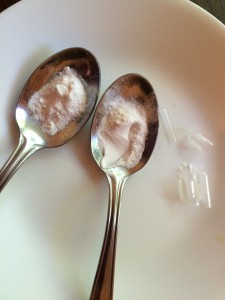
I had 2 x 500mg GABA on hand for my interviews – opened and ready to use!

Update: April 8, 2016

I continue to improve and have not needed GABA for 4 days and only have a very mild hint of the throat feeling late evening.

Two days ago I added an essential oil called Parasympathetic. It contains clove and lemon and I’ll share more in a future post.  Right now I can share that I used too much the first day and had the very dry mouth I experienced with too much GPC and acetyl-l-carnitine.

Update: April 22, 2016

A quick update to let you know that my dry spasmodic cough has completely gone.  I  have not had any symptoms for a week and I have stopped the vagus nerve rehab exercises, GPC,  acetyl-l-carnitine, the essential oil called Parasympathetic and GABA.

Additional resources when you are new to using GABAand other amino acids as supplements

As always, I use the symptoms questionnaire to figure out if low serotonin or low GABA or other neurotransmitter imbalances may be an issue.

If you suspect low levels of any of the neurotransmitters and do not yet have my book, The Antianxiety Food Solution – How the Foods You Eat Can Help You Calm Your Anxious Mind, Improve Your Mood, and End Cravings, I highly recommend getting it and reading it before jumping in and using amino acids on your own so you are knowledgeable. And be sure to share it with the practitioner/health team you or your loved one is working with.

There is an entire chapter on the amino acids and they are discussed throughout the book in the sections on gut health, gluten, blood sugar control (this is covered in an entire chapter too), sugar cravings, anxiety and mood issues.

The book doesn’t include product names (per the publisher’s request) so this blog, The Antianxiety Food Solution Amino Acid and Pyroluria Supplements, lists the amino acids that I use with my individual clients and those in my group programs.

If, after reading this blog and my book, you don’t feel comfortable figuring things out on your own (i.e. doing the symptoms questionnaire and respective amino acids trials), a good place to get help is the GABA QuickStart Program (if you have low GABA symptoms). This is a paid online/virtual group program where you get my guidance and community support.

If you are a practitioner, join us in The Balancing Neurotransmitters: the Fundamentals program. This is also a paid online/virtual program with an opportunity to interact with me and other practitioners who are also using the amino acids.

Wrapping up and your feedback

I so appreciate all the caring and concerned comments, feedback and ideas for me!  And boy, am I grateful for Joe and his expertise!

I will still be interviewing Joe so he can share the theory and address questions so please post questions you may have.

If any of this resonates with you or if you have any other questions I’d love to hear back from you.

Please post them in the comments section below.

Filed Under: GABA Tagged With: anxious, breathing, GABA, gabapentin, humming, Joe Tatta, scary, spasms, vagus nerve, voice

  • « Go to Previous Page
  • Page 1
  • Page 2
  • Page 3

Primary Sidebar

NEW! GABA QuickStart Homestudy (with special intro pricing)

gaba quickstart homestudy

Free Report

9 Great Questions Women Ask about Food, Mood and their Health

You'll also receive a complimentary subscription to my ezine "Food, Mood and Gal Stuff"


Connect with me

Popular Posts

  • Amino Acids Mood Questionnaire from The Antianxiety Food Solution
  • The Antianxiety Food Solution Amino Acid and Pyroluria Supplements
  • Pyroluria Questionnaire from The Antianxiety Food Solution
  • Collagen and gelatin lower serotonin: does this increase your anxiety and depression?
  • Tryptophan for the worry-in-your-head and ruminating type of anxiety
  • GABA for the physical-tension and stiff-and-tense-muscles type of anxiety
  • The Antianxiety Food Solution by Trudy Scott
  • Seriphos Original Formula is back: the best product for anxiety and insomnia caused by high cortisol
  • Am I an anxious introvert because of low zinc and vitamin B6? My response to Huffington Post blog
  • Vagus nerve rehab with GABA, breathing, humming, gargling and key nutrients

Recent Posts

  • What do I use instead of Seriphos to help lower high cortisol that is affecting my sleep and making me anxious at night?
  • BeSerene™ GABA/theanine cream eases severe muscle tension in her neck/shoulders, prevents her bad headaches and quells her anxiety
  • How the correct approach, dose and sublingual use of GABA can be calming and not cause a flushed and itchy face and neck
  • The amino acid glutamine improves low mood by addressing gut health, and it has calming effects too
  • Flight anxiety with heightened breath, physical tension and also fearing the worst (the role of low GABA and low serotonin)

Categories

  • 5-HTP
  • AB575
  • Addiction
  • ADHD
  • Adrenals
  • Alcohol
  • Allergies
  • Alzheimer's disease
  • Amino Acids
  • Anger
  • Antianxiety
  • Antianxiety Food Solution
  • Antidepressants
  • Anxiety
  • Anxiety and panic
  • Autism
  • Autoimmunity
  • benzodiazapines
  • Bipolar disorder
  • Books
  • Caffeine
  • Cancer
  • Candida
  • Children/Teens
  • Collagen
  • Cooking equipment
  • Coronavirus/COVID-19
  • Cravings
  • Depression
  • Detoxification
  • Diabetes
  • Diet
  • DPA/DLPA
  • Drugs
  • EFT/Tapping
  • EMF
  • EMFs
  • Emotional Eating
  • Endorphins
  • Environment
  • Essential oils
  • Events
  • Exercise
  • Fear
  • Fear of public speaking
  • Fertility and Pregnancy
  • Fish
  • Food
  • Food and mood
  • Functional neurology
  • GABA
  • Gene polymorphisms
  • General Health
  • Giving
  • Giving back
  • Glutamine
  • Gluten
  • GMOs
  • Gratitude
  • Gut health
  • Heart health/hypertension
  • Histamine
  • Hormone
  • Hyperparathyroidism
  • Hypoglycemia
  • Immune system
  • Inflammation
  • Insomnia
  • Inspiration
  • Introversion
  • Joy and happiness
  • Ketogenic diet
  • Lithium orotate
  • Looking awesome
  • Lyme disease and co-infections
  • MCAS/histamine
  • Medication
  • Men's health
  • Mental health
  • Mercury
  • Migraine
  • Mold
  • Movie
  • MTHFR
  • Multiple sclerosis
  • Music
  • NANP
  • Nature
  • Nutritional Psychiatry
  • OCD
  • Osteoporosis
  • Oxalates
  • Oxytocin
  • Pain
  • Paleo
  • Parasites
  • Parkinson’s disease
  • PCOS
  • People
  • PMS
  • Postpartum
  • PTSD/Trauma
  • Pyroluria
  • Questionnaires
  • Real whole food
  • Recipes
  • Research
  • Schizophrenia
  • serotonin
  • SIBO
  • Sleep
  • Special diets
  • Sports nutrition
  • Stress
  • Sugar addiction
  • Sugar and mood
  • Supplements
  • Teens
  • Testimonials
  • Testing
  • The Anxiety Summit
  • The Anxiety Summit 2
  • The Anxiety Summit 3
  • The Anxiety Summit 4
  • The Anxiety Summit 5
  • The Anxiety Summit 6
  • Thyroid
  • Thyroid health
  • Toxins
  • Tryptophan
  • Tyrosine
  • Uncategorized
  • Vegan/vegetarian
  • Women's health
  • Yoga

Archives

  • October 2025
  • September 2025
  • August 2025
  • July 2025
  • June 2025
  • May 2025
  • April 2025
  • March 2025
  • February 2025
  • January 2025
  • November 2024
  • October 2024
  • September 2024
  • August 2024
  • July 2024
  • June 2024
  • May 2024
  • April 2024
  • March 2024
  • February 2024
  • January 2024
  • December 2023
  • November 2023
  • October 2023
  • September 2023
  • August 2023
  • July 2023
  • June 2023
  • May 2023
  • April 2023
  • March 2023
  • February 2023
  • January 2023
  • December 2022
  • November 2022
  • October 2022
  • September 2022
  • August 2022
  • July 2022
  • June 2022
  • May 2022
  • April 2022
  • March 2022
  • February 2022
  • January 2022
  • December 2021
  • November 2021
  • October 2021
  • September 2021
  • August 2021
  • July 2021
  • June 2021
  • May 2021
  • April 2021
  • March 2021
  • February 2021
  • January 2021
  • December 2020
  • November 2020
  • October 2020
  • September 2020
  • August 2020
  • July 2020
  • June 2020
  • May 2020
  • April 2020
  • March 2020
  • February 2020
  • January 2020
  • December 2019
  • November 2019
  • October 2019
  • September 2019
  • August 2019
  • July 2019
  • June 2019
  • May 2019
  • April 2019
  • March 2019
  • February 2019
  • January 2019
  • December 2018
  • November 2018
  • October 2018
  • September 2018
  • August 2018
  • July 2018
  • June 2018
  • May 2018
  • April 2018
  • March 2018
  • February 2018
  • January 2018
  • December 2017
  • November 2017
  • October 2017
  • September 2017
  • August 2017
  • July 2017
  • June 2017
  • May 2017
  • April 2017
  • March 2017
  • February 2017
  • January 2017
  • December 2016
  • November 2016
  • October 2016
  • September 2016
  • August 2016
  • July 2016
  • June 2016
  • May 2016
  • April 2016
  • March 2016
  • February 2016
  • January 2016
  • December 2015
  • November 2015
  • October 2015
  • September 2015
  • August 2015
  • July 2015
  • June 2015
  • May 2015
  • April 2015
  • March 2015
  • February 2015
  • January 2015
  • December 2014
  • November 2014
  • October 2014
  • September 2014
  • August 2014
  • July 2014
  • June 2014
  • May 2014
  • April 2014
  • March 2014
  • February 2014
  • January 2014
  • December 2013
  • November 2013
  • October 2013
  • September 2013
  • August 2013
  • July 2013
  • June 2013
  • May 2013
  • April 2013
  • March 2013
  • February 2013
  • January 2013
  • December 2012
  • November 2012
  • October 2012
  • August 2012
  • July 2012
  • June 2012
  • May 2012
  • April 2012
  • March 2012
  • February 2012
  • January 2012
  • December 2011
  • November 2011
  • October 2011
  • September 2011
  • August 2011
  • July 2011
  • June 2011
  • May 2011
  • April 2011
  • March 2011
  • February 2011
  • January 2011
  • December 2010
  • October 2010
  • September 2010
  • July 2010
  • May 2010
  • April 2010
  • March 2010
  • February 2010
  • January 2010
  • November 2009

Share the knowledge!

The above statements have not been evaluated by the Food and Drug Administration. Products listed in this website are not intended to diagnose, treat, cure or prevent any disease.

The information provided on this site is for informational and educational purposes only and is not intended as a substitute for advice from your physician or other health care professional. You should consult with a healthcare professional before starting or modifying any diet, exercise, or supplementation program, before taking or stopping any medication, or if you have or suspect you may have a health problem.


Copyright © 2026 Trudy Scott. All Rights Reserved. | Privacy | Terms and Conditions | Refund Policy | Medical Disclaimer

Free Report

9 Great Questions Women Ask about Food, Mood and their Health

You’ll also receive a complimentary subscription to my ezine “Food, Mood and Gal Stuff”