• Skip to primary navigation
  • Skip to main content
  • Skip to primary sidebar

everywomanover29 blog

Food, Mood and Women's Health – Be your healthiest, look and feel great!

  • Blog
  • About
  • Services
  • Store
  • Resources
  • Testimonials
  • The Book
  • Contact
  • Search this site

turmeric

This Is Your Brain on Food by Uma Naidoo, MD (video interview and review)

August 21, 2020 By Trudy Scott 6 Comments

brain on food

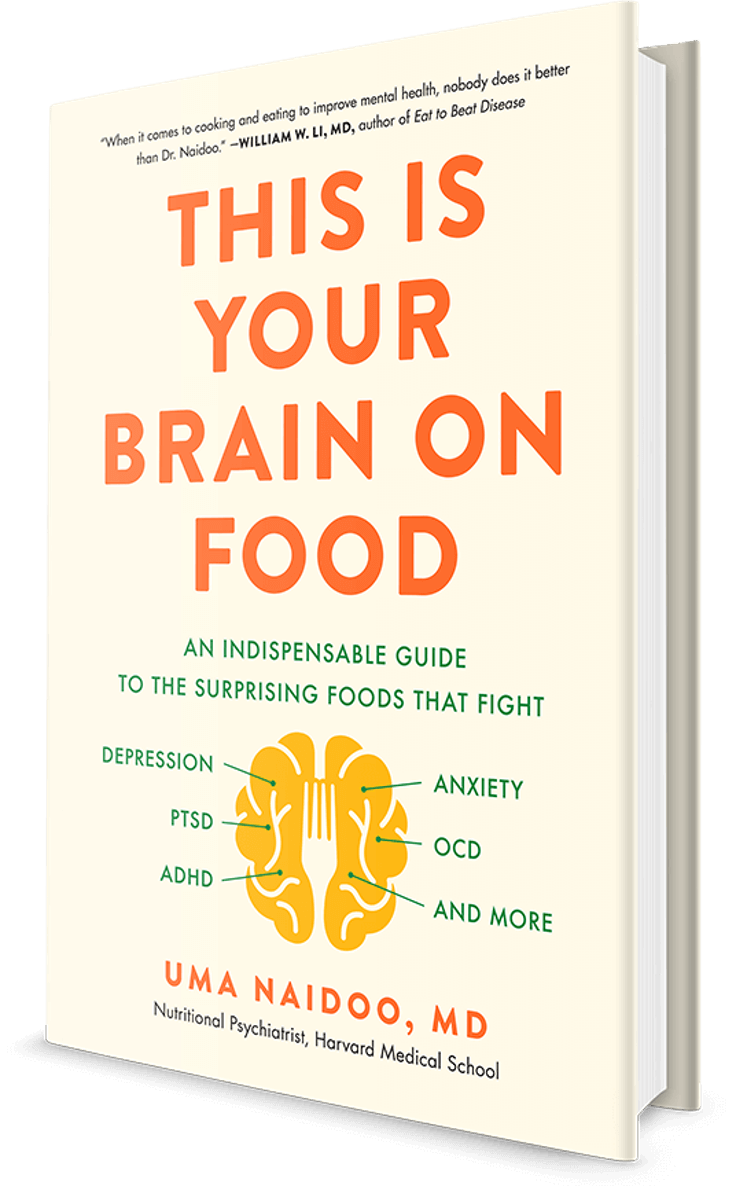
Dr. Uma Naidoo has a wonderful new book called This Is Your Brain on Food: An Indispensable Guide to the Surprising Foods that Fight Depression, Anxiety, PTSD, OCD, ADHD, and More (my Amazon link)

Her big bold message is this “Until we solve nutritional problems, no amount of medication and psychotherapy is going to be able to stem the tide of mental issues in our society.”  This is something I wholeheartedly agree with!

I had the wonderful opportunity to interview Dr. Naidoo and we talked about the benefits of fermented foods and social anxiety, vitamin D and anxiety, dietary sources of polyphenols for ADHD and much more:

  • A 2015 study, Fermented foods, neuroticism, and social anxiety, reports that people eating fermented foods saw a reduction in their social anxiety and neurotic traits
  • Dr. Naidoo recommends unflavored kefir (which can be used to make a creamy dressing), miso, fermented vegetables and kombucha (watch the added sugars)
  • I mention kombucha as a source of fluoride (watch if you have issues with fluoride)
  • Vitamin D and anxiety: we discuss a 2019 study, Effect of Vitamin D Supplement on Mood Status and Inflammation in Vitamin D Deficient Type 2 Diabetic Women with Anxiety: A Randomized Clinical Trial

51 women with type 2 diabetes and vitamin D deficiency were randomly allocated to receive one oral pearl of 50,000 IU vitamin D3 (26 women) or a placebo (25 women) fortnightly for 16 weeks

Anxiety score changes were significantly lower in vitamin D group than the controls

  • Dr . Naidoo recommends these sources of vitamin D: egg yolks, salmon, mushrooms and sun exposure (sun through a window doesn’t count)
  • Dietary polyphenols and ADHD: We talk about a 2018 study, Rationale for Dietary Antioxidant Treatment of ADHD

Dietary polyphenols… have antioxidant capacities as well as immunoregulatory effects and, therefore, appear appropriate in ADHD therapy.

  • Dr. Naidoo recommends these sources of polyphenols: berries and other fruit, vegetables, extra virgin olive oil.
  • I’m fascinated by the fact that polyphenols “act as a low-dose toxin that trains the body to mount an immune response in a process called hormesis” (there are many geeky gems like this in the book)
  • Dr. Naidoo shares the story of her 36 year old patient with severe anxiety. He was a binge eater and also had a history of alcohol abuse. Vitamin B1 (250mg) was every effective for him…“In animal studies, thiamine appears to reduce stress-like responses because it protects the hippocampus”
  • We talk about chamomile tea and how it helps with sleep. There are some cautions if you’re on a blood thinner prescription or going to have surgery. Pregnant women should also avoid it.
  • Dr. Naidoo shares a delicious Golden Milk recipe with tips on how to use turmeric (one her favorite spices and inspired by her grandmother’s cooking) with black pepper. You’ll find this in the recipes section.
  • Dr Naidoo also shares one of her favorite comfort foods – a yummy lentil soup recipe called dal in south Indian cuisines. It’s a great source of fiber, plant-based protein and is very affordable. And really healthy when cooked with vegetables and spices like mustard seeds, ginger, garlic and turmeric. She shares a tip to improve the flavors – making tadka (listen to the interview below, enjoy and be inspired!)


It’s a wonderful book that I highly recommend if:

  • you are new to nutritional psychiatry and the power of food
  • you are a seasoned foodie and want to geek out on mechanisms and the science
  • you want to learn about foods and nutrients (all science-based) specifically for depression, anxiety, PTSD, OCD, ADHD and insomnia
  • you are a practitioner and want to learn and share a wonderful book with your patients or clients

I read it cover to cover and picked up so many gems. I also loved reading about her memories of cooking with her Pinetown granny (Pinetown is just outside Durban where we both happened to grow up)!

We do have a few professional differences of opinion that I feel I should mention:

  • I am not in favor of canola oil and I’d switch out the recipes that call for canola oil with olive oil
  • I have a difficult time extrapolating high-fat diets in rat studies to concerns about saturated fat consumption in humans (given the nature of the rat chow in many of these studies)
  • I’m more concerned with portion-size of carbs than I am with portion-size of healthy fats (and typically recommend full-fat coconut milk, and chicken and turkey with skin-on)
  • I find grass-red meat to be beneficial for my clients with anxiety and mood issues
  • Many of my anxious clients cannot tolerate any caffeine and I consider 14 alcoholic drinks a week for men and 7 alcoholic drinks a week for women to be excessive
  • I prefer stove-top and oven cooking to using a microwave.

This is the official book blurb:

Did you know that blueberries can help you cope with the aftereffects of trauma? That salami can cause depression, or that boosting Vitamin D intake can help treat anxiety?

When it comes to diet, most people’s concerns involve weight loss, fitness, cardiac health, and longevity. But what we eat affects more than our bodies; it also affects our brains. And recent studies have shown that diet can have a profound impact on mental health conditions ranging from ADHD to depression, anxiety, sleep disorders, OCD, dementia and beyond.

A triple threat in the food space, Dr. Uma Naidoo is a board-certified psychiatrist, nutrition specialist, and professionally trained chef. In This Is Your Brain on Food, she draws on cutting-edge research to explain the many ways in which food contributes to our mental health, and shows how a sound diet can help treat and prevent a wide range of psychological and cognitive health issues.

Packed with fascinating science, actionable nutritional recommendations, and delicious, brain-healthy recipes, This Is Your Brain on Food is the go-to guide to optimizing your mental health with food.

Uma Naidoo, MD is board-certified psychiatrist (Harvard Medical School), professional chef (Cambridge School of Culinary Arts), and nutrition specialist (Cornell University). She is currently the Director of Nutritional and Lifestyle Psychiatry at Massachusetts General Hospital (MGH), where she consults on nutritional interventions for the psychiatrically and medically ill; Director of Nutritional Psychiatry at the Massachusetts General Hospital Academy; and has a private practice in Newton, MA. She also teaches at The Cambridge School of Culinary Arts.

Dr. Naidoo speaks frequently at conferences at Harvard, for Goop audiences, the New York City Jewish Community Center (JCC), and Ivy Boston. She blogs for Harvard Health and Psychology Today and completed a unique video cooking series for the MGH Academy which teaches Nutritional Psychiatry using culinary techniques in the kitchen.

You can get your copy of This Is Your Brain on Food here (my Amazon link) and find additional information about Dr. Naidoo here and the book here.

Let us know what you think in the comments below and be sure to leave Dr. Naidoo a review once you read your copy!

Feel free to post your questions here too.
Filed Under: Anxiety, Books Tagged With: ADHD, anxiety, brain, chamomile tea, dal, depression, Dr. Uma Naidoo, fermented food, food, insomnia, OCD, polyphenols, PTSD, sleep, This Is Your Brain on Food, turmeric, Uma Naidoo, vitamin D

The Anxiety Summit – Anxiety: the role of fats, turmeric and wheat

June 5, 2016 By Trudy Scott 37 Comments

 Cyndi O’Meara_Anxiety4

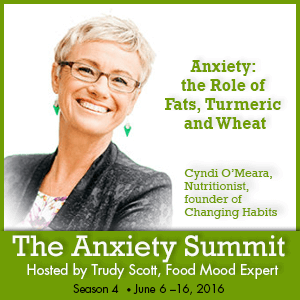
Cyndi O’Meara, Nutritionist, founder of Changing Habits, was interviewed on the Anxiety Summit by host of the Anxiety Summit, Trudy Scott, Food Mood Expert and Nutritionist, author of The Antianxiety Food Solution.

Anxiety: the role of fats, turmeric and wheat

  • Oils ain’t oils and fats ain’t fats: the danger of vegetable oils
  • The benefits of butter and other healthy fats
  • The impact of wheat on anxiety and depression
  • Turmeric for detoxification, inflammation, depression and anxiety
  • How to get the most out of consuming turmeric

Here are some gems from our interview:

The healthy fats for me are any fat that nature has made.  So that could be a saturated fat in a plant based oil such as coconut oil or it could be a saturated fat in animal fats.  So in the winter there would not be a lot of saturated fat around.  It would be more in the summer. 

And in culture and traditions we ate seasonal foods.  So when the animals were fat they had saturated fat on them and we would consume those fats.  If they were producing dairy which would usually be in the spring and right through the summer we might eat that and that had saturated fat in it.  So we would have these types of fats in the summer.  In the winter we had lean meats because the animals were lean.  They didn’t have stored fats on them.  Neither did we.

I look at the morphing of margarine and the fact that it’s been seen as a healthy fat and it’s not a healthy fat.  It’s a chemicalized, manmade, manufactured, polyunsaturated fat that is normally liquid at room temperature that becomes solid because of what they do.

We also discuss inca inchi oil, a plant-based oil:

Inca inchi is very high in vitamin A and vitamin E – inca inchi seed oil is one of the most amazing plant based oils.  It’s also called sacha inchi, so it’s a South American seed and it’s 86 percent essential fatty acid and 48 percent omega-3 which means that we can make our EPAs and our DHAs with it.  So it’s a more sustainable omega-3 base as opposed to fish oil.  And it’s one of my favorite oils and it’s got a profile that’s similar to flaxseed oil and I can use it to make my mayonnaises, my pestos.  I can make all beautiful salad dressings with it.  I can drizzle it over some fresh vegetables that I’ve just steamed.

We talk about Roundup/glyphosate being sprayed on wheat and canola and the research work of Stephanie Seneff (interviewed in season 1 of the Anxiety summit): looking at the effects on the gut bacteria, the shikimate pathway and hence serotonin and anxiety, depression and autism.

Here is the TEDX talk that Cyndi recommended – Jeff Iliff: One more reason to get a good night’s sleep

And a recent study on camu camu – Antioxidant and associated capacities of Camu camu (Myrciaria dubia): a systematic review.

A program to increase the visibility of camu camu can contribute substantially not only to the management of inflammatory conditions and its positive contribution to overall good health but also to its potential role in many disease states.

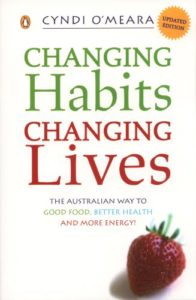
Here is Cyndi’s book: Changing Habits, Changing Lives

cyndi changing habits


Here is a digital gift from Cyndi: Depression e-report and Changing Habits Changing Lives audio book 

Here is the link to learn more about the new wheat documentary (online screening June 24-30): What’s With Wheat.

whats with wheat

If you are not already registered for the Anxiety Summit you can get live access to the speakers of the day here: www.theAnxietySummit.com

Missed this interview or can’t listen live? Or want this and the other great interviews for your learning library? Purchase the MP3s or MP3s + transcripts and listen when it suits you.

You can find your purchasing options here: Anxiety Summit Season 1, Anxiety Summit Season 2, Anxiety Summit Season 3, and Anxiety Summit Season 4.


Filed Under: Events, The Anxiety Summit 4 Tagged With: anxiety, anxiety summit, Cyndi O’Meara, fat, Trudy Scott, turmeric, wheat

Zinc, turmeric and tryptophan for brain health and mood

September 4, 2013 By Trudy Scott 33 Comments

Boys Telling Secrets

So much can be done using the amazing healing power of foods and nutrients when it comes to brain health and mood. I truly believe this holistic health approach is the way to go because it gets back to basics and addresses the root causes of issues instead of the using the band-aid approach. The added bonus is that this approach also improves focus, skin health, digestion, heart health and more.

Here are just some of my top nutrients for a healthy brain and great mood!

Zinc is one of the top nutrient deficiencies I see with my clients.

Zinc is a key nutrient for the prevention of anxiety and depression, especially the type of social anxiety called pyroluria. Here is the pyroluria questionnaire: https://www.everywomanover29.com/blog/pyroluria-questionnaire-from-the-antianxiety-food-solution/ It’s also been shown to be beneficial for sleep, cognitive function and for healing from traumatic brain injury. Zinc is also an important co-factor in making the neurotransmitters GABA and serotonin.

Turmeric is an uncommon yet powerful supplement

Research shows that turmeric has “promising cardioprotective and anti-inflammatory properties”. We often see inflammation and brain/mood problems go hand in hand. Inflammation produces cytokines which activate the IDO enzyme, degrading tryptophan and leading to less serotonin and less melatonin. This can result in increased depression and anxiety, poor sleep and poor focus. A new randomized, controlled clinical trial published in the journal Phytotherapy Research has confirmed that the primary polyphenol in turmeric known as curcumin is both safe and effective in treating serious states of depression. One study even found that turmeric benefited 3 patients with Alzheimer’s disease and reduced symptoms of irritability, agitation, anxiety, and apathy.

Tryptophan is an amazing amino acid

It promotes sleep and improves depression, anxiety, panic, worry and OCD /obsessive compulsive symptoms in people who have low serotonin. I have my clients do this questionnaire so we can figure out which deficiency they have https://www.everywomanover29.com/blog/amino-acids-mood-questionnaire-from-the-antianxiety-food-solution/ Although there isn’t a great deal of research on this amino acid and “the evidence base is significantly larger for depression than for anxiety disorder”, tryptophan is recognized as an add-on for when someone is on medications. I see so much success using tryptophan with my clients that I wish it was the first choice before anti-depressants!

I’d like to share some recent success I’ve seen with tryptophan. I’ve been having the most amazingly rewarding sessions with a young man (and his mom). During our first session, an in-office trial of 100mg of chewable tryptophan reduced his worry, sadness and very busy thoughts from a 7/8/9 out of 10, to a 3 out of 10 within 5-10 minutes. He said “my head feels different…good different…I’m thinking happy things”. He started to smile a lot. He also has a repetitive behavior which went from 7/8 out of 10, to a 5 out of 10. Tryptophan is known for reducing OCD but it wasn’t quite enough and we have had to add inositol too. I know the amazing amino acids work wonders but I’m always thrilled when I see them in action changing lives. And most of all, I’m so pleased his mom decided to go this route first instead of having him take medications. We are simply addressing nutritional deficiencies like low serotonin and low zinc [he did also need zinc].

What supplements have you found to be beneficial for your brain health, anxiety or depression? 

Filed Under: Antianxiety Food Solution, Anxiety and panic, Food and mood Tagged With: anxiety, brain, depression, mood, panic, tryptophan, turmeric, zinc

Primary Sidebar

NEW! GABA QuickStart Homestudy (with special intro pricing)

gaba quickstart homestudy

Free Report

9 Great Questions Women Ask about Food, Mood and their Health

You'll also receive a complimentary subscription to my ezine "Food, Mood and Gal Stuff"


Connect with me

Popular Posts

  • Amino Acids Mood Questionnaire from The Antianxiety Food Solution
  • The Antianxiety Food Solution Amino Acid and Pyroluria Supplements
  • Pyroluria Questionnaire from The Antianxiety Food Solution
  • Collagen and gelatin lower serotonin: does this increase your anxiety and depression?
  • Tryptophan for the worry-in-your-head and ruminating type of anxiety
  • GABA for the physical-tension and stiff-and-tense-muscles type of anxiety
  • The Antianxiety Food Solution by Trudy Scott
  • Seriphos Original Formula is back: the best product for anxiety and insomnia caused by high cortisol
  • Am I an anxious introvert because of low zinc and vitamin B6? My response to Huffington Post blog
  • Vagus nerve rehab with GABA, breathing, humming, gargling and key nutrients

Recent Posts

  • What do I use instead of Seriphos to help lower high cortisol that is affecting my sleep and making me anxious at night?
  • BeSerene™ GABA/theanine cream eases severe muscle tension in her neck/shoulders, prevents her bad headaches and quells her anxiety
  • How the correct approach, dose and sublingual use of GABA can be calming and not cause a flushed and itchy face and neck
  • The amino acid glutamine improves low mood by addressing gut health, and it has calming effects too
  • Flight anxiety with heightened breath, physical tension and also fearing the worst (the role of low GABA and low serotonin)

Categories

  • 5-HTP
  • AB575
  • Addiction
  • ADHD
  • Adrenals
  • Alcohol
  • Allergies
  • Alzheimer's disease
  • Amino Acids
  • Anger
  • Antianxiety
  • Antianxiety Food Solution
  • Antidepressants
  • Anxiety
  • Anxiety and panic
  • Autism
  • Autoimmunity
  • benzodiazapines
  • Bipolar disorder
  • Books
  • Caffeine
  • Cancer
  • Candida
  • Children/Teens
  • Collagen
  • Cooking equipment
  • Coronavirus/COVID-19
  • Cravings
  • Depression
  • Detoxification
  • Diabetes
  • Diet
  • DPA/DLPA
  • Drugs
  • EFT/Tapping
  • EMF
  • EMFs
  • Emotional Eating
  • Endorphins
  • Environment
  • Essential oils
  • Events
  • Exercise
  • Fear
  • Fear of public speaking
  • Fertility and Pregnancy
  • Fish
  • Food
  • Food and mood
  • Functional neurology
  • GABA
  • Gene polymorphisms
  • General Health
  • Giving
  • Giving back
  • Glutamine
  • Gluten
  • GMOs
  • Gratitude
  • Gut health
  • Heart health/hypertension
  • Histamine
  • Hormone
  • Hyperparathyroidism
  • Hypoglycemia
  • Immune system
  • Inflammation
  • Insomnia
  • Inspiration
  • Introversion
  • Joy and happiness
  • Ketogenic diet
  • Lithium orotate
  • Looking awesome
  • Lyme disease and co-infections
  • MCAS/histamine
  • Medication
  • Men's health
  • Mental health
  • Mercury
  • Migraine
  • Mold
  • Movie
  • MTHFR
  • Multiple sclerosis
  • Music
  • NANP
  • Nature
  • Nutritional Psychiatry
  • OCD
  • Osteoporosis
  • Oxalates
  • Oxytocin
  • Pain
  • Paleo
  • Parasites
  • Parkinson’s disease
  • PCOS
  • People
  • PMS
  • Postpartum
  • PTSD/Trauma
  • Pyroluria
  • Questionnaires
  • Real whole food
  • Recipes
  • Research
  • Schizophrenia
  • serotonin
  • SIBO
  • Sleep
  • Special diets
  • Sports nutrition
  • Stress
  • Sugar addiction
  • Sugar and mood
  • Supplements
  • Teens
  • Testimonials
  • Testing
  • The Anxiety Summit
  • The Anxiety Summit 2
  • The Anxiety Summit 3
  • The Anxiety Summit 4
  • The Anxiety Summit 5
  • The Anxiety Summit 6
  • Thyroid
  • Thyroid health
  • Toxins
  • Tryptophan
  • Tyrosine
  • Uncategorized
  • Vegan/vegetarian
  • Women's health
  • Yoga

Archives

  • October 2025
  • September 2025
  • August 2025
  • July 2025
  • June 2025
  • May 2025
  • April 2025
  • March 2025
  • February 2025
  • January 2025
  • November 2024
  • October 2024
  • September 2024
  • August 2024
  • July 2024
  • June 2024
  • May 2024
  • April 2024
  • March 2024
  • February 2024
  • January 2024
  • December 2023
  • November 2023
  • October 2023
  • September 2023
  • August 2023
  • July 2023
  • June 2023
  • May 2023
  • April 2023
  • March 2023
  • February 2023
  • January 2023
  • December 2022
  • November 2022
  • October 2022
  • September 2022
  • August 2022
  • July 2022
  • June 2022
  • May 2022
  • April 2022
  • March 2022
  • February 2022
  • January 2022
  • December 2021
  • November 2021
  • October 2021
  • September 2021
  • August 2021
  • July 2021
  • June 2021
  • May 2021
  • April 2021
  • March 2021
  • February 2021
  • January 2021
  • December 2020
  • November 2020
  • October 2020
  • September 2020
  • August 2020
  • July 2020
  • June 2020
  • May 2020
  • April 2020
  • March 2020
  • February 2020
  • January 2020
  • December 2019
  • November 2019
  • October 2019
  • September 2019
  • August 2019
  • July 2019
  • June 2019
  • May 2019
  • April 2019
  • March 2019
  • February 2019
  • January 2019
  • December 2018
  • November 2018
  • October 2018
  • September 2018
  • August 2018
  • July 2018
  • June 2018
  • May 2018
  • April 2018
  • March 2018
  • February 2018
  • January 2018
  • December 2017
  • November 2017
  • October 2017
  • September 2017
  • August 2017
  • July 2017
  • June 2017
  • May 2017
  • April 2017
  • March 2017
  • February 2017
  • January 2017
  • December 2016
  • November 2016
  • October 2016
  • September 2016
  • August 2016
  • July 2016
  • June 2016
  • May 2016
  • April 2016
  • March 2016
  • February 2016
  • January 2016
  • December 2015
  • November 2015
  • October 2015
  • September 2015
  • August 2015
  • July 2015
  • June 2015
  • May 2015
  • April 2015
  • March 2015
  • February 2015
  • January 2015
  • December 2014
  • November 2014
  • October 2014
  • September 2014
  • August 2014
  • July 2014
  • June 2014
  • May 2014
  • April 2014
  • March 2014
  • February 2014
  • January 2014
  • December 2013
  • November 2013
  • October 2013
  • September 2013
  • August 2013
  • July 2013
  • June 2013
  • May 2013
  • April 2013
  • March 2013
  • February 2013
  • January 2013
  • December 2012
  • November 2012
  • October 2012
  • August 2012
  • July 2012
  • June 2012
  • May 2012
  • April 2012
  • March 2012
  • February 2012
  • January 2012
  • December 2011
  • November 2011
  • October 2011
  • September 2011
  • August 2011
  • July 2011
  • June 2011
  • May 2011
  • April 2011
  • March 2011
  • February 2011
  • January 2011
  • December 2010
  • October 2010
  • September 2010
  • July 2010
  • May 2010
  • April 2010
  • March 2010
  • February 2010
  • January 2010
  • November 2009

Share the knowledge!

The above statements have not been evaluated by the Food and Drug Administration. Products listed in this website are not intended to diagnose, treat, cure or prevent any disease.

The information provided on this site is for informational and educational purposes only and is not intended as a substitute for advice from your physician or other health care professional. You should consult with a healthcare professional before starting or modifying any diet, exercise, or supplementation program, before taking or stopping any medication, or if you have or suspect you may have a health problem.


Copyright © 2026 Trudy Scott. All Rights Reserved. | Privacy | Terms and Conditions | Refund Policy | Medical Disclaimer

Free Report

9 Great Questions Women Ask about Food, Mood and their Health

You’ll also receive a complimentary subscription to my ezine “Food, Mood and Gal Stuff”