• Skip to primary navigation
  • Skip to main content
  • Skip to primary sidebar

everywomanover29 blog

Food, Mood and Women's Health – Be your healthiest, look and feel great!

  • Blog
  • About
  • Services
  • Store
  • Resources
  • Testimonials
  • The Book
  • Contact
  • Search this site

sleep issues

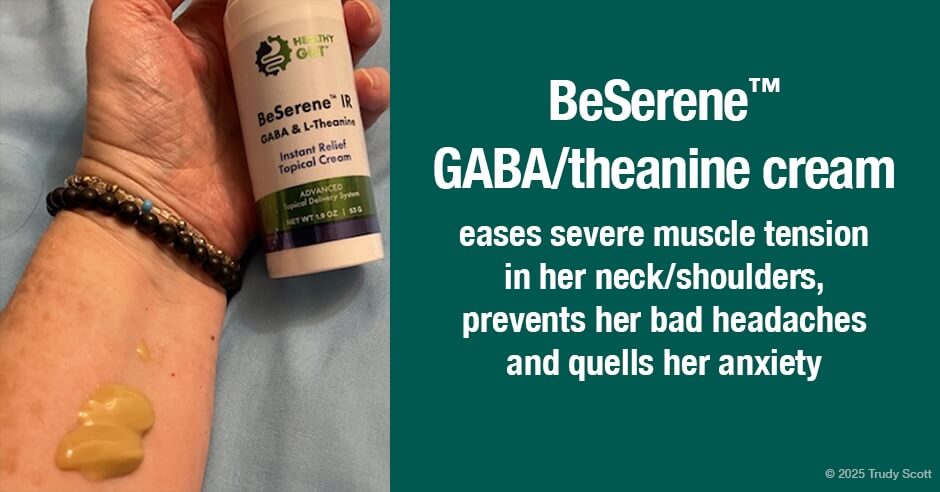
BeSerene™ GABA/theanine cream eases severe muscle tension in her neck/shoulders, prevents her bad headaches and quells her anxiety

October 24, 2025 By Trudy Scott 9 Comments

beserene

Hi there… I wanted to add my ‘two cents’ to the discussion about the BeSerene™ GABA/theanine product that you recommend. I LOVE it! I suffer from low GABA levels, which result in my having severe muscle tension in my neck and shoulders. Often, that resulted in bad muscle tension headaches, for which I couldn’t find anything to bring relief. The BeSerene™ GABA/theanine cream has been a real game changer.

If I wake up with one of those headaches in the middle of the night or in the morning, I use two pumps and rub it on my tight neck and shoulder muscles and within 15 minutes, I can feel the tension melting away! It literally goes away! I have  even been able to prevent a headache from occurring by using it on my neck muscles before I go to bed at night.

Insofar as anxiety, I get relief from that as well, because generally I start to get anxiety once the headaches start, as I never know if it is going to be manageable with just an ibuprofen or two, or if it is going to be one of ‘those’ headaches, i.e. a migraine that lasts for a day or more! Unfortunately, once the anxiety starts, it makes the muscle tension headache worse, which makes the anxiety worse, and it’s just a horrible vicious cycle!

So, since the BeSerene™ cream works so efficiently on the muscle tension, it quells the anxiety that usually follows!

It has changed my life, and I don’t know of any other product I can say that about. I can honestly say that I will not allow myself to ever be without it now!

Thank you so much Trudy, for recommending this product!

Lisa is a woman in the community who reached out to me via email with this message raving about how life-changing this cream has been for her. I am thrilled for her and never get tired of hearing results like this. I’m not surprised either and love to share these kinds of results! She kindly gave me permission to share, saying “I want others to experience what I have with this product!”

Read on below for more about why she gravitated towards using a cream, other benefits you may expect to see (like a reduction in stress-eating and/or drinking too much wine), my insights into when to consider using a GABA/theanine cream like this and how to use it, where to purchase this exact cream and additional resources if you are new to using GABA.

Why did Lisa gravitate to using a GABA/theanine cream?

Lisa shared that she just couldn’t seem to tolerate the sublingual or oral GABA:

I have tried sublingual GABA products but haven’t had much success, as I haven’t been able to find any without alcohol sugars (xylitol, sorbitol, etc.) Those ingredients give me a terrible taste in my mouth and I just can’t tolerate them. (Why can’t they make one with just real sugar from nature?)

Plus, I haven’t had a lot of success with the oral products as they just take too long to work on the headaches/muscle tension.

I’m really glad she recognized her symptoms were due to low GABA – muscle tension and pain, in conjunction with feeling physically anxious are common. And that she didn’t give up on GABA and persevered until she found what works for her symptoms.

What about other forms of GABA?

However, my advice for someone in Lisa’s situation is not to give up on other GABA products if she finds she needs additional support in the future or finds herself without the cream. With regards to taste and time to work, I recommend a GABA-only (or GABA/theanine) capsule opened on to the tongue or a GABA (and/or theanine) powder – both held on the tongue for 1-2 minutes for quick results.

Stress-eating and self-medication with wine are classic signs of low GABA

Interestingly, stress eating is not an issue for her but wine may be:

I’ve never really had any issues with stress-eating. In fact, I usually have no appetite when I’m stressed out! (That’s where the wine comes in…lol!)

We may self-medicate with wine when GABA is low because it relaxes us physically, helps us fit in socially and feels calming and pleasant. It’s mistakenly used to try and improve sleep but typically makes things worse.

Alcohol consumption damages the gut, depletes B vitamins (especially thiamine/vitamin B1) and zinc – and it’s addicting.

GABA can stop that addiction in its tracks so there are no feelings of deprivation. The reasons we are drawn to GABA are addressed too. And amazingly there is research that GABA may actually heal the gut after alcohol consumption.

Bumping up the GABA/theanine cream may help or considering one of the other GABA products mentioned above may be better.

Low GABA symptoms

As a reminder, if you are new to GABA, it’s an amino acid that helps to address low GABA levels and the associated symptoms: physical tension and feeling anxious, feeling worried or fearful, panic attacks, stiff or tense muscles, insomnia, feeling stressed and burned-out, craving carbs/alcohol for relaxation and calming, intrusive thoughts, spinning/poor focus, fear of heights, rectal spasms, burning mouth, and visceral pain/belly pain with IBS. See the most current list of low GABA symptoms here.

When to consider using a GABA/theanine cream like this?

These are some of the applications I consider

  • When other GABA products haven’t worked (like in Lisa’s situation)
  • When looking for something in addition to other GABA products, for example, GABA powder in the day while at work or play, and GABA/theanine cream at night for tension and sleep issues
  • When there is a specific need for a topical application – like with neck and shoulder tension or belly pain or period pain or leg spasms etc
  • For an aging parent with Alzheimer’s disease (and sundowning agitation/anxiety)
  • For a person with ARFID (avoidant-restrictive food intake disorder)
  • For a person with anorexia or other eating disorder
  • When a child or young adult has autism (with anxiety and sensorimotor issues), a child/adult who struggles with taking supplements and other special needs children/adults
  • For someone with multiple sclerosis (for anxiety and muscle spasms/spasticity)
  • When a person has severe digestive issues and prefers a cream
  • When someone just wants to take a break from sublingual/oral/powder GABA
  • For presurgery anxiety since supplements are typically not permitted (even though there is research showing both help)

Where to purchase BeSerene™ IR GABA and theanine cream and how to use it?

This cream can be purchased online with this link (this has my 15% discount built in – you’ll see the discount applied on the checkout page after you add it to the cart).

Purchase BeSerene™ IR

They recommend applying 1-2 pumps to your temples or wrists.

You could also use 1-2 pumps/squirts on your neck and shoulder (like Lisa did), the forearm or inner thigh (before bed for helping improve sleep), and/or belly (especially if belly pain or IBS/SIBO or PMS pain keeps you awake at night). It can also easily be applied if you wake in the night.

Personally, it’s a product I love at bedtime. I apply 2 pumps on my forearm and then rub my belly with any that is left over. It’s calming, improves my sleep and helps with belly pain at night.

I’m sure you can tell by now that this is a product I endorse. I recommend it to clients and to participants in my GABA Quickstart program. In fact, it’s one of the top ten GABA products I recommend and it’s even included in the training materials/handouts of the program!

Additional resources when you are new to using GABA or other amino acids as supplements

We use the symptoms questionnaire to figure out if low GABA (indicating a possible need for GABA or theanine) or low serotonin (indicating a need for tryptophan or 5-HTP) or low endorphins (indicating a possible need for DPA) or other neurotransmitter imbalances may be an issue for you.

If you suspect low levels of any of the neurotransmitters and do not yet have my book, The Antianxiety Food Solution – How the Foods You Eat Can Help You Calm Your Anxious Mind, Improve Your Mood, and End Cravings. I highly recommend getting it and reading it before jumping in and using amino acids on your own so you are knowledgeable. And be sure to share it with the practitioner/health team you or your loved one is working with.

There is an entire chapter on the amino acids and they are discussed throughout the book in the sections on gut health, gluten, blood sugar control, sugar cravings, anxiety and mood issues. The importance of quality animal protein and healthy fats is also covered.

The book doesn’t include product names (per the publisher’s request) so this blog, The Antianxiety Food Solution Amino Acid and Pyroluria Supplements, lists the amino acids that I use with my individual clients and those in my group programs.

If, after reading this blog and my book, you don’t feel comfortable figuring things out on your own (i.e. doing the symptoms questionnaire and respective amino acids trials), a good place to get help is the GABA QuickStart Program (if you have low GABA symptoms). This is a paid online/virtual group program where you get my guidance and community support. We’ll be launching a budget-friendly homestudy version in a few weeks – sign up for the wait list here (the live version with Q&A is offered only a few times a year).

If you also need serotonin support, the Serotonin QuickStart Program is a good place to get help. This is also a paid online/virtual group program where you get my guidance on using tryptophan and 5-HTP safely, and community support during 5 LIVE Q&A calls. You can sign up to be notified when the next live launch of this program is happening.

If you are a practitioner, join us in The Balancing Neurotransmitters: the Fundamentals program. This is also a paid online/virtual program with an opportunity to interact with me and other practitioners who are also using the amino acids.

Now I’d love to hear from you…

I appreciate Lisa’s willingness to share her wonderful results. Now I’d love to hear from you.

Have you used BeSerene™ GABA and theanine cream and how has it helped you?

How does using a GABA/theanine cream compare with other GABA products you have used (feel free to share specific brands and how you used them – sublingual, capsule-opened, liposomal or powder or even another brand of GABA cream)?

As  I shared above, some folks prefer a cream only and many use a combination of cream and sublingual.

Feel free to post your questions here too.
Filed Under: Anxiety, GABA, Pain, Stress Tagged With: anxiety, anxious, BeSerene, BeSerene™ GABA/theanine cream, cream, GABA, GABA cream, GABA Quickstart, Headaches, how to use a GABA cream, low GABA, migraine, muscle tension, neck, pain, shoulders, sleep issues, stress, stress-eating, wine

How the correct approach, dose and sublingual use of GABA can be calming and not cause a flushed and itchy face and neck

October 10, 2025 By Trudy Scott 12 Comments

correct use of gaba

I started GABA 750mg and think it gently chills out my anxiety a bit, however 20 minutes after I take it, I feel flushed and itchy in my face and neck. This lasts for 5 minutes and then goes away.

I am in a migraine program with a health coach who has referenced your book several times. She recommended I stop it because it sounds like an allergy. I personally would think it would last longer if it was an allergy.

What do you think? Have you heard of this reaction before? I thought it would maybe get better as my body gets used to taking it? I wanted to continue because I think it’s helping. Thank you.

Sharon posted the above feedback about her promising calming results with GABA and her flushed/itchy question on one of the blogs.  She also asked this:

Just read other posts and I’m just beginning to learn all of this info on your site. I’m also getting your book. Looks like I may have started too high? Could I open up one of my capsules and just take powder orally and then work up?

Read on below to learn more about the fact that too much GABA does cause flushing; the correct approach, dose and sublingual use of GABA for Sharon; Holly’s similar story with 750mg GABA; and GABA, serotonin and endorphin support for Sharon’s other symptoms (headaches, migraines, PMS, sleep issues and rectal spasms); plus additional resources when are new to amino acids such as GABA, 5-HTP, DPA and others.

Too much GABA does cause a flush feeling

Firstly, it’s wonderful that GABA gently chills out Sharon’s anxiety a bit. And she is correct – her flush and itchy face and neck is unlikely to be an allergic reaction. Too much GABA does cause a niacin-like flush or tingling feeling and yes, I have heard of this reaction many times. Unfortunately it leads to many people giving up on GABA when they really do need it.

Sharon shared this: “I thought it would maybe get better as my body gets used to taking it?”  Unfortunately, many individuals think the same and end up pushing through the discomfort and it’s not what I advise. She was wise in exercising caution and finding out by reading more on the blog, getting a copy of my book, The Antianxiety Food Solution and asking on the blog.

I have no idea why supplement companies produce such a high dose GABA product and it’s something I caution all my clients and GABA Quickstart program participants about.

The correct approach, dose and sublingual use of GABA for Sharon

Sharon also acknowledges she probably started with too high a dose and asks about opening up the GABA capsule and working her way up. This is exactly what we need to do to get results with GABA and not cause new issues.

Some other options to opening the GABA capsule could be:

  • a GABA only powder
  • a GABA sublingual product (such as GABA Calm)
  • a liposomal GABA product
  • a GABA cream (she reported migraines and neck tension so a cream may be a good option for her too)

I also have clients start with only one amino acid product and find the ideal dose before adding the next amino acid acid. And track results carefully so they can course correct, adjusting up or down as needed.

Sharon did come back and comment a week later sharing this adjustment she had made:

So I have been opening the GABA capsule and taking half a dose (so 375mg) on my tongue in the morning and then in the afternoon. I don’t notice the real calm like I did with the whole capsule though.

She’s on the right track and the next step could be to use three-quarters of a dose twice a day and see how that helps. Another option is half a dose, maybe 4 x day. There is no one-size fits all and it’s a matter of Sharon finding what works best for her unique needs.

Keep in mind that for some individuals even 375mg is too high a dose. I typically have clients start with 125mg GABA and less if they are super-sensitive.

Holly’s story with 750mg GABA is very similar

I’ve actually blogged about this before: Too much GABA causes a tingling niacin-like flush sensation (in the brain and body). It’s awful and very uncomfortable!) and shared Holly’s niacin-like flush result when using the same dose:

I experienced the niacin-like flush when I tried to go from GABA Calm [mostly dissolved in my mouth] to a pill form and didn’t realize the dosage would be way too high all at one time. The pill was 750 mg GABA [and swallowed with food], so it wasn’t going to work well anyway.

The flush lasted about 15-20 minutes. It was awful. I was sure I was going to throw up every time.

It took me a couple of weeks to figure out the cause.  My therapist recommended your website and book and those helped me understand when to take it and why it would help.

When I eliminated the 750 mg GABA  pill the symptoms completely went away.

Now I stick to GABA Calm. I take one in the morning and one before bed and sometimes one midday.

You can read more about this flush feeling on the above blog and another example.

GABA, serotonin and endorphin support for Sharon’s other symptoms

Sharon also has headaches, migraines, PMS, sleep issues and rectal spasms:

I’ve got chronic headaches and frequent migraines. Other weird symptoms are lip dermatitis, hormone imbalance, PMS, and rare rectal spasms which I saw referenced on your site too. Serotonin issues too and I also recently started 5-HTP 200mg at night which seems to be helping my PMS insomnia.

It’s great that 5-HTP is helping her PMS-related sleep issues. Both GABA and 5-HTP (for serotonin support) may help with her hormone balance, which in turn, may help with her headaches and migraines too. She may also want to consider a trial of d-phenylalanine/DPA for endorphin support/pain relief. GABA itself helps to ease neck tension and headaches.

GABA does stop very painful rectal spasms very quickly. More about this here – GABA lozenge relieves excruciating pelvic floor/rectal pain and spasms within 30 seconds: a solution for proctalgia fugax.

As I mentioned above, I have clients and those in the GABA Quickstart program start with GABA and find the ideal dose before adding the next amino acid acid. For Sharon, I’d recommend that she finds her ideal dose of GABA before bumping up her 5-HTP and adding DPA.

Additional resources when you are new to using GABA or other amino acids as supplements

We use the symptoms questionnaire to figure out if low GABA (indicating a possible need for GABA or theanine) or low serotonin (indicating a need for tryptophan or 5-HTP) or low endorphins (indicating a possible need for DPA) or other neurotransmitter imbalances may be an issue for you.

If you suspect low levels of any of the neurotransmitters and do not yet have my book, The Antianxiety Food Solution – How the Foods You Eat Can Help You Calm Your Anxious Mind, Improve Your Mood, and End Cravings. I highly recommend getting it and reading it before jumping in and using amino acids on your own so you are knowledgeable. And be sure to share it with the practitioner/health team you or your loved one is working with.

There is an entire chapter on the amino acids and they are discussed throughout the book in the sections on gut health, gluten, blood sugar control, sugar cravings, anxiety and mood issues. The importance of quality animal protein and healthy fats is also covered.

The book doesn’t include product names (per the publisher’s request) so this blog, The Antianxiety Food Solution Amino Acid and Pyroluria Supplements, lists the amino acids that I use with my individual clients and those in my group programs.

If, after reading this blog and my book, you don’t feel comfortable figuring things out on your own (i.e. doing the symptoms questionnaire and respective amino acids trials), a good place to get help is the GABA QuickStart Program (if you have low GABA symptoms). This is a paid online/virtual group program where you get my guidance and community support.

If you also need serotonin support, the Serotonin QuickStart Program is a good place to get help. This is also a paid online/virtual group program where you get my guidance on using tryptophan and 5-HTP safely, and community support during 5 LIVE Q&A calls. You can sign up to be notified when the next live launch of this program is happening.

If you are a practitioner, join us in The Balancing Neurotransmitters: the Fundamentals program. This is also a paid online/virtual program with an opportunity to interact with me and other practitioners who are also using the amino acids.

Now I’d love to hear from you…

I appreciate Sharon and Holly for sharing their experiences and asking questions. I’m hoping their stories have enlightened you!

And I am thrilled that her migraine health coach referenced my book and told her about GABA. It’s a great book that many practitioners share with their clients and patients.

Have you experienced this uncomfortable feeling when using too much GABA? And did you learn to use less in order to get the calming benefits of GABA?

How much do you find helps? And do you use powder or capsules opened or liposomal or cream?

Has serotonin or endorphin support helped too?

Feel free to share and ask your questions below.

Filed Under: Anxiety, GABA Tagged With: 5-HTP, 750mg, allergy, amino acids, anxiety, calming, chill, dose, DPA, endorphin, flushed, flushing, GABA, Headaches, itchy, migraines, PMS, rectal spasms, serotonin, sleep issues, sublingual, too high

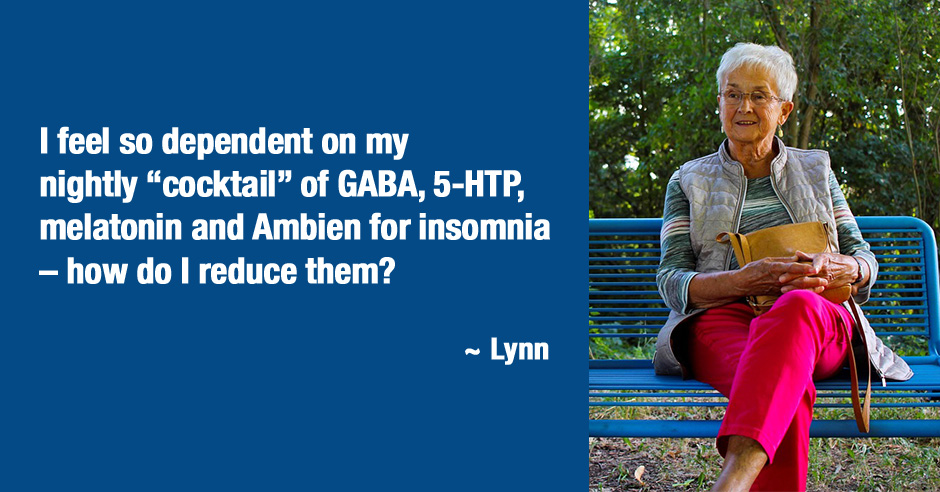
I feel so dependent on my nightly “cocktail” of GABA, 5-HTP, melatonin and Ambien for insomnia – how do I reduce them?

May 2, 2025 By Trudy Scott 3 Comments

reducing gaba

I have had insomnia for years. I have used GABA Calm with good results and also 5-HTP, melatonin and Ambien. Recently I discovered I have mild sleep apnea and have made huge progress in modifying my night awakening.

With my sleep apnea issues addressed, I would like to try to reduce my supplements and the Ambien… but the thought of this causes more anxiety. I feel so dependent on my nightly “cocktail”.

What is the best way to reduce the fear of withdrawal and my nagging brain that tells me I “need” these things?

Many thanks for all the wonderful information you share!

Lynn asked this on one of the blogs and since it’s a common question I’m sharing my feedback in this new blog post. I’m pleased to hear she has discovered sleep apnea is a factor as it’s not always checked and it definitely can cause disrupted sleep and waking in the night.

There is no need to taper amino acids and melatonin but I typically have clients gradually reduce them, one at a time, especially when they are concerned and are not sure how much they may still be helping.

She has a nagging feeling she still needs these supplements, feels dependent on them and feels anxious about stopping. All of this, in conjunction with the fact that stopping a sleep medication such as Ambien can also cause rebound insomnia has me advising a go-slow approach in a situation like this. Also, Ambien does need to be tapered very slowly and under medical supervision, so she would need to keep this in mind too.

A go-slow approach and one amino acid at a time

Lynn may still need one or more of the GABA, 5-HTP and/or melatonin and we don’t want to lose any gains.

As mentioned above, there is no need to taper amino acids and melatonin but I typically have clients gradually reduce them, one at a time, especially when they are concerned and are not sure how much they may still be helping.

I would start with assessing other low GABA symptoms and other low serotonin symptoms and if there are none, start with reducing either GABA or 5-HTP over a few weeks, watching for worsening sleep or other symptoms showing up. She could then do the same with melatonin.

As a reminder, other than sleep issues (with physical tension at night), these are low GABA symptoms: feeling anxious with physical-tension and stiff-and-tense-muscles, overwhelm, feelings of panic, and the need to self-medicate to calm down, often with alcohol but sometimes with carbs and sugary foods. You can also experience anger, rage and agitation, poor focus, intrusive thoughts/overactive brain, spasms, visceral pain/belly pain with IBS and more. You can read the entire list of low GABA signs and symptoms here.

With low serotonin, we see sleep issues with ruminating thoughts and worry (at night too), and fears, phobias, ruminations, obsessing, feelings of panic, perfectionism and lack of confidence, low mood, rage, anger and irritability.

Lynn has a nagging feeling she still needs these supplements, feels dependent on them and feels anxious about stopping. All this is a clue she may still need them or at least need one or more to some extent. Doing a reverse-trial of reducing each one, one at a time, with careful tracking is my approach.

I would tackle the above amino acid and melatonin reduction – if she decides to go ahead with it – only AFTER she has worked with her prescribing doctor on a slow taper on the Ambien. Stopping a sleep medication such as Ambien can cause rebound insomnia/discontinuation syndrome and she may find she does still need nutritional support to tide her over the Ambien taper period. This may be the same as she is currently using or she may even need to adjust upwards on one or more.

Ambien: dependence, withdrawal, rebound insomnia, slow tapering, falls and memory issues

Ambien/Zolpidem “is a non-benzodiazepine receptor modulator primarily used in the …short-term treatment of insomnia aimed at patients with difficulty falling asleep,” increasing “GABA inhibitory effects leading to sedation.”

I seldom see it used short-term i.e. 7 to 10 days. With longer-term use, “this drug has a high potential for overuse and daily dependence” and “withdrawal symptoms may occur if the zolpidem dose is tapered off rapidly or discontinued.”

Other factors to be aware of:

  • Complex sleep behaviors can occur after using zolpidem, such as sleep-driving, sleep-walking, and engaging in activities while not fully awake
  • Changes in behavior and abnormal thinking have been reported after zolpidem administration. In addition, patients have demonstrated aggressiveness and extroversion uncommon for the person’s usual behavior
  • Worsening of depression or suicidal ideation may occur with zolpidem therapy

I encourage you to read the article here and be fully informed.

This 2024 paper supports that “long-term use of Zolpidem may lead to drug tolerance, dependence, rebound phenomena, and withdrawal symptoms, making discontinuation difficult.” Other concerns include: dizziness, headache, falls, and cognitive decline.

Many of the papers published prior to 2023 do not report many of these issues, however awareness is growing. This 2024 paper, Case report: Additional grounds for tighter regulation? A case series of five women with zolpidem dependence from a Brazilian women-specific substance use disorder outpatient service, also reports adverse effects in women such as “memory and social impairment, falls, seizures” and “withdrawal symptoms, including rebound insomnia, social impairment, and craving.”

The authors recommend tighter regulation, stating that: “The surge in zolpidem prescriptions, driven by its perceived safety and low abuse potential compared to benzodiazepines, may lead to a global health issue of dependence.”

Because of much of this it’s important to work with the prescribing doctor on doing a very slow taper under their medical supervision. She may need to adjust her amino acids up during the taper period if her sleep gets worse in the short-term. And then do the taper approach I mentioned at the start of this blog.

With these safety, dependence and withdrawal issues, I would love to see GABA, tryptophan/5-HTP and/or melatonin (and other nutritional and functional medicine approaches), addressing sleep apnea and lifestyle factors/sleep hygiene be considered as the first approach for sleep issues – instead of Ambien/Zolipdem.

Additional resources when you are new to using GABA, 5-HTP and other amino acids as supplements

As always, I use the symptoms questionnaire to figure out if low serotonin or low GABA or other neurotransmitter imbalances may be an issue.

If you suspect low levels of any of the neurotransmitters and do not yet have my book, The Antianxiety Food Solution – How the Foods You Eat Can Help You Calm Your Anxious Mind, Improve Your Mood, and End Cravings, I highly recommend getting it and reading it before jumping in and using amino acids on your own so you are knowledgeable. And be sure to share it with the practitioner/health team you or your loved one is working with.

There is an entire chapter on the amino acids and they are discussed throughout the book in the sections on gut health, gluten, blood sugar control (this is covered in an entire chapter too), sugar cravings, anxiety and mood issues.

The book doesn’t include product names (per the publisher’s request) so this blog, The Antianxiety Food Solution Amino Acid and Pyroluria Supplements, lists the amino acids that I use with my individual clients and those in my group programs.

If, after reading this blog and my book, you don’t feel comfortable figuring things out on your own (i.e. doing the symptoms questionnaire and respective amino acids trials), a good place to get help is the GABA QuickStart Program (if you have low GABA symptoms). This is a paid online/virtual group program where you get my guidance and community support.

If you are a practitioner, join us in The Balancing Neurotransmitters: the Fundamentals program. This is also a paid online/virtual program with an opportunity to interact with me and other practitioners who are also using the amino acids.

Wrapping up and your feedback

I appreciate Lynn for asking this question and want to acknowledge that she is wise to be cautious and have concerns about the best way to tackle this. And she may find she does have a physical dependence on the Ambien.

Have you found that GABA, 5-HTP and/or melatonin helped/helps with your sleep issues?

And is sleep apnea a factor for you too?

And have you been prescribed Ambien and had any of the issues mentioned?

And how have you adjusted your amino acids and other sleep supplements as you’ve tapered your sleep medication?

Feel free to share your feedback and ask your questions below in the comments section.

Filed Under: Anxiety, GABA, Insomnia Tagged With: 5-HTP, Ambien, amino acids, anxiety, cognitive, dependent, falls, fear of withdrawal, GABA, GABA Quickstart, insomnia, melatonin, overwhelm, physical-tension, Rebound insomnia, sleep, Sleep apnea, sleep issues, Zolpidem

Understanding the function of the GABAergic system and its potential role in rheumatoid arthritis (for pain, anxiety, sleep issues and more)

January 3, 2025 By Trudy Scott 2 Comments

GABAergic system and its potential role in rheumatoid arthritis

This is a great question posed by a woman in my GABA/anxiety online group program:

Can GABA be good for rheumatoid arthritis, and in its early stages? If so, in what ways would someone see signs of improvement with GABA?

When I looked into some of the recent research on GABA and rheumatoid arthritis I was fascinated. A 2023 review paper, Understanding the function of the GABAergic system and its potential role in rheumatoid arthritis, discusses the relationship between rheumatoid arthritis (RA), an autoimmune condition, and GABA (gamma-amino butyric acid), a calming neurotransmitter.

The authors discuss “a new mechanism of action in RA” and the fact that “bidirectional communication occurs between the brain and immune system…and neuroinflammatory responses in the brain.”

The paper discusses GABA and neurosignalling, immunomodulatory effects and inflammation, stating that the:

GABAergic system may modulate the abnormal pain response in RA patients.

So to answer her question, if she has low GABA levels we would expect to see some reduction in her RA pain.

As always, we look for the signs and symptoms of low GABA regardless of the diagnosis or possible diagnosis. So if someone has low GABA symptoms of physical tension, overwhelm, fears, anxiousness, stiff and tense muscles, focus issues, pain, stress eating or drinking to calm down, and poor sleep, we consider a trial of the amino acid GABA, and could expect improvements in all or some of the above symptoms.

I would also recommend that she tracks markers of inflammation (like hs CRP, IL-6, IL-1β, and TNF-α) and RA markers to see if they shift in a positive direction with her use of GABA too.

I share more below about the incidence of anxiety and sleep issues in rheumatoid arthritis and some of the mechanisms covered in the review paper. Also, there are lab tests to track and there are other nutritional approaches for supporting an autoimmune condition such as RA.

Some of the mechanisms covered in the review paper

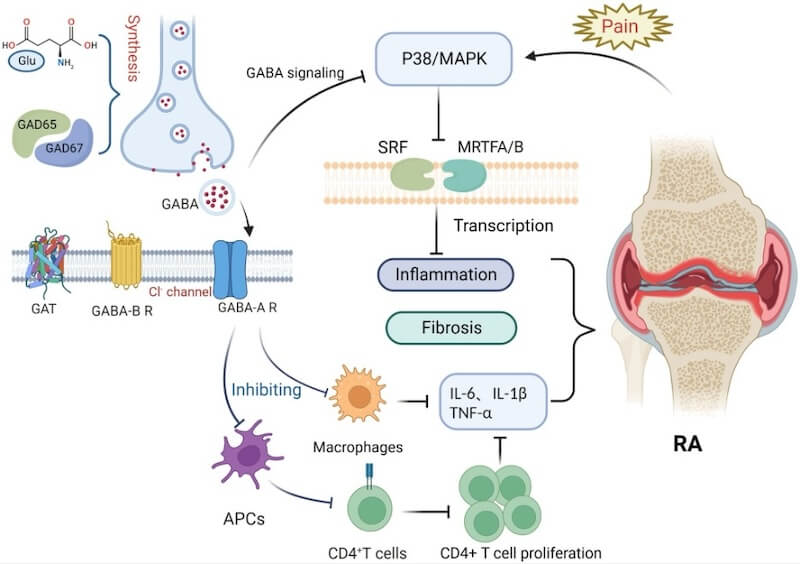
This image from the paper and the explanation provides some insights on the mechanisms at play.

  • Glutamate interacts with glutamate decarboxylase (GAD65 and GAD67) to produce gamma-aminobutyric acid (GABA).
  • Binding of GABA to GABA-A receptors inhibits macrophage activation and decreases the release of inflammatory factors such as IL-6, IL-1β, and TNF-α. Antigen presentation by antigen-presenting cells, however, is impaired, inhibiting CD4+ T cell proliferation and differentiation and reducing the expression of inflammatory factors such as IL-6, IL-1β, and TNF-α.
  • Pain signaling activates the P38/MAPK pathway, whereas GABA binding to GABA-A receptors inhibits P38/MAPK. The P38/MAPK signaling pathway contributes to inflammation and is involved in the activation of myocardin-related transcription factor A (MRTFA), myocardin-related transcription factor B (MRTFB), and serum response factor (SRF) that played key roles in fibroblast activation.
gaba and rheumatoid arthritis
Figure 1. Understanding the function of the GABAergic system and its potential role in rheumatoid arthritis

The authors don’t mention the use of the amino acid GABA as a supplement for RA but do list a number of clinical trials (mostly diabetes patients) where GABA has been used with success. It’s a start and I look forward to future research in this area.

Anxiety, depression, insomnia, cognitive issues and stress-eating in RA

This paper, Psychiatric aspects of rheumatoid arthritis: Review of literature, reports that

Among the major psychiatric disorders found in RA, the anxiety and depressive disorders are prevalent (13 to 48% of patients), as well as suicide, insomnia and tiredness. The impairment of quality of life is markedly after age 65.

This paper, A 30-Day Adjunct Wellness Intervention for the Management of Extra-Articular Symptoms of Rheumatoid Arthritis: A Formative Study, also mentions “cognitive and physical dysfunction” and “stress-related eating” in addition to anxiety, depression and insomnia in RA patients.

Doing a trial of GABA (and other amino acids such as tryptophan and d-phenylalanine/ DPA), will confirm which symptoms are related to which neurotransmitter deficiencies. It’s exciting to consider a very possible role of GABA and other amino acids given the fact that “individuals with rheumatoid arthritis (RA) continually fall short of treatment targets using standard drug therapies alone”

Looking further than GABA and other amino acids: a gluten-free diet and other root causes

With RA we obviously want to address more than just GABA (and other amino acids). Gluten removal is recommended but I do want to mention that the research is surprisingly mixed. This paper, Efficacy of gluten-free diet in patients with rheumatoid arthritis states that

Gluten seems to be a glycoprotein with a clinically relevant inflammatory effect. Several observational studies and anecdotal cases reported a correlation between gluten and various diseases, including autoimmune diseases, such as rheumatoid arthritis. This study aimed to evaluate whether gluten-free diet could be effective in controlling inflammation and ongoing rheumatoid arthritis symptoms.

We report 4 cases of patients with long-standing rheumatoid arthritis with no response to several conventional and biotechnological drugs, treated with a gluten-free diet concurrently with the drug therapy. Our patients presented different degrees of response to the diet, in terms of disease remission and improvement of symptoms. Our cases confirm that a gluten-free diet may improve symptoms of rheumatoid arthritis, even in patients resistant to conventional drug therapies.

Many other papers dismiss the role of gluten and inflammatory diets. This one is an example of a number of similar papers.

The benefits of addressing neurotransmitter imbalances with GABA and other amino acids means the addiction is stopped and quitting bread and cookies now no longer requires willpower,

Here are some autoimmune recipe resources:

  • The Autoimmune Solution Cookbook by Amy Myers MD
  • The Autoimmune Fix by Dr. Tom O’Bryan: gluteomorphins, casomorphins and withdrawal
  • Hashimoto’s Food Pharmacology, a new recipe book by Dr. Izabella Wentz

In addition to dietary changes, a full functional medicine approach is warranted as there is much research supporting the benefits of the following for RA: omega-3 fatty acids, olive oil, low vitamin B6, addressing heavy metals such as mercury and much much more.

I cover 60+ root causes of anxiety here – I’d be carefully assessing each of these root causes for RA too.

Additional resources when you are new to using GABA and other amino acids as supplements

As always, I use the symptoms questionnaire to figure out if low serotonin or low GABA or other neurotransmitter imbalances may be an issue.

If you suspect low levels of any of the neurotransmitters and do not yet have my book, The Antianxiety Food Solution – How the Foods You Eat Can Help You Calm Your Anxious Mind, Improve Your Mood, and End Cravings, I highly recommend getting it and reading it before jumping in and using amino acids on your own so you are knowledgeable. And be sure to share it with the practitioner/health team you or your loved one is working with.

There is an entire chapter on the amino acids and they are discussed throughout the book in the sections on gut health, gluten, blood sugar control (this is covered in an entire chapter too), sugar cravings, anxiety and mood issues.

The book doesn’t include product names (per the publisher’s request) so this blog, The Antianxiety Food Solution Amino Acid and Pyroluria Supplements, lists the amino acids that I use with my individual clients and those in my group programs.

If, after reading this blog and my book, you don’t feel comfortable figuring things out on your own (i.e. doing the symptoms questionnaire and respective amino acids trials), a good place to get help is the GABA QuickStart Program (if you have low GABA symptoms). This is a paid online/virtual group program where you get my guidance and community support, and is where this question was asked of me during one of the live Q&A calls.

If you are a practitioner, join us in The Balancing Neurotransmitters: the Fundamentals program. This is also a paid online/virtual program with an opportunity to interact with me and other practitioners who are also using the amino acids.

Wrapping up and your feedback

Do you have rheumatoid arthritis (RA) or another autoimmune condition and has GABA helped?

Were you aware of these possible connections?

What about dietary and nutritional approaches?

Feel free to share your feedback and ask your questions below.

Filed Under: Anxiety, GABA, Pain Tagged With: amino acids, anxiety, anxious, anxiousness, autoimmune, calming, drinking, fears, focus, GABA, GABA Quickstart, GABAergic system, Inflammation, neurotransmitter, overwhelm, pain, physical-tension, rheumatoid arthritis, sleep issues, stiff and tense muscles, stress-eating

Primary Sidebar

NEW! GABA QuickStart Homestudy (with special intro pricing)

gaba quickstart homestudy

Free Report

9 Great Questions Women Ask about Food, Mood and their Health

You'll also receive a complimentary subscription to my ezine "Food, Mood and Gal Stuff"


Connect with me

Popular Posts

  • Amino Acids Mood Questionnaire from The Antianxiety Food Solution
  • The Antianxiety Food Solution Amino Acid and Pyroluria Supplements
  • Pyroluria Questionnaire from The Antianxiety Food Solution
  • Collagen and gelatin lower serotonin: does this increase your anxiety and depression?
  • Tryptophan for the worry-in-your-head and ruminating type of anxiety
  • GABA for the physical-tension and stiff-and-tense-muscles type of anxiety
  • The Antianxiety Food Solution by Trudy Scott
  • Seriphos Original Formula is back: the best product for anxiety and insomnia caused by high cortisol
  • Am I an anxious introvert because of low zinc and vitamin B6? My response to Huffington Post blog
  • Vagus nerve rehab with GABA, breathing, humming, gargling and key nutrients

Recent Posts

  • What do I use instead of Seriphos to help lower high cortisol that is affecting my sleep and making me anxious at night?
  • BeSerene™ GABA/theanine cream eases severe muscle tension in her neck/shoulders, prevents her bad headaches and quells her anxiety
  • How the correct approach, dose and sublingual use of GABA can be calming and not cause a flushed and itchy face and neck
  • The amino acid glutamine improves low mood by addressing gut health, and it has calming effects too
  • Flight anxiety with heightened breath, physical tension and also fearing the worst (the role of low GABA and low serotonin)

Categories

  • 5-HTP
  • AB575
  • Addiction
  • ADHD
  • Adrenals
  • Alcohol
  • Allergies
  • Alzheimer's disease
  • Amino Acids
  • Anger
  • Antianxiety
  • Antianxiety Food Solution
  • Antidepressants
  • Anxiety
  • Anxiety and panic
  • Autism
  • Autoimmunity
  • benzodiazapines
  • Bipolar disorder
  • Books
  • Caffeine
  • Cancer
  • Candida
  • Children/Teens
  • Collagen
  • Cooking equipment
  • Coronavirus/COVID-19
  • Cravings
  • Depression
  • Detoxification
  • Diabetes
  • Diet
  • DPA/DLPA
  • Drugs
  • EFT/Tapping
  • EMF
  • EMFs
  • Emotional Eating
  • Endorphins
  • Environment
  • Essential oils
  • Events
  • Exercise
  • Fear
  • Fear of public speaking
  • Fertility and Pregnancy
  • Fish
  • Food
  • Food and mood
  • Functional neurology
  • GABA
  • Gene polymorphisms
  • General Health
  • Giving
  • Giving back
  • Glutamine
  • Gluten
  • GMOs
  • Gratitude
  • Gut health
  • Heart health/hypertension
  • Histamine
  • Hormone
  • Hyperparathyroidism
  • Hypoglycemia
  • Immune system
  • Inflammation
  • Insomnia
  • Inspiration
  • Introversion
  • Joy and happiness
  • Ketogenic diet
  • Lithium orotate
  • Looking awesome
  • Lyme disease and co-infections
  • MCAS/histamine
  • Medication
  • Men's health
  • Mental health
  • Mercury
  • Migraine
  • Mold
  • Movie
  • MTHFR
  • Multiple sclerosis
  • Music
  • NANP
  • Nature
  • Nutritional Psychiatry
  • OCD
  • Osteoporosis
  • Oxalates
  • Oxytocin
  • Pain
  • Paleo
  • Parasites
  • Parkinson’s disease
  • PCOS
  • People
  • PMS
  • Postpartum
  • PTSD/Trauma
  • Pyroluria
  • Questionnaires
  • Real whole food
  • Recipes
  • Research
  • Schizophrenia
  • serotonin
  • SIBO
  • Sleep
  • Special diets
  • Sports nutrition
  • Stress
  • Sugar addiction
  • Sugar and mood
  • Supplements
  • Teens
  • Testimonials
  • Testing
  • The Anxiety Summit
  • The Anxiety Summit 2
  • The Anxiety Summit 3
  • The Anxiety Summit 4
  • The Anxiety Summit 5
  • The Anxiety Summit 6
  • Thyroid
  • Thyroid health
  • Toxins
  • Tryptophan
  • Tyrosine
  • Uncategorized
  • Vegan/vegetarian
  • Women's health
  • Yoga

Archives

  • October 2025
  • September 2025
  • August 2025
  • July 2025
  • June 2025
  • May 2025
  • April 2025
  • March 2025
  • February 2025
  • January 2025
  • November 2024
  • October 2024
  • September 2024
  • August 2024
  • July 2024
  • June 2024
  • May 2024
  • April 2024
  • March 2024
  • February 2024
  • January 2024
  • December 2023
  • November 2023
  • October 2023
  • September 2023
  • August 2023
  • July 2023
  • June 2023
  • May 2023
  • April 2023
  • March 2023
  • February 2023
  • January 2023
  • December 2022
  • November 2022
  • October 2022
  • September 2022
  • August 2022
  • July 2022
  • June 2022
  • May 2022
  • April 2022
  • March 2022
  • February 2022
  • January 2022
  • December 2021
  • November 2021
  • October 2021
  • September 2021
  • August 2021
  • July 2021
  • June 2021
  • May 2021
  • April 2021
  • March 2021
  • February 2021
  • January 2021
  • December 2020
  • November 2020
  • October 2020
  • September 2020
  • August 2020
  • July 2020
  • June 2020
  • May 2020
  • April 2020
  • March 2020
  • February 2020
  • January 2020
  • December 2019
  • November 2019
  • October 2019
  • September 2019
  • August 2019
  • July 2019
  • June 2019
  • May 2019
  • April 2019
  • March 2019
  • February 2019
  • January 2019
  • December 2018
  • November 2018
  • October 2018
  • September 2018
  • August 2018
  • July 2018
  • June 2018
  • May 2018
  • April 2018
  • March 2018
  • February 2018
  • January 2018
  • December 2017
  • November 2017
  • October 2017
  • September 2017
  • August 2017
  • July 2017
  • June 2017
  • May 2017
  • April 2017
  • March 2017
  • February 2017
  • January 2017
  • December 2016
  • November 2016
  • October 2016
  • September 2016
  • August 2016
  • July 2016
  • June 2016
  • May 2016
  • April 2016
  • March 2016
  • February 2016
  • January 2016
  • December 2015
  • November 2015
  • October 2015
  • September 2015
  • August 2015
  • July 2015
  • June 2015
  • May 2015
  • April 2015
  • March 2015
  • February 2015
  • January 2015
  • December 2014
  • November 2014
  • October 2014
  • September 2014
  • August 2014
  • July 2014
  • June 2014
  • May 2014
  • April 2014
  • March 2014
  • February 2014
  • January 2014
  • December 2013
  • November 2013
  • October 2013
  • September 2013
  • August 2013
  • July 2013
  • June 2013
  • May 2013
  • April 2013
  • March 2013
  • February 2013
  • January 2013
  • December 2012
  • November 2012
  • October 2012
  • August 2012
  • July 2012
  • June 2012
  • May 2012
  • April 2012
  • March 2012
  • February 2012
  • January 2012
  • December 2011
  • November 2011
  • October 2011
  • September 2011
  • August 2011
  • July 2011
  • June 2011
  • May 2011
  • April 2011
  • March 2011
  • February 2011
  • January 2011
  • December 2010
  • October 2010
  • September 2010
  • July 2010
  • May 2010
  • April 2010
  • March 2010
  • February 2010
  • January 2010
  • November 2009

Share the knowledge!

The above statements have not been evaluated by the Food and Drug Administration. Products listed in this website are not intended to diagnose, treat, cure or prevent any disease.

The information provided on this site is for informational and educational purposes only and is not intended as a substitute for advice from your physician or other health care professional. You should consult with a healthcare professional before starting or modifying any diet, exercise, or supplementation program, before taking or stopping any medication, or if you have or suspect you may have a health problem.


Copyright © 2026 Trudy Scott. All Rights Reserved. | Privacy | Terms and Conditions | Refund Policy | Medical Disclaimer

Free Report

9 Great Questions Women Ask about Food, Mood and their Health

You’ll also receive a complimentary subscription to my ezine “Food, Mood and Gal Stuff”