• Skip to primary navigation
  • Skip to main content
  • Skip to primary sidebar

everywomanover29 blog

Food, Mood and Women's Health – Be your healthiest, look and feel great!

  • Blog
  • About
  • Services
  • Store
  • Resources
  • Testimonials
  • The Book
  • Contact
  • Search this site

self-harm

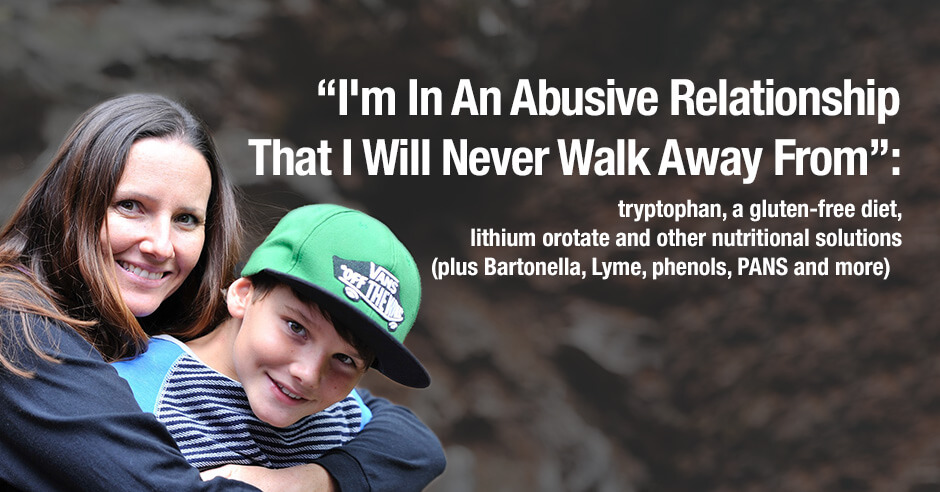
“I’m In An Abusive Relationship That I Will Never Walk Away From”: tryptophan, a gluten-free diet, lithium and other nutritional solutions

March 10, 2023 By Trudy Scott 16 Comments

abusive relationship - nutrition solutions

This mom’s story really struck a nerve for me… “I’m in an abusive relationship that I will never walk away from.” She shares this …

I can’t exactly pinpoint when I first felt the shift between our dynamic. One minute, things were as they always were. Before I could blink, though, I found myself engrossed in an alternate reality that resembled less and less of life as I knew it with each passing week. Trickles of rage and anger bubbled to the surface, threatening to break through until they could no longer be harnessed. I’ve been riding the waves ever since.

I currently exist in a heightened state of fear and anxiety, unsure of what each day will bring. When I wake each morning, I silently hope that today will be a “good” day; that he won’t be angry. That he won’t hurt me. Sometimes I’m lucky, and I get my person back. Other times, it feels like I’m living in a battle ground.

Her story really struck a nerve for me because of what she is going through but also because NO solutions are provided for her son. Stories like this help create awareness, make you feel less alone, create empathy and better understanding – which is important – but we want to offer nutritional solutions to families who are dealing with this.

(You can read her entire story on the ScaryMommy blog.)

Functional medicine and nutritional psychiatry as a solution

My heart goes out to this mom, this young man and the rest of the family. My hope is that this mom and all mom’s in similar situations are open to functional medicine, nutritional psychiatry and the power of food and nutrients to dramatically reduce and in many cases reverse behavioral issues like this in the child.

Sugar, caffeine and junk food must go and a gluten-free diet will very possibly make a difference. Having her son eat for blood sugar control is key too. It may also mean switching to a low-salicylate and/or, low-oxalate and low histamine diet. And addressing low lithium, low zinc, low vitamin D, low vitamin B12, high copper, low magnesium and/or low vitamin B6. Low serotonin and low GABA are common and this is where I would start with this young man (more on this below). They may also need to address his gut health/parasites, infections (like Lyme), PANS/PANDAS, mold toxicity, metals and environmental toxins etc.

I’ll highlight many of these in this blog and share links for further reading, plus the approaches I may consider. The important thing to recognize is that there is not one-size-fits-all.

Address low serotonin and low GABA

For a mom in the midst of all this, it can seem overwhelming and very daunting but when you start by addressing low serotonin and low GABA it becomes so much easier. Her son gets some relief very quickly and all the root causes can be figured out and addressed one by one. It also gives mom and the family a much-needed glimmer of hope. As I mentioned above, this is where I would start.

These are clues from her story as to why we’d want to look into and address low serotonin: her son’s explosive anger and rage, the physical and mental abuse, threats to hurt himself (self-harm) and his mother and siblings, and being argumentative.

You can see how the above fits into the list of low serotonin symptoms here. The amino acid that addresses low serotonin is tryptophan or 5-HTP and you can expect to see results in a few days.

I worked with an 11 year old girl with explosive rage issues (and anxiety, cravings & insomnia)  and chewable tryptophan started to turn things around very quickly. You can read more about this here.

If he has low GABA symptoms of physical tension and anxiety, we’d do a trial of GABA next.

A gluten-free diet and eating for blood sugar control

The next change I’d make is to have him start to make dietary changes, starting to switch to gluten-free eating and real whole food. As you can see from the above blog, a gluten-free diet and getting the 11 year old off the sugar made a big difference too. Tryptophan helped with this process, making it easy to break the addiction and not feel deprived.

Gluten issues (celiac disease and gluten sensitivity) are typically associated with gut issues but the psychiatric symptoms are less recognized. This 2023 paper, Psychiatric and Neurological Manifestations of Celiac Disease in Adults states that “Celiac disease is associated with mood disorders, such as manic-depressive disease, schizophrenia, and bipolar disorder, as well as other disorders such as depression and anxiety.”

In this blog I share how gluten was found to be the cause of a childhood case of obsessive-compulsive disorder. Symptoms resolved on a gluten-free diet.

Having him starting to eat for blood sugar stability may help with the irritability and mood swings, and may also help with his rageful outbursts.

Low dose lithium orotate for the rollercoaster of emotions

Next I’d likely explore the possibility of low dose lithium orotate as something that may help this young man too. The hallmark of low lithium is a rollercoaster of emotions and this mom shares how there are really good times amongst the really tough times.  I use this lithium questionnaire with clients. In addition to the ups and downs, these are clues that he may benefit: he’s rebellious, exhibits disruptive behavior and aggressiveness, is irritable, restless and engages in risky behavior.

Next steps: explore all the possible root causes and do nutritional testing

We’d want to explore all possible root causes and next steps would be decided based on his specific situation. Here is a list of 60+ root causes that I work through and the nutritional/functional testing that I do with my clients. You can replace anxiety with anger/rage in the blogs – for some people their symptoms show up as rage and for others it’s anxiety.

And here are some links for further reading:

  • Bartonella infection in mom and both sons: anxiety, panic attacks, insomnia, inconsolable crying, irritability, ADHD, rage and pain
  • Christmas tree phenols as a trigger for anger, meltdowns, anxiety, hyperactivity, insomnia, aggression, self-injury and autistic symptoms? (dietary salicylates – a type of phenol – can cause similar issues)
  • Sex and Aggression Characteristics in a Cohort of Patients with Pediatric Acute-Onset Neuropsychiatric Syndrome “Among patients with PANS, males exhibit more aggressive behavior when compared with females” (typically the clue it may be PANDAS/PANS is sudden onset of symptoms, although it’s not the case in all instances)
  • Neuropsychiatric Lyme Disease by Dr. Suruchi Chandra Lyme disease “can remain dormant for years and then later mimic a number of psychiatric illnesses, including anxiety disorders, mood disturbances, psychosis, and autism-like behaviors.”

This is not a conclusive list but a good start for seeing what the possibilities may be. Feel free to search the blog for more on some of the above and some of the other factors mentioned above and in the 60+ root causes blog.

As you can see above, we start with the simple changes – amino acids and a few simple dietary changes (all covered in my book) and lithium orotate – and then continue to dig deeper.

Mom and the other children need nutritional/trauma support too

This mom and the other children need support too – from family and community, from a therapist who specializes in trauma – and with GABA/tryptophan, adrenal support and B vitamins. You can read more about nutritional solutions for psychological stress here.

Resources if you are new to using tryptophan or GABA as supplements

If you are new to using tryptophan or GABA as supplements, here is the Amino Acids Mood Questionnaire from The Antianxiety Food Solution (you can see all the symptoms of neurotransmitter imbalances, including low GABA and low serotonin).

If you suspect low levels of any of the neurotransmitters and do not yet have my book, The Antianxiety Food Solution – How the Foods You Eat Can Help You Calm Your Anxious Mind, Improve Your Mood, and End Cravings, I highly recommend getting it and reading it before jumping in and using amino acids on your own so you are knowledgeable. And be sure to share it with the practitioner/health team you or your loved one is working with.

There is an entire chapter on the amino acids and they are discussed throughout the book in the sections on gut health, gluten, blood sugar control, sugar cravings, anxiety and mood issues (which include rage/anger/irritability/self-harm).

The book doesn’t include product names (per the publisher’s request) so this blog, The Antianxiety Food Solution Amino Acid and Pyroluria Supplements, lists the amino acids that I use with my individual clients and those in my group programs. You can find them all in my online store. The above oral lavender products are available in my online store too.

If, after reading this blog and my book, you don’t feel comfortable figuring things out on your own (i.e. doing the symptoms questionnaire and respective amino acids trials), a good place to get help is the GABA QuickStart Program (if you have low GABA symptoms). This is a paid online/virtual group program where you get my guidance and community support.

If you are a practitioner, join us in The Balancing Neurotransmitters: the Fundamentals program. This is also a paid online/virtual program with an opportunity to interact with me and other practitioners who are also using the amino acids.

Have you found tryptophan, GABA and/or lithium orotate to help in a situation like this?

What about a gluten-free diet and eating for blood sugar control?

What bigger root causes were found to be contributing factors too?

If you have questions and other feedback please share it here too.
Filed Under: Gluten, Lithium orotate, Nutritional Psychiatry, serotonin, Teens, Tryptophan Tagged With: abuse, abusive relationship, amino acids, anger, angry, anxiety, bartonella, blood sugar, emotions, fear, functional medicine, GABA Quickstart online program; and Balancing Neurotransmitters: the Fundamentals program for practitioners, gluten-free, irritability, lithium orotate, low GABA, low serotonin, Lyme Disease, nutritional psychiatry, nutritional solutions, PANS, Phenols, rage, rollercoaster, self-harm, Solutions, tryptophan

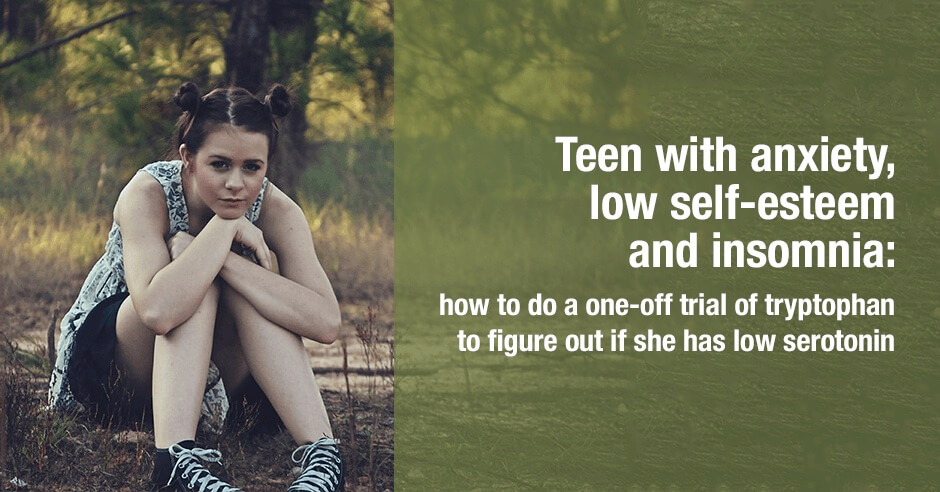
Teen with anxiety, low self-esteem and insomnia: how to do a one-off trial of tryptophan to figure out if she has low serotonin

August 20, 2021 By Trudy Scott 23 Comments


teen anxiety tryptophan serotonin

A mom asks for advice for her teenage daughter who has anxiety, low self-esteem issues,  insomnia, experiences negativity and has phobias. She wants to know if serotonin support may help and where to start. I share my feedback confirming that these are low serotonin symptoms and that I would do a trial of tryptophan. I go deeper in this blog and also go into detail about how I would do a one-off trial (or evaluation) of tryptophan if I was working with this family. I also share why I’d look into low GABA, seasonal allergies and the birth control pill. And I discuss the importance of being proactive given the increasing suicide and self-harm in this age-group, with the pandemic compounding the increase.

Here is the question that Maria asked about her daughter:

My 13-year-old teen has always suffered from insomnia, sometimes light, sometimes a bit heavier, depending on the period. She has suffered from asthma from a young age, even if this issue has improved enormously, it is sometimes present, specially during spring time as she is allergic to different plants. She would suffer from sugar cravings in the past as we were trying to change her diet. Things are going better in this respect as well; however, negativity, phobias, low self esteem and anxiety are always present for her.

Are these signs of low serotonin? How could we help her feel better? Should serotonin pills be applied directly? Would this make the system dependent on it? If amino acids should be supplemented, how should we do this, considering her age?

I responded that yes, negativity, phobias, low self esteem and anxiety (the worry type) are signs of low serotonin. Insomnia can also be caused by low serotonin especially if her daughter is lying awake, overthinking and worrying about things.

I shared that the body does not get dependent on the amino acids and I’d consider a trial of tryptophan to address her symptoms.

Doing a one-off trial/evaluation of tryptophan based on her symptoms

If I was working with this family, I would help this mom figure out for sure if her daughter has low serotonin by reviewing the low serotonin symptom list with her, and helping her rate them on a scale of 1-10 with 10 being the worst.

This can often be challenging for a 13-year old: giving the symptoms a severity rating and being able to identify exactly how she feels. Her ratings may also be reflective of where she is in her cycle at the time and may fluctuate more in the month if her cycle is not yet regular. Working together with mom we can hopefully figure this out. If not, we do the best we can with the information we have.

The next step is picking one or two symptoms that are easy to measure the day we do the initial trial or evaluation. For this young girl I’d pick anxiety/worry and negativity and ask her some questions that would help us assess before and after results of the one-off trial /evaluation of tryptophan:

  • For anxiety and worry she may say it’s also a 9 and give me this example: “I’m really worried about performing in the concert – I keep thinking about it all day long and at night.”
  • For negativity she may say it’s a 9 and give me this example: “I really don’t think I’m good enough to be in the dance class.”

Both tryptophan and 5-HTP can raise serotonin but I like to start with tryptophan. I typically start with 100mg Lidtke chewable tryptophan in children/teens so I’d have her chew one tablet and then check back in the next 2 to 5 minutes (or maybe a little longer for some folks).

This is the kind of feedback I’m looking for:

  • With regards to anxiety and worry she may say: “Gosh, I completely stopped thinking about the concert. I’m not worrying about it at all. Now that you ask I’m thinking about it again but I think my worry/anxiety is about a 5 now.”
  • With regards to negativity she may say: “I think I feel better about being in the dance class. I think I can do it. My negativity feels like it’s a 5 or 6”

Since this teen responded so well, I’d have her start taking tryptophan midafternoon and evening (away from protein) and we’d increase if needed, each week, and based on her symptoms.

I have everyone keep a food mood and supplements log and mom could help her do this too.

GABA, seasonal allergies and the birth control pill

I also always assess low GABA when someone is anxious (especially if she also has physical anxiety, tension, stiff muscles) and has insomnia. We’d do the same one-off trial with a product like GABA Calm (or similar) once we’ve established a good dose of tryptophan for easing her symptoms.

This mom also mentioned Spring time allergies so I also shared this blog with her: 5-HTP and/or tryptophan to help with increased anxiety, panic attacks and depression caused by spring allergies. Depending on the season, her daughter may score higher on some of the low serotonin symptoms.

I’d also want to know if her daughter is on a birth control pill (often prescribed at this age for acne) because it can contribute to anxiety and depression.

Being proactive is wise given the rise in suicide and self-harm in this age group

Being proactive about addressing low serotonin symptoms quickly is wise given the rise in suicide and self-harm in this age group. This 2021 Italian study discusses the role of emotional dysregulation when it comes to and self-injurious thoughts and behaviours in high-school students:

Overall, 11.1% of adolescents reported self-harming behaviours without suicide ideation or attempts, 6.4% declared having thought to suicide without acting a suicide attempt or self-harm, 1.4% declared having attempted suicide and really thought to take away their life.

Unfortunately, the pandemic has also made things worse for many adolescents. This study reports that Canadian adolescents appear to be experiencing “higher rates of self-harm thoughts and behaviours relative to before the pandemic.”

It’s important to keep in mind that pre-teens and teens may not be willing to admit that they are engaging in self-harm like cutting or burning, or thinking about taking their lives.

Resources if you are new to using the amino acids as supplements

If you are new to using the amino acids tryptophan/5-HTP or GABA as supplements and want to know more in case you need them in a future situation, here is the Amino Acids Mood Questionnaire from The Antianxiety Food Solution (you can see all the low serotonin and low GABA symptoms here) and a brief overview here, Anxiety and targeted individual amino acid supplements: a summary.

If you suspect low serotonin or low levels of any of the neurotransmitters and do not yet have my book, The Antianxiety Food Solution – How the Foods You Eat Can Help You Calm Your Anxious Mind, Improve Your Mood, and End Cravings, I highly recommend getting it and reading it before jumping in and using amino acids so you are knowledgeable.

It also covers all the basics of a healthy diet. It’s a comprehensive approach – amino acids AND diet. I’d also want to know what her diet is like right now – gluten-free, sugar-free, caffeine-free, eating protein at breakfast for blood sugar control, real whole foods, grass-fed red meat, wild fish, fermented foods etc?

The book doesn’t include product names (per the publisher’s request) so this blog, The Antianxiety Food Solution Amino Acid and Pyroluria Supplements, lists the amino acid products that I use with my individual clients and those in my group programs.

Thanks to this mom for asking the question and allowing me to use it as a teaching tool for my community. Let’s get her daughter and all teens feeling their best again.

Can you relate to the question this mom asked? Does it sound similar to what your daughter is experiencing right now or a client/patient?

Do you do a one-off trial /evaluation like this to find out if serotonin support is needed? Or have you done this in the past with your daughter, family member or yourself?

What are the before and after questions (and symptom ratings) and did tryptophan help?

Feel free to post any questions here too.

Filed Under: Anxiety, Depression, Teens, Tryptophan Tagged With: 5-HTP, allergic, allergies, anxiety, asthma, birth control pill, cutting, insomnia, low GABA, low self-esteem, low serotonin, negativity, one-off trial, overthinking, pandemic, phobias, seasonal allergies, self-harm, sucide, sugar cravings, teen, teenage, tryptophan, worrying

Primary Sidebar

NEW! GABA QuickStart Homestudy (with special intro pricing)

gaba quickstart homestudy

Free Report

9 Great Questions Women Ask about Food, Mood and their Health

You'll also receive a complimentary subscription to my ezine "Food, Mood and Gal Stuff"


Connect with me

Popular Posts

  • Amino Acids Mood Questionnaire from The Antianxiety Food Solution
  • The Antianxiety Food Solution Amino Acid and Pyroluria Supplements
  • Pyroluria Questionnaire from The Antianxiety Food Solution
  • Collagen and gelatin lower serotonin: does this increase your anxiety and depression?
  • Tryptophan for the worry-in-your-head and ruminating type of anxiety
  • GABA for the physical-tension and stiff-and-tense-muscles type of anxiety
  • The Antianxiety Food Solution by Trudy Scott
  • Seriphos Original Formula is back: the best product for anxiety and insomnia caused by high cortisol
  • Am I an anxious introvert because of low zinc and vitamin B6? My response to Huffington Post blog
  • Vagus nerve rehab with GABA, breathing, humming, gargling and key nutrients

Recent Posts

  • What do I use instead of Seriphos to help lower high cortisol that is affecting my sleep and making me anxious at night?
  • BeSerene™ GABA/theanine cream eases severe muscle tension in her neck/shoulders, prevents her bad headaches and quells her anxiety
  • How the correct approach, dose and sublingual use of GABA can be calming and not cause a flushed and itchy face and neck
  • The amino acid glutamine improves low mood by addressing gut health, and it has calming effects too
  • Flight anxiety with heightened breath, physical tension and also fearing the worst (the role of low GABA and low serotonin)

Categories

  • 5-HTP
  • AB575
  • Addiction
  • ADHD
  • Adrenals
  • Alcohol
  • Allergies
  • Alzheimer's disease
  • Amino Acids
  • Anger
  • Antianxiety
  • Antianxiety Food Solution
  • Antidepressants
  • Anxiety
  • Anxiety and panic
  • Autism
  • Autoimmunity
  • benzodiazapines
  • Bipolar disorder
  • Books
  • Caffeine
  • Cancer
  • Candida
  • Children/Teens
  • Collagen
  • Cooking equipment
  • Coronavirus/COVID-19
  • Cravings
  • Depression
  • Detoxification
  • Diabetes
  • Diet
  • DPA/DLPA
  • Drugs
  • EFT/Tapping
  • EMF
  • EMFs
  • Emotional Eating
  • Endorphins
  • Environment
  • Essential oils
  • Events
  • Exercise
  • Fear
  • Fear of public speaking
  • Fertility and Pregnancy
  • Fish
  • Food
  • Food and mood
  • Functional neurology
  • GABA
  • Gene polymorphisms
  • General Health
  • Giving
  • Giving back
  • Glutamine
  • Gluten
  • GMOs
  • Gratitude
  • Gut health
  • Heart health/hypertension
  • Histamine
  • Hormone
  • Hyperparathyroidism
  • Hypoglycemia
  • Immune system
  • Inflammation
  • Insomnia
  • Inspiration
  • Introversion
  • Joy and happiness
  • Ketogenic diet
  • Lithium orotate
  • Looking awesome
  • Lyme disease and co-infections
  • MCAS/histamine
  • Medication
  • Men's health
  • Mental health
  • Mercury
  • Migraine
  • Mold
  • Movie
  • MTHFR
  • Multiple sclerosis
  • Music
  • NANP
  • Nature
  • Nutritional Psychiatry
  • OCD
  • Osteoporosis
  • Oxalates
  • Oxytocin
  • Pain
  • Paleo
  • Parasites
  • Parkinson’s disease
  • PCOS
  • People
  • PMS
  • Postpartum
  • PTSD/Trauma
  • Pyroluria
  • Questionnaires
  • Real whole food
  • Recipes
  • Research
  • Schizophrenia
  • serotonin
  • SIBO
  • Sleep
  • Special diets
  • Sports nutrition
  • Stress
  • Sugar addiction
  • Sugar and mood
  • Supplements
  • Teens
  • Testimonials
  • Testing
  • The Anxiety Summit
  • The Anxiety Summit 2
  • The Anxiety Summit 3
  • The Anxiety Summit 4
  • The Anxiety Summit 5
  • The Anxiety Summit 6
  • Thyroid
  • Thyroid health
  • Toxins
  • Tryptophan
  • Tyrosine
  • Uncategorized
  • Vegan/vegetarian
  • Women's health
  • Yoga

Archives

  • October 2025
  • September 2025
  • August 2025
  • July 2025
  • June 2025
  • May 2025
  • April 2025
  • March 2025
  • February 2025
  • January 2025
  • November 2024
  • October 2024
  • September 2024
  • August 2024
  • July 2024
  • June 2024
  • May 2024
  • April 2024
  • March 2024
  • February 2024
  • January 2024
  • December 2023
  • November 2023
  • October 2023
  • September 2023
  • August 2023
  • July 2023
  • June 2023
  • May 2023
  • April 2023
  • March 2023
  • February 2023
  • January 2023
  • December 2022
  • November 2022
  • October 2022
  • September 2022
  • August 2022
  • July 2022
  • June 2022
  • May 2022
  • April 2022
  • March 2022
  • February 2022
  • January 2022
  • December 2021
  • November 2021
  • October 2021
  • September 2021
  • August 2021
  • July 2021
  • June 2021
  • May 2021
  • April 2021
  • March 2021
  • February 2021
  • January 2021
  • December 2020
  • November 2020
  • October 2020
  • September 2020
  • August 2020
  • July 2020
  • June 2020
  • May 2020
  • April 2020
  • March 2020
  • February 2020
  • January 2020
  • December 2019
  • November 2019
  • October 2019
  • September 2019
  • August 2019
  • July 2019
  • June 2019
  • May 2019
  • April 2019
  • March 2019
  • February 2019
  • January 2019
  • December 2018
  • November 2018
  • October 2018
  • September 2018
  • August 2018
  • July 2018
  • June 2018
  • May 2018
  • April 2018
  • March 2018
  • February 2018
  • January 2018
  • December 2017
  • November 2017
  • October 2017
  • September 2017
  • August 2017
  • July 2017
  • June 2017
  • May 2017
  • April 2017
  • March 2017
  • February 2017
  • January 2017
  • December 2016
  • November 2016
  • October 2016
  • September 2016
  • August 2016
  • July 2016
  • June 2016
  • May 2016
  • April 2016
  • March 2016
  • February 2016
  • January 2016
  • December 2015
  • November 2015
  • October 2015
  • September 2015
  • August 2015
  • July 2015
  • June 2015
  • May 2015
  • April 2015
  • March 2015
  • February 2015
  • January 2015
  • December 2014
  • November 2014
  • October 2014
  • September 2014
  • August 2014
  • July 2014
  • June 2014
  • May 2014
  • April 2014
  • March 2014
  • February 2014
  • January 2014
  • December 2013
  • November 2013
  • October 2013
  • September 2013
  • August 2013
  • July 2013
  • June 2013
  • May 2013
  • April 2013
  • March 2013
  • February 2013
  • January 2013
  • December 2012
  • November 2012
  • October 2012
  • August 2012
  • July 2012
  • June 2012
  • May 2012
  • April 2012
  • March 2012
  • February 2012
  • January 2012
  • December 2011
  • November 2011
  • October 2011
  • September 2011
  • August 2011
  • July 2011
  • June 2011
  • May 2011
  • April 2011
  • March 2011
  • February 2011
  • January 2011
  • December 2010
  • October 2010
  • September 2010
  • July 2010
  • May 2010
  • April 2010
  • March 2010
  • February 2010
  • January 2010
  • November 2009

Share the knowledge!

The above statements have not been evaluated by the Food and Drug Administration. Products listed in this website are not intended to diagnose, treat, cure or prevent any disease.

The information provided on this site is for informational and educational purposes only and is not intended as a substitute for advice from your physician or other health care professional. You should consult with a healthcare professional before starting or modifying any diet, exercise, or supplementation program, before taking or stopping any medication, or if you have or suspect you may have a health problem.


Copyright © 2026 Trudy Scott. All Rights Reserved. | Privacy | Terms and Conditions | Refund Policy | Medical Disclaimer

Free Report

9 Great Questions Women Ask about Food, Mood and their Health

You’ll also receive a complimentary subscription to my ezine “Food, Mood and Gal Stuff”