Celiac disease is “a digestive and autoimmune disorder that can damage your small intestine. People with celiac disease might experience symptoms like diarrhea, bloating, gas, anemia and growth issues. Celiac disease can be triggered by a protein called gluten. Gluten is found in grains, like wheat, barley and rye” (and oats that are contaminated with gluten). This description by the Cleveland Clinic is well-understood and recognized.
However, what is less recognized and understood, is extra-intestinal (or outside the gut) manifestations of non-celiac gluten sensitivity. A paper published in 2018, Extra-intestinal manifestations of non-celiac gluten sensitivity: An expanding paradigm lists a number of symptoms and conditions that gluten consumption may cause and/or contribute to, even when you do not have celiac disease.
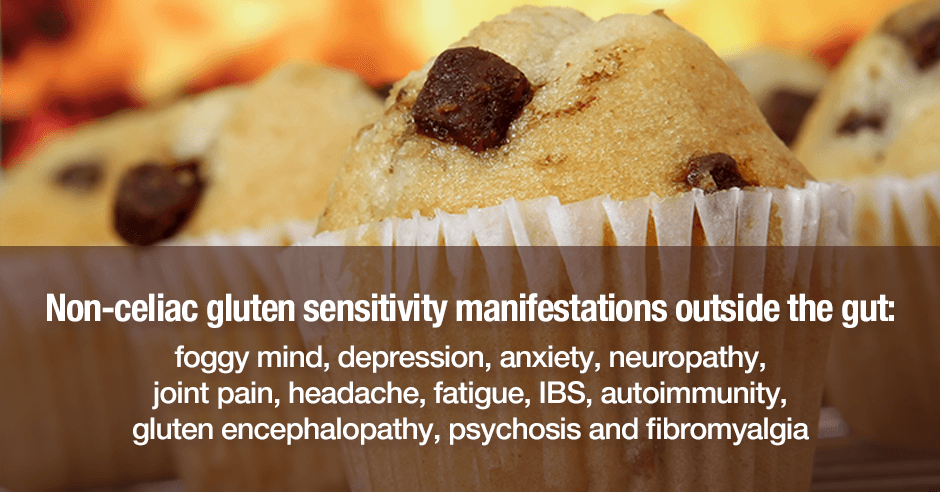
These can include: ‘foggy mind’; psychiatric diseases such as depression, anxiety and even psychosis; gluten ataxia, gluten neuropathy and gluten encephalopathy (causing memory and cognitive problems); joint and muscle pain, and leg or arm numbness; headache and fatigue; irritable bowel syndrome (IBS); autoimmune disorders; and and fibromyalgia.
This blog post highlights excerpts from the 2018 non-celiac gluten sensitivity paper and stories from real people who have experienced relief when removing gluten from their diets. And resources if you find you need neurotransmitter support to help break the addiction and not feel deprived.
This is from the abstract of the above paper:
Non celiac gluten sensitivity (NCGS) is a syndrome characterized by a cohort of symptoms related to the ingestion of gluten-containing food in subjects who are not affected by celiac disease (CD) or wheat allergy. The possibility of systemic manifestations in this condition has been suggested by some reports.
- In most cases they are characterized by vague symptoms such as ‘foggy mind’, headache, fatigue, joint and muscle pain, leg or arm numbness even if more specific complaints have been described.
- NCGS has an immune-related background. Indeed there is strong evidence that a selective activation of innate immunity may be the trigger for NCGS inflammatory response. The most common autoimmune disorders associated with NCGS are Hashimoto thyroiditis, dermatitis herpetiformis, psoriasis and rheumatologic diseases.
- A possible neurological involvement has been underlined by NCGS association with gluten ataxia, gluten neuropathy and gluten encephalopathy.
- NCGS patients may show even psychiatric diseases such as depression, anxiety and psychosis.
- Finally, a link with functional disorders (irritable bowel syndrome and fibromyalgia) is a topic under discussion.
We see all this clinically so it’s wonderful to see this being addressed in the research. However, the authors are saying we need more research and better studies:
the novelty of this matter has generated an expansion of literature data with the unavoidable consequence that some reports are often based on low levels of evidence. Therefore, only studies performed on large samples with the inclusion of control groups will be able to clearly establish whether the large information from the literature regarding extra-intestinal NCGS manifestations could be supported by evidence-based agreements.
Until then we use what we know works clinically: a gluten-free diet and observation of symptom resolution. We also use amino acids to balance brain chemicals so we break the addiction and don’t feel deprived (more on that below). Nutritional deficiencies caused by damage to the gut/leaky gut also need to be addressed, as well as healing the leaky gut and dysbiosis.
I shared the study abstract on Facebook asking for feedback and the response was so overwhelming that I can only share some of the feedback. I will do follow-up posts sharing more detailed information from their healing journeys.
Caroline had bloating, pain and chronic sadness, and discovered “joie de vivre”
Caroline confirmed that she has gluten sensitivity saying she stopped eating wheat in 2011:
Within a few months, my chronic sadness disappeared and I discovered the “joie de vivre”. It also allowed me to get rid of my swelling belly (bloating). Every evening I looked like a woman 2-3 months pregnant. [this likely falls into the irritable bowel syndrome category mentioned in the paper]
The pain in my joints also ended up disappearing.
I read so much about gluten once I started to realize it had changed my life to quit eating that stuff that now I’m convinced grains shouldn’t be part of human food, and I mean all grains (botanically speaking).
I think grains should at least be taken off all the menus in all hospitals, especially the psychiatric ones.
I adore her “joie de vivre” feedback and am so happy for her! I had this same feeling of pure joy when I went gluten-free. And I get so much feedback like this from clients who had no idea life could be so much better.
I also agree with her sentiment about gluten and grains being an issue too, especially in psychiatric settings.
Daphne was emotionally dysregulated with negative feelings and a pressure headache
Daphne shared what she calls an odd effect that she gets soon after eating bread: roiling emotions:
I get emotionally dysregulated. Negative feelings surface in various degrees, for me primarily anger and the reviewing of the incidents that caused it (aka ruminating thoughts?); less often sadness, disappointment, and overwhelm (that usually surfaces on its own anyway).
I also get what I call ‘bread head.’ I get a pressure headache from between my eyebrows, up the center of my head to my crown.
An additional effect: ‘the hangover’. Overnight the pressure headache subsides and the next day my whole head feels heavy and I am slower physically and mentally, and my hands in particular are achy
Also, I have had chicken bumps on my skin my whole life, until I stopped eating bread. I still have some, maybe from rice, potato and corn reactions. Starch is not my friend.
As I mentioned above, many folks are surprised at the emotional changes they see when eating gluten. Daphne called it an odd effect but her response is a very typical extra-intestinal (outside the gut) psychiatric response. And yes starches and grains are an issue for many folks.
Other feedback: fibromyalgia pain, brain fog, depression, cystic acne, anxiety, body aches, fatigue, PCOS and hypothyroidism
Here is some feedback from a few other women. As you can see the symptoms can vary per person:
- “Removal of gluten and all grains has improved my fibromyalgia pain symptoms … The difference in pain was so dramatic that it was worth it.”
- “It makes such a difference with my brain fog and depression! And cystic acne. If I have gluten, I have cystic acne for about 2 weeks.”
- “My joint pain, anxiety, and depression are much improved when I avoid gluten (and corn.)”
- “Yes! Within 15 min of ingesting gluten containing food I get all over body aches, fatigue and brain fog. It’s very unpleasant. I cut gluten out of my diet simply because I can’t function properly while eating it. I also have had episodes of reactive hypoglycemia from it too.”
- “Removing gluten has cured my hypothyroidism. Also has improved my PCOS, anxiety and depression.”
Stay tuned for a follow-up blog with more from their healing journeys and additional insights from me.
Using the amino acids to help break the gluten addiction and feel less deprived
Sometimes it’s difficult to figure out why you crave or are addicted to gluten. It can be challenging to determine which part of your brain chemistry it’s affecting, and you may not associate cravings with mood issues.
Your drug-of-choice is something you self-medicate with and it is something that makes you feel good or “normal.” It could be starchy gluten-containing foods like bread or pasta or cookies. It could also be candy, chocolate, ice-cream, coffee, sodas, wine/beer, cigarettes, marijuana, a prescription medication like Prozac, street drugs, or even shopping or exercise.
Cravings for these substances (or behaviors) typically indicate a brain chemistry imbalance, so it’s very helpful to identify how the substances you crave affect you. This will help you determine which amino acids you might supplement to address the imbalance.
Use your “drug-of-choice” from your gluten or grain list (perhaps you love bread or chocolate chip muffins) and the chart below to help you determine what brain chemistry imbalance may be affecting you and which amino acid you may benefit from.
| How you feel before | How you feel after | Brain chemistry imbalance | Amino acid to supplement |
|---|---|---|---|
| Anxious or stressed | Calm or relaxed | Low GABA | GABA |
| Depressed or anxious | Happy or content | Low serotonin | Tryptophan or 5-HTP |
| Tired or unfocused | Energetic, alert, or focused | Low catecholamines | Tyrosine |
| Wanting a reward or sad | Rewarded or comforted | Low endorphins | DPA (d-phenylalanine) |
| Irritable and shaky | Grounded or stable | Low blood sugar | Glutamine |
Once you address that brain chemical imbalance, it’s easy to quit and you won’t feel deprived.
You can read more about why you crave on this blog post
Resources if you are new to using the amino acids as supplements
If you are new to using any of the amino acids as supplements, here is the Amino Acids Mood Questionnaire from The Antianxiety Food Solution (you can see all the symptoms of neurotransmitter imbalances).
If you suspect low levels of any of the neurotransmitters and do not yet have my book, The Antianxiety Food Solution – How the Foods You Eat Can Help You Calm Your Anxious Mind, Improve Your Mood, and End Cravings, I highly recommend getting it and reading it before jumping in and using amino acids on your own so you are knowledgeable. And be sure to share it with the practitioner/health team you or your loved one is working with.
There is an entire chapter on the amino acids and they are discussed throughout the book in the sections on gut health, gluten, blood sugar control, sugar cravings, self-medicating with alcohol and more. There is also an entire chapter on gluten and grains if this is new to you.
The book doesn’t include product names (per the publisher’s request) so this blog, The Antianxiety Food Solution Amino Acid and Pyroluria Supplements, lists the amino acids that I use with my individual clients and those in my group programs.
If, after reading this blog and my book, you don’t feel comfortable figuring things out on your own (i.e. doing the symptoms questionnaire and respective amino acids trials), a good place to get help is the GABA Quickstart Program (if you have low GABA symptoms). This is a paid online/virtual group program where you get my guidance and community support. There are many moms in the program who are having much success with their kids.
If you are a practitioner, join us in The Balancing Neurotransmitters: the Fundamentals program. This is also a paid online/virtual program with an opportunity to interact with me and other practitioners who are also using the amino acids.
With much appreciation for these women for sharing their stories. I’d love to get some of these published as case studies to further add to the evidence.
Do you have (or suspect you may have) non celiac gluten sensitivity (NCGS)?
And has gluten removal resolved any of the above issues? And have you seen an improvement in gut issues too?
Have you observed other improvements since eating gluten and/or grain-free?
Did you find the amino acids helped you break your addiction and feel less deprived?
Or are you stuck and still eating gluten and have no idea where to start on quitting? If this is you, would a webinar series help?
If you have questions please share them here too.