• Skip to primary navigation
  • Skip to main content
  • Skip to primary sidebar

everywomanover29 blog

Food, Mood and Women's Health – Be your healthiest, look and feel great!

  • Blog
  • About
  • Services
  • Store
  • Resources
  • Testimonials
  • The Book
  • Contact
  • Search this site

mthfr

The Anxiety Summit 5: all the speakers and topics

October 11, 2019 By Trudy Scott 4 Comments

anxiety summit 5

The Anxiety Summit 5: Gut-Brain Axis
Hosted by Trudy Scott,
Food Mood Expert and Nutritionist, author of The Antianxiety Food Solution
Founder of Anxiety Nutrition Institute

ANXIETY has become the defining mental health issue of our decade – women are affected at twice the rate of men, and now children and young adults are also more stressed and anxious than ever before. Join us to learn nutritional and gut solutions for your anxiety!

Here are all the speakers/topics and blog posts with additional information, interview snippets, links to studies and more. Some of the speakers below include a link to an entire speaker blog.

“Why Bile is the Key to Anxiety & Hormone Havoc” – Ann Louise Gittleman

the connection between bile and hormone havoc and anxiety is one that is not readily understood in this day and time….bile is another detox method which actually is the dumping ground for hormones like estrogen

Additional snippets and information here

“Fix the Brain to Fix the Gut” – Datis Kharrazian, DHSc, DC, MS, FACN, CNS

I can tell you without question, there’s people who take GABA, they feel benefit from it, you do a blood brain barrier test but their blood brain barrier doesn’t have any markers to show permeability. So it’s not hard for me to consider the possibility that there’s some exogenous pathways too

Additional snippets and information here

“Parasites, Anxiety and TUDCA for Liver drainage” – Jay Davidson, DC, PScD

mimosa pudica seed is an amazing, just overall gut support. So even if your goal isn’t the parasite cleanse, mimosa pudica seed is awesome to help support the digestive tract. It can help break up biofilm. It’s really good against candida and just helping to normalize microbial levels within the GI besides the fact that it can help with parasites

Additional snippets and information here

“The Gut-Brain Axis and Mental Health” – Peter Bongiorno, ND, LAc

lactobacillus is also shown to lower cortisol; actually was shown to increase serotonin and melatonin as well as acetylcholine, which is really important for energy and for memory too. And it also increases short chain fatty acids….which are very, very important because they help with serotonin release, and they also help with memory and learning

Additional snippets and information here

“GABA & Tryptophan: The Gut-Anxiety Connections” – Trudy Scott, CN

In this study they looked at some different strains of candida, they looked at albicans, they looked at glabrata, tropicalis and some of the other strains. And they exposed these candida strains to serotonin and found that serotonin showed anti-fungal activity towards all these different strains of candida.

Additional snippets and information here

“SSRI Impact on the Microbiome and Safe SSRI Tapering” – Achina Stein, DO, IFMCP

The discussion on the SSRI (selective serotonin reuptake inhibitors) and SNRI (serotonin norepinephrine reuptake inhibitors) discontinuation syndrome (or withdrawal symptoms) is eye-opening and sobering. Here are just a few of the many psychological symptoms that she says patients may experience when tapering:

“I’m just going to read them off because I think it’s important for people to know: mood swings, unstable moods, hypomania, hyperarousal, anxiety, medication-induced agitation – which is described as being caffeinated – impulsive behavior, aggression, irritability, crying spells, lowered mood or depression.”

Dr. Stein also shares the many cognitive, physical and neurological side effects, and how she works with her patients with a functional medicine and nutritional approach to try and mitigate the side effects. She likes to use 5-HTP, GABA, theanine and glycine to smooth the taper process.

Additional snippets and information here.

“The Endocannabinoid System and the Gut” – Hyla Cass, MD

136 patients were treated in this clinic with full spectrum hemp oil extract for anxiety or sleep disorders over a nine month period. And the composition was 27 of them were pediatric patients. So, it’s really okay to give it to children as young as age five….What is remarkable is that 45 of those patients had only one visit. A lot of them exhibited dramatic response within a week. And that’s really fast

Additional snippets and information here

“Herbs to Improve Digestion & Support GABA” – Magdalena Wszelaki

astringents tighten everything up… like the loose junctions (when you have IBS) that cause the escape of food particles, that then trigger the immune system, right…And some astringents have a particular efficacy more so for the digestive system rather than others. And so the three that I would love to mention that are my absolute favorites is sage, rose, including rose petals, rosebuds, as well as red raspberry leaf

Additional snippets and information here

“Sugar/Fructose Addiction: Anxiety, ADHD and Aggression” – Michael Collins

My mother believed that sugar was love, and I think a lot of people do. In the baking and in the pies, and everything that happens around holidays. They just believe that these “treats” is love and I grew up this way. Every Saturday morning we would make this gigantic, I mean, gigantic bowl of oatmeal chocolate chip cookies and that lasted half the week, and we were eating cookie dough before cookie dough was cool. This is exactly how I grew up. Like, I think, a lot of people, Trudy, they grew up soaked in sugar. I mean, this was a treat that children got.

“Anxiety & the Gut-Brain Axis in Autism” – Julie Matthews, NC

One of the things we know about autism is that they have this hyperexcitation of mTOR. And what happens is they’re not able to properly prune the neurons in the brain… So this particular paper was looking at, “Oh, well, amino acids can help with that.” And so then it started looking at amino acids and how they can help with all different areas of this gut brain and immune axis. And so they looked at specifically the ability for amino acids to inhibit inflammation. Improve the gut barrier. And to modify microbiota.

Additional snippets and information here

“Hidden Jewels in your Stools & Castor Oil Packs” – Marisol Teijeiro, ND

it improves bile and improves liver detoxification… it improves the function of your digestion, how you absorb your food, and how you eliminate your food… It actually helps to reset how the function of your digestive system is working. And the problem with people who have anxiety is that anxiety really disturbs digestion completely, like 100%.

“Floatation Therapy for Anxiety and PTSD” – Evan Brand, BCHN, CFMP, NTP

huge benefit of feeling at peace with the world. They report more energy, the test subjects had heightened creativity, euphoria, increased ability to concentrate, appreciation that you’re alive, less anxious thoughts or worries, you feel connected to the world around you.

“Self-Advocating and the Power of Community” – Misty Williams

And if you’re part of a support group, you’re probably going to say, “Yes, I know this.” But it’s really nice to see that it’s documented. So the first thing is connection. So you can support each other, you can exchange advice, and you can overcome this feeling of loneliness because when you’re on this journey, you feel alone

“Mitochondrial Dysfunction in Anxiety” – Tara Hunkin, NTP, CGP, RWP

what they’re recognizing is that mitochondria are modulators of anxiety related behavior. And they’re seeing a bidirectional link between mitochondria and anxiety.

Additional snippets and information here

“Anxiety: The Latest Gluten Research and Testing Part 1” – Tom O’Bryan, DC, CCN, DACBN

If mom was in the top 5% of antibodies to wheat, her child had a 2.5 fold increased risk of developing schizophrenia 35 to 40 years later. And they checked for dairy, and mom having elevated antibodies to dairy had no correlation with developing schizophrenia at all. This was just wheat.

“Anxiety: The Latest Gluten Research and Testing Part 2” – Tom O’Bryan, DC, CCN, DACBN

With everything you know about gluteomorphins, if you have elevated antibodies to gluteomorphins; that could be triggering the inflammation in your brain. It also can be triggering the inflammation in your gut because there’s opiate receptors in the gut. That’s why CBD works and low dose naltrexone works because they stimulate the opiate receptors.

Additional snippets and information here

“Thiamine Deficiency in Anxiety and Gut Health (part 1 and 2)” – Chandler Marrs MS, MA, PhD

The assumption is that there is no such thing [as a thiamine deficiency] and that it’s rare unless you are a chronic alcoholic. And even then, it’s missed 80% of the time. Or you have a severe injury or illness that depletes thiamine rapidly.

The presumption is that we’ve solved it, and it’s rare, and it only happens in countries where food availability is problematic.

The reality is that the chemistry of our foods, the chemistry of our environment, the medications that we take all combine and accrue to not only deplete the available thiamine on the basis of intake but to increase the need and to damage a lot of the enzymes involved in the processing of thiamine.

So a lot of folks are functionally deficient in that even though by definition they meet the daily requirement and they may, based upon lab testing, show up as being sufficient and not frankly deficient.

Additional snippets and information here

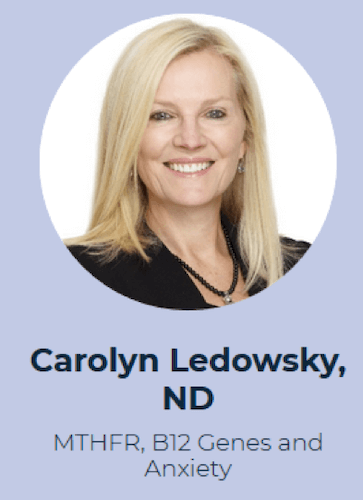
“MTHFR, B12 Genes and Anxiety” – Carolyn Ledowsky, ND

find now there’s so many things that influence B12 and I know we’re going to talk about B12 but gut function, stress, vegan, vegetarianism; all of these things can deplete our B12, and if that happens, then we can’t use our folate. It doesn’t matter how much we take, we can’t use it. So we then have to get that folate into that methionine cycle

Additional snippets and information here

“GI MAP Stool Test for Anxiety/Fibromyalgia” – David Brady, ND, DC, CCN, DACBN

if you get a marker of elastase, and specifically elastase 1; a subtype of elastase, it is most predictive, globally, of pancreatic output/exocrine output. And not only the protease, there is the amylase, the lipase and so forth. So it’s a great marker because you can do one marker and make a determination across output of various enzymes

“Fasting for Anxiety and Gut Health” – David Jockers, DNM, DC, MS

on the extended fast, they found that endorphins went up. So there was this whole neuroendocrine activation, and people had improved mood, and a sense of tranquility is what was described where they just felt at peace. And that’s really because when we have mood disorders, it’s a sign of chronic inflammation in our brain.

“Bacteriophage Therapy instead of Antibiotics” – Donna Gates, MEd, ABAAHP

for every single bacteria, there are 10 phages. So, they are important. They actually control the bacteria on the planet. The same thing with our gut, they control the diversity and what actually lives in our gut is controlled by these phages. I’m always amazed by nature and the way things are set up already, which is why I like to study the universal laws and see how nature is already doing things, because these phages have been around since the beginning of time.

“Food Sensitivities & Anxiety” – Rodger Murphree, DC, CNS

Food allergies can contribute to or trigger symptoms whether that is the classic ones… breaking out in hives, or rash, or stomach pain, or bloating, or gas, or indigestion, that kind of thing. But they also can create mood disorders, anxiety, depression, brain fog. They’re notorious in the community that I work in for triggering allergic reactions that create inflammation by generating chemicals like bradykinins that can go on and attack different cells

“Anxiety: Gut-Brain Communication & Diet” – David Perlmutter, M.D., F.A.C.N

We know that histone deacetylase inhibitors, as a class of pharmaceuticals, are being deeply explored as they relate to the treatment of Alzheimer’s disease and cancer. So the notion that we can regulate histone deacetylase activity by a metabolite made from our gut bacteria, because we decided to eat a lot of prebiotic fiber, connects a lot of dots.

Additional snippets and information here

“B12: Anxiety, OCD, Constipation & the Microbiome” – Edward F. Group III, DC, NP, DACBN, DCBCN, DABFM

Metformin is going to cause B12 malabsorption. Anyone with heartburn, anyone taking acid blockers, most antacids are going to reduce B12 absorption. Proton pump inhibitors, anything that has to do with acid reflux, chemotherapy, anybody that’s had cancer and had chemotherapy. Chemo is extremely damaging on the intestinal lining

“Essential Oils for Anxiety & Digestion” – Eric Zielinski, DC, MPH(c)

one of the reasons why I think peppermint can help with anxiety, is it helps open up the airways. One of the worst things for panic and anxieties are short breaths. You need deep breaths. You need deep breathing for a number of different reasons and it helps. This is why some people find a benefit in breathing in like a brown paper bag or something like that. Well, essential oils open up your airways instantly.

“Lori’s Anxiety-Gut Story & Solution” – Jonathan & Lori Otto

And I wondered, “Why am I not able to cope, when so many other people can?” I would just beat myself up. And I couldn’t get out of that fog. I was learning all these health principles. I was going, you know, to personal development conferences. I would help so many people. And here, I was, not able to get out of this fog. Out of this darkness

“Homeopathy for Dysbiosis, Anxiety & Angst” – Joette Calabrese, HMC, CCH, RSHom

this is another example of like cures like. If you drink too much coffee, you feel wired and tired. You feel anxious. And you might fall asleep for a moment and then wake right up. And then fall asleep and then wake right up. And it is often a reaction to drugs as well, not necessarily. Some people have never had any drugs and Coffea can act. And so, Coffea is also used for helping someone get off of their medications.

“Gut Health & Anxiety in Chinese Medicine” – Pedram Shojai, OMD

The wood element, especially liver is really associated with this continuum of say frustration or depression all the way to anger and rage, depending on where the stagnation happens within that organ system. For the gallbladder, if you have gallbladder issues, the flow of your gallbladder energy isn’t working well, you tend to be indecisive. If your gut isn’t working well, you tend to be pensive or worry too much.

“Glutamine, DPA & Tyrosine for Anxiety & Sugar Cravings” – Trudy Scott, CN

I share the story of a client of mine who described her sugar cravings as an “almost demonic urge to eat sugar and all things sweet.”

Before working with me she had been trying to control her blood sugar levels by eating the right foods at the right times i.e. healthy fats and quality protein (especially at breakfast). But this wasn’t enough to eliminate her sweet cravings. She would make and eat sweet treats all day long, using “healthier” sweeteners like monk fruit and maple syrup.

The solution was using 500mg of glutamine opened onto her tongue. I had the same conversation that I have with all my clients who would obviously rather eat something sweet than open a glutamine capsule onto their tongue: “If you have an intense craving for something sweet, tell yourself that you’re going to indulge, but also humor your nutritionist and take the glutamine anyway. You may be surprised to find your urge completely disappears.”

She did that and it worked – it stopped her demonic urge to eat something sweet every time and very quickly!

Additional snippets and information here

“Vagus Nerve Activation to Reduce Anxiety” – Navaz Habib, DC, AFMCP

what we find is that, that inability to sleep allows the vagus nerve not to do its job. It actually slows or stops the vagus nerve from being able to allow function to really occur. So sleep and sleep quality are very strongly linked to vagus nerve function. And that’s why the Oura ring is so good at measuring HRV at night because it’s actually going to tell you how well you’ve recovered overnight, how well you’ve gone into that rest, digest, and recovery state while you’re asleep and your circadian rhythm is optimized.

Additional snippets and information here

“Spore-based Probiotics to Boost Serotonin & GABA” – Kiran Krishnan

one of the primary effects really of the campylobacter toxin is a severe and sudden onset of anxiety. So, this is a food-born pathogen that will come on contaminated chicken and instead of getting horrible diarrhea like you might get with an e-coli, you’ll actually get all of a sudden, all out of the blue panic attacks and anxiety. Because the toxin it produces creates that kind of panic attack and at the same time dismantles the bowel function.

Additional snippets and information here

“Biology of Trauma and the Freeze Response” – Aimie Apigian, MD, MS, MPH

When we talk about just trauma and mood, and stress even, it’s like we still lump everything in that fight, flight, or freeze response. And the fight and flight response could not be more different than the freeze response.

On a biological level, they are completely different biology states, which means that it is humanly impossible to be in both of those states at the same time. So when we look at this freeze response, okay, so what is it? If it’s not fight or flight, what is it?

When we look at what it is, it’s when the anxiety has become so high that the body is not able to sustain that level of both anxiety, but it’s really an energy level.

Because anxiety is a high energy state and it triggers this response in the body where it says, “Ooh, this is unsustainable,” and in order to survive, for our best interests, it would be better for us to go into a low energy state.

Additional snippets and information here

“Pyroluria, Oxidative Stress and Parasites” – Todd Watts, DC, PScD

Radium is a byproduct, a breakdown of uranium and thorium, which are …radioactive heavy metals. But there are more types of elements that can be radioactive as well. Lead, strontium, iodine, cesium. So, there is a variety of those that are very damaging to our white blood cells, our red blood cells, and our overall immune system function. And it can highly drive what I think many people are going through. And it is amazing. I’ve been researching this a lot lately. So many people are sensitive to a lot of things. And a lot of the symptoms match up with people that have pyroluria disorder. And looking at it, in the United States anyway, 177 million people are exposed to radium within their municipality water.

“Collagen Can Cause Anxiety & Insomnia” – Trudy Scott, CN

There are a number of papers that show that genetic polymorphisms can make individuals more susceptible…. And it was interesting again, in one of the serotonin polymorphism studies, they found this difference between men and women. They actually found that men became more impulsive with acute tryptophan depletion, whereas women found more mood reduction. So maybe it’s the men actually feel better and maybe it’s because the women are feeling worse that we’re getting this kind of feedback.

Additional snippets and information here

“PQQ for Stress, Sleep, Mitochondria & Gut Health” – Michael Murray, ND

PQQ…. a vitamin-like cofactor was shown to be essential in mammalian nutrition in 1994. So that was only 25 years ago, it takes a while in order for science to adapt to change. And eventually, PQQ is going to be recognized as a vitamin-like compound essential for human nutrition. We know that it’s vital for mitochondrion function.

Additional snippets and information here

“SIBO: Anxiety, Testing, Probiotics & Fecal Transplants Part 1” – Allison Siebecker, ND, MSOM, LAc

“What if that fails? What if that doesn’t work?” And so, I may go for a plan C, but I will never go farther than a plan C. But I do like patients to know that I’ve got a lot of options to help them, I want them to know that. But at a certain point, we have to stop and get a little bit realistic here about, “You know what? You haven’t even tried option A.” And this is the problem with anxiety, is an absolute fear that nothing will help, nothing will work, and nothing’s going to be good in the future, ever.

“SIBO: Anxiety, Testing, Probiotics & Fecal Transplants Part 2” – Shivan Sarna

There are so many conditions and medications, and circumstances that cause SIBO that are chronic themselves. So, just for example, food poisoning, we have no known cure for the autoimmune situation that it’s doing there to the nerves. Ehlers-Danlos syndrome is not rare, that’s a very, very big cause of SIBO. Diabetes can cause SIBO because of nerve damage and other things. Hashimoto’s hypothyroid. I could just stop right there and already we might be explaining most of it. But then what about opioids and so many other things? Lyme is another cause of SIBO. And I didn’t even mention adhesions, abdominal adhesions which come after surgery. Any kind of abdominal surgery or injury; blow to the belly, infection, inflammation.

“Bitters: Calming and Digestive Support” – Summer Bock

Bitters are essentially these alkaloid compounds that are found in plants. And the bitter flavor is something that stimulates the Vagus nerve. So, what are some common bitter plants that we encounter in our day to day lives? Dandelion greens, various greens in general have a bitter component. There’s grapefruit, coffee, chocolate; these are all bitter flavor plants. And what’s interesting is that they help kind of like, stimulate all the digestive juices

“Really Simple Solutions for Anxiety & Gut Health” – Trudy Scott, CN

forest bathing… study participants viewed the landscape for 12 to 16 minutes a day. There we have “the just doing nothing”, sitting there looking at landscape. And then they walked in the landscape for 14 to 18 minutes. So this wasn’t a long time. What they found is that they lowered their cortisol. And we know when you’ve got high cortisol, you can feel more anxious. It lowered their pulse rate. It lowered their blood pressure. And they found that they had greater parasympathetic nerve activity. This is the rest and the digest, which is giving us these calming effects. And lower sympathetic nerve activity. This is the fight or flight.

You can listen to each of the interviews (and get transcripts) by purchasing The Anxiety Summit 5: Gut-Brain Axis.

If you’d like to give feedback or ask a question, please post in the comments section below or in the click above on the respective speaker/topic blog and comment there.

What stood out for you? Gems you want to share with your friends and family? Changes you’re going to make? What you want to dig deeper into? What has already helped you? Light-bulbs? Do you want more information like this?

I’d love to hear from you!

Filed Under: The Anxiety Summit 5 Tagged With: anxiety, anxiety summit, B12, bile, GABA, gut-brain, mthfr, speaker, TBI

MTHFR, B12 Genes and Anxiety with Carolyn Ledowsky on The Anxiety Summit 5

October 7, 2019 By Trudy Scott 10 Comments

MTHFR Anxiety Summit 5

Carolyn Ledowsky, ND is one my guest experts on The Anxiety Summit 5: Gut-Brain Axis and our topic is: MTHFR, B12 Genes and Anxiety. In this interview you’ll learn:

  • The mechanisms of methylation
  • B12 gene variants: MTR, MTRR, TCN
  • The tryptophan “steal” and a simple niacin test
  • and a whole lot more!

carolyn ledowsky

It’s an in-depth interview that really gets into the science and mechanisms, and we start with why methylation is so important:

We need methylation to create one of the most important brain substances – phosphatidyl choline – because our brain lives on it. This is incredibly important for neurotransmitter function.

And unfortunately, this whole methylation process is not only affected by our genes but it’s hugely affected by our environment. Stress is probably one of the one of the biggest things that chews up our methyl groups.

We also talk about what the research is showing and discuss a 2018 paper titled Methylenetetrahydrofolate reductase and psychiatric diseases:

Increasing evidence demonstrates that MTHFR polymorphism including C677T and A1298C is associated with psychiatric diseases. The MTHFR gene polymorphism is linked to onset, clinical symptoms, prevalence as well as response to treatments.

If you have a MTHFR polymorphism and it’s expressing it’s very likely contributing to neurotransmitter imbalances and playing a role in both anxiety and depression. Methylation is also important for detox and fertility, and often plays a role in ADHD, bipolar, schizophrenia and autism.

carolyn ledowsky and trudy scott

Carolyn covers SAMe, folate and the importance of addressing low B12 first and how this ties back to the gut, low HCl (hydrochloric acid) and nutrient absorption. We cover  B12 genes (MTR, MTRR, TCN) in detail, B12 testing, ideal forms of B12 supplementation based on your SNPs and more.

The connections she has found with pyroluria, oxalates, the CBS gene, glutathione, vitamin B6 and lysine is just fascinating and I look forward to really digging into the research and mechanisms in the future.  This was not on our planned outline of topics to discuss but we went with it anyway and I’m so glad we did.

We end with a discussion on the tryptophan steal and niacin, and agree to differ on our use of tryptophan – she prefers 5-HTP while I typically start with tryptophan and then have my clients switch to a trial of 5-HTP if the tryptophan is not helping.

Carolyn Ledowsky is the founder of MTHFR Support Australia. She is a naturopath, herbalist and nutritionist and based on what I learned in this interview and this lovely note of appreciation I received yesterday, I know you’ll really enjoy it:

I had to write to you to to thank you for your work. I’ve bought your book and followed you for a while, but that interview with Carolyn Ledowsky was probably one of the most eye opening talks I’ve ever listened to! The way she explained all the difficulties with the MTHFR gene was a wealth of information, and you both worked together so well to really make things clear. I feel I have hope, and better understand what the problem is. Thank you again.

Getting feedback like this makes my day because we’re sharing great information and offering hope!  May this inspire you to tune in and learn too.

You can listen to the entire interview by purchasing The Anxiety Summit 5: Gut-Brain Axis.

If you’d like to give feedback or ask a question, please post in the comments section. I’d love to hear from you once you’ve listened in.

Filed Under: The Anxiety Summit 5 Tagged With: anxiety, anxiety summit, B12 Genes, Carolyn Ledowsky, mthfr

Pyroluria prevalence and associated conditions

May 22, 2015 By Trudy Scott 104 Comments

pyroluria prevalence

Pyroluria is a genetic condition that is frequently associated with a type of anxiety characterized by social anxiety, avoidance of crowds, a feeling of inner tension, and bouts of depression. People with this problem experience varying degrees of anxiety or fear, often starting in childhood, but they usually manage to cover it up and push through. They tend to build their life around one person, become more of a loner over time, have difficulty handling stress or change, and have heightened anxiety symptoms when under more stress.

Addressing low levels of the mineral zinc and vitamin B6, together with some other nutrients and stress management, are key to addressing these symptoms.

You can read more about pyroluria, sometimes called high mauve or pyrrole disorder here

Pyroluria is far more common that we realize and is not considered a real condition in conventional medicine or mainstream mental health.

I’d like to share the prevalence of pyroluria and the many related conditions/syndromes (other than those we have listed on the current Pyroluria Questionnaire from The Antianxiety Food Solution

I discussed some of this in my interview on the Anxiety Summit season 3: Pyroluria, Amino Acids and Anxiety: Troubleshooting when you are not getting results and in my Closing call 60+ Nutritional & Biochemical Causes of Anxiety and Recommended Supplements so here it is all in one place.

This is an excerpt from my book The Antianxiety Food Solution:

Joan Mathews-Larson is someone who I consider an expert on the subject of pyroluria. In her book Depression-Free Naturally, she reports the prevalence as follows: 11 percent of the healthy population, 40 percent of adults with psychiatric disorders, 25 percent of children with psychiatric disorders, 30 percent of people with schizophrenia, and 40 percent of alcoholics.

Abram Hoffer worked primarily with schizophrenic patients, but he found pyroluria was also present in 25 percent of his nonschizophrenic patients, including adults with anxiety, depression, and alcoholism, and children with learning disorders and behavioral disorders.

According to McGinnis, pyroluria is also present in about 46 percent of people with autism spectrum disorders and 71 percent of those with Down syndrome.

I work primarily with adult women who are anxious, depressed, or both and have found that at least 80 percent of my clients with moderate to severe anxiety have a large number of pyroluria symptoms.

I thought it would be useful to summarize the above percentages for some clarity. I used some educated guesses to get some ranges we may expect to see. Keep in mind that the differing percentages are because of the different populations each practitioner works with:

  • the healthy population : 11% (Joan Mathews Larson)
  • adults with psychiatric/mood disorders like anxiety and depression: 40% (Joan Mathews Larson)
  • children with psychiatric/mood disorders like anxiety and depression: 25% (Joan Mathews Larson)
  • children with learning disorders and behavioral disorders: 25% (Abram Hoffer)
  • schizophrenics: 30% (Joan Mathews Larson)
  • alcoholics: 25% (Woody McGinnis and Abram Hoffer) to 40% (Joan Mathews Larson)
  • autism spectrum disorders: 46% (Woody McGinnis)
  • Down Syndrome: 71% (Woody McGinnis)
  • adult women with anxiety and/or depression: up to 80% (Trudy Scott)

There are other related conditions where there have been reports of improvements in both conditions (when on the pyroluria protocol):

  • Introversion – see my blog Am I an anxious introvert because of low zinc and vitamin B6? My response to Huffington Post blog. As of now 100s of people score high on both the pyroluria and introvert questionnaires and report feeling less introverted when on the pyroluria protocol (just read all the comments in this blog).
  • Dystonia – see my blog that shares Jay’s story: Pyroluria and focal musician’s dystonia or musician’s cramp. As of now we have 2 people reporting resolution of dystonia and pyroluria when on the pyroluria protocol.
  • Thin Basement Membrane Disease (an inherited collagen/connective tissue disorder diagnosed via kidney biopsy). Someone contacted me during season 3 of the Anxiety Summit and said she has pyroluria and TBMD. She shared that the pyroluria protocol helped with her TBMD symptoms.

Other factors/conditions to consider:

  • Miscarriage – Carl Pfeiffer observed that pyroluria is more common in girls and that girls in the family often look alike. It seems that boy babies are more frequently miscarried
  • MTHFR defects – I have been hearing that many people with pyroluria also have one or both of the MTHFR polymorphisms. We know that methylation polymorphisms are a factor in miscarriages and it would be interesting to know if more boys are miscarried.
  • Low histamine (histapenia) or high histamine (histadela) – many pyrolurics also have one or the other. I’m not sure of the prevalence but I’m sure Dr. William Walsh has some numbers which I plan to find.
  • Chronic fatigue syndrome/CFS – the common issues with CFS and pyroluria seem to be low zinc and low iron, plus inflammation. You can read more here: Pyroluria and chronic fatigue syndrome: is there a link?
  • Low oxytocin and social anxiety and autism – the common factors seem to be oxytocin receptor gene (OXTR) defects, low serotonin and low zinc

Other conditions that have a social anxiety aspect, a possible neurotransmitter imbalance with a likely pyroluria connection. These came up as questions during season 3 of the Anxiety Summit and I’ll report back as I find out more:

  • Alice in Wonderland Syndrome. I don’t know if there is there a connection between pyroluria and Alice in Wonderland Syndrome (where the person sees large or small objects/people and often has migraines). I had never heard of this condition but my quick search had me wondering about the word “hallucinations.” The original work by Carl Pfeiffer was with schizophrenics who had pyroluria so it’s possible that there is a connection.
  • Selective mutism I also don’t know if there is a connection between pyroluria and selective mutism. We do know that selective mutism often goes hand in hand with anxiety and social anxiety.

Both young girls with the above conditions did score high on the pyroluria questionnaire and it will be wonderful to hear if the pyroluria protocol helps them. I really do hope so!

Update: August 23, 2024

Osteopenia/osteoporosis – I’m exploring a possible connection to pyroluria given the role of zinc and vitamin B6, oxidative stress, anxiety and homocysteine in both.

One example are B vitamins (folate, B6 and B12) which help to reduce homocysteine. Elevated homocysteine increases anxiety/panic attacks and it also increases the risk of fractures. Also, vitamin B6 and the B vitamins are key for pyroluria and for helping to ease anxiety in general.

Another factor may be low zinc leading to low stomach acid production, thereby contributing to poor protein digestion and reduced calcium absorption – both important for bone health.

Other possible links include: celiac disease or non-celiac gluten sensitivity, MTHFR polymorphism, oxalate issues, collagen/joint issues, perimenopause/menopause and liver/gallbladder/bile issues.

I will be publishing an in depth blog with all the supporting research links and some case studies, so stay tuned.

If you’re new to pyroluria

If you’re new to pyroluria you can find the current Pyroluria Questionnaire from The Antianxiety Food Solution here.

There is an entire chapter on pyroluria in my book, The Antianxiety Food Solution, where I cover more of the back story, the exact protocol and nuances (for example using vitamin B6/pyridoxine vs P5P/pyridoxal-5-phosphate), testing and much more.

There are many blog posts on the site that address additional aspects of pyroluria – feel free to use the search feature when on any blog post or use this link to find the posts.

Wrapping up and your feedback

Now I’d love to hear from you – do you have pyroluria (or suspect you have pyroluria) and do you have any of the above conditions or do any of them run in your family?

Has addressing your pyroluria with the pyroluria helped you feel more social and helped any of the related conditions?

If you’re aware of any other conditions related to pyroluria please do share in the comments.

With the newest update on osteopenia/osteoporosis I’m particularly interested in your feedback on this aspect as I gather information for a more in-depth blog post.

If you’re a practitioner working with clients/patients with pyroluria I’d love to hear your insights too.

Feel free to share and ask your questions below.

Filed Under: Anxiety and panic, Pyroluria Tagged With: alice in wornderland syndrome, cfs, dystonia, histamine, introversion, mthfr, oxtr, pyroluria, selective mutism, thin basement membrane disease

The Anxiety Summit – How Methylfolate can make you Feel Worse and even Cause Anxiety, and What to do about it

May 12, 2015 By Trudy Scott 176 Comments


Dr. Benjamin Lynch ND, MTHFR and methylation expert, is interviewed  by host of the Anxiety Summit, Trudy Scott, Food Mood Expert and Nutritionist, author of The Antianxiety Food Solution.

How Methylfolate can make you Feel Worse and even Cause Anxiety, and What to do about it

  • Methylfolate and the MTHFR polymorphism
  • Anxiety and other side effects of too much methylfolate
  • How to prevent methylfolate side-effects
  • How to determine how much methylfolate to take

Here are some snippets from our interview (Dr Lynch actually closed with these wise words) :

Just because you have MTHFR doesn’t mean you’re screwed! 

Don’t look at MTHFR as a bad thing

It just means you have to do things differently

Be proactive and don’t be scared about it

At the start of our interview he said this:

Anxiety can be relieved by methylfolate but it can also be made worse

Here are some snippets from Dr. Lynch’s excellent article: Methylfolate Side Effects

Methylfolate is a remarkable nutrient yet it can create significant side effects.

Those who have MTHFR mutations (especially the C677T MTHFR mutation) learn that methylfolate is critical to take. The issue is methylfolate can cause more harm than good if not started at the right time or tapered up slowly in amount.

There appear to be three types of responses to methylfolate:

FIRST: A person who can jump on methylfolate and feel absolutely wonderful. The only down side they experience is why didn’t they know about methylfolate before?!

SECOND: A person starts methylfolate has an amazingly incredible week where they are happy, interacting and alert. Then the second week comes and they switch to wanting to hide in a room by themselves or literally throw dishes across the room out of anger. Or they may become bed ridden from muscle aches, intense headaches or joint pain.

THIRD: A person takes a small amount of methylfolate and feels all the methylfolate side effects right out the gate.

The above blog also lists the Methylfolate Side Effects:

  • irritability
  • insomnia
  • sore muscles
  • achy joints
  • acne
  • rash
  • severe anxiety
  • palpitations
  • nausea
  • headaches
  • migraines

I encourage you to read the whole blog that Dr Lynch has written (Methylfolate Side Effects)

And here is the related blog on Preventing Methylfolate Side Effects.  I’ve included some snippets here but please read the whole article too

ALREADY TAKING METHYLFOLATE AND FEEL GREAT?

Excellent! However, it may be a ‘honeymoon’ period and in a few days or weeks, side effects may appear.

Discuss this article with your doctor and make appropriate changes to your protocol.

Just think of a bell-shaped curve.

Before you started taking methylfolate, you felt terrible. You began taking it and started to feel good. Day after day goes by and you continue to improve. In time if the above things are not corrected, you will begin to slide down the other side of the bell-shaped curve.

My whole point of this article is to prevent this from happening!

My goal is to keep you feel amazing!

I’ve seen it happen way too much – caused by me, caused by other doctors and caused by over-excited people feeling amazing and pushing their system too hard with methylfolate. Methylfolate is powerful.

This last statement by Dr. Lynch is why I invited him to speak on this summit on this topic!

This is the Dr. Carl Pfeiffer and Dr Bill Walsh histapenia/histadelia blog post that I referred to in our discussion.  You can either read the discussion in the comments or read this new blog post I created: Methylation and anxiety: histadelia and histapenia.

Here is information about the first annual Seeking Health Educational Institute Conference, SHEI Con 15 (an event for health professionals).

Dr Lynch and a team of world-renowned physicians will be presenting absolutely new clinically-relevant information that has never been seen before ANYWHERE.

The main topics of SHEI Con 15 are centered around where physicians must look to recover their patient’s heath at the core.

Mitochondria: Function, Dysfunction, Connections to Pathologies, Identification and Restoration

Cell Membranes: Function, Dysfunction, Connections to Pathologies, Identification and Restoration

If you are not already registered for the Anxiety Summit you can get live access to the speakers of the day here: www.theAnxietySummit.com

Missed this interview or can’t listen live? Or want this and the other great interviews for your learning library? Purchase the MP3s or MP3s + transcripts and listen when it suits you.

You can find your purchasing options here: Anxiety Summit Season 1, Anxiety Summit Season 2, and Anxiety Summit Season 3.

Filed Under: Antianxiety, MTHFR, The Anxiety Summit 3 Tagged With: anxiety, Dr Ben Lynch, Methylation, methylfolate, mthfr, the anxiety summit, Trudy Scott

MTHFR and methylation: mood, anxiety, depression, and resources

March 6, 2015 By Trudy Scott 27 Comments

Methylation polymorphisms (also called defects or mutations or SNPs) can impact mood. I’d like to share a few studies on some of the mood issues, other health conditions where we may see impacts and some resources for you to learn more.

If you have one of the MTHFR polymorphisms, the BH4 cycle may be affected and may impact how we make serotonin and dopamine. Here is some of the research:

  • Anxiety and schizophrenia
  • Depression
  • Bipolar disorder

There is much evidence on the methylation polymorphisms and these health conditions:

  • Cancer
  • Fertility
  • Heart disease and stroke
  • Thyroid cancer

Resources for further learning

The two practitioners who I have learned the most from are Dr. Ben Lynch ND and Coleen Walsh, a nutritionist who has been dubbed the “methyl queen”.    

  • Ben Lynch ND: his website http://mthfr.net/ and blog articles provide a wealth of information and he is very active on his Facebook page (https://www.facebook.com/drbenjaminlynch). I did his excellent 2 day professional training which he has available on this site. I also interviewed him on The Anxiety Summit and we talked about GAD, MOAO and COMT polymorphisms
  • Coleen Walsh, nutritionist, “methyl queen” offers a professional MTHFR and Methylation training for practitioners and a MTHFR workshop for the layperson and every day mutant. I highly recommend both of these.

Just remember this great quote from Coleen Walsh during our interview on the Anxiety Summit:

Our DNA is not set in stone! Diet and lifestyle can go a long way to change our health destiny

The good news is that we can change our health, our disease outcomes and how we feel by eating real whole good quality organic food, getting chemicals and toxins out of our diets and environment, reducing stress, supporting the liver and our natural detox processes.

Certain key nutrients can also be very help for many people with polymorphisms. I’ll share more on folate and other nutrients and other SNPs in a later blog post. I’ll also share more on genetic testing.

I’d love to hear if you’ve done genetic testing and how making changes (supplement, diet, lifestyle) have helped. Be sure to post questions too.


Filed Under: Anxiety and panic, Bipolar disorder, Cancer, Depression, MTHFR, The Anxiety Summit Tagged With: coleen walsh, Methylation, mthfr

MTHFR workshop for the layperson

March 3, 2015 By Trudy Scott 6 Comments

MTHFR lay person training

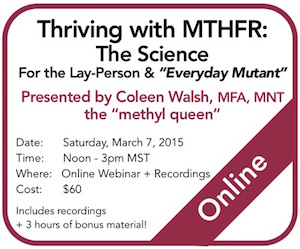
MTHFR is one hot topic and many of you are getting your MTHFR results, but do not know what to do with them.  Methylation cycle abnormalities can predispose you to disease. The MTHFR SNP (Single Nucleotide Polymorphism) is at a key position in the methylation cycle and if not working properly, can affect the whole pathway, creating symptoms and disease. The good news is that nutritional protocols and lifestyle modifications can help tremendously.  Most conventional doctors do not know about MTHFR, they have not studied the biochemical pathways and they don’t know how to support you on your journey to health.

Coleen Walsh, Dubbed the “methyl queen” Created a Guide for the Everyday Mutant – A Training on The Basics – MTHFR and Methylation Pathways – Just for You – The Everyday Mutant!

This 3-hour presentation breaks down the biochemistry of these pathways and epigenetics to give you a big picture idea of what is happening inside your cells and why it is important. Coleen is a natural educator and has an innate ability to break down the scientific information into to layman terms, so you can easily understand these pathways.  She created motion graphics to help you get a visual of the biochemistry and what that could mean to your health when you have these SNPs (mutations).

MTHFR interview from the Anxiety Summit – for your listening pleasure

I had the pleasure of interviewing Coleen on season 1 of The Anxiety Summit. I’d like to share that interview with you here, so you can get a taste of her level of expertise. It’s yours to listen to whether or not you can attend the training. Enjoy!

Are Your Genes Depressing You? MTHFR and Your Mood: Trudy Scott interviews Coleen Walsh on The Anxiety Summit

  • The Methylation Cycle overview, MTHFR and B vitamins as cofactors
  • How MTHFR effects the BH4 cycle and serotonin and dopamine
  • Factors that disturb methylation, how to test and what to do
  • Epigenetics and how SNPs are not our destiny

Listen to the recording here.

https://s3.amazonaws.com/trudyblog/Coleen-Walsh-MTHFR-from-Anxiety-Summit-for-webinar.mp3


Learn more and purchase

Here is the link to read more about Coleen’s online MTHFR/methylation workshop for the lay-person and every day mutant on March 7th, and to make your purchase:

http://www.easywebautomation.com/app/?Clk=5393325

PS. If you can’t make it live, you can still register and get the recordings/handouts later

PPS. This is a workshop for the lay-person. The 5 hour practitioner training was last week – if you’re a practitioner or would like to share this with your practitioner you’ll be able to get the recordings and handouts by signing up here for the MTHFR and Methylation Practitioner training. More information can be found on my blog here.


Filed Under: Events Tagged With: anxiety summit, coleen walsh, Methylation, mthfr

  • Page 1
  • Page 2
  • Go to Next Page »

Primary Sidebar

NEW! GABA QuickStart Homestudy (with special intro pricing)

gaba quickstart homestudy

Free Report

9 Great Questions Women Ask about Food, Mood and their Health

You'll also receive a complimentary subscription to my ezine "Food, Mood and Gal Stuff"


Connect with me

Popular Posts

  • Amino Acids Mood Questionnaire from The Antianxiety Food Solution
  • The Antianxiety Food Solution Amino Acid and Pyroluria Supplements
  • Pyroluria Questionnaire from The Antianxiety Food Solution
  • Collagen and gelatin lower serotonin: does this increase your anxiety and depression?
  • Tryptophan for the worry-in-your-head and ruminating type of anxiety
  • GABA for the physical-tension and stiff-and-tense-muscles type of anxiety
  • The Antianxiety Food Solution by Trudy Scott
  • Seriphos Original Formula is back: the best product for anxiety and insomnia caused by high cortisol
  • Am I an anxious introvert because of low zinc and vitamin B6? My response to Huffington Post blog
  • Vagus nerve rehab with GABA, breathing, humming, gargling and key nutrients

Recent Posts

  • What do I use instead of Seriphos to help lower high cortisol that is affecting my sleep and making me anxious at night?
  • BeSerene™ GABA/theanine cream eases severe muscle tension in her neck/shoulders, prevents her bad headaches and quells her anxiety
  • How the correct approach, dose and sublingual use of GABA can be calming and not cause a flushed and itchy face and neck
  • The amino acid glutamine improves low mood by addressing gut health, and it has calming effects too
  • Flight anxiety with heightened breath, physical tension and also fearing the worst (the role of low GABA and low serotonin)

Categories

  • 5-HTP
  • AB575
  • Addiction
  • ADHD
  • Adrenals
  • Alcohol
  • Allergies
  • Alzheimer's disease
  • Amino Acids
  • Anger
  • Antianxiety
  • Antianxiety Food Solution
  • Antidepressants
  • Anxiety
  • Anxiety and panic
  • Autism
  • Autoimmunity
  • benzodiazapines
  • Bipolar disorder
  • Books
  • Caffeine
  • Cancer
  • Candida
  • Children/Teens
  • Collagen
  • Cooking equipment
  • Coronavirus/COVID-19
  • Cravings
  • Depression
  • Detoxification
  • Diabetes
  • Diet
  • DPA/DLPA
  • Drugs
  • EFT/Tapping
  • EMF
  • EMFs
  • Emotional Eating
  • Endorphins
  • Environment
  • Essential oils
  • Events
  • Exercise
  • Fear
  • Fear of public speaking
  • Fertility and Pregnancy
  • Fish
  • Food
  • Food and mood
  • Functional neurology
  • GABA
  • Gene polymorphisms
  • General Health
  • Giving
  • Giving back
  • Glutamine
  • Gluten
  • GMOs
  • Gratitude
  • Gut health
  • Heart health/hypertension
  • Histamine
  • Hormone
  • Hyperparathyroidism
  • Hypoglycemia
  • Immune system
  • Inflammation
  • Insomnia
  • Inspiration
  • Introversion
  • Joy and happiness
  • Ketogenic diet
  • Lithium orotate
  • Looking awesome
  • Lyme disease and co-infections
  • MCAS/histamine
  • Medication
  • Men's health
  • Mental health
  • Mercury
  • Migraine
  • Mold
  • Movie
  • MTHFR
  • Multiple sclerosis
  • Music
  • NANP
  • Nature
  • Nutritional Psychiatry
  • OCD
  • Osteoporosis
  • Oxalates
  • Oxytocin
  • Pain
  • Paleo
  • Parasites
  • Parkinson’s disease
  • PCOS
  • People
  • PMS
  • Postpartum
  • PTSD/Trauma
  • Pyroluria
  • Questionnaires
  • Real whole food
  • Recipes
  • Research
  • Schizophrenia
  • serotonin
  • SIBO
  • Sleep
  • Special diets
  • Sports nutrition
  • Stress
  • Sugar addiction
  • Sugar and mood
  • Supplements
  • Teens
  • Testimonials
  • Testing
  • The Anxiety Summit
  • The Anxiety Summit 2
  • The Anxiety Summit 3
  • The Anxiety Summit 4
  • The Anxiety Summit 5
  • The Anxiety Summit 6
  • Thyroid
  • Thyroid health
  • Toxins
  • Tryptophan
  • Tyrosine
  • Uncategorized
  • Vegan/vegetarian
  • Women's health
  • Yoga

Archives

  • October 2025
  • September 2025
  • August 2025
  • July 2025
  • June 2025
  • May 2025
  • April 2025
  • March 2025
  • February 2025
  • January 2025
  • November 2024
  • October 2024
  • September 2024
  • August 2024
  • July 2024
  • June 2024
  • May 2024
  • April 2024
  • March 2024
  • February 2024
  • January 2024
  • December 2023
  • November 2023
  • October 2023
  • September 2023
  • August 2023
  • July 2023
  • June 2023
  • May 2023
  • April 2023
  • March 2023
  • February 2023
  • January 2023
  • December 2022
  • November 2022
  • October 2022
  • September 2022
  • August 2022
  • July 2022
  • June 2022
  • May 2022
  • April 2022
  • March 2022
  • February 2022
  • January 2022
  • December 2021
  • November 2021
  • October 2021
  • September 2021
  • August 2021
  • July 2021
  • June 2021
  • May 2021
  • April 2021
  • March 2021
  • February 2021
  • January 2021
  • December 2020
  • November 2020
  • October 2020
  • September 2020
  • August 2020
  • July 2020
  • June 2020
  • May 2020
  • April 2020
  • March 2020
  • February 2020
  • January 2020
  • December 2019
  • November 2019
  • October 2019
  • September 2019
  • August 2019
  • July 2019
  • June 2019
  • May 2019
  • April 2019
  • March 2019
  • February 2019
  • January 2019
  • December 2018
  • November 2018
  • October 2018
  • September 2018
  • August 2018
  • July 2018
  • June 2018
  • May 2018
  • April 2018
  • March 2018
  • February 2018
  • January 2018
  • December 2017
  • November 2017
  • October 2017
  • September 2017
  • August 2017
  • July 2017
  • June 2017
  • May 2017
  • April 2017
  • March 2017
  • February 2017
  • January 2017
  • December 2016
  • November 2016
  • October 2016
  • September 2016
  • August 2016
  • July 2016
  • June 2016
  • May 2016
  • April 2016
  • March 2016
  • February 2016
  • January 2016
  • December 2015
  • November 2015
  • October 2015
  • September 2015
  • August 2015
  • July 2015
  • June 2015
  • May 2015
  • April 2015
  • March 2015
  • February 2015
  • January 2015
  • December 2014
  • November 2014
  • October 2014
  • September 2014
  • August 2014
  • July 2014
  • June 2014
  • May 2014
  • April 2014
  • March 2014
  • February 2014
  • January 2014
  • December 2013
  • November 2013
  • October 2013
  • September 2013
  • August 2013
  • July 2013
  • June 2013
  • May 2013
  • April 2013
  • March 2013
  • February 2013
  • January 2013
  • December 2012
  • November 2012
  • October 2012
  • August 2012
  • July 2012
  • June 2012
  • May 2012
  • April 2012
  • March 2012
  • February 2012
  • January 2012
  • December 2011
  • November 2011
  • October 2011
  • September 2011
  • August 2011
  • July 2011
  • June 2011
  • May 2011
  • April 2011
  • March 2011
  • February 2011
  • January 2011
  • December 2010
  • October 2010
  • September 2010
  • July 2010
  • May 2010
  • April 2010
  • March 2010
  • February 2010
  • January 2010
  • November 2009

Share the knowledge!

The above statements have not been evaluated by the Food and Drug Administration. Products listed in this website are not intended to diagnose, treat, cure or prevent any disease.

The information provided on this site is for informational and educational purposes only and is not intended as a substitute for advice from your physician or other health care professional. You should consult with a healthcare professional before starting or modifying any diet, exercise, or supplementation program, before taking or stopping any medication, or if you have or suspect you may have a health problem.


Copyright © 2026 Trudy Scott. All Rights Reserved. | Privacy | Terms and Conditions | Refund Policy | Medical Disclaimer

Free Report

9 Great Questions Women Ask about Food, Mood and their Health

You’ll also receive a complimentary subscription to my ezine “Food, Mood and Gal Stuff”