• Skip to primary navigation
  • Skip to main content
  • Skip to primary sidebar

everywomanover29 blog

Food, Mood and Women's Health – Be your healthiest, look and feel great!

  • Blog
  • About
  • Services
  • Store
  • Resources
  • Testimonials
  • The Book
  • Contact
  • Search this site

insomnia

The Anxiety Summit – Tryptophan for anxiety, depression and insomnia: why quality is key and the critical co-factors

June 13, 2016 By Trudy Scott 64 Comments

Ron Sturtz_Anxiety4

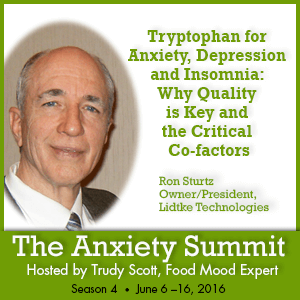
Ron Sturtz, Owner/President, Lidtke Technologies, was interviewed on the Anxiety Summit by host of the Anxiety Summit, Trudy Scott, Food Mood Expert and Nutritionist, author of The Antianxiety Food Solution.

Tryptophan for anxiety, depression and insomnia: why quality is key and the critical co-factors

  • The benefits of tryptophan for anxiety/mood/insomnia and why Trudy only recommends Lidtke
  • Tryptophan history and why safety and quality is key
  • Concerns about neurotoxic quinolinic acid
  • Tryptophan 500mg, kids chewable, Tryptophan Complete, and tryptophan for pets
  • Why use lysine, vitamin B3, B6/P5P, folate and curcumin with tryptophan
  • Other serotonin co-factors and 5-HTP
  • Client feedback and how to use these amino acids

In part 1 we start by discussing the history, the controversy in 1990 over contaminated L-tryptophan,  the impurities that lead to the EMS outbreak and why Lidtke has “been fanatical about purity and safety” since then:

the main [impurity] was EBT  [1,1′-ethylidene-bis-L-tryptophan] and that was the one that they suspected was the most heavily implicated.  They never could identify exactly which ones were toxic or in combination.  It could be like numbers one, two and five in combination were deadly or two and six in combination more deadly or maybe just six alone was deadly.  They never were able to determine that because they never found an animal model to use in research because when they would feed the rats or any other kind of animal, lab animal they had samples of this known toxic tryptophan, none of them responded the way humans do.  They have a very different gut flora and metabolism and they never responded the same so they weren’t about to use humans in any of these clinical trials so they never really could tell which of those six were the worst, but they strongly suspected that EBT was the worst

Ron covers how glyphosate/Roundup is contributing to low serotonin levels:

…the food crops  absorb the chemical, they still soak it up and then they’re sent to market and you buy them and you cook them and you eat then and then you soak it up.  Well, you don’t produce tryptophan or phenylalanine, but your gut bacteria to do.  And preferentially the beneficial gut bacteria tend to be killed by the glyphosates.  So when that happens the pathogenic bacteria tend to dominate.  And then when that happens when they grow kind of out of control then even more tryptophan is used up by the macrophages, which then attack the pathogens.

If you’d like to read more about this we covered this is much more detail in these interviews:

  • Stephanie Seneff presented in season 1: Is Roundup toxic and a cause of anxiety, autism and celiac disease?
  • Jeffrey Smith presented in season 2: on Anxiety, depression, GMOs and Roundup

In part 2 Ron reviews the serotonin biochemistry:
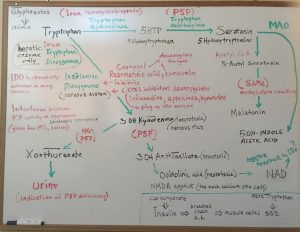
lidtke image serotonin biochemistry
Serotonin Biochemistry – Ron Sturtz from Lidtke Technologies

And we discuss the Tryptophan Complete product, the ingredients and rationale for including P5P, lysine, curcumin, folic acid and niacinamide. This is my feedback on the product:

the Tryptophan Complete is one that I’m not as familiar with as the 500 milligram Tryptophan.  I’ve been using the 500 milligram with my clients for over ten years.  The Tryptophan Complete is just a new one that’s sort of come on my radar and I started looking into it and I actually posted something on Facebook a few months ago and then did a blog post to get feedback from people [see below]. And I’ve had some promising feedback.  I’ve had one person say “I’ve used the Tryptophan Complete and liked it a lot better than the 500 milligrams.  It gave me a much deeper state of relaxation and a way more solid sleep.”  She used that, got benefits then tried the 500 and now has decided to go back to the Complete.  So she feels that the addition of the other ingredients really helped for her body chemistry.  I did have someone else say that she can’t do P5P at all.  It makes her agitated.  So for people who have individual reactions to any of the ingredients then you would go with the 500 milligrams.

Here is my blog: Tryptophan 500mg or Tryptophan Complete (by Lidtke)?

And my supplements blog that lists Lidtke tryptophan products (500mg tryptophan, Tryptophan Complete and Tryptophan 100mg chewable), other amino acid products and pyroluria products I recommend: The Antianxiety Food Solution Amino Acid and Pyroluria Supplements

You can also find the amino acid questionnaire (which lists the low serotonin symptoms) and amino acid precautions on the above blog.

Here is some of the research:

  • Tryptophan supplementation modulates social behavior: A review
  • Chronic treatment with a tryptophan-rich protein hydrolysate improves emotional processing, mental energy levels and reaction time in middle-aged women
  • A placebo-controlled clinical trial of L-tryptophan in premenstrual dysphoria.
  • Lysine fortification reduces anxiety and lessens stress in family members in economically weak communities in Northwest Syria.

Lidtke is kindly offering 15% off all Lidtke products through the end of June  – use coupon code anxietysummit

If you are not already registered for the Anxiety Summit you can get live access to the speakers of the day here: www.theAnxietySummit.com

Missed this interview or can’t listen live? Or want this and the other great interviews for your learning library? Purchase the MP3s or MP3s + transcripts and listen when it suits you.

You can find your purchasing options here.: Anxiety Summit Season 1, Anxiety Summit Season 2, Anxiety Summit Season 3, and Anxiety Summit Season 4.

Filed Under: Events, The Anxiety Summit 4 Tagged With: anxiety, anxiety summit, depression, insomnia, Lidtke, Ron Sturtz, Trudy Scott, tryptophan

Anxiety, ADHD, autism and insomnia: how a weighted blanket helps

April 22, 2016 By Trudy Scott 20 Comments

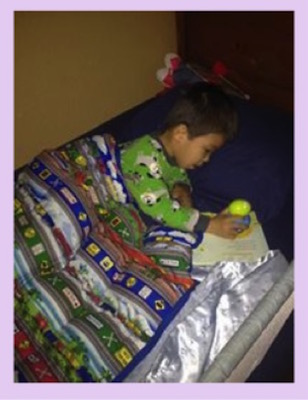
anxiety-weighted-blanket

I shared this article on facebook recently: Sleeping With Weighted Blankets Helps Insomnia And Anxiety

Traditionally, weighted blankets are used as part of occupational therapy for children experiencing sensory disorders, anxiety, stress or issues related to autism. ‘In psychiatric care, weighted blankets are one of our most powerful tools for helping people who are anxious, upset, and possibly on the verge of losing control,’ says Karen Moore, OTR/L, an occupational therapist in Franconia, N.H.

The response was so positive I promised I would share some blog posts with more information, so here we are. The first is to share some additional information and stories from people who have seen results or heard positive things about their use.

A 2008 study published in Occupational Therapy in Mental Health, observed the effects of a 30lb weighted blanket in a sample of 32 adults: Exploring the Safety and Therapeutic Effects of Deep Pressure Stimulation Using a Weighted Blanket. These results were observed

  • 63% reported lower anxiety after use
  • 78% preferred the weighted blanket as a calming modality

When I shared the article I asked a few questions. The first one: Have you used weighted blankets personally, or with children or recommended them to patients/clients?

The feedback I received was amazing! Lynn shared this magic blanket comment for ADHD and anxiety:

Someone close to me got one for her foster child, who suffers from emotional dysregulation, ADHD, and anxiety. It works like magic– in fact the child calls it his “magic blanket.”

She also shared this about her younger brother who is autistic and mute:

When we were young children, he would suffer terrible insomnia and agitation whenever there was a full moon. My older brother and I would take turns sleeping with him on full moon nights because that comforted him somewhat. We figured out as small children that we could get him to calm down and go to sleep by draping one leg and one arm across him. I think it was the heaviness and pressure of our limbs that settled his anxiety. Our parents could not do it, I suppose because their limbs were too large. So when I learned about Temple Grandin’s solution [more on that below], it made sense to me. Interesting, hmm

Phaedra commented saying some of us like to sleep with heavy blankets even in the summer and said this:

Deep pressure is calming and nurturing. Helps us get into our bodies and stimulates our proprioception (awareness of our body in space). I use weighted yoga bags filled with sand. Simply placing one across the chest or anywhere else on the body can be calming.

Diane shared that she used to write for a company called Mosaic Weighted Blankets and one of her jobs was to interview customers as testimonials:

I can’t tell you how blown away I was with my first few interviews. Parents of kids having autism, Asperger’s, special needs kids, kids having night terrors…it truly brought them (kids and the entire family) great peace and an ability to sleep through the night, almost immediately in many cases.

Adults also gained benefits, especially relating to issues with PTSD and restless legs syndrome.

The weight is part of the reason it provides calming…the pellets also provided something for the kids to touch/manipulate while they were trying to go to sleep. Mosaic’s blog should still have a lot of good articles on the benefits and how it is also used by occupational therapists. They can be on the expensive side if you compare it to a blanket, but if you compare it to the need for less medications and such it could be a very viable option.

There are many companies as well as sites showing how to make them yourself, just be sure you are focusing on the “pressure” effect and not the “heavy”…these blankets are not the same as just throwing 6 thick blankets on someone.

She also shared this article she wrote: Sensory Processing Disorder Treatment, Mosaic Weighted Blankets

Mosaic-Weighted-Blankets
Source: Mosaic Weighted Blankets

Tara lives in the UK and uses a medium weight duvet/comforter and has two very useful tricks/tips to hopefully get similar benefits if you don’t have access to a weighted blanket:

GREAT thread, everyone! Thanks so much! I find deep pressure *very* soothing. I don’t have a weighted blanket, but we do sleep with a 10.5 tog duvet [spring/autumn weight comforter – tog is a British measure of warmth pretty much year-round. (Ah, the “joy” of living in the UK. Not!)

good-sleep

That said, here are two other tricks: 1) if your climate allows (i.e. it’s not too hot), make yourself a *full* hot water bottle and tuck your feet *under* it. This will put some weight/pressure on your body and will feel comforting. (I’m thinking this could even be done with cold water if it’s too hot where you live.)

And 2) if you don’t have a weighted blanket, but find yourself struggling with insomnia, lie on your side and tuck your arms between your legs (so that your arms are “sandwiched” between your legs and the gravity of the leg on top presses onto your arms). It’s not the same as having the full weight of something on you, but you will be creating a bit of deep pressure all the same. I’m not an OT (I wish I were!) but if you think about what the best thing to do with a small baby is – swaddle it!!! A weighted blanket makes total sense! It’s calming to our nervous system because it “contains” us (but not in an oppressive, limiting way).

I have not verified if these two trick/tips do in fact work the same way but it makes sense that they would so feel free to share if you’ve found they work for you. I personally love the hot water bottle feeling and have always done this for as long as I can remember. I will also often start off sleeping in the arms-sandwiched position and then end up in arms folded position, sort of hugging myself. I had no idea why except that it just feels good.  

Tara mentioned also Temple Grandin’s deep pressure squeeze machine.

Temple Grandin (one of my heroes!) actually made her own deep pressure “machine” when she was little – she intuitively knew that it would help and soothe her. I’m not saying that anyone here is on the spectrum, but I have a hunch – tell me where I’m wrong – that a whole bunch of us have super “highly tuned” nervous systems! Thanks so much for all you do, Trudy and thanks to everyone in this group/community/village!

Based on the response this facebook post generated many of us have super “highly tuned” nervous systems, myself included!

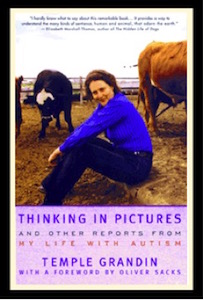
Many years ago I had read about device in her book: Thinking in Pictures, My Life with Autism many years ago. She is a fascinating woman and it’s a great read!  I see there is now an updated version.

thinking-in-pictures

Here is a little more about her: Temple Grandin PhD is an American professor of animal science at Colorado State University, world-renowned autism spokesperson and consultant to the livestock industry on animal behavior. On her website it states that she is now the most accomplished and well-known adult with autism in the world.

She writes about her squeeze machine and how it helped her anxiety and oversensitivity to touch here: Calming Effects of Deep Touch Pressure in Patients with Autistic Disorder, College Students, and Animals

I will describe here a deep touch pressure device (“squeeze machine”) that I developed to help me overcome problems of oversensitivity to touch, and that allays my nervousness. Reactions of other people to the squeeze machine, including children with autistic disorder and attention-deficit hyperactivity disorder (ADHD) are also reported.

When I posted this on facebook I also asked: “Do you have a source you can recommend -organic cotton cloth, non-plastic beads?”

I received some great resources but none that use organic cotton cloth and non-plastic beads. Some companies use stones and/or glass beads and one company has the option to send in your own fabric so you could buy your own organic cotton.  

I just feel that with sensitive individuals, having organic cotton and beads that are not plastic is the best option, especially since many of you will spend quite a bit of time under these blankets or wrapped in them.

I appreciate having the opportunity to share all the great facebook comments here. Thanks if you contributed to the discussion!. If you’d like to see all the responses here is link to the facebook post. Join us on facebook and be part of future discussions. We have a lot of fun and some healthy and sometimes heated debates too!

Stay tuned for part 2 where I will share resources for buying a weighted blanket. I’ll also share more of the research on how these weighted blankets work, resources for making one plus how to know what weight is best for you.

If you’ve used a weighted blanket for anxiety, stress reduction, ADHD or insomnia please do share how you liked it and how it helped you. Have you used one personally, or with children or recommended them to patients/clients?

If you have a resource that offers organic cotton cloth with non-plastic beads please do share it.

Filed Under: Antianxiety, Autism, Sleep Tagged With: insomnia, weighted blancket

The Anxiety Summit: Sleep Your Way to Better Moods

June 19, 2014 By Trudy Scott 9 Comments

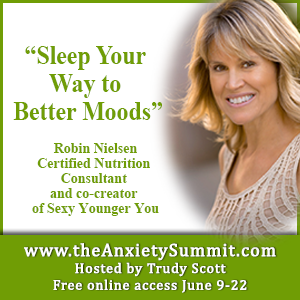
robin nielsen 1 the anxiety summit

This is day 12 of the Anxiety Summit. Robin Nielsen, Certified Nutrition Consultant and co-creator of Sexy Younger You, is interviewed by host of the Anxiety Summit, Trudy Scott, Food Mood Expert and Nutritionist, author of The Antianxiety Food Solution.

Everyone needs sleep! The CDC /Centers for Disease control says “Insufficient Sleep Is a Public Health Epidemic” According to data from the National Health Interview Survey, nearly 30% of adults reported an average of ?6 hours of sleep and only 31% of high school students reported getting at least 8 hours of sleep on an average school night. How do you feel when you don’t get enough sleep – other than awful…irritable, anxious, depressed and you very likely gravitate to sugar and caffeine to keep you going – which is only going to make things worse!

Research published just last month in the journal Pediatrics suggest that poor sleep in children under age 7 can lead to weight problems later on in life and can also affect their emotional health leading to more anxiety and depression.

Robin shares how you can …

Sleep Your Way to Better Moods

  • Learn why restorative sleep is the key to being happier
  • How anxiety and poor sleep are connected: sugar, blood sugar, caffeine, gluten
  • What sleep has to do with brain chemistry and hormones
  • How you can feel so much better when you get restorative sleep

Here are some great gems from my interview with Robin:

restorative sleep means sleep without medication

sleep helps to keep us beautiful as we age

insomnia can really be caused by just about anything and things that we would never guess

if you have a busy day, you’re going to have a busy night

chronic infections are constant stressor (and can affect your sleep)

hypothyroidism can cause sleep apnea

if you’re exercising improperly it’s going to raise your stress hormones and it’s going to affect your sleep and anxiety

We certainly did cover all the causes of insomnia and there are a lot of them.

Robin also shared that one of her favorite books is Lights Out: Sleep, Sugar, and Survival by T.S. Wiley.

Robin is so funny…she starts out by saying talking about sleep is not sexy and then ends with a sexy bombshell about oxytocin that left me speechless! Be warned!

Get your free gift from Robin Nielsen. She has a great Sleep Quiz, Checklist and Journal for you.

If you are not already registered for the Anxiety Summit you can get live access to the speakers of the day here www.theAnxietySummit.com

UPDATE: the summit concluded on Tues 6/24 – season 2 of The Anxiety Summit will be in November 2014. If you’d like to be on the notification list just sign up here www.theAnxietySummit.com

Missed this interview or can’t listen live? Or want this and the other great interviews for your learning library? Purchase the MP3s or MP3s + transcripts + interview highlights and listen when it suits you

Filed Under: Antianxiety, Anxiety and panic, Sleep, The Anxiety Summit Tagged With: Antianxiety Food Solution, anxiety, GABA, insomnia, mood, Robin Nielsen, sleep, the anxiety summit, Trudy Scott

How to get a great night’s sleep

August 31, 2012 By Trudy Scott 26 Comments

“A 2009 poll by the National Sleep Foundation found that only 28 percent of those surveyed regularly got eight hours or more of sleep a night. The average was around six and a half hours on weekdays and seven on weekends. Those who slept less than eight hours a night typically had mood problems, including worry and anxiety, ate more sugar and unhealthy food and drank more caffeinated beverages!”

~ Trudy Scott, The Antianxiety Food Solution

It’s amazing how many people don’t get enough sleep and there is so much we can do from a nutritional point of view to change this.  Here are six things to consider:

  1. One of the first things I think about when a client can’t sleep is low serotonin.  Low serotonin symptoms include insomnia, depression, negativity, worry and anxiety, irritability, PMS and afternoon and evening cravings.  And low serotonin can be boosted with tryptophan, taken as a supplement and/or in food sources.
  2. Research has actually shown that a medical or functional food made with pumpkin seeds improved sleep, due to the good sources of tryptophan and zinc. In another study this same functional food was also shown to reduce anxiety and social phobia.Pumpkin seeds can be soaked in water overnight and then lightly roasted with olive oil, sea salt, pepper, turmeric and ginger.  Food-wise, pumpkin seeds are a favorite of mine for a healthy snack and my clients love them.  Here is an blog post that discusses the benefits of soaked nuts and a roasted pumpkin seed recipe
  3. When tryptophan is taken as a supplement, some is converted to serotonin and some to melatonin.  Melatonin is fabulous for resetting your circadian rhythm so your sleep cycle gets back to normal. If taking tryptophan doesn’t quite get you sleeping through the night then taking additional melatonin may help. Sublingual melatonin helps you fall asleep and the timed-release form helps you stay asleep.
  4. Other factors that should be considered when sleep is an issue: low blood sugar,  addressing low serotonin levels,  addressing low GABA levels, checking for parasites and dysbiosis, and making sure you don’t have high cortisol.
  5. Other nutrients that may be helpful:  vitamin B6 (which helps improve mood and reduce anxiety too), zinc (which is also important for skin health,  reducing anxiety, improving mood, helping with blood sugar balance and PMS), and magnesium (which is also calming).
  6. Of course, it also helps to use a comfortable soft eye patch to keep the room dark and to use earplugs to keep things quiet. Also, keep clock radios and cell phones away from your head and don’t use an electric blanket!  Having a warm bath with essential oil of lavender is also a great help to help you wind down at the end of a hectic day.

Try some of the above tips and get those eight hours of sleep and you’ll have less mood problems, experience less worry and anxiety, eat less (or no) sugar and unhealthy food and drink less (or no) caffeinated beverages!   Sweet dreams!

Filed Under: Antianxiety Food Solution, Anxiety and panic, Real whole food, Sleep Tagged With: anxiety, insomnia, pumpkin seeds, serotonin, sleep, social anxiety, tryptophan

  • « Go to Previous Page
  • Page 1
  • Interim pages omitted …
  • Page 15
  • Page 16
  • Page 17

Primary Sidebar

NEW! GABA QuickStart Homestudy (with special intro pricing)

gaba quickstart homestudy

Free Report

9 Great Questions Women Ask about Food, Mood and their Health

You'll also receive a complimentary subscription to my ezine "Food, Mood and Gal Stuff"


Connect with me

Popular Posts

  • Amino Acids Mood Questionnaire from The Antianxiety Food Solution
  • The Antianxiety Food Solution Amino Acid and Pyroluria Supplements
  • Pyroluria Questionnaire from The Antianxiety Food Solution
  • Collagen and gelatin lower serotonin: does this increase your anxiety and depression?
  • Tryptophan for the worry-in-your-head and ruminating type of anxiety
  • GABA for the physical-tension and stiff-and-tense-muscles type of anxiety
  • The Antianxiety Food Solution by Trudy Scott
  • Seriphos Original Formula is back: the best product for anxiety and insomnia caused by high cortisol
  • Am I an anxious introvert because of low zinc and vitamin B6? My response to Huffington Post blog
  • Vagus nerve rehab with GABA, breathing, humming, gargling and key nutrients

Recent Posts

  • What do I use instead of Seriphos to help lower high cortisol that is affecting my sleep and making me anxious at night?
  • BeSerene™ GABA/theanine cream eases severe muscle tension in her neck/shoulders, prevents her bad headaches and quells her anxiety
  • How the correct approach, dose and sublingual use of GABA can be calming and not cause a flushed and itchy face and neck
  • The amino acid glutamine improves low mood by addressing gut health, and it has calming effects too
  • Flight anxiety with heightened breath, physical tension and also fearing the worst (the role of low GABA and low serotonin)

Categories

  • 5-HTP
  • AB575
  • Addiction
  • ADHD
  • Adrenals
  • Alcohol
  • Allergies
  • Alzheimer's disease
  • Amino Acids
  • Anger
  • Antianxiety
  • Antianxiety Food Solution
  • Antidepressants
  • Anxiety
  • Anxiety and panic
  • Autism
  • Autoimmunity
  • benzodiazapines
  • Bipolar disorder
  • Books
  • Caffeine
  • Cancer
  • Candida
  • Children/Teens
  • Collagen
  • Cooking equipment
  • Coronavirus/COVID-19
  • Cravings
  • Depression
  • Detoxification
  • Diabetes
  • Diet
  • DPA/DLPA
  • Drugs
  • EFT/Tapping
  • EMF
  • EMFs
  • Emotional Eating
  • Endorphins
  • Environment
  • Essential oils
  • Events
  • Exercise
  • Fear
  • Fear of public speaking
  • Fertility and Pregnancy
  • Fish
  • Food
  • Food and mood
  • Functional neurology
  • GABA
  • Gene polymorphisms
  • General Health
  • Giving
  • Giving back
  • Glutamine
  • Gluten
  • GMOs
  • Gratitude
  • Gut health
  • Heart health/hypertension
  • Histamine
  • Hormone
  • Hyperparathyroidism
  • Hypoglycemia
  • Immune system
  • Inflammation
  • Insomnia
  • Inspiration
  • Introversion
  • Joy and happiness
  • Ketogenic diet
  • Lithium orotate
  • Looking awesome
  • Lyme disease and co-infections
  • MCAS/histamine
  • Medication
  • Men's health
  • Mental health
  • Mercury
  • Migraine
  • Mold
  • Movie
  • MTHFR
  • Multiple sclerosis
  • Music
  • NANP
  • Nature
  • Nutritional Psychiatry
  • OCD
  • Osteoporosis
  • Oxalates
  • Oxytocin
  • Pain
  • Paleo
  • Parasites
  • Parkinson’s disease
  • PCOS
  • People
  • PMS
  • Postpartum
  • PTSD/Trauma
  • Pyroluria
  • Questionnaires
  • Real whole food
  • Recipes
  • Research
  • Schizophrenia
  • serotonin
  • SIBO
  • Sleep
  • Special diets
  • Sports nutrition
  • Stress
  • Sugar addiction
  • Sugar and mood
  • Supplements
  • Teens
  • Testimonials
  • Testing
  • The Anxiety Summit
  • The Anxiety Summit 2
  • The Anxiety Summit 3
  • The Anxiety Summit 4
  • The Anxiety Summit 5
  • The Anxiety Summit 6
  • Thyroid
  • Thyroid health
  • Toxins
  • Tryptophan
  • Tyrosine
  • Uncategorized
  • Vegan/vegetarian
  • Women's health
  • Yoga

Archives

  • October 2025
  • September 2025
  • August 2025
  • July 2025
  • June 2025
  • May 2025
  • April 2025
  • March 2025
  • February 2025
  • January 2025
  • November 2024
  • October 2024
  • September 2024
  • August 2024
  • July 2024
  • June 2024
  • May 2024
  • April 2024
  • March 2024
  • February 2024
  • January 2024
  • December 2023
  • November 2023
  • October 2023
  • September 2023
  • August 2023
  • July 2023
  • June 2023
  • May 2023
  • April 2023
  • March 2023
  • February 2023
  • January 2023
  • December 2022
  • November 2022
  • October 2022
  • September 2022
  • August 2022
  • July 2022
  • June 2022
  • May 2022
  • April 2022
  • March 2022
  • February 2022
  • January 2022
  • December 2021
  • November 2021
  • October 2021
  • September 2021
  • August 2021
  • July 2021
  • June 2021
  • May 2021
  • April 2021
  • March 2021
  • February 2021
  • January 2021
  • December 2020
  • November 2020
  • October 2020
  • September 2020
  • August 2020
  • July 2020
  • June 2020
  • May 2020
  • April 2020
  • March 2020
  • February 2020
  • January 2020
  • December 2019
  • November 2019
  • October 2019
  • September 2019
  • August 2019
  • July 2019
  • June 2019
  • May 2019
  • April 2019
  • March 2019
  • February 2019
  • January 2019
  • December 2018
  • November 2018
  • October 2018
  • September 2018
  • August 2018
  • July 2018
  • June 2018
  • May 2018
  • April 2018
  • March 2018
  • February 2018
  • January 2018
  • December 2017
  • November 2017
  • October 2017
  • September 2017
  • August 2017
  • July 2017
  • June 2017
  • May 2017
  • April 2017
  • March 2017
  • February 2017
  • January 2017
  • December 2016
  • November 2016
  • October 2016
  • September 2016
  • August 2016
  • July 2016
  • June 2016
  • May 2016
  • April 2016
  • March 2016
  • February 2016
  • January 2016
  • December 2015
  • November 2015
  • October 2015
  • September 2015
  • August 2015
  • July 2015
  • June 2015
  • May 2015
  • April 2015
  • March 2015
  • February 2015
  • January 2015
  • December 2014
  • November 2014
  • October 2014
  • September 2014
  • August 2014
  • July 2014
  • June 2014
  • May 2014
  • April 2014
  • March 2014
  • February 2014
  • January 2014
  • December 2013
  • November 2013
  • October 2013
  • September 2013
  • August 2013
  • July 2013
  • June 2013
  • May 2013
  • April 2013
  • March 2013
  • February 2013
  • January 2013
  • December 2012
  • November 2012
  • October 2012
  • August 2012
  • July 2012
  • June 2012
  • May 2012
  • April 2012
  • March 2012
  • February 2012
  • January 2012
  • December 2011
  • November 2011
  • October 2011
  • September 2011
  • August 2011
  • July 2011
  • June 2011
  • May 2011
  • April 2011
  • March 2011
  • February 2011
  • January 2011
  • December 2010
  • October 2010
  • September 2010
  • July 2010
  • May 2010
  • April 2010
  • March 2010
  • February 2010
  • January 2010
  • November 2009

Share the knowledge!

The above statements have not been evaluated by the Food and Drug Administration. Products listed in this website are not intended to diagnose, treat, cure or prevent any disease.

The information provided on this site is for informational and educational purposes only and is not intended as a substitute for advice from your physician or other health care professional. You should consult with a healthcare professional before starting or modifying any diet, exercise, or supplementation program, before taking or stopping any medication, or if you have or suspect you may have a health problem.


Copyright © 2026 Trudy Scott. All Rights Reserved. | Privacy | Terms and Conditions | Refund Policy | Medical Disclaimer

Free Report

9 Great Questions Women Ask about Food, Mood and their Health

You’ll also receive a complimentary subscription to my ezine “Food, Mood and Gal Stuff”