• Skip to primary navigation
  • Skip to main content
  • Skip to primary sidebar

everywomanover29 blog

Food, Mood and Women's Health – Be your healthiest, look and feel great!

  • Blog
  • About
  • Services
  • Store
  • Resources
  • Testimonials
  • The Book
  • Contact
  • Search this site

Impostor Phenomenon

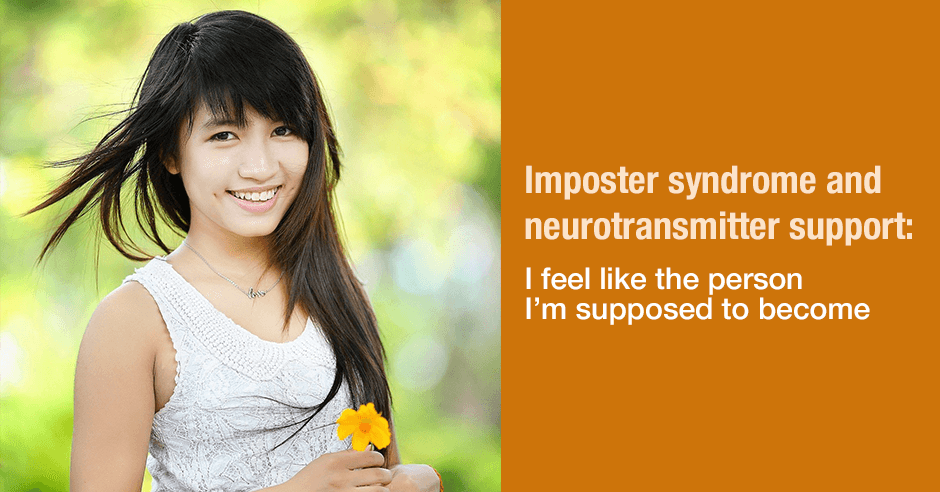
Imposter syndrome and neurotransmitter support: I feel like the person I’m supposed to become

February 26, 2021 By Trudy Scott 9 Comments

imposter syndrome and neurotransmitter support

A newly qualified nutritionist posted wonderful feedback on a blog post on imposter syndrome and low serotonin with tryptophan as one possible solution. She shared how neurotransmitter support with tryptophan, tyrosine and GABA was her solution, eliminating her imposter syndrome and social awkwardness in 2 weeks. Here is the feedback Yo shared on the blog:

Thanks for your work on neurotransmitters, Trudy.  I am a fan. I had suffered BADLY from imposter syndrome at the end of my nutrition degree and I felt socially awkward in so many outings and situations. My anxiety and stress were through the roof! VERY bad sleep, stressed and my digestion was very poor.

Fast forward to a year later after addressing my sleep (no. 1 priority); stress levels; diet; loads of minerals; vitamin supplementation – my health started to shift for the better, but I still had the imposter syndrome hanging over my head.

What really tipped the balance was the supplementation of tyrosine, tryptophan & GABA. The imposter syndrome seemed to have vanished within two weeks. And it was in your blogs that had pointed out clues to the amino acids I was needing to supplement.

I feel like the person I’m supposed to become and I can’t thank you enough for the amazing work you’ve been doing. I will definitely be following your journey, learning more about these neurotransmitters, and sharing this information so that others can benefit from it. Thank you, thank you!

I thanked Yo for her kind words and for sharing this wonderful outcome.  I always say we all deserve to feel our absolute best so I love that she says “I feel like the person I’m supposed to become”!

Addressing neurotransmitter imbalances with targeted amino acids

I also congratulated her on doing the foundational work first. As she discovered, even with all that in place, we often still have to address neurotransmitter imbalances with targeted amino acids too.  With regards to imposter syndrome and the amino acids she used:

  • Using tryptophan to address low serotonin eases worry, rumination, anxiety, negative self-talk, self-doubt and and not feeling capable – all of which we’d typically associate with imposter syndrome
  • Using tyrosine to address low dopamine results in more motivation and better focus so you are more likely to finish tasks (and therefore feel more confident and capable). Many folks report a feeling of calm focus with tyrosine too
  • Using GABA to address low GABA eases physical tension and overwhelm and helps stop unwanted thoughts.

A 2-week turnaround is fabulous and means she found the right combination of amino acids and ideal doses for her unique needs right away. I’ve seen results like this in 2 weeks but doing a new amino acid trial each week would usually take at least 3 weeks. I suspect her results were so fast because of the foundational work that was in place.

I typically start with amino acids trials on day one of working with someone, while we are working on diet, sleep, stress – this would have led to her feeling like the person she was meant to become much sooner and would have helped with sleep, stress and dietary changes too.  Her approach worked but it took longer to get results.

Questions I still have about the amino acid trials

I have these questions I posed to Yo and hope to hear back as I feel these answers may be helpful as you navigate your own challenges with imposter syndrome:

  • Did she do a trial of one amino acid at a time (my preferred approach so you know exactly what effects each one has)?
  • Or did she start taking all 3 amino acids at once and why?
  • What doses were ideal for her unique needs and how quickly did she find the ideal doses
  • Is she continuing with a maintenance dose?
  • Also, since she mentioned social awkwardness I have to wonder if the pyroluria protocol would be of added value (if any of the social awkwardness still remains)? This protocol helps to make neurotransmitters.

I’ll report back once I get Yo’s feedback.

If you’re new to imposter syndrome

If you’re new to imposter syndrome, here is a definition from Intellectual Self-doubt and How to Get Out of It:

People with imposter syndrome often feel like they are not as capable or adequate as others perceive or evaluate them to be. The signs and symptoms are feelings of phoniness, self-doubt, and inability to take credit for one’s accomplishments. It is a form of intellectual self-doubt. Those with imposter syndrome are often intelligent and high achievers – like many academics, pharmacists, and professional students. On one hand, imposter syndrome provides motivation to persevere. On the other hand, you over prepare and overwork.

This author shares a link to the Clance Imposter Scale. This is a self-assessment of imposter syndrome, developed by Dr. Pauline Rose Clance and Dr. Suzanne Imes (who worked together and coined the term “Impostor Phenomenon”.).

This paper reports that

Imposter syndrome is common among early career nurse researchers and often has a considerable impact on those affected. It can cause various problems, including anxiety, self-doubt and feelings of inadequacy, and therefore has significant potential to adversely affect personal and professional development.

You can also read more about imposter syndrome on my previous blog post on this topic – Imposter syndrome and low serotonin: is tryptophan the solution? and the Harvard Business review definition:

Imposter syndrome can be defined as a collection of feelings of inadequacy that persist despite evident success. ‘Imposters’ suffer from chronic self-doubt and a sense of intellectual fraudulence that override any feelings of success or external proof of their competence.

The numbers of papers on imposter syndrome are increasing but there is still no mention of biochemistry or neurotransmitters so these amino acid success stories are adding to the body of knowledge. (I would love to get them published as case studies so if you can help please do let me know.)

I love hearing life-changing stories like this and I am sharing it here to inspire and offer hope! I also love that Yo is such a fan now and wants to pay it forward by sharing this information with clients so I also shared my amino acid practitioner training.

Is imposter syndrome new to you? And is this concept of addressing imposter syndrome with amino acids new to you? If you have a question we would appreciate hearing:

#1 How you describe your imposter syndrome and how it impacts your life

#2 How you score on the Clance Imposter Scale (and which aspects bother you the most)

#3 What symptoms you have on the Amino Acid Questionnaire in the low serotonin, low catecholamine and low GABA sections.

If you already know about imposter syndrome and have found a solution with the amino acids please do share your success story so we can all learn from each other, as well as inspire and offer hope. We would appreciate hearing:

#A How you described your imposter syndrome and how it impacted your life

#B How you scored on the Clance Imposter Scale before and after using amino acids (and which aspects bothered you the most)

#C What symptoms you had on the Amino Acid Questionnaire  in the low serotonin, low catecholamine and low GABA sections (before and after using the amino acids)

#D Which amino acids were most helpful and how much of each amino acid helped you

#E If you’ve also had CBT (cognitive behavior therapy) and how it helped too

(if you feel more comfortable sharing some of this anonymously feel free to use a nickname or your initials only when commenting – I’m aware that there is a stigma to admitting this in the corporate world, as a health professional and as an entrepreneur)

Feel free to post your questions and feedback in the comments below.

Filed Under: Anxiety, Testimonials, Tryptophan, Women's health Tagged With: anxiety, Clance Imposter Scale, dopamine, focus, GABA, Imposter syndrome, Impostor Phenomenon, neurotransmitter, Pauline Rose Clance, phoniness, self-doubt, serotonin, tryptophan, tyrosine, worry

Primary Sidebar

NEW! GABA QuickStart Homestudy (with special intro pricing)

gaba quickstart homestudy

Free Report

9 Great Questions Women Ask about Food, Mood and their Health

You'll also receive a complimentary subscription to my ezine "Food, Mood and Gal Stuff"


Connect with me

Popular Posts

  • Amino Acids Mood Questionnaire from The Antianxiety Food Solution
  • The Antianxiety Food Solution Amino Acid and Pyroluria Supplements
  • Pyroluria Questionnaire from The Antianxiety Food Solution
  • Collagen and gelatin lower serotonin: does this increase your anxiety and depression?
  • Tryptophan for the worry-in-your-head and ruminating type of anxiety
  • GABA for the physical-tension and stiff-and-tense-muscles type of anxiety
  • The Antianxiety Food Solution by Trudy Scott
  • Seriphos Original Formula is back: the best product for anxiety and insomnia caused by high cortisol
  • Am I an anxious introvert because of low zinc and vitamin B6? My response to Huffington Post blog
  • Vagus nerve rehab with GABA, breathing, humming, gargling and key nutrients

Recent Posts

  • What do I use instead of Seriphos to help lower high cortisol that is affecting my sleep and making me anxious at night?
  • BeSerene™ GABA/theanine cream eases severe muscle tension in her neck/shoulders, prevents her bad headaches and quells her anxiety
  • How the correct approach, dose and sublingual use of GABA can be calming and not cause a flushed and itchy face and neck
  • The amino acid glutamine improves low mood by addressing gut health, and it has calming effects too
  • Flight anxiety with heightened breath, physical tension and also fearing the worst (the role of low GABA and low serotonin)

Categories

  • 5-HTP
  • AB575
  • Addiction
  • ADHD
  • Adrenals
  • Alcohol
  • Allergies
  • Alzheimer's disease
  • Amino Acids
  • Anger
  • Antianxiety
  • Antianxiety Food Solution
  • Antidepressants
  • Anxiety
  • Anxiety and panic
  • Autism
  • Autoimmunity
  • benzodiazapines
  • Bipolar disorder
  • Books
  • Caffeine
  • Cancer
  • Candida
  • Children/Teens
  • Collagen
  • Cooking equipment
  • Coronavirus/COVID-19
  • Cravings
  • Depression
  • Detoxification
  • Diabetes
  • Diet
  • DPA/DLPA
  • Drugs
  • EFT/Tapping
  • EMF
  • EMFs
  • Emotional Eating
  • Endorphins
  • Environment
  • Essential oils
  • Events
  • Exercise
  • Fear
  • Fear of public speaking
  • Fertility and Pregnancy
  • Fish
  • Food
  • Food and mood
  • Functional neurology
  • GABA
  • Gene polymorphisms
  • General Health
  • Giving
  • Giving back
  • Glutamine
  • Gluten
  • GMOs
  • Gratitude
  • Gut health
  • Heart health/hypertension
  • Histamine
  • Hormone
  • Hyperparathyroidism
  • Hypoglycemia
  • Immune system
  • Inflammation
  • Insomnia
  • Inspiration
  • Introversion
  • Joy and happiness
  • Ketogenic diet
  • Lithium orotate
  • Looking awesome
  • Lyme disease and co-infections
  • MCAS/histamine
  • Medication
  • Men's health
  • Mental health
  • Mercury
  • Migraine
  • Mold
  • Movie
  • MTHFR
  • Multiple sclerosis
  • Music
  • NANP
  • Nature
  • Nutritional Psychiatry
  • OCD
  • Osteoporosis
  • Oxalates
  • Oxytocin
  • Pain
  • Paleo
  • Parasites
  • Parkinson’s disease
  • PCOS
  • People
  • PMS
  • Postpartum
  • PTSD/Trauma
  • Pyroluria
  • Questionnaires
  • Real whole food
  • Recipes
  • Research
  • Schizophrenia
  • serotonin
  • SIBO
  • Sleep
  • Special diets
  • Sports nutrition
  • Stress
  • Sugar addiction
  • Sugar and mood
  • Supplements
  • Teens
  • Testimonials
  • Testing
  • The Anxiety Summit
  • The Anxiety Summit 2
  • The Anxiety Summit 3
  • The Anxiety Summit 4
  • The Anxiety Summit 5
  • The Anxiety Summit 6
  • Thyroid
  • Thyroid health
  • Toxins
  • Tryptophan
  • Tyrosine
  • Uncategorized
  • Vegan/vegetarian
  • Women's health
  • Yoga

Archives

  • October 2025
  • September 2025
  • August 2025
  • July 2025
  • June 2025
  • May 2025
  • April 2025
  • March 2025
  • February 2025
  • January 2025
  • November 2024
  • October 2024
  • September 2024
  • August 2024
  • July 2024
  • June 2024
  • May 2024
  • April 2024
  • March 2024
  • February 2024
  • January 2024
  • December 2023
  • November 2023
  • October 2023
  • September 2023
  • August 2023
  • July 2023
  • June 2023
  • May 2023
  • April 2023
  • March 2023
  • February 2023
  • January 2023
  • December 2022
  • November 2022
  • October 2022
  • September 2022
  • August 2022
  • July 2022
  • June 2022
  • May 2022
  • April 2022
  • March 2022
  • February 2022
  • January 2022
  • December 2021
  • November 2021
  • October 2021
  • September 2021
  • August 2021
  • July 2021
  • June 2021
  • May 2021
  • April 2021
  • March 2021
  • February 2021
  • January 2021
  • December 2020
  • November 2020
  • October 2020
  • September 2020
  • August 2020
  • July 2020
  • June 2020
  • May 2020
  • April 2020
  • March 2020
  • February 2020
  • January 2020
  • December 2019
  • November 2019
  • October 2019
  • September 2019
  • August 2019
  • July 2019
  • June 2019
  • May 2019
  • April 2019
  • March 2019
  • February 2019
  • January 2019
  • December 2018
  • November 2018
  • October 2018
  • September 2018
  • August 2018
  • July 2018
  • June 2018
  • May 2018
  • April 2018
  • March 2018
  • February 2018
  • January 2018
  • December 2017
  • November 2017
  • October 2017
  • September 2017
  • August 2017
  • July 2017
  • June 2017
  • May 2017
  • April 2017
  • March 2017
  • February 2017
  • January 2017
  • December 2016
  • November 2016
  • October 2016
  • September 2016
  • August 2016
  • July 2016
  • June 2016
  • May 2016
  • April 2016
  • March 2016
  • February 2016
  • January 2016
  • December 2015
  • November 2015
  • October 2015
  • September 2015
  • August 2015
  • July 2015
  • June 2015
  • May 2015
  • April 2015
  • March 2015
  • February 2015
  • January 2015
  • December 2014
  • November 2014
  • October 2014
  • September 2014
  • August 2014
  • July 2014
  • June 2014
  • May 2014
  • April 2014
  • March 2014
  • February 2014
  • January 2014
  • December 2013
  • November 2013
  • October 2013
  • September 2013
  • August 2013
  • July 2013
  • June 2013
  • May 2013
  • April 2013
  • March 2013
  • February 2013
  • January 2013
  • December 2012
  • November 2012
  • October 2012
  • August 2012
  • July 2012
  • June 2012
  • May 2012
  • April 2012
  • March 2012
  • February 2012
  • January 2012
  • December 2011
  • November 2011
  • October 2011
  • September 2011
  • August 2011
  • July 2011
  • June 2011
  • May 2011
  • April 2011
  • March 2011
  • February 2011
  • January 2011
  • December 2010
  • October 2010
  • September 2010
  • July 2010
  • May 2010
  • April 2010
  • March 2010
  • February 2010
  • January 2010
  • November 2009

Share the knowledge!

The above statements have not been evaluated by the Food and Drug Administration. Products listed in this website are not intended to diagnose, treat, cure or prevent any disease.

The information provided on this site is for informational and educational purposes only and is not intended as a substitute for advice from your physician or other health care professional. You should consult with a healthcare professional before starting or modifying any diet, exercise, or supplementation program, before taking or stopping any medication, or if you have or suspect you may have a health problem.


Copyright © 2026 Trudy Scott. All Rights Reserved. | Privacy | Terms and Conditions | Refund Policy | Medical Disclaimer

Free Report

9 Great Questions Women Ask about Food, Mood and their Health

You’ll also receive a complimentary subscription to my ezine “Food, Mood and Gal Stuff”