• Skip to primary navigation
  • Skip to main content
  • Skip to primary sidebar

everywomanover29 blog

Food, Mood and Women's Health – Be your healthiest, look and feel great!

  • Blog
  • About
  • Services
  • Store
  • Resources
  • Testimonials
  • The Book
  • Contact
  • Search this site

IBS

Healing Anxiety through the Gut on the Heal Your Gut Summit

December 28, 2015 By Trudy Scott 8 Comments

Gut dysfunction can be linked to virtually every disease and can cause conditions like autoimmunity, fatigue, depression, anxiety and panic attacks, food sensitivities, chronic pain, allergies and many more. These conditions are by and large preventable.
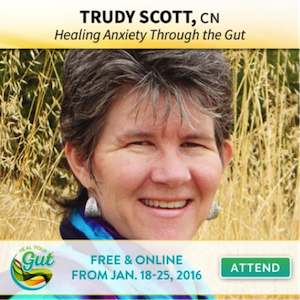
healthygutsummit-trudy

Gut issues and anxiety often go hand-in hand and my interview addresses Healing Anxiety through the Gut:

Can you relate to the following phrases? “I have butterflies in my stomach,” “I can feel it in my gut,” or “I just have this awful feeling in the pit of my stomach.” These aren’t just figures of speech.

It can be difficult to assess which came first. Is the anxiety affecting your digestion, or did poor digestion lead to anxiety or make anxiety worse? Sometimes it’s a mixture of both, and both need to be addressed.

Digestive disorders are very common in the United States. Over a third of all adults are affected by some kind of digestive disorder, and each year forty-five million people visit the doctor for reflux, constipation, irritable bowel syndrome (IBS), liver disease, and other digestive complaints.

Studies have found that people with digestive complaints such IBS, food allergies and sensitivities, small intestinal bacterial overgrowth and ulcerative colitis frequently suffer from anxiety and also depression too.

One study found that 50 to 90 percent of people with IBS who visited a doctor for treatment also suffered from various anxiety disorders (panic disorder, generalized anxiety disorder, social phobia, and post-traumatic stress disorder) and major depression.

There are many factors that can be considered when it comes to anxiety and gut health: the microbiome and psychobiotics (or good bacteria), low serotonin and an amino acid like tryptophan, low levels of stomach acid, low zinc, food sensitivities and much more.

heal-your-gut-summit

Join us for this fabulous upcoming online event that is being hosted by 3 of my favorite people: Dr. Josh Axe, who specializes in functional medicine and is on a mission to transform the health of millions all across the world; Donna Gates, the international best-selling author of The Body Ecology Diet and Dr. Eric L. Zielinski, a sought-after natural health educator, motivational speaker and author, and host of the well-known Essential Oils Summit.

I’m honored to have been invited to present with this excellent line-up of speakers that include:

  • Josh Axe, DNM, DC, CNS: 5 Steps to Heal Leaky Gut
  • Leo Galland, MD: Why Allergies Could Be Signaling Bigger Problems
  • David Perlmutter, MD: Heal Your Gut by Going Grain Free
  • Ty Bollinger: Boost Immunity with Gut-Immune-Cancer Connection

Here are some of the great speakers who I’ll be presenting with on day 5 of the summit:
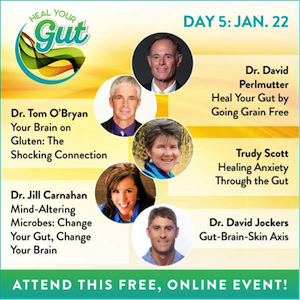
healthygutsummit-speakers

I hope you can join us! You can register here https://ju127.isrefer.com/go/healyourgutreg/trudyscottcn/
Filed Under: Antianxiety, Events Tagged With: anxiety, Heal Your Gut Summit, IBS, microbiome, serotonin, Trudy Scott

Customizing a Low FODMAPS Diet for a Client with Anxiety and/or Depression

January 19, 2015 By Trudy Scott 10 Comments

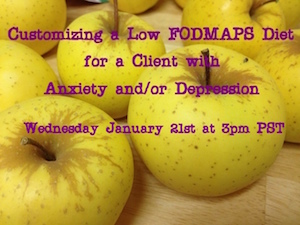
fodmaps-image

Here is an excerpt from a Dec 2014 paper called Review article: the aetiology, diagnosis, mechanisms and clinical evidence for food intolerance:

There have been significant advances in understanding the scientific basis of gastrointestinal food intolerance due to short-chain fermentable carbohydrates (FODMAPs). The most helpful diagnostic test for food intolerance is food exclusion to achieve symptom improvement followed by gradual food reintroduction. A low FODMAP diet is effective, however, it affects the gastrointestinal microbiota and FODMAP reintroduction to tolerance is part of the management strategy.

We’re seeing plenty of people with digestive issues like IBS (Irritable Bowel Syndrome) and SIBO (Small Intestinal Bacterial Overgrowth),  often with accompanying anxiety and depression, and a low FODMAPS diet may need to be considered. How do we know if we should consider it and how do we help out clients make this change?

This webinar is a way for you to learn more about FODMAPS for your clients and it’s a way for me to showcase the valuable work my friend Julie Matthews is doing in her BioIndividual Nutrition™ program. And for us to share the very cool new Victus software. I’ve actually signed up for the next training and I’m just super-excited to get the word out…which is another reason for the webinar! When I learn, I like to share what I learn!

Customizing a Low FODMAPS Diet for a Client with Anxiety and/or Depression

A webinar for health practitioners 
Food Mood Expert Trudy Scott interviews Julie Matthews, co-founder of BioIndividual Nutrition Institute

In this webinar, aimed at health practitioners, we will discuss:

  • The scientific rationale for recommending a Low FODMAPS (an acronym, deriving from “Fermentable, Oligo-, Di-, Mono-saccharides And Polyols) Diet for someone with anxiety/depression
  • Defining oligosaccharides (fructans and galacto-oligosaccharides); disaccharides (lactose); monosaccharides (fructose) and polyols (sugar alcohols and more)
  • What are high free fructose foods and the fructose malabsorption/anxiety and depression connection
  • How to do a low FODMAPs diet elimination/provocation
  • Why would you combine Low FODMAPS and SCD (Specific Carbohydrate Diet) for SIBO (Small Intestinal Bacterial Overgrowth)
  • How the Victus software helps you create a diet/recipes for the Low FODMAPs Diet
  • How to learn more about Julie Matthews’ Bioindividual Nutrition program (for practitioners), other special diets and the upcoming study group

Julie Matthews is a Certified Nutrition Consultant specializing in autism spectrum disorders, ADHD, and nutrition for pregnancy.  Her approached is based on the BioIndividual Nutrition™ needs of each person. She provides dietary guidance backed by scientific research and applied clinical experience. Her award winning book, Nourishing Hope for Autism, has helped people around the world to make food and nutrition choices that aid the health, learning, and behavior of those with autism, ADHD, and other developmental delays. She presents at leading autism conferences in the US and abroad, and is the Nutrition Editor of the Autism File magazine. She is on the scientific advisory board for USAAA (U.S. Autism & Asperger Association) and the Autism Nutrition Research Center. She is the co-founder of Nourishing Hope and BioIndividual Nutrition Institute. Julie has a private nutrition practice in San Francisco, California, and supports families and clinicians from around the world with her nutrition learning tools and professional training courses.

Here is the link to register for the webinar. If you can’t make it at this time, register anyway to get a copy of the notes and audio:

Update: this event is over (it was done Wednesday January 21st, 2015.)  Sorry you missed it!


Filed Under: Antianxiety, Anxiety and panic, Events Tagged With: anxiety, BioIndividual Nutrition Institute, depression, fodmaps, IBS, Julie Matthews, SIBO, Trudy Scott

The Anxiety Summit – Microbes in the gut and psychobiotics as a potential treatment for anxiety and depression

November 5, 2014 By Trudy Scott 20 Comments

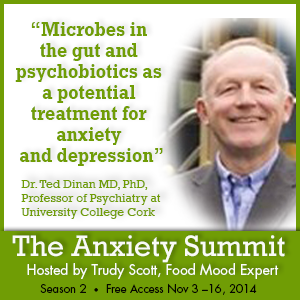
Dr_Ted_Dinan_Anxiety2

Dr. Ted Dinan, MD, PhD. Professor of Psychiatry at University College Cork was interviewed  by host of the Anxiety Summit, Trudy Scott, Food Mood Expert and Nutritionist, author of The Antianxiety Food Solution.

Microbes in the gut and psychobiotics as a potential treatment for anxiety and depression

  • Varied ways in which anxiety presents
  • Anxiety as a co-morbid condition e.g. irritable bowel syndrome
  • Microbes in the gut and the influence on emotional activity
  • Non-pharmacological approaches to treating anxiety
  • Psychobiotics as a potential treatment and the newest research in this area

Here are some snippets from our interview

Now the brain-gut axis is an axis that we learned more about over the decade or 2, how does the brain communicate with the gut, how does the gut communicate with the brain, and the view of irritable bowel syndrome is that it is as I say a brain axis disorder, an exceedingly common disorder, up to at least 50 percent and some studies suggest much higher rates in terms of the presence of psychiatric symptoms in patients with irritable bowel syndrome. The general view is that at least 50 percent of patients with irritable bowel syndrome have a coexistent or comorbid depression or anxiety.

We’re gradually I think learning more about the pathology underlying irritable bowel syndrome and we and others have published a number of studies show that for instance patients with irritable bowel syndrome have high levels of cytokines. Now cytokines are chemicals that are produced by the immune system and there are certain cytokines that are caused pro-inflammatory. They give rise to inflammation or are the product of inflammation. And certainly there is now good evidence that many patients with irritable bowel syndrome do have very high levels of these pro-inflammatory molecules in their blood stream. The molecules would be molecules like interleukin 6 and CNF-alpha.

Here is the quote from Dr. Dinan’s article that was co-written with Dr. John Cryan and called Psychobiotics: How Gut Bacteria Mess with Your Mind

In the 20th century the major focus of microbiological research was on finding ways to kill microbes by antibiotics. This century the focus has changed somewhat with the recognition of the health benefits of bacteria, not just from an immunity perspective but from a mental health one.

Here is some of Dr. Dinan’s research:

Do interactions between stress and immune responses lead to symptom exacerbations in irritable bowel syndrome?

co-morbidity with mood disorders such as depression and anxiety is common in IBS

Psychobiotics: a novel class of psychotropic.

Here, we define a psychobiotic as a live organism that, when ingested in adequate amounts, produces a health benefit in patients suffering from psychiatric illness. As a class of probiotic, these bacteria are capable of producing and delivering neuroactive substances such as gamma-aminobutyric acid and serotonin, which act on the brain-gut axis. Preclinical evaluation in rodents suggests that certain psychobiotics possess antidepressant or anxiolytic activity. Effects may be mediated via the vagus nerve, spinal cord, or neuroendocrine systems. So far, psychobiotics have been most extensively studied in a liaison psychiatric setting in patients with irritable bowel syndrome, where positive benefits have been reported for a number of organisms including Bifidobacterium infantis. Evidence is emerging of benefits in alleviating symptoms of depression and in chronic fatigue syndrome. Such benefits may be related to the anti-inflammatory actions of certain psychobiotics and a capacity to reduce hypothalamic-pituitary-adrenal axis activity. Results from large scale placebo-controlled studies are awaited.

This is the recent resistance training anxiety study I mentioned: The anxiolytic effects of resistance exercise

This research has shown that resistance training at a low-to-moderate intensity (<70% 1 repetition maximum) produces the most reliable and robust decreases in anxiety.

If you are not already registered for the Anxiety Summit you can get live access to the speakers of the day here www.theAnxietySummit.com

Filed Under: Anxiety and panic, The Anxiety Summit 2 Tagged With: anxiety, depression, IBS, Inflammation, microbes, psychobiotics, the anxiety summit, Trudy Scott

  • « Go to Previous Page
  • Page 1
  • Page 2
  • Page 3

Primary Sidebar

NEW! GABA QuickStart Homestudy (with special intro pricing)

gaba quickstart homestudy

Free Report

9 Great Questions Women Ask about Food, Mood and their Health

You'll also receive a complimentary subscription to my ezine "Food, Mood and Gal Stuff"


Connect with me

Popular Posts

  • Amino Acids Mood Questionnaire from The Antianxiety Food Solution
  • The Antianxiety Food Solution Amino Acid and Pyroluria Supplements
  • Pyroluria Questionnaire from The Antianxiety Food Solution
  • Collagen and gelatin lower serotonin: does this increase your anxiety and depression?
  • Tryptophan for the worry-in-your-head and ruminating type of anxiety
  • GABA for the physical-tension and stiff-and-tense-muscles type of anxiety
  • The Antianxiety Food Solution by Trudy Scott
  • Seriphos Original Formula is back: the best product for anxiety and insomnia caused by high cortisol
  • Am I an anxious introvert because of low zinc and vitamin B6? My response to Huffington Post blog
  • Vagus nerve rehab with GABA, breathing, humming, gargling and key nutrients

Recent Posts

  • What do I use instead of Seriphos to help lower high cortisol that is affecting my sleep and making me anxious at night?
  • BeSerene™ GABA/theanine cream eases severe muscle tension in her neck/shoulders, prevents her bad headaches and quells her anxiety
  • How the correct approach, dose and sublingual use of GABA can be calming and not cause a flushed and itchy face and neck
  • The amino acid glutamine improves low mood by addressing gut health, and it has calming effects too
  • Flight anxiety with heightened breath, physical tension and also fearing the worst (the role of low GABA and low serotonin)

Categories

  • 5-HTP
  • AB575
  • Addiction
  • ADHD
  • Adrenals
  • Alcohol
  • Allergies
  • Alzheimer's disease
  • Amino Acids
  • Anger
  • Antianxiety
  • Antianxiety Food Solution
  • Antidepressants
  • Anxiety
  • Anxiety and panic
  • Autism
  • Autoimmunity
  • benzodiazapines
  • Bipolar disorder
  • Books
  • Caffeine
  • Cancer
  • Candida
  • Children/Teens
  • Collagen
  • Cooking equipment
  • Coronavirus/COVID-19
  • Cravings
  • Depression
  • Detoxification
  • Diabetes
  • Diet
  • DPA/DLPA
  • Drugs
  • EFT/Tapping
  • EMF
  • EMFs
  • Emotional Eating
  • Endorphins
  • Environment
  • Essential oils
  • Events
  • Exercise
  • Fear
  • Fear of public speaking
  • Fertility and Pregnancy
  • Fish
  • Food
  • Food and mood
  • Functional neurology
  • GABA
  • Gene polymorphisms
  • General Health
  • Giving
  • Giving back
  • Glutamine
  • Gluten
  • GMOs
  • Gratitude
  • Gut health
  • Heart health/hypertension
  • Histamine
  • Hormone
  • Hyperparathyroidism
  • Hypoglycemia
  • Immune system
  • Inflammation
  • Insomnia
  • Inspiration
  • Introversion
  • Joy and happiness
  • Ketogenic diet
  • Lithium orotate
  • Looking awesome
  • Lyme disease and co-infections
  • MCAS/histamine
  • Medication
  • Men's health
  • Mental health
  • Mercury
  • Migraine
  • Mold
  • Movie
  • MTHFR
  • Multiple sclerosis
  • Music
  • NANP
  • Nature
  • Nutritional Psychiatry
  • OCD
  • Osteoporosis
  • Oxalates
  • Oxytocin
  • Pain
  • Paleo
  • Parasites
  • Parkinson’s disease
  • PCOS
  • People
  • PMS
  • Postpartum
  • PTSD/Trauma
  • Pyroluria
  • Questionnaires
  • Real whole food
  • Recipes
  • Research
  • Schizophrenia
  • serotonin
  • SIBO
  • Sleep
  • Special diets
  • Sports nutrition
  • Stress
  • Sugar addiction
  • Sugar and mood
  • Supplements
  • Teens
  • Testimonials
  • Testing
  • The Anxiety Summit
  • The Anxiety Summit 2
  • The Anxiety Summit 3
  • The Anxiety Summit 4
  • The Anxiety Summit 5
  • The Anxiety Summit 6
  • Thyroid
  • Thyroid health
  • Toxins
  • Tryptophan
  • Tyrosine
  • Uncategorized
  • Vegan/vegetarian
  • Women's health
  • Yoga

Archives

  • October 2025
  • September 2025
  • August 2025
  • July 2025
  • June 2025
  • May 2025
  • April 2025
  • March 2025
  • February 2025
  • January 2025
  • November 2024
  • October 2024
  • September 2024
  • August 2024
  • July 2024
  • June 2024
  • May 2024
  • April 2024
  • March 2024
  • February 2024
  • January 2024
  • December 2023
  • November 2023
  • October 2023
  • September 2023
  • August 2023
  • July 2023
  • June 2023
  • May 2023
  • April 2023
  • March 2023
  • February 2023
  • January 2023
  • December 2022
  • November 2022
  • October 2022
  • September 2022
  • August 2022
  • July 2022
  • June 2022
  • May 2022
  • April 2022
  • March 2022
  • February 2022
  • January 2022
  • December 2021
  • November 2021
  • October 2021
  • September 2021
  • August 2021
  • July 2021
  • June 2021
  • May 2021
  • April 2021
  • March 2021
  • February 2021
  • January 2021
  • December 2020
  • November 2020
  • October 2020
  • September 2020
  • August 2020
  • July 2020
  • June 2020
  • May 2020
  • April 2020
  • March 2020
  • February 2020
  • January 2020
  • December 2019
  • November 2019
  • October 2019
  • September 2019
  • August 2019
  • July 2019
  • June 2019
  • May 2019
  • April 2019
  • March 2019
  • February 2019
  • January 2019
  • December 2018
  • November 2018
  • October 2018
  • September 2018
  • August 2018
  • July 2018
  • June 2018
  • May 2018
  • April 2018
  • March 2018
  • February 2018
  • January 2018
  • December 2017
  • November 2017
  • October 2017
  • September 2017
  • August 2017
  • July 2017
  • June 2017
  • May 2017
  • April 2017
  • March 2017
  • February 2017
  • January 2017
  • December 2016
  • November 2016
  • October 2016
  • September 2016
  • August 2016
  • July 2016
  • June 2016
  • May 2016
  • April 2016
  • March 2016
  • February 2016
  • January 2016
  • December 2015
  • November 2015
  • October 2015
  • September 2015
  • August 2015
  • July 2015
  • June 2015
  • May 2015
  • April 2015
  • March 2015
  • February 2015
  • January 2015
  • December 2014
  • November 2014
  • October 2014
  • September 2014
  • August 2014
  • July 2014
  • June 2014
  • May 2014
  • April 2014
  • March 2014
  • February 2014
  • January 2014
  • December 2013
  • November 2013
  • October 2013
  • September 2013
  • August 2013
  • July 2013
  • June 2013
  • May 2013
  • April 2013
  • March 2013
  • February 2013
  • January 2013
  • December 2012
  • November 2012
  • October 2012
  • August 2012
  • July 2012
  • June 2012
  • May 2012
  • April 2012
  • March 2012
  • February 2012
  • January 2012
  • December 2011
  • November 2011
  • October 2011
  • September 2011
  • August 2011
  • July 2011
  • June 2011
  • May 2011
  • April 2011
  • March 2011
  • February 2011
  • January 2011
  • December 2010
  • October 2010
  • September 2010
  • July 2010
  • May 2010
  • April 2010
  • March 2010
  • February 2010
  • January 2010
  • November 2009

Share the knowledge!

The above statements have not been evaluated by the Food and Drug Administration. Products listed in this website are not intended to diagnose, treat, cure or prevent any disease.

The information provided on this site is for informational and educational purposes only and is not intended as a substitute for advice from your physician or other health care professional. You should consult with a healthcare professional before starting or modifying any diet, exercise, or supplementation program, before taking or stopping any medication, or if you have or suspect you may have a health problem.


Copyright © 2026 Trudy Scott. All Rights Reserved. | Privacy | Terms and Conditions | Refund Policy | Medical Disclaimer

Free Report

9 Great Questions Women Ask about Food, Mood and their Health

You’ll also receive a complimentary subscription to my ezine “Food, Mood and Gal Stuff”