• Skip to primary navigation
  • Skip to main content
  • Skip to primary sidebar

everywomanover29 blog

Food, Mood and Women's Health – Be your healthiest, look and feel great!

  • Blog
  • About
  • Services
  • Store
  • Resources
  • Testimonials
  • The Book
  • Contact
  • Search this site

IBS

EMFs from computers, phones, smart meters and circuit breakers: insomnia, anxiety, depression, IBS, numb hands and skin issues

November 9, 2018 By Trudy Scott 4 Comments

EMFs from computers, phones, smart meters and circuit breakers can cause insomnia, anxiety, depression, IBS, numb hands and skin issues, and even play a role in the severity of autism and other chronic health conditions.

Investigative health journalist, Nick Pineault, also known as “The EMF Guy” is on a mission to create awareness and provide practical and research-based resources for practitioners via his ElectrosmogRX training. He kindly offered to answer questions from some of you in my community. Thank you if you submitted a question and if you didn’t hopefully you get to learn from these great questions that were submitted.

Sarah ask about smart meters, cell phone in the bedroom and a CPAP machine, and depression, IBS, insomnia, pain and sinus problems

PART 1: I’d like to know Nick’s thoughts on what to do about a smart meter outside a bedroom wall almost directly behind my husband’s side of the bed. He suffers from many things… depression IBS, diarrhea during stressful events, painful joints and muscles, fatigue, insomnia at times, sinus problems.

Here is Nick’s feedback for Sarah:

Smart utility meters have often been linked with an increase in a slew of symptoms. One 2013 survey conducted in Maine has shown that 98% of respondents were “fairly sure” or “very sure” that their meter had made them sicker.

Depression, digestive issues, joint pain, fatigue, insomnia are all possible EMF-related symptoms.

The best thing you can do is to call your utility company and have your smart meter replaced by an analog meter. In certain states they will charge you a monthly penalty for that, and in other states the utility company won’t let you do it.

If you can’t remove the smart meter, then your next best choice is to shield it. A cheap solution to dampen the signal is to install a Smart Meter Guard, but in the case of your husband there’s a chance this would not be enough.

You could install special shielding materials between your bedroom wall and the meter, with the help of a certified Building Biologist (find one in your state)

PART 2: I’ve just put our WiFi on a timer to turn off at night. He still charges his phone next to him at night and sleeps with a CPAP machine. My main question is, in the whole scheme of EMF exposure where does the smart meter stand? And how serious is this compared to having the phone charging at night and the CPAP machine?  Thanks very much for all that you do!

Here is Nick’s additional feedback for Sarah H:

Turning off the wifi at night is an extremely important step. In the case of your husband, again I’m not sure that will be sufficient.

I would try the following for 3 nights:

  • Make sure the CPAP machine is 3 or more feet away.
  • Charge the phones in another room
  • No wireless device in the room whatsoever
  • Unplug everything from the walls — lamps, alarm clocks, etc. Phones in Airplane Mode can act as an alarm clock, but don’t charge it on the bed stand.

See how his symptoms change. If there are improvements in his sleep and reduction in symptoms, it’ll be easier for him to get on board too.

I’d like to add to this and suggest also getting a meter to get your husband on board – seeing is often believing.

Nicole is concerned about numb hands, hypersensitivity to smells and skin issues

Can EMFs cause numb hands, hypersensitivity to smells, skin issues?

Here is Nick’s feedback for Nicole:

Numb hands is a very common symptom. A lot of people feel itchy, tingling or other weird sensations when they hold a cell phone.

Hypersensitivity to smells might be linked with multiple chemical sensitivity (MCS), which often comes with his cousin electro hypersensitivity (EHS).

EMFs can definitely be linked with skin issues as well. For starters, EMF cause oxidative stress in cells, which will lead to premature aging of the skin.

Many EHS sufferers have reported skin-related symptoms. The work of Dr. Dominique Belpomme from France has shown that 40% of EHS people have high histamine levels in their blood, and the work of Olle Johansson has shown that exposure to screens and TV monitors (sources of magnetic and electrical fields) causes mast cells to migrate to the top dermis and release more histamine.

Basically, this means that a lot of us could be having a type of low-level allergic reaction on the skin when exposed to various types of EMFs.

Dilia is concerned about the circuit breaker and EMFs

How can I deal with EMF? I live in a small apartment where the breaker of the house is located. Is there something I can do about this?

Here is Nick’s feedback for Dilia:

Make sure that this circuit breaker panel is at least several feet away from an area where you spend a lot of time. It is unfortunately very hard to shield against the magnetic fields emitted by a breaker panel — I would suggest hiring a Building Biologist if the breaker panel was right next to your bed, for example.

That being said, generally speaking, you can deal with EMFs by turning off your wireless devices when not in use.

This includes:

  • Hitting Airplane Mode on your phone unless you need it
  • Turning off the wifi at night when not in use and at night, or using wired ethernet (best)
  • “Unsmarting” the home by getting rid of cordless phones and other wireless gadgets if you can

Sarah J asks about EMF mitigating devices and harmonizers for anxiety, sleep issues and more

My family is experiencing a plethora of serious health issues including anxiety, major sleep issues, autism, multiple brain injuries, etc.

There are many EMF mitigating devices and harmonizers on the market.  Which products really make a difference? How can one know? Are there any specific brands you can recommend that really work?

How does one cut through the pretenders and find the products that really help? Thank you for the opportunity ask Nick!! I’ve struggling with these questions for a long time

Here is Nick’s feedback for Sarah J:

A lot of devices (chips you’d out on your cell phone or computer, pendants, etc.) claim to “harmonize” EMFs, but there is very little scientific validation to back up these claims.

I cannot deny that some of these devices have been shown to alleviate some symptoms: less frequent headaches, less blood clumping and better blood circulation, better HRV (a sign of lowered stress), etc.

That being said, there are a few problems with these devices:

a) They are often marketed as “protective” (prevents harm), but the manufacturers offer tests which demonstrate that they are “supportive” (reduces symptoms).

In other words, I have no seen a single manufacturer of these devices who could show me the scientific proof that if I installed one of these devices on my phone, my body would experience ZERO biological effects from it. No DNA damage, no oxidative stress.

b) As these devices reduce symptoms related to EMF exposure, some people use them as an excuse to increase their EMF exposure now that they don’t feel as sensitive to EMFs anymore.

If you keep all of the above in mind, using these pendant or “chips” isn’t a bad idea to reduce symptoms and support the body during times of inevitable exposure outside the home.

May I add that considering the plethora of symptoms that your family is experiencing — all of which have been linked in medical literature with EMF exposure — I suggest hiring a Building Biologist and having them do a thorough home survey in order to identify how you could minimize EMFs inside the home, and shield against outside exposures (cell phone towers, smart meters, etc.), if the need be.

I’d like to add that I am convinced my Qlink helps me, especially with sleep, but I also follow Nick’s advice and have no WiFi and very seldom use my smart phone. I also recently had someone share this with me: “I shut off my WiFi at night and wear a Qlink. I have tested the Qlink with looking at blood cells under a dark field microscope and when it’s removed there is definitely clumping of red blood cells. They move fine with it on.”

This question about EMF mitigating devices and harmonizers is the most common question I get related to EMFs so I’d like to reiterate Nick’s advice and share how Dr. Klinghardt supports his patients who have chronic health conditions – notice he makes no mention of devices or harmonizers.
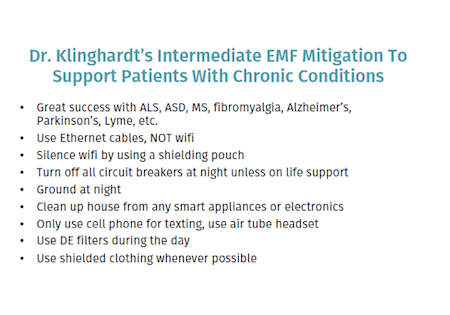
The above slide is shared with permission from Nick Pineault’s ElectrosmogRX training (more details below).

Adriana asks this question about EMFs and sleep

My boyfriend cannot sleep for years now. We are in the outskirts of [a big city], close to the international airport. We lived in the city and there we had a lot of EMF (3 GSM antennas on the neighboring block, WiFi with every neighbor in the block – 10 stories high and 4 apartments/floor + intelligent meters for heating on every heater in the house. That was a lot for him and after we moved outside the city, to a house and in a low-density housing area, then it was better for him. But he sits at the laptop for 6-8 hours every day. You think that may be affecting him that much?

Here is Nick’s feedback for Adriana:

Your boyfriend might be feeling symptoms related to EMF exposure, and sleep disturbance is one of the most common ones.

If he exposes himself to a laptop connected via WiFi, then his symptoms might persist.

In his case, especially if he works at the computer all day, every day — I’d recommend cutting off the WiFi anytime it’s not in use and using his computer via an ethernet cable instead of WiFi.

Turn off the WiFi at night, unplug everything from the walls and even turn off the circuit breaker to the bedroom at night for at least 3 days and sees if this helps him.

In order to alleviate EMF sensitivity, it’s critical that he takes extra step to reduce his exposure as much as possible.

If you’re a practitioner, are you looking at the impact EMFs have on the health of your clients/patients and do you feel comfortable answering questions like these ones? If not, Nick Pineault is on a mission to create awareness and provide practical and research-based resources for practitioners via his ElectrosmogRX training (it’s 33% off for a limited time).

Nick is also offering these non-cost resources so you can be as informed as possible:

  • Downloadable Guide: How EMFs Affect Your Patients/Clients
  • EMF case studies video (teaching you how to identify EMF-related symptoms)
  • Here is the link to register for a replay of the webinar: 3 Essential Steps to Know Which of Your Patients/Clients Are Suffering From EMF-Related Symptoms

This blog is strictly about EMFs – which cannot be ignored – but we must not forget how the amino acids like GABA and tryptophan can help with anxiety and depression, and even pain and IBS. They can both also help with insomnia as can melatonin which has been shown to be disrupted by EMF exposure. This is just the tip of the iceberg in terms of nutritional support for EMF-related issues for both healing and resilience – Nick covers it all in the ElectrosmogRX training (which I’ve done and wholeheartedly endorse).

Are you seeing improvements in your health once you address EMFs? What changes have you made? Have nutritional changes helped too?

Filed Under: EMF, EMFs Tagged With: anxiety, depression, electrosmog, EMF harmonizer, EMF mitigating device, EMFs, IBS, insomnia, Nick Pineault, Qlink, sinus, skin, sleep

Lyme Disease: An Overlooked Underlying Cause of IBS & SIBO

August 23, 2018 By Trudy Scott 5 Comments

Lyme disease is an overlooked underlying cause of IBS & SIBO and Dr. Tom Messinger addresses this fascinating connection in his interview on the IBS & SIBO SOS Summit, happening September 3-10, 2018.

Summit host, Shivan Sarna, found out about this connection when she told Dr. Messinger that her feet really hurt. He responded with this:

You know, the spirochetes from Lyme do like the feet

Who knew!?

He also shared that an acute presentation of Lyme disease can manifest with GI symptoms such as nausea, vomiting, diarrhea:

a common underlying cause of SIBO is what’s considered either a GI flu or food poisoning. Most times, clinically, you can’t tease out which of those two scenarios happened. The person just has the same symptoms—nausea, vomiting, diarrhea, abdominal cramping.

However, there is research—and that’s published research—showing that one of the ways an acute presentation of Lyme disease can manifest is that those GI symptoms—nausea, vomiting, diarrhea.

So, a person that has that, and then years down the road is diagnosed with SIBO, it’s traced back to that as probably the onset, and thinking, “Well, it’s probably a GI flu,” you don’t get worked up for it, or it was a food poisoning, but it could’ve actually been a tick bite, Lyme disease, that caused that. And it was written off as it was just a GI flu. So an acute presentation, Borrelia can cause those symptoms that may lead down the road to SIBO.

And there is more:

  • We know that Borrelia does live in the intestinal lining cells
  • Borrelia has an affinity for nervous system tissue and that’s why there’s a lot of neurological symptoms in Lyme. But as we know, the GI system has a lot of nervous system tissue in it. It’s felt that Borrelia has an impact on the migrating motor complex and definitely has a profound impact on motility. It could either make motility hyperactive or hypoactive (diarrhea or constipation).
  • Borrelia has a great affinity for that and usually will impact the vagus nerve. The vagus nerve is your main parasympathetic nerve in your body that helps to regulate all of your digestive function—hydrochloric acid secretion, pancreatic enzyme secretion, motility.

He reminds us to not discount the possibility of Lyme disease based on the following belief:

Well, I don’t live in the northeast. I don’t hike. I’ve never had a tick bite with a bulls eye rash. So there’s no way I could have Lyme disease

Dr. Messinger goes on to talk about the incidence of Lyme, how it can be transmitted, how it affects many body systems (digestion, neurological, hormones etc.), the challenges with Lyme testing, treatment and how overall toxicity may be playing a role in symptom severity.

I have chronic SIBO myself and I’m a speaker on the summit too. I cover how GABA reduces the visceral pain of IBS & SIBO, eases anxiety and helps with insomnia, plus some other protocols for easing the pain when the dreaded belly bloat occurs and you can’t sleep.

I’m also in the process of testing for Lyme disease. I wonder if this is one of the underlying causes of my SIBO? You’ll be sure to hear from me once I find out more.

Summit host, Shivan, asks the excellent questions YOU would ask if you were in the room with these experts. She draws on her own experience with painful digestive issues and years of failed treatments (alternative and conventional) to be YOUR champion for improved health…

…and she’s here to share her knowledge with you!

Join us at The IBS & SIBO SOS Summit to learn more about:

  • Identifying the root cause of your digestive struggles
  • Saving money from wasted doctor visits and ineffective treatments
  • Identifying which foods cause your flares
  • Naturopathic and conventional principles important to gut healing
  • Strategies for food reintroduction
  • Treatments, protocols and diets for IBS and/or SIBO
  • And more!

The IBS & SIBO SOS Summit is online and complimentary from September 3-10, 2018!

I’ll see you online at this educational summit when you register here today

Filed Under: Events, Lyme disease and co-infections Tagged With: IBS, SIBO, sibo sos summit

GABA reduces the visceral pain of IBS & SIBO, eases anxiety and helps with insomnia

August 23, 2018 By Trudy Scott 6 Comments

I have chronic SIBO (small intestinal bacterial overgrowth) and shared some insights – during an interview on the IBS & SIBO SOS Summit – on what helps me when I’m trying a new protocol or new food and get that awful and painful belly bloat.

It’s so bad that I’m in pain all night, tossing and turning and can’t sleep…. and Iberogast, enzymes and peppermint and lavender essential oil on my bloated belly help so much:

Because of the cellulose in one of the Candibactin products, I was getting the bloating. And the Iberogast taken at night just before I went to bed (together with a few other things) definitely helped with some of the bloating.

For me, the problem with the bloating is the pain (obviously), but worse than that is the lack of sleep. If I’m bloated, it just feels like I’m tossing and turning the whole night. And if I don’t get eight hours of sleep, I’m a mess. So, the biggest issue for me is the impact on my sleep.

But if I’ve got this huge, bloated belly which was happening a lot, I take enzymes that help with carb digestion. I will also rub peppermint essential oil on my belly. So I’ve got a little bowl of coconut oil with a dab of lavender (it’s calming and it helps you sleep as well) and a little bit of peppermint oil.

There’s a number of studies showing that essential oil or peppermint ingested in a capsule can help with IBS. And I’ve found that, topically, it can help too. So that works for me to help with some of the bloating.

I also share about my 2 favorite amino acids – you guessed it – GABA and tryptophan. They just have so many applications! In this instance of painful belly bloating they help with pain and sleep and improve motility:

The other thing that helps is GABA which is one of the amino acids. There is research discussing the role of GABA in stress-induced visceral hypersensitivity. GABA helps with reducing the visceral pain that is seen with IBS/SIBO because we have GABA receptors in various parts of the body, including the digestive system. GABA is amazing for physical tension/anxiety and it can ease that. I’m thinking that this easing of physical tension may be one of the mechanisms as to how it works for some of the pain issues.

I do want to mention something about GABA – it works most effectively when taken sublingually. I just chew a capsule and get the results. And it works within five minutes.

And then, the other one that I use at night is tryptophan. This really helps with the sleep as well by boosting serotonin levels. It actually helps with motility too – there’s research showing this.

If your SIBO causes increased anxiety, these two amino acids would help ease those symptoms too – GABA for the physical anxiety and tryptophan for the worry in the head anxiety:

And then, it helps with anxiety as well if that’s an issue – for many people with IBS and SIBO, anxiety is an issue.

Summit host, Shivan Sarna, shares how LDN (low dose naltrexone) has helped her tremendously (she also has chronic SIBO) and we discuss how too much can increase anxiety and impact your sleep. Since doing this interview I’ve had feedback from two people who successfully used GABA Calm to reduce their anxiety from too high a dose of LDN.

We also touch on some of the possible mechanisms of LDN, I share some of the benefits of berberine, and we discuss benzodiazepines which are so often prescribed for IBS/SIBO (for the anxiety, the insomnia and the pain) and why nutritional approaches are a safer option.

Have topical peppermint/lavender essential oils helped with belly bloat?

Has GABA or tryptophan helped you with the pain, poor motility or anxiety associated with SIBO?

Feel free to post your feedback and questions in the comments below.

Filed Under: GABA Tagged With: anxiety, bloat, GABA, Iberogast, IBS, insomnia, lavender, pain, peppermint, SIBO, visceral pain

Histamine issues: IBS, fatigue, brain fog, anxiety, depression, migraines

January 11, 2018 By Trudy Scott 10 Comments

Dr. Ben Lynch is hosting the Dirty Genes Summit Jan 22-39 and he shares this about you and your genes:

You are not a victim of circumstance… born with bad genes, destined to die of whatever your family tree has genetically bequeathed you.

The way your genes express is unique – and it can change throughout your life. 

Knowing how to create that change is vitally important and you’ll see how clear this is in his wonderful histamine interview with Yasmina Ykelenstam of Healing Histamine.

I love the bucket analogy where Yasmina shares about histamine and inflammation:

Imagine the body as a giant bucket and there is only so much inflammation you can put into it before our inflammation causing behaviors that you can fill it up with before you spill over symptoms. So let’s say you fill it with a few high histamine foods; then you feel it up with stress; then you fill it up to being exposed to animal hair (dander); then pollen season starts; and woah, we’re right, right, right at the top; and then we eat an apple which is not high histamine, it doesn’t cause inflammation, in fact, it’s anti-inflammatory; and suddenly we spill over because the active digestion itself is an inflammatory process.

We blame the poor little apple and not the hamburger we ate the week ago that started the inflammation bucket filling up. We don’t blame the puppy because we love the doggy so much. We certainly don’t blame our stress because we don’t want to take too hard a look at our lives and how difficult it would be for us to make changes, steps to take real steps to handle our stress and to start meditating or to remove stressful processes from our life because that’s just too much for us to handle

She shares how you can combat some of this by adding foods with

anti-properties: anti-histamine and anti-inflammatory properties…I just stopped eating the wrong high histamine foods, the processed ones, the sugary ones, the ones that added nothing to my life beyond the two seconds in my mouth.

Dr. Lynch asks Yasmina to list symptoms she experienced in this midst of her histamine issues (many of which are commonly seen in individuals with histamine issues)

IBS, which is mostly loose stools or being totally bound up so you can’t go to the bathroom for 8 days and they tend to go back and forth… severe swelling of the stomach – what I call basketball stomach… At my worse, it was projectile vomiting and constant nausea, and constant until it went away… chronic migraines. I once had migraines every day for six months before they went away. Common symptoms include dizziness, brain fog, low blood pressure, feeling dizzy when you stand up… really, inability to think straight is a really, really big one. It’s kind of like somebody almost puts a wet blanket over your brain. It tends to happen after you eat.

She also shares how fatigue after eating is often an issue. And how intolerance to alcohol is a factor, specifically red wine:

Most people do better with tequila, vodka, rum and gin, although alcohol paralyzes the thiamine oxidase, histamine degrading enzyme.

There is also a mental health impact from histamine issues – histamine is a neurotransmitter – and Yasmina shares how this may impact you:

…it affects dopamine, GABA, serotonin, and it can make us depressed. It can also make us manic as I discovered in my teens. It can mimic the symptoms of bipolar disorder and also schizophrenia. There’s been a few interesting studies where certain types of antihistamines that are not available on the market were able to reverse schizophrenia symptoms better than antipsychotic medications.

Anxiety is also a very, very big histamine symptom and whenever I see somebody who has a histamine problem, they do tend to be quite stressed out and kind of the chicken or the egg, which came first. But definitely histamine causes more stress and anxiety and that again is in the medical research.

This statement about symptoms rotating was new to me and may be new to you too:

It has to be consistent and then it goes away and then it comes back again. That’s what’s really confusing about histamine because: 1. It mimics many disorders, and 2. The symptoms rotate

All in all, this is a fascinating interview and well worth listening to!

Join the summit and you will learn that your genes can be turned off or on and this event will teach:

  • How Do Your Genes Impact You?
  • How to Clean Your Genes With Food
  • About Your Genes and Your Mental Health
  • How to Alter Your Genetic Expression
  • The Building Blocks of Healthy Families (and generations!)
  • An Understanding of How Your Genes Work
  • Genetic Testing and How to Clean Up Your Genes for the Long Term

Register for the Dirty Genes Summit here – to hear this entire interview and learn from Dr. Ben Lynch and the other experts he interviews.

Hope you can join!

Filed Under: Anxiety, Events, Histamine Tagged With: anxiety, Ben Lynch, dirty genes summit, histamine, IBS, Yasmina Ykelenstam

How much GABA should I use and which GABA product is best?

December 8, 2017 By Trudy Scott 61 Comments

The most common question I get about GABA (gamma-amino butyric acid) is the one about the blood-brain barrier and does it even work (it certainly does – read here for information on this one).

The next most common question I get about GABA is this one:

How much GABA should I use and which GABA product is best?

This exact question was actually asked of me a number of times last week after I published: Herbal therapy is equivalent to rifaximin for the treatment of small intestinal bacterial overgrowth (SIBO). In this blog I share about my trials of using sublingual GABA for the visceral pain and muscle tension in my gut caused by the bloating symptoms of SIBO.

There is no simple answer! It requires a blog post to provide a good answer because we are all unique, have different needs and these needs can even differ at different times depending on the issue and what is going on in our lives at the moment.

Let’s first do a quick recap of GABA (gamma-amino butyric acid) in case this is new to you. GABA is a calming amino acid that can be used as a supplement to raise GABA levels (GABA is also a neurotransmitter. It’s one of the amino acids I use most frequently with my anxious clients (together with tryptophan). GABA helps with the physical anxiety and tension, as well as panic attacks. New research shows it also helps with inhibition of unwanted thoughts and may also offer gut protection after alcohol consumption. It also helps with stiff and tense muscles and muscle pain and spasms.

How I have benefited from GABA

Here is a quick summary of how I’ve benefited from GABA supplements. I use this information to inform my use of GABA to help with the visceral pain I now experience due to my SIBO (more on that below).

If you have never used GABA or if you’ve used it once or twice, reading this should give you a clue as to why there is no one answer and how we need to use a trial approach to figure out what is best for each situation.

This also illustrates that there is no one size fits all for everyone and even for the same person under different situations.

  1. The anxiety and panic attacks I experienced 15 years ago:
    1. I used 1-2 GABA Calm three times a day and a combination GABA product at night. GABA Calm contains 125mg GABA and the GABA product contains 200mg GABA. My anxiety eased and my panic attacks stopped in a few days, giving me immediate relief and hope while I started to address all the other root causes like gluten sensitivity, adrenal issues, low zinc, gut health, low vitamin B6 and more
    2. The doses of GABA I used for my anxiety and panic attacks are typical amounts my clients benefit from and I would not have someone start on 500mg.
    3. If someone is a “pixie-dust” person and very sensitive I’d have them start with a pinch/dab or ¼ of 125 mg GABA Calm.
  1. The “ice-pick” headaches on the top of the skull that I discovered were caused by neck spasms:
    1. Physical therapy, high doses of GABA and high doses of magnesium were essential.
    2. Because of the low doses of GABA I had used for my anxiety years before this, I started with low doses of GABA increasing slowly from 200mg up to 1000mg GABA. This higher amount worked for me at this time for this injury.
  1. Throat spasms and the loss of my voice due to vagus nerve issues caused by a terrifying plane ride:
    1. Based on my prior ice-pick headache experience I now knew I could tolerate higher doses and started with 500mg GABA and used more as needed.
    2. I must have been really low in GABA because I was actually able to use upwards of 5 (and sometime more) doses of 500mg a day and not feel too wiped out, even during the day.
    3. That’s a lot of GABA for me – as I mentioned above 125mg to 250mg used to be enough for the anxiety I experienced 15 years ago.
    4. I write more about all this here: Vagus nerve rehab with GABA, breathing, humming, gargling and key nutrients (with videos to demonstrate immediate effects when using GABA sublingually)
  1. Rectal spasms/proctalgia fugax. These seem to be related to SIBO/IBS and I still experience these from time to time.
    1. I have found that 250mg to 500mg GABA opened onto my tongue works best for me for this particular muscle spasm.
    2. Again, it eases the spasms and pain in a few minutes. I write more about this here: How GABA eases agonizing rectal pain and spasms in under 2 minutes
  1. A back injury in August causing severe muscle spasms and pain.
    1. Again, based on my previous experiences using GABA, right after my fall I started taking 1000mg of GABA powder every few hours (held in my mouth for 1-2 minutes) and then reduced it to 2 or 3 times a day as needed.
    2. I share more in this blog: Acupuncture boosts GABA to reduce back pain and oral GABA further reduces the pain
    3. In the above blog you can also read some research about the mechanism of how GABA supplements ease inflammation and tracheal spasms associated with asthma.
  1. Visceral pain caused by SIBO.
    1. My SIBO is really well-controlled with diet but I’ve been having pain, bloating and insomnia while doing this herbal SIBO protocol. I suspect the cellulose in one of the herbal products is causing this bloating and pain after dinner. It was getting so bad it was keeping me awake (this is typical when I am accidently exposed to problematic foods and get a flare-up).
    2. SIBO patients can have visceral hypersensitivity where their pain can be due to the pressure of the gas that is produced and the muscles in the digestive system actually contracting against this pressure.
    3. It got me thinking about how effective GABA is for relieving muscle tension and how much it’s helped me in the past. I also use GABA with my clients all the time for relief of their physical anxiety and stiff and tense muscles. There are GABA receptors all over the gut and I recently discovered that GABA is important for motility.
    4. Over the last 2 weeks I’ve trialed 300mg GABA (opened on to the tongue) a few times to ease the pain and pressure and it’s been amazing at how much it’s helped and how quickly it’s eased the pain. I’ve used it as soon as I notice the bloating starting and it GABA helps me sleep too (as does the tryptophan I’ve also added). I suspect I could safely double this dose in the evening and may do this if the lower dose isn’t enough some evenings. I’ve also used it some days the next morning when I wake with the bloated ache in my belly.

How much should I use and which GABA product is best?

I have a blog post listing the products I use with clients: The Antianxiety Food Solution Amino Acid and Pyroluria Supplements

Always read the precautions (there is a link on the above blog) and do the amino acid questionnaire (the link is also on the above blog) before starting a trial. I also recommend reading the amino acids chapter in my book The Antianxiety Food Solution so you are a well-informed savvy consumer.

If you’re doing a trial for anxiety and panic attacks:

  • If you can use tyrosine the Source Naturals GABA Calm product is the one I use with most of my anxious clients.
  • The other GABA products listed on the supplements blog need to be opened onto the tongue and started with a low dose (100-200mg is a good starting dose) and increase based on symptom relief. More can often be used at night, especially if sleep is also an issue – sometimes up to 500mg.

If you have SIBO/IBS and are doing a trial for visceral pain:

  • I’d suggest NOT starting with the Source Naturals GABA Calm because the sugar alcohols can be problematic for some individuals. Or if you do, be aware that it may not help and may make things worse in the short-term. Personally, I have not found this product to be an issue with my SIBO and I have very few clients report an issue.
  • The other GABA products listed on the supplements blog need to be opened onto the tongue and started with a low dose and increased based on symptom relief.
  • For a client totally new to GABA I’d start with 100-200mg in the evening and also increase slowly over a few weeks based on symptom relief, up to 500-1000mg.
  • For early morning belly pain I’d start a client on 100-200mg because too much in the day can make you feel tired.    

If you have other pain issues:

  • For a client totally new to GABA I’d start with 100-200mg in the evening and increase slowly over a few weeks based on symptom relief, up to 500-1000mg.  Depending on the pain more may often be needed and higher doses can often be tolerated during the day.
  • Keep in mind that pain can have any many root causes and it may be more than low just GABA or may not be due to low GABA at all. Other factors to consider include but are not limited to: low serotonin, low magnesium, low endorphins, inflammation, structural damage, low omega-3s, gluten issues, Lyme disease etc.  Physical therapy and acupuncture are wonderful approaches to include too.

As you can see from my experiences above it’s a matter of doing trials to find the ideal amount for you for your particular situation.  

If you’ve used GABA supplements for anxiety, visceral pain or other muscles spasms I’d love to hear from you.

This GABA-pain connection is not well recognized and I’d love to have more people know about this as a possible option. The more we share our experiences the more we all learn.

If you plan a trial similar to any of the above I’d also love to hear your questions and feedback.

Filed Under: GABA, Pain, SIBO Tagged With: anxiety, back spasms, GABA, IBS, muscle, pain, SIBO, tryptophan, vagus nerve, visceral pain

Herbal therapy is equivalent to rifaximin for the treatment of small intestinal bacterial overgrowth (SIBO)

December 1, 2017 By Trudy Scott 15 Comments

Despite the fact that this paper was published in 2014, it’s still very relevant and I’m just behind in sharing it via a blog post: Herbal therapy is equivalent to rifaximin for the treatment of small intestinal bacterial overgrowth

Patients with small intestine bacterial overgrowth (SIBO) have chronic intestinal and extraintestinal symptomatology which adversely affects their quality of life. Present treatment of SIBO is limited to oral antibiotics with variable success. A growing number of patients are interested in using complementary and alternative therapies for their gastrointestinal health. The objective was to determine the remission rate of SIBO using either the antibiotic rifaximin or herbals in a tertiary care referral gastroenterology practice.

I’ve also decided to post this study now because I’ve been dealing with chronic SIBO for some time and am in the middle of doing the Metagenics herbal protocol (more information on that below).

SIBO symptoms and conditions

Here is a summary of some of the chronic intestinal symptoms: Abdominal bloating (gas), belching, flatulence, abdominal pain, cramps, constipation and/or diarrhea, heartburn (reflux or GERD), nausea and food sensitivities.

Here is a summary of some of the extraintestinal (outside the intestinal system) symptoms and conditions that have been linked to SIBO and/or dysbiosis: disorders of mood and behavior (including anxiety), diabetes, obesity, cardiovascular disease, rosacea, restless legs syndrome, pain, anemia, interstitial cystitis, and other pelvic conditions such as vulvodynia and proctalgia fugax (rectal spasms), chronic prostatitis and polyneuropathy.

During season 3 of The Anxiety Summit, I interviewed Dr. Allison Siebecker on Small Intestinal Bacterial Overgrowth and Anxiety. We talked about the SIBO Questionnaire I use with my clients and she gave me permission to share my modified version. You can find this SIBO questionnaire here. Please check out Dr. Siebecker’s site siboinfo.com for a wealth of information about SIBO.

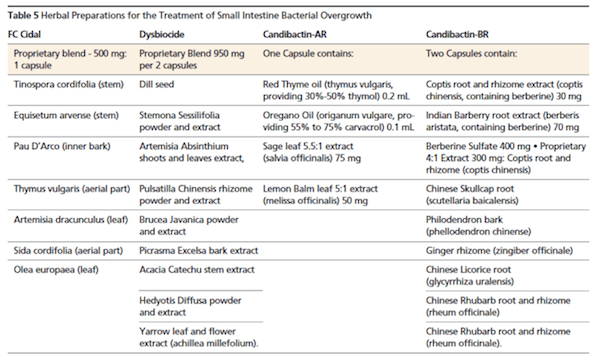
The herbal treatments in this study

In this study, one hundred and four patients who tested positive for newly diagnosed SIBO by lactulose breath testing were offered either 1200mg rifaximin a day or one of two herbal treatments for 4 weeks. Lactulose breath testing was done again at the end of the treatment.

These are the two herbal treatments that were offered:  

Dysbiocide and FC Cidal (both by Biotics Research): take 2 capsules twice daily of each of these products

or

Candibactin-AR and Candibactin-BR (both by Metagenics): take 2 capsules twice daily of each of these products

The ingredients in each of the products
(from the paper: Herbal therapy is equivalent to rifaximin for the treatment of small intestinal bacterial overgrowth)

Study conclusion

The study concluded that these herbal therapies are at least as effective as rifaximin for resolution of SIBO. It also states that the herbal products also appear to be as effective as triple antibiotic therapy in patients who don’t respond to rifaximin.

Adverse effects

With regards to adverse effects, they were reported as follows: in the rifaximin treated patients there was 1 case of anaphylaxis, 2 cases of hives, 2 cases of diarrhea and 1 case of Clostridium difficile; in the herbal group only one case of diarrhea was reported.

A comment about bioindividuality

You’ll notice that the only herb that is in both sets of herbal protocols is Red Thyme Oil or thymus vulgaris and yet both herbal protocols offer a solution. I’ve heard Dr. Siebecker share that of all the different approaches for SIBO (including the elemental diet), at least one approach works for everyone. So, if you’ve tried an approach and it hasn’t worked, don’t give up and move on to the next approach. This points to bioindividuality, and there being no one size fits all approach.

Dr. Siebecker lists the above combination herbal protocols together with the herbal protocol her and team use on her site, which, again, is different from the above: 1-3 of the following herbs x 4 weeks per course, at highest levels suggested on product labels.

  • Allicin from Garlic (the highest potency formula is Allimed)
  • Oregano
  • Berberine- found in Goldenseal, Oregon Grape, Barberry, Coptis, Phellodendron
  • Neem
  • Cinnamon

My protocol and experience

As I mention above, I also decided to post this study because I’ve been dealing with chronic SIBO for some time and am in the middle of doing the Metagenics herbal protocol. I’m 14 days into a 28-day protocol.

I’m actually doing 1 capsule of Candibactin-AR, 3 times a day away from food and 2 capsules of Candibactin-BR, twice a day, and about 10 minutes before food. I landed on this protocol, so I would have enough of each for a 4-week protocol.

When I started on the products I immediately observed the typical SIBO bloating and almost quit but quickly figured out it was from the microcrystalline cellulose and hypromellose in the Candibactin-BR.

It turns out that these are soluble fibers (dispersible in water) and are more easily fermented than insoluble fibers. This fermentation in the small intestine can trigger IBS/SIBO symptoms. Adding 2 capsules of a product with cellulase (an enzyme that breaks down cellulose) has helped.

Pain, gas and GABA

I also remembered that Dr. Siebecker shared on the SIBO SOS I summit about how SIBO patients can have visceral hypersensitivity where their pain can be due to the pressure of the gas that is produced and the muscles in the digestive system actually contracting against this pressure. It got me thinking about how effective GABA is for relieving muscle tension. I use GABA with my clients all the time for relief of their physical anxiety and stiff and tense muscles. And GABA helps me and many others with proctalgia fugax (rectal spasms)  which seems to be related to IBS/SIBO.

Over the last week I’ve tried sublingual GABA a few times to ease the pain and pressure and it’s been amazing. I’ve used it as soon as I notice the bloating starting AND even the next morning when I wake with the bloated ache in my belly.  I’ve been using the NFH GABA-T SAP opened on to my tongue. This product contains 300mg GABA and 150mg of theanine.  

I’m going to keep this in mind in case of a future flare up of my IBS/SIBO if I’m accidentally exposed to a food I can’t tolerate – assuming this protocol doesn’t clear it up for me. I suspect, as Dr. Siebecker reports, and based on the fact that I have chronic SIBO, that I’ll need a few more rounds anyway.

There is research supporting why this works: there are GABA receptors all over the gut and GABA is important for motility. (Stay tuned for a detailed blog post on this topic).

As well as the initial bloating and pain, I’ve also experienced some die-off symptoms like brain-fog and feeling blah, together with some sleep issues a few nights. The GABA helps with this and so does the tryptophan that I’ve also added.

If you’ve used GABA for this purpose or medications like Gabapentin or others to achieve similar results, I’d love to hear from you.

I’ll share more as I progress through the protocol. I’m also going to be speaking on SIBO SOS summit (the 3rd one) hosted by Dr. Allison Siebecker and Shivan Sarno. I will share more about my SIBO journey then, as well as all my results with this herbal protocol and any other challenges I face along the way.

Please also share if you’ve had success with any of the above herbal protocols or other approaches for your SIBO.

And feel free to post any questions below.

Filed Under: GABA, Gut health, SIBO Tagged With: anxiety, Candibactin-AR, Candibactin-BR, Dysbiocide, FC Cidal, GABA, herbal, IBS, rifaximin, SIBO, tryptophan

  • « Go to Previous Page
  • Page 1
  • Page 2
  • Page 3
  • Go to Next Page »

Primary Sidebar

NEW! GABA QuickStart Homestudy (with special intro pricing)

gaba quickstart homestudy

Free Report

9 Great Questions Women Ask about Food, Mood and their Health

You'll also receive a complimentary subscription to my ezine "Food, Mood and Gal Stuff"


Connect with me

Popular Posts

  • Amino Acids Mood Questionnaire from The Antianxiety Food Solution
  • The Antianxiety Food Solution Amino Acid and Pyroluria Supplements
  • Pyroluria Questionnaire from The Antianxiety Food Solution
  • Collagen and gelatin lower serotonin: does this increase your anxiety and depression?
  • Tryptophan for the worry-in-your-head and ruminating type of anxiety
  • GABA for the physical-tension and stiff-and-tense-muscles type of anxiety
  • The Antianxiety Food Solution by Trudy Scott
  • Seriphos Original Formula is back: the best product for anxiety and insomnia caused by high cortisol
  • Am I an anxious introvert because of low zinc and vitamin B6? My response to Huffington Post blog
  • Vagus nerve rehab with GABA, breathing, humming, gargling and key nutrients

Recent Posts

  • What do I use instead of Seriphos to help lower high cortisol that is affecting my sleep and making me anxious at night?
  • BeSerene™ GABA/theanine cream eases severe muscle tension in her neck/shoulders, prevents her bad headaches and quells her anxiety
  • How the correct approach, dose and sublingual use of GABA can be calming and not cause a flushed and itchy face and neck
  • The amino acid glutamine improves low mood by addressing gut health, and it has calming effects too
  • Flight anxiety with heightened breath, physical tension and also fearing the worst (the role of low GABA and low serotonin)

Categories

  • 5-HTP
  • AB575
  • Addiction
  • ADHD
  • Adrenals
  • Alcohol
  • Allergies
  • Alzheimer's disease
  • Amino Acids
  • Anger
  • Antianxiety
  • Antianxiety Food Solution
  • Antidepressants
  • Anxiety
  • Anxiety and panic
  • Autism
  • Autoimmunity
  • benzodiazapines
  • Bipolar disorder
  • Books
  • Caffeine
  • Cancer
  • Candida
  • Children/Teens
  • Collagen
  • Cooking equipment
  • Coronavirus/COVID-19
  • Cravings
  • Depression
  • Detoxification
  • Diabetes
  • Diet
  • DPA/DLPA
  • Drugs
  • EFT/Tapping
  • EMF
  • EMFs
  • Emotional Eating
  • Endorphins
  • Environment
  • Essential oils
  • Events
  • Exercise
  • Fear
  • Fear of public speaking
  • Fertility and Pregnancy
  • Fish
  • Food
  • Food and mood
  • Functional neurology
  • GABA
  • Gene polymorphisms
  • General Health
  • Giving
  • Giving back
  • Glutamine
  • Gluten
  • GMOs
  • Gratitude
  • Gut health
  • Heart health/hypertension
  • Histamine
  • Hormone
  • Hyperparathyroidism
  • Hypoglycemia
  • Immune system
  • Inflammation
  • Insomnia
  • Inspiration
  • Introversion
  • Joy and happiness
  • Ketogenic diet
  • Lithium orotate
  • Looking awesome
  • Lyme disease and co-infections
  • MCAS/histamine
  • Medication
  • Men's health
  • Mental health
  • Mercury
  • Migraine
  • Mold
  • Movie
  • MTHFR
  • Multiple sclerosis
  • Music
  • NANP
  • Nature
  • Nutritional Psychiatry
  • OCD
  • Osteoporosis
  • Oxalates
  • Oxytocin
  • Pain
  • Paleo
  • Parasites
  • Parkinson’s disease
  • PCOS
  • People
  • PMS
  • Postpartum
  • PTSD/Trauma
  • Pyroluria
  • Questionnaires
  • Real whole food
  • Recipes
  • Research
  • Schizophrenia
  • serotonin
  • SIBO
  • Sleep
  • Special diets
  • Sports nutrition
  • Stress
  • Sugar addiction
  • Sugar and mood
  • Supplements
  • Teens
  • Testimonials
  • Testing
  • The Anxiety Summit
  • The Anxiety Summit 2
  • The Anxiety Summit 3
  • The Anxiety Summit 4
  • The Anxiety Summit 5
  • The Anxiety Summit 6
  • Thyroid
  • Thyroid health
  • Toxins
  • Tryptophan
  • Tyrosine
  • Uncategorized
  • Vegan/vegetarian
  • Women's health
  • Yoga

Archives

  • October 2025
  • September 2025
  • August 2025
  • July 2025
  • June 2025
  • May 2025
  • April 2025
  • March 2025
  • February 2025
  • January 2025
  • November 2024
  • October 2024
  • September 2024
  • August 2024
  • July 2024
  • June 2024
  • May 2024
  • April 2024
  • March 2024
  • February 2024
  • January 2024
  • December 2023
  • November 2023
  • October 2023
  • September 2023
  • August 2023
  • July 2023
  • June 2023
  • May 2023
  • April 2023
  • March 2023
  • February 2023
  • January 2023
  • December 2022
  • November 2022
  • October 2022
  • September 2022
  • August 2022
  • July 2022
  • June 2022
  • May 2022
  • April 2022
  • March 2022
  • February 2022
  • January 2022
  • December 2021
  • November 2021
  • October 2021
  • September 2021
  • August 2021
  • July 2021
  • June 2021
  • May 2021
  • April 2021
  • March 2021
  • February 2021
  • January 2021
  • December 2020
  • November 2020
  • October 2020
  • September 2020
  • August 2020
  • July 2020
  • June 2020
  • May 2020
  • April 2020
  • March 2020
  • February 2020
  • January 2020
  • December 2019
  • November 2019
  • October 2019
  • September 2019
  • August 2019
  • July 2019
  • June 2019
  • May 2019
  • April 2019
  • March 2019
  • February 2019
  • January 2019
  • December 2018
  • November 2018
  • October 2018
  • September 2018
  • August 2018
  • July 2018
  • June 2018
  • May 2018
  • April 2018
  • March 2018
  • February 2018
  • January 2018
  • December 2017
  • November 2017
  • October 2017
  • September 2017
  • August 2017
  • July 2017
  • June 2017
  • May 2017
  • April 2017
  • March 2017
  • February 2017
  • January 2017
  • December 2016
  • November 2016
  • October 2016
  • September 2016
  • August 2016
  • July 2016
  • June 2016
  • May 2016
  • April 2016
  • March 2016
  • February 2016
  • January 2016
  • December 2015
  • November 2015
  • October 2015
  • September 2015
  • August 2015
  • July 2015
  • June 2015
  • May 2015
  • April 2015
  • March 2015
  • February 2015
  • January 2015
  • December 2014
  • November 2014
  • October 2014
  • September 2014
  • August 2014
  • July 2014
  • June 2014
  • May 2014
  • April 2014
  • March 2014
  • February 2014
  • January 2014
  • December 2013
  • November 2013
  • October 2013
  • September 2013
  • August 2013
  • July 2013
  • June 2013
  • May 2013
  • April 2013
  • March 2013
  • February 2013
  • January 2013
  • December 2012
  • November 2012
  • October 2012
  • August 2012
  • July 2012
  • June 2012
  • May 2012
  • April 2012
  • March 2012
  • February 2012
  • January 2012
  • December 2011
  • November 2011
  • October 2011
  • September 2011
  • August 2011
  • July 2011
  • June 2011
  • May 2011
  • April 2011
  • March 2011
  • February 2011
  • January 2011
  • December 2010
  • October 2010
  • September 2010
  • July 2010
  • May 2010
  • April 2010
  • March 2010
  • February 2010
  • January 2010
  • November 2009

Share the knowledge!

The above statements have not been evaluated by the Food and Drug Administration. Products listed in this website are not intended to diagnose, treat, cure or prevent any disease.

The information provided on this site is for informational and educational purposes only and is not intended as a substitute for advice from your physician or other health care professional. You should consult with a healthcare professional before starting or modifying any diet, exercise, or supplementation program, before taking or stopping any medication, or if you have or suspect you may have a health problem.


Copyright © 2026 Trudy Scott. All Rights Reserved. | Privacy | Terms and Conditions | Refund Policy | Medical Disclaimer

Free Report

9 Great Questions Women Ask about Food, Mood and their Health

You’ll also receive a complimentary subscription to my ezine “Food, Mood and Gal Stuff”