• Skip to primary navigation
  • Skip to main content
  • Skip to primary sidebar

everywomanover29 blog

Food, Mood and Women's Health – Be your healthiest, look and feel great!

  • Blog
  • About
  • Services
  • Store
  • Resources
  • Testimonials
  • The Book
  • Contact
  • Search this site

digestive system

PQQ for Stress, Sleep, Mitochondria and Gut Health with Dr. Michael Murray: The Anxiety Summit 5

October 28, 2019 By Trudy Scott 7 Comments

pqq stress

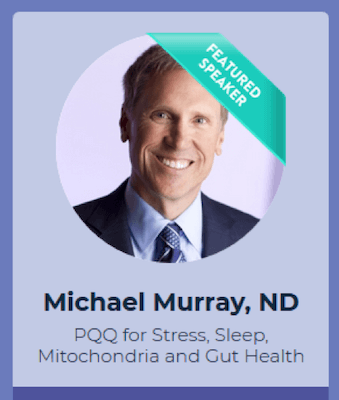
Michael Murray, ND is one my guest experts on The Anxiety Summit 5: Gut-Brain Axis and our topic is: PQQ for Stress, Sleep, Mitochondria and Gut Health.  What You’ll Learn –

  • Pyrroloquinoline quinone (PQQ) for calm energy – what it is and how to use it
  • How it is protective against every known toxin
  • A study where participants report “improved happiness and fullness of social life”
michael murray as5

Pyrroloquinoline quinone (PQQ) is a fascinating nutrient that provides calm energy, helps with sleep, is protective against every known toxin and support mitochondrial health. PQQ also supports digestive health because the liver and gut is mitochondria-dense (Tara Hunkin shares more about this in her mitochondria/anxiety interview).

When I discovered that Dr. Michael Murray, ND is an expert on PQQ I reached out to invite him to speak on the summit. I was not disappointed – our interview is fabulous, meaty and exciting.

(We actually ended up doing it twice because of technical issues with the first one. There are always plenty of “fun and games” when hosting a summit!)

Dr. Murray shares some of the many benefits of this vitamin-like compound that is found in kiwi fruit, leafy green vegetables, papaya and other fruits and vegetables:

It’s been shown to be neuroprotective, protecting brain cells, it promotes nerve growth factors, it’s been shown to be memory restorative in animal and human studies. It has some interesting effects on anxiety and improving sleep quality. And it exerts many synergistic effects with Coenzyme Q10 and some of the other nutritional compounds that influence the mitochondria.

He feels that “eventually, PQQ is going to be recognized as essential for human nutrition.” And in case you’re curious about the pronunciation, this is how you say it: pyrro-lo-quin-o-line quinone.

We discuss this paper: “Effects of Oral Supplementation with Pyrroloquinoline Quinone on Stress, Fatigue, and Sleep” and Dr. Murray shares how PQQ is

really quite interesting because normally when we think of substances exerting an anti-stress or an anti-anxiety effect, we think about things that maybe calm us down and maybe even make us a little tired.

PQQ is able to promote a calming effect, an anti-stress effect, an anti-anxiety effect, but it actually enhances mental energy and physical energy.

The results in the study were pretty profound and I quote some of the findings the study authors report participants experienced (this, of course, was subjective feedback):

  • Fullness of social life improved
  • Happiness and fullness in the  family  life improved
  • Fullness and  satisfaction  in  overall  daily improved

They also found improved quality of life on measures of appetite, and pain, and obsession, as well.

The authors have this conclusion about a possible mechanism: “The  anti-oxidative  capacity  or  mitochondrial  biogenesis  function  of  PQQ might be responsible for the outcomes in this study.”

michael murray trudy scott

Some of the other topics we discuss around PQQ:

  • why taking PQQ is likely a better approach than using resveratrol
  • how it compares with vitamin C in terms of being an antioxidant (this really amazes me)
  • how it “been shown to protect against every known toxin on the brain”
  • possible benefits for Parkinson’s disease (by preventing the formation of alpha-synuclein) and also for Alzheimer’s disease
  • how “PQQ influences the microbiome in a very favorable way”
  • how a single dose, used one time, dramatically reduced C-reactive protein (a marker of inflammation) in one study
  • possible concerns about oxalates
  • optimal dosages and when to use it with coenzyme Q10
  • best products and much more

Be sure to listen to Tara Hunkin’s interview to get a solid understanding of the bidirectional connection between mitochondria and anxiety: Mitochondrial Dysfunction in Anxiety

You can listen to each of the interviews (and get transcripts) by purchasing The Anxiety Summit 5: Gut-Brain Axis.

If you’d like to give feedback or ask a question, please post in the comments section. I’d love to hear from you once you’ve listened in.

Have you already used PQQ and found good results? Please share so we can all learn.

I’ll be reporting back more in the coming weeks and months based on my own personal findings and based on feedback from my clients and my community.  I’ve already had this feedback from someone who has seen the speaker line-up:

Registered for the summit today. So excited about it. And excited to see PQQ, one of my favourite, must-have supplements, getting its own piece.

If you’d like to give feedback or ask a question, please post in the comments section at the bottom.

I’d also love to hear from you once you’ve listened in to Dr. Murray’s interview and the others.
Filed Under: The Anxiety Summit 5 Tagged With: anxiety, anxiety summit, digestive system, liver, michael murray, mitochondria, mitochondria and gut health, PQQ, sleep, stress, toxin

Mitochondrial Dysfunction in Anxiety with Tara Hunkin on The Anxiety Summit 5

October 18, 2019 By Trudy Scott 2 Comments

mitochondrial dysfunction

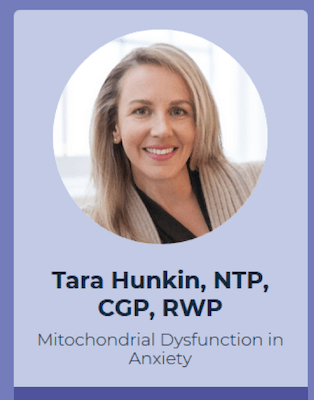
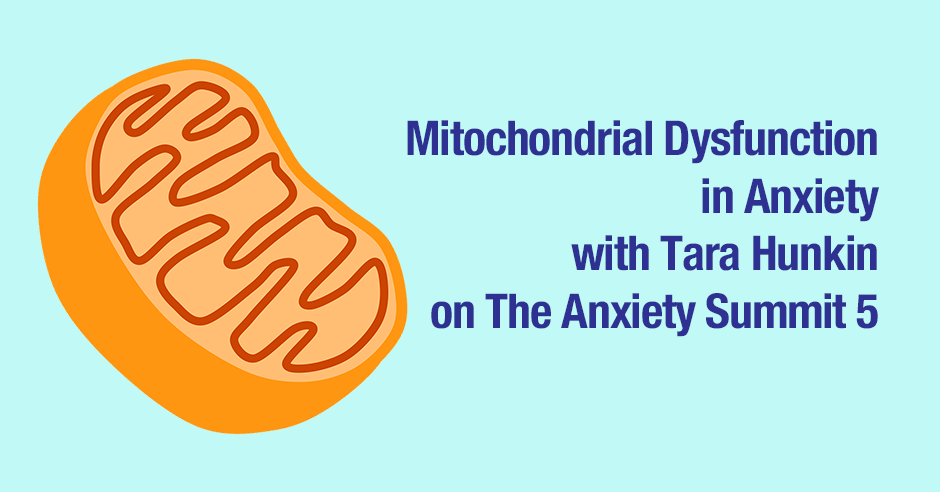
Tara Hunkin, NTP, CGP, RWP is one my guest experts on The Anxiety Summit 5: Gut-Brain Axis and our topic is: Mitochondrial Dysfunction in Anxiety. In this interview you’ll learn:

  • The role of mitochondria in the gut, brain and anxiety
  • Causes (such as medications and environmental toxins), testing, and signs and symptoms of mitochondrial dysfunction
  • Healing nutrients: Carnitine, COQ10, folinic acid, meal timing (as well as antioxidants and many other nutrients such as PQQ)

Tara starts with an overview of mitochondria, the energy powerhouses of our bodies and why they are so important in both physical and mental health.

You can hear some of this background information in this short in-person interview we did in San Diego recently.

(Note: The dates for the 2021 Anxiety Summit 5 is November 8-14, 2021)

You’ll also hear Tara share about this new bidirectional relationship that has been identified between anxiety and mitochondrial dysfunction.  One of the papers she is referring to is this 2019 review paper: Anxiety and Brain Mitochondria: A Bidirectional Crosstalk. Here are the highlights:

  • Despite the established link between mitochondrial dysfunction and various psychiatric disorders, the contribution of mitochondria in anxiety disorders has not been extensively addressed.
  • Mitochondria are emerging as modulators of anxiety-related behavior, as evidenced both in animal and human studies.
  • There is a bidirectional link between mitochondria and anxiety. Mitochondrial, energy metabolism, and oxidative stress alterations are observed in high anxiety; conversely, changes in mitochondrial function can lead to heightened anxiety.

Tara shares how important the mitochondria are when it comes to digestion and gut health too:

  • the liver is heavily mitochondrial-dense and is needed to help eliminate toxins we are exposed to (toxins that affect our mitochondria and increase anxiety)
  • the mitochondria are also important when it comes to digestion – the lining of digestive tract (the epithelial cells of the microvilli) contain large numbers of mitochondria

The authors also highlight that “Pharmacological manipulation of mitochondria may be a potential therapeutic approach to relieve high anxiety symptoms.”  One of the objectives of this summit is to highlight non-pharmacological approaches and Tara does exactly this in our interview.

She covers both lifestyle and nutritional approaches for addressing mitochondrial dysfunction (acetyl-l-carnitine, glutathione, antioxidants, coenzyme Q10, folinic acid and many more).

I also mention two other interviews on the summit where we talk about nutrients that also support mitochondrial function: PQQ (pyrroloquinoline quinone) and TUDCA (tauroursodeoxycholic acid).

Be sure to listen to these interviews for more about these two nutrients:

  • Jay Davidson, DC, PScD: Parasites, Anxiety and TUDCA for Your Liver
  • Michael Murray, ND: PQQ for Stress, Sleep, Mitochondria and Gut Health

tara hunkin and trudy scott

We also discuss testing and all the environmental factors that impact the mitochondria including medications such as risperidone/risperdal (and antipsychotic medication), valproic acid (used for seizures), fluoroquinolone antibiotics like Cipro (and others) and also benzodiazepines (the commonly prescribed anti-anxiety medications).

You can listen to each of the interviews (and get transcripts) by purchasing The Anxiety Summit 5: Gut-Brain Axis.

If you’d like to give feedback or ask a question, please post in the comments section. I’d love to hear from you once you’ve listened in.

If you’d like to give feedback or ask a question, please post in the comments section at the bottom.

I’d love to hear from you once you’ve listened in to this interview and the others.

Filed Under: The Anxiety Summit 5 Tagged With: anxiety, anxiety summit, benzodiazepines, bidirectional, digestive system, environmental, environmental toxins, fluoroquinolone, liver, mitochondria, mitochondrial dysfunction, PQQ, risperidone, Tara Hunkin, TUDCA, valproic acid

Primary Sidebar

NEW! GABA QuickStart Homestudy (with special intro pricing)

gaba quickstart homestudy

Free Report

9 Great Questions Women Ask about Food, Mood and their Health

You'll also receive a complimentary subscription to my ezine "Food, Mood and Gal Stuff"


Connect with me

Popular Posts

  • Amino Acids Mood Questionnaire from The Antianxiety Food Solution
  • The Antianxiety Food Solution Amino Acid and Pyroluria Supplements
  • Pyroluria Questionnaire from The Antianxiety Food Solution
  • Collagen and gelatin lower serotonin: does this increase your anxiety and depression?
  • Tryptophan for the worry-in-your-head and ruminating type of anxiety
  • GABA for the physical-tension and stiff-and-tense-muscles type of anxiety
  • The Antianxiety Food Solution by Trudy Scott
  • Seriphos Original Formula is back: the best product for anxiety and insomnia caused by high cortisol
  • Am I an anxious introvert because of low zinc and vitamin B6? My response to Huffington Post blog
  • Vagus nerve rehab with GABA, breathing, humming, gargling and key nutrients

Recent Posts

  • What do I use instead of Seriphos to help lower high cortisol that is affecting my sleep and making me anxious at night?
  • BeSerene™ GABA/theanine cream eases severe muscle tension in her neck/shoulders, prevents her bad headaches and quells her anxiety
  • How the correct approach, dose and sublingual use of GABA can be calming and not cause a flushed and itchy face and neck
  • The amino acid glutamine improves low mood by addressing gut health, and it has calming effects too
  • Flight anxiety with heightened breath, physical tension and also fearing the worst (the role of low GABA and low serotonin)

Categories

  • 5-HTP
  • AB575
  • Addiction
  • ADHD
  • Adrenals
  • Alcohol
  • Allergies
  • Alzheimer's disease
  • Amino Acids
  • Anger
  • Antianxiety
  • Antianxiety Food Solution
  • Antidepressants
  • Anxiety
  • Anxiety and panic
  • Autism
  • Autoimmunity
  • benzodiazapines
  • Bipolar disorder
  • Books
  • Caffeine
  • Cancer
  • Candida
  • Children/Teens
  • Collagen
  • Cooking equipment
  • Coronavirus/COVID-19
  • Cravings
  • Depression
  • Detoxification
  • Diabetes
  • Diet
  • DPA/DLPA
  • Drugs
  • EFT/Tapping
  • EMF
  • EMFs
  • Emotional Eating
  • Endorphins
  • Environment
  • Essential oils
  • Events
  • Exercise
  • Fear
  • Fear of public speaking
  • Fertility and Pregnancy
  • Fish
  • Food
  • Food and mood
  • Functional neurology
  • GABA
  • Gene polymorphisms
  • General Health
  • Giving
  • Giving back
  • Glutamine
  • Gluten
  • GMOs
  • Gratitude
  • Gut health
  • Heart health/hypertension
  • Histamine
  • Hormone
  • Hyperparathyroidism
  • Hypoglycemia
  • Immune system
  • Inflammation
  • Insomnia
  • Inspiration
  • Introversion
  • Joy and happiness
  • Ketogenic diet
  • Lithium orotate
  • Looking awesome
  • Lyme disease and co-infections
  • MCAS/histamine
  • Medication
  • Men's health
  • Mental health
  • Mercury
  • Migraine
  • Mold
  • Movie
  • MTHFR
  • Multiple sclerosis
  • Music
  • NANP
  • Nature
  • Nutritional Psychiatry
  • OCD
  • Osteoporosis
  • Oxalates
  • Oxytocin
  • Pain
  • Paleo
  • Parasites
  • Parkinson’s disease
  • PCOS
  • People
  • PMS
  • Postpartum
  • PTSD/Trauma
  • Pyroluria
  • Questionnaires
  • Real whole food
  • Recipes
  • Research
  • Schizophrenia
  • serotonin
  • SIBO
  • Sleep
  • Special diets
  • Sports nutrition
  • Stress
  • Sugar addiction
  • Sugar and mood
  • Supplements
  • Teens
  • Testimonials
  • Testing
  • The Anxiety Summit
  • The Anxiety Summit 2
  • The Anxiety Summit 3
  • The Anxiety Summit 4
  • The Anxiety Summit 5
  • The Anxiety Summit 6
  • Thyroid
  • Thyroid health
  • Toxins
  • Tryptophan
  • Tyrosine
  • Uncategorized
  • Vegan/vegetarian
  • Women's health
  • Yoga

Archives

  • October 2025
  • September 2025
  • August 2025
  • July 2025
  • June 2025
  • May 2025
  • April 2025
  • March 2025
  • February 2025
  • January 2025
  • November 2024
  • October 2024
  • September 2024
  • August 2024
  • July 2024
  • June 2024
  • May 2024
  • April 2024
  • March 2024
  • February 2024
  • January 2024
  • December 2023
  • November 2023
  • October 2023
  • September 2023
  • August 2023
  • July 2023
  • June 2023
  • May 2023
  • April 2023
  • March 2023
  • February 2023
  • January 2023
  • December 2022
  • November 2022
  • October 2022
  • September 2022
  • August 2022
  • July 2022
  • June 2022
  • May 2022
  • April 2022
  • March 2022
  • February 2022
  • January 2022
  • December 2021
  • November 2021
  • October 2021
  • September 2021
  • August 2021
  • July 2021
  • June 2021
  • May 2021
  • April 2021
  • March 2021
  • February 2021
  • January 2021
  • December 2020
  • November 2020
  • October 2020
  • September 2020
  • August 2020
  • July 2020
  • June 2020
  • May 2020
  • April 2020
  • March 2020
  • February 2020
  • January 2020
  • December 2019
  • November 2019
  • October 2019
  • September 2019
  • August 2019
  • July 2019
  • June 2019
  • May 2019
  • April 2019
  • March 2019
  • February 2019
  • January 2019
  • December 2018
  • November 2018
  • October 2018
  • September 2018
  • August 2018
  • July 2018
  • June 2018
  • May 2018
  • April 2018
  • March 2018
  • February 2018
  • January 2018
  • December 2017
  • November 2017
  • October 2017
  • September 2017
  • August 2017
  • July 2017
  • June 2017
  • May 2017
  • April 2017
  • March 2017
  • February 2017
  • January 2017
  • December 2016
  • November 2016
  • October 2016
  • September 2016
  • August 2016
  • July 2016
  • June 2016
  • May 2016
  • April 2016
  • March 2016
  • February 2016
  • January 2016
  • December 2015
  • November 2015
  • October 2015
  • September 2015
  • August 2015
  • July 2015
  • June 2015
  • May 2015
  • April 2015
  • March 2015
  • February 2015
  • January 2015
  • December 2014
  • November 2014
  • October 2014
  • September 2014
  • August 2014
  • July 2014
  • June 2014
  • May 2014
  • April 2014
  • March 2014
  • February 2014
  • January 2014
  • December 2013
  • November 2013
  • October 2013
  • September 2013
  • August 2013
  • July 2013
  • June 2013
  • May 2013
  • April 2013
  • March 2013
  • February 2013
  • January 2013
  • December 2012
  • November 2012
  • October 2012
  • August 2012
  • July 2012
  • June 2012
  • May 2012
  • April 2012
  • March 2012
  • February 2012
  • January 2012
  • December 2011
  • November 2011
  • October 2011
  • September 2011
  • August 2011
  • July 2011
  • June 2011
  • May 2011
  • April 2011
  • March 2011
  • February 2011
  • January 2011
  • December 2010
  • October 2010
  • September 2010
  • July 2010
  • May 2010
  • April 2010
  • March 2010
  • February 2010
  • January 2010
  • November 2009

Share the knowledge!

The above statements have not been evaluated by the Food and Drug Administration. Products listed in this website are not intended to diagnose, treat, cure or prevent any disease.

The information provided on this site is for informational and educational purposes only and is not intended as a substitute for advice from your physician or other health care professional. You should consult with a healthcare professional before starting or modifying any diet, exercise, or supplementation program, before taking or stopping any medication, or if you have or suspect you may have a health problem.


Copyright © 2026 Trudy Scott. All Rights Reserved. | Privacy | Terms and Conditions | Refund Policy | Medical Disclaimer

Free Report

9 Great Questions Women Ask about Food, Mood and their Health

You’ll also receive a complimentary subscription to my ezine “Food, Mood and Gal Stuff”