• Skip to primary navigation
  • Skip to main content
  • Skip to primary sidebar

everywomanover29 blog

Food, Mood and Women's Health – Be your healthiest, look and feel great!

  • Blog
  • About
  • Services
  • Store
  • Resources
  • Testimonials
  • The Book
  • Contact
  • Search this site

cauliflower

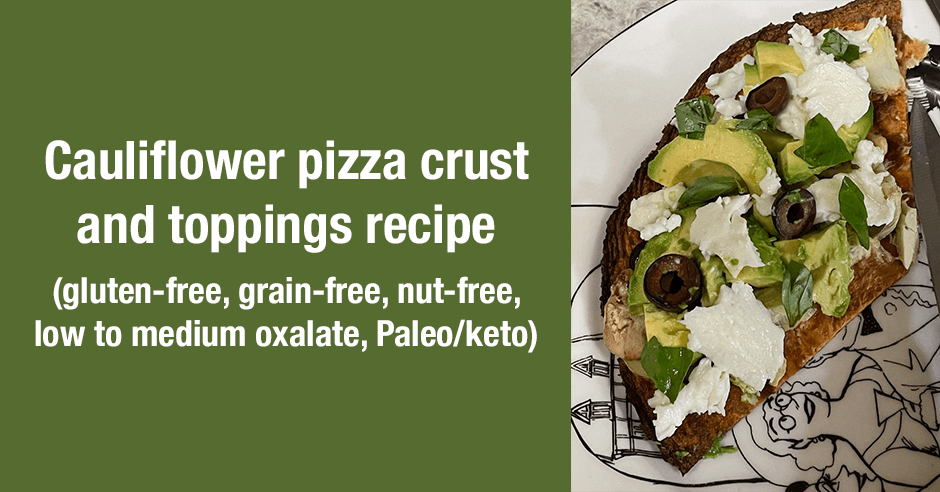
Cauliflower pizza crust and toppings recipe (gluten-free, grain-free, nut-free, low to medium oxalate, Paleo/keto)

July 19, 2024 By Trudy Scott Leave a Comment

cauliflower pizza

Today I’m sharing a really delicious cauliflower pizza crust recipe from Megan Gilmore of Detoxinista (the pizza crust recipe is unchanged and perfect just the way it is), my variations on toppings and some additional information on oxalates.

I do acknowledge, as far as pizza goes, my toppings are rather unconventional but I’ve never really been a big pizza lover (there, I said it!) But I do love cauliflower – it’s my favorite veggie – and I was excited when my sister told me about this recipe and then made it especially for me when I visited her and her family in Hawaii recently! Aren’t I spoiled?!

The fact that the cauliflower pizza crust is low oxalate makes a huge difference: the only ingredients are cauliflower, goats cheese and an egg. I’ve seen other cauliflower pizza crust recipes that include a nut flour such as almond flour. That would be a no-no for me and someone with dietary oxalate issues because almonds are high oxalate.

My topping included: a light smearing of tomato sauce, chunks of chicken (left-overs from the night before), a few halves of tinned artichoke and a few halved olives. I added all this to the prepared cauliflower pizza crust and heated it for 10 minutes.

Once it came out of the oven I loaded it up with freshly cut avocado, pieces of fresh basil and chunks of mozzarella cheese. I don’t like melted cheese and have a hard time digesting it so I prefer to add it afterwards. I think I’ll try feta cheese next time for a change.

I personally have dietary oxalate issues but right now I am doing well with a little tomato sauce, a few artichokes, a few olives and some fresh basil (as long as that is all I’m consuming that day in the way of medium oxalate foods). It’s best to figure out your own needs based on your oxalate issues and what you know you can tolerate.

Read on below for the link to the cauliflower pizza crust recipe and more about dietary oxalates.

The cauliflower pizza crust recipe from detoxinista

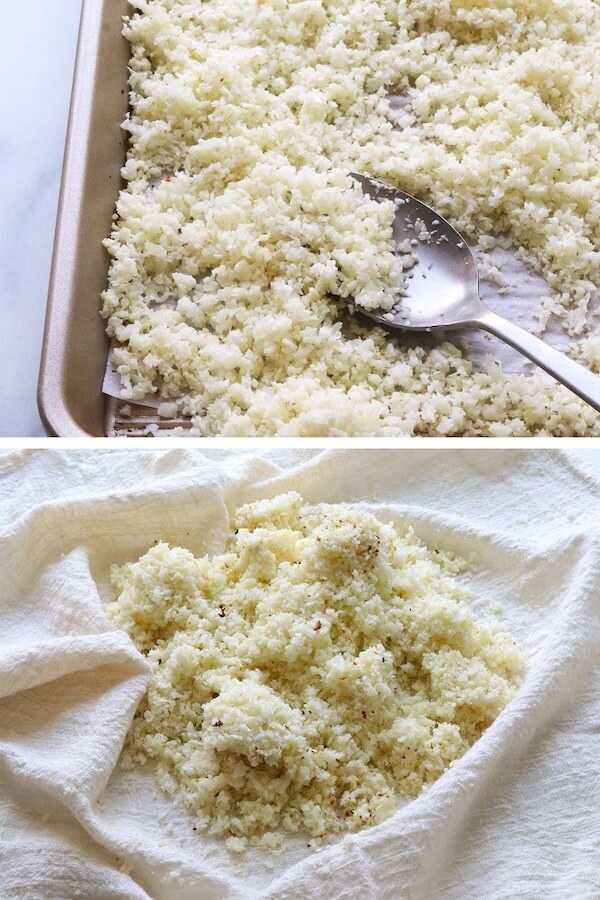
Here is the recipe for the perfect cauliflower pizza crust from Megan Gilmore. I have permission to only share the ingredients: cauliflower, egg, goats cheese, oregano, salt, and a pinch of black pepper, and photos from the site but you need to go to her site for the recipe instructions. It’s well worth it to see how it looks at the various stages. I’ve included a few of Megan’s images below.

I will add that my sister doesn’t have a food processor and just cooked the chopped cauliflower and then used a stick blender to get it looking like this.
cauliflower pizza
(Images used with permission from detoxinista)

(Images used with permission from detoxinista https://detoxinista.com/the-secret-to-perfect-cauliflower-pizza-crust/)

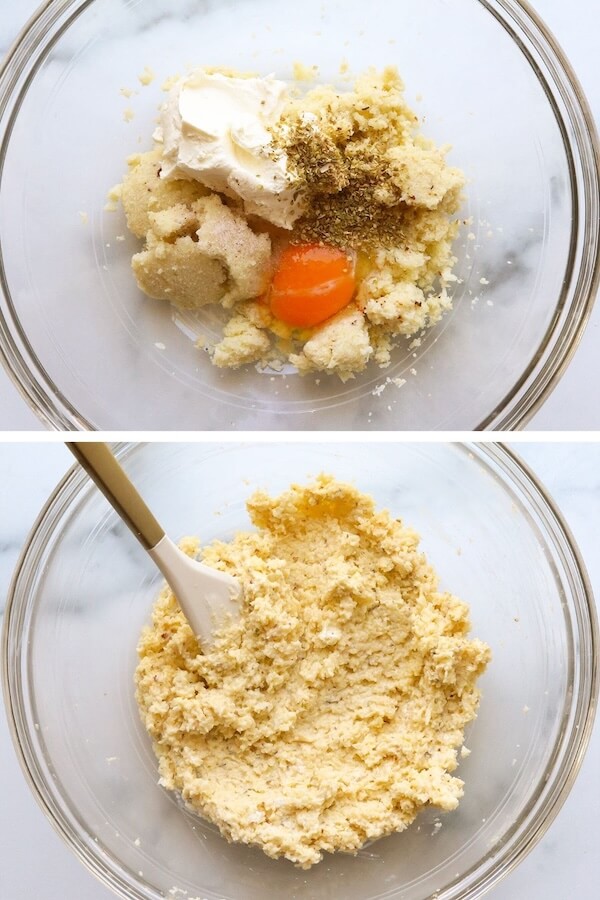
Once you add the egg and goat cheese it will have a texture and consistency like this. This is done after you have squeezed the liquid out of the cooked cauliflower – a crucial step for a firm and crunchy pizza crust.
cauliflower recipe
(Images used with permission from detoxinista)

Check out Megan’s site for other useful images, especially to see what the cooked crust looks like. One tip from my sister: once the crust is golden and crisp, flip it over and cook it another 10 minutes.

You’ll see there are also some variations with no goat cheese and no egg. If you try either of these please do share how they turned out.

Enjoying family, nature and a cauliflower crust pizza

After a gorgeous evening with my sister and brother (they were camera-shy!) at Kona on the Big Island, we got back home and ate delicious pizza on this home-made cauliflower pizza crust!

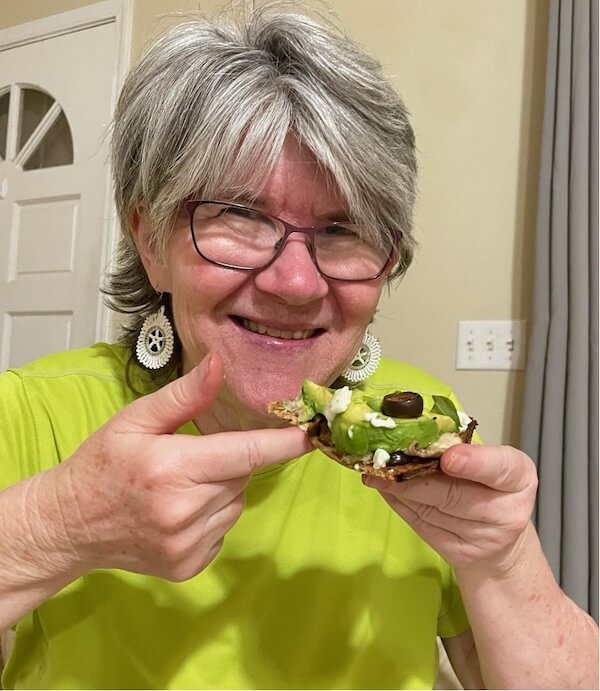
It was all prepared in advance – the crust and all the toppings – so we just put it all together based on our own likes and munched away. And boy did I rave about it – so much so that I said “hey take photos of me eating my pizza and I’ll share my my community”
cauliflower pizza

As you can see it’s a pretty firm crust and holds up well with all the toppings I added to mine. And yes my shirt matches the pizza topping – unintentional but still fun!
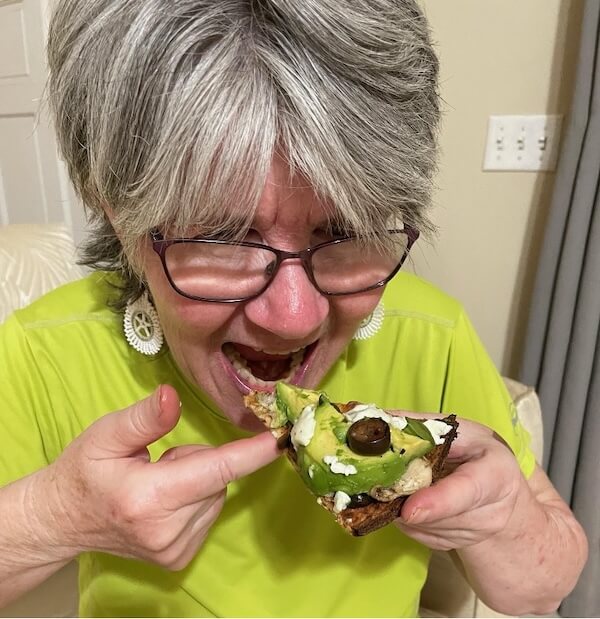
cauliflower pizza

It’s also really nice to eat something crunchy with a pizza-crust-like texture. If you’re gluten-free and grain-free I’m sure you can relate! And it tastes lovely.

Of course you can make it with conventional pizza toppings too. And I think you could use the pizza crust as crackers too. I plan to make a double batch and try this and freeze them.

Dietary oxalates and the problems they can cause

This blog post is a helpful one to start with if you’re new to dietary oxalates and the issues they can cause – Oxalate crystal disease, dietary oxalates and pain: the research & questions.

These are the common medium-oxalate and high-oxalate foods that many folks have problems with: nuts, nut-butters and nut-flour (especially baking with almond flour and something to watch when eating Paleo or GAPS), wheat, chocolate, kiwi fruit (very high – see the raphides image on the above blog), star fruit (also very high), beets, potatoes, sweet potatoes, legumes, raspberries, spinach and soy.

In the above blog post, I share an overview of oxalates, my pain issues with dietary oxalates (severe foot pain and eye pain), and deeper dive into the condition called oxalate crystal disease (with some of my insights and questions).

The big take-aways are that calcium oxalate crystals are sharp and can cause far reaching harm beyond pain – such as unresolved anxious feelings, thyroid issues, neurological symptoms, eye issues, hearing loss, bladder issues, headaches, fatigue, sleep issues, restless legs, autism symptoms and more. You can have issues with dietary oxalates and not have kidney disease/kidney stones, although there is very little research supporting the latter.

I’m finding dietary oxalate issues to be underappreciated especially in menopausal women when symptoms can show up and be more severe. And there is a strong connection with gallbladder issues and problems with fat digestion, which becomes more of an issue in perimenopause and beyond.

You can click on this link to read other blog posts on the topic of oxalates.

A resource if you are looking for a nutritional approach

If you are looking for a nutritional approach for your anxious feelings, mood issues, sleep problems and overall health issues, my book, The Antianxiety Food Solution – How the Foods You Eat Can Help You Calm Your Anxious Mind, Improve Your Mood, and End Cravings, is a great foundation. Be sure to share it with the practitioner/health team you or your loved one is working with.

If diet isn’t enough, there are entire chapters on the amino acids, gut health, blood sugar control and pyroluria. I don’t cover oxalates because I only became aware of them after my book was published (but I’ve published much on the blog since then – simply search this blog for other articles on the topic).

If, after reading this blog and my book, you don’t feel comfortable figuring things out on your own (i.e. doing the amino acids symptoms questionnaire and respective amino acids trials), a good place to get help is the GABA QuickStart Program (if you have low GABA symptoms too). This is a paid online/virtual group program where you get my guidance and community support.

If you are a practitioner, join us in The Balancing Neurotransmitters: the Fundamentals program. This is also a paid online/virtual program with an opportunity to interact with me and other practitioners who are also using the amino acids.

I’d love to hear if you try this recipe and enjoy it (and what modifications you made).

Do you like cauliflower and what is your favorite way to enjoy it?

Feel free to share and ask your questions below.
Filed Under: Oxalates, Recipes Tagged With: anxious, cauliflower, cauliflower pizza crust, dietary oxalate issues, egg, gluten-free, goats cheese, grain-free, Low oxalate, low to medium oxalate, Megan Gilmore, nut-free, pain, Paleo/keto, recipe, sharp crystals, sleep

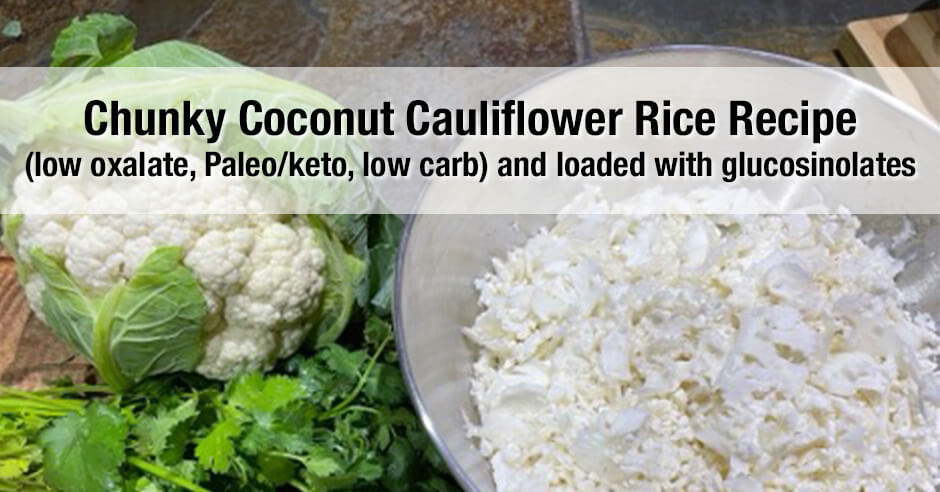
Chunky Coconut Cauliflower Rice Recipe (low oxalate, Paleo/keto, low carb) and loaded with glucosinolates

November 10, 2023 By Trudy Scott Leave a Comment

coconut cauliflower rice

I love cauliflower any which way – like steamed with butter or roasted in coconut oil – and I’m always looking for new ideas to enjoy this healthy, yummy and very versatile cruciferous vegetable. I also like to modify recipes to my own liking and this recipe is a version of a new favorite of mine. You’ll notice it’s quite chunky and not overcooked so it ends up being a little crunchy. The flavors are mild so you can actually taste the cauliflower.

I do love that this is low oxalate, Paleo/keto and low carb, and loaded with glucosinolates. I share more on all this below.

Chunky Coconut Cauliflower Rice Recipe

Ingredients

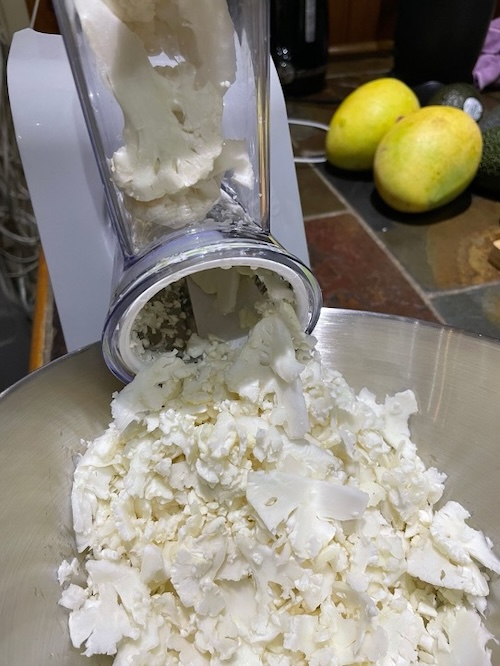
1 organic cauliflower, chopped into chunks and then fed through a food processor using a blade that results in chunky pieces
3-4 Tablespoons coconut oil
2 Tablespoons dried garlic flakes
Half a bunch of fresh cilantro, chopped finely (with the stalks)
Half a cup of full fat coconut milk

Method

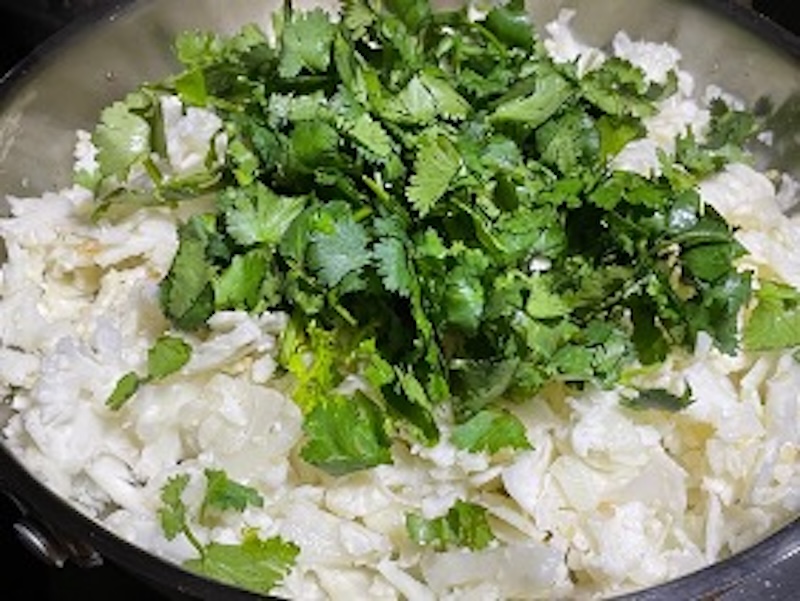
Heat the coconut oil in a frying pan on medium heat, add the chunkily chopped cauliflower and garlic flakes. Stir to coat with the coconut oil and continue stirring to cook lightly – for about 6 minutes. Add the finely chopped fresh cilantro and stir to mix it all into the cauliflower. Add the coconut milk and continue to cook for another 2-3 minutes. Serve and enjoy!

Other flavor options could include onion, curry powder or other favorite spices. I like to keep mine simple and add sea salt when it’s served because I love the taste of cauliflower and don’t want to overpower it.

coconut cauliflower rice
I like to use chunky pieces of cauliflower.
coconut cauliflower rice
And I keep the stems on the cilantro when I chop it. It’s added once the cauliflower is almost ready and then mixed in.
coconut cauliflower rice
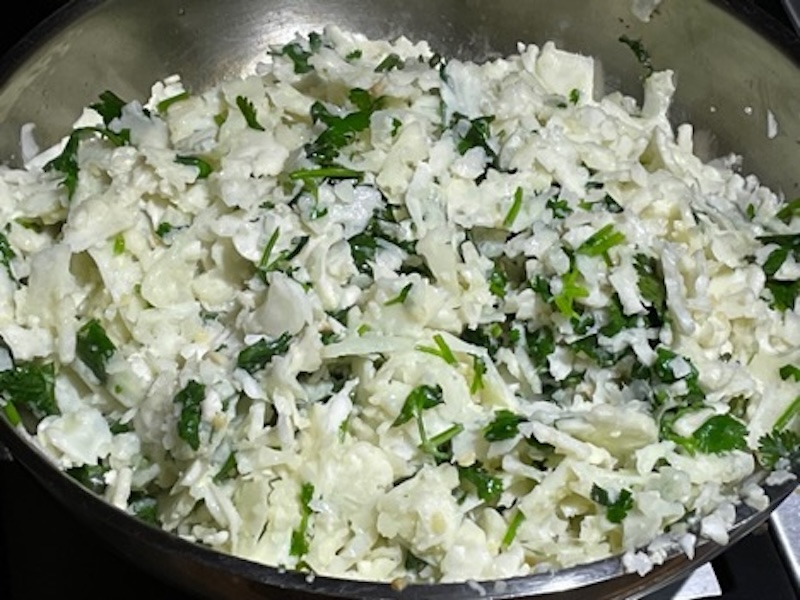
This is the end result – crunchy, tasty and colorful!

This recipe is low oxalate, low carb and satiating

Cauliflower is low oxalate with about 1/10 the oxalates of mashed potato and sweet potato so it’s a great replacement. (If you’re new to oxalates, click on this link to read other blog posts on the topic – and learn how they may contribute to sharp pain, bladder issues, anxiety, vulvodynia and more.)

It’s less of a blood sugar hit and lower calories if you are eating low carb or Paleo or keto. You can read some anxiety and depression success with Paleo and grain free diets here.

It’s also a great way to get your children or husbands or other loved ones to really enjoy cauliflower and come back for seconds when steamed or roasted cauliflower doesn’t grab them.

Because of the coconut oil and coconut milk it’s creamy and tasty and these healthy fats make it very satiating too

This recipe also looks great and can be served at Thanksgiving, Christmas and other special meals. It can be cooked in advance and then heated up as needed and served right from the pan. It’s also delicious the next day, heated up again and also served cold.

Benefits of glucosinolates from cruciferous vegetables

As well as a delicious low oxalate/low carb side order, cauliflower, a cruciferous vegetable, also provides a source of glucosinolates:

As outlined in this paper, Glucosinolates From Cruciferous Vegetables and Their Potential Role in Chronic Disease: Investigating the Preclinical and Clinical Evidence

An increasing body of evidence highlights the strong potential for a diet rich in fruit and vegetables to delay, and often prevent, the onset of chronic diseases, including cardiometabolic, neurological, and musculoskeletal conditions, and certain cancers.

A possible protective component, glucosinolates, which are phytochemicals found almost exclusively in cruciferous vegetables, have been identified from preclinical and clinical studies.

Current research suggests that glucosinolates (and isothiocyanates) act via several mechanisms, ultimately exhibiting anti-inflammatory, antioxidant, and chemo-protective effects. This review summarizes the current knowledge surrounding cruciferous vegetables and their glucosinolates in relation to the specified health conditions.

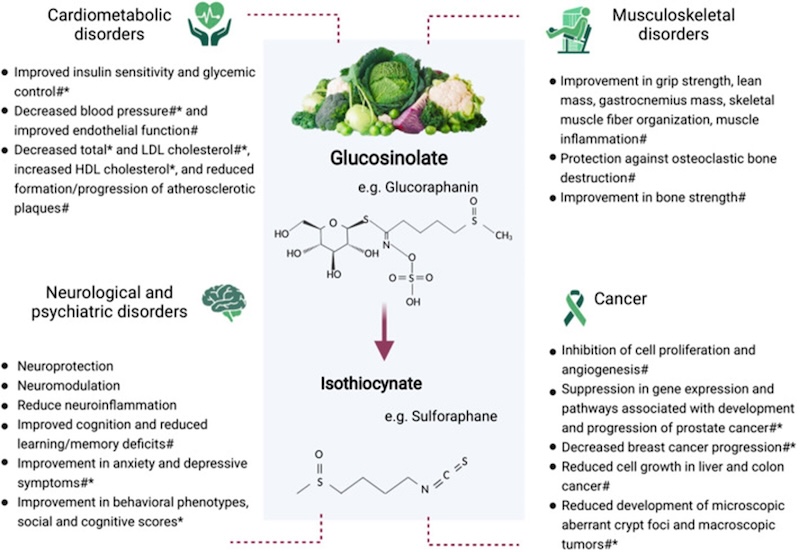
This image from the above paper provides a great visual. As you can see, there are documented improvements for anxiety and depression, as well as neuroprotection and so much more.  I encourage you to read the whole paper (and enjoy more cauliflower).

glucosinolate
(from: Glucosinolates From Cruciferous Vegetables and Their Potential Role in Chronic Disease: Investigating the Preclinical and Clinical Evidence)

A resource if you are looking for a nutritional approach

If you are looking for a nutritional approach for your anxiety, mood issues, insomnia and overall health issues, my book, The Antianxiety Food Solution – How the Foods You Eat Can Help You Calm Your Anxious Mind, Improve Your Mood, and End Cravings, is a great foundation. Be sure to share it with the practitioner/health team you or your loved one is working with.

If nutrition isn’t enough, there are entire chapters on the amino acids, gut health, blood sugar and pyroluria. I don’t cover oxalates (but do search this blog for other articles on the topic) or mention glucosinolates in my book.

If, after reading this blog and my book, you don’t feel comfortable figuring things out on your own (i.e. doing the amino acids symptoms questionnaire and respective amino acids trials), a good place to get help is the GABA QuickStart Program (if you have low GABA symptoms too). This is a paid online/virtual group program where you get my guidance and community support.

If you are a practitioner, join us in The Balancing Neurotransmitters: the Fundamentals program. This is also a paid online/virtual program with an opportunity to interact with me and other practitioners who are also using the amino acids.

I’d love to hear if you try this recipe and enjoy it (and what modifications you made).

Do you like cauliflower and what is your favorite way to enjoy it?

Feel free to share and ask your questions below.
Filed Under: Anxiety, Recipes Tagged With: anxiety; GABA Quickstart; Balancing Neurotransmitters: the Fundamentals program for practitioners, cauliflower, cauliflower rice, Chunky Coconut Cauliflower Rice Recipe, coconut, cruciferous, glucosinolates, keto, low carb, Low oxalate, pain, paleo, recipe

Brain Wash by Dr. David Perlmutter and Dr. Austin Perlmutter

January 15, 2020 By Trudy Scott 4 Comments

brain wash

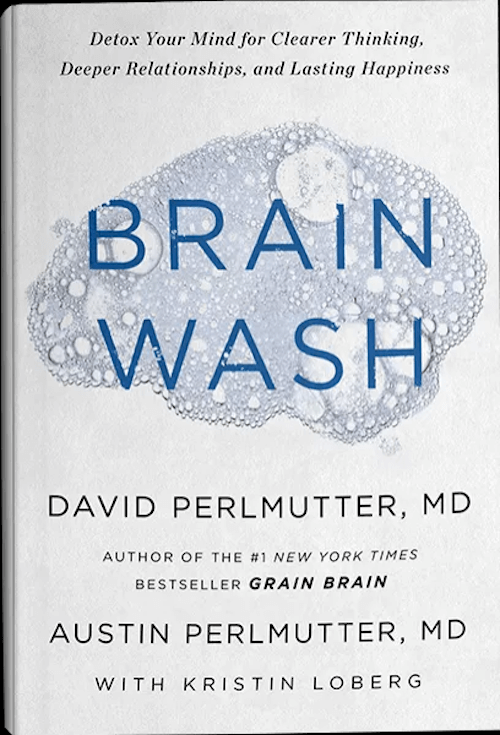
If you tuned in to my interview with Dr. David Pelmutter on the Anxiety Summit 5: Gut-Brain Axis you may recall us talking about his new book Brain Wash: Detox Your Mind for Clearer Thinking, Deeper Relationships, and Lasting Happiness (written with his son Dr. Austin Perlmutter).

He shared this in our summit interview: “I think technology can be either our most wonderful servant or a really disastrous master. It’s all in how we mindfully use technology.”

I have the pleasure of sharing another interview where we take a deeper dive into this topic and he shares additional information about this new book, which was just published.

This book builds from a simple premise: “Our brain’s performance is being gravely manipulated, resulting in behaviors that leave us more lonely, anxious, depressed, distrustful, illness-prone, and overweight than ever before. At the same time, we feel disconnected from ourselves, from others, and from the world at large.

Dr Perlmutter shares wonderful insights from the book:

  • Disconnection syndrome (and loneliness) and how our decision-making abilities have been compromised
  • Hi-tech hijack and some alarming stats on internet addiction: it’s around 6 percent and translates to more than a quarter of a billion people. Keep in mind internet addiction is “any online-related compulsive behavior that interferes with normal living and causes severe stress on family, friends, loved ones, and the ability to be productive at work”
  • Structural changes that are seen in the brain when we are addicted
  • How we can set boundaries and his tool called T.I.M.E. “When approaching your use of technology, especially when it comes to digital media and communication, you need make sure your activities are making good use of T.I.M.E. (Time restricted, Intentional, Mindful and Enriching)

One of my favorite parts of the book is the chapter on nature:“Spending time in nature is one of the easiest things you can do to stay healthy and happy —you just need to step outside.”

He shares how: “Americans spend a remarkable 87 percent of their days indoors and another 6 percent in their cars” and we go into the health benefits of forest bathing and indoor plants. As he mentions, we know we feel good when we’re in nature, but they wanted to gather all the research supporting just what the health benefits are. I loved geeking over all the studies!

I can’t be anywhere indoors unless I can see outside and I just love this study: “View Through a Window May Influence Recovery from Surgery.”

We didn’t have time to go into other equally valuable chapters in the book on food, sleep, exercise, and quiet time but they are foundational especially if you are just starting your healing journey. If you’ve been following my work for awhile these chapters are a great reminder for us.

There is also a 10-day brain wash plan, together with a meal plan and recipes to guide you through the process.

Dr. Perlmutter shared his personal favorite recipe – the Jicama Slaw (with all those prebiotics for a good microbiome and reducing inflammation). He gave me permission to share the Cauliflower Pancakes recipe with you. Enjoy!

Cauliflower Pancakes

Serves 4, Time required: About 25 minutes

Although these pancakes make a terrific breakfast or brunch dish, they are also a wonderful side dish for grilled meats, poultry, and/or fish. The turmeric adds great color as well as a slightly tannic yet sweet flavor.

1 pound organic cauliflower florets, including stems
1 small organic white onion, peeled and grated
1 teaspoon grated organic garlic
1/2 teaspoon organic ground turmeric
3 large eggs from pasture-raised chickens, at room temperature, lightly beaten
Fine sea salt and freshly ground organic black pepper to taste
1/3 cup organic ghee from grass-fed animals
1/2 cup chopped organic scallion greens
1 cup full-fat organic sour cream from grass-fed cows (optional)

Preheat the oven to 200°F. Place a cookie sheet lined with parchment paper in the oven.

Using a handheld box grater, grate the cauliflower through the medium holes. Transfer the grated cauliflower in a large mixing bowl.

Add the onion, garlic, and turmeric and toss to blend.

Add the eggs and season with sea salt and pepper, stirring to combine completely. Set aside for 10 minutes to allow the flavors to blossom.

Heat the ghee in a large frying pan over medium heat. Spoon in enough of the cauliflower mixture to make a flat cake about 3 inches in diameter. Continue making cakes without crowding the pan.

Using the back of a metal spatula, flatten the cakes slightly, but allow them to get no larger than 4 inches in diameter.

Fry for about 5 minutes, or until the bottom is golden brown and the pancakes have firmed enough to turn easily. Lower the heat if they are browning too quickly.

Using the spatula – a fish spatula is a great tool for this – carefully turn the pancakes and fry for an additional 4 minutes, or until cooked through and golden brown. If you flip them too quickly, they will fall apart.

As each one is cooked, place it on the cookie sheet in the oven and continue making cakes until all the batter has been used.

When ready to serve, place the pancakes on a platter, sprinkle with sea salt and scallion greens, and serve with sour cream on the side if desired.

Here is the official blurb for the book:

Dr. David Perlmutter, #1 New York Times bestselling author of Grain Brain, and Dr. Austin Perlmutter, his son, explore how modern culture threatens to rewire our brains and damage our health, offering a practical plan for healing.

Contemporary life provides us with infinite opportunities, along with endless temptations. We can eat whatever we want, whenever we want. We can immerse ourselves in the vast, enticing world of digital media. We can buy goods and services for rapid delivery with our fingertips or voice commands. But living in this 24/7 hyper-reality poses serious risks to our physical and mental states, our connections to others, and even to the world at large.

Brain Wash builds from a simple premise: Our brains are being gravely manipulated, resulting in behaviors that leave us more lonely, anxious, depressed, distrustful, illness-prone, and overweight than ever before.

Based on the latest science, the book identifies the mental hijacking that undermines each and every one of us, and presents the tools necessary to think more clearly, make better decisions, strengthen bonds with others, and develop healthier habits. Featuring a 10-day bootcamp program, including a meal plan and 40 delicious original recipes, Brain Wash is the key to cultivating a more purposeful and fulfilling life.

You can get your copy from Amazon here (my Amazon link).  More information here

Do share what insights you’ve gained from this interview and review (and other gems once you’ve read the book).

I’d also love to hear your favorite way to enjoy nature. For me, some of my many favorites are a hike or mountain bike ride, a day at the beach catching waves and wriggling my toes in the sand, and visiting new places with lovely natural scenery.

Filed Under: Books Tagged With: anxiety, anxiety summit, Austin Perlmutter, Brain Wash, cauliflower, David Perlmutter, disconnection, internet addiction, loneliness, nature

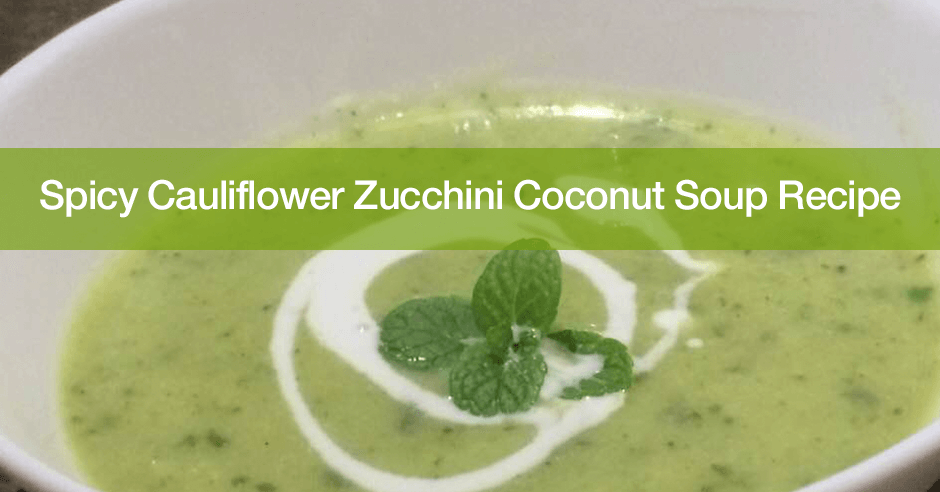
Spicy Cauliflower Zucchini Coconut Soup Recipe

January 18, 2019 By Trudy Scott 10 Comments

This recipe – Spicy Cauliflower Zucchini Coconut Soup – is my new favorite because it’s nutrient-dense, creamy (because of the cauliflower), lasts well in the fridge for a few days, freezes well, and is oh so yummy!

I tend to create my own recipes after being inspired by a recipe in a book, blog or eating something similar. I knew I wanted something creamy and went searching and found this recipe – Zucchini Soup with Fresh Mint – in The Complete Gut Health Cookbook by Pete Evans and Helen Padarin (on page 147 in case you have this book or end up buying a copy. It’s a great book by the way!).

The beautiful green color caught my eye. Cauliflower is one of my favorite vegetables and I had never made a soup with cauliflower before! Pete and Helen’s recipe calls for 2 handfuls of spinach leaves which are problematic for with my oxalate issues so I improvised with bok choy. The end result is not quite a green but it’s still pretty and is really delicious.

I also LOVE all things coconut and can’t resist adding coconut milk to soups for the added creaminess and to provide a good healthy fat. And with that coconut I just had to add some Indian spices for all the goodness and flavor they offer. I’m a mild spicy kind of girl so it’s not too hot. If oxalates are an issue for you reduce the quantities of the higher oxalate spices or leave them out (more on this below the recipe). Here’s the end result:

Spicy Cauliflower Zucchini Coconut Soup (serves 12)

6 large zucchini (or courgette if you’re in the UK or South Africa)
1 large cauliflower
2 large bunches of bok choy
Approx 16 cups /3.5 liters/4 quarts of liquid (home-made chicken broth and enough filtered water to cover the vegetables, leaving room in the pot for the coconut milk)
1 can coconut milk 

Spices

1 tablespoon turmeric (extra high oxalates)

1 tablespoon cumin (very high oxalates)

1 teaspoon curry powder (very high oxalates)

1 tablespoon coriander (high oxalates)

1 tablespoon ginger (low oxalates)

½ tablespoon sea salt

¼ tablespoon black pepper

(this is a mild combination of spices; you could add more curry powder to make it more spicy)

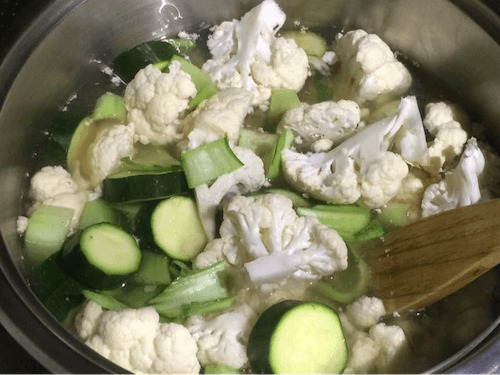
Chop the zucchini and cauliflower and add to the water in a large pot. Chop the white stalks of the bok choy and add to the water with zucchini and cauliflower. Reserve the green leaves of the bok choy and slice finely for later.

Bring to a boil, cover and simmer slowly for about 20 minutes until the vegetables are tender.

Open the can of coconut milk, reserving a few tablespoons for drizzling over the served soup. Pour the remainder into the soup pot, together with the spices and cook for a further minute, stirring to blend everything. Add the finely sliced green leaves of the bok choy and cook for a few more minutes.

Blend until smooth and add back to the pot to reheat. Serve with a drizzle of coconut milk.

Some other serving options:

  • add half a chopped avocado to the serving bowl (I like the chunks) and some MCT oil (for more of a keto-friendly soup and to help with blood sugar stability)
  • add chunks of cooked organic chicken or slices of cooked grass-fed beef
  • or simply serve before the main meal

Enjoy!

The pot should be almost full of liquid and vegetables

The blended soup can be stored in the fridge for a few days and re-heated for lunches and dinner (in a pot and not the microwave), or even enjoyed cold. Be sure to store in glass or pyrex containers.

It also freezes well (and again, use glass or pyrex). When you’re ready to use it, either thaw ahead of time or place the frozen glass/pyrex container in warm water for a few minutes in the sink. This thaws the edges just enough so it’s easy to tip the frozen soup into a pot to finish thawing and reheat. Use low heat while it’s thawing in the pot.

If you have food challenges with oxalates, autoimmune triggers or SIBO:

1) It’s low oxalate with the bok choy instead of spinach but you could use could use 2 cups of baby spinach if oxalates are not an issue.

Per the spreadsheet in the TryingLowOxalates facebook group  run by Susan Owens, a biomedical researcher and the founder of the Autism Oxalate Project, the spices above add up to about 20-24g of oxalates.

  • turmeric (extra high oxalates)
  • cumin (very high oxalates)
  • curry powder (very high oxalates)
  • coriander (high oxalates)
  • ginger (low oxalates)

As I mention above, if you have a problem with oxalates you may need to reduce the quantities of the higher oxalate spices or use more magnesium citrate or calcium citrate with this meal.

On a personal note, I’m very sensitive to oxalates (too much and I get really painful hot-coals-burning/shards-of- glass type pain in my feet and very scratchy eyes) and I seem to tolerate the above amounts of spices in a large soup like this, provided I’m not eating other high oxalate foods at the same time.

2) It’s AIP-friendly (Autoimmune Paleo)

3) It’s FODMAPS-friendly as is or feel free to add garlic and onion if tolerated

Let me know if this sounds yummy and ask away if you have any questions. If you make it be sure to come back and let us know how you enjoyed it. And let us know if you made your own variation.

Filed Under: Recipes Tagged With: bok choy, cauliflower, coconut, oxalates, recipe, soup, spicy, vegetable, zucchini

Coconut-Lemon-Garlic Cauliflower recipe

November 21, 2014 By Trudy Scott 19 Comments

cauliflower-1

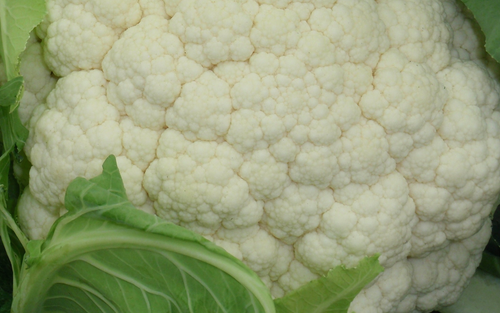
Cauliflower is in the Brassicaceae family of vegetables together with broccoli, brussels sprouts, and cabbage. It’s one of my favorite vegetables!

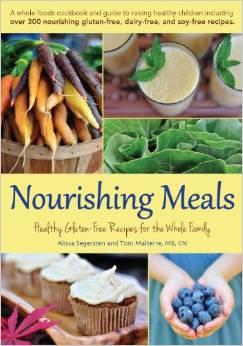
Enjoy this yummy recipe that I adapted slightly from a recipe from Nourishing Meals: Healthy Gluten-Free Recipes for the Whole Family.

by Alissa Segersten and Tom Malterre, MS, CN. I always seem to do this with recipes 🙂

1 medium head of cauliflower (i.e. a whole one)
1 cup of full-fat coconut milk
½ cup of chicken stock or water
1-2 tablespoons of freshly squeezed lemon juice (the original recipe called for lime juice which I didn’t have so I used lemon juice and it resulted in a great taste)
6 large garlic cloves, crushed (the original recipe called for 2, I love garlic so added more!)
1 teaspoon powdered ginger spice (the original recipe called for 1-2 teaspoons grated fresh ginger – I didn’t have any on hand but will try it with this next time)
½ teaspoon sea salt
Garnishes: sliced green onions and chopped cilantro

Cut the cauliflower into small pieces and place in a food processor fitted with the “s’ blade. Pulse until it’s coarsely ground. If you don’t have a food processor, just chop it as finely as possible.

In in large pot, heat the coconut milk, chicken stock or water, freshly squeezed lemon juice, crushed garlic cloves, powdered ginger spice or grated fresh ginger and sea salt, over medium heat. Once the mixture is simmering add the cauliflower pieces.

Stir together and simmer uncovered for 10-15 minutes, stirring every few minutes or until the cauliflower is cooked to your liking. Garnish with sliced green onions and chopped cilantro. Serve hot.

Yields 4-6 servings.

Some of my favorite foods are coconut, garlic, lemon and ginger, and the combination of these ingredients with the cauliflower is just superb! It heats up nicely the next day and is actually delicious cold too so could serve as a “salad.”

nourishing-meals 

I’m looking forward to trying other recipes in this book written by Tom and his wife Alissa. You may recall Tom’s interview from the Anxiety Summit: toxin exposures promote anxiety. We talked about the detox and health benefits, anti-cancer effects of sulforaphane in broccoli. And in my closing talk, I discussed broccoli sprouts and this study: Sulforaphane treatment of autism spectrum disorder. Well, cauliflower is a great source of sulforaphane too! So eat up and be sure to chew well.


Filed Under: Books, Food and mood, Real whole food, Recipes, The Anxiety Summit 2 Tagged With: anxiety, anxiety summit, cauliflower, recipe, sulforaphane, Tom Malterre, Trudy Scott

Primary Sidebar

NEW! GABA QuickStart Homestudy (with special intro pricing)

gaba quickstart homestudy

Free Report

9 Great Questions Women Ask about Food, Mood and their Health

You'll also receive a complimentary subscription to my ezine "Food, Mood and Gal Stuff"


Connect with me

Popular Posts

  • Amino Acids Mood Questionnaire from The Antianxiety Food Solution
  • The Antianxiety Food Solution Amino Acid and Pyroluria Supplements
  • Pyroluria Questionnaire from The Antianxiety Food Solution
  • Collagen and gelatin lower serotonin: does this increase your anxiety and depression?
  • Tryptophan for the worry-in-your-head and ruminating type of anxiety
  • GABA for the physical-tension and stiff-and-tense-muscles type of anxiety
  • The Antianxiety Food Solution by Trudy Scott
  • Seriphos Original Formula is back: the best product for anxiety and insomnia caused by high cortisol
  • Am I an anxious introvert because of low zinc and vitamin B6? My response to Huffington Post blog
  • Vagus nerve rehab with GABA, breathing, humming, gargling and key nutrients

Recent Posts

  • What do I use instead of Seriphos to help lower high cortisol that is affecting my sleep and making me anxious at night?
  • BeSerene™ GABA/theanine cream eases severe muscle tension in her neck/shoulders, prevents her bad headaches and quells her anxiety
  • How the correct approach, dose and sublingual use of GABA can be calming and not cause a flushed and itchy face and neck
  • The amino acid glutamine improves low mood by addressing gut health, and it has calming effects too
  • Flight anxiety with heightened breath, physical tension and also fearing the worst (the role of low GABA and low serotonin)

Categories

  • 5-HTP
  • AB575
  • Addiction
  • ADHD
  • Adrenals
  • Alcohol
  • Allergies
  • Alzheimer's disease
  • Amino Acids
  • Anger
  • Antianxiety
  • Antianxiety Food Solution
  • Antidepressants
  • Anxiety
  • Anxiety and panic
  • Autism
  • Autoimmunity
  • benzodiazapines
  • Bipolar disorder
  • Books
  • Caffeine
  • Cancer
  • Candida
  • Children/Teens
  • Collagen
  • Cooking equipment
  • Coronavirus/COVID-19
  • Cravings
  • Depression
  • Detoxification
  • Diabetes
  • Diet
  • DPA/DLPA
  • Drugs
  • EFT/Tapping
  • EMF
  • EMFs
  • Emotional Eating
  • Endorphins
  • Environment
  • Essential oils
  • Events
  • Exercise
  • Fear
  • Fear of public speaking
  • Fertility and Pregnancy
  • Fish
  • Food
  • Food and mood
  • Functional neurology
  • GABA
  • Gene polymorphisms
  • General Health
  • Giving
  • Giving back
  • Glutamine
  • Gluten
  • GMOs
  • Gratitude
  • Gut health
  • Heart health/hypertension
  • Histamine
  • Hormone
  • Hyperparathyroidism
  • Hypoglycemia
  • Immune system
  • Inflammation
  • Insomnia
  • Inspiration
  • Introversion
  • Joy and happiness
  • Ketogenic diet
  • Lithium orotate
  • Looking awesome
  • Lyme disease and co-infections
  • MCAS/histamine
  • Medication
  • Men's health
  • Mental health
  • Mercury
  • Migraine
  • Mold
  • Movie
  • MTHFR
  • Multiple sclerosis
  • Music
  • NANP
  • Nature
  • Nutritional Psychiatry
  • OCD
  • Osteoporosis
  • Oxalates
  • Oxytocin
  • Pain
  • Paleo
  • Parasites
  • Parkinson’s disease
  • PCOS
  • People
  • PMS
  • Postpartum
  • PTSD/Trauma
  • Pyroluria
  • Questionnaires
  • Real whole food
  • Recipes
  • Research
  • Schizophrenia
  • serotonin
  • SIBO
  • Sleep
  • Special diets
  • Sports nutrition
  • Stress
  • Sugar addiction
  • Sugar and mood
  • Supplements
  • Teens
  • Testimonials
  • Testing
  • The Anxiety Summit
  • The Anxiety Summit 2
  • The Anxiety Summit 3
  • The Anxiety Summit 4
  • The Anxiety Summit 5
  • The Anxiety Summit 6
  • Thyroid
  • Thyroid health
  • Toxins
  • Tryptophan
  • Tyrosine
  • Uncategorized
  • Vegan/vegetarian
  • Women's health
  • Yoga

Archives

  • October 2025
  • September 2025
  • August 2025
  • July 2025
  • June 2025
  • May 2025
  • April 2025
  • March 2025
  • February 2025
  • January 2025
  • November 2024
  • October 2024
  • September 2024
  • August 2024
  • July 2024
  • June 2024
  • May 2024
  • April 2024
  • March 2024
  • February 2024
  • January 2024
  • December 2023
  • November 2023
  • October 2023
  • September 2023
  • August 2023
  • July 2023
  • June 2023
  • May 2023
  • April 2023
  • March 2023
  • February 2023
  • January 2023
  • December 2022
  • November 2022
  • October 2022
  • September 2022
  • August 2022
  • July 2022
  • June 2022
  • May 2022
  • April 2022
  • March 2022
  • February 2022
  • January 2022
  • December 2021
  • November 2021
  • October 2021
  • September 2021
  • August 2021
  • July 2021
  • June 2021
  • May 2021
  • April 2021
  • March 2021
  • February 2021
  • January 2021
  • December 2020
  • November 2020
  • October 2020
  • September 2020
  • August 2020
  • July 2020
  • June 2020
  • May 2020
  • April 2020
  • March 2020
  • February 2020
  • January 2020
  • December 2019
  • November 2019
  • October 2019
  • September 2019
  • August 2019
  • July 2019
  • June 2019
  • May 2019
  • April 2019
  • March 2019
  • February 2019
  • January 2019
  • December 2018
  • November 2018
  • October 2018
  • September 2018
  • August 2018
  • July 2018
  • June 2018
  • May 2018
  • April 2018
  • March 2018
  • February 2018
  • January 2018
  • December 2017
  • November 2017
  • October 2017
  • September 2017
  • August 2017
  • July 2017
  • June 2017
  • May 2017
  • April 2017
  • March 2017
  • February 2017
  • January 2017
  • December 2016
  • November 2016
  • October 2016
  • September 2016
  • August 2016
  • July 2016
  • June 2016
  • May 2016
  • April 2016
  • March 2016
  • February 2016
  • January 2016
  • December 2015
  • November 2015
  • October 2015
  • September 2015
  • August 2015
  • July 2015
  • June 2015
  • May 2015
  • April 2015
  • March 2015
  • February 2015
  • January 2015
  • December 2014
  • November 2014
  • October 2014
  • September 2014
  • August 2014
  • July 2014
  • June 2014
  • May 2014
  • April 2014
  • March 2014
  • February 2014
  • January 2014
  • December 2013
  • November 2013
  • October 2013
  • September 2013
  • August 2013
  • July 2013
  • June 2013
  • May 2013
  • April 2013
  • March 2013
  • February 2013
  • January 2013
  • December 2012
  • November 2012
  • October 2012
  • August 2012
  • July 2012
  • June 2012
  • May 2012
  • April 2012
  • March 2012
  • February 2012
  • January 2012
  • December 2011
  • November 2011
  • October 2011
  • September 2011
  • August 2011
  • July 2011
  • June 2011
  • May 2011
  • April 2011
  • March 2011
  • February 2011
  • January 2011
  • December 2010
  • October 2010
  • September 2010
  • July 2010
  • May 2010
  • April 2010
  • March 2010
  • February 2010
  • January 2010
  • November 2009

Share the knowledge!

The above statements have not been evaluated by the Food and Drug Administration. Products listed in this website are not intended to diagnose, treat, cure or prevent any disease.

The information provided on this site is for informational and educational purposes only and is not intended as a substitute for advice from your physician or other health care professional. You should consult with a healthcare professional before starting or modifying any diet, exercise, or supplementation program, before taking or stopping any medication, or if you have or suspect you may have a health problem.


Copyright © 2026 Trudy Scott. All Rights Reserved. | Privacy | Terms and Conditions | Refund Policy | Medical Disclaimer

Free Report

9 Great Questions Women Ask about Food, Mood and their Health

You’ll also receive a complimentary subscription to my ezine “Food, Mood and Gal Stuff”