• Skip to primary navigation
  • Skip to main content
  • Skip to primary sidebar

everywomanover29 blog

Food, Mood and Women's Health – Be your healthiest, look and feel great!

  • Blog
  • About
  • Services
  • Store
  • Resources
  • Testimonials
  • The Book
  • Contact
  • Search this site

5-HTP

A gut feeling – the gut microbiome in health, diseases and behavior

January 6, 2017 By Trudy Scott 11 Comments

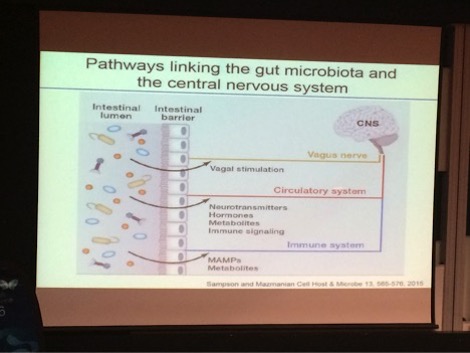
Pathways linking the gut microbiota and the CNS/central nervous system

There are a number of pathways linking the gut microbiota and the CNS/central nervous system: the vagus nerve, the circulatory system and the immune system. The gut microbiota have a direct impact on anxiety and depression via these pathways.

The 2015 paper referenced in the above slide is: Control of brain development, function, and behavior by the microbiome

More recently, studies have suggested that gut bacteria can impact neurological outcomes–altering behavior and potentially affecting the onset and/or severity of nervous system disorders. In this review, we highlight emerging evidence that the microbiome extends its influence to the brain via various pathways connecting the gut to the central nervous system. While understanding and appreciation of a gut microbial impact on neurological function is nascent, unraveling gut-microbiome-brain connections holds the promise of transforming the neurosciences and revealing potentially novel etiologies for psychiatric and neurodegenerative disorders.

This slide and study was part of Professor Karsten Kristiansen’s  keynote presentation at The Society for Mental Health Research conference in Sydney last month: “A gut feeling – the gut microbiome in health, diseases and behavior.”   I had the pleasure of attending and meeting Professor Kristiansen. He gave me permission to share some of the highlights which you can watch in the video below.

Professor Felice Jacka, nutritional psychiatry researcher and founder of ISNPR introduced him and his presentation on the gut-brain connection.
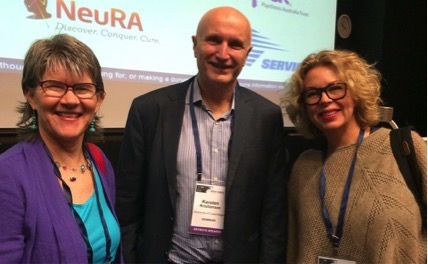
Here I am with Professor Karsten Kristiansen and Professor Felice Jacka

It was really wonderful to finally Professor Felice Jacka in person. I have been following her research work since her first food mood study in 2010: Association of Western and traditional diets with depression and anxiety in women. You may recall our wonderful interview on The Anxiety Summit: The Research – Food to prevent and treat anxiety and depression?

Here are 2 position statements on nutritional psychiatry from ISNPR:

  • Nutritional medicine in modern psychiatry: position statement by ISNPR 
  • Nutritional medicine as mainstream in psychiatry

It was also wonderful to see Felice’s name on so many of the microbiome and mood-diet posters that were presented at the conference!

We appreciate Professor Kristiansen, Professor Felice Jacka and all the research work they and their teams of researchers do!
Filed Under: Gut health Tagged With: 5-HTP, saffron, tryptophan

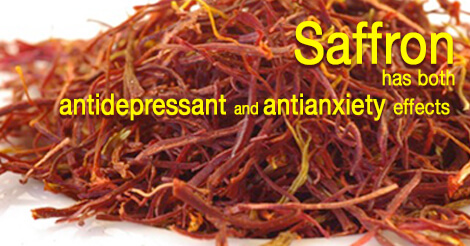
Saffron has both antidepressant and antianxiety effects

December 30, 2016 By Trudy Scott 71 Comments

In a new study published in Pharmacopsychiatry, Crocus sativus L. versus citalopram in the treatment of major depressive disorder with anxious distress: a double-blind, controlled clinical trial, saffron (Crocus sativus L.) has been shown to have both antidepressant and antianxiety effects. It’s also anti-inflammatory and an antioxidant.

In this study patients received either saffron or an SSRI called citalopram/Celexa:

66 patients with major depressive disorder accompanied by anxious distress were randomly assigned to receive either saffron (30 mg/day) or citalopram (40 mg/day) for 6 weeks.

The Hamilton Rating Scale for Depression (HAM-D) and Hamilton Rating Scale for Anxiety (HAM-A) were used to assess the effectiveness of the treatment during the study.

60 participants finished the study and they all showed significant improvement in depression and anxiety scores, with no significant difference in effectiveness or side effects from either the saffron or citalopram.

The authors make this conclusion:

The present study indicates saffron as a potential efficacious and tolerable treatment for major depressive disorder with anxious distress.

A 2014 systematic review of clinical studies and examination of underlying antidepressant mechanisms of action of saffron found that:

saffron’s antidepressant effects potentially are due to its serotonergic, antioxidant, anti-inflammatory, neuro-endocrine and neuroprotective effects

This means that saffron could potentially be used in place tryptophan or 5-HTP if you score high on the low serotonin section of the amino acid questionnaire (anxiety, worry-in-the head, obsessiveness, negativity and depression, irritability, PMS, afternoon and evening cravings and insomnia) and yet do not seem to benefit from either of these two amino acids.

And you’ll be getting the added antioxidant, anti-inflammatory, neuro-endocrine and neuroprotective effects.

If you do well with tryptophan and/or 5-HTP, I suspect that using a small amount of saffron together with these amino acids could enhance the effects.

Saffron: GABA is one of the mechanisms of action

Update: Dec 20, 2024

I’m adding this section about GABA as a result of saffron coming up in a question in the GABA Quickstart 2.0 program this week. One of the participants asked me this question: “I’m seeing a lot of new Saffron supplements stating that it helps with GABA. Your thoughts on this?” 

According this this 2022 paper, Saffron (Crocus sativus L.): A Source of Nutrients for Health and for the Treatment of Neuropsychiatric and Age-Related Diseases

Investigations have shown that aqueous saffron extracts and its constituent safranal exert anxiolytic effects similar to that of diazepam, probably through their interaction with the benzodiazepine binding site at the GABAA receptor.

In addition, studies have demonstrated that crocins alleviated the obsessive compulsive behavior in rats through an antagonistic action at the 5-HT2C receptor site.

This is a subtype of the 5-HT2 serotonin receptor site and further supports the impacts saffron has on serotonin.

Another paper, also published in 2022, lists GABA as one of the mechanisms of action, in addition to its effects on monoamines (serotonin and dopamine) and N-methyl-d-aspartate (NMDA).

Additional resources when you are new to using GABA and other amino acids as supplements

As always, I use the symptoms questionnaire to figure out if low serotonin or low GABA or other neurotransmitter imbalances may be an issue.

If you suspect low levels of any of the neurotransmitters and do not yet have my book, The Antianxiety Food Solution – How the Foods You Eat Can Help You Calm Your Anxious Mind, Improve Your Mood, and End Cravings, I highly recommend getting it and reading it before jumping in and using amino acids on your own so you are knowledgeable. And be sure to share it with the practitioner/health team you or your loved one is working with.

There is an entire chapter on the amino acids and they are discussed throughout the book in the sections on gut health, gluten, blood sugar control (this is covered in an entire chapter too), sugar cravings, anxiety and mood issues.

The book doesn’t include product names (per the publisher’s request) so this blog, The Antianxiety Food Solution Amino Acid and Pyroluria Supplements, lists the amino acids that I use with my individual clients and those in my group programs.

If, after reading this blog and my book, you don’t feel comfortable figuring things out on your own (i.e. doing the symptoms questionnaire and respective amino acids trials), a good place to get help is the GABA QuickStart Program (if you have low GABA symptoms). This is a paid online/virtual group program where you get my guidance and community support.

If you are a practitioner, join us in The Balancing Neurotransmitters: the Fundamentals program. This is also a paid online/virtual program with an opportunity to interact with me and other practitioners who are also using the amino acids.

Wrapping up and your feedback

I have yet to use saffron with my clients so I’d love to hear from you (so we all can benefit and learn from each other):

  • Have you used saffron and found it to be effective for your anxiety and/or depression?
  • If you’re a practitioner, have you used it with patients or clients?
  • Have you found 30 mg a day to be the most effective dose and how quickly have you noticed benefits? What symptoms have improved the most?
  • Have you combined saffron with tryptophan or 5-HTP?
  • Have you combined saffron with GABA?

Feel free to post your questions below too.

Filed Under: Antianxiety Tagged With: 5-HTP, saffron, tryptophan

I am on 5-HTP for anxiety and I am wondering about trying tryptophan instead

December 16, 2016 By Trudy Scott 74 Comments

Both 5-HTP and tryptophan help to boost serotonin levels so you can feel happy, calm, sleep well and not crave carbs. I typically have my clients who have low serotonin symptoms start with a trial of tryptophan because it I see such excellent results with this amino acid. That being said, some people simply do better on one versus the other and you may do better with 5-HTP. If you have low serotonin symptoms and are using either of these amino acids and not getting the expected results, it’s worth considering a change.

Here is a question I recently received on the blog. It’s something I’m commonly asked about and something I deal with often when working one-on-one with clients:

I am on 5-HTP (400 mg) [for anxiety]. I am wondering about trying tryptophan instead. What is the best (safest) way to make the switch? What is the starting dose you usually suggest? I am tapering off SSRIs so I know my serotonin reserves are low.

Here are some of the reasons you may want to consider switching and doing a trial of tryptophan

  • the 5-HTP is not working as you would expect for your anxiety or depression, or other low serotonin symptoms like PMS, insomnia, afternoon and evening carb cravings, negative self-talk, perfectionism, worry in the head and ruminations, and even anger issues or irritability (here is the complete questionnaire)
  • the 5-HTP is causing digestive issues
  • you have done an adrenal saliva test and discovered you have high cortisol. If you feel wired-tired I like to use tryptophan because 5-HTP has been shown to raise cortisol levels

Depending on how severe your symptoms are I would have you slowly replace one with the other, keeping in mind that 50mg 5-HTP is roughly equivalent to 500mg tryptophan.

In this particular case she was taking 400 mg 5-HTP and was surprised to hear that she may now need 2000 mg tryptophan, saying “that seems like a lot!”

Here is my feedback:

2000mg tryptophan isn’t too much if you have low serotonin symptoms and need it. If we were working together I would have her start with a trial of 500mg which is the typical starting amount and increase based on her response. If 500mg helps some symptoms but doesn’t give complete resolution of symptoms then I’d have her try 1000mg and monitor symptoms, and then go up to 1500mg and even 2000mg.

She may respond better to tryptophan and may only need 500mg or 1000mg or she may in fact need the full 2000mg.

She is currently taking an SSRI, so I would assume her doctor already knows she has been using 5-HTP and knows her plans to switch, giving approval and monitoring for possible serotonin syndrome. She would also take the tryptophan at least 6 hours from the SSRI.

Here is additional information on SSRI tapering while using amino acids.

Obviously a similar approach could be used to switch from tryptophan to 5-HTP.

I also only ever recommend the Lidtke brand of tryptophan. You can find this and the other amino acids I use with my clients here.

Have you switched from 5-HTP to tryptophan and seen added benefits?

Have you switched from tryptophan to 5-HTP and seen added benefits?

If you’re a practitioner please share if you’ve used this approach successfully.

Filed Under: Tryptophan Tagged With: 5-HTP, tryptophan

How do I taper from my antidepressant with tryptophan and can I safely use the other amino acids?

November 18, 2016 By Trudy Scott 119 Comments

antidepressant-tapering

Today’s article is based on a question I am seeing more and more on the blog: How do I taper from my antidepressant with tryptophan and can I safely use the other amino acids?

I find my clients do better when tapering off an antidepressant (which is often prescribed for anxiety and panic attacks) when their nutritional status is solid. Incorporating diet changes and adding amino acids and other nutrients first can result in a more successful taper with less side-effects. This would mean starting with the basics – eating real whole food, incorporating quality animal protein, eating to balance blood sugar, and removing gluten, caffeine and sugar.

If needed and based on testing results, it’s important to address any other nutritional deficiencies such as low iron, low vitamin D, low stomach acid, low total cholesterol, low B12 (and whatever else is an issue), plus support the adrenals/sex hormones/thyroid if needed and addressing gut health like leaky gut and dysbiosis.

Adding a good copper free multivitamin and often the addition of zinc and vitamin B6, evening primrose oil and possibly fish oil – the latter based on each person’s unique needs.

With antidepressants such as selective serotonin-reuptake inhibitors (SSRIs), I have my clients work with their prescribing doctor and get the approval to add tryptophan (or 5-HTP) 6 hours apart from the SSRI. If they are taking the medication at night they get the approval from their doctor to switch it to the morning, and will take tryptophan (or 5-HTP) at least 6 hours later, mid-afternoon and evening.

If they decide to do both the medication and tryptophan (or 5-HTP), they get a protocol for the SSRI taper for the future. This is important. If you are in too big a rush to start right away, it often causes more issues. It’s also important to make sure you get a very slow taper protocol from your doctor. Some antidepressants are harder to taper (Paxil is notoriously difficult) and they all should be tapered really slowly.

The plan is to start to taper the SSRI once you have been using the tryptophan (or 5-HTP) for at least 4 to 8 weeks and are seeing real benefits by using it. This translates to much much less or none of the following symptoms: anxiety, depression, insomnia, rumination, worry, negative-self-talk, perfectionism, afternoon and evening carbohydrate cravings, PMS, rage or anger.

For some of my clients it’s 3 months before they feel they are ready to taper. This may be because of feedback they have provided based on prior taper attempts and how they are feeling this time. It may also be based on what else is going on in their lives like a stressful work situation. It may also be based on the time of the year: winter is generally not a good time to taper and definitely not if you suffer from increased depression or anxiety in winter.

The tryptophan (or 5-HTP) is adjusted up as needed while continuing to taper the SSRI.

The doctor is always kept informed and monitors for the possibility of serotonin syndrome. I learned about the potential concerns about serotonin syndrome when using tryptophan or 5-HTP with an SSRI from Julia Ross, author of The Mood Cure, and so I continue to caution my clients about this.

When I interviewed Dr. Peter Bongiorno in season 4 of the Anxiety Summit (Serotonin and anxiety: tryptophan, 5-HTP, serotonin syndrome and medication tapers), he shared that he is not concerned about serotonin syndrome being an issue with tryptophan or 5-HTP dosed with an SSRI, even if taken at the same time. He cited research that found the combination of tryptophan and SSRI did not result in serotonin syndrome in any of the participants.

Dr. Bongiorno also uses the same approach to address the basics:

the most important thing is that we really establish all the basics and that they’re in the healthiest place possible.  Because if those aren’t there, if a patient just gets off the medication and we haven’t really done anything to change the underlying reasons why they got to the place where they had the mood issue, in most cases they’re going to go back there again.

Some people need amino acid support in more than just the low serotonin area so we review the amino acid questionnaire and consider trials of GABA and other amino acids too. All this only applies for SSRIs and tryptophan or 5-HTP. The other amino acids can safely be used with SSRIs, and it’s not uncommon to also have low GABA, low endorphins, low catecholamines and low blood sugar and need them all, but it’s still best to discuss them with the prescribing doctor.

We also review all the amino acid precautions.

Some people choose to work with their doctor to taper the SSRI and then add the tryptophan (or 5-HTP) once they have quit the medication. I have found that this makes it much harder to do and more side-effects are seen. With the amino acids you start to get some relief right away and have hope on the first day! They also make it so much easier to quit the sugar, gluten and caffeine without having to use will-power.

In summary, these are my recommendations for doing an SSRI taper with amino acids:

  • doctor’s approval to taper the SSRI and use amino acids
  • address diet and nutritional deficiencies first – before starting to taper
  • work with someone knowledgeable in amino acid use
  • OR educate yourself by
    • reading my book The Antianxiety Food Solution , Julia’s book The Mood Cure and Dr. Kelly Brogan’s new book A Mind of Your Own
    • listening to the Anxiety Summit interviews

(please don’t simply read one or two blogs and jump in to this)

  • use the amino acids from day one to start addressing low levels of all the brain chemicals
  • use the tryptophan or 5-HTP at least 6 hours away from the SSRI

I would like to add that Dr. Brogan shares that coffee enemas help her patients who are doing medication tapers.

If you are a practitioner, join us in The Balancing Neurotransmitters: the Fundamentals program. It’s an opportunity to interact with me and other practitioners who are also using the amino acids and helping their clients/patients to taper from antidepressants (always working with the prescribing doctor).

Have you used a similar SSRI taper protocol? And how did it work for you? What would you have done differently? And what advice would you give someone contemplating an SSRI taper?

Have you found that coffee enemas have helped?

If you are a practitioner, has the above approach been helpful for your clients/patients?

Filed Under: Antidepressants Tagged With: 5-HTP, amino acids, antidepressant, anxiety, depression, serotonin, SSRI, taper, tryptophan

DPA to end comfort-eating, end weepiness and boost endorphins

September 10, 2016 By Trudy Scott 83 Comments

medicinal-supplements-summit-speakers

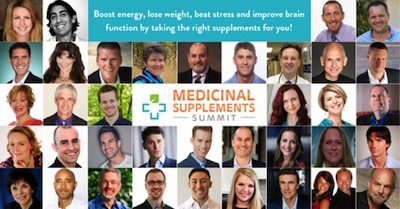
The Medicinal Supplements Summit runs September 12 -19 and is dedicated to helping you learn the latest in supplement customization to boost energy, lose weight, beat stress, improve brain function and heal your body! 

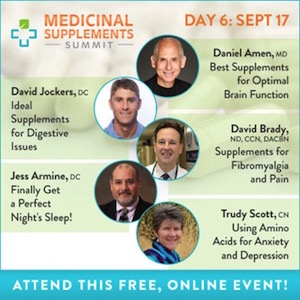
My interview addresses amino acids for both anxiety and depression – I talk about GABA, tryptophan, 5-HTP (and when not to use it), DPA, glutamine and tyrosine.

medicinal-supplements-summit-day6

Wendy asks me to share more about DPA for the low endorphins kind of depression, comfort eating, emotional pain, weepiness and physical pain. Here are some snippets on this topic from my interview:

DPA is D-phenylalanine. It’s an amino acid that actually destroys the enzyme that breaks down endorphins. Endorphins are feel-good chemicals that we may relate to when you hear about getting an endorphin rush, when you go for a run or when someone gives you a big hug or when you do something nice for someone or someone does something nice for you, you get that nice sort of feel good feeling, like you’ve got this big hug kind of feeling. So taking this amino acid, DPA, helps, in essence, to raise your endorphins.

There are different kinds of depression. I mentioned the low serotonin depression, which is more the anxiety kind of depression. With the low endorphin kind of depression, you’re very weepy. You may be overly emotional. So if you watched a TV ad or you watched a really sad movie, you may be more prone to crying than the average person. As well as being sensitive to emotional pain, which is the crying and the weepiness, you also tend to be sensitive to physical pain.

So we know that doing acupuncture raises your endorphin levels. And in that way it helps with pain. So taking this amino acid will help with that emotional sadness that you often feel when you’ve got low endorphins. And it is very, very helpful for physical pain as well. I find a number of clients with physical pain that is related to low endorphins. Pain can be related to low oxalates or nightshades, something physical, or even osteoarthritis. So you’ve got some kind of physical issue. But if it’s related to low endorphins you’ll actually see a really nice pain reduction effect from it.

Now, the big thing with low endorphins is this comfort eating. So I mentioned earlier with low serotonin you have the anxiety and the depression and the afternoon and the evening cravings. With low endorphins, as well as this emotional aspect and the pain aspect, the cravings part is very much a comfort kind of craving.

It’s like, “This is my reward. This is my treat. I deserve it.” And when you consume those carbohydrates, that bowl of ice cream, that bowl of cereal, that chocolate chip cookie, you feel like this is my reward. I deserve it. So a lot of people will resonate with the low endorphins kind of emotional eating. And when they get on DPA their mood improves, and this comfort eating goes away.

Tune in to hear my entire interview and all the other great speakers!

You can use this link to register for access: https://qt247.isrefer.com/go/SUPP16reg/trudyscottcn/

And use this link to purchase at pre-summit special prices:
https://qt247.isrefer.com/go/SUPP16order/trudyscottcn/

Filed Under: Events, GABA Tagged With: 5-HTP, aminos for anxiety, comfort eating, depression, DPA, emotional, GABA, glutamine, Medicinal supplements summit, tryptophan, tyrosine

Essential oils for dementia, agitation, anxiety on the Alzheimer’s & Dementia Summit

July 31, 2016 By Trudy Scott 6 Comments

essential-oils-for-dimentia

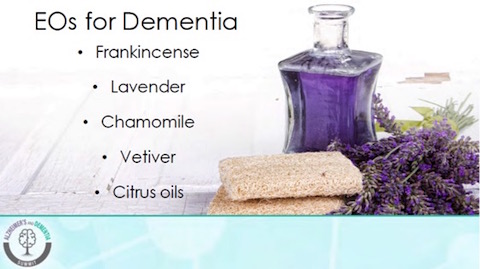
One of the excellent speakers, Eric Zielinski, DC, MPH(c) is interviewed on the Alzheimer’s & Dementia Summit. He’s fondly known as Dr. Z and I love everything he shares about the simplicity and power of essential oils (and all the research).

The topic of his interview is “Best Essential Oils for Brain Health”, dementia and Alzheimer’s disease – but as you will hear these essential oils also help with anxiety, agitation, insomnia and social withdrawal.

One aspect that I find very interesting is the discussion about aromatherapy versus using essential oils in lotions with those with dementia and Alzheimer’s disease. The latter is more effective because of the loss of sense of smell with advanced dementia.

Here are some of the gems he shares (from Professor Elaine Perry’s paper: Aromatherapy for the treatment of Alzheimer’s disease:

Lemon balm (Melissa) lotion was applied to the face and arms of 36 patients, whilst another 36 patients had sunflower oil applied. Melissa was associated with highly significant reductions measured on an agitation inventory and social withdrawal, together with an increase in constructive activities (dementia care mapping).

In a trial involving 122 non-demented patients in intensive care, massage aromatherapy using lavender oil was well received, the greatest improvements being in mood and reduction in anxiety.

In another trial, lavender, geranium and mandarin essential oils in an almond oil base were applied to the skin of 39 patients over an unspecified period. This resulted in increased alertness, contentment and sleeping at night; and reduced levels of agitation, withdrawal and wandering.

I’m so pleased Dr. Z talks about antipsychotics and how a number of studies have shown a reduced need for these medications when using essential oils.

This interview and other interviews on the Alzheimer’s & Dementia Summit are well-worth tuning in to. They represent a unique opportunity to discover how to prevent, slow down and even reverse (yes reverse!) the symptoms of Alzheimer’s disease and dementia.

I say “yes reverse!” because I received this concerned question from someone in my community

It’s a big claim to say you can reverse Alzheimer’s, especially to those of us sensitized to the issue because of a very ill parent. On what studies or peer-reviewed research do you and your colleagues rely? Do you mean when someone is so far along that they are unable to communicate effectively? How would you find the “root cause” then? I am interested in alternative approaches but sometimes the claims seem to veer toward irresponsible

I feel for this concerned caregiver and her question is very valid because we have been led to believe that Alzheimer’s disease cannot be reversed. I only share information I have vetted and always make sure it is research-based and this summit is no exception, even when someone can no longer communicate effectively. Simply using essential oils in a lotion is a wonderful start. Getting the testing that Dr. Bredesen recommends would be the next step. There really is SO much that can be done!

Here are some of my other favorite interviews:

  • Christopher Shade PhD – Brain Defense: What to Do About Heavy Metal Toxicity
  • Niki Gratrix – Dementia Warning: Uncovering the Threat of Emotional Stress
  • Nadine Artemis – Protecting the Brain: Why You Should Care About Oral Health
  • Datis Kharrazian, DHSc, DC, MS – Dementia Solutions: Overlooked Therapies Revealed
  • Dale E. Bredesen, MD – Reversing Alzheimer’s Disease: A Comprehensive Approach (read more here and see his research)
  • David Minkoff, MD – Link Between Lyme Disease and Alzheimer’s

These interviews also provide a resource for you if you are just starting to notice that your own memory and focus is not quite what it used to be, if you have low motivation, if you suffer from brain fog and if you have anxiety and/or insomnia.

Today is the last day of the Alzheimer’s & Dementia Summit and REPLAYS of all the speakers will be tomorrow Monday August 1. You can still register here:
https://qt247.isrefer.com/go/ALZ16reg/trudyscottcn/

Prices will increase after the final REPLAY DAY that so if you know you want to purchase the series, now is the time. This is one summit I highly RECOMMEND purchasing! Here is the order link:
https://qt247.isrefer.com/go/ALZ16order/trudyscottcn/

If you have questions or feedback please feel free to post them in the comments.

PS. If you enjoyed this information and interview and want to learn more about essential oils, don’t forget that Dr. Z is hosting The Essential Oils Revolution 2 online from August 22-29. You can register for this one now.

Filed Under: Essential oils Tagged With: 5-HTP, anxiety, GABA, our calming neurotransmitter, PMS, sleep

  • « Go to Previous Page
  • Page 1
  • Interim pages omitted …
  • Page 9
  • Page 10
  • Page 11
  • Page 12
  • Page 13
  • Go to Next Page »

Primary Sidebar

NEW! GABA QuickStart Homestudy (with special intro pricing)

gaba quickstart homestudy

Free Report

9 Great Questions Women Ask about Food, Mood and their Health

You'll also receive a complimentary subscription to my ezine "Food, Mood and Gal Stuff"


Connect with me

Popular Posts

  • Amino Acids Mood Questionnaire from The Antianxiety Food Solution
  • The Antianxiety Food Solution Amino Acid and Pyroluria Supplements
  • Pyroluria Questionnaire from The Antianxiety Food Solution
  • Collagen and gelatin lower serotonin: does this increase your anxiety and depression?
  • Tryptophan for the worry-in-your-head and ruminating type of anxiety
  • GABA for the physical-tension and stiff-and-tense-muscles type of anxiety
  • The Antianxiety Food Solution by Trudy Scott
  • Seriphos Original Formula is back: the best product for anxiety and insomnia caused by high cortisol
  • Am I an anxious introvert because of low zinc and vitamin B6? My response to Huffington Post blog
  • Vagus nerve rehab with GABA, breathing, humming, gargling and key nutrients

Recent Posts

  • What do I use instead of Seriphos to help lower high cortisol that is affecting my sleep and making me anxious at night?
  • BeSerene™ GABA/theanine cream eases severe muscle tension in her neck/shoulders, prevents her bad headaches and quells her anxiety
  • How the correct approach, dose and sublingual use of GABA can be calming and not cause a flushed and itchy face and neck
  • The amino acid glutamine improves low mood by addressing gut health, and it has calming effects too
  • Flight anxiety with heightened breath, physical tension and also fearing the worst (the role of low GABA and low serotonin)

Categories

  • 5-HTP
  • AB575
  • Addiction
  • ADHD
  • Adrenals
  • Alcohol
  • Allergies
  • Alzheimer's disease
  • Amino Acids
  • Anger
  • Antianxiety
  • Antianxiety Food Solution
  • Antidepressants
  • Anxiety
  • Anxiety and panic
  • Autism
  • Autoimmunity
  • benzodiazapines
  • Bipolar disorder
  • Books
  • Caffeine
  • Cancer
  • Candida
  • Children/Teens
  • Collagen
  • Cooking equipment
  • Coronavirus/COVID-19
  • Cravings
  • Depression
  • Detoxification
  • Diabetes
  • Diet
  • DPA/DLPA
  • Drugs
  • EFT/Tapping
  • EMF
  • EMFs
  • Emotional Eating
  • Endorphins
  • Environment
  • Essential oils
  • Events
  • Exercise
  • Fear
  • Fear of public speaking
  • Fertility and Pregnancy
  • Fish
  • Food
  • Food and mood
  • Functional neurology
  • GABA
  • Gene polymorphisms
  • General Health
  • Giving
  • Giving back
  • Glutamine
  • Gluten
  • GMOs
  • Gratitude
  • Gut health
  • Heart health/hypertension
  • Histamine
  • Hormone
  • Hyperparathyroidism
  • Hypoglycemia
  • Immune system
  • Inflammation
  • Insomnia
  • Inspiration
  • Introversion
  • Joy and happiness
  • Ketogenic diet
  • Lithium orotate
  • Looking awesome
  • Lyme disease and co-infections
  • MCAS/histamine
  • Medication
  • Men's health
  • Mental health
  • Mercury
  • Migraine
  • Mold
  • Movie
  • MTHFR
  • Multiple sclerosis
  • Music
  • NANP
  • Nature
  • Nutritional Psychiatry
  • OCD
  • Osteoporosis
  • Oxalates
  • Oxytocin
  • Pain
  • Paleo
  • Parasites
  • Parkinson’s disease
  • PCOS
  • People
  • PMS
  • Postpartum
  • PTSD/Trauma
  • Pyroluria
  • Questionnaires
  • Real whole food
  • Recipes
  • Research
  • Schizophrenia
  • serotonin
  • SIBO
  • Sleep
  • Special diets
  • Sports nutrition
  • Stress
  • Sugar addiction
  • Sugar and mood
  • Supplements
  • Teens
  • Testimonials
  • Testing
  • The Anxiety Summit
  • The Anxiety Summit 2
  • The Anxiety Summit 3
  • The Anxiety Summit 4
  • The Anxiety Summit 5
  • The Anxiety Summit 6
  • Thyroid
  • Thyroid health
  • Toxins
  • Tryptophan
  • Tyrosine
  • Uncategorized
  • Vegan/vegetarian
  • Women's health
  • Yoga

Archives

  • October 2025
  • September 2025
  • August 2025
  • July 2025
  • June 2025
  • May 2025
  • April 2025
  • March 2025
  • February 2025
  • January 2025
  • November 2024
  • October 2024
  • September 2024
  • August 2024
  • July 2024
  • June 2024
  • May 2024
  • April 2024
  • March 2024
  • February 2024
  • January 2024
  • December 2023
  • November 2023
  • October 2023
  • September 2023
  • August 2023
  • July 2023
  • June 2023
  • May 2023
  • April 2023
  • March 2023
  • February 2023
  • January 2023
  • December 2022
  • November 2022
  • October 2022
  • September 2022
  • August 2022
  • July 2022
  • June 2022
  • May 2022
  • April 2022
  • March 2022
  • February 2022
  • January 2022
  • December 2021
  • November 2021
  • October 2021
  • September 2021
  • August 2021
  • July 2021
  • June 2021
  • May 2021
  • April 2021
  • March 2021
  • February 2021
  • January 2021
  • December 2020
  • November 2020
  • October 2020
  • September 2020
  • August 2020
  • July 2020
  • June 2020
  • May 2020
  • April 2020
  • March 2020
  • February 2020
  • January 2020
  • December 2019
  • November 2019
  • October 2019
  • September 2019
  • August 2019
  • July 2019
  • June 2019
  • May 2019
  • April 2019
  • March 2019
  • February 2019
  • January 2019
  • December 2018
  • November 2018
  • October 2018
  • September 2018
  • August 2018
  • July 2018
  • June 2018
  • May 2018
  • April 2018
  • March 2018
  • February 2018
  • January 2018
  • December 2017
  • November 2017
  • October 2017
  • September 2017
  • August 2017
  • July 2017
  • June 2017
  • May 2017
  • April 2017
  • March 2017
  • February 2017
  • January 2017
  • December 2016
  • November 2016
  • October 2016
  • September 2016
  • August 2016
  • July 2016
  • June 2016
  • May 2016
  • April 2016
  • March 2016
  • February 2016
  • January 2016
  • December 2015
  • November 2015
  • October 2015
  • September 2015
  • August 2015
  • July 2015
  • June 2015
  • May 2015
  • April 2015
  • March 2015
  • February 2015
  • January 2015
  • December 2014
  • November 2014
  • October 2014
  • September 2014
  • August 2014
  • July 2014
  • June 2014
  • May 2014
  • April 2014
  • March 2014
  • February 2014
  • January 2014
  • December 2013
  • November 2013
  • October 2013
  • September 2013
  • August 2013
  • July 2013
  • June 2013
  • May 2013
  • April 2013
  • March 2013
  • February 2013
  • January 2013
  • December 2012
  • November 2012
  • October 2012
  • August 2012
  • July 2012
  • June 2012
  • May 2012
  • April 2012
  • March 2012
  • February 2012
  • January 2012
  • December 2011
  • November 2011
  • October 2011
  • September 2011
  • August 2011
  • July 2011
  • June 2011
  • May 2011
  • April 2011
  • March 2011
  • February 2011
  • January 2011
  • December 2010
  • October 2010
  • September 2010
  • July 2010
  • May 2010
  • April 2010
  • March 2010
  • February 2010
  • January 2010
  • November 2009

Share the knowledge!

The above statements have not been evaluated by the Food and Drug Administration. Products listed in this website are not intended to diagnose, treat, cure or prevent any disease.

The information provided on this site is for informational and educational purposes only and is not intended as a substitute for advice from your physician or other health care professional. You should consult with a healthcare professional before starting or modifying any diet, exercise, or supplementation program, before taking or stopping any medication, or if you have or suspect you may have a health problem.


Copyright © 2026 Trudy Scott. All Rights Reserved. | Privacy | Terms and Conditions | Refund Policy | Medical Disclaimer

Free Report

9 Great Questions Women Ask about Food, Mood and their Health

You’ll also receive a complimentary subscription to my ezine “Food, Mood and Gal Stuff”