• Skip to primary navigation
  • Skip to main content
  • Skip to primary sidebar

everywomanover29 blog

Food, Mood and Women's Health – Be your healthiest, look and feel great!

  • Blog
  • About
  • Services
  • Store
  • Resources
  • Testimonials
  • The Book
  • Contact
  • Search this site

The Natural Cures Movement with Dr. Josh Axe

October 8, 2014 By Trudy Scott 26 Comments

NC_SidebarBanner_300x300_Attend

I love to bring you valuable content so I’m so pleased to be sharing this online event with you!

Learn secret cures to naturally heal your body from 30 unique presentations! The Natural Cures Movement includes natural remedies and treatment protocols for specific conditions like hypothyroidism, anxiety and depression, autoimmune disease, arthritis and inflammatory bowel disease. The home remedies and natural cures you will discover could help you begin a path to better health and disease prevention! Plus, it’s FREE and online from October 6-13. 2014.

Take your health to the next level when you join Dr. Josh Axe, founder of one of the top 25 natural health websites in the world, DrAxe.com, and author of The Real Food Diet Cookbook. It’s his mission to educate millions around the world in order to help them transform their health.

Here are a few of the incredible presenters:

Dr. Joseph Mercola, Take Control of Your Health & Insulin
Dr. Josh Axe, Natural Cures for Leaky Gut
Sayer Ji, 10 Food Medicines That Could Save Your Life
Suzy Cohen, RPh, Natural Remedies for Thyroid & Autoimmune Disease
Vani Hari, How to Cure Yourself Despite Food Companies and Your Doctor

Day3Banner

If you haven’t yet hear me present or want to hear me again, my food-mood-anxiety interview aired today (day 3) together with Marc David, Katie Wellness Mama and Lauren Geersten.

Here are a few gems from my food-mood-anxiety interview:

To raise low serotonin:

  • 5-HTP or tryptophan (amino acid supplements) taken between meals
  • Exercise, sunshine or a full spectrum lamp, and diet (quality real food and wild fish and grass-fed red meat and healthy fats!)
  • Pumpkin seeds – research shows that a functional food rich in tryptophan and zinc (made of pumpkin seeds) reduced social anxiety and helps sleep!

We didn’t get to talk about all the amino acids and brain chemical imbalances so here is a high level summary:

  • glutamine for low blood sugar
  • GABA for stress-eating/low GABA
  • tyrosine when you need a sugar or caffeine pickup/low catecholamines
  • DPA for comfort/emotional eating and low endorphins.

I love and highly recommend the eating psychology work of Marc David and I really enjoyed Katie’s talk on beautiful healthy coconut!

Here are some gems from her interview:

  • anti-microbial and anti-fungal properties and high in antioxidants
  • high in MCTs and easily digested so you don’t need bile to digest them, plus they help boost metabolism
  • she combines it with oregano oil for oil pulling/swishing in mouth
  • use it for cooking, as a body lotion, to help prevent diaper rash, as a hair detangler, as a massage oil

Register for FREE now at the following link: https://ju127.isrefer.com/go/summitreg/trudyscottcn/


Filed Under: Amino Acids, Antianxiety Food Solution, Events, Food and mood Tagged With: amino acids, anxiety, josh axe, natural cures, Trudy Scott

Chilling out with cheetahs – using nature for stress relief, joy and pure awesomeness!

October 3, 2014 By Trudy Scott 8 Comments

0 skye

I was recently visiting family in South Africa and promised to share pictures from our incredible trip to the Kwa Cheetah Breeding Project. My sister Woo and I decided to do the early morning 50 minute bush walk with Skye, one of the male cheetahs. All I can say is wow! What an experience!

I’ve written about how nature and exercise can help to boost mood and reduce stress and this certainly did this and more. I hope you get to enjoy some of it via my photos.


1_meeting skye

Here I am getting to meet Skye before we head out. And what a meeting it was – he purrs just like a kitty cat only louder and deeper! Incredible first encounter!


2_skyes sister comes over to say hi

Skye’s sister comes over to say hi and can I come for a walk too.


3_walking with woo

We took Skye for a 50 minute walk through the bush around Kwa Cheetah – or maybe he took us for a walk! At one stage he spotted his sister and bolted to say hello and I got kind of dragged behind him. Here is with the ranger and my sister Woo.


4 woo and skye

Woo getting to know Skye


4 trudy and skye

Skye has spotted a warthog in the far distance


6_woo and I with skye

Woo and I with Skye


niece and cheetah-1

After the early morning bushwalk we all got to spend the next two hours watching cheetahs being trained to run and hunt, and various other fun activities. This is my 7-year old niece in one enclosure – fearless!


7 kwa cheetch breeding

Of course we both highly recommend Kwa Cheetah Breeding Project: “The main goal behind the project is not to sell cheetahs to zoos or any other likewise place, but to release our cats back into the African wilderness.”

Here are some stats on why they do what they do: “The reason we are trying to do this is because there are only between seven and ten thousand cheetahs left worldwide. About two thousand cheetahs are dying every four years due to three main factors: natural predators (like lions and hyenas), humans (poaching is a big one, so is farming) and poor genetics. You can read all the stats here.

Next time you’re in South Africa, go and visit – you’ll be giving back and making a difference, and you’ll find you’ll get back so much more: joy, awe and an amazing sense of calmness!


Filed Under: Environment, Gratitude Tagged With: africa, cheetah sanctuary, Kwa Cheetah Breeding, stress relief

Nutrients for dementia: could they help during benzodiazepine withdrawal?

September 19, 2014 By Trudy Scott 29 Comments

Half Coconut and Flower on Bamboo Mat

Could certain nutrients help with memory and cognitive issues, and the “pseudo-dementia” symptoms so many people experience when withdrawing from benzodiazapines?

In a recent article I shared the new research on benzodiazepines being linked to increased Alzheimer’s risk and other serious concerns.

Alison, who was featured in the Boston Globe story, commented on the above blog post:

I am only 29 years old, and I developed what I refer to as pseudo-dementia once I developed a tolerance to benzodiazepines and it got worse once the drug was stopped. From what I have seen from others recovering from and in tolerance to benzodiazepines, cognitive functioning and memory can get hit hard and actually mimic dementia. I wonder if the symptoms these elders are experiencing are true Alzheimer’s, or a side effect/withdrawal effect.

This really got me thinking. She makes an excellent point. It may well be that the symptoms they are seeing in the study are a side effect/withdrawal effect, rather than true Alzheimer’s disease and may be reversible. It surprises me that the study authors have not commented on this since cognitive effects are well documented in the literature.

Here are a few examples I found:

“Benzodiazepines revisited—will we ever learn?” Published in Addiction in 2011

“The review noted a series of adverse effects that continued to cause concern, such as cognitive and psychomotor impairment. In addition, dependence and abuse remain as serious problems. Despite warnings and guidelines, usage of these drugs remains at a high level.”

“Benzodiazepine harm: how can it be reduced?” Published in British Journal of Clinical Pharmacology in January this year (2014)

“Adverse effects comprise sedation subjectively and cognitive and psychomotor impairment objectively. Complex skills such as driving can be compromised… Withdrawal and dependence have excited particular concern, and even polemic. Perhaps a third of long term (beyond 6 months) users experience symptoms and signs on attempting to withdraw – anxiety, insomnia, muscle spasms and tension and perceptual hypersensitivity.”

I was not able to find much in the literature on pseudo-dementia. I did see it listed on the benzo.org.uk site but not elsewhere in relation to benzodiazapines.

I did find this paper “Pseudo-dementia: A neuropsychological review” which is presumably something different (as it refers to depression/dementia). This part may be applicable: “ ‘The pseudo component’ which denotes the actual lack of the neurodegenerative dementia” and the fact that it can be reversed.

This all inspired me to do some digging on dementia. If what they are seeing in participants of the British Medical Journal is not true dementia, it’s very encouraging to think that recovery is possible.

There are some very powerful foods and nutrients that help certain people with dementia and I wonder if they would also help with the benzodiazepine-induced pseudo-dementia:

  • Phosphatidyl serine
  • Fish oil
  • Niacinaminde
  • Olive oil
  • Coconut oil
  • Nattokinase
  • Vitamin E
  • Folate
  • Folate, vitamin B6 and B12
  • Zinc
  • Lithium orotate
  • Bacopa

Not all of the above would work for everyone because of biochemical individuality, and there are mixed results in the literature, but it’s worth assessing for possible deficiencies and addressing overall nutrient status.

It would be wonderful to think that benzo recovery can be improved in the areas of cognition, memory and “pseudo-dementia.”

Interestingly, many of these above nutrients are also factors in anxiety and/or depression and may be related to why someone sought help and was prescribed benzos initially.

P.S. There nutrients are great for overall brain function so anyone could benefit from one or more of them. I actually take 20mg of lithium orotate a day and it helps keep my post-menopausal brain sharp and focused.

P.P.S. I have recently learned that many people in benzo withdrawal do not tolerate supplements so please USE CAUTION and work with your health practitioner.  I will do a part 2 follow up to this blog listing foods high in these nutrients in case you feel more comfortable and do better with a food based approach. 


Filed Under: benzodiazapines Tagged With: bacopa, benzodiazapines, cognitive, dementia, fish oil, lithium, olive oil

The Hashimoto’s Institute summit: Autoimmune thyroid dysfunction and anxiety

September 16, 2014 By Trudy Scott 2 Comments

hashimotos institute summit

There is a valuable summit airing this week: September 15 – September 22, and the topic is all about Hashimoto’s Thyroiditis.

The Hashimoto’s Institute (and summit) was created by my colleagues Dr. Izabella Wentz (the pharmacist), Dr. Alan Christianson (the doctor) and Andrea Nakayama (the nutritionist).

You may recall Dr. Izabella Wentz, PharmD, “The Thyroid Pharmacist”, from The Anxiety Summit in June. Her very popular interview was Hashimoto’s Thyroiditis and Anxiety. She shared how she would co-host a summit purely on the topic of Hashimoto’s Thyroiditis and here it is.

Here are some facts on Hashimoto’s Thyroiditis:

  • Autoimmune thyroid dysfunction is the leading cause of hypothyroidism in the developed world
  • It can lead to weight gain, poor energy, hair loss, constipation, and even anxiety and depression.
  • It’s something I see with so many of my clients (and so many don’t even know they have it)
  • Statistics estimate that as many as 20% of people have circulating antibodies, which is indicative of Hashimoto’s thyroiditis
  • The conventional medical model does not offer much besides using medications.

Here is the break down for the week:

Day 1: Diagnosis – test don’t guess, learn what you need to know to plan your recovery
Day 2: Dosage – medication options and strategies
Day 3: Diet/Digestion – healing from within
Day 4: Daily rhythms – balance your adrenals and other hormones
Day 5: Detox – remove the triggers
Day 6: Defense – immune repair
Day 7: Design your recovery – creating your personal recovery plan

By the end of next week, you’ll have a detailed plan of action to find and fix the cause of your thyroid problems.

There is no cost to attend this awesome event and it’s completely online. When you register you get some great free gifts

Alan Christianson, NMD – “Healing Hashimoto’s – A Savvy Patient’s Guide”
Izabella Wentz, PharmD – “Guide to Overcoming Hashimoto’s Fatigue”
Andrea Nakayama, CNE, CNC – “Mapping Your Signs & Symptoms: Addressing Your Hashimoto’s from a Full System’s Perspective”

Plus, A full day of Special Topics from Taming Post-Partum Flares to Addressing Underlying Immune Triggers
AND… real life tools to help you reclaim your health

You can register here https://jz197.isrefer.com/go/hashimotos/tlscott

Enjoy!


Filed Under: Events Tagged With: hashimoto's thyroiditis

Sexy Younger You summit: Why are depression and anxiety more common as we age?

September 15, 2014 By Trudy Scott Leave a Comment

SYY banner

Sexy Younger You! Season 3
Create More Vibrant, Healthy and Sexy No Matter What Your Age

25 of the World’s Leading experts on de-aging will be sharing their secret ingredients, special sauce and myth-busting facts to guide you toward a more healthy, vibrant and sexy you – at any age. Join hosts Dr. Anna Cabeca, OB/GYN, Functional Medicine and Age Management Specialist, and Robin Nielsen, Certified Nutrition Consultant and Growing Younger Expert for this global telesummit event at no charge so you can stop feeling OLD and FATigued and start feeling fabulous. The good news is that with some simple science-based information and a little commitment to yourself, you can age vibrantly and feel wonderful at any age. Bring on the fabulous!

This summit has already started (so sorry about the late notification) but it’s not too late register. I just started listening and am learning a lot already – I always learn so much on this summit!

I loved the interview with Dr. Susanne Bennett, best-selling author of The 7-Day Allergy Makeover; host of the Wellness for Life radio show; a leading natural allergy expert, specializing in anti-aging and lifestyle medicine; a Huffington Post contributor and television personality. She shared how to achieve a Flat Sexy Belly by revealing her “Inner Gut Secrets!”

Here are a few gems from her interview:

  • Fermentable carbohydrates are the sugars that are easily fermented in your digestive system, and include oligosaccharides, disaccharides, monosaccharides, fructans, galactans and polyols. If you have SIBO/Small Intestinal Bacteria Overgrowth, these foods are going to be problematic, and may lead to bloating and even mood issues.
  • There is a new area of study called psychobiotics, spear-headed by Dr. Timothy Dinan, suggesting that certain “good” bacteria might have potential as a treatment for depression and other psychiatric maladies. Lactobacillus helveticus and Bifdobacterium longum have shown to reduce levels of stress hormones and maintain a calmer, peaceful state.

These could be some of the many reasons why are depression and anxiety more common as we age.

Here are a few of the upcoming speakers:

Dr. Sara Gottfried, New York Times Bestselling Author, of The Hormone Cure, and co-host of the #1 rated podcast on iTunes, The Health Bridge, will share with you her secrets on “Metabolism: How to keep It Humming As You Age”

Christy Whitman, NYTimes bestselling author of Taming Your Alpha Bitch: How To Be Fierce and Feminine (and Get Everything You Want!) and CEO/Founder of the Quantum Success Coaching Academy, will help you to “Creating Your Ideal Body”

Rebecca Katz, purveyor of “YUM”, Founder and Director of the Healing Kitchens Institute and author of many cookbooks including The Longevity Kitchen, shares “How Food Can Help Us Enhance Our Brain Function, Mood, Memory, and Mental Clarity in Our Non-Stop Day to Day Life.”

TrudyScott_syydates And if you haven’t yet heard me present, this is my talk:
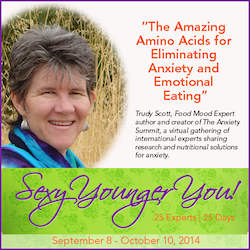
Trudy Scott, Food Mood Expert, nutritionist and author of The Antianxiety Food Solution, on “The Amazing Amino Acids for Eliminating Anxiety and Emotional Eating. ” Low levels of brain chemicals or neurotransmitters such as GABA or serotonin could be another reason why depression and anxiety are more common as we age.

It’s all complimentary. Enjoy!

Filed Under: Events, Joy and happiness, Looking awesome Tagged With: sexy younger you

Benzodiazepines linked to increased Alzheimer’s risk and other serious concerns

September 12, 2014 By Trudy Scott 18 Comments

pill bottle

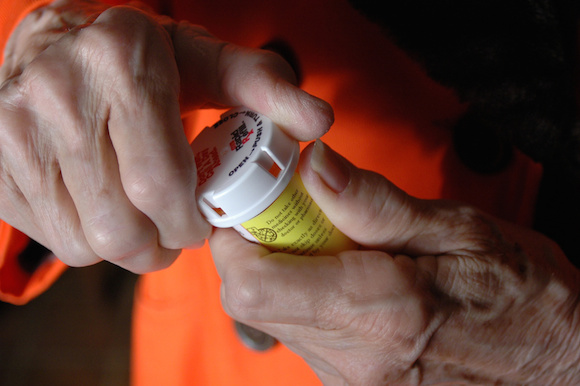
A new study published last week shows that benzodiazepines are linked to an increased Alzheimer’s disease risk. A useful synopsis was published on the Harvard Health Publications blog.

A team of researchers from France and Canada linked benzodiazepine use to an increased risk of being diagnosed with Alzheimer’s disease. In the study, the greater a person’s cumulative dose of benzodiazepines, the higher his or her risk of Alzheimer’s.

The type of drug taken also mattered. People who were on a long-acting benzodiazepine like diazepam (Valium) and flurazepam (Dalmane) were at greater risk than those on a short-acting one like triazolam (Halcion), lorazepam (Ativan), alprazolam (Xanax), and temazepam (Restoril).

You can read the full British Medical Journal study here.

The possible increased risk of Alzheimer’s disease is just part of the picture. There are a host of other very serious issues with this medication.

Jeremy C. Fox wrote a great article in the Boston Globe called “When withdrawal is the hardest part.”  It covers Alison Page’s struggle with recovering from difficulties associated with benzodiazepine withdrawal.

… Alison ” was experiencing withdrawal between doses of Ativan, a drug often prescribed for anxiety or insomnia. After taking a dose that night” Alison “felt fine — for the moment. But her struggle to recover continues more than two years later.

While rampant abuse of heroin and prescription opiates dominates public attention, dependency on benzodiazepines — a group of tranquilizers that includes drugs such as Ativan, Klonopin, and Xanax — remains less widely acknowledged or understood.

Doctors say benzodiazepines are effective for short-term stress, as in the days following the death of a loved one or another emotionally difficult event. But problems can arise when use continues for more than a few weeks.”

I don’t feel any benzodiazepine prescriptions should be written. There are much better ways to deal with anxiety – like addressing possible low GABA and tryptophan; addressing low zinc levels; addressing the gut and possible dysbiosis; quitting sugar and caffeine; figuring out if gluten is an issue; eating to control blood sugar; and eating quality food that includes grass-fed red meat, wild fish, healthy fats and organic produce.

Alison “was prescribed Ativan by a psychiatrist in 2009, she said, as she adjusted to working as a receptionist after graduating from Northeastern University. As a shy person, she found the front-and-center role a tough fit, she said.”

Many of my shy and introverted clients have pyroluria, a social anxiety condition. Addressing this with zinc, vitamin B6 and evening primrose oil solves the problem. Instead many people are prescribed benzos rather casually and end up like Alison, having to deal with all these horrible withdrawal effects from the benzos: increased anxiety, dizziness, terrible fears, less able to deal with stress, prone to getting sick and not sleeping for months.

Alison joined the BenzoBuddies.org support group and it was through this group that she learned what was happening to her. This is a great group that supports folks who are tapering off benzos.

I was fortunate to have interviewed Dr. Catherine Pittman on the Anxiety Summit in June – Benzodiazapines: Risks vs Benefits – and she shared the results of a survey she did with members of BenzoBuddies.org.

Here are a few facts and gems from our interview:

  • The United States has the highest rate of benzodiazepine prescription in the world
  • If the person is prescribed a benzodiazepine, short-term relief is obtained, but tolerance develops, and increasing dosages may be required
  • Physiological dependence on the benzodiazepines can occur within, four to six weeks [I am hearing it can be much shorter than four to six weeks]
  • If you have people who are on benzodiazepines, you may have to give them lists, because they may not remember as much as person who’s not on benzodiazepines [this relates directly to the new research mentioned above and cognitive decline]
  • Not all physicians or psychiatrists have the knowledge to help a person successfully withdraw.
  • Professor Malcolm Lader, who is from the Royal Maudsley Hospital (in the UK) stated: “It’s more difficult to withdraw people from benzodiazepines than it is from heroin.”
  • And one of the things that we heard from the BenzoBuddies community, “Please educate the treatment professional community. Please help them know. My doctor didn’t understand this. My psychiatrist didn’t understand what was going on. Try to do what you can to educate them.”

My goal with this blog post is to help with what the BenzoBuddies community is asking – educating the treatment professional community and you as well. If you’re not currently taking a prescription for benzodiazapines please think twice before doing so and please share this information with friends and family who may be considering getting on them.

I also encourage you to read the comments in the Benzodiazapines: Risks vs Benefits blog. Many Benzobuddies.org members shared very heartfelt stories of their battles with benzo withdrawal.  We appreciate them (and Alison) for being so open and vulnerable about what has happened to them. They are doing this to raise awareness.

If you do have a benzodiazepine prescription please don’t stop cold turkey and without first talking to your doctor, as well as learning about the taper protocols.  www.Benzo.org.uk is a great resource for Professor Ashton’s taper protocols and other valuable benzo information.  And do check out BenzoBuddies.org for a great support system.

Based on all the above side-effects and withdrawal symptoms and whether or not the above new study shows a causal link between benzodiazapines and Alzheimer’s disease, I would not recommend these drugs for anyone ever! 

Filed Under: benzodiazapines Tagged With: alzheimer's, Dr. Catherine Pittman

  • « Go to Previous Page
  • Page 1
  • Interim pages omitted …
  • Page 127
  • Page 128
  • Page 129
  • Page 130
  • Page 131
  • Interim pages omitted …
  • Page 159
  • Go to Next Page »

Primary Sidebar

NEW! GABA QuickStart Homestudy (with special intro pricing)

gaba quickstart homestudy

Free Report

9 Great Questions Women Ask about Food, Mood and their Health

You'll also receive a complimentary subscription to my ezine "Food, Mood and Gal Stuff"


Connect with me

Popular Posts

  • Amino Acids Mood Questionnaire from The Antianxiety Food Solution
  • The Antianxiety Food Solution Amino Acid and Pyroluria Supplements
  • Pyroluria Questionnaire from The Antianxiety Food Solution
  • Collagen and gelatin lower serotonin: does this increase your anxiety and depression?
  • Tryptophan for the worry-in-your-head and ruminating type of anxiety
  • GABA for the physical-tension and stiff-and-tense-muscles type of anxiety
  • The Antianxiety Food Solution by Trudy Scott
  • Seriphos Original Formula is back: the best product for anxiety and insomnia caused by high cortisol
  • Am I an anxious introvert because of low zinc and vitamin B6? My response to Huffington Post blog
  • Vagus nerve rehab with GABA, breathing, humming, gargling and key nutrients

Recent Posts

  • What do I use instead of Seriphos to help lower high cortisol that is affecting my sleep and making me anxious at night?
  • BeSerene™ GABA/theanine cream eases severe muscle tension in her neck/shoulders, prevents her bad headaches and quells her anxiety
  • How the correct approach, dose and sublingual use of GABA can be calming and not cause a flushed and itchy face and neck
  • The amino acid glutamine improves low mood by addressing gut health, and it has calming effects too
  • Flight anxiety with heightened breath, physical tension and also fearing the worst (the role of low GABA and low serotonin)

Categories

  • 5-HTP
  • AB575
  • Addiction
  • ADHD
  • Adrenals
  • Alcohol
  • Allergies
  • Alzheimer's disease
  • Amino Acids
  • Anger
  • Antianxiety
  • Antianxiety Food Solution
  • Antidepressants
  • Anxiety
  • Anxiety and panic
  • Autism
  • Autoimmunity
  • benzodiazapines
  • Bipolar disorder
  • Books
  • Caffeine
  • Cancer
  • Candida
  • Children/Teens
  • Collagen
  • Cooking equipment
  • Coronavirus/COVID-19
  • Cravings
  • Depression
  • Detoxification
  • Diabetes
  • Diet
  • DPA/DLPA
  • Drugs
  • EFT/Tapping
  • EMF
  • EMFs
  • Emotional Eating
  • Endorphins
  • Environment
  • Essential oils
  • Events
  • Exercise
  • Fear
  • Fear of public speaking
  • Fertility and Pregnancy
  • Fish
  • Food
  • Food and mood
  • Functional neurology
  • GABA
  • Gene polymorphisms
  • General Health
  • Giving
  • Giving back
  • Glutamine
  • Gluten
  • GMOs
  • Gratitude
  • Gut health
  • Heart health/hypertension
  • Histamine
  • Hormone
  • Hyperparathyroidism
  • Hypoglycemia
  • Immune system
  • Inflammation
  • Insomnia
  • Inspiration
  • Introversion
  • Joy and happiness
  • Ketogenic diet
  • Lithium orotate
  • Looking awesome
  • Lyme disease and co-infections
  • MCAS/histamine
  • Medication
  • Men's health
  • Mental health
  • Mercury
  • Migraine
  • Mold
  • Movie
  • MTHFR
  • Multiple sclerosis
  • Music
  • NANP
  • Nature
  • Nutritional Psychiatry
  • OCD
  • Osteoporosis
  • Oxalates
  • Oxytocin
  • Pain
  • Paleo
  • Parasites
  • Parkinson’s disease
  • PCOS
  • People
  • PMS
  • Postpartum
  • PTSD/Trauma
  • Pyroluria
  • Questionnaires
  • Real whole food
  • Recipes
  • Research
  • Schizophrenia
  • serotonin
  • SIBO
  • Sleep
  • Special diets
  • Sports nutrition
  • Stress
  • Sugar addiction
  • Sugar and mood
  • Supplements
  • Teens
  • Testimonials
  • Testing
  • The Anxiety Summit
  • The Anxiety Summit 2
  • The Anxiety Summit 3
  • The Anxiety Summit 4
  • The Anxiety Summit 5
  • The Anxiety Summit 6
  • Thyroid
  • Thyroid health
  • Toxins
  • Tryptophan
  • Tyrosine
  • Uncategorized
  • Vegan/vegetarian
  • Women's health
  • Yoga

Archives

  • October 2025
  • September 2025
  • August 2025
  • July 2025
  • June 2025
  • May 2025
  • April 2025
  • March 2025
  • February 2025
  • January 2025
  • November 2024
  • October 2024
  • September 2024
  • August 2024
  • July 2024
  • June 2024
  • May 2024
  • April 2024
  • March 2024
  • February 2024
  • January 2024
  • December 2023
  • November 2023
  • October 2023
  • September 2023
  • August 2023
  • July 2023
  • June 2023
  • May 2023
  • April 2023
  • March 2023
  • February 2023
  • January 2023
  • December 2022
  • November 2022
  • October 2022
  • September 2022
  • August 2022
  • July 2022
  • June 2022
  • May 2022
  • April 2022
  • March 2022
  • February 2022
  • January 2022
  • December 2021
  • November 2021
  • October 2021
  • September 2021
  • August 2021
  • July 2021
  • June 2021
  • May 2021
  • April 2021
  • March 2021
  • February 2021
  • January 2021
  • December 2020
  • November 2020
  • October 2020
  • September 2020
  • August 2020
  • July 2020
  • June 2020
  • May 2020
  • April 2020
  • March 2020
  • February 2020
  • January 2020
  • December 2019
  • November 2019
  • October 2019
  • September 2019
  • August 2019
  • July 2019
  • June 2019
  • May 2019
  • April 2019
  • March 2019
  • February 2019
  • January 2019
  • December 2018
  • November 2018
  • October 2018
  • September 2018
  • August 2018
  • July 2018
  • June 2018
  • May 2018
  • April 2018
  • March 2018
  • February 2018
  • January 2018
  • December 2017
  • November 2017
  • October 2017
  • September 2017
  • August 2017
  • July 2017
  • June 2017
  • May 2017
  • April 2017
  • March 2017
  • February 2017
  • January 2017
  • December 2016
  • November 2016
  • October 2016
  • September 2016
  • August 2016
  • July 2016
  • June 2016
  • May 2016
  • April 2016
  • March 2016
  • February 2016
  • January 2016
  • December 2015
  • November 2015
  • October 2015
  • September 2015
  • August 2015
  • July 2015
  • June 2015
  • May 2015
  • April 2015
  • March 2015
  • February 2015
  • January 2015
  • December 2014
  • November 2014
  • October 2014
  • September 2014
  • August 2014
  • July 2014
  • June 2014
  • May 2014
  • April 2014
  • March 2014
  • February 2014
  • January 2014
  • December 2013
  • November 2013
  • October 2013
  • September 2013
  • August 2013
  • July 2013
  • June 2013
  • May 2013
  • April 2013
  • March 2013
  • February 2013
  • January 2013
  • December 2012
  • November 2012
  • October 2012
  • August 2012
  • July 2012
  • June 2012
  • May 2012
  • April 2012
  • March 2012
  • February 2012
  • January 2012
  • December 2011
  • November 2011
  • October 2011
  • September 2011
  • August 2011
  • July 2011
  • June 2011
  • May 2011
  • April 2011
  • March 2011
  • February 2011
  • January 2011
  • December 2010
  • October 2010
  • September 2010
  • July 2010
  • May 2010
  • April 2010
  • March 2010
  • February 2010
  • January 2010
  • November 2009

Share the knowledge!

The above statements have not been evaluated by the Food and Drug Administration. Products listed in this website are not intended to diagnose, treat, cure or prevent any disease.

The information provided on this site is for informational and educational purposes only and is not intended as a substitute for advice from your physician or other health care professional. You should consult with a healthcare professional before starting or modifying any diet, exercise, or supplementation program, before taking or stopping any medication, or if you have or suspect you may have a health problem.


Copyright © 2026 Trudy Scott. All Rights Reserved. | Privacy | Terms and Conditions | Refund Policy | Medical Disclaimer

Free Report

9 Great Questions Women Ask about Food, Mood and their Health

You’ll also receive a complimentary subscription to my ezine “Food, Mood and Gal Stuff”