• Skip to primary navigation
  • Skip to main content
  • Skip to primary sidebar

everywomanover29 blog

Food, Mood and Women's Health – Be your healthiest, look and feel great!

  • Blog
  • About
  • Services
  • Store
  • Resources
  • Testimonials
  • The Book
  • Contact
  • Search this site

World Benzodiazepine Awareness Day

World Benzodiazepine Awareness Day 2017: Awareness and Anxiety Nutrition Solutions

July 14, 2017 By Trudy Scott 14 Comments

World Benzodiazepine Awareness Day 2017 was celebrated earlier this week on July 11th. The organization recommends that everyone should watch and share this short informative video: The risks of taking benzodiazepines (Klonopin, Xanax, Ativan) as prescribed. It could save your life or the life of someone you know.

This is what W-BAD shares about benzodiazepines and Z-drugs that are used as prescribed:

Benzodiazepines (Xanax, Klonopin, Ativan, Valium, Librium, and others) as well as Z-drugs (Ambien, Lunesta and others), which are similar, have the most debilitating withdrawal reactions in all of medicine.

This happens in regular, everyday people who are taking the medications exactly as their doctor prescribed. It also happens to people on what they think are “low doses” and is not just a “high dose” problem. This happens because the prescribing guidelines for this class of drug recommend short-term use only (less than 2-4 weeks), yet doctors are prescribing them for much longer. Even worse, these unsuspecting patients are given no warning (or informed consent) by their doctor about these risks and dangers before taking the prescription past the recommended timeline. The patients think the drugs are “safe” because they are prescribed when they are actually quite dangerous medications that are capable of inflicting sometimes severe and life-threatening withdrawal syndromes which are known, for some people, to persist for many years.

W-BAD shares these stats about how common it is to see physical dependence, adverse effects, and withdrawal:

Experts and studies estimate that as many as 60% of people taking benzodiazepines for more than the recommended 2-4 week time period will develop physical dependence, adverse effects, and withdrawal

60% is actually a conservative percentage, as some other sources indicate that “50-80% of people regularly taking benzodiazepines (even in ‘low dose’) for longer than a few months will develop a physical tolerance to the drug and become dependent, resulting in difficulty stopping benzodiazepines because of withdrawal symptoms”.

30% of long-term users will experience severe withdrawal or adverse effects which may include seizures, hallucinations, psychosis, akathisia, and sometimes suicide or death (people are especially at risk for severe withdrawal if they over-rapidly taper or cold-turkey their benzodiazepine/Z-drug).

The tapers to discontinue these medications, once you’ve taken them past 2-4 weeks and depending on dose, can last many months or years. I see this all the time in my practice.

About 10-15% of people who withdraw will develop a protracted withdrawal syndrome which can potentially persist for many years (there are anecdotal reports of it persisting up to five, seven, and even ten years post-cessation.). Others, even after a slow, gradual reduction of the benzodiazepine or Z-drug will experience withdrawal that lasts for up to 18 months post-cessation.

Physical dependence is a physical condition, a state of adaptation in the body caused by chronic use of a tolerance forming drug, in which abrupt or gradual drug withdrawal causes withdrawal.

When someone becomes physically dependent to benzodiazepines (or Z-drugs), they are also at risk for developing tolerance. With benzodiazepines/Z-drugs, specifically, when the receptors in the brain become adapted or accustomed to the action of the original dose of BZ, more of the drug is needed in order for the desired therapeutic effect (or the original effect at the original dose) to be achieved. This means that the drug loses its effectiveness and the person taking it can begin to experience withdrawal symptoms while still taking the prescribed dose of the drug.

It’s very unfortunate that some of the very same symptoms that are trying to be addressed by these medications are now amplified or seen for the first time:

Some common symptoms of tolerance include increasing anxiety, panic attacks, development of agoraphobia for the first time, interdose withdrawal (withdrawal symptoms emerging in between doses), as well as a plethora of other physical/neurological/psychological symptoms.

Visit the website World Benzodiazepine Awareness Day to learn more and to get involved:

By spreading the word about taken-as-prescribed benzodiazepine risks, harms, and dangers, W-BAD (World Benzodiazepine Awareness Day) hopes to bring awareness to the general public and the medical community about this problem before more people are needlessly harmed. Please help share this video with everyone you know and, together, we can prevent more victims of iatrogenic (caused by medicine) dependence, withdrawal, and injury from prescribed benzodiazepines and Z-drugs.

There are some heartbreaking stories on the Facebook page (an excellent resource) :

  • W-BAD volunteer Jan Elle bravely shares some details of her cold-turkey benzo withdrawal in this video as she recovers from the Protracted Withdrawal Syndrome
  • Jennifer Fritzler-Krueger was struggling really badly through withdrawal and major brain fog but shared her story via video anyway
W-BAD acknowledges Professor Malcolm H. Lader for guiding them in providing information that appears throughout the website and in handout materials. Prof. Lader first described benzodiazepine withdrawal syndrome as a potential brain injury in the scientific literature, and also campaigned around the world to get everyone from politicians to royalty to listen.

Here is some guidance with slow tapering protocols from W-BAD (and never stop cold-turkey).

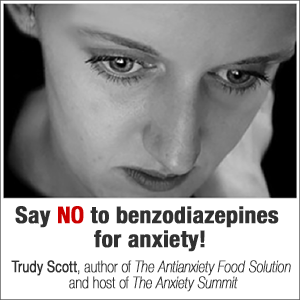
For additional resources this is the blog post I published last year: World Benzodiazepine Awareness Day – say NO to Benzodiazepines for anxiety!

Awareness and nutrition solutions

I do love that this awareness is being created. It is so needed for those who are prescribed these medications and currently taking them, for anyone who may consider a future prescription, and for everyone in the medical profession, as well as all integrative and functional medicine practitioners and nutritionists.

All this awareness creates the perfect opportunity to offers nutrition solutions too, so we can address:

  • the initial root cause/s of your anxiety which led to your prescription of this medication to start with
  • the anxiety you now experience even through you were prescribed these medications for something else (such as pain)
  • your current biochemistry and nutritional status to facilitate an easier taper from the benzodiazepine with the least withdrawal effects
  • your current biochemistry and nutritional status so you don’t get anxiety in the future, once you have completed the taper

And if you are considering a benzodiazepine prescription in the future you are now informed about the dangers and have nutritional resources too.

When I am working with someone who has been prescribed a benzodiazepine, I get them nutritionally stable BEFORE they even consider a benzodiazepine taper.

I use amino acids like GABA and tryptophan, melatonin and niacinamide to make the taper easier and so we can balance brain chemistry before tapering and then during the taper (all under the supervision of the prescribing doctor and using the Ashton taper protocol).

Dr. Jonathan Prousky, talks about his success with benzodiazepine tapers on a prior Anxiety Summit interview – using melatonin, niacinamide, Neurapas Balance, rhodiola and GABA.

There is also a big focus on diet (real food/often a Paleo diet, no additives, organic, healthy fats, no gluten, no sugar, no caffeine, quality grass-fed/wild protein), addressing high cortisol if needed, addressing low zinc, low iron, low vitamin B6, low B12 and looking at gut health. Lifestyle and stress reduction is important and we look at and address all possible 60+ underlying factors/causes.

This is all covered in detail in my book “The Antianxiety Food Solution” (on amazon here) The basics plus advanced topics (like fluoroquinolone antibiotic issues when on benzodiazepines and more) are also addressed on the Anxiety Summits.

I feel very strongly about providing this nutritional support and sharing how helpful it is because organizations like W-BAD and Benzobuddies.org (as much as love them) advocate for no nutrient support suggesting it won’t help or could make symptoms worse. I will admit that some people who are tapering are very sensitive and in these situations very very tiny amounts (as small as a pinch in some instances) of some of the nutrients may be a better option, always only doing one thing at a time to make sure it’s helping and not making symptoms worse, and doing functional medicine tests. Using essential oils, light therapy, gentle detox, Heartmath and yoga are wonderful to start with, in conjunction with all the diet changes.

Please share your benzodiazepine story and what has helped you taper more easily and recover.

If you’re a practitioner please share what approaches you have used to help your clients or patients taper more easily.

Filed Under: benzodiazapines Tagged With: anxiety, benzodiazepine, diet, GABA, melatonin, nutrition solutions, World Benzodiazepine Awareness Day

World Benzodiazepine Awareness Day – say NO to Benzodiazepines for anxiety!

July 11, 2016 By Trudy Scott 17 Comments

world benzo awareness day july 11 2016

Today, July 11th, is  World Benzodiazepine Awareness Day

This date was designated in recognition of Prof. Heather Ashton’s significant contributions to the benzodiazepine cause over so many decades; together with all of the help she has given to so many people around the world.

In honor of World Benzodiazepine Awareness Day, also called W-BAD I’ve decided to re-release a webinar I did last year: Say NO to Benzodiazepines for anxiety  [CLICK THIS LINK TO FIND THE WEBINAR]

say no-to-benzo

Here is an excerpt of the overview from: Say NO to benzodiazepines for anxiety! 

Benzodiazepines are a class of psychoactive drugs that work by enhancing the effect of the calming neurotransmitter GABA, and are used to treat anxiety, insomnia, pain, muscle spasms and a range of other conditions. They are widely prescribed, particularly among elderly patients and may even be used off-label with children with autism.

Use of this medication is very controversial.  We know long term use leads to tolerance, dependence, and many adverse psychological effects and even physical effects. Short term use is generally considered safe but even using them for 2 – 4 weeks can lead to problems for certain individuals.

This presentation provides an overview of benzodiazepines; when they are used; who they are prescribed to; details about tolerance, dependence, and the many adverse effects; how to taper, including nutritional support during the taper; what to do instead of saying yes to a benzodiazepine prescription in the first place; and additional resources.

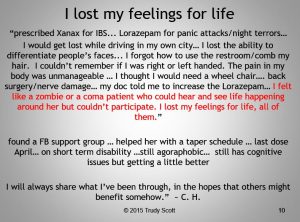
Here is one of the benzo stories I share in the webinar:

world benzo awareness day story


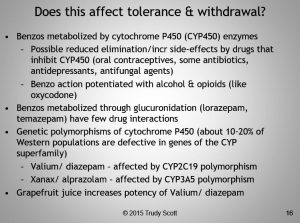
We know that some individuals are much more affected than others when it comes to tolerance and withdrawal.  Here are some other possible factors that may affect tolerance and withdrawal:

world benzo awareness day liver enzymes

During season 4 of the Anxiety Summit, Lisa Bloomquist talked about Antibiotic Induced Anxiety – How Fluoroquinolone Antibiotics Induce Psychiatric Illness Symptoms.   During this interview she shared how:

People who have gone through benzodiazepine withdrawal before should never take a fluoroquinolone because essentially it can throw people right back into the benzo withdrawal – because it has very similar effects on people’s GABA’s receptors as what happens when people go through benzodiazepine withdrawal. 

I would love to see a survey of people who have experienced adverse effects when using benzodiazepines as prescribed or when tapering. Could these be some of the contributing factors?

  • Taking Valium/ diazepam and have the CYP2C19 polymorphism (about 10-20% of Western populations are defective in genes of the CYP liver enzyme superfamily)
  • Taking Xanax/ alprazolam and have CYP3A5 polymorphism (about 10-20% of Western populations are defective in genes of the CYP liver enzyme superfamily)
  • Taking any benzodiazepine and also
    • Taking oral contraceptives
    • Taking a course of antibiotics
    • Taking a course of one of the fluoroquinolone antibiotics
    • On an SSRI prescription
    • Taking a course of antifungal medications
    • Drinking alcohol on a regular basis
    • On an opioid such as oxycodone
    • Drinking grapefruit juice on a regular basis

For withdrawal/tapering, the best resource I know of is Benzo.org.uk which contains the Ashton Manual. You will need to educate yourself and your doctor and/or find a doctor willing to help you with the adjusted prescription. It does need to be done very very very slowly.

Finding a good support group like Benzobuddies.org  is very helpful for many of my clients. Just be aware that this group and some of the other support groups say no to any supplements during the taper process. I find it to be very individualized and have many clients that see great benefit by using GABA, tryptophan, zinc, magnesium and other nutrients. (You can read more about this here: Anxiety and the amino acids overview)

That being said some people tapering can only tolerate very low amounts of the amino acids (like a dab or pinch from a capsule) and some can’t tolerate any supplements and do better with essential oils, yoga, light therapy and dietary changes.

You can find more information on World Benzodiazepine Awareness Day on Benzo Case: Raising Awareness about Benzodiazepine Drugs  (widely prescribed for anxiety, stress, sleep, pain and much more…) and additional stories on the World Benzo Awareness facebook page.

World Benzodiazepine Awareness Day was conceived by the acting Chair Barry Halsam, former Chair of Oldham TRANX, and jointly organized by Wayne Douglas, founder of benzo.case.com / benzo-case-japan.com

Please read share so your loved ones are informed and can say NO to benzos!  

If you have experienced adverse effects when taking or tapering from benzodiazepines I’d love some feedback on the above possible contributing factors.


Filed Under: Anxiety and panic, benzodiazapines, GABA, Gene polymorphisms Tagged With: benzodiazepine, benzodiazepines, CYP enzymes, fluoroquinolone antibiotics, GABA, Heather Ashton, Valium, World Benzodiazepine Awareness Day, Xanax

Primary Sidebar

NEW! GABA QuickStart Homestudy (with special intro pricing)

gaba quickstart homestudy

Free Report

9 Great Questions Women Ask about Food, Mood and their Health

You'll also receive a complimentary subscription to my ezine "Food, Mood and Gal Stuff"


Connect with me

Popular Posts

  • Amino Acids Mood Questionnaire from The Antianxiety Food Solution
  • The Antianxiety Food Solution Amino Acid and Pyroluria Supplements
  • Pyroluria Questionnaire from The Antianxiety Food Solution
  • Collagen and gelatin lower serotonin: does this increase your anxiety and depression?
  • Tryptophan for the worry-in-your-head and ruminating type of anxiety
  • GABA for the physical-tension and stiff-and-tense-muscles type of anxiety
  • The Antianxiety Food Solution by Trudy Scott
  • Seriphos Original Formula is back: the best product for anxiety and insomnia caused by high cortisol
  • Am I an anxious introvert because of low zinc and vitamin B6? My response to Huffington Post blog
  • Vagus nerve rehab with GABA, breathing, humming, gargling and key nutrients

Recent Posts

  • What do I use instead of Seriphos to help lower high cortisol that is affecting my sleep and making me anxious at night?
  • BeSerene™ GABA/theanine cream eases severe muscle tension in her neck/shoulders, prevents her bad headaches and quells her anxiety
  • How the correct approach, dose and sublingual use of GABA can be calming and not cause a flushed and itchy face and neck
  • The amino acid glutamine improves low mood by addressing gut health, and it has calming effects too
  • Flight anxiety with heightened breath, physical tension and also fearing the worst (the role of low GABA and low serotonin)

Categories

  • 5-HTP
  • AB575
  • Addiction
  • ADHD
  • Adrenals
  • Alcohol
  • Allergies
  • Alzheimer's disease
  • Amino Acids
  • Anger
  • Antianxiety
  • Antianxiety Food Solution
  • Antidepressants
  • Anxiety
  • Anxiety and panic
  • Autism
  • Autoimmunity
  • benzodiazapines
  • Bipolar disorder
  • Books
  • Caffeine
  • Cancer
  • Candida
  • Children/Teens
  • Collagen
  • Cooking equipment
  • Coronavirus/COVID-19
  • Cravings
  • Depression
  • Detoxification
  • Diabetes
  • Diet
  • DPA/DLPA
  • Drugs
  • EFT/Tapping
  • EMF
  • EMFs
  • Emotional Eating
  • Endorphins
  • Environment
  • Essential oils
  • Events
  • Exercise
  • Fear
  • Fear of public speaking
  • Fertility and Pregnancy
  • Fish
  • Food
  • Food and mood
  • Functional neurology
  • GABA
  • Gene polymorphisms
  • General Health
  • Giving
  • Giving back
  • Glutamine
  • Gluten
  • GMOs
  • Gratitude
  • Gut health
  • Heart health/hypertension
  • Histamine
  • Hormone
  • Hyperparathyroidism
  • Hypoglycemia
  • Immune system
  • Inflammation
  • Insomnia
  • Inspiration
  • Introversion
  • Joy and happiness
  • Ketogenic diet
  • Lithium orotate
  • Looking awesome
  • Lyme disease and co-infections
  • MCAS/histamine
  • Medication
  • Men's health
  • Mental health
  • Mercury
  • Migraine
  • Mold
  • Movie
  • MTHFR
  • Multiple sclerosis
  • Music
  • NANP
  • Nature
  • Nutritional Psychiatry
  • OCD
  • Osteoporosis
  • Oxalates
  • Oxytocin
  • Pain
  • Paleo
  • Parasites
  • Parkinson’s disease
  • PCOS
  • People
  • PMS
  • Postpartum
  • PTSD/Trauma
  • Pyroluria
  • Questionnaires
  • Real whole food
  • Recipes
  • Research
  • Schizophrenia
  • serotonin
  • SIBO
  • Sleep
  • Special diets
  • Sports nutrition
  • Stress
  • Sugar addiction
  • Sugar and mood
  • Supplements
  • Teens
  • Testimonials
  • Testing
  • The Anxiety Summit
  • The Anxiety Summit 2
  • The Anxiety Summit 3
  • The Anxiety Summit 4
  • The Anxiety Summit 5
  • The Anxiety Summit 6
  • Thyroid
  • Thyroid health
  • Toxins
  • Tryptophan
  • Tyrosine
  • Uncategorized
  • Vegan/vegetarian
  • Women's health
  • Yoga

Archives

  • October 2025
  • September 2025
  • August 2025
  • July 2025
  • June 2025
  • May 2025
  • April 2025
  • March 2025
  • February 2025
  • January 2025
  • November 2024
  • October 2024
  • September 2024
  • August 2024
  • July 2024
  • June 2024
  • May 2024
  • April 2024
  • March 2024
  • February 2024
  • January 2024
  • December 2023
  • November 2023
  • October 2023
  • September 2023
  • August 2023
  • July 2023
  • June 2023
  • May 2023
  • April 2023
  • March 2023
  • February 2023
  • January 2023
  • December 2022
  • November 2022
  • October 2022
  • September 2022
  • August 2022
  • July 2022
  • June 2022
  • May 2022
  • April 2022
  • March 2022
  • February 2022
  • January 2022
  • December 2021
  • November 2021
  • October 2021
  • September 2021
  • August 2021
  • July 2021
  • June 2021
  • May 2021
  • April 2021
  • March 2021
  • February 2021
  • January 2021
  • December 2020
  • November 2020
  • October 2020
  • September 2020
  • August 2020
  • July 2020
  • June 2020
  • May 2020
  • April 2020
  • March 2020
  • February 2020
  • January 2020
  • December 2019
  • November 2019
  • October 2019
  • September 2019
  • August 2019
  • July 2019
  • June 2019
  • May 2019
  • April 2019
  • March 2019
  • February 2019
  • January 2019
  • December 2018
  • November 2018
  • October 2018
  • September 2018
  • August 2018
  • July 2018
  • June 2018
  • May 2018
  • April 2018
  • March 2018
  • February 2018
  • January 2018
  • December 2017
  • November 2017
  • October 2017
  • September 2017
  • August 2017
  • July 2017
  • June 2017
  • May 2017
  • April 2017
  • March 2017
  • February 2017
  • January 2017
  • December 2016
  • November 2016
  • October 2016
  • September 2016
  • August 2016
  • July 2016
  • June 2016
  • May 2016
  • April 2016
  • March 2016
  • February 2016
  • January 2016
  • December 2015
  • November 2015
  • October 2015
  • September 2015
  • August 2015
  • July 2015
  • June 2015
  • May 2015
  • April 2015
  • March 2015
  • February 2015
  • January 2015
  • December 2014
  • November 2014
  • October 2014
  • September 2014
  • August 2014
  • July 2014
  • June 2014
  • May 2014
  • April 2014
  • March 2014
  • February 2014
  • January 2014
  • December 2013
  • November 2013
  • October 2013
  • September 2013
  • August 2013
  • July 2013
  • June 2013
  • May 2013
  • April 2013
  • March 2013
  • February 2013
  • January 2013
  • December 2012
  • November 2012
  • October 2012
  • August 2012
  • July 2012
  • June 2012
  • May 2012
  • April 2012
  • March 2012
  • February 2012
  • January 2012
  • December 2011
  • November 2011
  • October 2011
  • September 2011
  • August 2011
  • July 2011
  • June 2011
  • May 2011
  • April 2011
  • March 2011
  • February 2011
  • January 2011
  • December 2010
  • October 2010
  • September 2010
  • July 2010
  • May 2010
  • April 2010
  • March 2010
  • February 2010
  • January 2010
  • November 2009

Share the knowledge!

The above statements have not been evaluated by the Food and Drug Administration. Products listed in this website are not intended to diagnose, treat, cure or prevent any disease.

The information provided on this site is for informational and educational purposes only and is not intended as a substitute for advice from your physician or other health care professional. You should consult with a healthcare professional before starting or modifying any diet, exercise, or supplementation program, before taking or stopping any medication, or if you have or suspect you may have a health problem.


Copyright © 2026 Trudy Scott. All Rights Reserved. | Privacy | Terms and Conditions | Refund Policy | Medical Disclaimer

Free Report

9 Great Questions Women Ask about Food, Mood and their Health

You’ll also receive a complimentary subscription to my ezine “Food, Mood and Gal Stuff”