• Skip to primary navigation
  • Skip to main content
  • Skip to primary sidebar

everywomanover29 blog

Food, Mood and Women's Health – Be your healthiest, look and feel great!

  • Blog
  • About
  • Services
  • Store
  • Resources
  • Testimonials
  • The Book
  • Contact
  • Search this site

Vitamin D council

Vitamin D: anxiety, depression, sun exposure, supplements and optimal levels

November 4, 2016 By Trudy Scott 36 Comments

vitamin-d
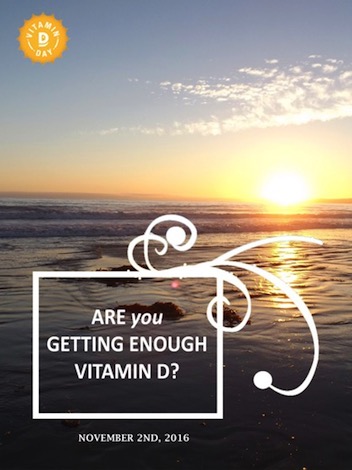
(image from Vitamin D Day website http://www.vitamindday.net/)

It was Vitamin D Day on November 2nd and it was a day to recognize vitamin D deficiency as a world problem. The day is led by the Vitamin D Society, Vitamin D Council and GrassrootsHealth, non-profit organizations dedicated to spread awareness on the vitamin D deficiency pandemic. According to the Vitamin D Day site:

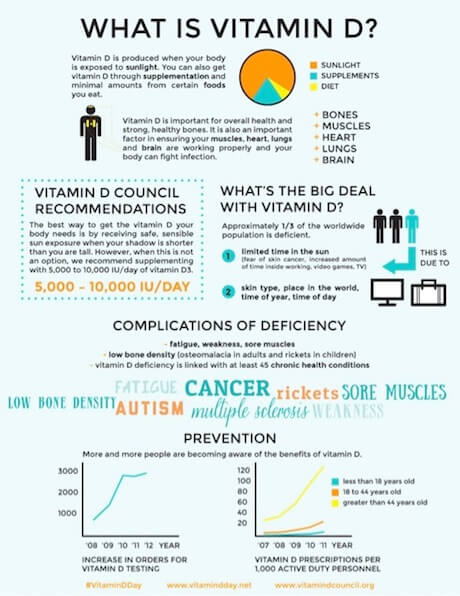
Researchers agree that at least one third of the world is deficient in vitamin D, and some scientists even think a greater percent of people are deficient in vitamin D.

Why are so many people deficient, you might ask? It’s simple really. We get vitamin D from sun exposure. And now, more than ever, the world’s population lives an indoor lifestyle, avoiding the sun daily.

Doctors are beginning to discover that vitamin D deficiency is a risk factor for many diseases, including heart disease and cancer.

Furthermore, they’re discovering that vitamin D deficiency may make some diseases more severe, like respiratory diseases and autoimmune diseases like multiple sclerosis and lupus. And they’re discovering that vitamin D can be an important piece in the treatment of some illnesses and diseases, including multiple sclerosis, cystic fibrosis, asthma and many other diseases!

Low vitamin D is also a factor when it comes to mental health. Even though this information is not listed on the Vitamin D day site, there is much research supporting the connection:

  • Low vitamin D is associated with negative and depressive symptoms in psychotic disorders

There is a strong association between low S-25(OH)D and higher negative and depressive symptoms in psychotic disorders.

  • Vitamin D levels and perinatal depressive symptoms in women at risk: a secondary analysis of the mothers, omega-3, and mental health study

In women at risk for depression, early pregnancy low vitamin D levels are associated with higher depressive symptom scores in early and late pregnancy.

  • The Association between Vitamin D and Health-Related Quality of Life in Korean Adults

Participants with higher serum vitamin D (serum 25-hydroxyvitamin D) levels were significantly less likely to report problems with depression and anxiety.

  • Association Between Serum Levels of Vitamin D and the Risk of Post-Stroke Anxiety

Serum vitamin D status is related to the occurrence of anxiety in post-stroke patients and may be an independent risk factor of [post-stroke anxiety] after 1 month.

Here are eight key factors to know about vitamin D for Vitamin D day:

  1. Vitamin D comes from sun exposure, not your diet.
  2. Scientists and doctors agree that at least a third of the world is deficient in vitamin D.
  3. If you don’t get frequent moderate sun exposure or take a vitamin D supplement, you’re likely deficient in vitamin D.
  4. Moderate midday sun exposure is the best for making vitamin D.
  5. You don’t need to burn to make vitamin D.
  6. Vitamin D supplements are a good option in the wintertime to get the vitamin D you need.

In the northern hemisphere, the sun starts focusing more on the southern hemisphere. The sun’s rays strike the northern hemisphere at a different angle, an angle that isn’t quite as intense as during the summer. In consequence, your body has a harder time making vitamin D in the winter compared to the summer. The further north you live, the more difficult it is to make vitamin D in the winter.

Remember you can always check to see if you’re making vitamin D by looking at your shadow. If it’s longer than you, you aren’t making much vitamin D. And in the winter, your shadow is often longer than you.

Have no fear that you can’t make vitamin D! Vitamin D supplements are a good option in the wintertime. Low-pressure sunbeds and UV light units are also options to help you make vitamin D during the winter.

  1. Vitamin D is important for many things, including your bones, heart, respiratory system, brain [and mental health], and likely cancer prevention.
  2. Consider getting tested for vitamin D, to see if you’re getting enough.

Vitamin D tests are pretty easy. You can ask your doctor to add it to your next routine blood panel, or you can order an in-home test online through the Vitamin D Council.
vitamin-d-1
(image from Vitamin D Day website http://www.vitamindday.net/)

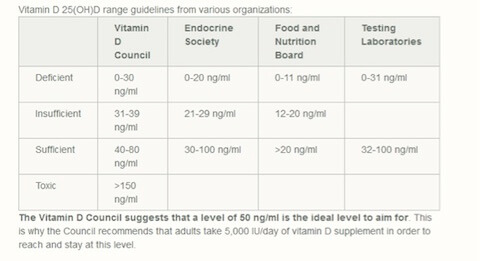
Here are the vitamin D range guidelines from various organizations and the recommendations from the Vitamin D council:
vitamin-d-2

This blog post by the Vitamin D Council helps you to interpret your results: I tested my vitamin D level. What do my results mean?

When you get your test results you will see a number in units of ng/ml, for example, 50 ng/ml. These are the units that health professionals in the United States use. Elsewhere in the world, vitamin D blood test results are given in units of nmol/l.

  • To convert a test result measured in ng/ml to one measured in nmol/l, multiply the ng/ml number by 2.5. For example, 20 ng/ml is the same as 50 nmol/l (20 x 2.5).
  • To convert a test result measured in nmol/l to one measured in ng/ml, divide the nmol/l number by 2.5. For example, 50 nmol/l is the same as 20 ng/ml (50÷2.5).

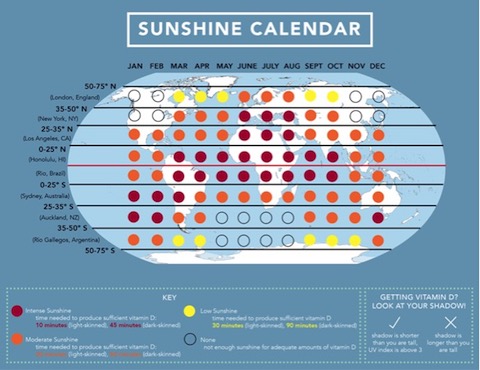
This great Sunshine Calendar shows the amount of time needed to produce sufficient vitamin D.
vitamin-d-3
(image from Vitamin D Day website http://www.vitamindday.net/)

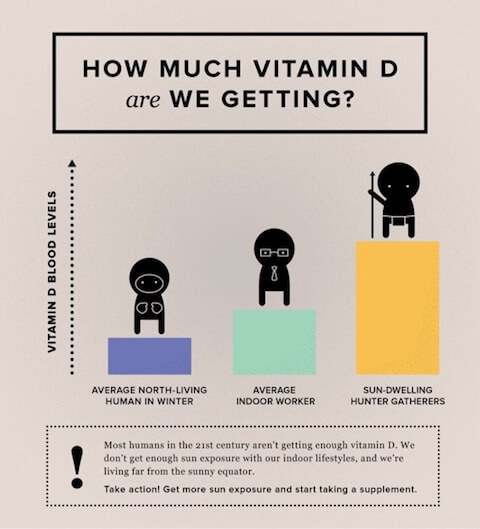
And this graphic shows why most of us aren’t getting enough vitamin D and why we need to supplement and get more sunshine exposure.
vitamin-d-4
(image from Vitamin D Day website http://www.vitamindday.net/)

To learn more about vitamin D, please visit Vitamin D Council, Vitamin D Society, GrassRootsHealth and the Vitamin D Day website.

Do you have your vitamin D levels tested at least once or twice a year? Are they in the 40-80ng/ml range?

And do you spend time in the sun and supplement?

Filed Under: Antianxiety Tagged With: anxiety, depression, Depressive symptoms, Negative, vitamin D, Vitamin D council, Vitamin D day

Primary Sidebar

NEW! GABA QuickStart Homestudy (with special intro pricing)

gaba quickstart homestudy

Free Report

9 Great Questions Women Ask about Food, Mood and their Health

You'll also receive a complimentary subscription to my ezine "Food, Mood and Gal Stuff"


Connect with me

Popular Posts

  • Amino Acids Mood Questionnaire from The Antianxiety Food Solution
  • The Antianxiety Food Solution Amino Acid and Pyroluria Supplements
  • Pyroluria Questionnaire from The Antianxiety Food Solution
  • Collagen and gelatin lower serotonin: does this increase your anxiety and depression?
  • Tryptophan for the worry-in-your-head and ruminating type of anxiety
  • GABA for the physical-tension and stiff-and-tense-muscles type of anxiety
  • The Antianxiety Food Solution by Trudy Scott
  • Seriphos Original Formula is back: the best product for anxiety and insomnia caused by high cortisol
  • Am I an anxious introvert because of low zinc and vitamin B6? My response to Huffington Post blog
  • Vagus nerve rehab with GABA, breathing, humming, gargling and key nutrients

Recent Posts

  • What do I use instead of Seriphos to help lower high cortisol that is affecting my sleep and making me anxious at night?
  • BeSerene™ GABA/theanine cream eases severe muscle tension in her neck/shoulders, prevents her bad headaches and quells her anxiety
  • How the correct approach, dose and sublingual use of GABA can be calming and not cause a flushed and itchy face and neck
  • The amino acid glutamine improves low mood by addressing gut health, and it has calming effects too
  • Flight anxiety with heightened breath, physical tension and also fearing the worst (the role of low GABA and low serotonin)

Categories

  • 5-HTP
  • AB575
  • Addiction
  • ADHD
  • Adrenals
  • Alcohol
  • Allergies
  • Alzheimer's disease
  • Amino Acids
  • Anger
  • Antianxiety
  • Antianxiety Food Solution
  • Antidepressants
  • Anxiety
  • Anxiety and panic
  • Autism
  • Autoimmunity
  • benzodiazapines
  • Bipolar disorder
  • Books
  • Caffeine
  • Cancer
  • Candida
  • Children/Teens
  • Collagen
  • Cooking equipment
  • Coronavirus/COVID-19
  • Cravings
  • Depression
  • Detoxification
  • Diabetes
  • Diet
  • DPA/DLPA
  • Drugs
  • EFT/Tapping
  • EMF
  • EMFs
  • Emotional Eating
  • Endorphins
  • Environment
  • Essential oils
  • Events
  • Exercise
  • Fear
  • Fear of public speaking
  • Fertility and Pregnancy
  • Fish
  • Food
  • Food and mood
  • Functional neurology
  • GABA
  • Gene polymorphisms
  • General Health
  • Giving
  • Giving back
  • Glutamine
  • Gluten
  • GMOs
  • Gratitude
  • Gut health
  • Heart health/hypertension
  • Histamine
  • Hormone
  • Hyperparathyroidism
  • Hypoglycemia
  • Immune system
  • Inflammation
  • Insomnia
  • Inspiration
  • Introversion
  • Joy and happiness
  • Ketogenic diet
  • Lithium orotate
  • Looking awesome
  • Lyme disease and co-infections
  • MCAS/histamine
  • Medication
  • Men's health
  • Mental health
  • Mercury
  • Migraine
  • Mold
  • Movie
  • MTHFR
  • Multiple sclerosis
  • Music
  • NANP
  • Nature
  • Nutritional Psychiatry
  • OCD
  • Osteoporosis
  • Oxalates
  • Oxytocin
  • Pain
  • Paleo
  • Parasites
  • Parkinson’s disease
  • PCOS
  • People
  • PMS
  • Postpartum
  • PTSD/Trauma
  • Pyroluria
  • Questionnaires
  • Real whole food
  • Recipes
  • Research
  • Schizophrenia
  • serotonin
  • SIBO
  • Sleep
  • Special diets
  • Sports nutrition
  • Stress
  • Sugar addiction
  • Sugar and mood
  • Supplements
  • Teens
  • Testimonials
  • Testing
  • The Anxiety Summit
  • The Anxiety Summit 2
  • The Anxiety Summit 3
  • The Anxiety Summit 4
  • The Anxiety Summit 5
  • The Anxiety Summit 6
  • Thyroid
  • Thyroid health
  • Toxins
  • Tryptophan
  • Tyrosine
  • Uncategorized
  • Vegan/vegetarian
  • Women's health
  • Yoga

Archives

  • October 2025
  • September 2025
  • August 2025
  • July 2025
  • June 2025
  • May 2025
  • April 2025
  • March 2025
  • February 2025
  • January 2025
  • November 2024
  • October 2024
  • September 2024
  • August 2024
  • July 2024
  • June 2024
  • May 2024
  • April 2024
  • March 2024
  • February 2024
  • January 2024
  • December 2023
  • November 2023
  • October 2023
  • September 2023
  • August 2023
  • July 2023
  • June 2023
  • May 2023
  • April 2023
  • March 2023
  • February 2023
  • January 2023
  • December 2022
  • November 2022
  • October 2022
  • September 2022
  • August 2022
  • July 2022
  • June 2022
  • May 2022
  • April 2022
  • March 2022
  • February 2022
  • January 2022
  • December 2021
  • November 2021
  • October 2021
  • September 2021
  • August 2021
  • July 2021
  • June 2021
  • May 2021
  • April 2021
  • March 2021
  • February 2021
  • January 2021
  • December 2020
  • November 2020
  • October 2020
  • September 2020
  • August 2020
  • July 2020
  • June 2020
  • May 2020
  • April 2020
  • March 2020
  • February 2020
  • January 2020
  • December 2019
  • November 2019
  • October 2019
  • September 2019
  • August 2019
  • July 2019
  • June 2019
  • May 2019
  • April 2019
  • March 2019
  • February 2019
  • January 2019
  • December 2018
  • November 2018
  • October 2018
  • September 2018
  • August 2018
  • July 2018
  • June 2018
  • May 2018
  • April 2018
  • March 2018
  • February 2018
  • January 2018
  • December 2017
  • November 2017
  • October 2017
  • September 2017
  • August 2017
  • July 2017
  • June 2017
  • May 2017
  • April 2017
  • March 2017
  • February 2017
  • January 2017
  • December 2016
  • November 2016
  • October 2016
  • September 2016
  • August 2016
  • July 2016
  • June 2016
  • May 2016
  • April 2016
  • March 2016
  • February 2016
  • January 2016
  • December 2015
  • November 2015
  • October 2015
  • September 2015
  • August 2015
  • July 2015
  • June 2015
  • May 2015
  • April 2015
  • March 2015
  • February 2015
  • January 2015
  • December 2014
  • November 2014
  • October 2014
  • September 2014
  • August 2014
  • July 2014
  • June 2014
  • May 2014
  • April 2014
  • March 2014
  • February 2014
  • January 2014
  • December 2013
  • November 2013
  • October 2013
  • September 2013
  • August 2013
  • July 2013
  • June 2013
  • May 2013
  • April 2013
  • March 2013
  • February 2013
  • January 2013
  • December 2012
  • November 2012
  • October 2012
  • August 2012
  • July 2012
  • June 2012
  • May 2012
  • April 2012
  • March 2012
  • February 2012
  • January 2012
  • December 2011
  • November 2011
  • October 2011
  • September 2011
  • August 2011
  • July 2011
  • June 2011
  • May 2011
  • April 2011
  • March 2011
  • February 2011
  • January 2011
  • December 2010
  • October 2010
  • September 2010
  • July 2010
  • May 2010
  • April 2010
  • March 2010
  • February 2010
  • January 2010
  • November 2009

Share the knowledge!

The above statements have not been evaluated by the Food and Drug Administration. Products listed in this website are not intended to diagnose, treat, cure or prevent any disease.

The information provided on this site is for informational and educational purposes only and is not intended as a substitute for advice from your physician or other health care professional. You should consult with a healthcare professional before starting or modifying any diet, exercise, or supplementation program, before taking or stopping any medication, or if you have or suspect you may have a health problem.


Copyright © 2026 Trudy Scott. All Rights Reserved. | Privacy | Terms and Conditions | Refund Policy | Medical Disclaimer

Free Report

9 Great Questions Women Ask about Food, Mood and their Health

You’ll also receive a complimentary subscription to my ezine “Food, Mood and Gal Stuff”