• Skip to primary navigation
  • Skip to main content
  • Skip to primary sidebar

everywomanover29 blog

Food, Mood and Women's Health – Be your healthiest, look and feel great!

  • Blog
  • About
  • Services
  • Store
  • Resources
  • Testimonials
  • The Book
  • Contact
  • Search this site

tape

Mouth-taping for improved sleep, the image of vertical taping that changed my mind and GABA and serotonin support if you still feel anxious

March 28, 2025 By Trudy Scott 19 Comments

mouth taping

I had been exploring mouth-breathing and using mouth-taping for my own personal use when I came across this paper, The Impact of Mouth-Taping in Mouth-Breathers with Mild Obstructive Sleep Apnea.  I had tried mouth-taping a few times but it felt uncomfortable to completely seal my mouth with the large piece of tape I was seeing various health practitioners recommend. And to be honest, it also felt a little scary too, even though I already use tryptophan and GABA for sleep and anxiety.

As soon as I saw the image of the man with a narrow strip of mouth-tape it gave me confidence to start mouth-taping again and I haven’t looked back! I don’t have mild obstructive sleep apnea and don’t snore but I was aware I was starting to mouth-breathe and sleep with a slightly open mouth because of waking with an incredibly dry mouth.

I do not go a single night without it and love the benefits of improved sleep and more energy the next day, and no more dry mouth during the night. I know it’s reducing future tooth decay too.

I share more about the paper, where I first learned about mouth-taping (and an image of sealing the mouth completely) and how GABA and tryptophan may help alleviate any fear and anxiety you may still have about taping your mouth closed at night.

The image that changed my mind and excerpts from the mouth-taping paper

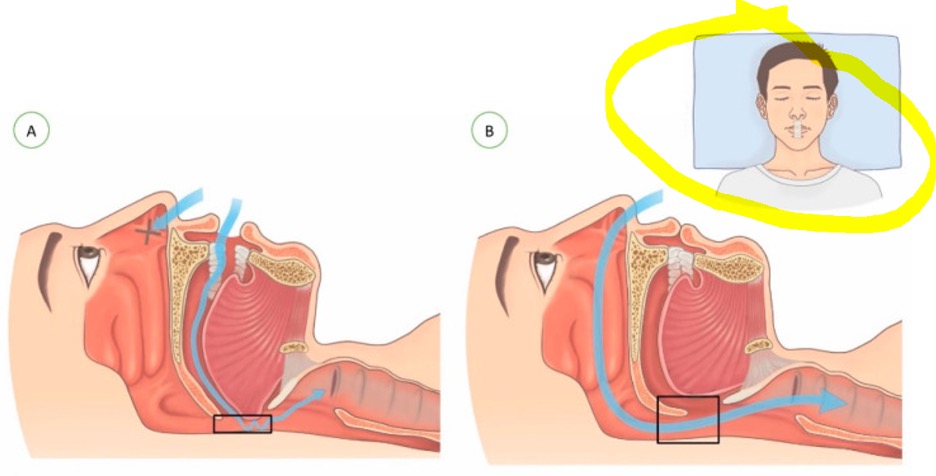
This is the image I’m referring to: the man on the top right with his mouth taped (as circled in yellow). You can see he has a narrow piece of tape, used vertically, instead of a wide piece of tape placed horizontally across his entire mouth/lips (I share an example of the latter below).
mouth taping
Figures demonstrating the breathing routes of (A) mouth-breathing and (B) nasal-breathing after mouth-taping. (from – The Impact of Mouth-Taping in Mouth-Breathers with Mild Obstructive Sleep Apnea: A Preliminary Study)

As you can see in the image above, there is a difference in “airflow during mouth-breathing vs. nasal-breathing” as indicated by the blue arrows.

Here is the study objective:

Many patients with obstructive sleep apnea (OSA) are mouth-breathers. Mouth-breathing not only narrows the upper airway, consequently worsening the severity of obstructive sleep apnea, but also it affects compliance with nasal continuous positive airway pressure (CPAP) treatment. This study aimed to investigate changes in obstructive sleep apnea by the use of mouth tape in mouth-breathers with mild obstructive sleep apnea.

And the conclusion:

Mouth-taping during sleep improved snoring and the severity of sleep apnea in mouth-breathers with mild obstructive sleep apnea, with AHI (apnea/hypopnea index)  and SI (snoring index) being reduced by about half. The higher the level of baseline AHI and SI, the greater the improvement was shown after mouth-taping.

Mouth-taping could be an alternative treatment in patients with mild obstructive sleep apnea before turning to CPAP therapy or surgical intervention.

The snoring index is the number of snoring events per hour. And according to the Cleveland Clinic, the AHI /apnea/hypopnea index “identifies how many times your breathing slows or stops during an hour of sleep. You might see an AHI after a sleep study or on a CPAP machine.

The apnea-hypopnea index (AHI) is the average number of times you stop breathing (apneas) and have shallow breathing events (hypopneas) per hour of sleep.

The American Academy of Sleep Medicine uses a range to categorize the severity of apnea and hypopnea events in adults:

  • Mild: Five to fewer than 15 events per hour
  • Moderate: 15 to fewer than 30 events per hour
  • Severe: 30 or more events per hour”

In the above mouth-taping study, both the apnea-hypopnea index (AHI) and snoring index were reduced by about half, which I find impressive.

They used 3M tape that was “easy to adhere, easy to remove, and non-allergenic.”

My first introduction to mouth-taping and an example of taping your entire mouth with horizontal tape

This interview and taping demo with Mike Mutzel and Mark Burhenne was my first introduction to mouth-taping. It’s a fascinating interview and the benefits are numerous – do read the highlights and watch the interview.

As you can see, Dr. Mark Burhenne tapes his entire mouth with horizontal tape. This approach did not work for me and I gave up after a few tries.

mouth taping

If you have considered taping in the past and were put off or afraid because of this approach of taping the entire mouth, I’m hoping my insights below about taping vertically and the above study will get you trying it again.

How I tape my mouth and what I use

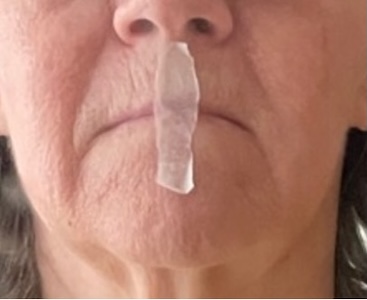
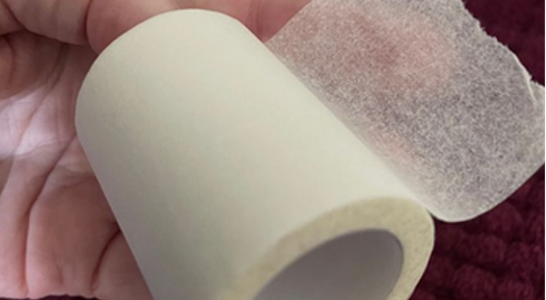
As mentioned above, I use a narrow strip of hypoallergenic paper tape that I simply tear off the roll each night. I sometimes use the same piece for a second night. I use lip ice/lip balm before taping as that prevents the tape from actually sticking to my lips. It feels more comfortable this way and still keeps my mouth closed. And it also allows me to cough and sneeze without feeling like I’ll lose skin on my lips. I can also sort of talk, although not very clearly, and it makes it easy to remove.

I do not go to bed without taping and it has added another element to improving my sleep. I do this together with the amino acids GABA, theanine and tryptophan, magnesium, Seriphos for high cortisol (when it’s high), eating low oxalates and calcium to counter the effects of oxalates, and avoiding EMFs).

If needed, I can slide a GABA Calm into my mouth without removing the tape. I will do this if I happen to need it due to waking in the middle of the night and not being able to get back to sleep.
If you are still fearful and anxious about trying this: serotonin and GABA support

If you are still fearful about taping your mouth closed at night, know you’re not alone! It felt a bit scary to me when I first started taping and I even yanked it off a few times during the night.

Trying it out in the daytime first definitely helps to get used to it. And it’s ok to test-drive taping for a few hours at night initially, and pulling it off later in the night.

Also, be sure to address low serotonin if you have low serotonin type of worry, ruminating, negative self-talk type of anxiety. With this type of anxiety, fears and phobias, and feelings of panic can be heightened. Personally, I use tryptophan and theanine for my low serotonin and also recommend this for clients and those in my group online programs. Keep in mind that some individuals do better with 5-HTP than tryptophan.

When you feel anxious, it’s common to have low GABA type of physical tension and anxiety. This may also make mouth-taping feel too overwhelming and give you feelings of panic. I’m a GABA girl myself and use GABA every night. I’m also getting some GABA support from the theanine I use. I know both are firm favorites with clients and group program members.

And, of course, an added bonus is that by addressing low serotonin and low GABA, we also address sleep issues which is a common sign of low levels of both these neurotransmitters.

Additional resources when you are new to using tryptophan, 5-HTP, GABA and other amino acids as supplements

As always, I use the symptoms questionnaire to figure out if low serotonin or low GABA or other neurotransmitter imbalances may be an issue.

If you suspect low levels of any of the neurotransmitters and do not yet have my book, The Antianxiety Food Solution – How the Foods You Eat Can Help You Calm Your Anxious Mind, Improve Your Mood, and End Cravings, I highly recommend getting it and reading it before jumping in and using amino acids on your own so you are knowledgeable. And be sure to share it with the practitioner/health team you or your loved one is working with.

There is an entire chapter on the amino acids and they are discussed throughout the book in the sections on gut health, gluten, blood sugar control (this is covered in an entire chapter too), sugar cravings, anxiety and mood issues.

The book doesn’t include product names (per the publisher’s request) so this blog, The Antianxiety Food Solution Amino Acid and Pyroluria Supplements, lists the amino acids that I use with my individual clients and those in my group programs.

If, after reading this blog and my book, you don’t feel comfortable figuring things out on your own (i.e. doing the symptoms questionnaire and respective amino acids trials), a good place to get help is the GABA QuickStart Program (if you have low GABA symptoms). This is a paid online/virtual group program where you get my guidance and community support, and is where this question was asked of me during one of the live Q&A calls.

If you are a practitioner, join us in The Balancing Neurotransmitters: the Fundamentals program. This is also a paid online/virtual program with an opportunity to interact with me and other practitioners who are also using the amino acids.

Wrapping up and your feedback

Have you used vertical mouth-taping and if yes how has it helped you? Or are you fine with horizontal taping and covering your entire mouth? I’d love to hear how you tape, what tape you use and if you also use lip balm/lip ice before taping.

And if you have words of wisdom for newbies who may need some encouragement feel free to share this too!

I am curious if you have also used GABA, theanine, tryptophan or 5-HTP for overcoming the fear of mouth-taping and continue to use one or more of these amino acids for sleep support too?

Feel free to share your feedback and ask your questions below in the comments section.
Filed Under: Anxiety, GABA, serotonin, Sleep Tagged With: 5-HTP, amino acid, anxiety, anxious, dry mouth, fear, fears, GABA, GABA Quickstart, Mild Obstructive Sleep Apnea, mouth-breathing, mouth-taping, neurotransmitter, overwhelm, physical-tension, scary, serotonin, sleep, Sleep apnea, snore, tape, taping, theanine, tryptophan, vertical

A case of enterobiasis presenting as post-traumatic-stress-disorder / PTSD (i.e. a common and parasitic pinworm infection)

February 3, 2023 By Trudy Scott 11 Comments

case of enterobiasis

Enterobiasis (oxyuriasis) is a common infection in humans caused by Enterobius vermicularis (E. vermicularis), a human intestinal helminth. Because of the easy way of its transmission among people, it has an extremely high prevalence in overcrowded conditions, such as nurseries and primary schools. Oxyuriasis’s symptoms are extremely diverse in children, ranging from nausea, diarrhea, insomnia, irritability, recurrent cellulitis, loss of appetite, nightmares and endometritis.

Here we report a curious case of oxyuriasis in the settings of a refugee camp in Greece. The patient was a 10-year old Syrian female, who presented with unusual and vague symptoms like insomnia and irritability. Given the violent background of the Syrian warzone that the patient had escaped, she was firstly diagnosed with post traumatic stress disorder (PTSD) before eventually getting correctly diagnosed with enterobiasis.

This infection is the first documented case of enterobiasis in the settings of a refugee camp and can highlight the unsanitary living conditions that refugees have to endure in those camps.

The above is the abstract from a 2017 paper: A case of enterobiasis presenting as post-traumatic-stress-disorder (PTSD): a curious case of the infection with predominant mental health symptoms, presenting for the first time in the settings of a refugee camp

In addition to her symptoms of insomnia and irritability, she had a decreased appetite and mild abdominal (tummy) pain. She was also experiencing nausea and vomiting and had a slightly raised body temperature (subfebrile). She was severely malnourished and had lost 3kg/6.6lbs in 5 days.

Because of the violent nature of her situation she was initially seen by a psychologist but her symptoms worsened in a few days. When this young girl complained about itching in the perianal area (around her anus), the clinic reassessed her and scars around the anal area from the scratches.

They then confirmed enterobiasis/pinworm after using a piece of clear adhesive tape “to collect a specimen from the perianal surface of the girl, for three consecutive mornings … A microscopic examination showed the presence of oval shaped eggs, which is typical for the specific helminth [parasitic worm].”

She was treated with “two doses of albendazole, with each dose two weeks apart, in order to avoid reinfection …. And after a 3 month follow-up period, the patient remains asymptomatic without any signs of recurrence.”

An overview of pinworm infections, symptoms, tape test and treatment approaches

This WebMD article offers an overview of pinworm infections, the symptoms, the tape test and treatment approaches.

As you’ll read it’s not only a problem in refugee camps – it’s “very common in elementary school-aged children” and it’s the most common kind of worm infection in the United States. “Most of the time, pinworm infections don’t cause serious problems.” However, when one child (or adult) gets a pinworm infection it can easily be spread to the entire family.  The Syrian refugee paper mentions the whole family was tested.

Systemic infection: female health issues and gut health

The WebMD authors also state, “in rare cases, and especially if you have a lot of them, the pinworms can travel from the anal area up the vagina to the uterus, fallopian tubes, and around the pelvic organs. This can cause inflammation of the vagina (vulvovaginitis).”

I first learned about these serious systemic issues in women from naturopathic doctor Rachel Arthur at a conference in Australia. Contrary to the WedMD article, she believes this is not rare and more common than you’d expect, contributing to hormonal imbalances and even infertility.

The research confirms the impacts of pinworm on the gut, with reports of pinworm associated with appendicitis, pinworm in the liver, pinworms contributing to dysbiosis and pinworm being a factor in inflammatory bowel disease.

The WebMD article doesn’t mention the mental health symptoms and mechanisms but you can read more about that (and my interview with Dr. Jay Davidson) below.

Annual deworming and concerns about drug resistance?

I’m not going to get into anti-parasitic medications and herbal alternatives in this blog post – Dr. Jay talks about mimosa pudica seeds and Dr. Rachel recommends chondroitin sulfate – but do I want to mention that there are many public policy papers calling for annual deworming procedures for everyone. It’s also mentioned in the above Syrian refugee paper, as is hand-washing for prevention.

And many folks recall annual deworming concoctions as a child and did/do the same with their children.

There is, however, the concern about antiparasitic drug resistance similar to what is being seen with antibiotics and antiviral drugs.

If you are new to parasites and their impacts on mood issues, anxiety and insomnia and more

If you are new to parasites, here are some insights from an interview I did with Dr. Jay Davidson on The Anxiety Summit 5: Gut Brain Axis. The topic of our interview is – Parasites, Anxiety and TUDCA for Your Liver. He shares this:

The Greek meaning of parasite is one that sits at another’s table. So essentially think of a parasite as it’s taking things from you. It’s taking nutrients, it’s taking key things that your body needs and literally off of you, not to the point that it’s killing you because then you’re not a good host to give a good environment. So it’s basically just kind of sucking you dry.

We discussed symptoms individuals may experience: mood issues, anxiety and insomnia (especially around full moon). He shared that with insomnia “the big issue that I see is restless sleep where you toss, you turn, you wake often. You can’t just be relaxed when you sleep. Parasites get active when you go to bed. The more active they are within your body and the more you’re trying to calm down, the more your body is getting stressed out. This is where teeth grinding happens when you sleep.

This is very typical and likely the kinds of insomnia symptoms this young refugee girl experienced too. Pinworm is more active at night so the itching around her anus and the need to scratch would have affected her sleep too. This is a classic sign of pinworm.

With regards to anxiety and mood issues and possible mechanisms, Dr. Jay shares how parasites contribute to neurotransmitter imbalances:

Parasites will eat the protein you eat and not allow your body to break down that protein into amino acids. That’s why amino acid therapy can be so beneficial symptomatically and change people’s lives, because they’re getting these amino acids that they’re not getting when they have parasites.

When we digest protein, the amino acids are needed to help us make neurotransmitters. With his amino acid comments, he is making reference to my work with the amino acid tryptophan to support your low serotonin worry-type of anxiety symptoms and the amino acid GABA to support your low GABA physical-anxiety type symptoms. They are wonderful for quick relief of anxiety and mood symptoms, and even help sleep problems too. But as he says “you always want to make sure to go to the underlying cause to remove the parasitic infection.”

Other symptoms of parasitic infection that we discuss at length: restless legs and calf cramping, diarrhea, bowel urgency, SIBO (small intestinal bacterial overgrowth), vertical wrinkles above your mouth, nail-biting, food sensitivities, bed-wetting and night sweats. These are all symptoms that we need to look for and then consider stool testing and/or the sticky tape test/clear adhesive tape test for pinworm (as mentioned in the Syrian refugee paper and WebMD article above).

If you missed this interview and/or summit, you can find the purchase link on the above blog and here.

Tryptophan is not working (possibly because of parasites) and toxoplasma gondii (and GABA/anxiety)

Here is some additional reading on parasites on my site and in the literature:

  • Tryptophan doesn’t work, then it does and then it doesn’t: could it be hormonal shifts, dietary factors and/or parasites? As I share here, if you have a very pronounced shift in symptoms for 4-5 days around a full moon each month – more severe insomnia, more anxious, more depressed – I would want to check for parasites (as well as hormonal impacts and everything else covered on this blog).
  • Toxoplasma gondii: schizophrenia, bipolar disorder, OCD and unresolved anxiety? As I share in this blog, toxoplasma gondii is a microscopic parasite that infects cats and can be found in the soil – research shows it may be a factor in schizophrenia, bipolar disorder and OCD in susceptible individuals. Could toxoplasma gondii could be one of the root causes of unresolved anxiety? I believe so and feel it’s under-rated.
  • In this study, Toxoplasma gondii Infections Alter GABAergic Synapses and Signaling in the Central Nervous System, the authors share that “toxoplasma interferes with GABA signaling in the brain …playing a role in seizures and other neurological complications seen in Toxoplasma-infected individuals.” This particular parasite disrupts the workings of the glutamic acid decarboxylase 67 enzyme (GAD67), used to make GABA from glutamate, and very likely contributes to increased anxiety symptoms too.

Resources if you are new to using tryptophan, GABA and other amino acids as supplements

If you are new to using tryptophan, GABA or any of the other amino acids as supplements, here is the Amino Acids Mood Questionnaire from The Antianxiety Food Solution (you can see all the symptoms of neurotransmitter imbalances, including low GABA and low serotonin).

If you suspect low levels of any of the neurotransmitters and do not yet have my book, The Antianxiety Food Solution – How the Foods You Eat Can Help You Calm Your Anxious Mind, Improve Your Mood, and End Cravings, I highly recommend getting it and reading it before jumping in and using amino acids on your own so you are knowledgeable. And be sure to share it with the practitioner/health team you or your loved one is working with.

There is an entire chapter on the amino acids and they are discussed throughout the book in the sections on gut health, gluten, blood sugar control, sugar cravings, self-medicating with alcohol and more.

The book doesn’t include product names (per the publisher’s request) so this blog, The Antianxiety Food Solution Amino Acid and Pyroluria Supplements, lists the amino acids that I use with my individual clients and those in my group programs. You can find them all in my online store.

If, after reading this blog and my book, you don’t feel comfortable figuring things out on your own (i.e. doing the symptoms questionnaire and respective amino acids trials), a good place to get help is the GABA QuickStart Program (if you have low GABA symptoms). This is a paid online/virtual group program where you get my guidance and community support.

If you are a practitioner, join us in The Balancing Neurotransmitters: the Fundamentals program. This is also a paid online/virtual program with an opportunity to interact with me and other practitioners who are also using the amino acids.

If you or a family member have had a pinworm infection, what symptoms did you experience and was the entire family affected?

Have you had hormonal and/or pelvic issues and/or gut issues as a result of systemic infection with pinworm?

How have other parasitic infections impacted your health?

How familiar are you with the fact that pinworm and other parasites can affect your mood, anxiety and sleep, as well as cause gut issues?

If you’re interested in learning more about testing and herbal protocols please let me know. If you’d like to share what has worked for you please do share too.

If you have other questions and feedback please share them here too.

Filed Under: Anxiety, Gut health, Insomnia, Parasites, PTSD/Trauma Tagged With: amino acids, anxiety, diarrhea, Enterobiasis, female health, GABA, insomnia, irritability, itching anal area, loss of appetite, mental health, mood, nausea, Nightmares, parasite, parasitic, pinworm, post-traumatic-stress-disorder, PTSD, Syrian, tape, the GABA Quickstart online program; and Balancing Neurotransmitters: the Fundamentals program for practitioners, toxoplasma gondii, tryptophan

Primary Sidebar

NEW! GABA QuickStart Homestudy (with special intro pricing)

gaba quickstart homestudy

Free Report

9 Great Questions Women Ask about Food, Mood and their Health

You'll also receive a complimentary subscription to my ezine "Food, Mood and Gal Stuff"


Connect with me

Popular Posts

  • Amino Acids Mood Questionnaire from The Antianxiety Food Solution
  • The Antianxiety Food Solution Amino Acid and Pyroluria Supplements
  • Pyroluria Questionnaire from The Antianxiety Food Solution
  • Collagen and gelatin lower serotonin: does this increase your anxiety and depression?
  • Tryptophan for the worry-in-your-head and ruminating type of anxiety
  • GABA for the physical-tension and stiff-and-tense-muscles type of anxiety
  • The Antianxiety Food Solution by Trudy Scott
  • Seriphos Original Formula is back: the best product for anxiety and insomnia caused by high cortisol
  • Am I an anxious introvert because of low zinc and vitamin B6? My response to Huffington Post blog
  • Vagus nerve rehab with GABA, breathing, humming, gargling and key nutrients

Recent Posts

  • What do I use instead of Seriphos to help lower high cortisol that is affecting my sleep and making me anxious at night?
  • BeSerene™ GABA/theanine cream eases severe muscle tension in her neck/shoulders, prevents her bad headaches and quells her anxiety
  • How the correct approach, dose and sublingual use of GABA can be calming and not cause a flushed and itchy face and neck
  • The amino acid glutamine improves low mood by addressing gut health, and it has calming effects too
  • Flight anxiety with heightened breath, physical tension and also fearing the worst (the role of low GABA and low serotonin)

Categories

  • 5-HTP
  • AB575
  • Addiction
  • ADHD
  • Adrenals
  • Alcohol
  • Allergies
  • Alzheimer's disease
  • Amino Acids
  • Anger
  • Antianxiety
  • Antianxiety Food Solution
  • Antidepressants
  • Anxiety
  • Anxiety and panic
  • Autism
  • Autoimmunity
  • benzodiazapines
  • Bipolar disorder
  • Books
  • Caffeine
  • Cancer
  • Candida
  • Children/Teens
  • Collagen
  • Cooking equipment
  • Coronavirus/COVID-19
  • Cravings
  • Depression
  • Detoxification
  • Diabetes
  • Diet
  • DPA/DLPA
  • Drugs
  • EFT/Tapping
  • EMF
  • EMFs
  • Emotional Eating
  • Endorphins
  • Environment
  • Essential oils
  • Events
  • Exercise
  • Fear
  • Fear of public speaking
  • Fertility and Pregnancy
  • Fish
  • Food
  • Food and mood
  • Functional neurology
  • GABA
  • Gene polymorphisms
  • General Health
  • Giving
  • Giving back
  • Glutamine
  • Gluten
  • GMOs
  • Gratitude
  • Gut health
  • Heart health/hypertension
  • Histamine
  • Hormone
  • Hyperparathyroidism
  • Hypoglycemia
  • Immune system
  • Inflammation
  • Insomnia
  • Inspiration
  • Introversion
  • Joy and happiness
  • Ketogenic diet
  • Lithium orotate
  • Looking awesome
  • Lyme disease and co-infections
  • MCAS/histamine
  • Medication
  • Men's health
  • Mental health
  • Mercury
  • Migraine
  • Mold
  • Movie
  • MTHFR
  • Multiple sclerosis
  • Music
  • NANP
  • Nature
  • Nutritional Psychiatry
  • OCD
  • Osteoporosis
  • Oxalates
  • Oxytocin
  • Pain
  • Paleo
  • Parasites
  • Parkinson’s disease
  • PCOS
  • People
  • PMS
  • Postpartum
  • PTSD/Trauma
  • Pyroluria
  • Questionnaires
  • Real whole food
  • Recipes
  • Research
  • Schizophrenia
  • serotonin
  • SIBO
  • Sleep
  • Special diets
  • Sports nutrition
  • Stress
  • Sugar addiction
  • Sugar and mood
  • Supplements
  • Teens
  • Testimonials
  • Testing
  • The Anxiety Summit
  • The Anxiety Summit 2
  • The Anxiety Summit 3
  • The Anxiety Summit 4
  • The Anxiety Summit 5
  • The Anxiety Summit 6
  • Thyroid
  • Thyroid health
  • Toxins
  • Tryptophan
  • Tyrosine
  • Uncategorized
  • Vegan/vegetarian
  • Women's health
  • Yoga

Archives

  • October 2025
  • September 2025
  • August 2025
  • July 2025
  • June 2025
  • May 2025
  • April 2025
  • March 2025
  • February 2025
  • January 2025
  • November 2024
  • October 2024
  • September 2024
  • August 2024
  • July 2024
  • June 2024
  • May 2024
  • April 2024
  • March 2024
  • February 2024
  • January 2024
  • December 2023
  • November 2023
  • October 2023
  • September 2023
  • August 2023
  • July 2023
  • June 2023
  • May 2023
  • April 2023
  • March 2023
  • February 2023
  • January 2023
  • December 2022
  • November 2022
  • October 2022
  • September 2022
  • August 2022
  • July 2022
  • June 2022
  • May 2022
  • April 2022
  • March 2022
  • February 2022
  • January 2022
  • December 2021
  • November 2021
  • October 2021
  • September 2021
  • August 2021
  • July 2021
  • June 2021
  • May 2021
  • April 2021
  • March 2021
  • February 2021
  • January 2021
  • December 2020
  • November 2020
  • October 2020
  • September 2020
  • August 2020
  • July 2020
  • June 2020
  • May 2020
  • April 2020
  • March 2020
  • February 2020
  • January 2020
  • December 2019
  • November 2019
  • October 2019
  • September 2019
  • August 2019
  • July 2019
  • June 2019
  • May 2019
  • April 2019
  • March 2019
  • February 2019
  • January 2019
  • December 2018
  • November 2018
  • October 2018
  • September 2018
  • August 2018
  • July 2018
  • June 2018
  • May 2018
  • April 2018
  • March 2018
  • February 2018
  • January 2018
  • December 2017
  • November 2017
  • October 2017
  • September 2017
  • August 2017
  • July 2017
  • June 2017
  • May 2017
  • April 2017
  • March 2017
  • February 2017
  • January 2017
  • December 2016
  • November 2016
  • October 2016
  • September 2016
  • August 2016
  • July 2016
  • June 2016
  • May 2016
  • April 2016
  • March 2016
  • February 2016
  • January 2016
  • December 2015
  • November 2015
  • October 2015
  • September 2015
  • August 2015
  • July 2015
  • June 2015
  • May 2015
  • April 2015
  • March 2015
  • February 2015
  • January 2015
  • December 2014
  • November 2014
  • October 2014
  • September 2014
  • August 2014
  • July 2014
  • June 2014
  • May 2014
  • April 2014
  • March 2014
  • February 2014
  • January 2014
  • December 2013
  • November 2013
  • October 2013
  • September 2013
  • August 2013
  • July 2013
  • June 2013
  • May 2013
  • April 2013
  • March 2013
  • February 2013
  • January 2013
  • December 2012
  • November 2012
  • October 2012
  • August 2012
  • July 2012
  • June 2012
  • May 2012
  • April 2012
  • March 2012
  • February 2012
  • January 2012
  • December 2011
  • November 2011
  • October 2011
  • September 2011
  • August 2011
  • July 2011
  • June 2011
  • May 2011
  • April 2011
  • March 2011
  • February 2011
  • January 2011
  • December 2010
  • October 2010
  • September 2010
  • July 2010
  • May 2010
  • April 2010
  • March 2010
  • February 2010
  • January 2010
  • November 2009

Share the knowledge!

The above statements have not been evaluated by the Food and Drug Administration. Products listed in this website are not intended to diagnose, treat, cure or prevent any disease.

The information provided on this site is for informational and educational purposes only and is not intended as a substitute for advice from your physician or other health care professional. You should consult with a healthcare professional before starting or modifying any diet, exercise, or supplementation program, before taking or stopping any medication, or if you have or suspect you may have a health problem.


Copyright © 2026 Trudy Scott. All Rights Reserved. | Privacy | Terms and Conditions | Refund Policy | Medical Disclaimer

Free Report

9 Great Questions Women Ask about Food, Mood and their Health

You’ll also receive a complimentary subscription to my ezine “Food, Mood and Gal Stuff”