• Skip to primary navigation
  • Skip to main content
  • Skip to primary sidebar

everywomanover29 blog

Food, Mood and Women's Health – Be your healthiest, look and feel great!

  • Blog
  • About
  • Services
  • Store
  • Resources
  • Testimonials
  • The Book
  • Contact
  • Search this site

Sleep apnea

I feel so dependent on my nightly “cocktail” of GABA, 5-HTP, melatonin and Ambien for insomnia – how do I reduce them?

May 2, 2025 By Trudy Scott 3 Comments

reducing gaba

I have had insomnia for years. I have used GABA Calm with good results and also 5-HTP, melatonin and Ambien. Recently I discovered I have mild sleep apnea and have made huge progress in modifying my night awakening.

With my sleep apnea issues addressed, I would like to try to reduce my supplements and the Ambien… but the thought of this causes more anxiety. I feel so dependent on my nightly “cocktail”.

What is the best way to reduce the fear of withdrawal and my nagging brain that tells me I “need” these things?

Many thanks for all the wonderful information you share!

Lynn asked this on one of the blogs and since it’s a common question I’m sharing my feedback in this new blog post. I’m pleased to hear she has discovered sleep apnea is a factor as it’s not always checked and it definitely can cause disrupted sleep and waking in the night.

There is no need to taper amino acids and melatonin but I typically have clients gradually reduce them, one at a time, especially when they are concerned and are not sure how much they may still be helping.

She has a nagging feeling she still needs these supplements, feels dependent on them and feels anxious about stopping. All of this, in conjunction with the fact that stopping a sleep medication such as Ambien can also cause rebound insomnia has me advising a go-slow approach in a situation like this. Also, Ambien does need to be tapered very slowly and under medical supervision, so she would need to keep this in mind too.

A go-slow approach and one amino acid at a time

Lynn may still need one or more of the GABA, 5-HTP and/or melatonin and we don’t want to lose any gains.

As mentioned above, there is no need to taper amino acids and melatonin but I typically have clients gradually reduce them, one at a time, especially when they are concerned and are not sure how much they may still be helping.

I would start with assessing other low GABA symptoms and other low serotonin symptoms and if there are none, start with reducing either GABA or 5-HTP over a few weeks, watching for worsening sleep or other symptoms showing up. She could then do the same with melatonin.

As a reminder, other than sleep issues (with physical tension at night), these are low GABA symptoms: feeling anxious with physical-tension and stiff-and-tense-muscles, overwhelm, feelings of panic, and the need to self-medicate to calm down, often with alcohol but sometimes with carbs and sugary foods. You can also experience anger, rage and agitation, poor focus, intrusive thoughts/overactive brain, spasms, visceral pain/belly pain with IBS and more. You can read the entire list of low GABA signs and symptoms here.

With low serotonin, we see sleep issues with ruminating thoughts and worry (at night too), and fears, phobias, ruminations, obsessing, feelings of panic, perfectionism and lack of confidence, low mood, rage, anger and irritability.

Lynn has a nagging feeling she still needs these supplements, feels dependent on them and feels anxious about stopping. All this is a clue she may still need them or at least need one or more to some extent. Doing a reverse-trial of reducing each one, one at a time, with careful tracking is my approach.

I would tackle the above amino acid and melatonin reduction – if she decides to go ahead with it – only AFTER she has worked with her prescribing doctor on a slow taper on the Ambien. Stopping a sleep medication such as Ambien can cause rebound insomnia/discontinuation syndrome and she may find she does still need nutritional support to tide her over the Ambien taper period. This may be the same as she is currently using or she may even need to adjust upwards on one or more.

Ambien: dependence, withdrawal, rebound insomnia, slow tapering, falls and memory issues

Ambien/Zolpidem “is a non-benzodiazepine receptor modulator primarily used in the …short-term treatment of insomnia aimed at patients with difficulty falling asleep,” increasing “GABA inhibitory effects leading to sedation.”

I seldom see it used short-term i.e. 7 to 10 days. With longer-term use, “this drug has a high potential for overuse and daily dependence” and “withdrawal symptoms may occur if the zolpidem dose is tapered off rapidly or discontinued.”

Other factors to be aware of:

  • Complex sleep behaviors can occur after using zolpidem, such as sleep-driving, sleep-walking, and engaging in activities while not fully awake
  • Changes in behavior and abnormal thinking have been reported after zolpidem administration. In addition, patients have demonstrated aggressiveness and extroversion uncommon for the person’s usual behavior
  • Worsening of depression or suicidal ideation may occur with zolpidem therapy

I encourage you to read the article here and be fully informed.

This 2024 paper supports that “long-term use of Zolpidem may lead to drug tolerance, dependence, rebound phenomena, and withdrawal symptoms, making discontinuation difficult.” Other concerns include: dizziness, headache, falls, and cognitive decline.

Many of the papers published prior to 2023 do not report many of these issues, however awareness is growing. This 2024 paper, Case report: Additional grounds for tighter regulation? A case series of five women with zolpidem dependence from a Brazilian women-specific substance use disorder outpatient service, also reports adverse effects in women such as “memory and social impairment, falls, seizures” and “withdrawal symptoms, including rebound insomnia, social impairment, and craving.”

The authors recommend tighter regulation, stating that: “The surge in zolpidem prescriptions, driven by its perceived safety and low abuse potential compared to benzodiazepines, may lead to a global health issue of dependence.”

Because of much of this it’s important to work with the prescribing doctor on doing a very slow taper under their medical supervision. She may need to adjust her amino acids up during the taper period if her sleep gets worse in the short-term. And then do the taper approach I mentioned at the start of this blog.

With these safety, dependence and withdrawal issues, I would love to see GABA, tryptophan/5-HTP and/or melatonin (and other nutritional and functional medicine approaches), addressing sleep apnea and lifestyle factors/sleep hygiene be considered as the first approach for sleep issues – instead of Ambien/Zolipdem.

Additional resources when you are new to using GABA, 5-HTP and other amino acids as supplements

As always, I use the symptoms questionnaire to figure out if low serotonin or low GABA or other neurotransmitter imbalances may be an issue.

If you suspect low levels of any of the neurotransmitters and do not yet have my book, The Antianxiety Food Solution – How the Foods You Eat Can Help You Calm Your Anxious Mind, Improve Your Mood, and End Cravings, I highly recommend getting it and reading it before jumping in and using amino acids on your own so you are knowledgeable. And be sure to share it with the practitioner/health team you or your loved one is working with.

There is an entire chapter on the amino acids and they are discussed throughout the book in the sections on gut health, gluten, blood sugar control (this is covered in an entire chapter too), sugar cravings, anxiety and mood issues.

The book doesn’t include product names (per the publisher’s request) so this blog, The Antianxiety Food Solution Amino Acid and Pyroluria Supplements, lists the amino acids that I use with my individual clients and those in my group programs.

If, after reading this blog and my book, you don’t feel comfortable figuring things out on your own (i.e. doing the symptoms questionnaire and respective amino acids trials), a good place to get help is the GABA QuickStart Program (if you have low GABA symptoms). This is a paid online/virtual group program where you get my guidance and community support.

If you are a practitioner, join us in The Balancing Neurotransmitters: the Fundamentals program. This is also a paid online/virtual program with an opportunity to interact with me and other practitioners who are also using the amino acids.

Wrapping up and your feedback

I appreciate Lynn for asking this question and want to acknowledge that she is wise to be cautious and have concerns about the best way to tackle this. And she may find she does have a physical dependence on the Ambien.

Have you found that GABA, 5-HTP and/or melatonin helped/helps with your sleep issues?

And is sleep apnea a factor for you too?

And have you been prescribed Ambien and had any of the issues mentioned?

And how have you adjusted your amino acids and other sleep supplements as you’ve tapered your sleep medication?

Feel free to share your feedback and ask your questions below in the comments section.

Filed Under: Anxiety, GABA, Insomnia Tagged With: 5-HTP, Ambien, amino acids, anxiety, cognitive, dependent, falls, fear of withdrawal, GABA, GABA Quickstart, insomnia, melatonin, overwhelm, physical-tension, Rebound insomnia, sleep, Sleep apnea, sleep issues, Zolpidem

Mouth-taping for improved sleep, the image of vertical taping that changed my mind and GABA and serotonin support if you still feel anxious

March 28, 2025 By Trudy Scott 19 Comments

mouth taping

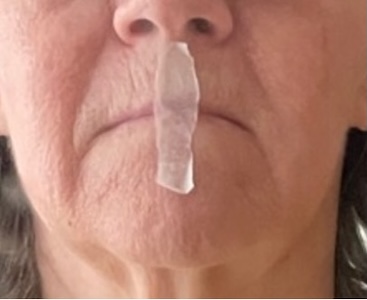
I had been exploring mouth-breathing and using mouth-taping for my own personal use when I came across this paper, The Impact of Mouth-Taping in Mouth-Breathers with Mild Obstructive Sleep Apnea.  I had tried mouth-taping a few times but it felt uncomfortable to completely seal my mouth with the large piece of tape I was seeing various health practitioners recommend. And to be honest, it also felt a little scary too, even though I already use tryptophan and GABA for sleep and anxiety.

As soon as I saw the image of the man with a narrow strip of mouth-tape it gave me confidence to start mouth-taping again and I haven’t looked back! I don’t have mild obstructive sleep apnea and don’t snore but I was aware I was starting to mouth-breathe and sleep with a slightly open mouth because of waking with an incredibly dry mouth.

I do not go a single night without it and love the benefits of improved sleep and more energy the next day, and no more dry mouth during the night. I know it’s reducing future tooth decay too.

I share more about the paper, where I first learned about mouth-taping (and an image of sealing the mouth completely) and how GABA and tryptophan may help alleviate any fear and anxiety you may still have about taping your mouth closed at night.

The image that changed my mind and excerpts from the mouth-taping paper

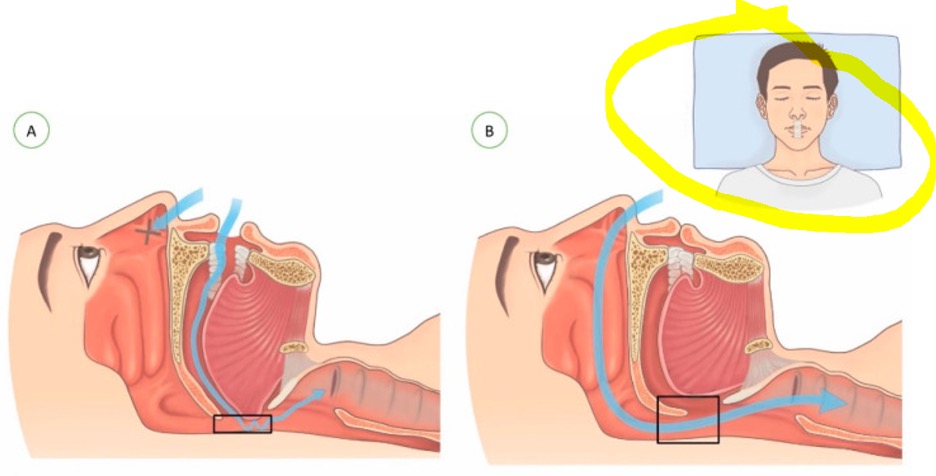
This is the image I’m referring to: the man on the top right with his mouth taped (as circled in yellow). You can see he has a narrow piece of tape, used vertically, instead of a wide piece of tape placed horizontally across his entire mouth/lips (I share an example of the latter below).

mouth taping
Figures demonstrating the breathing routes of (A) mouth-breathing and (B) nasal-breathing after mouth-taping. (from – The Impact of Mouth-Taping in Mouth-Breathers with Mild Obstructive Sleep Apnea: A Preliminary Study)

As you can see in the image above, there is a difference in “airflow during mouth-breathing vs. nasal-breathing” as indicated by the blue arrows.

Here is the study objective:

Many patients with obstructive sleep apnea (OSA) are mouth-breathers. Mouth-breathing not only narrows the upper airway, consequently worsening the severity of obstructive sleep apnea, but also it affects compliance with nasal continuous positive airway pressure (CPAP) treatment. This study aimed to investigate changes in obstructive sleep apnea by the use of mouth tape in mouth-breathers with mild obstructive sleep apnea.

And the conclusion:

Mouth-taping during sleep improved snoring and the severity of sleep apnea in mouth-breathers with mild obstructive sleep apnea, with AHI (apnea/hypopnea index)  and SI (snoring index) being reduced by about half. The higher the level of baseline AHI and SI, the greater the improvement was shown after mouth-taping.

Mouth-taping could be an alternative treatment in patients with mild obstructive sleep apnea before turning to CPAP therapy or surgical intervention.

The snoring index is the number of snoring events per hour. And according to the Cleveland Clinic, the AHI /apnea/hypopnea index “identifies how many times your breathing slows or stops during an hour of sleep. You might see an AHI after a sleep study or on a CPAP machine.

The apnea-hypopnea index (AHI) is the average number of times you stop breathing (apneas) and have shallow breathing events (hypopneas) per hour of sleep.

The American Academy of Sleep Medicine uses a range to categorize the severity of apnea and hypopnea events in adults:

  • Mild: Five to fewer than 15 events per hour
  • Moderate: 15 to fewer than 30 events per hour
  • Severe: 30 or more events per hour”

In the above mouth-taping study, both the apnea-hypopnea index (AHI) and snoring index were reduced by about half, which I find impressive.

They used 3M tape that was “easy to adhere, easy to remove, and non-allergenic.”

My first introduction to mouth-taping and an example of taping your entire mouth with horizontal tape

This interview and taping demo with Mike Mutzel and Mark Burhenne was my first introduction to mouth-taping. It’s a fascinating interview and the benefits are numerous – do read the highlights and watch the interview.

As you can see, Dr. Mark Burhenne tapes his entire mouth with horizontal tape. This approach did not work for me and I gave up after a few tries.

mouth taping

If you have considered taping in the past and were put off or afraid because of this approach of taping the entire mouth, I’m hoping my insights below about taping vertically and the above study will get you trying it again.

How I tape my mouth and what I use

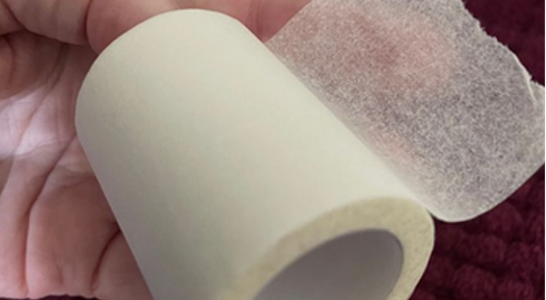
As mentioned above, I use a narrow strip of hypoallergenic paper tape that I simply tear off the roll each night. I sometimes use the same piece for a second night. I use lip ice/lip balm before taping as that prevents the tape from actually sticking to my lips. It feels more comfortable this way and still keeps my mouth closed. And it also allows me to cough and sneeze without feeling like I’ll lose skin on my lips. I can also sort of talk, although not very clearly, and it makes it easy to remove.

I do not go to bed without taping and it has added another element to improving my sleep. I do this together with the amino acids GABA, theanine and tryptophan, magnesium, Seriphos for high cortisol (when it’s high), eating low oxalates and calcium to counter the effects of oxalates, and avoiding EMFs).

If needed, I can slide a GABA Calm into my mouth without removing the tape. I will do this if I happen to need it due to waking in the middle of the night and not being able to get back to sleep.

If you are still fearful and anxious about trying this: serotonin and GABA support

If you are still fearful about taping your mouth closed at night, know you’re not alone! It felt a bit scary to me when I first started taping and I even yanked it off a few times during the night.

Trying it out in the daytime first definitely helps to get used to it. And it’s ok to test-drive taping for a few hours at night initially, and pulling it off later in the night.

Also, be sure to address low serotonin if you have low serotonin type of worry, ruminating, negative self-talk type of anxiety. With this type of anxiety, fears and phobias, and feelings of panic can be heightened. Personally, I use tryptophan and theanine for my low serotonin and also recommend this for clients and those in my group online programs. Keep in mind that some individuals do better with 5-HTP than tryptophan.

When you feel anxious, it’s common to have low GABA type of physical tension and anxiety. This may also make mouth-taping feel too overwhelming and give you feelings of panic. I’m a GABA girl myself and use GABA every night. I’m also getting some GABA support from the theanine I use. I know both are firm favorites with clients and group program members.

And, of course, an added bonus is that by addressing low serotonin and low GABA, we also address sleep issues which is a common sign of low levels of both these neurotransmitters.

Additional resources when you are new to using tryptophan, 5-HTP, GABA and other amino acids as supplements

As always, I use the symptoms questionnaire to figure out if low serotonin or low GABA or other neurotransmitter imbalances may be an issue.

If you suspect low levels of any of the neurotransmitters and do not yet have my book, The Antianxiety Food Solution – How the Foods You Eat Can Help You Calm Your Anxious Mind, Improve Your Mood, and End Cravings, I highly recommend getting it and reading it before jumping in and using amino acids on your own so you are knowledgeable. And be sure to share it with the practitioner/health team you or your loved one is working with.

There is an entire chapter on the amino acids and they are discussed throughout the book in the sections on gut health, gluten, blood sugar control (this is covered in an entire chapter too), sugar cravings, anxiety and mood issues.

The book doesn’t include product names (per the publisher’s request) so this blog, The Antianxiety Food Solution Amino Acid and Pyroluria Supplements, lists the amino acids that I use with my individual clients and those in my group programs.

If, after reading this blog and my book, you don’t feel comfortable figuring things out on your own (i.e. doing the symptoms questionnaire and respective amino acids trials), a good place to get help is the GABA QuickStart Program (if you have low GABA symptoms). This is a paid online/virtual group program where you get my guidance and community support, and is where this question was asked of me during one of the live Q&A calls.

If you are a practitioner, join us in The Balancing Neurotransmitters: the Fundamentals program. This is also a paid online/virtual program with an opportunity to interact with me and other practitioners who are also using the amino acids.

Wrapping up and your feedback

Have you used vertical mouth-taping and if yes how has it helped you? Or are you fine with horizontal taping and covering your entire mouth? I’d love to hear how you tape, what tape you use and if you also use lip balm/lip ice before taping.

And if you have words of wisdom for newbies who may need some encouragement feel free to share this too!

I am curious if you have also used GABA, theanine, tryptophan or 5-HTP for overcoming the fear of mouth-taping and continue to use one or more of these amino acids for sleep support too?

Feel free to share your feedback and ask your questions below in the comments section.
Filed Under: Anxiety, GABA, serotonin, Sleep Tagged With: 5-HTP, amino acid, anxiety, anxious, dry mouth, fear, fears, GABA, GABA Quickstart, Mild Obstructive Sleep Apnea, mouth-breathing, mouth-taping, neurotransmitter, overwhelm, physical-tension, scary, serotonin, sleep, Sleep apnea, snore, tape, taping, theanine, tryptophan, vertical

Hydroxychloroquine and chloroquine (antimalarial drugs): quinism and the risk of sudden and lasting neuropsychiatric effects

July 31, 2020 By Trudy Scott 80 Comments

Hydroxychloroquine

The Quinism Foundation, a nonprofit charitable organization “promotes and supports education and research on quinism, the family of medical disorders caused by poisoning by mefloquine, tafenoquine, chloroquine, and related quinoline drugs.”

Executive Director of the foundation, Dr. Remington Nevin, MD, MPH, DrPH, is a Johns-Hopkins trained psychiatric epidemiologist and drug safety expert and former U.S. Army public health physician. He has published extensively on the subject.

The foundation share the symptoms of chronic quinoline encephalopathy, also known as neuropsychiatric quinism:

The term “quinism” may seem new, but the symptoms of poisoning by mefloquine (previously marketed as Lariam®), tafenoquine (marketed as Krintafel® and Arakoda™), chloroquine (marketed as Aralen®), and related quinoline drugs are all too familiar: Tinnitus. Dizziness. Vertigo. Paresthesias. Visual disturbances. Gastroesophageal and intestinal problems. Nightmares. Insomnia. Sleep apnea. Anxiety. Agoraphobia. Paranoia. Cognitive dysfunction. Depression. Personality change. Suicidal thoughts.

These symptoms are not “side effects,” they are symptoms of poisoning by a class of drug that is neurotoxic and that injures the brain and brainstem. This poisoning causes a disease, and this disease has a name: Chronic quinoline encephalopathy — also known as quinism.

In March they published this press release: The Quinism Foundation Warns of Dangers from Use of Antimalarial Quinolines Against COVID‑19. Here are some highlights:

  • A risk of sudden and lasting neuropsychiatric effects from the use of antimalarial quinolines against COVID‑19, the disease caused by the novel coronavirus
  • In susceptible individuals, these drugs act as idiosyncratic neurotoxicants, potentially causing irreversible brain and brainstem dysfunction, even when used at relatively low doses

What is concerning is lasting neuropsychiatric effects and the fact that even low doses can cause irreversible effects. The Foundation “has urged policy makers, physicians, and members of the public to be alert to such effects.”

Dr. Nevin states that “these are not safe drugs” and “While it may be tempting to attribute anxiety, depression, paranoia, or other mental health symptoms to the psychological effects of the COVID‑19 pandemic, these symptoms may be an early warning sign of idiosyncratic neurotoxicity, and must be taken seriously.” 

You can read the entire March 2020 press release here. It contains a link to U.S. Food and Drug Administration’s MedWatch program for reporting adverse effects.

Another press release published late July also cautions the use of tafenoquine against COVID-19 which The Qunism Foundation states “is a neurotoxic quinoline antimalarial drug with a similar adverse effect profile to mefloquine.”

New COVID-19 research on chloroquine and hydroxychloroquine

It’s encouraging to see that new research published on COVID-19 and these medications also highlights the possibility of neuropsychiatric side effects (even through the authors state it’s considered uncommon): Psychiatric Aspects of Chloroquine and Hydroxychloroquine Treatment in the Wake of COVID-19: Psychopharmacological Interactions and Neuropsychiatric Sequelae

…neuropsychiatric side effects are very uncommon but possible, and include a potentially prolonged phenomenon of “psychosis following chloroquine.” Hydroxychloroquine has less information available about its neuropsychiatric side effects than chloroquine, with psychosis literature limited to several case reports

Case reports on psychiatric symptoms induced by hydroxychloroquine

Here is one of these case reports: Psychiatric symptoms induced by hydroxychloroquine.  A 36-year-old woman was diagnosed with Systemic Lupus Erythematosus (SLE) and antiphospholipid syndrome, and was treated with prednisone 10 mg and hydroxychloroquine 200 mg every 24 hours. Her arthritis improved but

One month after initiation of treatment, the patient began with generalized anxiety, suicidal ideation and the appearance of auditory and kinaesthetic [tactile] hallucinations.

She had similar adverse effects 5 years later  when hydroxychloroquine (without prednisone) was prescribed following an outbreak of cutaneous SLE

A week later, the patient was admitted to the Department of Psychiatry because of suicidal ideation, self-harm and kinaesthetic and auditory hallucinations, which improved after withdrawal of hydroxychloroquine and treatment in a psychiatric setting. 

Since then, the patient has not been taking hydroxychloroquine and has had no further episodes of kinaesthetic [tactile] or auditory hallucinations.

Here are two other case reports: Hydroxychloroquine-induced acute psychosis in a systemic lupus erythematosus female and Hydroxychloraquine-induced acute psychotic disorder in a female patient with rheumatoid arthritis: a case report.

Risk factors for susceptibility

This review article from 2018, Neuropsychiatric clinical manifestations in elderly patients treated with hydroxychloroquine: A review article mentions that these adverse events can range from less severe nervousness to “actual psychosis and suicidal tendencies.” 

It also lists possible risk factors that may make certain individuals more susceptible:

co-exposure to interacting drugs, alcohol intake, familial history of psychiatric diseases, female gender, and the concomitant use of low-dose glucocorticoids [such as prednisone]. 

Malaria drug causes brain damage that mimics PTSD

I first learned of this neuropsychiatric connection a number of years ago when I read about the “case of a service member diagnosed with post-traumatic stress disorder but found instead to have brain damage caused by a malaria drug.” You can read about this here – Malaria drug causes brain damage that mimics PTSD: case study.

A few years ago I also blogged about the anti-malaria medication mefloquine and how it was known to contribute to neuropsychiatric symptoms in susceptible individuals: PTSD from 3 tours in Afghanistan: Can GABA help with the anxiety?

My concerns about long-term prophylactic use and lack of awareness

My concerns are long-term prophylactic use. There are a number of clinical trials planned or in progress for long-term use in healthcare workers. If they are stressed, anxious, depressed and exhausted because of the COVID-19 work they have been doing, they may incorrectly attribute some of their symptoms to all that rather than the medication side-effects. And if they do get COVID-19, they may confuse the neurological and psychiatric effects of COVID-19 with those of chloroquine or hydroxychloroquine.

What also concerns me is the lack of awareness. None of the advocates of this class of medications mentions quinism, the possible neuropsychiatric side-effects and long-term risks, or who may be susceptible.

I would be very happy if chloroquine or hydroxychloroquine is found to be a solution (or part of a solution) for COVID-19 – alone or in combination with zinc – for certain individuals.

But I believe we do need to be very aware about side-effects as serious as these. I’d also like to see education for healthcare providers and the consumer, as well as informed consent for the consumer.

Similar concerns with other medications

In the past I’ve written about similar concerns with other medications such as benzodiazepines, SSRIs and fluoroquinolone antibiotics:

  • Antibiotic Induced Anxiety – How Fluoroquinolone Antibiotics Induce Psychiatric Illness Symptoms
  • World Benzodiazepine Awareness Day – say NO to Benzodiazepines for anxiety! 
  • The benzodiazepine valium blocks DAO and impacts histamine levels: wisdom from Yasmina Ykelenstam and a tribute to her brilliance
  • Little evidence for SSRI use in anxiety and compulsions in ASD: my interview on Nourishing Hope for Autism Summit 

Your feedback and questions so we can all learn

I encourage you to keep all this in mind as you navigate what you hear in the news, read on social media and/or read in the research on hydroxychloroquine.

Keep all this in mind too if you have future plans to travel to a malaria area for a vacation in the future (wouldn’t we love that – a trip!?).

Have you used chloroquine or hydroxychloroquine for COVID-19 and experienced psychiatric side-effects? Or know someone who has?

Have you used antimalarial medications in the past and experienced psychiatric side-effects? Was this a short-course or long-term prophylactic use?

Have you used these medications for lupus or rheumatoid arthritis with success and without psychiatric side-effects? Or have you experienced adverse effects and had to stop?

If you have had adverse psychiatric effects please share which medication, dosage and frequency? Also do you have any of the predisposing risk factors: alcohol intake at the time, history of psychiatric diseases (you or family members), are female, and were also prescribed low-dose glucocorticoids such as prednisone, and/or other medications (and which ones)?

Feel free to post your questions here too.

Filed Under: Medication Tagged With: Agoraphobia, antimalarial drugs, anxiety, benzodiazepines, chloroquine, chronic quinoline encephalopathy, Cognitive dysfunction, Coronavirus, COVID-19, depression, Dizziness, fluoroquinolone antibiotics, Hydroxychloroquine, insomnia, lasting neuropsychiatric effects, mental health symptoms, neuropsychiatric, Nightmares, paranoia, Personality change, quinism, Quinism Foundation, Sleep apnea, SSRI, Suicidal, Tinnitus, vertigo

Primary Sidebar

NEW! GABA QuickStart Homestudy (with special intro pricing)

gaba quickstart homestudy

Free Report

9 Great Questions Women Ask about Food, Mood and their Health

You'll also receive a complimentary subscription to my ezine "Food, Mood and Gal Stuff"


Connect with me

Popular Posts

  • Amino Acids Mood Questionnaire from The Antianxiety Food Solution
  • The Antianxiety Food Solution Amino Acid and Pyroluria Supplements
  • Pyroluria Questionnaire from The Antianxiety Food Solution
  • Collagen and gelatin lower serotonin: does this increase your anxiety and depression?
  • Tryptophan for the worry-in-your-head and ruminating type of anxiety
  • GABA for the physical-tension and stiff-and-tense-muscles type of anxiety
  • The Antianxiety Food Solution by Trudy Scott
  • Seriphos Original Formula is back: the best product for anxiety and insomnia caused by high cortisol
  • Am I an anxious introvert because of low zinc and vitamin B6? My response to Huffington Post blog
  • Vagus nerve rehab with GABA, breathing, humming, gargling and key nutrients

Recent Posts

  • What do I use instead of Seriphos to help lower high cortisol that is affecting my sleep and making me anxious at night?
  • BeSerene™ GABA/theanine cream eases severe muscle tension in her neck/shoulders, prevents her bad headaches and quells her anxiety
  • How the correct approach, dose and sublingual use of GABA can be calming and not cause a flushed and itchy face and neck
  • The amino acid glutamine improves low mood by addressing gut health, and it has calming effects too
  • Flight anxiety with heightened breath, physical tension and also fearing the worst (the role of low GABA and low serotonin)

Categories

  • 5-HTP
  • AB575
  • Addiction
  • ADHD
  • Adrenals
  • Alcohol
  • Allergies
  • Alzheimer's disease
  • Amino Acids
  • Anger
  • Antianxiety
  • Antianxiety Food Solution
  • Antidepressants
  • Anxiety
  • Anxiety and panic
  • Autism
  • Autoimmunity
  • benzodiazapines
  • Bipolar disorder
  • Books
  • Caffeine
  • Cancer
  • Candida
  • Children/Teens
  • Collagen
  • Cooking equipment
  • Coronavirus/COVID-19
  • Cravings
  • Depression
  • Detoxification
  • Diabetes
  • Diet
  • DPA/DLPA
  • Drugs
  • EFT/Tapping
  • EMF
  • EMFs
  • Emotional Eating
  • Endorphins
  • Environment
  • Essential oils
  • Events
  • Exercise
  • Fear
  • Fear of public speaking
  • Fertility and Pregnancy
  • Fish
  • Food
  • Food and mood
  • Functional neurology
  • GABA
  • Gene polymorphisms
  • General Health
  • Giving
  • Giving back
  • Glutamine
  • Gluten
  • GMOs
  • Gratitude
  • Gut health
  • Heart health/hypertension
  • Histamine
  • Hormone
  • Hyperparathyroidism
  • Hypoglycemia
  • Immune system
  • Inflammation
  • Insomnia
  • Inspiration
  • Introversion
  • Joy and happiness
  • Ketogenic diet
  • Lithium orotate
  • Looking awesome
  • Lyme disease and co-infections
  • MCAS/histamine
  • Medication
  • Men's health
  • Mental health
  • Mercury
  • Migraine
  • Mold
  • Movie
  • MTHFR
  • Multiple sclerosis
  • Music
  • NANP
  • Nature
  • Nutritional Psychiatry
  • OCD
  • Osteoporosis
  • Oxalates
  • Oxytocin
  • Pain
  • Paleo
  • Parasites
  • Parkinson’s disease
  • PCOS
  • People
  • PMS
  • Postpartum
  • PTSD/Trauma
  • Pyroluria
  • Questionnaires
  • Real whole food
  • Recipes
  • Research
  • Schizophrenia
  • serotonin
  • SIBO
  • Sleep
  • Special diets
  • Sports nutrition
  • Stress
  • Sugar addiction
  • Sugar and mood
  • Supplements
  • Teens
  • Testimonials
  • Testing
  • The Anxiety Summit
  • The Anxiety Summit 2
  • The Anxiety Summit 3
  • The Anxiety Summit 4
  • The Anxiety Summit 5
  • The Anxiety Summit 6
  • Thyroid
  • Thyroid health
  • Toxins
  • Tryptophan
  • Tyrosine
  • Uncategorized
  • Vegan/vegetarian
  • Women's health
  • Yoga

Archives

  • October 2025
  • September 2025
  • August 2025
  • July 2025
  • June 2025
  • May 2025
  • April 2025
  • March 2025
  • February 2025
  • January 2025
  • November 2024
  • October 2024
  • September 2024
  • August 2024
  • July 2024
  • June 2024
  • May 2024
  • April 2024
  • March 2024
  • February 2024
  • January 2024
  • December 2023
  • November 2023
  • October 2023
  • September 2023
  • August 2023
  • July 2023
  • June 2023
  • May 2023
  • April 2023
  • March 2023
  • February 2023
  • January 2023
  • December 2022
  • November 2022
  • October 2022
  • September 2022
  • August 2022
  • July 2022
  • June 2022
  • May 2022
  • April 2022
  • March 2022
  • February 2022
  • January 2022
  • December 2021
  • November 2021
  • October 2021
  • September 2021
  • August 2021
  • July 2021
  • June 2021
  • May 2021
  • April 2021
  • March 2021
  • February 2021
  • January 2021
  • December 2020
  • November 2020
  • October 2020
  • September 2020
  • August 2020
  • July 2020
  • June 2020
  • May 2020
  • April 2020
  • March 2020
  • February 2020
  • January 2020
  • December 2019
  • November 2019
  • October 2019
  • September 2019
  • August 2019
  • July 2019
  • June 2019
  • May 2019
  • April 2019
  • March 2019
  • February 2019
  • January 2019
  • December 2018
  • November 2018
  • October 2018
  • September 2018
  • August 2018
  • July 2018
  • June 2018
  • May 2018
  • April 2018
  • March 2018
  • February 2018
  • January 2018
  • December 2017
  • November 2017
  • October 2017
  • September 2017
  • August 2017
  • July 2017
  • June 2017
  • May 2017
  • April 2017
  • March 2017
  • February 2017
  • January 2017
  • December 2016
  • November 2016
  • October 2016
  • September 2016
  • August 2016
  • July 2016
  • June 2016
  • May 2016
  • April 2016
  • March 2016
  • February 2016
  • January 2016
  • December 2015
  • November 2015
  • October 2015
  • September 2015
  • August 2015
  • July 2015
  • June 2015
  • May 2015
  • April 2015
  • March 2015
  • February 2015
  • January 2015
  • December 2014
  • November 2014
  • October 2014
  • September 2014
  • August 2014
  • July 2014
  • June 2014
  • May 2014
  • April 2014
  • March 2014
  • February 2014
  • January 2014
  • December 2013
  • November 2013
  • October 2013
  • September 2013
  • August 2013
  • July 2013
  • June 2013
  • May 2013
  • April 2013
  • March 2013
  • February 2013
  • January 2013
  • December 2012
  • November 2012
  • October 2012
  • August 2012
  • July 2012
  • June 2012
  • May 2012
  • April 2012
  • March 2012
  • February 2012
  • January 2012
  • December 2011
  • November 2011
  • October 2011
  • September 2011
  • August 2011
  • July 2011
  • June 2011
  • May 2011
  • April 2011
  • March 2011
  • February 2011
  • January 2011
  • December 2010
  • October 2010
  • September 2010
  • July 2010
  • May 2010
  • April 2010
  • March 2010
  • February 2010
  • January 2010
  • November 2009

Share the knowledge!

The above statements have not been evaluated by the Food and Drug Administration. Products listed in this website are not intended to diagnose, treat, cure or prevent any disease.

The information provided on this site is for informational and educational purposes only and is not intended as a substitute for advice from your physician or other health care professional. You should consult with a healthcare professional before starting or modifying any diet, exercise, or supplementation program, before taking or stopping any medication, or if you have or suspect you may have a health problem.


Copyright © 2026 Trudy Scott. All Rights Reserved. | Privacy | Terms and Conditions | Refund Policy | Medical Disclaimer

Free Report

9 Great Questions Women Ask about Food, Mood and their Health

You’ll also receive a complimentary subscription to my ezine “Food, Mood and Gal Stuff”