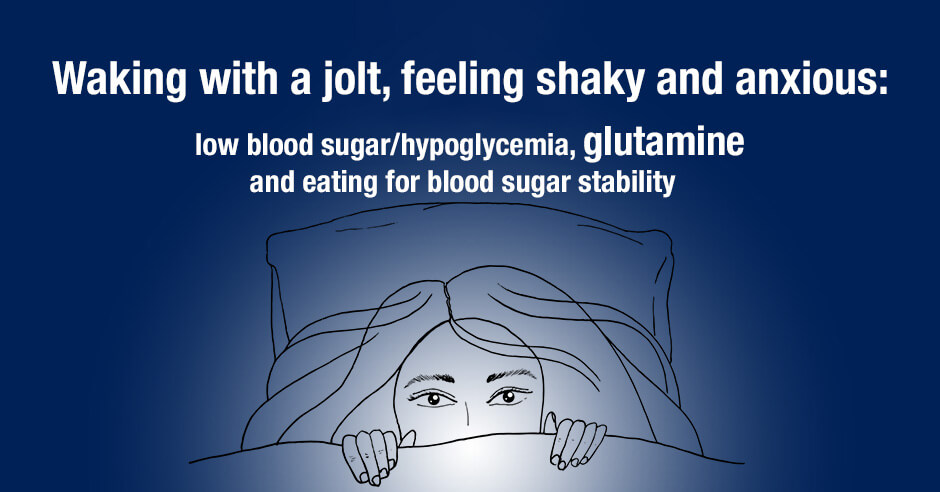
Low blood sugar is one of a number of causes of waking in the night or early hours, often with a jolt and feelings of anxiety or feeling like you’re having a panic attack. As shared in a recent blog post, cortisol that is high at night can cause very similar symptoms.
Because of a low blood sugar question on the high cortisol blog, today I’m explaining the very different solutions to each root cause: glutamine and eating for blood sugar stability when you have low blood sugar versus Seriphos when you have high cortisol.
Katherine shares that she has low cortisol and suspects hypoglycemia or low blood sugar, and is hesitant about using Seriphos:
My last 4 point cortisol test showed mine is low throughout the day. But I’m having episodes where I’m waking up in the mornings feeling a jolt (every time I wake up from sleeping) and sometimes also shaky and anxious.
A functional pharmacist suggested my blood sugar may be dropping during the night and hypoglycemia could cause an adrenaline surge.
I don’t know. I’m nervous to try something [such as Seriphos] to lower cortisol when it seems mine is already too low.
I agree with her functional pharmacist that hypoglycemia is likely a factor as it often is with adrenal dysfunction and low cortisol. And I am glad Katherine is being cautious about using Seriphos.
I shared that Seriphos is not the solution in this instance because she doesn’t have high cortisol based on her adrenal saliva test (4 collections). Instead, she has low cortisol throughout the day and using Seriphos would lower her cortisol even further. What many folks don’t realize is that high cortisol and low cortisol can lead to similar symptoms of anxiety, shakiness and waking in the night and early hours.
The good news is it’s relatively easy to figure out if low blood sugar is causing your symptoms. First I have clients rate their symptoms on the low blood sugar questionnaire and do a trial of glutamine. Next is figuring out the dosing and timing of glutamine, looking at a current food log and making dietary changes as needed.
If Katherine notices improvements – typically seen within a week – it’s very likely that hypoglycemia is a factor.
Finally, if additional support is needed for her anxiety I’d consider looking at low GABA and low serotonin symptoms and doing a trial of GABA and/or tryptophan.
Longer term solutions include all the dietary changes mentioned in my book – gluten-free, no sugar, no caffeine or alcohol, using nutritional support for the adrenals and addressing toxins, infections, trauma etc.
Low blood sugar symptoms
First I have clients rate their symptoms on the low blood sugar questionnaire and do a trial of glutamine if they have low blood sugar symptoms.
Here are the low blood sugar symptoms which are rated on a scale of 1 to 10, with 10 being most severe:
- Crave sugar, starch or alcohol any time during the day
- Irritable, shaky, headachey – especially if too long between meals
- Intense cravings for sweets
- Lightheaded if meals are missed
- Eating relieves fatigue
- Agitated, easily upset, nervous
- Waking in the night or early hours with a jolt of anxiety/shakiness
If the ratings indicate the possibility of low blood sugar i.e. any cluster of the above symptoms, we do a trial of the amino acid glutamine on the tongue and record before and after ratings of a few symptoms.
Glutamine is a key amino acid for blood sugar stability and helps quickly while the adrenals heal and the dietary changes are figured out.
Glutamine for low blood sugar: dosing and timing
Typically 500 mg glutamine is a good starting dose. I see many folks start too high, like 5000 mg / 5 g and up multiple times a day, and it’s not necessary. However, we increase based on individual needs and you may find you do need to use 500 mg -1000 mg two to three times a day. Using a glutamine powder is a great way to use it especially if you find you do need more than 500 mg each time.
When you use glutamine powder directly on the tongue (rather than mixed in water), the benefits are seen almost immediately.
For someone like Katherine, using glutamine throughout the day may set her up for night time or early morning low blood sugar. She may also find she needs to use some glutamine just before bed too.
GABA and/or serotonin support too?
Depending on the causes of her anxiety and shakiness, in addition to glutamine, Katherine may need to consider GABA and/or tryptophan too. We use the low GABA and low serotonin symptoms questionnaire and do trials of GABA and/or tryptophan/5-HTP.
All three amino acids can be used before bed and during the night if needed but trials are best done one at a time.
Glutamine for low blood sugar, healing the gut, to reduce sugar cravings and for better sleep
In addition to helping with blood sugar stability and sleep issues, glutamine also helps to heal the gut and helps reduce sugar cravings. Laura shared how it’s been helping her with all of this on another blog:
I am currently struggling with gastritis (inflammation of the stomach lining) as well as a lifetime of low blood sugar and irritability. I started glutamine a few days ago (15 grams a day) and I am amazed at how it has calmed my gut as well as calmed the sugar cravings. I am also sleeping better!
I did share that 15 g is considered a high starting dose of glutamine. She may well get similar benefits with much less.
Glutamine for early morning low blood sugar and headaches
As you can see in this case, Cat finds 500 mg glutamine just once a day works well for her unique needs:
I found a powder that I mix approximately 500 mg of with water. It works within about 15 minutes and keeps me going for about 2 – 3 hours — long enough to reach a reasonable time for lunch.
I’m thrilled to have this option as anytime that I travel, low blood sugar becomes a huge issue as I suffer from ketotic hypoglycemia and end up with massive headaches and vomiting for 6-8 hours.
You can read more about Cat’s success here – Glutamine for hypoglycemia/low blood sugar: “500mg mixed in water works in 15 minutes and keeps me going for 2 – 3 hours”.
Dietary changes for blood sugar control and adrenal support
All my clients keep a food log and we look at what they are eating on a typical day and when. It’s key to eat in a certain way in order to control blood sugar:. breakfast on waking, healthy snacks 3 to 4 x day and some folks do well with a snack before bed. These meals and snacks should include quality animal protein and healthy fats. This is all outlined in detail in the diet and low blood sugar chapters in my book “The Antianxiety Food Solution”.
A protein smoothie in the morning is a good option too and especially helpful if you have the social anxiety condition pyroluria, where morning nausea and a low appetite is common initially. This blog highlights a research paper about breakfast smoothies helping to reduce anxiety and hypoglycemia symptoms.
Nutritional support for adrenal function includes a good B vitamin complex, extra vitamin B5/pantothenic acid, vitamin C and adaptogenic herbs such as rhodiola and ashwagandha.
Glutamine product options – capsule vs powder
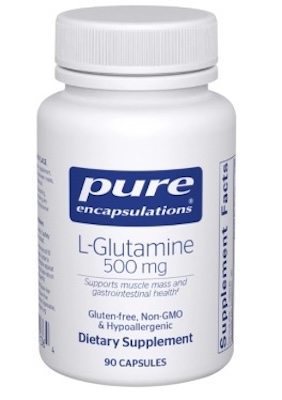
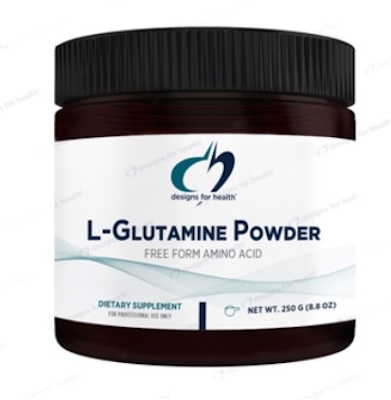
Products I recommend include Pure Encapsulations 500 mg l-glutamine (capsules opened on to your tongue) and Designs for Health l-glutamine powder as you find you need higher amounts. You can purchase these from my online store (Fullscript – only available to US customers – use this link to set up an account).
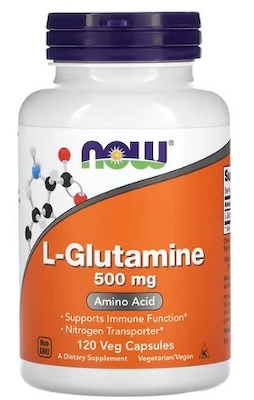
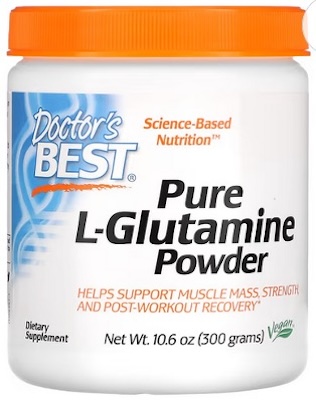
If you’re not in the US, Now l-glutamine 500 mg and Doctor’s best l-glutamine powder are products I recommend on iherb (use this link to save 5%).
Additional resources when you are new to using amino acids as supplements
We use the symptoms questionnaire to figure out if low blood sugar and/or low serotonin and/or low GABA and other neurotransmitter imbalances may be an issue for you.
If you suspect low levels of any of the neurotransmitters and do not yet have my book, The Antianxiety Food Solution – How the Foods You Eat Can Help You Calm Your Anxious Mind, Improve Your Mood, and End Cravings, I highly recommend getting it and reading it before jumping in and using amino acids on your own so you are knowledgeable. And be sure to share it with the practitioner/health team you or your loved one is working with.
There is an entire chapter on the amino acids and they are discussed throughout the book in the sections on gut health, gluten, blood sugar control (this is covered in an entire chapter too), sugar cravings, anxiety and mood issues. The importance of quality animal protein and healthy fats is also covered.
The book doesn’t include product names (per the publisher’s request) so this blog, The Antianxiety Food Solution Amino Acid and Pyroluria Supplements, lists the amino acids that I use with my individual clients and those in my group programs.
If, after reading this blog and my book, you don’t feel comfortable figuring things out on your own (i.e. doing the symptoms questionnaire and respective amino acids trials), a good place to get help is the GABA QuickStart Program (if you have low GABA symptoms too). This is a paid online/virtual group program where you get my guidance and community support.
If you are a practitioner, join us in The Balancing Neurotransmitters: the Fundamentals program. This is also a paid online/virtual program with an opportunity to interact with me and other practitioners who are also using the amino acids.
Have you had success with glutamine for blood sugar stability and waking with a jolt of anxiety/panic at night or in the early hours?
Have you used it for blood sugar stability, reduced cravings, leaky gut and anxiety during the day?
If yes, how much helps you? And how often do you use it?
Have dietary changes and adrenal support helped too?
If you’re a practitioner do you use glutamine and dietary approaches with clients/patients with low blood sugar?
And please let me know if it’s helpful that I’m now including product recommendations and where to get them?
Feel free to share and ask your questions below.