• Skip to primary navigation
  • Skip to main content
  • Skip to primary sidebar

everywomanover29 blog

Food, Mood and Women's Health – Be your healthiest, look and feel great!

  • Blog
  • About
  • Services
  • Store
  • Resources
  • Testimonials
  • The Book
  • Contact
  • Search this site

Integrative Medicine for Mental Health

GABA for Anxiety, ADHD, Autism, Insomnia, and Addictions at IMMH 2019 conference

June 26, 2019 By Trudy Scott Leave a Comment

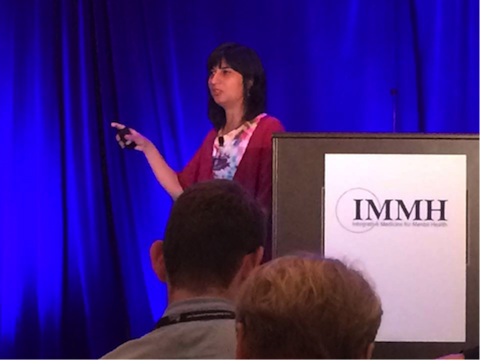
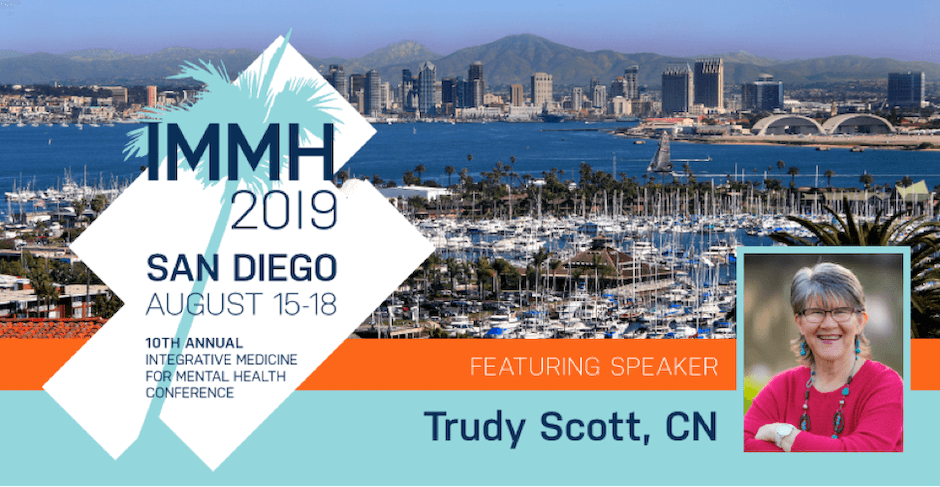
immh trudy scott

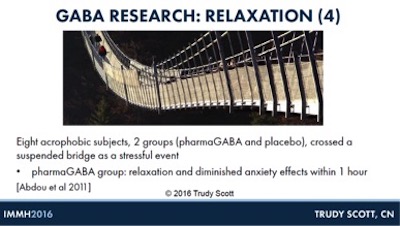
I’m proud to be presenting on “GABA for Anxiety, ADHD, Autism, Insomnia, and Addictions: Research and Practical Applications” at this year’s Integrative Medicine for Mental Health (IMMH) conference (a practitioner-only event)

I’ll be sharing the newest research on GABA and practical ways to use GABA with your clients/patients, as well as how to trouble-shoot when you’re not getting expected results.

Here is one of the many new studies I’ll be discussing (plus how to translate the animal study dosages for a human population): GABA and l-theanine mixture decreases sleep latency and improves NREM sleep

The use of GABA/l-theanine mixture rather than GABA or l-theanine alone restored to normal levels sleep time and quality in the arousal animal model.

The 10th Annual IMMH Conference will be held in San Diego, at the beautiful Hilton San Diego Bayfront! This four-day international conference gives practitioners a holistic approach to successfully diagnose and treat underlying issues contributing to the manifestations of neurological, behavioral, and psychiatric disorders.

Research has revealed that many disorders such as depression, bipolar disorder, anxiety, OCD, eating disorders, and autism spectrum disorders often have biomedical causes that contribute to symptoms, from nutritional deficiencies to chronic infections. Patients have better outcomes when these causes are addressed and treated through a combination of specialized testing and nutritional therapies, even in combination with traditional approaches.

CME, CE, and CEU credits available!

It’s my favorite integrative mental health conference and this year the speaker line-up and topics being addressed are excellent!


2019 CONFERENCE SPEAKERS

  • BRIDGET BRIGGS, MD
  • SURUCHI CHANDRA, MD
  • KABRAN CHAPEK, ND
  • BILL CODE, MD
  • MARK FILIDEI, DO
  • FELICE GERSH, MD
  • JAMES GREENBLATT, MD
  • ANN HATHAWAY, MD
  • GRACE JACKSON, MD
  • HEATHER KING, PhD
  • LESLIE KORN, PhD
  • JULIE MATTHEWS, CNC
  • NEIL NATHAN, MD
  • JAMES NEUENSCHWANDER, MD
  • SANFORD NEWMARK, MD
  • JOSEPH PIZZORNO, ND
  • MATTHEW PRATT-HYATT, PhD
  • SCOTT SHANNON, MD
  • KENNETH SHARLIN, MD
  • WILLIAM SHAW, PhD
  • RICK SPONAUGLE, MD
  • ELISA SONG, MD
  • KURT WOELLER, DO

A few of the conference topics include:

  • Solving the Brain Puzzle: Recovery Potential for Neurodegenerative Disorders
  • It’s Not All in Their Heads: Treating the Gut-Brain-Immune Triad
  • Brains on Fire: An Integrative Approach to Healing Childhood PANS/PANDAS
  • Integrative Therapies for Suicide Prevention
  • Reversal of Cognitive Decline: The Science, The Tools, and the Transformation
  • Concussion Rescue: A Comprehensive Approach to Traumatic Brain Injury
  • Neuropsychiatric Aspects of Lyme Disease and Associated Co-Infections
  • Non-Pharmacological Treatments for Chronic Pain
  • The Integrative Treatment of ADHD
  • Bioidentical Hormone Replacement for Mood and Cognition
  • New Frontiers in Mental Health: CBD and Beyond

IMMH CLINICIAN REGISTRY

Attendance at this conference qualifies you to join the Integrative Medicine for Mental Health (IMMH) Clinician Registry, making you accessible to potential patients. Each entry searchable by zip code in the U.S. and provides the medical professional’s specialty and contact information. In keeping with the integrative approach, the registry includes all professionals who have attended an IMMH conference and completed the IMMH registry application.

Details and registration here (Use promo code TRUDY50 to save an additional $50 on your registration). Early bird rates expire after June 30th.

If you are coming, please comment below and let me know! And be sure to come and say hi after my presentation and at my booth! If there is enough interest, I’ll be arranging a gathering/dinner one evening so let me know.

This is a practitioner-only event so if this doesn’t apply to you please consider sharing it with your practitioner. I’ll also be bringing back information to share with you via blog posts after the event so stay tuned. In the meanwhile, feel free to post questions in the comments below.
Filed Under: Events Tagged With: addictions, ADHD, anxiety, autism, GABA, IMMH, insomnia, Integrative Medicine for Mental Health, theanine, Trudy Scott

Integrative Medicine for Mental Health Conference 2017 (IMMH)

August 15, 2017 By Trudy Scott 22 Comments

The Integrative Medicine for Mental Health Conference 2017 (IMMH) runs Sept 28-Oct 1, 2017, in Orange County, CA (near Anaheim).

This is a conference I attend every year and I’ll be attending again this year – it’s that good! As IMMH mentions:

research has revealed that many disorders such as depression, bipolar disorder, anxiety, OCD, eating disorders, and autism spectrum disorders often have biomedical causes that contribute to symptoms, from nutritional deficiencies to chronic infections.

This is a practitioner-only event and attendees include psychiatrists, naturopathic physicians, family physicians, chiropractic physicians, nurses and nurse practitioners, psychologists, nutritionists and registered dieticians, and other allied mental health professionals. 

Here is a video with highlights from the 2016 conference

Here are just a few of the topics and speakers I am especially looking forwarding at the 2017 conference:

Integrative Medicine Approaches to Autoimmune Encephalopathy and PANDAS – KENNETH BOCK, MD

This lecture will discuss neuropsychiatric disorders with abrupt onset that include symptoms ranging from anxiety to intrusive thoughts and rage episodes. They may also include tics, dysgraphia (inability to write coherently), and dyscalculia (difficulty understanding numbers). These symptoms are triggered by infectious autoimmune encephalopathy (frequently referred to as PANS/PANDAS). Evaluation and treatment will be discussed from a comprehensive integrative medicine point of view.

Ion Channel Genetics in Mental Health: Associated Integrative Therapies – LAUREN FEW, PHD

Several studies have implicated genetic mutations in voltage-gated ion channels in the pathogenesis of mental health disorders. For example, both the CACNA1C calcium channel gene and ANK3 gene have been linked to bipolar disorder, schizophrenia, and depression in genome-wide association studies. This talk will focus on a number of integrative therapeutic options that target ion channels and have demonstrated efficacy in the treatment of mental health symptomatology, including omega-3 fatty acids, lithium, magnesium, and N-acetylcysteine.

Mold and Mycotoxins: The Hidden Menace – MARK FILIDEI, DO

Mold and fungi are ubiquitous in the environment. However, particularly in “WDB”, water damaged buildings, mold can become a sinister force affecting physical and mental health. Not all molds are toxic and many just cause respiratory issues, but a subset of molds produce mycotoxins; powerful neurotoxins that can have a profound effect on the brain and mental health. The effects of mold, as well as testing, diagnosis, and treatment options will be discussed.

Mitochondria and Mood: Understanding the Role of Mitochondrial Dysfunction in Psychiatric Illness – PETER BONGIORNO, ND

As the ‘powerhouse of the cell’ and nervous system, healthy mitochondrial function is an underlying key to healing mental illness. Dr. Bongiorno will explain what you need to know to help identify mitochondrial issues, understand the factors that contribute to poor function, and review the best natural treatments to restore mitochondrial health.

Helping Patients Follow Special Diets Despite Barriers – JULIE MATTHEWS, CNC

How do we support effective special diet implementation when our patients – both adults and children – face varied behavior, psychosocial, and environmental barriers? How do you determine the right diet for each individual? If it’s too complex or restrictive the patient may become overwhelmed and non-compliant. If it’s too basic, you may not see positive results. In this presentation, Julie will share keen insights gleaned from fifteen years of working with special diets for complex digestive, immune, and neurological conditions in both children and adults, audiences fraught with implementation challenges.

Discovery of a Novel Cause of Alzheimer’s Disease – DALE BREDESEN, MD

The cause(s) of Alzheimer’s disease have remained incompletely defined, although risk factors such as type 2 diabetes and the epsilon-4 allele of the Apolipoprotein E gene (ApoE4) have been described. Precision medicine approaches have proven valuable for the evaluation and treatment of various malignancies. This presentation will review the metabolic profiling done by Dr. Bredesen and his team in patients with Alzheimer’s disease and pre-dementia conditions. The results suggested that mycotoxin exposure may be a novel cause of Alzheimer’s disease.

Genetic SNP Testing for Neuropsychiatric Disorders – WILLIAM SHAW, PHD

Genetic variants called single nucleotide polymorphisms (SNPs) play a greater role in the metabolism of the human brain compared to almost all the other organs. A SNP called apolipoprotein E4 markedly increases the chance of developing Alzheimer’s disease after 50. A SNP in protein HFe that absorbs iron improves brain function in populations that have dietary iron deficiency but greatly increases the risk of psychiatric disease in populations in which dietary iron is excessive. In this presentation, a survey of the most significant SNPs for psychiatric diseases and potential “fixes” for these SNPs will be reviewed.

Estrogen and Mental Health: Exploring Estrogen’s Vital Role Linking the Brain, the Gut Microbiome, and the Immune System – FELICE GERSH, MD

There is an amazing and complex interrelationship involving our gut microbiome, our brain function and emotional wellbeing, and our hormones, and most particularly estrogen. A dialogue has only recently been re-initiated, opening the door to a deeper exploration of the most advantageous ways and manner in which to deliver estrogen supplementation for the improvement and prevention of cognitive and mood disorders. This talk will review how this dialogue is unfolding and using this new information, provide practical ways to address mental health issues.

Botanicals for Depression: Rhodiola, St. John’s Wort, Curcumin and Saffron – JUDITH PENTZ, MD

Botanicals have long been a part of the healing traditions in many cultures for depression. Certain medicinal herbs have increasing evidence based research and thus can be part of toolbox for an integrative medical practice. Yet, having a greater understanding of the complexities that herbs present is critical in having a successful outcome when prescribing them for your patients.

Here is the entire schedule and all the topic outlines

And here is the link to register

This is a practitioner-only event and CEs and CMEs are available.

Hope to see you there! I’m not presenting again this year (as you saw in the video I did present last year) but will be there to support my dear friend and colleague Julie Matthews AND will also have a booth there to share The Antianxiety Food Solution message!

If there is enough interest I’m going to arrange a small group meet-up with Julie and I and some of the speakers so please let me know in the comments below if this is of interest.

P.S. If you are NOT a practitioner and are interested please pass this on to your doctor, nutritionist, social worker, therapist, naturopath etc. The event is also recorded and will be available to purchase after wards so please leave me a note in the comments if you’re interested in the recordings.

Filed Under: Events, Mental health Tagged With: IMMH 2017, Integrative Medicine, Integrative Medicine for Mental Health, mental health

Genes, lithium, Kundalini yoga, coffee enemas, GABA, dairy: IMMH highlights part 1

December 12, 2016 By Trudy Scott 17 Comments

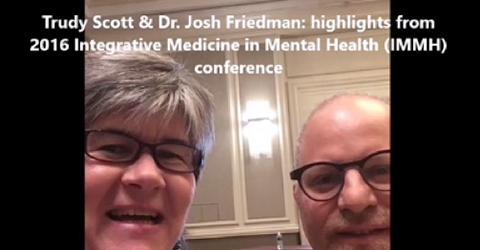
Here are some highlights from the recent Integrative Medicine for Mental Health conference. We did it live on Facebook, holding my iphone, as the conference was ending. I’m with my colleague Dr. Josh Friedman and this is the video and transcript of our discussion – we cover the following:

  • Methygenetic Testing to fine tune your gene results
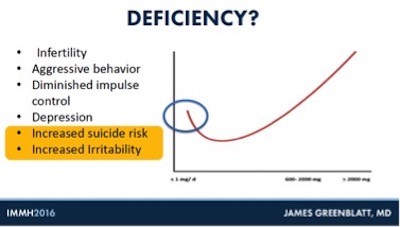
  • Low dose lithium for irritability and alcoholism
  • Kundalini yoga if you have a hard time meditating
  • Coffee enemas for medication detox
  • Working as a detective to find your root cause
  • Simple changes like adding GABA or 5-HTP or removing gluten and/or dairy

Ok we are live… Trudy Scott, certified nutritionist and author of The Antianxiety Food Solution and Dr. Josh Friedman, a psychologist interested in integrative medicine approaches to depression.  

Josh: I have a new website integrativedepressionsolutions.com and we are at the IMMH conference and it has just wrapped up – there was a huge amount of information, tons to learn, it was wonderful. What were your take aways Trudy?

Trudy:   One of the things that I thought was absolutely fascinating was this booth called Methyl Genetic Testing. You can enter your 23andme data and then what you can also do is – while they are running their analysis on that – enter blood work, enter results of organic acid tests and results of stool. They actually show you if your genes are expressing and causing problems. Because you may have a MTHFR methylation genetic defect showing up on your SNP but maybe it is not causing you a problem. So this way you can actually determine if it is causing you a problem. You had shared with me that you have done the training?

Josh:   The training was really amazing. Functional medicine looks at how the biochemical pathways of the body are working. This provides you with another layer – which is how are the   genes that are programming those enzymes support those pathways – and it can provide you with an awful lot of information. And then they have a very simple program you plug your genes into and it gives you a guide as to what kind of supplements might help.

Trudy:   Amazing! So it is really fine tuning the functional medicine and fine tuning what might actually be going on with each individual.

Josh:   It gives you the next amount of information because the functional medicine actually shows you what is happening whereas the genetic testing shows you what potentiality there might be. So you might have a folic acid defect or your folate could be fine – so that was pretty interesting.

Trudy:   What else did you like?

Josh:   I went to a lecture on the use of low dose lithium for all kinds of things.   It is something that I’ve known about – obviously pharmaceutical use [of lithium] for bipolar disorder.   Low dose lithium can also be used for bipolar disorder, but the two things new I learnt is that it is incredibly helpful for irritability. So I am dealing with [clients with] depression and it is something that I have often not thought about for irritability. It is also helpful for situations if you have a parent or family history or a past history of substance abuse or alcoholism. So that was something that I’ll take home to my office.

Trudy:   And it is something that I currently use in my practice and [I learned it from] Dr. James Greenblatt. He actually presented on a similar topic last year and I heard it then. So low dose lithium is the lithium orotate, we want to be clear about that – 5 to 10 mg twice a day is kind of what we are thinking about. I’ve had great results with women with insomnia.   It helps to stabilize the mood and when you are using the amino acids you need a stable mood – you can’t have these ups and downs – so the low dose lithium is really good for that. I would like to hear how it goes when you are using it.

Josh:   I have used it with some people with a history of alcoholism and it has provided stability in their mood which is really good. What else have you got?

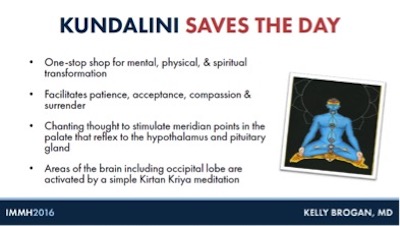
Trudy: I loved Dr. Kelly Brogan, we always love her, don’t we?   She is just really fabulous. She talked about the issues with all the medication and how she does not prescribe anymore. And she talked about a good Paleo diet and getting off gluten and all that good stuff.   New things that I heard from her was how she loves Kundalini yoga and how she loves it because she can’t meditate. I find a lot of my clients have a problem with meditating so I always say if that does not work find something that is going to work. And she has found that this Kundalini yoga works for her. So tell me a little about what you know about it?

Josh: I think Kundalini yoga is quick movements with very quick breathing so it easily occupies the mind. So for someone who would have a hard time sitting and meditating that kind of movement would be helpful.   Other kinds of movements and other types of yoga are Tai Chi or qigong.   Movement or walking meditation can be easier practices for stress management if sitting completely still is hard.

Trudy: So we are doing Facebook live here for those of you who are just joining now.   We are at Integrative Medicine for Mental Health conference and it is Trudy Scott and Josh Friedman.

And I want to pass the phone to Josh to hold because my arm is sore and killing me. Maybe he will do a better job than me.

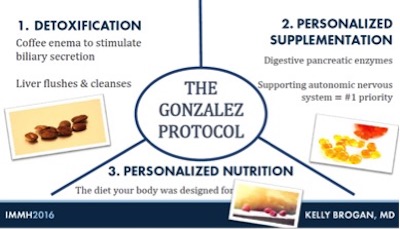
The other thing that I heard from Kelly Brogan that I really enjoyed is that she is using coffee enemas. I have quite a lot of experience with them because the first practitioner that I worked with when I was an intern used coffee enemas for detox for cancer and had really good results.   Dr. Brogan was saying how effective it is for phase 1 and phase 2 detox. It also helps with bile production and the part that I really like is that it helps with medication detox. So this is something that I’m going to be looking into a little bit more and I’ll come back and share more as I learn more.

Josh: That’s pretty cool. One take away I had is that functional medicine can often be like a very complex process of delving into the root underlying cause of symptoms – so things like detox pathways or different kinds of infections. Trudy here gave a talk – and her talk was on amino acids and dietary change and blood sugar stabilization and stress management. One of the things I heard running through the entire workshop was sometimes it is simple things that can make a huge difference. And so with using amino acids for mood issues it can be incredibly quick.

I don’t remember what her name was, but there was a psychiatrist who presented at the end, she talked about how she got into functional medicine and she was talking about the radical changes she had in her health status from simple dietary changes. So stopping gluten and dairy was a huge change for her.

Trudy: That’s important. We want to realize that these dietary changes and nutrients can have profound effects. I was talking to Dr. Nicole Beurkens earlier [about zinc and GABA for anxiety] and saying a lot of my clients will say “my anxiety and my depression is so severe I have to have medication, there is no way that diet and nutrients can make a difference”.   But they really can.   It can completely transform your life.   I remember you shared a story of someone who got off gluten?

Josh:   Yes, I see those powerful changes every day – where someone with a dietary change or a supplement like 5-HTP or GABA just changes everything. It is the one change that might move things along. It is quite amazing.  

Trudy: And it is just a matter of finding what that root cause is for your anxiety and your depression – it may be low serotonin, and it may be gluten or you might need lithium support, it may be that you have an infection. We have heard about Clostridia this weekend, we’ve heard about Toxoplasma gondii, we’ve heard about Lyme disease – they can manifest in many different ways, [including anxiety and depression] – so finding that root cause is important.

Josh: So what people were talking about was being a clinical detective. So working collaboratively with your clients and just saying “it is going to be a process, we will find a solution, but it is going to take some time to figure it out.”   Then there is a lot of detective work that can be done with pencil and paper: measures, asking questions, a clinical interview and it is putting the person’s story together to get to the bottom of what is going on. And so sometimes we can do that without testing. There are a lot of clinicians here, there are doctors here but neither of us are physicians and a lot of the work we both do is working with clients to try to figure out what that missing piece is.

And so, sometimes the missing piece can be quite small. I had a patient who had debilitating depression, had been hospitalized three or four times and we did one test, and the test was an IgG food allergy test.   He was a weight lifter and he was doing 5 whey protein shakes a day, and it came up that he was severely allergic to dairy.   He stopped dairy and within two days his mood was back to normal. I spoke to him recently and he has been stable and happy since his mood lifted.


What a wonderful outcome for his client!

And what an excellent conference! This is part 1 of our discussion. Stay tuned for part 2.

Feel free to post questions or comments below. And let us know if any of the above resonate with you?

Filed Under: Mental health Tagged With: coffee enemas, dairy, GABA, genetics, IMMH, Integrative Medicine for Mental Health, Josh Friedman, Kundalini yoga, lithium

Neuropsychiatric Lyme Disease by Dr. Suruchi Chandra

September 25, 2015 By Trudy Scott 28 Comments

Dr. Suruchi Chandra, MD

One of my favorite presentations at the recent IMMH/Integrative Medicine for Mental Health conference was Dr. Suruchi Chandra’s Neuropsychiatric Lyme Disease talk.

Here is the description of her presentation:

“Neuropsychiatric Lyme Disease and Associated Co-infections: Clinical Presentations, Diagnostic Challenges, and Treatment Options”

Lyme disease is one of the fastest growing infectious diseases in the United States. It can remain dormant for years and then later mimic a number of psychiatric illnesses, including anxiety disorders, mood disturbances, psychosis, and autism-like behaviors. It can be further complicated by the presence of co-infections. Both the diagnosis and treatment of these infections in the chronic stage can be challenging. We will review both standard treatment recommendations and integrative and holistic approaches, including dietary changes, herbal medicines, and nutritional supplements.

Dr. Chandra started by sharing the late stage neuropsychiatric symptoms of Lyme disease:

  • Depression
  • Mood swings
  • Anxiety, panic attacks, OCD
  • Psychosis
  • Violent behaviors and irritability
  • Chronic fatigue syndrome
  • Fibromyalgia
  • ADHD and autism like behaviors
  • Seizures
  • Sleep disorders

Here are some of the many very interesting facts she shared:

  • Lyme disease is one of the fastest growing infectious diseases in the USA (and it doesn’t seem to be only an issue in the USA)
  • Not everyone recalls a tick bite or bulls-eye rash
  • Lyme disease is not only isolated to the Northeast – a year ago a Stanford study found the bacterium Borrelia miyamotoi, as well as burgdorferi, the bacterium that causes Lyme disease, in ticks they sampled throughout the San Francisco Bay area
  • Lyme disease may be due to tick borne complex i.e. it is hypothesized that there are multiple co-infections
  • Purple rashes that look like stretch marks are common with Bartonella
  • There can be maternal-fetal transmission of the disease
  • The involvement of the gut is under-rated with Lyme disease and cognitive decline is a big issue
  • Lyme and co-infections affects serotonin levels, due to IDO being increased
  • Low zinc (and high copper) and low manganese levels are often factors

Dr. Chandra is very unique in that she uses no antibiotics, “provokes” before testing and has some very interesting herbal protocols (many that are used with malaria). She stated that Lyme disease is worth treating even if there are no symptoms, simply because of the higher risk of Alzheimer’s disease.

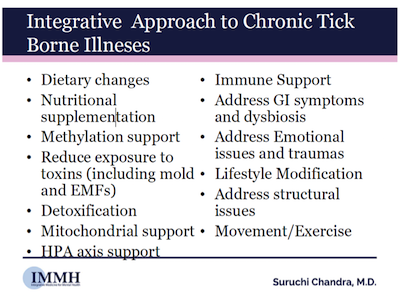
She uses a wonderfully integrative approach with her patients who have chronic tick borne diseases:

integrative-approach-chronic-tick-borne-illnesses

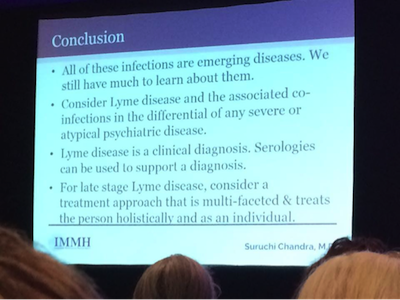
Here is the last slide of her presentation: Consider Lyme disease and the associated co-infections when there is any severe or atypical psychiatric disease, and use a holistic and individualized approach.

Chandra-conclusion

Excellent presentation! This really is the top integrative mental health conference to attend!

Here are a few of my other favorite presentations include:

  • Julie Matthews’ talk on “Oxalates, Phenols, and FODMAPs: Food Substances and Diets that Impact Mental Health Conditions”
  • James Greenblatt’s talk “New Information on Nutritional Lithium for ADHD, Mood Disorders and Prevention of Cognitive Decline”
  • Andrea Gruszecki’s talk on “The Effects of Stress on the Gut-Brain Microbiome”
  • Dr Kurt Woeller’s talk on “Oxytocin and Cholesterol – Their Interactions and Effects on Mental Health and Autism Spectrum Disorders”

I’ll share some highlights from these in a future blog post.

All the presentations were recorded and I’ll let you know when the recordings are available for purchase. These presentations are not to be missed.

Please share what you know about Lyme disease or if you have been diagnosed with one of the co-infections. Feel free to ask questions too.


Filed Under: Events, Lyme disease and co-infections Tagged With: anxiety, depression, Dr. Suruchi Chandra, IMMH, Integrative Medicine for Mental Health, Lyme Disease, Neuropsychiatric Lyme Disease

Primary Sidebar

NEW! GABA QuickStart Homestudy (with special intro pricing)

gaba quickstart homestudy

Free Report

9 Great Questions Women Ask about Food, Mood and their Health

You'll also receive a complimentary subscription to my ezine "Food, Mood and Gal Stuff"


Connect with me

Popular Posts

  • Amino Acids Mood Questionnaire from The Antianxiety Food Solution
  • The Antianxiety Food Solution Amino Acid and Pyroluria Supplements
  • Pyroluria Questionnaire from The Antianxiety Food Solution
  • Collagen and gelatin lower serotonin: does this increase your anxiety and depression?
  • Tryptophan for the worry-in-your-head and ruminating type of anxiety
  • GABA for the physical-tension and stiff-and-tense-muscles type of anxiety
  • The Antianxiety Food Solution by Trudy Scott
  • Seriphos Original Formula is back: the best product for anxiety and insomnia caused by high cortisol
  • Am I an anxious introvert because of low zinc and vitamin B6? My response to Huffington Post blog
  • Vagus nerve rehab with GABA, breathing, humming, gargling and key nutrients

Recent Posts

  • What do I use instead of Seriphos to help lower high cortisol that is affecting my sleep and making me anxious at night?
  • BeSerene™ GABA/theanine cream eases severe muscle tension in her neck/shoulders, prevents her bad headaches and quells her anxiety
  • How the correct approach, dose and sublingual use of GABA can be calming and not cause a flushed and itchy face and neck
  • The amino acid glutamine improves low mood by addressing gut health, and it has calming effects too
  • Flight anxiety with heightened breath, physical tension and also fearing the worst (the role of low GABA and low serotonin)

Categories

  • 5-HTP
  • AB575
  • Addiction
  • ADHD
  • Adrenals
  • Alcohol
  • Allergies
  • Alzheimer's disease
  • Amino Acids
  • Anger
  • Antianxiety
  • Antianxiety Food Solution
  • Antidepressants
  • Anxiety
  • Anxiety and panic
  • Autism
  • Autoimmunity
  • benzodiazapines
  • Bipolar disorder
  • Books
  • Caffeine
  • Cancer
  • Candida
  • Children/Teens
  • Collagen
  • Cooking equipment
  • Coronavirus/COVID-19
  • Cravings
  • Depression
  • Detoxification
  • Diabetes
  • Diet
  • DPA/DLPA
  • Drugs
  • EFT/Tapping
  • EMF
  • EMFs
  • Emotional Eating
  • Endorphins
  • Environment
  • Essential oils
  • Events
  • Exercise
  • Fear
  • Fear of public speaking
  • Fertility and Pregnancy
  • Fish
  • Food
  • Food and mood
  • Functional neurology
  • GABA
  • Gene polymorphisms
  • General Health
  • Giving
  • Giving back
  • Glutamine
  • Gluten
  • GMOs
  • Gratitude
  • Gut health
  • Heart health/hypertension
  • Histamine
  • Hormone
  • Hyperparathyroidism
  • Hypoglycemia
  • Immune system
  • Inflammation
  • Insomnia
  • Inspiration
  • Introversion
  • Joy and happiness
  • Ketogenic diet
  • Lithium orotate
  • Looking awesome
  • Lyme disease and co-infections
  • MCAS/histamine
  • Medication
  • Men's health
  • Mental health
  • Mercury
  • Migraine
  • Mold
  • Movie
  • MTHFR
  • Multiple sclerosis
  • Music
  • NANP
  • Nature
  • Nutritional Psychiatry
  • OCD
  • Osteoporosis
  • Oxalates
  • Oxytocin
  • Pain
  • Paleo
  • Parasites
  • Parkinson’s disease
  • PCOS
  • People
  • PMS
  • Postpartum
  • PTSD/Trauma
  • Pyroluria
  • Questionnaires
  • Real whole food
  • Recipes
  • Research
  • Schizophrenia
  • serotonin
  • SIBO
  • Sleep
  • Special diets
  • Sports nutrition
  • Stress
  • Sugar addiction
  • Sugar and mood
  • Supplements
  • Teens
  • Testimonials
  • Testing
  • The Anxiety Summit
  • The Anxiety Summit 2
  • The Anxiety Summit 3
  • The Anxiety Summit 4
  • The Anxiety Summit 5
  • The Anxiety Summit 6
  • Thyroid
  • Thyroid health
  • Toxins
  • Tryptophan
  • Tyrosine
  • Uncategorized
  • Vegan/vegetarian
  • Women's health
  • Yoga

Archives

  • October 2025
  • September 2025
  • August 2025
  • July 2025
  • June 2025
  • May 2025
  • April 2025
  • March 2025
  • February 2025
  • January 2025
  • November 2024
  • October 2024
  • September 2024
  • August 2024
  • July 2024
  • June 2024
  • May 2024
  • April 2024
  • March 2024
  • February 2024
  • January 2024
  • December 2023
  • November 2023
  • October 2023
  • September 2023
  • August 2023
  • July 2023
  • June 2023
  • May 2023
  • April 2023
  • March 2023
  • February 2023
  • January 2023
  • December 2022
  • November 2022
  • October 2022
  • September 2022
  • August 2022
  • July 2022
  • June 2022
  • May 2022
  • April 2022
  • March 2022
  • February 2022
  • January 2022
  • December 2021
  • November 2021
  • October 2021
  • September 2021
  • August 2021
  • July 2021
  • June 2021
  • May 2021
  • April 2021
  • March 2021
  • February 2021
  • January 2021
  • December 2020
  • November 2020
  • October 2020
  • September 2020
  • August 2020
  • July 2020
  • June 2020
  • May 2020
  • April 2020
  • March 2020
  • February 2020
  • January 2020
  • December 2019
  • November 2019
  • October 2019
  • September 2019
  • August 2019
  • July 2019
  • June 2019
  • May 2019
  • April 2019
  • March 2019
  • February 2019
  • January 2019
  • December 2018
  • November 2018
  • October 2018
  • September 2018
  • August 2018
  • July 2018
  • June 2018
  • May 2018
  • April 2018
  • March 2018
  • February 2018
  • January 2018
  • December 2017
  • November 2017
  • October 2017
  • September 2017
  • August 2017
  • July 2017
  • June 2017
  • May 2017
  • April 2017
  • March 2017
  • February 2017
  • January 2017
  • December 2016
  • November 2016
  • October 2016
  • September 2016
  • August 2016
  • July 2016
  • June 2016
  • May 2016
  • April 2016
  • March 2016
  • February 2016
  • January 2016
  • December 2015
  • November 2015
  • October 2015
  • September 2015
  • August 2015
  • July 2015
  • June 2015
  • May 2015
  • April 2015
  • March 2015
  • February 2015
  • January 2015
  • December 2014
  • November 2014
  • October 2014
  • September 2014
  • August 2014
  • July 2014
  • June 2014
  • May 2014
  • April 2014
  • March 2014
  • February 2014
  • January 2014
  • December 2013
  • November 2013
  • October 2013
  • September 2013
  • August 2013
  • July 2013
  • June 2013
  • May 2013
  • April 2013
  • March 2013
  • February 2013
  • January 2013
  • December 2012
  • November 2012
  • October 2012
  • August 2012
  • July 2012
  • June 2012
  • May 2012
  • April 2012
  • March 2012
  • February 2012
  • January 2012
  • December 2011
  • November 2011
  • October 2011
  • September 2011
  • August 2011
  • July 2011
  • June 2011
  • May 2011
  • April 2011
  • March 2011
  • February 2011
  • January 2011
  • December 2010
  • October 2010
  • September 2010
  • July 2010
  • May 2010
  • April 2010
  • March 2010
  • February 2010
  • January 2010
  • November 2009

Share the knowledge!

The above statements have not been evaluated by the Food and Drug Administration. Products listed in this website are not intended to diagnose, treat, cure or prevent any disease.

The information provided on this site is for informational and educational purposes only and is not intended as a substitute for advice from your physician or other health care professional. You should consult with a healthcare professional before starting or modifying any diet, exercise, or supplementation program, before taking or stopping any medication, or if you have or suspect you may have a health problem.


Copyright © 2026 Trudy Scott. All Rights Reserved. | Privacy | Terms and Conditions | Refund Policy | Medical Disclaimer

Free Report

9 Great Questions Women Ask about Food, Mood and their Health

You’ll also receive a complimentary subscription to my ezine “Food, Mood and Gal Stuff”