• Skip to primary navigation
  • Skip to main content
  • Skip to primary sidebar

everywomanover29 blog

Food, Mood and Women's Health – Be your healthiest, look and feel great!

  • Blog
  • About
  • Services
  • Store
  • Resources
  • Testimonials
  • The Book
  • Contact
  • Search this site

ALS

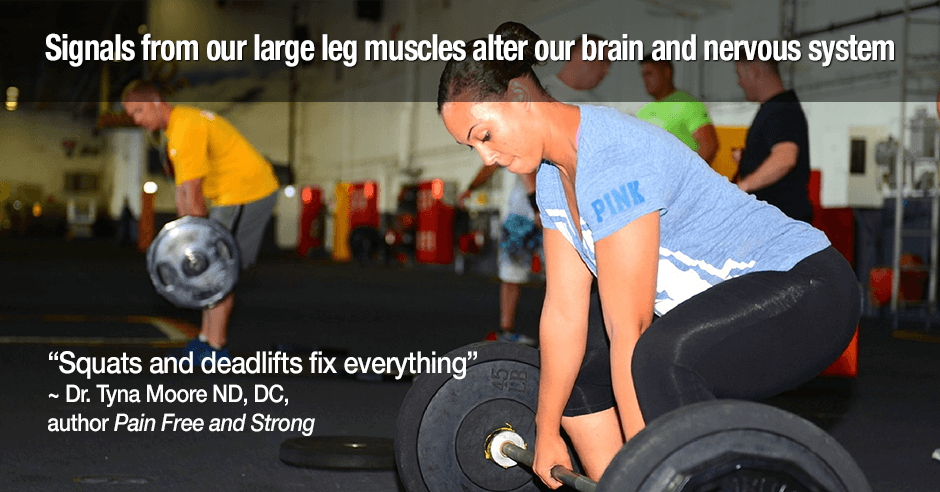
Squats and deadlifts fix everything: Signals from our large leg muscles alter our brain and nervous system

June 1, 2018 By Trudy Scott 22 Comments

A new paper published in Frontiers in Neuroscience reports new research that highlights how signals from our large leg muscles alter our brain and nervous system:

Groundbreaking research shows that neurological health depends as much on signals sent by the body’s large, leg muscles to the brain as it does on directives from the brain to the muscles… the study fundamentally alters brain and nervous system medicine – giving doctors new clues as to why patients with motor neuron disease, multiple sclerosis, spinal muscular atrophy and other neurological diseases often rapidly decline when their movement becomes limited.

My friend and colleague, Dr. Tyna Moore ND, DC, author Pain Free and Strong said this when she shared the study on social media: “Told ya – squats and deadlifts fix everything!”

Study author, Dr. Raffaella Adami, shares this about body chemistry being altered:

Our study supports the notion that people who are unable to do load-bearing exercises – such as patients who are bed-ridden, or even astronauts on extended travel – not only lose muscle mass, but their body chemistry is altered at the cellular level and even their nervous system is adversely impacted.

Here are some points from the discussion section in the actual study that relate directly to anxiety, depression and cognition:

The level of glutamate was up-regulated… the concentration of serotonin, dopamine, GABA, and epinephrine was reduced

What this means is that people who are not able to do load-bearing exercise had glutamate up-regulated (likely leading to more anxiety and excitotoxicity), reduced serotonin and GABA (contributing to more anxiety, worry, fear, depression and carb cravings), and lower dopamine and epinephrine (so more depression, less energy and less motivation).  (You can read all the symptoms associated with out of balance neurotransmitters here and how I use targeted individual amino acids to address low levels – which you want to do in conjunction with dietary and lifestyle changes such as resistance training.)

The study goes on to share that:

Prospective studies indicate that physical inactivity is one of the most frequent avoidable risk factors for developing Alzheimer’s disease. Moreover, elevated physical activity levels are associated with a lower risk of Alzheimer’s disease. The Alzheimer’s disease patient who undertook exercise training showed decreased neuropsychiatric symptoms, improvement in cognitive function, and a slower decline in the activities of daily life.

This was an animal study conducted with mice but we have many human studies that highlight the benefits of exercise for both anxiety and depression. In this recent meta-analysis “of 33 clinical trials including 1877 participants, resistance exercise training was associated with a significant reduction in depressive symptoms.”

When I shared the Frontiers in Neuroscience paper on Facebook, I received this feedback that correlates with the research:

Chris: My son’s concussion symptoms improved by leaps when he began consistent light cardio and added some leg weight training

Katie: I wonder if this is why my mom “lost her mind” (suddenly dementia) when she broke her ankle. I thought it was the antibiotics but maybe it was the extended reclining recovery

Jessica: I had a brain injury due to being hit by a car while crossing the street a year ago. I had to dig deep to heal – meditation, fish oil….. But I thought I had hit a plateau in my healing. About 2 months ago I was able to start doing yoga again, and move my body… wow, what a difference it has made in my brain healing! I am feeling able to focus again and have more brain energy! The body is connected from head to toes

As you’ve gathered from Dr. Tyna Moore’s quote about squats and deadlifts, she is a big fan of resistance training, and she is my go-to person for questions on this topic. I’ve been following her online for a few years, love her posts and we finally got to meet in person last summer.

Tyna and trudy
Tyna and I last summer

Dr. Tyna has written a great ebook called Pain Free and Strong (you can download a copy here). She shares how sarcopenia or muscle wasting results from “deconditioning and lack of strength training exercises,” and this wisdom about movement and resistance training, also referred to as strength training:

Movement is the key to life. Without movement, your cells cannot do their thing. Your blood and lymph do not pump well. Your metabolism slows, your hormones suffer and your sleep becomes compromised. More than anything, you hurt. Motion is lotion and movement is medicine.

We have been taught as a society to do cardiovascular exercises, such as running, biking or walking as the core of our exercise routines. When I discuss exercise with my patients, I talk about “appropriate and strategic exercise” and what I’m referring to is strength training.

the most potent exercises for orthopedic health, improving metabolism, balancing hormones, decreasing inflammation, modulating immune function, reducing pain, lowering blood pressure, improving heart health and increasing resilience revolve around adding and maintaining healthy lean skeletal muscle mass to the body, and keeping it there as we age.

The entire chapter on movement is well-worth reading to get a better understanding of the importance of adding and maintaining healthy lean skeletal muscle mass.

Dr. Tyna also has the answer on how we can do this, sharing that squats and deadlifts “are king and the cornerstone to any strength and conditioning program”:

Compound lifts like squats and deadlifts can give us more bang for our buck metabolically, while also providing profound hormetic and hormonal benefits. Studies have also shown that free weights may be more potent than machines, and that machines put you into an unnatural position at times, which can lead to further injury. If machines are all you have access to, so be it. Just know that free weights are optimal and you need [a professional] to show you how to use them safely.

If you’re new to squats and deadlifts like I am, you may be like me and prefer to know what you’re letting yourself in for so here are 2 excellent blog posts with great images on how to and how not to do deadlifts and squats.  For women, the exercise section in this book looks excellent: The New Rules of Lifting for Women: Lift Like a Man, Look Like a Goddess (my Amazon link). The exercise information is more than half the book and has in-depth explanations on the mechanisms, going into much more in detail than I can cover in a blog. I would pass on the nutritional sections as the advice about canola, Splenda and low-fat is clearly outdated information. But as Dr. Tyna says in her ebook, you can’t learn this from  a book or video – find a personal trainer to guide you if you’re new to free weights.

In case you’re wondering about aerobic exercise it’s still good. In fact, one study reports how both aerobic exercise and resistance training offer slightly different benefits if you suffer from anxiety:

aerobic exercise improved general psychological distress and anxiety, while resistance training improved disorder-specific symptoms, anxiety sensitivity, distress tolerance, and intolerance of uncertainty.

So go for your walk, ride your bike, swim in the ocean, go hiking, play tennis – and all the better if you can do this out in nature for the added benefits of sunshine, fresh air, greenery and the scenery – but don’t forget the huge benefits of resistance training and find a personal trainer to get you up to speed on doing squats and deadlifts and using free weights.

And remember what Dr. Tyna says: “squats and deadlifts fix everything!”

Let us know if this is new to you and you’re now interested in doing squats and deadlifts and using free weights?

I’ve done plenty of resistance training with free weights over the years, especially when I was rock-climbing every weekend, but have not done deadlifts or squats with free weights and have decided it’s time to start. I’ll keep you posted on my progress. Feel free to share your progress too.

If you’re already doing squats and deadlifts and using free weights we’d love to hear how you enjoy it, how long you’ve been doing it and the benefits you’ve seen?  And please do share tips or words of encouragement for us newbies.
Filed Under: Exercise Tagged With: ALS, anxiety, brain, brain chemicals, deadlifts, depression, hormones, leg muscles, lifting weights, nervous system, squats, weights

Amyotrophic lateral sclerosis/ALS: ketogenic diet, GABA, 5-HTP and environmental toxins

May 25, 2018 By Trudy Scott 31 Comments

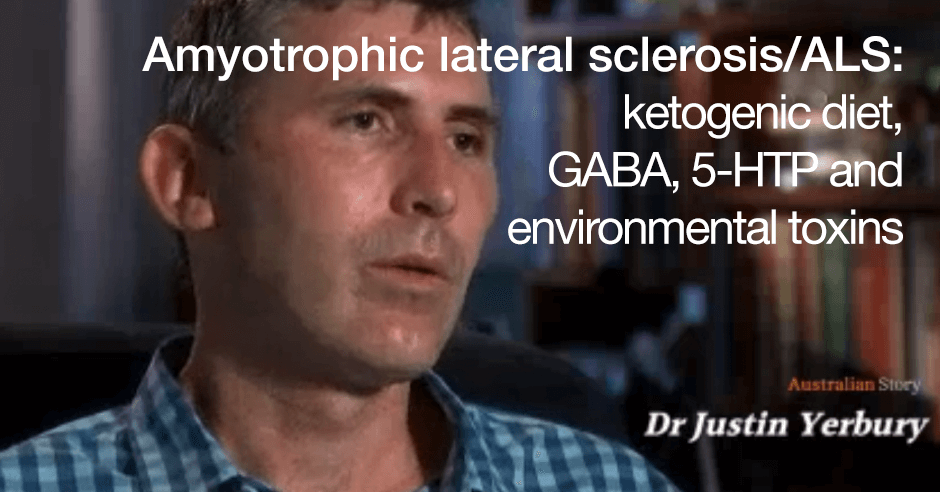
(Image from ABC: The Enemy Within – Australian Story)

I recently watched a documentary on the life and work of Justin Yerbury, a basket-ball player turned scientist who has motor neuron disease (also referred to as ALS) and is seeking a cure. It was aired on ABC and called The Enemy Within – Australian Story

When Justin Yerbury’s family members began to die from motor neurone disease he made a life-changing decision.

He turned his back on a professional basketball career and enrolled in a science degree. Almost 20 years later, he is an internationally recognised expert on the disease, leading the way in the search for a treatment.

Recently, however, Justin’s work took on a terrible urgency as he too developed symptoms of MND.

As Australian Story filmed with Justin and his family, his condition deteriorated dramatically, requiring difficult decisions to enable him to continue his search for a cure.

Having met Justin in 2017, Professor Stephen Hawking recorded the introduction to this story shortly before his death from motor neurone disease.

(the Australian spellings are neurone instead of neuron and recognised instead of recognized)

I felt very moved by his story and work and felt compelled to reach out to Dr. Yerbury to share what I have learned about this condition in the last few years. I know of a number of practitioners who work with individuals with this condition and even some colleagues with family members who have been diagnosed with this condition. I have also had enough queries that it’s time for a blog post on the topic so you are informed too.

What is Amyotrophic lateral sclerosis (ALS) and motor neuron disease (MND)?

Let’s start with the fact sheet on Amyotrophic lateral sclerosis from the NIH (National Institute of Neurological Disorders and Stroke). They describe ALS as follows:

Amyotrophic lateral sclerosis (ALS) is a group of rare neurological diseases that mainly involve the nerve cells (neurons) responsible for controlling voluntary muscle movement. Voluntary muscles produce movements like chewing, walking, and talking. The disease is progressive, meaning the symptoms get worse over time. Currently, there is no cure for ALS and no effective treatment to halt, or reverse, the progression of the disease.

ALS belongs to a wider group of disorders known as motor neuron diseases, which are caused by gradual deterioration (degeneration) and death of motor neurons. Motor neurons are nerve cells that extend from the brain to the spinal cord and to muscles throughout the body. These motor neurons initiate and provide vital communication links between the brain and the voluntary muscles.

I encourage you to watch the 30 minute program if you want to learn more about this condition and Dr. Yerbury’s work (they call it MND rather than ALS in the documentary.)

You may also be familiar with the life and story of Professor Stephen Hawking – he had ALS or motor neuron disease.

Ketogenic diet for ALS?

Here is some of the information I sent to Dr. Yerbury, explaining my work as a nutritionist working with women with anxiety using nutritional psychiatry approaches. Many of these nutritional psychiatry approaches – such as the SMILES study – have been spear-headed in Australia by Professor Felice Jacka.

I’ve recently being looking at the growing research base on the ketogenic diet and mental health and when I saw his story on ABC my first thought was – I wonder if there is research on ketogenic diets and ALS/MND? After a very quick search I found these papers:

  • High-Fat and Ketogenic Diets in Amyotrophic Lateral Sclerosis

there are strong epidemiologic data showing that malnutrition is a common symptom of amyotrophic lateral sclerosis both in humans and in mice and may contribute to disease progression. There is also epidemiologic evidence that increased dietary fat and cholesterol intake might reduce the risk of amyotrophic lateral sclerosis and the rate disease progression. Finally, data from animal studies strongly suggest that increasing dietary intake of fat ameliorates disease progression. However, determining whether amyotrophic lateral sclerosis patients should be treated with a high-fat or ketogenic diet can be based only on randomized double-blind placebo-controlled interventional trials.

  • Neuroprotection in Metabolism-Based Therapy

Metabolism-based therapy [which includes the ketogenic diet] has been used successfully in the treatment of seizures but study of its use in other neurodegenerative disorders [such as Alzheimer’s disease, Parkinson’s disease and ALS] is growing.

A gluten-free diet?

We must always consider gluten with every chronic health condition. There is a case report of celiac disease with neurologic manifestations misdiagnosed as amyotrophic lateral sclerosis:

he was diagnosed as having CD, and a gluten-free diet was immediately begun. At a 4-month follow-up, his weight and the quality of his stool had improved gradually, and the neurological manifestations had not progressed.

Another study reports that in certain cases, ALS may be associated with autoimmunity and gluten sensitivity, with elevated transglutaminase 6 antibodies in the serum of 23 patients.

GABA and 5-HTP: the Deanna Protocol

Awhile back I was contacted by someone in my community about the Deanna Protocol for ALS because it uses amino acids GABA and 5-HTP and other nutrients like niacin and CoQ10:

It is determined that the substances in the DP™ Plan provide energy to cells that are dying and in doing so keeps them alive.  This is very important because when nerve cells die, they release glutamate which kills the contiguous cells.  If too many cells are dying then we cannot supply enough energy to keep up with the rate of death of the cells.  When the DP™ Plan​ is taken in sufficient quantities, it will support the nerves that are challenged by glutamate.

As you may already know I use targeted individual amino acids such as GABA and tryptophan/5-HTP with clients so I am very familiar with their therapeutic benefits for anxiety and I am fascinated they also ease symptoms in ALS.

There is an animal study supporting this approach: Metabolic therapy with Deanna Protocol supplementation delays disease progression and extends survival in amyotrophic lateral sclerosis (ALS) mouse model.

Anxiety and depression

There is also research indicating that psychiatric symptoms often precede an ALS diagnosis:

neuropsychiatric conditions are overrepresented in amyotrophic lateral sclerosis (ALS) patient kindreds and psychiatric symptoms may precede the onset of motor symptoms…. A diagnosis of depression was significantly associated with a first record of ALS ≥5 years later, in keeping with growing evidence for major depressive disorder as an early marker of cerebral neurodegeneration.

This doesn’t mean if you have anxiety or depression that ALS or another neurodegenerative disorder is in your future, because we can address so many of the root causes before we get to that diagnosis. Many of the nutrients in the Deanna Protocol will help both the person with ALS and the caregivers who also suffer psychological distress.

Environmental toxins and ALS

We recently spent 3 days at Shell Harbour just south of the Wollongong area and we loved it!

Lovely Red Sands Beach, NSW

As beautiful as it was I couldn’t help but be concerned about the toxins being released into the air from the steel production plants. Dr. Yerbury lives in the area and is conducting his research at the University of Wollongong. I know toxins play a role in many diseases and wondered about an ALS connection. I found this paper: Association of Environmental Toxins With Amyotrophic Lateral Sclerosis

Pollution in Wollongong

I also shared that I’m a total research geek and pretty passionate about the power of nutrition, lifestyle and environmental factors because this was how I was able to eliminate my own anxiety and panic attacks.

You can learn more about Dr. Yerbury and his publications here. We appreciate the work him and his research team are doing and thank him for sharing his story.

It would be wonderful if some of this information can help Dr. Yerbury and even be considered for future research by his very passionate research team. I also hope this information will be helpful for you or a loved one suffering with ALS or MND.

Filed Under: Anxiety, Gluten, Toxins Tagged With: 5-HTP, ALS, amyotrophic lateral sclerosis, anxiety, caregiver, depression, Dr. Justin Yerbury, environmental toxins, GABA, gluten, Ketogenic diet, MND, motor neuron disease

Primary Sidebar

NEW! GABA QuickStart Homestudy (with special intro pricing)

gaba quickstart homestudy

Free Report

9 Great Questions Women Ask about Food, Mood and their Health

You'll also receive a complimentary subscription to my ezine "Food, Mood and Gal Stuff"


Connect with me

Popular Posts

  • Amino Acids Mood Questionnaire from The Antianxiety Food Solution
  • The Antianxiety Food Solution Amino Acid and Pyroluria Supplements
  • Pyroluria Questionnaire from The Antianxiety Food Solution
  • Collagen and gelatin lower serotonin: does this increase your anxiety and depression?
  • Tryptophan for the worry-in-your-head and ruminating type of anxiety
  • GABA for the physical-tension and stiff-and-tense-muscles type of anxiety
  • The Antianxiety Food Solution by Trudy Scott
  • Seriphos Original Formula is back: the best product for anxiety and insomnia caused by high cortisol
  • Am I an anxious introvert because of low zinc and vitamin B6? My response to Huffington Post blog
  • Vagus nerve rehab with GABA, breathing, humming, gargling and key nutrients

Recent Posts

  • What do I use instead of Seriphos to help lower high cortisol that is affecting my sleep and making me anxious at night?
  • BeSerene™ GABA/theanine cream eases severe muscle tension in her neck/shoulders, prevents her bad headaches and quells her anxiety
  • How the correct approach, dose and sublingual use of GABA can be calming and not cause a flushed and itchy face and neck
  • The amino acid glutamine improves low mood by addressing gut health, and it has calming effects too
  • Flight anxiety with heightened breath, physical tension and also fearing the worst (the role of low GABA and low serotonin)

Categories

  • 5-HTP
  • AB575
  • Addiction
  • ADHD
  • Adrenals
  • Alcohol
  • Allergies
  • Alzheimer's disease
  • Amino Acids
  • Anger
  • Antianxiety
  • Antianxiety Food Solution
  • Antidepressants
  • Anxiety
  • Anxiety and panic
  • Autism
  • Autoimmunity
  • benzodiazapines
  • Bipolar disorder
  • Books
  • Caffeine
  • Cancer
  • Candida
  • Children/Teens
  • Collagen
  • Cooking equipment
  • Coronavirus/COVID-19
  • Cravings
  • Depression
  • Detoxification
  • Diabetes
  • Diet
  • DPA/DLPA
  • Drugs
  • EFT/Tapping
  • EMF
  • EMFs
  • Emotional Eating
  • Endorphins
  • Environment
  • Essential oils
  • Events
  • Exercise
  • Fear
  • Fear of public speaking
  • Fertility and Pregnancy
  • Fish
  • Food
  • Food and mood
  • Functional neurology
  • GABA
  • Gene polymorphisms
  • General Health
  • Giving
  • Giving back
  • Glutamine
  • Gluten
  • GMOs
  • Gratitude
  • Gut health
  • Heart health/hypertension
  • Histamine
  • Hormone
  • Hyperparathyroidism
  • Hypoglycemia
  • Immune system
  • Inflammation
  • Insomnia
  • Inspiration
  • Introversion
  • Joy and happiness
  • Ketogenic diet
  • Lithium orotate
  • Looking awesome
  • Lyme disease and co-infections
  • MCAS/histamine
  • Medication
  • Men's health
  • Mental health
  • Mercury
  • Migraine
  • Mold
  • Movie
  • MTHFR
  • Multiple sclerosis
  • Music
  • NANP
  • Nature
  • Nutritional Psychiatry
  • OCD
  • Osteoporosis
  • Oxalates
  • Oxytocin
  • Pain
  • Paleo
  • Parasites
  • Parkinson’s disease
  • PCOS
  • People
  • PMS
  • Postpartum
  • PTSD/Trauma
  • Pyroluria
  • Questionnaires
  • Real whole food
  • Recipes
  • Research
  • Schizophrenia
  • serotonin
  • SIBO
  • Sleep
  • Special diets
  • Sports nutrition
  • Stress
  • Sugar addiction
  • Sugar and mood
  • Supplements
  • Teens
  • Testimonials
  • Testing
  • The Anxiety Summit
  • The Anxiety Summit 2
  • The Anxiety Summit 3
  • The Anxiety Summit 4
  • The Anxiety Summit 5
  • The Anxiety Summit 6
  • Thyroid
  • Thyroid health
  • Toxins
  • Tryptophan
  • Tyrosine
  • Uncategorized
  • Vegan/vegetarian
  • Women's health
  • Yoga

Archives

  • October 2025
  • September 2025
  • August 2025
  • July 2025
  • June 2025
  • May 2025
  • April 2025
  • March 2025
  • February 2025
  • January 2025
  • November 2024
  • October 2024
  • September 2024
  • August 2024
  • July 2024
  • June 2024
  • May 2024
  • April 2024
  • March 2024
  • February 2024
  • January 2024
  • December 2023
  • November 2023
  • October 2023
  • September 2023
  • August 2023
  • July 2023
  • June 2023
  • May 2023
  • April 2023
  • March 2023
  • February 2023
  • January 2023
  • December 2022
  • November 2022
  • October 2022
  • September 2022
  • August 2022
  • July 2022
  • June 2022
  • May 2022
  • April 2022
  • March 2022
  • February 2022
  • January 2022
  • December 2021
  • November 2021
  • October 2021
  • September 2021
  • August 2021
  • July 2021
  • June 2021
  • May 2021
  • April 2021
  • March 2021
  • February 2021
  • January 2021
  • December 2020
  • November 2020
  • October 2020
  • September 2020
  • August 2020
  • July 2020
  • June 2020
  • May 2020
  • April 2020
  • March 2020
  • February 2020
  • January 2020
  • December 2019
  • November 2019
  • October 2019
  • September 2019
  • August 2019
  • July 2019
  • June 2019
  • May 2019
  • April 2019
  • March 2019
  • February 2019
  • January 2019
  • December 2018
  • November 2018
  • October 2018
  • September 2018
  • August 2018
  • July 2018
  • June 2018
  • May 2018
  • April 2018
  • March 2018
  • February 2018
  • January 2018
  • December 2017
  • November 2017
  • October 2017
  • September 2017
  • August 2017
  • July 2017
  • June 2017
  • May 2017
  • April 2017
  • March 2017
  • February 2017
  • January 2017
  • December 2016
  • November 2016
  • October 2016
  • September 2016
  • August 2016
  • July 2016
  • June 2016
  • May 2016
  • April 2016
  • March 2016
  • February 2016
  • January 2016
  • December 2015
  • November 2015
  • October 2015
  • September 2015
  • August 2015
  • July 2015
  • June 2015
  • May 2015
  • April 2015
  • March 2015
  • February 2015
  • January 2015
  • December 2014
  • November 2014
  • October 2014
  • September 2014
  • August 2014
  • July 2014
  • June 2014
  • May 2014
  • April 2014
  • March 2014
  • February 2014
  • January 2014
  • December 2013
  • November 2013
  • October 2013
  • September 2013
  • August 2013
  • July 2013
  • June 2013
  • May 2013
  • April 2013
  • March 2013
  • February 2013
  • January 2013
  • December 2012
  • November 2012
  • October 2012
  • August 2012
  • July 2012
  • June 2012
  • May 2012
  • April 2012
  • March 2012
  • February 2012
  • January 2012
  • December 2011
  • November 2011
  • October 2011
  • September 2011
  • August 2011
  • July 2011
  • June 2011
  • May 2011
  • April 2011
  • March 2011
  • February 2011
  • January 2011
  • December 2010
  • October 2010
  • September 2010
  • July 2010
  • May 2010
  • April 2010
  • March 2010
  • February 2010
  • January 2010
  • November 2009

Share the knowledge!

The above statements have not been evaluated by the Food and Drug Administration. Products listed in this website are not intended to diagnose, treat, cure or prevent any disease.

The information provided on this site is for informational and educational purposes only and is not intended as a substitute for advice from your physician or other health care professional. You should consult with a healthcare professional before starting or modifying any diet, exercise, or supplementation program, before taking or stopping any medication, or if you have or suspect you may have a health problem.


Copyright © 2026 Trudy Scott. All Rights Reserved. | Privacy | Terms and Conditions | Refund Policy | Medical Disclaimer

Free Report

9 Great Questions Women Ask about Food, Mood and their Health

You’ll also receive a complimentary subscription to my ezine “Food, Mood and Gal Stuff”