• Skip to primary navigation
  • Skip to main content
  • Skip to primary sidebar

everywomanover29 blog

Food, Mood and Women's Health – Be your healthiest, look and feel great!

  • Blog
  • About
  • Services
  • Store
  • Resources
  • Testimonials
  • The Book
  • Contact
  • Search this site

almond flour

Gingerbread Coconut Muffins (a gluten-free/low oxalate recipe)

July 28, 2023 By Trudy Scott 12 Comments

gingerbread coconut muffins

If you have gluten sensitivity or celiac disease and/or dietary oxalate issues (pain, anxiety, insomnia, restless legs, hearing loss, eye issues, unresolved thyroid issues, bladder issues and more) and yet really miss the occasional muffin this Gingerbread Coconut Muffins recipe is a delicious gluten-free and low oxalate option. I see way too many so-called healthy gluten-free recipes using almond flour.  This is concerning given that almonds are high in oxalates. Keep in mind that wheat is also high oxalate.

I’m finding dietary oxalate issues to be underappreciated especially in menopausal women when symptoms can show up and be more severe. If you’re new to the dietary oxalate issues you can read more below.

I have also found that using almond flour and other nut flours in baking affects your zinc/copper balance, increasing copper and hence causing more anxiety and even panic attacks.

If you don’t have dietary oxalate issues, you can certainly enjoy this recipe too. But watch the overindulging and binge-eating (more on that and using amino acids below).

Gingerbread Coconut Muffins (a low oxalate recipe)

Ingredients

6 eggs
1/3 cup melted butter
1/4 teaspoon salt
1/2 cup molasses
1/2 cup coconut sugar
2-3 teaspoons ginger powder (or liquid ginger extract)
3/4 cup sifted coconut flour
1 tablespoon ground flax seeds

Method

Melt the butter over low heat and add the coconut sugar and molasses. Once it’s cooled add the eggs and mix well. Stir in the coconut flour, salt, ground flax seeds and ginger powder.

Spoon the mixture into two greased mini muffin pans. Bake at 400 degrees F/ 205 degrees C for 12 – 14 minutes. The muffins will rise nicely and will start to turn dark brown. Remove and cool on a cooking rack. Makes 24 mini muffins.

Eat warm or when cooled. Serve with butter and/or cream and/or coconut butter. For a little added sweetness a small amount of raw honey can be spread on a muffin too.

My adaptation from a gingerbread cookies recipe

I adapted this recipe from a Gingerbread Cookies recipe in Cooking with Coconut Flour by Bruce Fife ND. I pretty much always do this when I cook – adapt recipes to my needs and likes – and always reduce the sugar. In this instance, I halved the sugar and used coconut sugar instead.

I also increased the ginger because I love all things ginger. I upped it from 1 teaspoon ground ginger to 2 teaspoons and will actually try 3 teaspoons next time I make them. Ginger can be an issue if you have oxalate issues so you’d want to see how much you can tolerate – so far so good for me. If you do have issues with ground ginger you could always use a liquid ginger extract which is low oxalate.

I omitted the cinnamon and cloves to emphasize the ginger taste. I also added ground flax seeds for added fiber.

I decided to cook them in mini muffin pans instead of making cookies on a baking tray but you could always try this option. Use the same temperature and cooking time per the original recipe.

The blackstrap molasses makes them so flavorful too and takes me back to my childhood. Molasses is nutrient dense too, providing calcium, magnesium, potassium, manganese, iron, vitamin B6, and selenium. Just be sure to use molasses made from sugar cane and not sugar beets (which are high in oxalates).

They were surprisingly soft and moist and eating them with butter and/or cream made them even more delicious. I always like to include some healthy fats. If dairy isn’t tolerated, coconut cream could be substituted. I suspect coconut oil could be substituted for the melted butter but have not tried this yet.
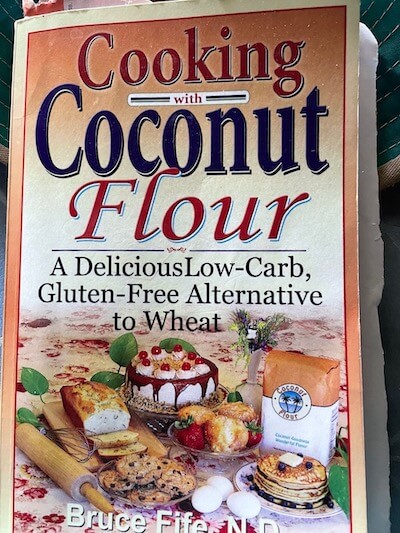
cooking with coconut flour

Here is Cooking with Coconut Flour by Bruce Fife ND. You can find it on Amazon here (my link). I’ve baked a number of recipes from this book and I’m impressed. I really appreciate that it’s all coconut flour recipes with no almond flour or other gluten-free flours used.

If you do battle with sugar cravings and binge eating – use amino acids

It’s ideal to keep baked goods – especially the ones shown on the cover of this book – to a minimum. But for an occasional treat this recipe book is excellent.

If you do battle with sugar cravings and binge eating, don’t forget how useful the amino acids are for stopping your cravings with no willpower and no feelings of deprivation. You can learn more about this here: The individual amino acids glutamine, GABA, tryptophan (or 5-HTP), DPA and tyrosine are powerful for eliminating sugar cravings, often within 5 minutes.

I discuss cravings/emotional eating and how to use amino acids in my book, The Antianxiety Food Solution – How the Foods You Eat Can Help You Calm Your Anxious Mind, Improve Your Mood and End Cravings. More here. I also cover how low blood sugar can lead to both anxiety and cravings and how to prevent this by use glutamine and eating for blood sugar stability.

If you’re new to dietary oxalates as a possible health issue

This blog post is a helpful one to start with if you’re new to dietary oxalates and the issues they can cause: Oxalate crystal disease, dietary oxalates and pain: the research & questions

These are the common medium-oxalate and high-oxalate foods that many folks have problems with: nuts, nut-butters and nut-flour (especially baking with almond flour and something to watch when eating Paleo or GAPS), wheat, chocolate, kiwi fruit (very high – see the raphides image on the above blog), star fruit (also very high), beets, potatoes, sweet potatoes, legumes, raspberries, spinach and soy.

In the above blog post, I share an overview of oxalates, my pain issues with dietary oxalates (severe foot pain and eye pain), and deeper dive into the condition called oxalate crystal disease (with some of my insights and questions).

The big take-aways are that calcium oxalate crystals are sharp and can cause far reaching harm beyond pain – such as unresolved anxiety, thyroid issues, neurological symptoms, eye issues, hearing loss, bladder issues, headaches, fatigue, insomnia, restless legs, autism symptoms and more. You can have issues with dietary oxalates and not have kidney disease/kidney stones, although there is very little research supporting the latter.

You may find these oxalate blogs helpful too:

  • Increased kidney stones in postmenopausal women with lower estradiol levels. What about increased dietary oxalate issues too?
  • Waking in the night due to environmental toxins: impacts on the liver, gallbladder and fat digestion (making oxalate issues worse)
  • Butternut Bake recipe (a low oxalate alternative to Potato Bake)
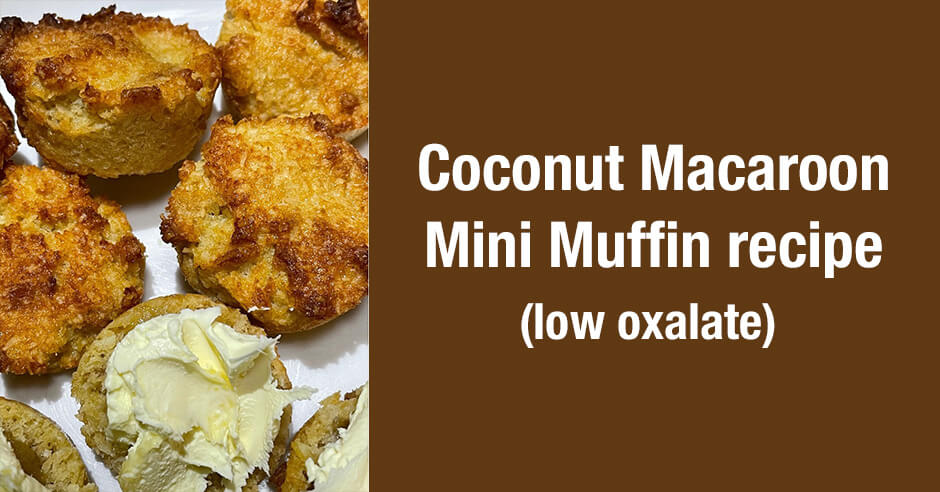
  • Coconut Macaroon Mini Muffin recipe (low oxalate)

What dietary oxalates issues have you experienced and has a low oxalate diet helped you?

If you have dietary oxalates issues can you handle ginger?

Do let us know if you make this recipe and enjoy it.

Feel free to share a favorite recipe of something you’ve adapted to be low or even medium oxalate.

If you have questions and feedback please share them here too.
Filed Under: Amino Acids, Anxiety, Recipes Tagged With: almond flour, anxiety, blackstrap molasses, bladder issues, celiac disease, coconut flour, copper, cravings. amino acids, dietary oxalate issues, eye issues, Gingerbread, gluten sensitivity, gluten-free, hearing loss, insomnia, Low oxalate, menopause, muffin, pain, recipe, restless legs, unresolved thyroid issues

Coconut Macaroon Mini Muffin recipe (low oxalate)

January 20, 2023 By Trudy Scott 18 Comments

coconut macaroon mini muffin

If you have dietary oxalate issues (pain, anxiety, insomnia, restless legs, hearing loss, eye issues, unresolved thyroid issues, bladder issues and more) and yet really miss the occasional muffin this Coconut Macaroon Mini Muffin recipe is a delicious low oxalate option. I see way too many so-called healthy gluten-free recipes that use almond flour and it’s concerning given that almonds are high oxalate foods. If you’re new to the dietary oxalate issues you can read more about this below. I’m finding it to be underappreciated as an issue especially in menopausal women when symptoms seem to be more severe in susceptible individuals. I have also found that using almond flour in baking affects your zinc/copper balance, increasing copper and hence causing more anxiety and even panic attacks.

If you don’t have dietary oxalate issues, you can certainly enjoy this recipe too. The addition of flaked coconut does make it similar to macaroons.

Coconut Macaroon Mini Muffin recipe (a low oxalate option)

Ingredients

1/2 cup melted butter
1/2 cup coconut sugar
4 eggs
1/2 teaspoon vanilla
1/2 cup sifted coconut flour
2 cups coconut flakes

Method

Melt the butter over low heat and add the coconut sugar. Once it’s cooled add the eggs and vanilla. Stir in the coconut flour and coconut flakes.

Spoon the mixture into a greased mini muffin pan. Bake at 375 degrees F/ 190 degrees C for 18 – 20 minutes. The muffins don’t rise at all but will start to turn golden brown. Remove and cool on a cooking rack. Makes 12 mini muffins.

Eat warm or when cooled. Serve with butter and/or cream and/or coconut butter. For a little added sweetness a small amount of raw honey can be spread on a muffin too.

coconut macaroon muffins

I adapted this recipe from the Coconut Butter Cookies recipe in “Cooking with Coconut Flour” by Bruce Fife ND. I pretty much always do this when I cook – adapt recipes to my needs and likes – and always reduce the sugar. In this instance, I halved the sugar and used coconut sugar.

The original recipe does have a reduced sugar option suggesting using ½ cup of sugar and adding ¼ teaspoon stevia. I’d find this too sweet.

I decided to cook them in mini muffin pans instead of making cookies on a baking tray but you could always try this option. Use the same temperature and cooking time per the original recipe.

They were a little dry (next time I’ll use a little extra butter in the recipe) but eating them with butter and/or cream made them delicious. I tried both – I always like to include some healthy fats. If dairy isn’t tolerated, coconut cream could be substituted. I suspect coconut oil could be substituted for the melted butter but have not tried it.

cooking with coconut flour

Here is “Cooking with Coconut Flour” by Bruce Fife ND. You can find it on Amazon here (my link). I’ve baked a number of recipes from this book and I’m impressed. I really appreciate that it’s all coconut flour recipes with no almond flour or other gluten-free flours used.

It’s ideal to keep baked goods – especially the ones shown on the cover of this book – to a minimum. But for an occasional treat this recipe book is excellent.

If you’re new to dietary oxalates as a possible issue

This blog post is a helpful one to start with if you’re new to dietary oxalates and the issues they can cause: Oxalate crystal disease, dietary oxalates and pain: the research & questions

These are the common medium-oxalate and high-oxalate foods that many folks have problems with: nuts, nut-butters and nut-flour (especially baking with almond flour and something to watch when eating Paleo or GAPS), wheat, chocolate, kiwi fruit (very high – see the raphides image on the above blog), star fruit (also very high), beets, potatoes, sweet potatoes, legumes, raspberries, spinach and soy.

In the above blog post, I share an overview of oxalates, my pain issues with dietary oxalates (severe foot pain and eye pain), and deeper dive into the condition called oxalate crystal disease (with some of my insights and questions).

The big take-aways are that calcium oxalate crystals are sharp and can cause far reaching harm beyond pain – such as unresolved anxiety, thyroid issues, neurological symptoms, eye issues, hearing loss, bladder issues, headaches, fatigue, insomnia, restless legs, autism symptoms and more. You can have issues with dietary oxalates and not have kidney disease/kidney stones, although there is very little research supporting the latter.

You may find these oxalate blogs helpful too:

  • Increased kidney stones in postmenopausal women with lower estradiol levels. What about increased dietary oxalate issues too?
  • Waking in the night due to environmental toxins: impacts on the liver, gallbladder and fat digestion (making oxalate issues worse)
  • Butternut Bake recipe (a low oxalate alternative to Potato Bake)

What dietary oxalates issues have you experienced and has a low oxalate diet helped you?

Do let us know if you make this recipe and enjoy it.

Feel free to share a favorite recipe of something you’ve adapted to be low or even medium oxalate.

If you have questions and feedback please share them here too.

Filed Under: Anxiety, Oxalates, Recipes Tagged With: almond flour, anxiety, bladder issues, coconut, coconut flour, Coconut Macaroon Mini Muffin recipe, copper, dietary oxalate issues, eye issues, gluten-free recipes, hearing loss, insomnia, Low oxalate, menopausal, oxalate, pain, panic attacks, restless legs, unresolved thyroid issues, zinc

The Anxiety Summit – Eggs, broths, sprouts, almond flour, questions and what to do next

November 16, 2014 By Trudy Scott 31 Comments

Trudy Scott Anxiety

The host of the Anxiety Summit, Trudy Scott, Food Mood Expert and Nutritionist, author of The Antianxiety Food Solution talks about:

Eggs, broths, sprouts, almond flour, questions and what to do next

  • Are eggs a superfood? and choline for a better mood and less anxiety
  • More superfoods: broths, sprouts and curcumin
  • Reconsidering almond flour for baking
  • Questions answered (a select few from the blog and facebook page)
  • What you can get out of the summit, resources and where to go next

We’ve gathered all the speaker/topic blogs into one blog called Anxiety Summit Season 2 speakers and topics so you can find them easily. These have snippets from our interviews, links to research, and links to speaker books and gifts.  You can also use these blogs to comment, share your experiences and ask questions. 

Here is the New York Times article U.S.D.A. Approves Modified Potato

The potato’s DNA has been altered so that less of a chemical called acrylamide, which is suspected of causing cancer in people, is produced when the potato is fried.

A Huffpo blog announces Doritos-Flavored Mountain Dew Is Real

Here is New York City’s first take-out window devoted to sippable broths

I recently spoke on Dr. Josh Axe’s Natural Cures summit and here is a great broth recipe on his site

I love this picture in the LA urban farming article

The dinner menu lists “our home-grown items”: broccolini, baby carrots, blueberries, figs, snap peas and heirloom tomatoes.

Here is a link to Julia Rucklidge’s TEDX talk: The surprisingly dramatic role of nutrition in mental health. I love how she opens with:

what I’m going to share today may sound as radical as hand-washing sounded to a mid-19th century doctor and yet it is equally scientific. It is the simple idea that optimizing nutrition is a safe and viable way to avoid, treat or lessen mental illness. Nutrition matters. Poor nutrition is a significant and modifiable risk factor for the development of mental illness

Eggs are one of the most nutritious foods on earth! Here is some of the egg research:

“Orally administered whole egg demonstrates antidepressant-like effects in the forced swimming test on rats”

Skipping breakfast can increase depression, anxiety and stress levels and eggs can be part of a healthy breakfast. “A cross-sectional investigation of depressive, anxiety, and stress symptoms and health-behavior participation in Australian university students”

Eggs are an excellent source of choline. Research shows that plasma choline levels are related to anxiety levels

The lowest choline quintile was significantly associated with high anxiety levels.

Results from an October 2014 study in Behavioral Brain Research suggest that

high choline intake during early development can prevent or dramatically reduce deficits in social behavior and anxiety in an autistic mouse model

An article on Webmd, Egg-Rich Diet Not Harmful in Type 2 Diabetes suggest that

eating two eggs per day, 6 days a week can be a safe part of a healthy diet for people with type 2 (that’s 12 eggs a week – yeah!)

I blogged about eggs and that you can eat the yolk this last month. You can read about TMAO concerns in the comments of the above blog.

Grow your own broccoli sprouts to get sulforaphane! Here is the study called Sulforaphane treatment of autism spectrum disorder (ASD), published Oct 2014

improvement in social interaction, abnormal behavior, and verbal communication

… oxidative stress, depressed glutathione synthesis, reduced mitochondrial function and oxidative phosphorylation, increased lipid peroxidation, and neuroinflammmation

Here is the curcumin depression study

In a randomised, double-blind, placebo-controlled study, 56 individuals with major depressive disorder were treated with curcumin (500 mg twice daily) or placebo for 8 weeks.

From weeks 4 to 8, curcumin was significantly more effective than placebo in improving several mood-related symptoms

Here is my healthy travel foods blog that includes pemmican, THE energy bar of the 21st century. You can purchase pemmican from US Wellness Meats.

Here is my carob blog with the yummy Carob Cinnamon Delight al la Trudy

I mentioned a number of studies related to PTSD symptoms. Here they are:

  • Lower EPA (one of the omega-3 fatty acids) levels are associated with the severity of clinical symptoms in PTSD.
  • One factor could be low levels of vitamin D
  • Another factor in PTSD could be cortisol and DHEA
  • And a new study found a connection between PTSD and low HDL and high triglycerides

Here are the Amino Acid Precautions. They will also be added to my blog Targeted individual amino acids for eliminating anxiety: practical applications.

If you are wanting to find out more about pyroluria, do check out my session from season 1 “How zinc and vitamin B6 prevent pyroluria and social anxiety.   And here is the pyroluria questionnaire from my book.

If you missed my opening interview here are a few lines from “Top of the World”

A new beginning, a brand new day
All of my fears are gone away
I feel so calm, so free, so whole
Right now, I’m feeling on top of the world

Grab your copy of the song here if you don’t yet have it!

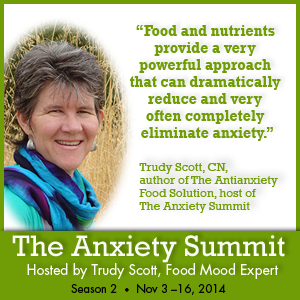
“Food and nutrients provide a very powerful approach that can dramatically reduce and very often completely eliminate anxiety- and can totally prevent it in the first place too.”

You can have zero anxiety! Really! You deserve to feel on top of the world.

If you are not already registered for the Anxiety Summit you can get live access to the speakers of the day here www.theAnxietySummit.com

Filed Under: Antianxiety, Anxiety and panic, Food and mood, The Anxiety Summit 2 Tagged With: almond flour, anxiety, broths, curcumin, eggs, sprouts, the anxiety summit, Trudy Scott

Primary Sidebar

NEW! GABA QuickStart Homestudy (with special intro pricing)

gaba quickstart homestudy

Free Report

9 Great Questions Women Ask about Food, Mood and their Health

You'll also receive a complimentary subscription to my ezine "Food, Mood and Gal Stuff"


Connect with me

Popular Posts

  • Amino Acids Mood Questionnaire from The Antianxiety Food Solution
  • The Antianxiety Food Solution Amino Acid and Pyroluria Supplements
  • Pyroluria Questionnaire from The Antianxiety Food Solution
  • Collagen and gelatin lower serotonin: does this increase your anxiety and depression?
  • Tryptophan for the worry-in-your-head and ruminating type of anxiety
  • GABA for the physical-tension and stiff-and-tense-muscles type of anxiety
  • The Antianxiety Food Solution by Trudy Scott
  • Seriphos Original Formula is back: the best product for anxiety and insomnia caused by high cortisol
  • Am I an anxious introvert because of low zinc and vitamin B6? My response to Huffington Post blog
  • Vagus nerve rehab with GABA, breathing, humming, gargling and key nutrients

Recent Posts

  • What do I use instead of Seriphos to help lower high cortisol that is affecting my sleep and making me anxious at night?
  • BeSerene™ GABA/theanine cream eases severe muscle tension in her neck/shoulders, prevents her bad headaches and quells her anxiety
  • How the correct approach, dose and sublingual use of GABA can be calming and not cause a flushed and itchy face and neck
  • The amino acid glutamine improves low mood by addressing gut health, and it has calming effects too
  • Flight anxiety with heightened breath, physical tension and also fearing the worst (the role of low GABA and low serotonin)

Categories

  • 5-HTP
  • AB575
  • Addiction
  • ADHD
  • Adrenals
  • Alcohol
  • Allergies
  • Alzheimer's disease
  • Amino Acids
  • Anger
  • Antianxiety
  • Antianxiety Food Solution
  • Antidepressants
  • Anxiety
  • Anxiety and panic
  • Autism
  • Autoimmunity
  • benzodiazapines
  • Bipolar disorder
  • Books
  • Caffeine
  • Cancer
  • Candida
  • Children/Teens
  • Collagen
  • Cooking equipment
  • Coronavirus/COVID-19
  • Cravings
  • Depression
  • Detoxification
  • Diabetes
  • Diet
  • DPA/DLPA
  • Drugs
  • EFT/Tapping
  • EMF
  • EMFs
  • Emotional Eating
  • Endorphins
  • Environment
  • Essential oils
  • Events
  • Exercise
  • Fear
  • Fear of public speaking
  • Fertility and Pregnancy
  • Fish
  • Food
  • Food and mood
  • Functional neurology
  • GABA
  • Gene polymorphisms
  • General Health
  • Giving
  • Giving back
  • Glutamine
  • Gluten
  • GMOs
  • Gratitude
  • Gut health
  • Heart health/hypertension
  • Histamine
  • Hormone
  • Hyperparathyroidism
  • Hypoglycemia
  • Immune system
  • Inflammation
  • Insomnia
  • Inspiration
  • Introversion
  • Joy and happiness
  • Ketogenic diet
  • Lithium orotate
  • Looking awesome
  • Lyme disease and co-infections
  • MCAS/histamine
  • Medication
  • Men's health
  • Mental health
  • Mercury
  • Migraine
  • Mold
  • Movie
  • MTHFR
  • Multiple sclerosis
  • Music
  • NANP
  • Nature
  • Nutritional Psychiatry
  • OCD
  • Osteoporosis
  • Oxalates
  • Oxytocin
  • Pain
  • Paleo
  • Parasites
  • Parkinson’s disease
  • PCOS
  • People
  • PMS
  • Postpartum
  • PTSD/Trauma
  • Pyroluria
  • Questionnaires
  • Real whole food
  • Recipes
  • Research
  • Schizophrenia
  • serotonin
  • SIBO
  • Sleep
  • Special diets
  • Sports nutrition
  • Stress
  • Sugar addiction
  • Sugar and mood
  • Supplements
  • Teens
  • Testimonials
  • Testing
  • The Anxiety Summit
  • The Anxiety Summit 2
  • The Anxiety Summit 3
  • The Anxiety Summit 4
  • The Anxiety Summit 5
  • The Anxiety Summit 6
  • Thyroid
  • Thyroid health
  • Toxins
  • Tryptophan
  • Tyrosine
  • Uncategorized
  • Vegan/vegetarian
  • Women's health
  • Yoga

Archives

  • October 2025
  • September 2025
  • August 2025
  • July 2025
  • June 2025
  • May 2025
  • April 2025
  • March 2025
  • February 2025
  • January 2025
  • November 2024
  • October 2024
  • September 2024
  • August 2024
  • July 2024
  • June 2024
  • May 2024
  • April 2024
  • March 2024
  • February 2024
  • January 2024
  • December 2023
  • November 2023
  • October 2023
  • September 2023
  • August 2023
  • July 2023
  • June 2023
  • May 2023
  • April 2023
  • March 2023
  • February 2023
  • January 2023
  • December 2022
  • November 2022
  • October 2022
  • September 2022
  • August 2022
  • July 2022
  • June 2022
  • May 2022
  • April 2022
  • March 2022
  • February 2022
  • January 2022
  • December 2021
  • November 2021
  • October 2021
  • September 2021
  • August 2021
  • July 2021
  • June 2021
  • May 2021
  • April 2021
  • March 2021
  • February 2021
  • January 2021
  • December 2020
  • November 2020
  • October 2020
  • September 2020
  • August 2020
  • July 2020
  • June 2020
  • May 2020
  • April 2020
  • March 2020
  • February 2020
  • January 2020
  • December 2019
  • November 2019
  • October 2019
  • September 2019
  • August 2019
  • July 2019
  • June 2019
  • May 2019
  • April 2019
  • March 2019
  • February 2019
  • January 2019
  • December 2018
  • November 2018
  • October 2018
  • September 2018
  • August 2018
  • July 2018
  • June 2018
  • May 2018
  • April 2018
  • March 2018
  • February 2018
  • January 2018
  • December 2017
  • November 2017
  • October 2017
  • September 2017
  • August 2017
  • July 2017
  • June 2017
  • May 2017
  • April 2017
  • March 2017
  • February 2017
  • January 2017
  • December 2016
  • November 2016
  • October 2016
  • September 2016
  • August 2016
  • July 2016
  • June 2016
  • May 2016
  • April 2016
  • March 2016
  • February 2016
  • January 2016
  • December 2015
  • November 2015
  • October 2015
  • September 2015
  • August 2015
  • July 2015
  • June 2015
  • May 2015
  • April 2015
  • March 2015
  • February 2015
  • January 2015
  • December 2014
  • November 2014
  • October 2014
  • September 2014
  • August 2014
  • July 2014
  • June 2014
  • May 2014
  • April 2014
  • March 2014
  • February 2014
  • January 2014
  • December 2013
  • November 2013
  • October 2013
  • September 2013
  • August 2013
  • July 2013
  • June 2013
  • May 2013
  • April 2013
  • March 2013
  • February 2013
  • January 2013
  • December 2012
  • November 2012
  • October 2012
  • August 2012
  • July 2012
  • June 2012
  • May 2012
  • April 2012
  • March 2012
  • February 2012
  • January 2012
  • December 2011
  • November 2011
  • October 2011
  • September 2011
  • August 2011
  • July 2011
  • June 2011
  • May 2011
  • April 2011
  • March 2011
  • February 2011
  • January 2011
  • December 2010
  • October 2010
  • September 2010
  • July 2010
  • May 2010
  • April 2010
  • March 2010
  • February 2010
  • January 2010
  • November 2009

Share the knowledge!

The above statements have not been evaluated by the Food and Drug Administration. Products listed in this website are not intended to diagnose, treat, cure or prevent any disease.

The information provided on this site is for informational and educational purposes only and is not intended as a substitute for advice from your physician or other health care professional. You should consult with a healthcare professional before starting or modifying any diet, exercise, or supplementation program, before taking or stopping any medication, or if you have or suspect you may have a health problem.


Copyright © 2026 Trudy Scott. All Rights Reserved. | Privacy | Terms and Conditions | Refund Policy | Medical Disclaimer

Free Report

9 Great Questions Women Ask about Food, Mood and their Health

You’ll also receive a complimentary subscription to my ezine “Food, Mood and Gal Stuff”