• Skip to primary navigation
  • Skip to main content
  • Skip to primary sidebar

everywomanover29 blog

Food, Mood and Women's Health – Be your healthiest, look and feel great!

  • Blog
  • About
  • Services
  • Store
  • Resources
  • Testimonials
  • The Book
  • Contact
  • Search this site

Happiness is driven by biological factors like diet, the microbiome and serotonin, plus epigenetics

March 9, 2018 By Trudy Scott 5 Comments

As a food mood expert and nutritionist, I believe one very overlooked way we can address the lack of happiness or joy is the biochemical aspect.

One classic root cause of depression or unhappiness is low serotonin and this low serotonin can also lead to fear, worry, anxiety, self-doubt, lack of confidence, ruminations, insomnia and imposter syndrome, all of which are classic signs of low serotonin.  

A poor diet or a diet that is not right for you is a big factor in serotonin production and therefore happiness and a sense of calm.

The biological or biochemical connections to lack of happiness

This paper, Happiness & Health: The Biological Factors – Systematic Review Article, supports the biological or biochemical connections to lack of happiness (and the other signs of low serotonin), listing endogenic (or internal) as well as exogenic (or external) factors :

Happiness underlying factors are considerable from two dimensions:

  • endogenic factors (biological, cognitive, personality and ethical sub-factors) and
  • exogenic factors (behavioral, social/cultural, economical, geographical, life events and aesthetics sub-factors).

Among all endogenic [or internal] factors, biological sub-factors are the significant predictors of happiness.

The external factors are the ones we’re most familiar with i.e. things that are going on in our lives like relationships, income, where we live and life events. It’s the internal factors that we don’t discuss.

This study looked at biological factors (one of the internal factors) that underlie happiness and optimism. Five sub-groups of biological factors were found:

  1. brain and neurotransmitters (dopamine, serotonin and endorphins playing a role in happiness)
  2. endocrinology and hormones (cortisol and oxytocin playing a role in happiness)
  3. physical health
  4. physical attractiveness
  5. genetic (this accounted for 35-50% of happiness)

Nutritional psychiatry and the first 4 sub-groups

The work of nutritional psychiatry, a new and growing field, shows that food and nutrients have a direct impact on the first 4 groups: brain and neurotransmitters, on endocrinology and hormones and on physical health (and thereby physical attractiveness too):

The International Society for Nutritional Psychiatry Research hosted their first international conference in August last year in Bethesda, MD, and I had the pleasure of attending.

The new SMILES trial was presented at the conference: the first randomized controlled diet depression study where ONE THIRD of the dietary intervention group saw improvements in their depression and anxiety symptoms by switching from processed/junk food to real food with no specific dietary restrictions.
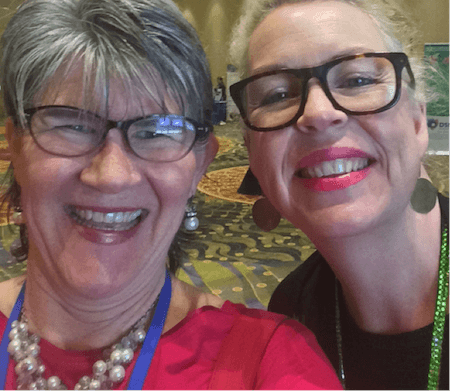
Here I am with world-renowned nutritional psychiatry researcher, Professor Felice Jacka

I participated in the rapid fire presentation session at the conference. In my talk, Applications of the Paleo diet and Gluten-free diet for Anxiety, I shared how Paleo and grain-free diets can increase happiness and reduce anxiety.

This November 2017 review, Nutritional psychiatry: the present state of the evidence, mentions the SMILES trial and provides the latest overview of the evidence in nutritional psychiatry:

Potential biological pathways related to mental disorders include inflammation, oxidative stress, the gut microbiome, epigenetic modifications and neuroplasticity. Consistent epidemiological evidence, particularly for depression, suggests an association between measures of diet quality and mental health, across multiple populations and age groups; these do not appear to be explained by other demographic, lifestyle factors or reverse causality.

Genetics (the last sub-group), epigenetics, diet and the microbiome

It saddens me when I hear someone say: “depression runs in my family – my grandmother suffered, I suffer with depression and I don’t know what kind of life my daughter is going to have.”

Even though genetics (the last sub-group) is reported to accounted for 35-50% of happiness, we now know that “our genes are not our destiny” and we can actually switch on good genes and switch off bad genes when we change our diet and environment.

This paper, Microbiome, inflammation, epigenetic alterations, and mental diseases, sums it up perfectly, reporting that recent findings show that the onset and development of mental diseases such as autism, bipolar disorder, schizophrenia, and depression cannot be well described by the one-gene/one-disease approach:

Even though the involvement of many genes are likely, up regulating and activation or down regulation and silencing of these genes by the environmental factors play a crucial role in contributing to their pathogenesis. Much of this interplay may be moderated by epigenetic changes.

Environmental factors such as diet, gut microbiota, and infections have significant role in these epigenetic modifications.

The authors conclude that the potential interactions of diet, gastrointestinal microbiome, and inflammation can all contribute to epigenetic alterations in psychiatric disorders.

If the term epigenetic is new to you, here is a helpful explanation:

The word “epigenetic” literally means “in addition to changes in genetic sequence.” The term has evolved to include any process that alters gene activity without changing the DNA sequence, and leads to modifications that can be transmitted to daughter cells.

What this means is that you can change your destiny in a positive way – by changing your diet – even if you have bad genes passed on from your grandmother and mother or other family members.

And don’t forget the environmental factors (as stated in the above paper) that can change your genes in a negative way: heavy metals, pesticides, diesel exhaust, tobacco smoke, polycyclic aromatic hydrocarbons (environmental pollutants from coal, oil, petrol, and wood), radioactivity, viruses and bacteria.

The take-aways are to eat quality real whole food, avoid sugar, caffeine and gluten, address the microbiome and nutritional deficiencies, avoid toxins/chemicals, detox if needed, address infections and the adrenals. This is exactly what my book The Antianxiety Food Solution covers so if you don’t yet have a copy, grab one from your nearest bookstore or from Amazon here (my affiliate link).

For a deeper dive into the epigenetics aspect and detoxification, I recommend Dr. Ben Lynch’s new book called Dirty Genes (my Amazon link).

Are you ready to find the biological root causes of your lack of happiness and anxiety?

Or are you already there and have seen the benefits already?


The above statements have not been evaluated by the Food and Drug Administration. Products listed in this blog post are not intended to diagnose, treat, cure or prevent any disease.

The information provided on this site is for informational and educational purposes only and is not intended as a substitute for advice from your physician or other health care professional. You should consult with a healthcare professional before starting or modifying any diet, exercise, or supplementation program, before taking or stopping any medication, or if you have or suspect you may have a health problem.


The amino acids and pyroluria supplements I use with my clients

Additional Anxiety Resources
Click on each image to learn more

gaba quickstart live gaba quickstart hs

Filed Under: Food and mood Tagged With: anxiety, biochemical, biological, depression, epigenetics, food, genes, happiness, microbiome

About Trudy Scott

Food Mood Expert Trudy Scott is a certified nutritionist on a mission to educate and empower anxious individuals worldwide about natural solutions for anxiety, stress and emotional eating.

Trudy is the author of The Antianxiety Food Solution: How the Foods You Eat Can Help You Calm Your Anxious Mind, Improve Your Mood and End Cravings and host of The Anxiety Summit now in its 6th season and called a “bouquet of hope.”

Trudy is passionate about sharing the powerful food mood connection because she experienced the results first-hand, finding complete resolution of her anxiety and panic attacks.

Reader Interactions

Comments

  1. C says

    March 21, 2018 at 7:03 pm

    I think it’s important to consider the full segment of text rather than just the feel good part. “but who will by no means clear the guilty, visiting the iniquity of the fathers on the children and the children’s children, to the third and the fourth generation.” God loves and forgives us, but sin still has consequences. The more I learn about epigenetic changes and adverse childhood experiences, the more I understand the weight of the rest of that segment. God loves us, but we have to act with love as well if we want to protect our future generations from harm.

    Reply
    • Katreena Drew says

      March 25, 2018 at 5:14 pm

      Wow exactly, well said, we can do a lot of work on eating right and trying to be happpy, but if we don’t get it right with Gods love and ask for his Grace & forgiveness…! We don’t move forward. It’s all contacted and work together, love your words. Blessings Katreena

      Reply
  2. Lesley says

    June 7, 2021 at 2:24 pm

    A friends daughter is struggling with depression and anxiety amongst other and I suggested some further reading on biochemistry and amino acids. The daughter is a strict vegan. She got back to me with this article. I do understand that big pharmacy and amino acids are different and that counselling can be invaluable, I can’t ignore my own experience of amino acids helping immensely and immediately in my case and the case of many others. I don’t want to disagree with her but I’d hate to see her discount amino acids in helping her daughter get well.
    https://robynchuter.substack.com/p/the-biochemical-imbalance-theory

    Reply
    • Trudy Scott says

      June 11, 2021 at 8:33 pm

      Lesley
      You are so kind to ask on behalf of your friend. Hopefully she won’t base her decision on one blog post. I’d share some of my blogs and give her a copy of my book (heavily referenced)

      Here are some relevant blogs

      Tryptophan for my teenager: she laughs and smiles, her OCD and anxiety has lessened, and she is more goal oriented and focused on school https://www.everywomanover29.com/blog/tryptophan-for-my-teenager-she-laughs-and-smiles-her-ocd-and-anxiety-has-lessened-and-she-is-more-goal-oriented-and-focused-on-school/

      Rage, anxiety, cravings & insomnia in 11-year old girl with RAD/reactive attachment disorder: chewable tryptophan turns things around https://www.everywomanover29.com/blog/rage-anxiety-cravings-insomnia-in-11-year-old-girl-with-rad-reactive-attachment-disorder-chewable-tryptophan-turns-things-around/

      Since starting GABA my child sleeps for the first time in years and really notices a difference in his carb cravings https://www.everywomanover29.com/blog/since-starting-gaba-my-child-sleeps-for-the-first-time-in-years-and-really-notices-a-difference-in-his-carb-cravings/

      If she is new to the amino acids (and other anxiety nutrition solutions like gluten/sugar/caffeine removal, blood sugar control, gut health, pyroluria etc) my book “The Antianxiety Food Solution” is a great place to start. More here https://www.everywomanover29.com/blog/the-antianxiety-food-solution-by-trudy-scott/

      Reply
      • Lesley says

        June 23, 2021 at 6:03 am

        Thanks so much for your reply Trudy. I really appreciate it.
        Lesley

Leave a Reply Cancel reply

Your email address will not be published. Required fields are marked *

Primary Sidebar

NEW! GABA QuickStart Homestudy (with special intro pricing)

gaba quickstart homestudy

Free Report

9 Great Questions Women Ask about Food, Mood and their Health

You'll also receive a complimentary subscription to my ezine "Food, Mood and Gal Stuff"


Connect with me

Popular Posts

  • Amino Acids Mood Questionnaire from The Antianxiety Food Solution
  • The Antianxiety Food Solution Amino Acid and Pyroluria Supplements
  • Pyroluria Questionnaire from The Antianxiety Food Solution
  • Collagen and gelatin lower serotonin: does this increase your anxiety and depression?
  • Tryptophan for the worry-in-your-head and ruminating type of anxiety
  • GABA for the physical-tension and stiff-and-tense-muscles type of anxiety
  • The Antianxiety Food Solution by Trudy Scott
  • Seriphos Original Formula is back: the best product for anxiety and insomnia caused by high cortisol
  • Am I an anxious introvert because of low zinc and vitamin B6? My response to Huffington Post blog
  • Vagus nerve rehab with GABA, breathing, humming, gargling and key nutrients

Recent Posts

  • What do I use instead of Seriphos to help lower high cortisol that is affecting my sleep and making me anxious at night?
  • BeSerene™ GABA/theanine cream eases severe muscle tension in her neck/shoulders, prevents her bad headaches and quells her anxiety
  • How the correct approach, dose and sublingual use of GABA can be calming and not cause a flushed and itchy face and neck
  • The amino acid glutamine improves low mood by addressing gut health, and it has calming effects too
  • Flight anxiety with heightened breath, physical tension and also fearing the worst (the role of low GABA and low serotonin)

Categories

  • 5-HTP
  • AB575
  • Addiction
  • ADHD
  • Adrenals
  • Alcohol
  • Allergies
  • Alzheimer's disease
  • Amino Acids
  • Anger
  • Antianxiety
  • Antianxiety Food Solution
  • Antidepressants
  • Anxiety
  • Anxiety and panic
  • Autism
  • Autoimmunity
  • benzodiazapines
  • Bipolar disorder
  • Books
  • Caffeine
  • Cancer
  • Candida
  • Children/Teens
  • Collagen
  • Cooking equipment
  • Coronavirus/COVID-19
  • Cravings
  • Depression
  • Detoxification
  • Diabetes
  • Diet
  • DPA/DLPA
  • Drugs
  • EFT/Tapping
  • EMF
  • EMFs
  • Emotional Eating
  • Endorphins
  • Environment
  • Essential oils
  • Events
  • Exercise
  • Fear
  • Fear of public speaking
  • Fertility and Pregnancy
  • Fish
  • Food
  • Food and mood
  • Functional neurology
  • GABA
  • Gene polymorphisms
  • General Health
  • Giving
  • Giving back
  • Glutamine
  • Gluten
  • GMOs
  • Gratitude
  • Gut health
  • Heart health/hypertension
  • Histamine
  • Hormone
  • Hyperparathyroidism
  • Hypoglycemia
  • Immune system
  • Inflammation
  • Insomnia
  • Inspiration
  • Introversion
  • Joy and happiness
  • Ketogenic diet
  • Lithium orotate
  • Looking awesome
  • Lyme disease and co-infections
  • MCAS/histamine
  • Medication
  • Men's health
  • Mental health
  • Mercury
  • Migraine
  • Mold
  • Movie
  • MTHFR
  • Multiple sclerosis
  • Music
  • NANP
  • Nature
  • Nutritional Psychiatry
  • OCD
  • Osteoporosis
  • Oxalates
  • Oxytocin
  • Pain
  • Paleo
  • Parasites
  • Parkinson’s disease
  • PCOS
  • People
  • PMS
  • Postpartum
  • PTSD/Trauma
  • Pyroluria
  • Questionnaires
  • Real whole food
  • Recipes
  • Research
  • Schizophrenia
  • serotonin
  • SIBO
  • Sleep
  • Special diets
  • Sports nutrition
  • Stress
  • Sugar addiction
  • Sugar and mood
  • Supplements
  • Teens
  • Testimonials
  • Testing
  • The Anxiety Summit
  • The Anxiety Summit 2
  • The Anxiety Summit 3
  • The Anxiety Summit 4
  • The Anxiety Summit 5
  • The Anxiety Summit 6
  • Thyroid
  • Thyroid health
  • Toxins
  • Tryptophan
  • Tyrosine
  • Uncategorized
  • Vegan/vegetarian
  • Women's health
  • Yoga

Archives

  • October 2025
  • September 2025
  • August 2025
  • July 2025
  • June 2025
  • May 2025
  • April 2025
  • March 2025
  • February 2025
  • January 2025
  • November 2024
  • October 2024
  • September 2024
  • August 2024
  • July 2024
  • June 2024
  • May 2024
  • April 2024
  • March 2024
  • February 2024
  • January 2024
  • December 2023
  • November 2023
  • October 2023
  • September 2023
  • August 2023
  • July 2023
  • June 2023
  • May 2023
  • April 2023
  • March 2023
  • February 2023
  • January 2023
  • December 2022
  • November 2022
  • October 2022
  • September 2022
  • August 2022
  • July 2022
  • June 2022
  • May 2022
  • April 2022
  • March 2022
  • February 2022
  • January 2022
  • December 2021
  • November 2021
  • October 2021
  • September 2021
  • August 2021
  • July 2021
  • June 2021
  • May 2021
  • April 2021
  • March 2021
  • February 2021
  • January 2021
  • December 2020
  • November 2020
  • October 2020
  • September 2020
  • August 2020
  • July 2020
  • June 2020
  • May 2020
  • April 2020
  • March 2020
  • February 2020
  • January 2020
  • December 2019
  • November 2019
  • October 2019
  • September 2019
  • August 2019
  • July 2019
  • June 2019
  • May 2019
  • April 2019
  • March 2019
  • February 2019
  • January 2019
  • December 2018
  • November 2018
  • October 2018
  • September 2018
  • August 2018
  • July 2018
  • June 2018
  • May 2018
  • April 2018
  • March 2018
  • February 2018
  • January 2018
  • December 2017
  • November 2017
  • October 2017
  • September 2017
  • August 2017
  • July 2017
  • June 2017
  • May 2017
  • April 2017
  • March 2017
  • February 2017
  • January 2017
  • December 2016
  • November 2016
  • October 2016
  • September 2016
  • August 2016
  • July 2016
  • June 2016
  • May 2016
  • April 2016
  • March 2016
  • February 2016
  • January 2016
  • December 2015
  • November 2015
  • October 2015
  • September 2015
  • August 2015
  • July 2015
  • June 2015
  • May 2015
  • April 2015
  • March 2015
  • February 2015
  • January 2015
  • December 2014
  • November 2014
  • October 2014
  • September 2014
  • August 2014
  • July 2014
  • June 2014
  • May 2014
  • April 2014
  • March 2014
  • February 2014
  • January 2014
  • December 2013
  • November 2013
  • October 2013
  • September 2013
  • August 2013
  • July 2013
  • June 2013
  • May 2013
  • April 2013
  • March 2013
  • February 2013
  • January 2013
  • December 2012
  • November 2012
  • October 2012
  • August 2012
  • July 2012
  • June 2012
  • May 2012
  • April 2012
  • March 2012
  • February 2012
  • January 2012
  • December 2011
  • November 2011
  • October 2011
  • September 2011
  • August 2011
  • July 2011
  • June 2011
  • May 2011
  • April 2011
  • March 2011
  • February 2011
  • January 2011
  • December 2010
  • October 2010
  • September 2010
  • July 2010
  • May 2010
  • April 2010
  • March 2010
  • February 2010
  • January 2010
  • November 2009

Share the knowledge!

The above statements have not been evaluated by the Food and Drug Administration. Products listed in this website are not intended to diagnose, treat, cure or prevent any disease.

The information provided on this site is for informational and educational purposes only and is not intended as a substitute for advice from your physician or other health care professional. You should consult with a healthcare professional before starting or modifying any diet, exercise, or supplementation program, before taking or stopping any medication, or if you have or suspect you may have a health problem.


Copyright © 2026 Trudy Scott. All Rights Reserved. | Privacy | Terms and Conditions | Refund Policy | Medical Disclaimer

Free Report

9 Great Questions Women Ask about Food, Mood and their Health

You’ll also receive a complimentary subscription to my ezine “Food, Mood and Gal Stuff”