
• Skip to primary navigation
  • Skip to main content
  • Skip to primary sidebar

everywomanover29 blog

Food, Mood and Women's Health – Be your healthiest, look and feel great!

  • Blog
  • About
  • Services
  • Store
  • Resources
  • Testimonials
  • The Book
  • Contact
  • Search this site

How to figure out what’s causing your depression with Dr. Kharrazian

June 11, 2015 By Trudy Scott 12 Comments

 depressionsessions

The Depression Sessions officially starts on Sunday June 14th.

To give you a taste of what is to come, this week is a pre-summit kick-off with some great interviews airing RIGHT NOW!

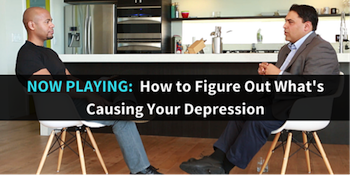
TODAY (and the next few days), you can watch Sean Croxton’s excellent interview with Dr. Datis Kharrazian, author of Why Isn’t My Brain Working.

Dr. Kharrazian’s full-length session is available for EARLY BIRD viewing and downloading (video, mp3 and transcript).

Dr. Datis Kharrazian: How to Figure Out What’s Causing Your Depression
dr-k
  • Why there is more to correcting mood disorders than only boosting neurotransmitter levels. A lot more!
  • Why traumatic brain injuries often show up as depression … years down the road. 
  • How chronic gut inflammation can cause brain inflammation, leading to depression.
  • How the “other” symptoms presenting with depression — anxiety, insomnia, brain fog –can help determine its cause.

This free EARLY BIRD viewing will be available until Sunday morning June 14th at 8am PST/11am EST when the Depression Sessions online event officially kicks off.

Here are a few gems from this interview:

  • Depression is decreased frequency of firing of areas the frontal cortex, pre-frontal, orbitofrontal, and the cingulate gyrus. At the end of the day, someone’s clinical depression is that part of their brain not firing. Then our goal as a clinical workup is why? What’s not making that area of the brain fire?
  • Every single case of depression is uniquely different
  • If you have depression and you notice it and you want to change it, that’s a really positive sign. If you have depression and you don’t even care anymore, you don’t even recognize it, that’s when things get really scary for us. That’s where all the neurodegenerative diseases have to be ruled out.

I’m so pleased to hear that Dr Kharrazian is not in favor of urinary neurotransmitter testing and do agree that depression (and anxiety) is often a lot more than only neurotransmitter deficiencies.

I see such incredible results with amino acids that I must say I do disagree with him on this one: “If you take an amino acid, like 5-HTP or tyrosine you do get a boost of brain function that doesn’t last.”

It may just be that he is working with people who have very complex issues like a history of brain injuries and neurodegenerative diseases. The whole discussion on head injuries is so interesting! And the wonderful thing is that there are certain nutrients that can help so much (fish oil, turmeric and others)!

The GABA blood-brain-barrier discussion comes up later (and I get a mention!) so be sure to listen out for that section. I’m still not convinced about the leaky brain GABA information but I am planning to have to look into the Cyrex blood-brain-barrier test Dr. Kharrazian mentions.  I’m also going to look into the Cyrex GAD autoimmunity test he talks about.

My interview on the amino acids (GABA and tryptophan) and pyroluria/social anxiety/introversion airs on Day 1 so be sure to tune in for this one too.  You can see a preview snippet on this blog called: Can Social Anxiety Be Reversed with Nutrition?

If you haven’t yet registered you can simply register here:
https://at105.isrefer.com/go/depreg/trudyscott/

I do hope you enjoy this one and all the others in the Depression Sessions!  


The above statements have not been evaluated by the Food and Drug Administration. Products listed in this blog post are not intended to diagnose, treat, cure or prevent any disease.

The information provided on this site is for informational and educational purposes only and is not intended as a substitute for advice from your physician or other health care professional. You should consult with a healthcare professional before starting or modifying any diet, exercise, or supplementation program, before taking or stopping any medication, or if you have or suspect you may have a health problem.


The amino acids and pyroluria supplements I use with my clients

Additional Anxiety Resources
Click on each image to learn more

gaba quickstart live gaba quickstart hs

Filed Under: Amino Acids, Depression, Events Tagged With: causes of depression, datis kharrazian, depression sessions, GABA, sean croxton, Trudy Scott

About Trudy Scott

Food Mood Expert Trudy Scott is a certified nutritionist on a mission to educate and empower anxious individuals worldwide about natural solutions for anxiety, stress and emotional eating.

Trudy is the author of The Antianxiety Food Solution: How the Foods You Eat Can Help You Calm Your Anxious Mind, Improve Your Mood and End Cravings and host of The Anxiety Summit now in its 6th season and called a “bouquet of hope.”

Trudy is passionate about sharing the powerful food mood connection because she experienced the results first-hand, finding complete resolution of her anxiety and panic attacks.

Reader Interactions

Comments

  1. Kari J. Kindem says

    June 11, 2015 at 2:40 pm

    In Dr. K’s other lecture I heard, referring to the use of GABA, how it “shouldn’t” work (and a practitioner should be very concerned if it does) because it can’t really pass the blood brain barrier…

    How do you feel about that and what’s your explanation?

    Does this mean that people who do well on GABA have a pretty severe permeability to the gut?

    Reply
    • Trudy Scott says

      June 11, 2015 at 6:28 pm

      Hi Kari
      I talk about this in my interview with Sean and am not sure I agree with this reasoning. As of now there there is no study supporting this.

      I propose that GABA may have a calming effect by working in other areas of the body ie peripherally. There is much research showing that we have GABA receptors in many parts of the body: muscles, fascia, ovaries, adrenal glands etc (you can see some of the research here https://www.everywomanover29.com/blog/anxiety-summit-targeted-individual-amino-acids-eliminating-anxiety-practical-applications/). We know that low GABA causes physical anxiety so this makes sense.

      You’ll also see some research on the above blog showing that GABA is relaxing (these were with pharmaGABA) .

      Dr K does talk about the Cyrex leaky brain test and I’m going to look into this to see if folks who do respond to GABA also have this marker. I also need to do some research on this marker and how effective it is for measuring a leaky BBB. Up until now no-one has been able to confirm this or seen a correlation.

      Dr K also talks about autoimmunity and the GAD gene and I suspect this may affect your response to GABA as will many other factors like zinc levels, B6 levels, gluten sensitivity and other genetic polymorphisms.

      Dr K also writes about the GABA challenge in his book – the amount he uses is so high I would expect most people to feel calmer/sleepy and wiped out, so don’t really think this is a good test to use. He uses 1000 mg for the challenge and I find most people do well starting on 125mg.

      I think the work Dr K is great but we do disagree on this one. I am always open to learning more and having my mind changed so would love to hear your thoughts on this. Do you use GABA with your patients? and how much? what results do you see? do you know if they have leaky gut? and have you done any of the Cyrex tests? what have you heard about this from other practitioners?

      Reply
  2. Michelle Silbernagel says

    June 12, 2015 at 3:10 pm

    Hi Trudi,

    Thank you so much for your blog review of Dr. K’s talk. I actually was thinking it would be great for Sean to have a conversation with the both of you together.

    I wanted to follow up on your endorsement of Dr. K’s lack of faith in urinary neurotransmitter testing. What do you do in your clinical practice instead? Dr. K went over his team’s initial workup, I wonder if yours is similar or different? How can you tell if someone is deficient in dopamine, for example, without a test? Is by test and trial with amino therapy?

    Thank you!

    Michelle

    Reply
    • Trudy Scott says

      June 12, 2015 at 4:25 pm

      Michelle
      Great idea! I love the idea of a panel with Dr K, me and a few others like Dr Dan Kalish, Dr Kelly Brogan and Dr Hyla Cass! I do plan to invite Dr K (and Dr Kalisg) to speak on a future Anxiety Summit too.

      And yes, I use the amino acid questionnaire (https://www.everywomanover29.com/blog/amino-acids-mood-questionnaire-from-the-antianxiety-food-solution/) and response to targeted individual amino acids

      Reply
  3. Tandy Elisala says

    June 13, 2015 at 2:58 pm

    Trudy, I love this. Here’s my favorite: Every single case of depression is uniquely different If you have depression and you notice it and you want to change it, that’s a really positive sign. If you have depression and you don’t even care anymore, you don’t even recognize it, that’s when things get really scary for us. That’s where all the neurodegenerative diseases have to be ruled out.

    Every single case of depression is different and wanting to change it is a good thing. Not caring anymore about how you feel is a huge issue. I wonder how it impacts people when they do care about their depression but part of them feels hopeless; like they can’t do anything about it.

    Great interview here and I’m going to share with a depression support group I’m a board member of.

    Reply
    • Trudy Scott says

      June 13, 2015 at 3:21 pm

      Tandy – I love this quote too!

      For folks who do care but feel hopeless I say there is always an answer/solution/root cause and don’t give up until you find it! It’s a matter of putting the puzzle pieces together to find it.

      Also, it’s important to realize that many people say I’d tried every single approach under the sun but most of those people have not looked into all the possible nutritional/biochemical causes. I talked about in the last anxiety summit and shared 60+ possible causes for anxiety that folks can use as a checklist to go thru. These same causes could be used for depression, arthritis, cancer, heart disease, diabetes – any health concern.

      As Dr K says, “every single case of depression is uniquely different” and this applies to other health issues too.

      Here is the link to that blog https://www.everywomanover29.com/blog/60-nutritional-biochemical-causes-of-anxiety/

      Thanks for sharing with your depression support group

      Reply
  4. Heidi Alexandra says

    June 13, 2015 at 7:57 pm

    What a fascinating interview Trudy – thanks for sharing this – as a member of the foundation of a medical research institute I am constantly intrigued by what we now know about the brain. In fact I have heard just as he now acknowledges that there has been an explosion of information and research as 85% of what we know about how the brain works has been discovered only in the past 3 years!

    Reply
    • Trudy Scott says

      June 14, 2015 at 6:38 am

      Heidi – yes, so much new research and we are learning more and more each day! How wonderful that you are a member of the foundation of a medical research institute!

      Reply
  5. Mitch Tublin says

    June 14, 2015 at 7:12 pm

    Another amazing information packed item for anyone to check out and learn from. You always provide topics with discussion points which many people would not remotely understand until becoming exposed to your material.

    Reply
  6. Mary Ellen Miller says

    June 20, 2015 at 2:15 pm

    Depression is such a huge issue in this country I’m sure this information will be met with great enthusiasm. It is very interesting to me that there is even a “gut” connection to depression. Once again, good nutrition is huge!

    Reply
    • Trudy Scott says

      June 21, 2015 at 1:13 am

      Yes Mary Ellen, the “gut” connection to both anxiety and depression is huge

      Reply
  7. Tiffany deSilva says

    June 29, 2015 at 12:58 pm

    I’m sorry I missed this, Trudy. I always enjoy listening to the resources that you share.

    Reply

Leave a Reply Cancel reply

Your email address will not be published. Required fields are marked *

Primary Sidebar

NEW! GABA QuickStart Homestudy (with special intro pricing)

gaba quickstart homestudy

Free Report

9 Great Questions Women Ask about Food, Mood and their Health

You'll also receive a complimentary subscription to my ezine "Food, Mood and Gal Stuff"


Connect with me

Popular Posts

  • Amino Acids Mood Questionnaire from The Antianxiety Food Solution
  • The Antianxiety Food Solution Amino Acid and Pyroluria Supplements
  • Pyroluria Questionnaire from The Antianxiety Food Solution
  • Collagen and gelatin lower serotonin: does this increase your anxiety and depression?
  • Tryptophan for the worry-in-your-head and ruminating type of anxiety
  • GABA for the physical-tension and stiff-and-tense-muscles type of anxiety
  • The Antianxiety Food Solution by Trudy Scott
  • Seriphos Original Formula is back: the best product for anxiety and insomnia caused by high cortisol
  • Am I an anxious introvert because of low zinc and vitamin B6? My response to Huffington Post blog
  • Vagus nerve rehab with GABA, breathing, humming, gargling and key nutrients

Recent Posts

  • What do I use instead of Seriphos to help lower high cortisol that is affecting my sleep and making me anxious at night?
  • BeSerene™ GABA/theanine cream eases severe muscle tension in her neck/shoulders, prevents her bad headaches and quells her anxiety
  • How the correct approach, dose and sublingual use of GABA can be calming and not cause a flushed and itchy face and neck
  • The amino acid glutamine improves low mood by addressing gut health, and it has calming effects too
  • Flight anxiety with heightened breath, physical tension and also fearing the worst (the role of low GABA and low serotonin)

Categories

  • 5-HTP
  • AB575
  • Addiction
  • ADHD
  • Adrenals
  • Alcohol
  • Allergies
  • Alzheimer's disease
  • Amino Acids
  • Anger
  • Antianxiety
  • Antianxiety Food Solution
  • Antidepressants
  • Anxiety
  • Anxiety and panic
  • Autism
  • Autoimmunity
  • benzodiazapines
  • Bipolar disorder
  • Books
  • Caffeine
  • Cancer
  • Candida
  • Children/Teens
  • Collagen
  • Cooking equipment
  • Coronavirus/COVID-19
  • Cravings
  • Depression
  • Detoxification
  • Diabetes
  • Diet
  • DPA/DLPA
  • Drugs
  • EFT/Tapping
  • EMF
  • EMFs
  • Emotional Eating
  • Endorphins
  • Environment
  • Essential oils
  • Events
  • Exercise
  • Fear
  • Fear of public speaking
  • Fertility and Pregnancy
  • Fish
  • Food
  • Food and mood
  • Functional neurology
  • GABA
  • Gene polymorphisms
  • General Health
  • Giving
  • Giving back
  • Glutamine
  • Gluten
  • GMOs
  • Gratitude
  • Gut health
  • Heart health/hypertension
  • Histamine
  • Hormone
  • Hyperparathyroidism
  • Hypoglycemia
  • Immune system
  • Inflammation
  • Insomnia
  • Inspiration
  • Introversion
  • Joy and happiness
  • Ketogenic diet
  • Lithium orotate
  • Looking awesome
  • Lyme disease and co-infections
  • MCAS/histamine
  • Medication
  • Men's health
  • Mental health
  • Mercury
  • Migraine
  • Mold
  • Movie
  • MTHFR
  • Multiple sclerosis
  • Music
  • NANP
  • Nature
  • Nutritional Psychiatry
  • OCD
  • Osteoporosis
  • Oxalates
  • Oxytocin
  • Pain
  • Paleo
  • Parasites
  • Parkinson’s disease
  • PCOS
  • People
  • PMS
  • Postpartum
  • PTSD/Trauma
  • Pyroluria
  • Questionnaires
  • Real whole food
  • Recipes
  • Research
  • Schizophrenia
  • serotonin
  • SIBO
  • Sleep
  • Special diets
  • Sports nutrition
  • Stress
  • Sugar addiction
  • Sugar and mood
  • Supplements
  • Teens
  • Testimonials
  • Testing
  • The Anxiety Summit
  • The Anxiety Summit 2
  • The Anxiety Summit 3
  • The Anxiety Summit 4
  • The Anxiety Summit 5
  • The Anxiety Summit 6
  • Thyroid
  • Thyroid health
  • Toxins
  • Tryptophan
  • Tyrosine
  • Uncategorized
  • Vegan/vegetarian
  • Women's health
  • Yoga

Archives

  • October 2025
  • September 2025
  • August 2025
  • July 2025
  • June 2025
  • May 2025
  • April 2025
  • March 2025
  • February 2025
  • January 2025
  • November 2024
  • October 2024
  • September 2024
  • August 2024
  • July 2024
  • June 2024
  • May 2024
  • April 2024
  • March 2024
  • February 2024
  • January 2024
  • December 2023
  • November 2023
  • October 2023
  • September 2023
  • August 2023
  • July 2023
  • June 2023
  • May 2023
  • April 2023
  • March 2023
  • February 2023
  • January 2023
  • December 2022
  • November 2022
  • October 2022
  • September 2022
  • August 2022
  • July 2022
  • June 2022
  • May 2022
  • April 2022
  • March 2022
  • February 2022
  • January 2022
  • December 2021
  • November 2021
  • October 2021
  • September 2021
  • August 2021
  • July 2021
  • June 2021
  • May 2021
  • April 2021
  • March 2021
  • February 2021
  • January 2021
  • December 2020
  • November 2020
  • October 2020
  • September 2020
  • August 2020
  • July 2020
  • June 2020
  • May 2020
  • April 2020
  • March 2020
  • February 2020
  • January 2020
  • December 2019
  • November 2019
  • October 2019
  • September 2019
  • August 2019
  • July 2019
  • June 2019
  • May 2019
  • April 2019
  • March 2019
  • February 2019
  • January 2019
  • December 2018
  • November 2018
  • October 2018
  • September 2018
  • August 2018
  • July 2018
  • June 2018
  • May 2018
  • April 2018
  • March 2018
  • February 2018
  • January 2018
  • December 2017
  • November 2017
  • October 2017
  • September 2017
  • August 2017
  • July 2017
  • June 2017
  • May 2017
  • April 2017
  • March 2017
  • February 2017
  • January 2017
  • December 2016
  • November 2016
  • October 2016
  • September 2016
  • August 2016
  • July 2016
  • June 2016
  • May 2016
  • April 2016
  • March 2016
  • February 2016
  • January 2016
  • December 2015
  • November 2015
  • October 2015
  • September 2015
  • August 2015
  • July 2015
  • June 2015
  • May 2015
  • April 2015
  • March 2015
  • February 2015
  • January 2015
  • December 2014
  • November 2014
  • October 2014
  • September 2014
  • August 2014
  • July 2014
  • June 2014
  • May 2014
  • April 2014
  • March 2014
  • February 2014
  • January 2014
  • December 2013
  • November 2013
  • October 2013
  • September 2013
  • August 2013
  • July 2013
  • June 2013
  • May 2013
  • April 2013
  • March 2013
  • February 2013
  • January 2013
  • December 2012
  • November 2012
  • October 2012
  • August 2012
  • July 2012
  • June 2012
  • May 2012
  • April 2012
  • March 2012
  • February 2012
  • January 2012
  • December 2011
  • November 2011
  • October 2011
  • September 2011
  • August 2011
  • July 2011
  • June 2011
  • May 2011
  • April 2011
  • March 2011
  • February 2011
  • January 2011
  • December 2010
  • October 2010
  • September 2010
  • July 2010
  • May 2010
  • April 2010
  • March 2010
  • February 2010
  • January 2010
  • November 2009

Share the knowledge!

The above statements have not been evaluated by the Food and Drug Administration. Products listed in this website are not intended to diagnose, treat, cure or prevent any disease.

The information provided on this site is for informational and educational purposes only and is not intended as a substitute for advice from your physician or other health care professional. You should consult with a healthcare professional before starting or modifying any diet, exercise, or supplementation program, before taking or stopping any medication, or if you have or suspect you may have a health problem.


Copyright © 2026 Trudy Scott. All Rights Reserved. | Privacy | Terms and Conditions | Refund Policy | Medical Disclaimer

Free Report

9 Great Questions Women Ask about Food, Mood and their Health

You’ll also receive a complimentary subscription to my ezine “Food, Mood and Gal Stuff”