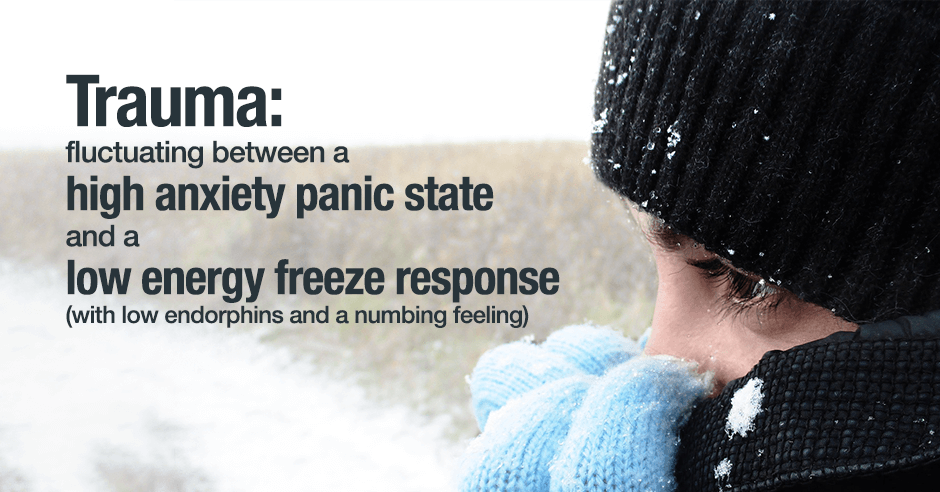
The freeze response in trauma is not well understood and is a low energy state. When the anxiety has become so high or severe it triggers a low energy or freeze state in order for you to survive. There is also the feeling of numbness and being disconnected when in the freeze state and this eventually becomes the default pattern that the nervous system has been wired into. Healing can start with somatic work and using a functional medicine and nutritional psychiatry approach to address the biological underpinnings of trauma.
Dr. Aimie Apigian, MD, MS, MPH discusses all this and much more in her interview on the Anxiety Summit 5: Gut-Brain Axis.
And then Dr. Aimie interviews me and we discuss how folks with low endorphins are often in the freeze state. These folks are more emotionally sensitive to everything and because of this they experience much more stress. They also experience a feeling of numbness and feel disconnected. The encouraging news is that the amino acid DPA (d-phenylalanine) helps ease the low endorphin symptoms while they are recovering. More on all this below.
The freeze response in trauma is not well understood and is a low energy state
Let’s start with this interview with Dr. Aimie – Biology of Trauma and the Freeze Response. This is what we cover:
- Identifying the freeze response and symptoms when anxiety is high
- The role of the microbiome, neurotransmitters, oxidative stress, mitochondria and cortisol
- Somatic work when in the chronic freeze state: containment hugs and marking your territory
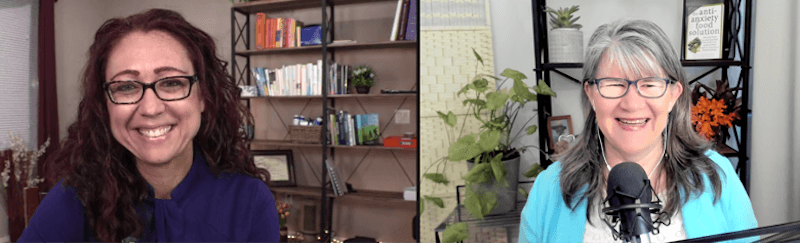
Dr. Aimie explains that the freeze response in trauma is not something that’s been really well understood:
- When we talk about just trauma and mood, and stress even, it’s like we still lump everything in that fight, flight, or freeze response. And the fight and flight response could not be more different than the freeze response.
- On a biological level, they are completely different biology states, which means that it is humanly impossible to be in both of those states at the same time. So when we look at this freeze response, okay, so what is it? If it’s not fight or flight, what is it?
She shares how the anxiety has been become so high or severe it triggers a low energy or freeze state in order for you to survive:
- When we look at what it is, it’s when the anxiety has become so high that the body is not able to sustain that level of both anxiety, but it’s really an energy level.
- Because anxiety is a high energy state and it triggers this response in the body where it says, “Ooh, this is unsustainable,” and in order to survive, for our best interests, it would be better for us to go into a low energy state.
- And it feels like giving in, giving up. It feels like giving up the fight because the body just goes into this, I kind of call it like, it shifts down into first gear.
- You’re no longer zooming along in fifth or sixth gear, you just kind of shift down into first gear and now you’re just going through life.
The feeling of numbness and being disconnected when in the freeze state
In addition to the low energy state, this is where Dr. Aimie talks about the feeling of numbness and being disconnected when in the freeze state:
- Now you’re just going through your day, you feel a little numb, you feel a little disconnected.
- But the trigger for that freeze response originally comes from the anxiety level, which really becomes a level of fear, terror, panic.
Dr. Amie also shares how this becomes the default pattern that the nervous system has been wired into:
- And people can have what I call a strong pull towards the freeze response so that they no longer are even aware of the fear and the terror.
- They just feel anxiety and boom, they go straight into the freeze response because it has just become that default pattern that the nervous system has been wired into.
The biology of trauma and somatic work
She goes on to discuss the biology of trauma and the role of the microbiome, neurotransmitters, oxidative stress, mitochondria and cortisol in contributing to the freeze response (i.e. making you more susceptible to trauma) and as factors we can address in order to facilitate recovery and healing.
Dr. Aimie also describes the somatic work she does with her patients who are in the chronic freeze state: exercises like containment hugs and marking your territory. She shares that “I want people to experience their nervous system. I want them to know what it feels like, be able to actually recognize which state of the nervous system they are in at any given moment in time, and be able to feel what that feels like in their body, because then that’s how we teach them how to shift that.”
In her work and in this interview, Dr. Amie brings the world of trauma recovery and somatic work to the functional medicine and nutritional psychiatry world. It’s an eye-opening interview you don’t want to miss.
The connection between the trauma freeze response and low endorphins
Also featured in the summit is another interview where Dr. Aimie happens to interview me on this topic: Glutamine, DPA and Tyrosine for Anxiety and Sugar Cravings. We cover the following:
- Sugar addiction: impacts on the microbiome, tryptophan metabolism, zinc & B vitamins
- Glutamine for intense sugar cravings, anxiety & support of the microbiome/mucosa
- DPA for comfort/reward cravings, pain & acute stress; tyrosine for focus & calm energy
It’s during this interview that I make the connection between the trauma freeze response and low endorphins when we are discussing the last bullet above.
As a reminder, these are the mood symptoms of low endorphins:
- Heightened sensitivity to emotional pain
- (and also Heightened sensitivity to physical pain)
- Crying or tearing up easily
And these are the ways sugar cravings often show up when you have low endorphins:
- Eating to soothe your mood, or comfort eating
- Really, really loving certain foods, behaviors, drugs, or alcohol
- Craving a reward or numbing treat
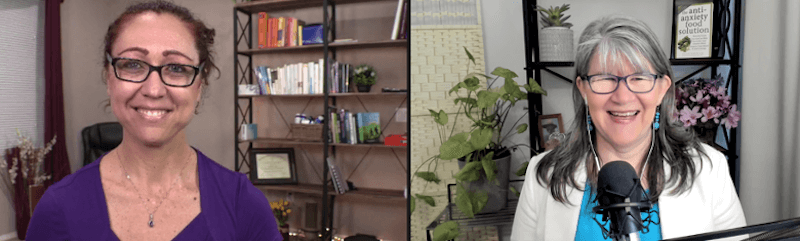
As I share about the endorphins and how I use the amino acids DPA and/or DLPA to boost endorphin levels, I remember how Dr. Aimie discussed the numbing effect when someone is in the freeze state and it made me think about endorphins. So I ask Dr. Amie if she finds that folks with low endorphins are often in the freeze state.
Dr. Amie says most definitely yes and shares that with the low endorphins, people in the freeze state really are more emotionally sensitive to everything and because of this they experience much more stress:
- From my perspective, working with a lot of the trauma response … they are much closer … to that line of overwhelm.
- So most definitely, yes. And it’s that comfort, right? It’s that self-soothing, and it’s the numbing effect. The numbing effect of reaching for food when you’re not hungry. It’s just for numbing the emotional sensitivity that you have with low endorphins.
- Endorphins really affect the stress levels and then mood, and then inflammation? It starts this cascade of changes in their biology because of the low endorphins and the increased amount of stress that they experience with that sensitivity.
This discussion tied in perfectly to the study I had to share: The Role of Beta-endorphin in Stress, Behavior, Neuroinflammation, and Brain Energy Metabolism.
In this 2020 paper, the authors discuss beta-endorphins in the context of reward-centric behaviors, pain, neuroinflammation, immune function and also how endorphins attenuate (or reduce the effects of) the acute stress response. They also share how endorphins exert a regulatory effect on serotonin levels.
I find the latter link to serotonin very interesting and will be digging deeper into this in another blog post. I’ll also be digging into the low endorphins aspect of the trauma freeze response in the coming months. And I want to learn more about the somatic work that Dr. Aimie uses – to experience some of it myself and to bring to my community i.e you! I do love that I also get to learn so much when I do these interviews.
Use DPA to ease the weepiness and need to numb out with comfort food or behaviors
For now, if you have experienced trauma and recognize being in the freeze state, and you feel numbed out and disconnected, and also relate to the above other low endorphin symptoms, I would do a trial of DPA (the amino acid d-phenylalanine) and see how you do. It will likely help ease some of the low endorphin symptoms while you are recovering.
Keep in mind that you can also have low endorphin symptoms without having experienced trauma. I see this with many of my clients and it’s not uncommon to also have low serotonin worry and low GABA physical anxiety symptoms too..
In both instances, I would do a trial of DPA (I like the Lidtke Endorphigen product) and see how you do. If it is low endorphins you’ll ease the weepiness and need to numb out with comfort food or behaviors (such as endless scrolling on social media). You can expect to see results in 5-10 minutes when the DPA is opened onto the tongue.
To recap, be sure to tune in to these 2 interviews to see how it’s all connected and to hear more about trauma, the biology of trauma and how to use amino acids to balance neurotransmitters:
- Aimie Apigian, MD, MS, MPH – Biology of Trauma and the Freeze Response
- Trudy Scott, CN – Glutamine, DPA and Tyrosine for Anxiety and Sugar Cravings
These interviews dove-tail well with this topic of trauma, the freeze response and neurotransmitters:
- Navaz Habib, DC, AFMCP – Vagus Nerve Activation to Reduce Anxiety (because vagus nerve activation habits speed trauma recovery)
- My other amino acid interview, Cravings and GABA & Tryptophan: Gut-Anxiety Connections (because the amino acids help to support low serotonin and low GABA which is common with trauma)
- Evan Brand, CFMP, NTP – Floatation Therapy for Anxiety and PTSD (because floatation therapy is gentle and yet effective)
- Eric Zielinski, DC – Essential Oils for Anxiety and Digestion (because essential oils are well tolerated and effective)
- David Jockers, DNM, DC, MS – Fasting for Anxiety and Gut Health (he talks about the effects of fasting on endorphins and serotonin)
I encourage you to tune in if you have:
- Anxiety & feel overwhelmed & stressed by little things
- Panic attacks &/or obsessive thoughts or behaviors
- Social anxiety/pyroluria
- Phobias or fears (flying, spiders or even driving on a highway)
And also if you suffer from…
- Food sensitivities, IBS/SIBO, parasites or gallbladder issues
- Constipation, diarrhea, bloating, gas, pain & other digestive issues
- Leaky gut, a leaky blood-brain barrier or vagus nerve issues
You’ll also benefit if you are also an emotional eater with intense sugar cravings (and know you suffer from low blood sugar), experience insomnia, low mood, PMS, poor focus and/or low motivation.
This is THE online event to learn about the powerful individual amino acids – GABA, theanine, tryptophan, 5-HTP, glutamine, DPA and tyrosine – to quickly ease anxiety and help with gut symptoms while you are dealing with other root causes which take longer to address. (They also help with cravings as with this example, and sleep and immunity).
With research-based anxiety nutritional solutions and practical steps, you can determine your root causes, ease your anxiety and prevent it from coming back so you can feel on top of the world again!
If you are a practitioner, please join us too and find advanced solutions for your clients or patients too!
You’ve heard me say the Anxiety Summit has been called “a bouquet of hope!” My wish for you is that this summit is your bouquet of hope!
I hope you’ll join me and these incredible speakers, be enlightened and find YOUR solutions!
Here’s to no more anxiety and you feeling on top of the world again!
Can you relate to the freeze state and fluctuating from a high energy anxiety/panic state?
When you’re in the freeze state do you feel numb and disconnected?
Have you had success with somatic work? And also using a functional medicine approach to healing?
Also let us know if you’ve benefited from using DPA to help ease the low endorphin symptoms?
Feel free to post your questions here too.