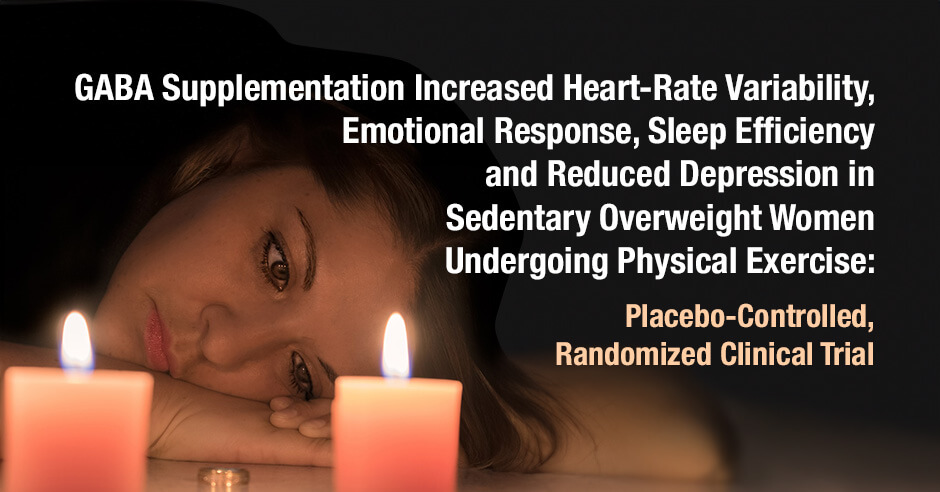
In a new GABA study published earlier this year, the authors report that supplementation with the calming amino acid, GABA (gamma-aminobutyric acid), helped to reduce stress and depression, and improved emotional response and sleep in overweight women. The intervention group was given 200 mg GABA per day for 90 days. Here is the study abstract:
Gamma-aminobutyric acid (GABA) serves as a pivotal neurotransmitter implicated in the pathogenesis of stress, anxiety, sleep-related disorders, and heart rate (HR) reactions.
Heart-rate variability (HRV), modulated by the sympathetic and parasympathetic branches of the autonomic nervous system (ANS), offers insights into cardiac autonomic control and cardiovascular well-being.
The present study aimed to explore the impact of GABA supplementation on emotional metrics, sleep quality, and HRV in sedentary women with overweight or obesity partaking in physical exercise.
A randomized, double-blind, placebo-controlled clinical trial was undertaken involving 30 sedentary women with overweight or obesity. Volunteers were assigned randomly to two groups: the intervention group receiving GABA (200 mg) once daily for a total of 90 supplementation doses, and the placebo group. Both groups engaged in physical exercise, while the supplementation regimen spanned 90 days.
Assessments were conducted at three intervals: baseline (T0), midway through the study (T45), and study culmination (T90).
Following 90 days of GABA supplementation, the intervention group demonstrated enhancements in habitual sleep efficiency, as indicated by reductions in Pittsburgh Sleep Quality Index (PSQI) scores. Moreover, an improved emotional response was observed, characterized by diminished negative affect. GABA supplementation yielded ameliorations in depression scores as per the Depression, Anxiety, and Stress Scale (DASS-21). Notably, an augmented HRV was noted, attributed to heightened parasympathetic autonomic nervous system predominance.
GABA supplementation elicited noteworthy enhancements in heart rate variability, emotional response, depression mitigation, and sleep efficiency following a 90-day supplementation.
I received a full copy of the paper, GABA Supplementation, Increased Heart-Rate Variability, Emotional Response, Sleep Efficiency and Reduced Depression in Sedentary Overweight Women Undergoing Physical Exercise: Placebo-Controlled, Randomized Clinical Trial. I thanked them for doing this research and shared my clinical insights and the fact that I do use GABA a little differently. More on that below.
The type of GABA, how it was used, the timing and fillers
The study participants were given GABA and not pharmaGABA, it was swallowed and it was used before bed.
Both the GABA and placebo contained starch and talc. The starch may be an issue with someone with SIBO (small intestinal bacterial overgrowth) or an IgG reaction to whatever the starch is made from, such as corn (used in this study) or rice or wheat.
Talc is simply not necessary in any supplements. With so many of my clients being very sensitive to excipients, ideally we want to be using fewer fillers and using a clean supplement just like when it comes to eating real whole good quality food.
My feedback on the 200 mg GABA dose used in the study
Given that many studies use much higher doses it’s wonderful that they used just 200 mg GABA.
They used the same dose for everyone for 90 days at night only.
This illustrates how effective GABA can be when used in the same manner for all study participants. It is, however, very possible that the fact they were exercising and just being part of a study also contributed to many of their improvements:
While both study groups engaged in physical exercise, it is plausible to surmise that the act of participating in physical activities may have contributed to the improved stress, anxiety, and depression profiles in the placebo group. Furthermore, study participation alone can instill a positive effect, potentially fostering volunteers’ motivation to embrace healthier lifestyle habits and enhance overall well-being.
My approach for using GABA is personalized
The study provides a great foundation for future research and clinical use.
My approach is personalized dosing based on symptoms and increased to find the optimal dose. I typically have clients start on 125 mg GABA used sublingually, which is a nice low starting dose for most folks. I have clients use GABA 1-5 times a day, including the night, based on their unique needs and only if they have low GABA type of physical/tension anxiety). I have clients rate 1 or 2 symptoms on a scale of 1-10 with 10 being worst, do an initial one-off trial of GABA and rate the symptoms again right afterwards (in the next 2 to 30 minutes). Based on this we decide if we’ll continue with GABA and how much to use.
I speculate there would likely be even better outcomes with a GABA only powder used on the tongue and held in the mouth for up to 2 minutes. And of course, dosing according to each person’s needs is ideal but impractical in a study.
Feedback illustrates how GABA use (and the benefits) can differ per person
When I shared the research on Facebook I received this feedback from Doula Michelle Jackson:
25 mg GABA twice a day has done wonders for me. I used to take 750 mg of GABA Calm Mind at night and it made me very weepy. Lower dosing works best for me. It helps with sleep, anxiety and depression.
(The 750 mg GABA Calm Mind is a hard tablet and is not the same as the 125mg GABA Calm sublingual product I recommend. The product that works for her is Kal GABA 25mg.)
Carrie shared this: “I always put GABA under the tongue myself.”
Tara said: “GABA is the one thing I can rely on to get a good night’s rest. I open a 420 mg cap about 45 minutes before bed.”
Patrice said: “I take GABA about 30 minutes before bedtime. I open a capsule and use about 100-200 mg in water. It helps to calm my mind and stop ruminating. I think I sleep better.”
Elmas shared this about her son’s results: “GABA can be a game changer. We just started last week and can see it improves my boy’s tics and stimming. Thanks to Trudy’s recommendation on Mind Body and vagus nerve connection summit, we started only 100mg (Superior Sources sublingual) in water. And increased to approx 1/8 tsp about 380mg (Sources Naturals GABA powder) yesterday.”
Both Sue and her husband benefit from GABA:“Trudy posted once about GABA helping with pain in the colon so I tried it and was so amazed at how quickly it worked. I use 200 mg and take the capsule whole, not opening the caps and it works in 15 minutes for me. I have found it also helps me with times that I get anxiety, crabbiness, restless legs and the blues. This is such a blessing for me.
Even my husband will take 200 mg when he’s feeling grouchy with the customers and within 15 to 20 minutes, he’s a different person. It’s a wonder supplement. I tell EVERYBODY about it.”
As you can see from the above, it really is different strokes for different folks and a personalized approach to using GABA.
A few GABA product options – a sublingual and a powder
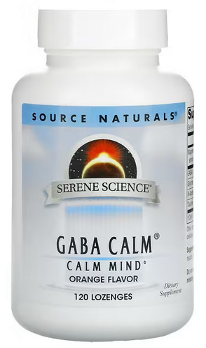
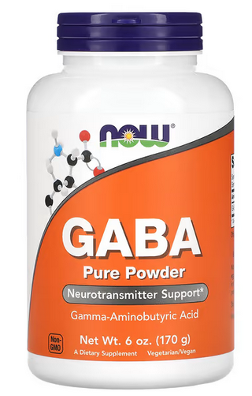
Products I recommend include Source Naturals GABA Calm lozenges and Now GABA Powder. You can purchase these from my online store (Fullscript – only available to US customers – use this link to set up an account).
If you’re not in the US, these same products are available via iherb (use this link to save 5%).
Additional resources when you are new to using GABA and other amino acids as supplements
As I mentioned above, I use the symptoms questionnaire to figure out if low GABA or other neurotransmitter imbalances may be an issue for you.
If you suspect low levels of any of the neurotransmitters and do not yet have my book, The Antianxiety Food Solution – How the Foods You Eat Can Help You Calm Your Anxious Mind, Improve Your Mood, and End Cravings, I highly recommend getting it and reading it before jumping in and using amino acids on your own so you are knowledgeable. And be sure to share it with the practitioner/health team you or your loved one is working with.
There is an entire chapter on the amino acids and they are discussed throughout the book in the sections on gut health, gluten, blood sugar control (this is covered in an entire chapter too), sugar cravings, anxiety and mood issues.
The book doesn’t include product names (per the publisher’s request) so this blog, The Antianxiety Food Solution Amino Acid and Pyroluria Supplements, lists the amino acids that I use with my individual clients and those in my group programs (over and above the few I mentioned above).
If, after reading this blog and my book, you don’t feel comfortable figuring things out on your own (i.e. doing the symptoms questionnaire and respective amino acids trials), a good place to get help is the GABA QuickStart Program (if you have low GABA symptoms too). This is a paid online/virtual group program where you get my guidance and community support.
If you are a practitioner, join us in The Balancing Neurotransmitters: the Fundamentals program. This is also a paid online/virtual program with an opportunity to interact with me and other practitioners who are also using the amino acids.
Wrapping up and your feedback
I do appreciate the researchers and do hope my clinical insights and community feedback help with further research. The team has plans to do similar research with men and older individuals, and I look forward to these outcomes. I’ll be sure to share these at a later date.
I’ll end here with this statement from the conclusion:
Consequently, GABA supplementation emerges as a promising avenue for augmenting both cardiovascular and emotional well-being among individuals actively participating in physical exercise.
How has GABA helped your emotions, depression, stress and sleep? And what doses work best for you?
Have you tweaked your dosing to find the ideal doses for your needs?
If yes, which products have helped and do you find sublingual or swallowed is more effective?
If you’re a practitioner do you use GABA with clients/patients and how do you use it?
And please let me know if it’s helpful that I’m now including product recommendations and where to get them?
Feel free to share and ask your questions below.