• Skip to primary navigation
  • Skip to main content
  • Skip to primary sidebar

everywomanover29 blog

Food, Mood and Women's Health – Be your healthiest, look and feel great!

  • Blog
  • About
  • Services
  • Store
  • Resources
  • Testimonials
  • The Book
  • Contact
  • Search this site

low potassium

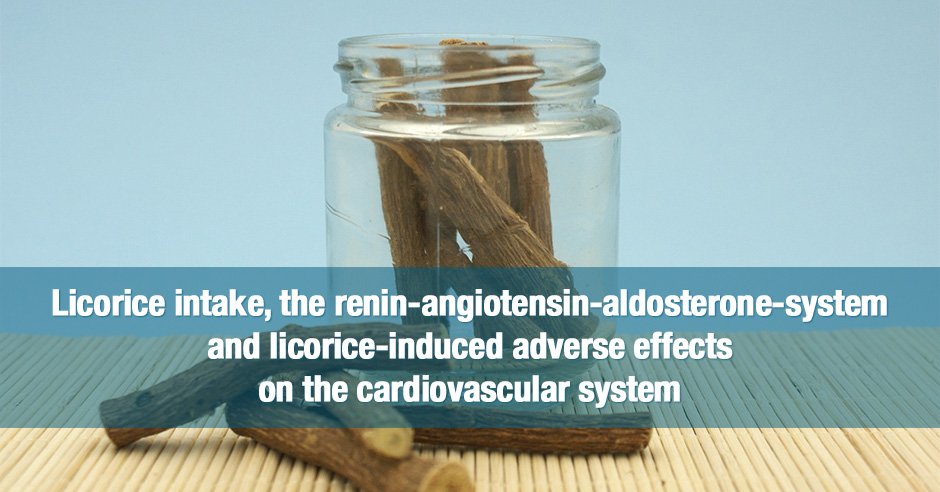
Licorice intake, the renin-angiotensin-aldosterone-system and licorice-induced adverse effects on the cardiovascular system

October 13, 2023 By Trudy Scott 28 Comments

licorice intake

Licorice, today chiefly utilized as a flavoring additive in tea, tobacco and candy, is one of the oldest used herbs for medicinal purposes and consists of up to 300 active compounds.

The main active constituent of licorice is the prodrug glycyrrhizin, which is successively converted to 3β-monoglucuronyl-18β-glycyrrhetinic acid (3MGA) and 18β-glycyrrhetinic acid (GA) in the intestines.

Despite many reported health benefits, 3MGA and GA inhibit the 11-β-hydrogenase type II enzyme (11β-HSD2) oxidizing cortisol to cortisone. Through activation of mineralocorticoid receptors, high cortisol levels induce a mild form of apparent mineralocorticoid excess in the kidney and increase systemic vascular resistance.

Continuous inhibition of 11β-HSD2 related to excess licorice consumption will create a state of hypernatremia [high sodium], hypokalemia [low potassium] and increased fluid volume, which can cause serious life-threatening complications especially in patients already suffering from cardiovascular diseases.

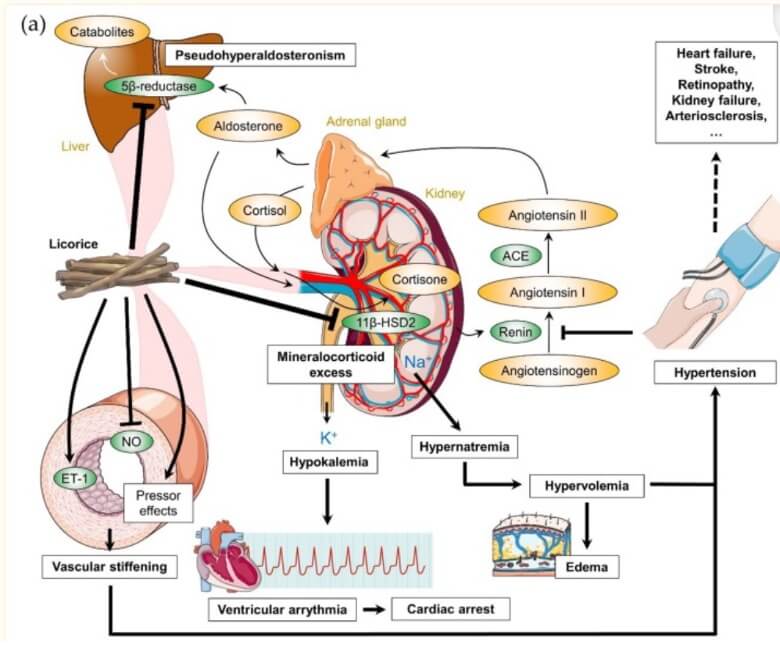
The above is from the paper, Bioactive Candy: Effects of Licorice on the Cardiovascular System and builds on the recent licorice-hypertension blog, showing a “correlation between licorice intake, the renin-angiotensin-aldosterone-system and licorice-induced adverse effects on the cardiovascular system.”
licorice intake

Correlation between licorice intake, the renin-angiotensin-aldosterone-system and licorice-induced adverse effects on the cardiovascular system
From: Bioactive Candy: Effects of Licorice on the Cardiovascular System

Adverse effects on the heart

As you can see from the above image, there are many ways that licorice intake can adversely affect the heart.

Most folks are aware of the issues with licorice causing high blood pressure and some folks know it can lower potassium. However, many folks are not aware of some of these more severe cardiovascular consequences caused by high blood pressure and  severely low potassium:

Hypertension is one of the major concerns for our healthcare system and was the leading contributor to premature death in 2015.  It has been proven to be a major risk factor of cardiovascular diseases.

Some of the mechanisms include “increased stiffness of large arteries” and “pulmonary edema …caused by the sodium retaining effect of licorice” (this is high blood pressure in your pulmonary arteries, which carry oxygen-poor blood from your heart to your lungs. The earliest symptom is shortness of breath during your usual routine).

In addition to hypertension, the paper mentions the following:

  • “Cardiac arrhythmias are the most serious side effect caused by licorice intake due to severe hypokalemia” (i.e. irregular heartbeat due to low potassium).
  • “Depletion of the body’s potassium stores can cause a prolongation of the QT interval, which is closely connected with ventricular arrhythmias and tachycardia” (i.e. abnormal heartbeats and increased heart rate).
  • “As a consequence, several patients experienced a cardiac arrest with a subsequent recovery.”

I encourage you to read the entire paper in order to fully understand the “correlation between licorice intake, the renin-angiotensin-aldosterone-system and licorice-induced adverse effects on the cardiovascular system.”

Who may be more susceptible to the adverse impacts of licorice intake?

There are many documented health benefits of licorice and the above paper outlines how it may even benefit the heart. However some folks are more susceptible to the adverse effects and the above paper shares who may be more adversely impacted by licorice intake:

  • People aged over 40
  • Patients with a history of cardiac disease (and high blood pressure). I’ll also add those with family members with heart or blood pressure issues
  • Patients who are on medicines lowering potassium levels (such as thiazide or loop diuretics)
  • Patients treated with antihypertensive drugs such as ACE-inhibitors and diuretics
  • Patients suffering from diarrhea or alcoholism, which can worsen hypokalemia
  • Patients with congestive heart failure or resistant hypertension
  • Patients taking digoxin or warfarin to avoid the risk of toxicity

The authors also state that “women seem to be more susceptible to licorice intake. A possible explanation for this gender difference are many other hormonal (estrogenic and antiandrogenic) effects exhibited by licorice in addition to its activity via mineralocorticoid receptor.” And that licorice should also be avoided during pregnancy “because the conversion of cortisone into cortisol plays an important role in lung maturation.”

These other possible factors from this paper, Licorice abuse: time to send a warning message, should also be considered:

  • Patients with less common causes of hypokalemia that include Cushing syndrome, Conn’s syndrome and Anorexia nervosa
  • Patients with prolonged gastrointestinal transit time (The amount of glycyrrhetic acid reabsorbed depends on its transit through the small and large intestines, therefore patients with prolonged gastrointestinal transit times are more prone to toxicity after repeated intake)

And I’d add these as factors to consider too:

  • Someone with known high cortisol levels
  • Someone with dietary oxalate issues and/or kidney issues. Licorice tea is listed as low oxalate on the Trying Low Oxalates Facebook group but they will be updating their spreadsheet based on a paper I just shared with them – Oxalate in Foods: Extraction Conditions, Analytical Methods, Occurrence, and Health Implications “Licorice was the highest-oxalate food reported in this review with 3569.3 mg total oxalate/100 g FW (fresh weight).” (this is higher than spinach, sweet potatoes and rhubarb which are really high oxalate)

As with everything, there is no one-size fits all and we need to be diligent about what works for us and what can cause issues.

What are the lasting cardiovascular effects of high blood pressure caused by drinking up to 6 cups of licorice tea a day?

As I shared on the recent licorice-hypertension blog, high blood pressure is one of the many cardiovascular issues with licorice – Beware! Too much licorice tea can cause hypertension even if you have low or normal blood pressure

In that case report, Hypertension induced by liquorice tea, a 45-year-old woman with hot flushes, sweating and headaches, was found to have high blood pressure and low potassium (mild hypokalemia) when she visited her doctor.

She had been drinking up to six cups of liquorice/licorice tea per day and within 2 weeks of stopping this, all her symptoms, the hypertension and the hypokalemia entirely resolved.

This case report is eye-opening because she had always had low blood pressure. I share more about this, my concerns and a very similar incident that I experienced when drinking Throat Calm tea – on the above blog.

What I do want to add is this woman’s concern about possible longer term effects. She says this: “I don’t know if I’ve had any lasting effects on my body by drinking this tea on a daily basis for over a year.” Hopefully her medical team explained much of what I’ve shared here and she was given a thorough cardiovascular work-up.

My cautions for consuming licorice in any form

I am of the opinion that licorice should be treated like the medicinal/therapeutic herb that it is and only be used when working with a knowledgeable practitioner.

This statement in this paper, The cardiovascular complications of licorice, sums up my beliefs:

The health benefits of licorice are minor compared to the adverse outcomes of chronic use which is never justified nor recommended. The long-established belief among the community that licorice is a natural healthy substance free of side effects promotes its liberal consumption and predisposition to toxicity.

I recommend ongoing blood pressure home monitoring if you regularly consume licorice in any form. I also recommend looking at the list of factors that may make you more susceptible to the adverse effects of licorice and discussing these with your practitioner.

I’d also encourage a thorough cardiovascular work-up for anyone who has observed high blood pressure and/or low potassium after consuming licorice for any duration. My blood pressure increased from 110/80 to 137/84 in just a week and it concerned me enough that I went to the doctor to get my potassium checked (it was in range but was only tested 10 days after I quit the licorice tea). I’ll also be discussing all this with my cardiologist and I’ll update this blog when I learn more.

Learning about all this and reading all this research – together with my personal experience and feedback from my community – has been eye-opening to me and hopefully these licorice blogs will help to create more awareness.

Has intake of licorice from tea, candy, herbal products, cough medicines and even smoking cigarettes caught you by surprise?

How much licorice did you consume and over what period?

Did you know about the caution to avoid licorice if you have high blood pressure? What about if you have low blood or normal pressure?

Are you more susceptible to the adverse impacts of licorice intake? And which factors do you suspect played a part if you had issues?

Feel free to share and ask your questions below.
Filed Under: Heart health/hypertension, Oxalates Tagged With: Bioactive Candy, cardiac arrest, cardiac arrhythmia, cardiovascular system, cortisol, cortisone, glycyrrhizin, high blood pressure, high sodium, hypernatremia, hypertension, hypokalemia, increased heart rate, irregular heartbeat, kidney, Licorice, licorice tea, low potassium, tachycardia

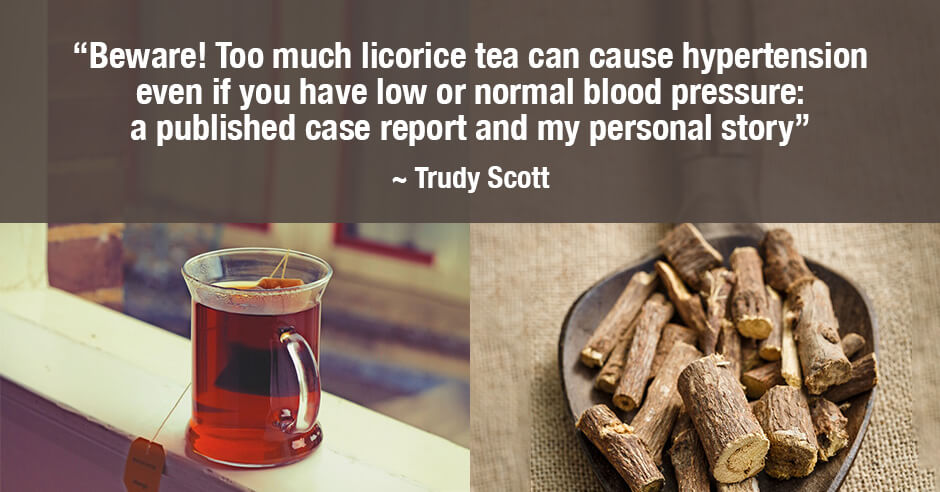
Beware! Too much licorice tea can cause hypertension even if you have low or normal blood pressure

October 6, 2023 By Trudy Scott 38 Comments

licorice tea and hypertension

A 45-year-old woman presented to her general practitioner with a 4-month history of hot flushes, sweating and headaches. On examination, she was found to be hypertensive, and blood tests revealed mild hypokalaemia [low potassium].

While awaiting the results of further investigation into the cause of her elevated blood pressure, the patient conducted her own research and identified liquorice tea [licorice tea] as the potential cause of her symptoms. The patient had been drinking up to six cups of liquorice tea per day as a substitute for caffeinated tea and fruit-based infusions.

The patient immediately stopped consuming the drink and within 2 weeks her symptoms, hypertension and hypokalaemia, had entirely resolved.

This case report, Hypertension induced by liquorice tea, is eye-opening because this woman had always had low blood pressure and so she ignored the small print on the box that states “not advised for people with hypertension.”

I often see this caution about avoiding licorice if you have high blood pressure (hypertension). But I have yet to see a warning on a box of tea about the fact that licorice can actually cause high blood pressure with high consumption – even when your blood pressure is low or normal. I feel the latter aspect is not as well known, which is the reason for this blog.

I’m also sharing this case report and additional information because something similar has just happened to me (more on my story below).

Here are a few more facts about this patient’s case:

  • She went to her doctor “with a history of hot flushes, night sweats and headaches. These symptoms had started over the preceding 4 months. The patient suspected that her symptoms were due to the onset of menopause.”
  • Initially her blood pressure was 162/82 and “Repeat blood pressure measurement confirmed ongoing hypertension of 150/80 mm Hg”
  • “Blood tests demonstrated mild hypokalaemia” (i.e. low potassium of 3.3 mmol/L).
  • Two weeks after she stopped drinking the licorice tea, “repeat blood pressure measurement was 128/84 mm Hg and her hypokalaemia (and other symptoms) had resolved.”

I encourage you to read the entire published case report to get an understanding of the mechanisms of licorice mediating “its effect on blood pressure via the action of glycyrrhizin on the kidney.” And the impacts on sodium, potassium, aldosterone, cortisol/cortisone and blood pressure. I will add that this is one of many such case reports in the published research.

My story with elevated blood pressure after drinking Yogi Throat Comfort tea

As I mentioned above, I’m sharing this case report because something similar has just happened to me! I had been drinking Yogi Throat Comfort tea for just over a week to soothe my throat and help after my voice loss. It contains licorice root as well as slippery elm and other herbs.

My blood pressure is typically low at 110/80 or less (sometimes as low as 102/80) and last Friday it was 130/80 which is the highest it had ever been.

I didn’t make the connection to licorice right away because I had just flown internationally from Hawaii to Australia and we were sprayed with insecticide on the plane when we landed in Australia. We all had to sit there in the toxic soup for 10 minutes. (I’ll be sharing more about all this in a future blog).

I suffered severe vertigo the next day and it was at the doctor’s office that I found out my blood pressure was 130/80. I was very surprised but he felt it could be due to the travel or vertigo or voice issues. I also know that bereavement can have major physiological impacts and increased blood pressure is one of them (I was in Hawaii for my darling mom’s memorial).

I finally made the connection when my blood pressure measured 137/84 a few days later and stopped drinking the tea immediately. Over the next few days it came down to 127/93 and then 121/90 and then 118/84.  I expect it to continue to come back down to my normal low blood pressure and will update this blog when it does.

As far as symptoms, I was just not feeling myself and had a strange feeling of apprehension, spaciness and breathlessness when talking too much. These are much improved having stopped the tea. My naturopath also recommended eating a banana each day to increase my potassium levels and to have epsom salt baths to help regulate the electrolytes in my body.

I will admit there are the above confounding/contributing factors – grief, voice loss, travel, vertigo, insecticide exposure – so I can’t be sure it’s only the licorice in the tea, and I’m not willing to test it out right now.

(Update Oct 13, 2023:  A week later and it’s now pretty much back to my usual low blood pressure. Over the course of this last week it measured 125/82, 118/91, 127/84, 118/85 and today it’s 112/85. I will continue to track.)

How much licorice tea is too much?

The authors of the above case report mention this about the dose of glycyrrhizin:

  • Experimental studies have shown that the rise in blood pressure caused by liquorice follows a linear dose–response relationship. Doses of as little as 75 mg of glycyrrhizin (equivalent to 50 g of standard liquorice confectionery) given daily for a 2-week period have been shown to cause a significant increase in systolic blood pressure (the first number).
  • In a survey of 33 brands of liquorice tea, the mean glycyrrhizin content was found to be 126 mg/L (range 2–450 mg/L). A cup of liquorice tea with a volume of 250 mL could therefore be expected to contain, on average, approximately 31.5 mg of glycyrrhizin.”
  • The European Scientific Committee on Food advises that regular glycyrrhizin doses of 100 mg/day present a risk to health, and advocate a safe average daily intake of no more than 10 mg/person/day. This is an amount equivalent to less than half a cup of liquorice tea or just 6 g of liquorice confectionery daily.

In the above published case, the patient had been “averaging around 4–6 cups per day, and had been consuming the licorice tea for about a year.” She was “unwittingly consuming daily volumes of liquorice tea containing up to 190 mg of glycyrrhizin, well in excess of the recommended limit” of 10 mg per day. It was 8 months before she started to notice the adverse effects, but I do wonder how long she had high blood pressure.

We have a home blood pressure monitor but I haven’t used it for ages and if I hadn’t gone in to the doctor for my vertigo, my elevated blood pressure may have gone unnoticed for a while too.

How much did I consume: a total of 10 Yogi Throat Comfort tea bags over the course of a week. The day before leaving I had a few cups of hot tea and was thrilled to be able to talk on my last day there.  I then drank it all day on the 15+ hour flight back: I had 2 tea bags in my 2 liter / 2 quart water bottle and filled it up a few times with cold water.  And I continued to do this once I was home, having it next to my bed if I woke up coughing in the night. I was probably getting 3 or 4 times more than the safe average daily intake of 10 mg/person/day.

I love licorice tea and drink it from time to time, maybe 2-4 cups a month. I’m quite surprised it affected me so quickly but have never consumed this amount and in such a concentrated time period.

Will I drink Yogi Throat Comfort tea or other herbal teas that contain licorice?

For now, I think I will – the Throat Comfort tea helped so much with my voice – but when I do I will monitor my blood pressure carefully and then make a final decision.

I also plan to dig a bit further into some of the confounding factors I mention above to see how they could possibly have made me more susceptible.

I do also have dietary oxalate issues so this could play into the effects of glycyrrhizin on the kidney. I’m finding mixed results on the oxalate content of licorice: some papers say high and some say low. But I didn’t have any of my typical oxalate reactions such as painful feet or eyes. I have, however, noticed some stiffness in my left hip the last few days so will be looking further into this aspect.

(Update Oct 13, 2023: Licorice tea is listed as low oxalate on the Trying Low Oxalates Facebook group but they will be updating their spreadsheet based on a paper I just shared with them – Oxalate in Foods: Extraction Conditions, Analytical Methods, Occurrence, and Health Implications “Licorice was the highest-oxalate food reported in this review with 3569.3 mg total oxalate/100 g FW (fresh weight).” (this is higher than spinach, sweet potatoes and rhubarb which are really high oxalate)

My takeaway messages – a warning and listen to your body

There is no licorice hypertension warning on this Yogi Throat Comfort tea box (or my Tulsi Licorice tea) and I do feel there should be 2 warnings: the usual warning about licorice if you have high blood pressure AND a general warning that licorice may also affect you if you have low or normal blood pressure.

My other takeaway message is this: listen to your body and get checked out when things don’t seem as they should be.

Has something like this happened to you? How much licorice tea did you consume, which brand and over what period?

Do you typically have low blood pressure and were you also caught by surprise?

Did you know about the caution to avoid licorice if you have high blood pressure?

And what about the fact that licorice may also affect you if you have low or normal blood pressure?

Feel free to share and ask your questions below.

Filed Under: Heart health/hypertension, Oxalates Tagged With: glycyrrhizin, Headaches, high blood pressure, hot flushes, hypertension, hypokalaemia, kidney, Licorice, licorice tea, liquorice, low blood pressure, low potassium, normal blood pressure, oxalate, sweating, Yogi Throat Comfort tea

Primary Sidebar

NEW! GABA QuickStart Homestudy (with special intro pricing)

gaba quickstart homestudy

Free Report

9 Great Questions Women Ask about Food, Mood and their Health

You'll also receive a complimentary subscription to my ezine "Food, Mood and Gal Stuff"


Connect with me

Popular Posts

  • Amino Acids Mood Questionnaire from The Antianxiety Food Solution
  • The Antianxiety Food Solution Amino Acid and Pyroluria Supplements
  • Pyroluria Questionnaire from The Antianxiety Food Solution
  • Collagen and gelatin lower serotonin: does this increase your anxiety and depression?
  • Tryptophan for the worry-in-your-head and ruminating type of anxiety
  • GABA for the physical-tension and stiff-and-tense-muscles type of anxiety
  • The Antianxiety Food Solution by Trudy Scott
  • Seriphos Original Formula is back: the best product for anxiety and insomnia caused by high cortisol
  • Am I an anxious introvert because of low zinc and vitamin B6? My response to Huffington Post blog
  • Vagus nerve rehab with GABA, breathing, humming, gargling and key nutrients

Recent Posts

  • What do I use instead of Seriphos to help lower high cortisol that is affecting my sleep and making me anxious at night?
  • BeSerene™ GABA/theanine cream eases severe muscle tension in her neck/shoulders, prevents her bad headaches and quells her anxiety
  • How the correct approach, dose and sublingual use of GABA can be calming and not cause a flushed and itchy face and neck
  • The amino acid glutamine improves low mood by addressing gut health, and it has calming effects too
  • Flight anxiety with heightened breath, physical tension and also fearing the worst (the role of low GABA and low serotonin)

Categories

  • 5-HTP
  • AB575
  • Addiction
  • ADHD
  • Adrenals
  • Alcohol
  • Allergies
  • Alzheimer's disease
  • Amino Acids
  • Anger
  • Antianxiety
  • Antianxiety Food Solution
  • Antidepressants
  • Anxiety
  • Anxiety and panic
  • Autism
  • Autoimmunity
  • benzodiazapines
  • Bipolar disorder
  • Books
  • Caffeine
  • Cancer
  • Candida
  • Children/Teens
  • Collagen
  • Cooking equipment
  • Coronavirus/COVID-19
  • Cravings
  • Depression
  • Detoxification
  • Diabetes
  • Diet
  • DPA/DLPA
  • Drugs
  • EFT/Tapping
  • EMF
  • EMFs
  • Emotional Eating
  • Endorphins
  • Environment
  • Essential oils
  • Events
  • Exercise
  • Fear
  • Fear of public speaking
  • Fertility and Pregnancy
  • Fish
  • Food
  • Food and mood
  • Functional neurology
  • GABA
  • Gene polymorphisms
  • General Health
  • Giving
  • Giving back
  • Glutamine
  • Gluten
  • GMOs
  • Gratitude
  • Gut health
  • Heart health/hypertension
  • Histamine
  • Hormone
  • Hyperparathyroidism
  • Hypoglycemia
  • Immune system
  • Inflammation
  • Insomnia
  • Inspiration
  • Introversion
  • Joy and happiness
  • Ketogenic diet
  • Lithium orotate
  • Looking awesome
  • Lyme disease and co-infections
  • MCAS/histamine
  • Medication
  • Men's health
  • Mental health
  • Mercury
  • Migraine
  • Mold
  • Movie
  • MTHFR
  • Multiple sclerosis
  • Music
  • NANP
  • Nature
  • Nutritional Psychiatry
  • OCD
  • Osteoporosis
  • Oxalates
  • Oxytocin
  • Pain
  • Paleo
  • Parasites
  • Parkinson’s disease
  • PCOS
  • People
  • PMS
  • Postpartum
  • PTSD/Trauma
  • Pyroluria
  • Questionnaires
  • Real whole food
  • Recipes
  • Research
  • Schizophrenia
  • serotonin
  • SIBO
  • Sleep
  • Special diets
  • Sports nutrition
  • Stress
  • Sugar addiction
  • Sugar and mood
  • Supplements
  • Teens
  • Testimonials
  • Testing
  • The Anxiety Summit
  • The Anxiety Summit 2
  • The Anxiety Summit 3
  • The Anxiety Summit 4
  • The Anxiety Summit 5
  • The Anxiety Summit 6
  • Thyroid
  • Thyroid health
  • Toxins
  • Tryptophan
  • Tyrosine
  • Uncategorized
  • Vegan/vegetarian
  • Women's health
  • Yoga

Archives

  • October 2025
  • September 2025
  • August 2025
  • July 2025
  • June 2025
  • May 2025
  • April 2025
  • March 2025
  • February 2025
  • January 2025
  • November 2024
  • October 2024
  • September 2024
  • August 2024
  • July 2024
  • June 2024
  • May 2024
  • April 2024
  • March 2024
  • February 2024
  • January 2024
  • December 2023
  • November 2023
  • October 2023
  • September 2023
  • August 2023
  • July 2023
  • June 2023
  • May 2023
  • April 2023
  • March 2023
  • February 2023
  • January 2023
  • December 2022
  • November 2022
  • October 2022
  • September 2022
  • August 2022
  • July 2022
  • June 2022
  • May 2022
  • April 2022
  • March 2022
  • February 2022
  • January 2022
  • December 2021
  • November 2021
  • October 2021
  • September 2021
  • August 2021
  • July 2021
  • June 2021
  • May 2021
  • April 2021
  • March 2021
  • February 2021
  • January 2021
  • December 2020
  • November 2020
  • October 2020
  • September 2020
  • August 2020
  • July 2020
  • June 2020
  • May 2020
  • April 2020
  • March 2020
  • February 2020
  • January 2020
  • December 2019
  • November 2019
  • October 2019
  • September 2019
  • August 2019
  • July 2019
  • June 2019
  • May 2019
  • April 2019
  • March 2019
  • February 2019
  • January 2019
  • December 2018
  • November 2018
  • October 2018
  • September 2018
  • August 2018
  • July 2018
  • June 2018
  • May 2018
  • April 2018
  • March 2018
  • February 2018
  • January 2018
  • December 2017
  • November 2017
  • October 2017
  • September 2017
  • August 2017
  • July 2017
  • June 2017
  • May 2017
  • April 2017
  • March 2017
  • February 2017
  • January 2017
  • December 2016
  • November 2016
  • October 2016
  • September 2016
  • August 2016
  • July 2016
  • June 2016
  • May 2016
  • April 2016
  • March 2016
  • February 2016
  • January 2016
  • December 2015
  • November 2015
  • October 2015
  • September 2015
  • August 2015
  • July 2015
  • June 2015
  • May 2015
  • April 2015
  • March 2015
  • February 2015
  • January 2015
  • December 2014
  • November 2014
  • October 2014
  • September 2014
  • August 2014
  • July 2014
  • June 2014
  • May 2014
  • April 2014
  • March 2014
  • February 2014
  • January 2014
  • December 2013
  • November 2013
  • October 2013
  • September 2013
  • August 2013
  • July 2013
  • June 2013
  • May 2013
  • April 2013
  • March 2013
  • February 2013
  • January 2013
  • December 2012
  • November 2012
  • October 2012
  • August 2012
  • July 2012
  • June 2012
  • May 2012
  • April 2012
  • March 2012
  • February 2012
  • January 2012
  • December 2011
  • November 2011
  • October 2011
  • September 2011
  • August 2011
  • July 2011
  • June 2011
  • May 2011
  • April 2011
  • March 2011
  • February 2011
  • January 2011
  • December 2010
  • October 2010
  • September 2010
  • July 2010
  • May 2010
  • April 2010
  • March 2010
  • February 2010
  • January 2010
  • November 2009

Share the knowledge!

The above statements have not been evaluated by the Food and Drug Administration. Products listed in this website are not intended to diagnose, treat, cure or prevent any disease.

The information provided on this site is for informational and educational purposes only and is not intended as a substitute for advice from your physician or other health care professional. You should consult with a healthcare professional before starting or modifying any diet, exercise, or supplementation program, before taking or stopping any medication, or if you have or suspect you may have a health problem.


Copyright © 2026 Trudy Scott. All Rights Reserved. | Privacy | Terms and Conditions | Refund Policy | Medical Disclaimer

Free Report

9 Great Questions Women Ask about Food, Mood and their Health

You’ll also receive a complimentary subscription to my ezine “Food, Mood and Gal Stuff”