Licorice, today chiefly utilized as a flavoring additive in tea, tobacco and candy, is one of the oldest used herbs for medicinal purposes and consists of up to 300 active compounds.
The main active constituent of licorice is the prodrug glycyrrhizin, which is successively converted to 3β-monoglucuronyl-18β-glycyrrhetinic acid (3MGA) and 18β-glycyrrhetinic acid (GA) in the intestines.
Despite many reported health benefits, 3MGA and GA inhibit the 11-β-hydrogenase type II enzyme (11β-HSD2) oxidizing cortisol to cortisone. Through activation of mineralocorticoid receptors, high cortisol levels induce a mild form of apparent mineralocorticoid excess in the kidney and increase systemic vascular resistance.
Continuous inhibition of 11β-HSD2 related to excess licorice consumption will create a state of hypernatremia [high sodium], hypokalemia [low potassium] and increased fluid volume, which can cause serious life-threatening complications especially in patients already suffering from cardiovascular diseases.
The above is from the paper, Bioactive Candy: Effects of Licorice on the Cardiovascular System and builds on the recent licorice-hypertension blog, showing a “correlation between licorice intake, the renin-angiotensin-aldosterone-system and licorice-induced adverse effects on the cardiovascular system.”
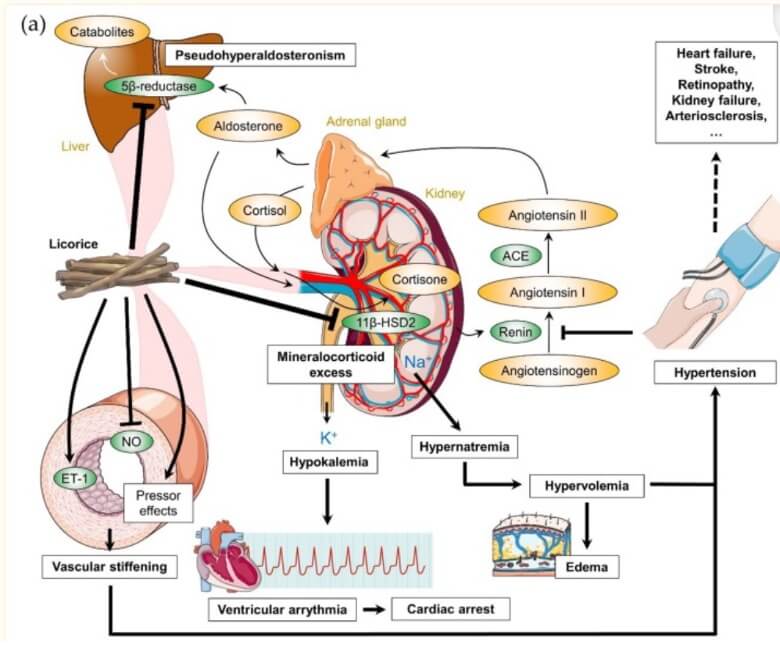
Correlation between licorice intake, the renin-angiotensin-aldosterone-system and licorice-induced adverse effects on the cardiovascular system
From: Bioactive Candy: Effects of Licorice on the Cardiovascular System
Adverse effects on the heart
As you can see from the above image, there are many ways that licorice intake can adversely affect the heart.
Most folks are aware of the issues with licorice causing high blood pressure and some folks know it can lower potassium. However, many folks are not aware of some of these more severe cardiovascular consequences caused by high blood pressure and severely low potassium:
Hypertension is one of the major concerns for our healthcare system and was the leading contributor to premature death in 2015. It has been proven to be a major risk factor of cardiovascular diseases.
Some of the mechanisms include “increased stiffness of large arteries” and “pulmonary edema …caused by the sodium retaining effect of licorice” (this is high blood pressure in your pulmonary arteries, which carry oxygen-poor blood from your heart to your lungs. The earliest symptom is shortness of breath during your usual routine).
In addition to hypertension, the paper mentions the following:
- “Cardiac arrhythmias are the most serious side effect caused by licorice intake due to severe hypokalemia” (i.e. irregular heartbeat due to low potassium).
- “Depletion of the body’s potassium stores can cause a prolongation of the QT interval, which is closely connected with ventricular arrhythmias and tachycardia” (i.e. abnormal heartbeats and increased heart rate).
- “As a consequence, several patients experienced a cardiac arrest with a subsequent recovery.”
I encourage you to read the entire paper in order to fully understand the “correlation between licorice intake, the renin-angiotensin-aldosterone-system and licorice-induced adverse effects on the cardiovascular system.”
Who may be more susceptible to the adverse impacts of licorice intake?
There are many documented health benefits of licorice and the above paper outlines how it may even benefit the heart. However some folks are more susceptible to the adverse effects and the above paper shares who may be more adversely impacted by licorice intake:
- People aged over 40
- Patients with a history of cardiac disease (and high blood pressure). I’ll also add those with family members with heart or blood pressure issues
- Patients who are on medicines lowering potassium levels (such as thiazide or loop diuretics)
- Patients treated with antihypertensive drugs such as ACE-inhibitors and diuretics
- Patients suffering from diarrhea or alcoholism, which can worsen hypokalemia
- Patients with congestive heart failure or resistant hypertension
- Patients taking digoxin or warfarin to avoid the risk of toxicity
The authors also state that “women seem to be more susceptible to licorice intake. A possible explanation for this gender difference are many other hormonal (estrogenic and antiandrogenic) effects exhibited by licorice in addition to its activity via mineralocorticoid receptor.” And that licorice should also be avoided during pregnancy “because the conversion of cortisone into cortisol plays an important role in lung maturation.”
These other possible factors from this paper, Licorice abuse: time to send a warning message, should also be considered:
- Patients with less common causes of hypokalemia that include Cushing syndrome, Conn’s syndrome and Anorexia nervosa
- Patients with prolonged gastrointestinal transit time (The amount of glycyrrhetic acid reabsorbed depends on its transit through the small and large intestines, therefore patients with prolonged gastrointestinal transit times are more prone to toxicity after repeated intake)
And I’d add these as factors to consider too:
- Someone with known high cortisol levels
- Someone with dietary oxalate issues and/or kidney issues. Licorice tea is listed as low oxalate on the Trying Low Oxalates Facebook group but they will be updating their spreadsheet based on a paper I just shared with them – Oxalate in Foods: Extraction Conditions, Analytical Methods, Occurrence, and Health Implications “Licorice was the highest-oxalate food reported in this review with 3569.3 mg total oxalate/100 g FW (fresh weight).” (this is higher than spinach, sweet potatoes and rhubarb which are really high oxalate)
As with everything, there is no one-size fits all and we need to be diligent about what works for us and what can cause issues.
What are the lasting cardiovascular effects of high blood pressure caused by drinking up to 6 cups of licorice tea a day?
As I shared on the recent licorice-hypertension blog, high blood pressure is one of the many cardiovascular issues with licorice – Beware! Too much licorice tea can cause hypertension even if you have low or normal blood pressure
In that case report, Hypertension induced by liquorice tea, a 45-year-old woman with hot flushes, sweating and headaches, was found to have high blood pressure and low potassium (mild hypokalemia) when she visited her doctor.
She had been drinking up to six cups of liquorice/licorice tea per day and within 2 weeks of stopping this, all her symptoms, the hypertension and the hypokalemia entirely resolved.
This case report is eye-opening because she had always had low blood pressure. I share more about this, my concerns and a very similar incident that I experienced when drinking Throat Calm tea – on the above blog.
What I do want to add is this woman’s concern about possible longer term effects. She says this: “I don’t know if I’ve had any lasting effects on my body by drinking this tea on a daily basis for over a year.” Hopefully her medical team explained much of what I’ve shared here and she was given a thorough cardiovascular work-up.
My cautions for consuming licorice in any form
I am of the opinion that licorice should be treated like the medicinal/therapeutic herb that it is and only be used when working with a knowledgeable practitioner.
This statement in this paper, The cardiovascular complications of licorice, sums up my beliefs:
The health benefits of licorice are minor compared to the adverse outcomes of chronic use which is never justified nor recommended. The long-established belief among the community that licorice is a natural healthy substance free of side effects promotes its liberal consumption and predisposition to toxicity.
I recommend ongoing blood pressure home monitoring if you regularly consume licorice in any form. I also recommend looking at the list of factors that may make you more susceptible to the adverse effects of licorice and discussing these with your practitioner.
I’d also encourage a thorough cardiovascular work-up for anyone who has observed high blood pressure and/or low potassium after consuming licorice for any duration. My blood pressure increased from 110/80 to 137/84 in just a week and it concerned me enough that I went to the doctor to get my potassium checked (it was in range but was only tested 10 days after I quit the licorice tea). I’ll also be discussing all this with my cardiologist and I’ll update this blog when I learn more.
Learning about all this and reading all this research – together with my personal experience and feedback from my community – has been eye-opening to me and hopefully these licorice blogs will help to create more awareness.
Has intake of licorice from tea, candy, herbal products, cough medicines and even smoking cigarettes caught you by surprise?
How much licorice did you consume and over what period?
Did you know about the caution to avoid licorice if you have high blood pressure? What about if you have low blood or normal pressure?
Are you more susceptible to the adverse impacts of licorice intake? And which factors do you suspect played a part if you had issues?
Feel free to share and ask your questions below.