Just a quick reminder that the Brain Summit airs May 2nd to 6th.

Here is a snippet from the interview with Alex Doman: Using Music to Rewire Your Brain. Alex is CEO of Advanced Brain Technologies, the third generation of a family of pioneers in the field of human brain development, co-founder of Sleep Genius, author of the best-selling book, Healing at the Speed of Sound and co-creator of The Listening Program, a sound therapy program.
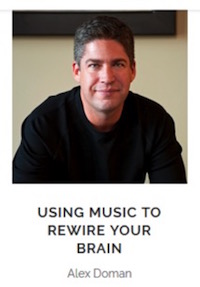
It’s a fascinating topic that I didn’t know much about until I heard this interview. Alex shares some of the basics of sound and sound therapy:
Sound affects us on a myriad of levels, from lower brain centers to the higher brain centers. So bottom-up and top-down processing, emotional regulation, moods. So it has a swath of impact on us as human beings, and, you know, the music that’s in our personal playlist we use, you know, to self-regulate, and, as you said, maybe an up-tempo piece for our cardio; a slow tempo, very calm piece when we’re in a stress state; maybe some baroque music to help focus us.
And the principles of using music and sound for self-regulation, there are a few components, right? One is frequency, which you mentioned, which is a big area of focus for us. Different sound frequencies have a different impact on our functions and performance, right? So we’ve learned that low-frequency sounds have a very calming effect on the nervous system. They have an effect on our motor functions within the brain; fine and gross motor skills, our sense of body and space, our left-right awareness, our coordinated movements, and our vestibular functions, primarily. Whereas, the mid-frequencies are very focusing, as opposed to the low frequencies being grounded, and they are more related to our communication with one another, our ability to receive and express language, both orally and through written communication. And then these high frequencies, which are rather magical, in a way, that are very stimulating and tap into our intuition, our beliefs, our creativity. And actually, in the brain, there’s more neural area for the high frequencies than any other range of sound frequencies.
So we are working with sound and the components of frequency to affect different functions within our lives — from the low to the mid to the high frequencies—in very specific ways, but then there are other features, like the tempo, the pace of the music, right? Slow tempos will entrain our body rhythms and brain waves to lower states, and fast tempos will activate us. So, in way, you can think of high frequencies like sonic caffeine that I have here in my cup, to get me activated, and the low frequencies might be like taking a lavender essential oil to help kind of calm our nervous system. So they affect us across a great range.
Once he started talking about stress, burnout and the vagus nerve, I was even more fascinated and really intrigued:
What’s happening is our stress resilience is getting lower and lower and lower. So what’s interesting is noise is a big contributor to that. But sound is also the antidote. So there was some research that was done in Europe a few years ago with child care workers that experienced burnout symptoms to the magnitude that many would qualify for a depression diagnosis.
So the investigators wanted to research the impact of Music Listening Therapy with a special mode of stimulation that would impact the vagus nerve and the autonomic nervous system with more impact—and we’ll probably talk about bone conduction later—and to use one of our protocols to see if, in fact, symptoms of burnout would be lessened in response to that intervention, compared to the standard care, that standard care being visits to a psychotherapist for these workers.
So they did a controlled study, and one group saw the therapist and one group, their therapist was themselves using sound as the input and to help heal and change their state. And what was miraculous is that those that did the listening had statistically significant improvements going from stress burnout to normal stress resilience, and those getting talk therapy made very little change. They stayed kind of stuck in their pattern of stress response. So it’s really a testament to the power of the right sound done in a very specific manner, right? This isn’t haphazard; this is a very focused, structured program to create a massive change to a very big issue that many of us face.
Later on in the interview, there is more discussion about the vagus nerve. If you’ve been following my blogging recently you’ll be aware of the issues I had with my voice and the breathing and humming work I did for my vagus nerve rehabilitation. Now I have a much better understanding of why it helped so much!
And what’s interesting is the vagus nerve, which is a cranial nerve, has enervations within the ear, meaning connections, inner connections within the ear. So when we hear or experience sound, that sound carries along the vagus nerve. So it connects our central nervous system and our autonomic nervous system; that’s the main bridge, the main connector that happens. And it’s very important for emotional regulation; it’s the center of emotional regulation.
And what we’ve found with Music Listening Therapy, the observations are that it helps with that homeostatic state, that balance of acceleration when we need it and deceleration in the brake when we need it. So that we can have improved stress resilience and better emotional regulation
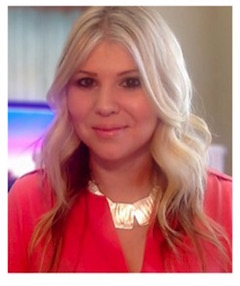
Erin Matlock is founder of Brain Summit, a mental health advocate and popular speaker. After overcoming a crippling battle with severe depression, she went on to create an online community where she openly shares her search for a better brain.
During this interview she shares how much this music therapy helped her to feel joyful and more connected:
I’d spent four weeks in the high frequency range, and that produced a joy. And I have never described myself as joyful, not since I was a little child, because of the history of depression. And I can’t remember – and I know I wrote about that – a time when I walked around saying, “I feel joy,” for no reason, none at all.
And then the other part was the connection. And this part was interesting. As an introvert, as someone who has always felt very out of place, like I was born in the wrong time, I used to describe myself like that saying, “alone in a crowded room.” That was me. And to feel connected — not to any particular person, just in a general sense— for me it was spiritual; it’s not that way for everyone else. I don’t know where that connection comes from, but it was something that my brain wasn’t giving me before. And that came directly as a result of this training.
Overall it is a fascinating interview and one I know you’ll want to hear! I look forward to checking out other interviews and hope you’ll join me on the Brain Summit. Erin interviews 25 global experts who present cutting edge information on brain health, mental health, peak performance, neurotechnology, nutrition and much more.
You can register here: http://www.brainsummit.com?orid=45505&opid=12

Great that there is so much more talk in the science and healthy community about the vagus nerve. Kundalini technology has been talking about the relationship between the vagus nerve and our mental and physical health for many many years. I am a licensed marriage and family therapist who uses segmented breathing meditations to simulate the vagus nerve. I have a CD which has 6 different meditations which all work on the vagus nerve and each have a different mental affect. Please check it out at where I also offer 3 min free meditations. Thank you https://madhurnain.com/product/segmented-breathing-meditation-collection/
Thanks for sharing these Madhur-Nain. Can you share more about what segmented breathing meditations are?
I look forward to learning more about what Kundalini and the vagus nerve – do you perhaps have a blog post on the topic that you could share?
I’m fascinated by what I’m learning about the vagus nerve – all because of my recent personal experiences https://www.everywomanover29.com/blog/vagus-nerve-rehab-gaba/
I have a CD out called Segmented Breathing. It has 6 different meditations which all work on the vagus nerve and other emotional issues or goals. https://madhurnain.com/product/segmented-breathing-meditation-collection/
Scientific research shares that the vagus nerve, when activated by different kinds of breath meditations, can lower our stress response to life. Supporting the vagus nerve is like a super vitamin to the brain. Scientific research has found that when we active the vagus nerve it helps us to create new cells which support the rebuilding of our organs. When our body is under stress this adds to tiring our organs and weaken our health. Ready more on the back of my CD.
Kundalini technology has been talking about working with and stimulating the vagus nerve for over 40 years in the United States. You will only know by practicing. Love your feedback. The 3 minuet meditations are free so try them by visiting my website. Thank you Trudy Scott for always sharing so much and bringing us all together to heal our selves and heal the world.
Thank you for sharing and for the work you do!
Hi Trudy,
I’ve got a few questions for you, sorry they are unrelated to this specific post. I’ve gotten your book the anti-anxiety food solution, and I started taking Gaba and 5-htp. The Gaba Calm you recommended has been very helpful and I notice a difference in my anxiety right away. However, I’ve worked my way up to about 10 tablets a day and I’m concerned about if that is healthy. It’s also expensive. I started taking another Gaba that you recommended and the dose on that is 250mg. I’ve been taking that 2 times a day. I’ve been taking 200 mg of 5-htp as well. Unfortunately after taking all these pills I’m still quite anxious. I’m also not able to sleep through the night. The not sleeping has been going on for years, but now I have 2 small children and it’s catching up with me. I wake up every night around 2am. I have been experiencing panic attacks a few times a week and overall my anxiety and irritability is high. Do you think my doses are ok? I am thinking about taking your course, but I’m wondering how different it is from the book. I’m very desperate to not have anxiety and to be able to sleep. Thanks so much for all you are doing to help people!
Jess
It’s often a matter of trial and error. If the GABA and 5-HTP help that’s a good sign. I would use a GABA product opened rather than 10 of the GABA calm. If sleep is still an issue with 5-HTP I like to try tryptophan as 5-HTP can raise cortisol. Other factors that affect sleep: blood sugar, parasites, SIBO and high cortisol.
The aminos program walks you through each of the aminos one week at the time.
Jess, the 2am is probably telling you it’s your liver. You might want to focus on healing/cleansing your liver and see if that helps.
The research regarding sound, singing, chanting, and breathing techniques with the vagus nerve are certainly solid and we need more of that. However, unless you have a board certified Music Therapist involved you cannot call it music therapy. Be careful of how you are representing the research so as not to confuse the consumer with the profession of music therapy. I am a Music Therapist working with psychiatric patients. My facility is implementing Trauma Informed Care and research on the polyvagal theory is certainly a game changer. We need the research for sure to validate the evidence. For more information on music therapy in the U.S., G.B., and globally you can go to: https://www.musictherapy.org/, https://www.bamt.org/, https://www.wfmt.info/.
Rebecca
Thanks for sharing these wonderful resources! I had no idea they existed and am not familiar with this work. Thanks for the advice about using correct terminology.