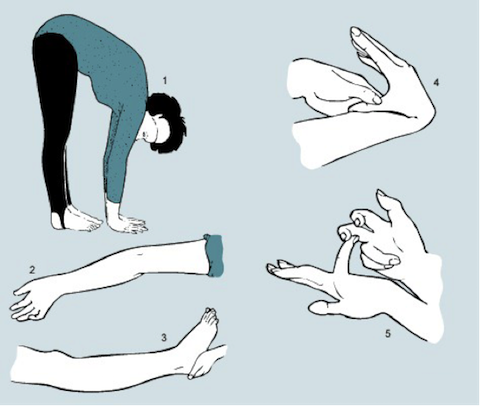
I recently received a question about the possible connection between joint hypermobility / Ehlers-Danlos Syndrome and pyroluria. It’s been on my long list of topics to look into, learn more about and write about because I also feel there may be a connection to pyroluria, a social anxiety condition. People with pyroluria can often relate to these symptoms: joints popping, cracking, or aching; pain or discomfort between the shoulder blades; or cartilage problems (likely due to low zinc levels).
So here goes, I’ll share what I know so far. I’d love to gather more information and am looking for feedback too so please do share your experiences in the comments.
Joint hypermobility syndrome is described in this British Medical Journal paper: by expert Professor Rodney Grahame:
Joint hypermobility syndrome (JHS), previously known as benign joint hypermobility syndrome (BJHS), is a heritable disorder of connective tissue that comprises symptomatic hypermobility predisposing to arthralgia, soft tissue injury, and joint instability. It is indistinguishable from the hypermobility type of Ehlers-Danlos syndrome.
Complications may include autonomic dysfunction, proprioceptive impairment, premature osteoarthritis, intestinal dysmotility, and laxity in other tissues causing hernias or uterine or rectal prolapse.
Symptoms are often minimal or mild, but 168 out of 700 patients with joint hypermobility syndrome (24%) attending the UCH Hypermobility Clinic already had an established chronic pain syndrome at the time of their first outpatient attendance. These patients were experiencing serious pain, disability, and impairment of the quality of life, some patients becoming chairbound or even bedbound.
As reported in this Dec 2014 paper: United States Physical Therapists’ Knowledge About Joint Hypermobility Syndrome Compared with Fibromyalgia and Rheumatoid Arthritis despite the fact that joint hypermobility syndrome is one of the most common inherited connective tissue disorders, “many physical therapists in the United States are not familiar with the diagnostic criteria, prevalence or common clinical presentation.”
This is the actual request that I received from Catriona, one of my blog readers/facbeook followers:
I was wondering if you’d ever be interested on doing a post on Ehlers-Danlos Syndrome/Joint Hypermobility. I wonder whether many of your clients suffer from it and possibly don’t even realize. It’s a group of connective tissue disorders which had mostly been thought to affect only the joints, skin, skeleton and blood vessels, but it turns out that connective tissue is a necessary part of all organs and that there are much higher than expected incidences of anxiety, depression, chronic pain which is often labelled as fibromyalgia, gastrointestinal problems and more. I suspect a lot of people with EDS [Ehlers-Danlos Syndrome] also have pyroluria, there are high numbers of people having to deal with POTS [Postural orthostatic tachycardia syndrome] and MCAS[Mast Cell Activation Syndrome] and very high levels of disability with it. I think that having connective tissue in the gut that might be more prone to tearing and leaking might make dietary changes even more important, but might also be one of the things that results in less good responses to nutrient therapies. As well as that there are so many people with EDS on cocktails of medications for pain, sleep, anxiety, depression, reflux, IBS, menstrual disorders etc. and I can’t help but wonder whether all those medications are actually sometimes making things worse for some. Is it something you’ve come across much? Thanks.
There are a number of papers published in 2014 and 2015 linking EDS / Ehlers-Danlos Syndrome with psychiatric disorders. None mention social anxiety but anxiety is very common, as is depression.
Here is one paper that was published October 2015: Psychiatric disorders in Ehlers-Danlos syndrome are frequent, diverse and strongly associated with pain
Psychiatric disorders were found in 42.5 % of the EDS cohort, with 22.7 % of patients affected with 2 or more psychiatric diagnoses. Anxiety and depression were most commonly reported, with frequencies of 23.6 and 25.5 %, respectively.
This paper was published in April 2015, looking postal survey results from 250 members (over 18 years) of the Swedish National EDS Association: Self-reported quality of life, anxiety and depression in individuals with Ehlers-Danlos syndrome (EDS): a questionnaire study
Of the respondents 74.8% scored high on anxiety and 22.4% scored high on depression on the HADS [Hospital Anxiety and Depression Scale]
This March 2015 paper: Psychopathological manifestations of joint hypermobility and joint hypermobility syndrome/ Ehlers-Danlos syndrome, hypermobility type: The link between connective tissue and psychological distress revised addresses generalized joint hypermobility and other disorders as well as anxiety:
Psychological distress is a known feature of generalized joint hypermobility (gJHM), as well as of its most common syndromic presentation, namely Ehlers-Danlos syndrome, hypermobility type (a.k.a. joint hypermobility syndrome – JHS/EDS-HT), and significantly contributes to the quality of life of affected individuals.
Interestingly, in addition to the confirmation of a tight link between anxiety and gJHM [generalized joint hypermobility], preliminary connections with depression, attention deficit (and hyperactivity) disorder, autism spectrum disorders, and obsessive-compulsive personality disorder were also found.
Of course the big question is which comes first ?
- the EDS and pain leading to feelings of anxiety and depression
- or the genetic factors that cause nutritional deficiencies affecting both connective tissue and contributing to anxiety/depression
I’d guess it’s likely a combination of both and that it’s going to vary by individual.
The website of the Ehlers-Danlos Syndromes National Foundation is an excellent resource for learning about the condition but interestingly they make no mention of psychiatric symptoms.
Here is some feedback I’ve received up until now, on my blog, about a possible connection to pyroluria:
- As you can see in this blog post: Pyroluria prevalence and associated conditions Thin Basement Membrane Disease (an inherited collagen/connective tissue disorder diagnosed via kidney biopsy) may be related to pyroluria. Someone contacted me during season 3 of the Anxiety Summit and said she has pyroluria and TBMD/Thin Basement Membrane Disease. She shared that the pyroluria protocol helped with her TBMD/Thin Basement Membrane Disease symptoms.
- Maruschka posted on the same pyroluria blog sharing this (slightly edited version): pyrrole disorder/pyroluria is big part of hypermobility, Ehlers Danlos syndrome 3 and mixed connective tissue disorder. 80% of us suffer with pyrrole in collagen issues. Often undiagnosed. Professor Rodney Grahame says every 5 people in 30 people we meet have it. Now there is a talk that hypermobility is induced by environment, so epigenetics could reverse it.
- Ali commented on this blog post: Pyroluria, Amino Acids and Anxiety: Troubleshooting when you are not getting results saying she “immediately identified with almost all of the symptoms on your pyroluria questionairre, and ordered the test through Direct Health Care (the lab Dr. Walsh recommends). I ended up getting a mild positive urinary kryptopyrrole result .” She has also been “diagnosed with mast cell activation disorder (MCAD) and autoimmune disease (lupus, Hashimoto’s thyroiditis, celiac disease, Raynaud’s, interstitial cystitis), and Ehlers-Danlos Syndrome Type 3.” The pyroluria protocol does not seem to help her but she does have a great deal going on with her health.
- Candy commented on the above post too, saying she has been diagnosed with Ehlers Danlos Syndrome and relates to many of the pyroluria symptoms.
I received this feedback from a colleague, Dr. Josh Friedman, an integrative psychotherapist who uses amino acids and other nutritional approaches in his practice. (You may remember him from the Anxiety Summit season 1 and then he interviewed me in season 3
One thing that I have noticed in the few folks in my practice with EDS (small sample of 4-5) is that that they tend toward low cholesterol (below 160 total) and do well with cholesterol supplementation. They do suffer from anxiety and/or depression. It seems pyroluria is a factor in some but not others (I have used the questionnaire from your book).
I look forward to learning more so I can help more people with social anxiety and hopefully some of the symptoms that may overlap with joint hypermobility and Ehlers-Danlos Syndrome.
Have you been diagnosed with joint hypermobility or Ehlers-Danlos Syndrome? And do you have pyroluria? If yes we’d love to hear if the pyroluria protocol of zinc, vitamin B6, evening primrose oil and a good copper-free multi has helped?
If you have been diagnosed with joint hypermobility or Ehlers-Danlos Syndrome and have social anxiety, we’d love to hear how you score on the Pyroluria Questionnaire
What approaches (nutritional and otherwise) have helped you? And please do share additional resources if you have them.